
Canton Power Sub 8 Review
The current Canton product lineup is segmented into Reference, Vento, Townus, GLE, Ergo, CD, and the special 50th-anniversary GS Editionen series. Among these, the GLE series has undergone several revisions, yet its name remains unchanged. This is likely due to its status as the brand’s bestselling series, making a name change too risky.
The GLE series also boasts one of the most extensive selections, encompassing traditional passive speakers, wireless active speakers, wall-mounted speakers, and even models tailored for home theatre applications. Given its target audience includes home theatre enthusiasts, the inclusion of subwoofers is only natural. The GLE series currently features three active subwoofers: the Power Sub 8, Power Sub 10, and Power Sub 12, differentiated primarily by driver size and internal power output.
This review focuses on the smallest model, the Power Sub 8.
Driver and Amplifier Technology
A key highlight of the GLE series is the upgrade of the diaphragm material from the previous aluminum alloy to titanium alloy. This material was previously reserved for higher-tier series but has now trickled down to the GLE line. Titanium alloy is renowned for having the highest strength-to-weight ratio among metals, making it a favoured material in weight-critical fields like aerospace and military applications.
Its combination of lightness and high rigidity naturally makes it an excellent choice for diaphragm material. Beyond the material, the surround has also been improved. The previous generation utilized a computer-calculated wave-shaped triple-fold surround, which already significantly outperformed standard surrounds; this has now been further refined. Additionally, the magnetic system has been strengthened, and the driver frame uses PC polycarbonate.
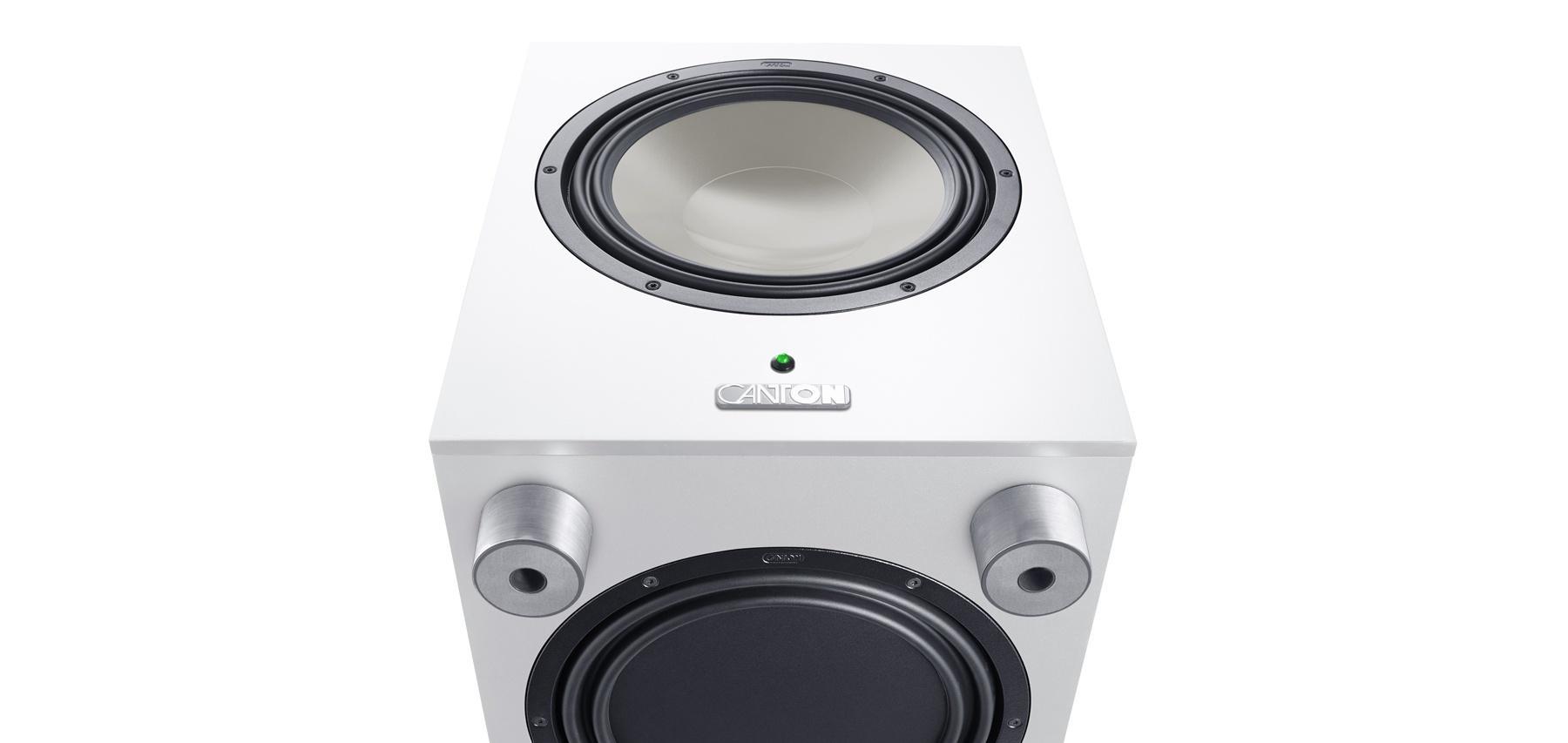
As the Power Sub 8 is an active design, it houses a 200-watt amplifier internally, capable of a peak power output of 280 watts.
Cabinet Design and Features
What makes the Power Sub 8 particularly unique is its cabinet design, which employs a passive radiator configuration, also known as a passive driver design. This setup features a diaphragm that looks identical to a regular active driver but lacks a voice coil, magnetic system, or motor structure. Its movement is entirely dictated by the internal air pressure changes within the cabinet.
While more costly to manufacture, this design is also more challenging than the common bass-reflex porting, as it requires careful consideration of the passive driver’s operating characteristics. Consequently, passive radiator designs remain relatively uncommon in mainstream Hi-Fi. The passive driver on the Power Sub 8 is mounted on the bottom, requiring you to flip the subwoofer over to see it.
Furthermore, the signature aluminum feet commonly found across the GLE series are also present on the Power Sub 8, offering superior vibration isolation compared to the rubber feet used on many subwoofers, including Canton’s own Experience line.
Connectivity and Controls
The Power Sub 8 offers two input methods: RCA line-level and speaker-level terminals. It also includes a pair of RCA outputs for daisy-chaining multiple subwoofers. Feature-wise, the Power Sub 8 provides the standard controls for Volume, Crossover Frequency, and Phase. Volume can be adjusted between +10dB and -60dB, the crossover point is adjustable from 50Hz to 200Hz, and phase can be set between 0 and 180 degrees. In addition to these, it includes Auto Standby and Room Compensation functions.

Room Compensation
The Room Compensation has three settings, allowing you to select the appropriate one based on your listening room size.
Listening Test Setup
The listening test took place in Listening Room No. 5. The setup included Audel U-Basik 5/8 bookshelf speakers paired with a Primare I35 integrated amplifier. For the Power Sub 8 settings, although the Audel speakers are rated down to 47Hz on paper, the actual crossover point was set around 55Hz in this pairing. The Room Compensation was set to ‘Narrow’ to suit the smaller dimensions of Listening Room No. 5.
Listening Impressions
The testing method was simple: listening for the sonic differences with the Power Sub 8 engaged and disengaged. From the settings, it’s clear that the Power Sub 8 was operating only within the range of approximately 55Hz down to 25Hz for this test. However, this ~30Hz band of sound proved sufficient to create a noticeable difference in the listening experience.
Typically, adding a subwoofer to extend low-frequency response results in improvements such as better bass extension and the main speakers sounding larger. The Power Sub 8 certainly delivered these benefits. Only after engaging the subwoofer did I realize that the very bottom layer of the sound had been missing, leaving the original sound feeling somewhat suspended in the air, like a castle built without a foundation.
However, the most astonishing aspect, in my opinion, was how the bass became more relaxed and spacious after activating the Power Sub 8. This isn’t something you hear from every subwoofer. I honestly couldn’t fathom how simply supplementing a 30Hz wide frequency band could reduce the perceived tension in lower-pitched instruments, but that’s precisely what the listening experience revealed.
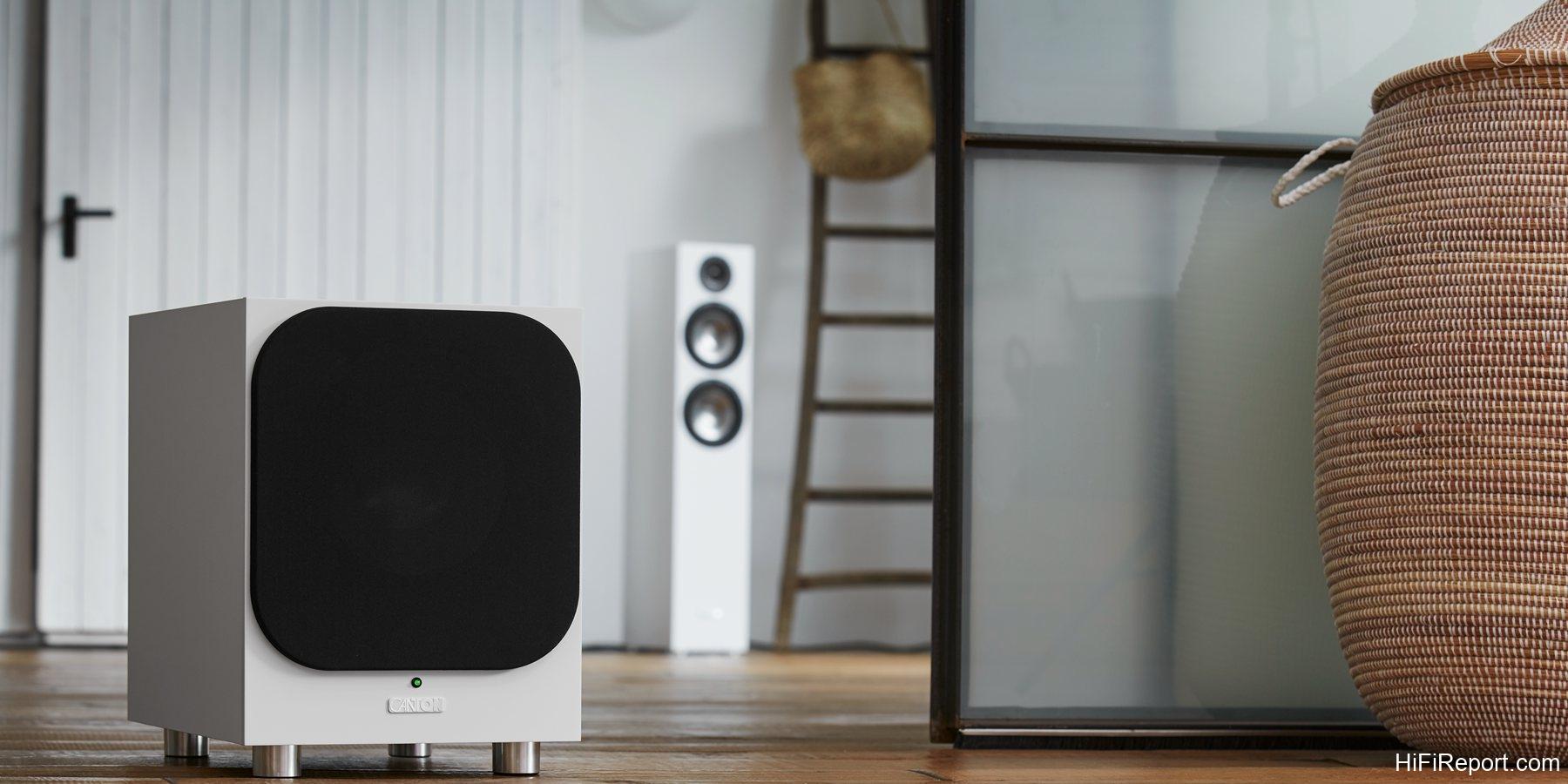
As an example, listening to bassist Jaco Pastorius’s self-titled album, the bass performance before and after engaging the Power Sub 8 was night and day. The bass sounded significantly more relaxed and effortless. Even more surprisingly, adding the Power Sub 8 seemed to untangle the bass lines, revealing layers of detail and texture that were previously obscured. Perhaps this indirectly proves that most bookshelf speakers are simply unable to fully convey the charm of the bass guitar.
Another noticeable difference after using the Power Sub 8 was the improved spacing between sound images. It was quite magical – while the perceived boundaries of the soundstage didn’t seem to expand significantly outwards, and the sound images themselves didn’t shrink but rather became grander, the congestion between different instrument shapes decreased, allowing me to better perceive the intended distance between them.
Given that the Power Sub 8 was only active below 55Hz during this test, many higher-pitched instruments didn’t exhibit significant changes. However, most instruments typically associated with lower registers showed clear and effortless improvement when the Power Sub 8 was engaged. If you desire a more complete music listening experience, supplementing the lowest frequency band is an unavoidable step.
Conclusion
Yet, achieving deep bass doesn’t necessarily require upgrading to massive floorstanding speakers; adding a subwoofer might be a more pragmatic choice. The Power Sub 8, manufactured in Canton’s headquarters in Weilrod, Germany, and utilizing the more costly passive radiator design, simply wouldn’t be available at this price point without the benefits of large-scale production. Looking for an affordable yet high-performing subwoofer? The Canton GLE series Power Sub 8 fits the bill perfectly.
Specifications
* Type: Active passive radiator subwoofer
* Drivers: 219mm Titanium alloy diaphragm x 1, Passive driver x 1
* Built-in Power: 200 watts
* Frequency Response: 25Hz to 200Hz
* Crossover Range: 50Hz to 200Hz
* Dimensions (WHD): 275 × 380 × 420mm
* Weight: 12 kg