
Canton Reference GS Limited Edition Review
Canton has always been known for manufacturing “mainstream” loudspeakers – affordable and decent performing. Buying a Canton speaker never required much thought about the price, as you could almost certainly afford it. Surprisingly, this time they’ve introduced a loudspeaker that is utterly out of reach for the average person, completely contradicting their usual philosophy. How much does it cost? 25,000 Euros per speaker, or 50,000 Euros per pair.
To be honest, loudspeakers costing 50,000 Euros per pair are common in the market and not inherently astonishing. So, why is everyone wide-eyed and gasping? Because the Reference GS Limited Edition is simply breathtakingly beautiful.
What Does “GS” Stand For?
What exactly does “GS” signify?
Then there’s the Ergo GS Edition, launched to commemorate Canton’s first floorstanding speaker introduced in 1979. It features a solid wood cabinet with a remarkably elegant design, priced at 3,500 Euros per speaker. Following that is the Karat GS Edition. This pair of speakers features side-mounted woofers, and employs completely different high, mid, and low-frequency drivers compared to their standard models.
This speaker commemorates the company’s founding in 1972, thus it’s limited to 1,972 pairs, priced at 1,750 Euros per speaker.
Looking at the prices of these three GS models, the Ergo GS Edition and Karat GS Edition are clearly designed for the general consumer. The Reference GS Limited Edition, however, is explicitly aimed at the high-end market. This exclusivity is why it’s limited to just 50 pairs globally – once they’re gone, you simply can’t buy them, even if you want to.
Design and Build Excellence
The Reference GS Limited Edition measures 46 x 163 x 72 cm (W x H x D) and weighs a substantial 155 kilograms. It boasts a frequency response of 18Hz-40kHz and an unusual nominal impedance rating of 4-8 ohms. With a sensitivity of 89dB (2.83V/1m), it appears to require an amplifier of 100 watts or more to drive it effectively.
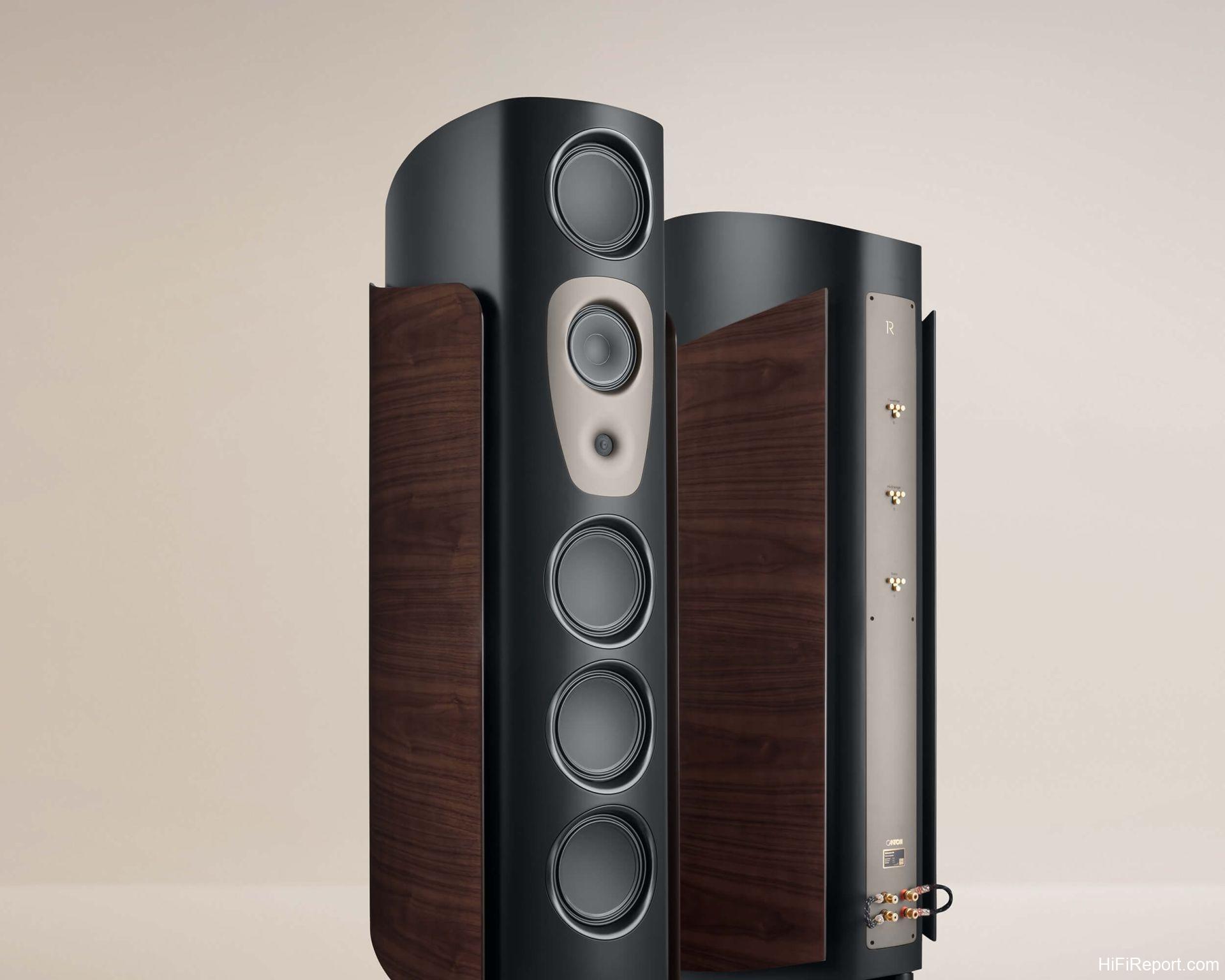
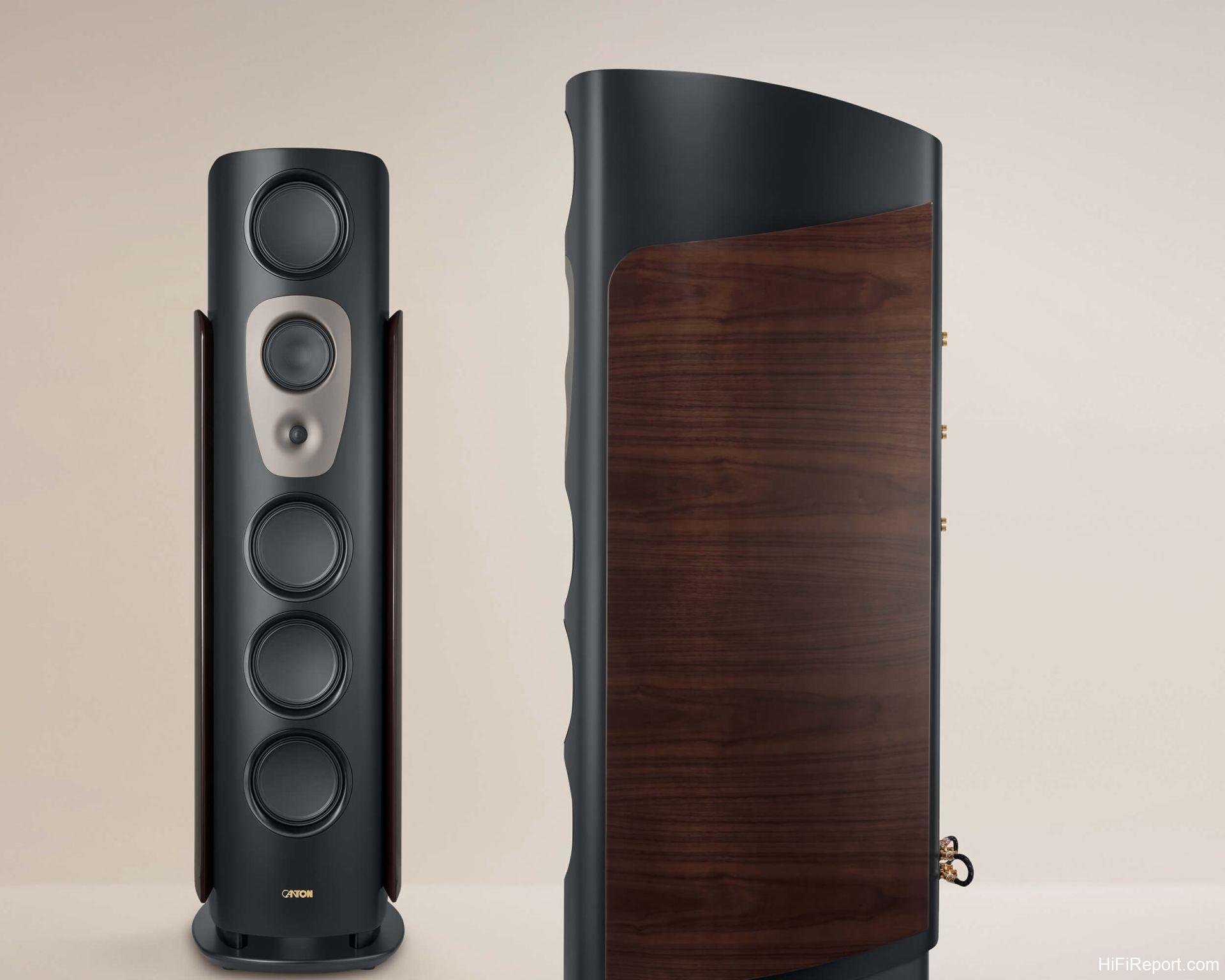
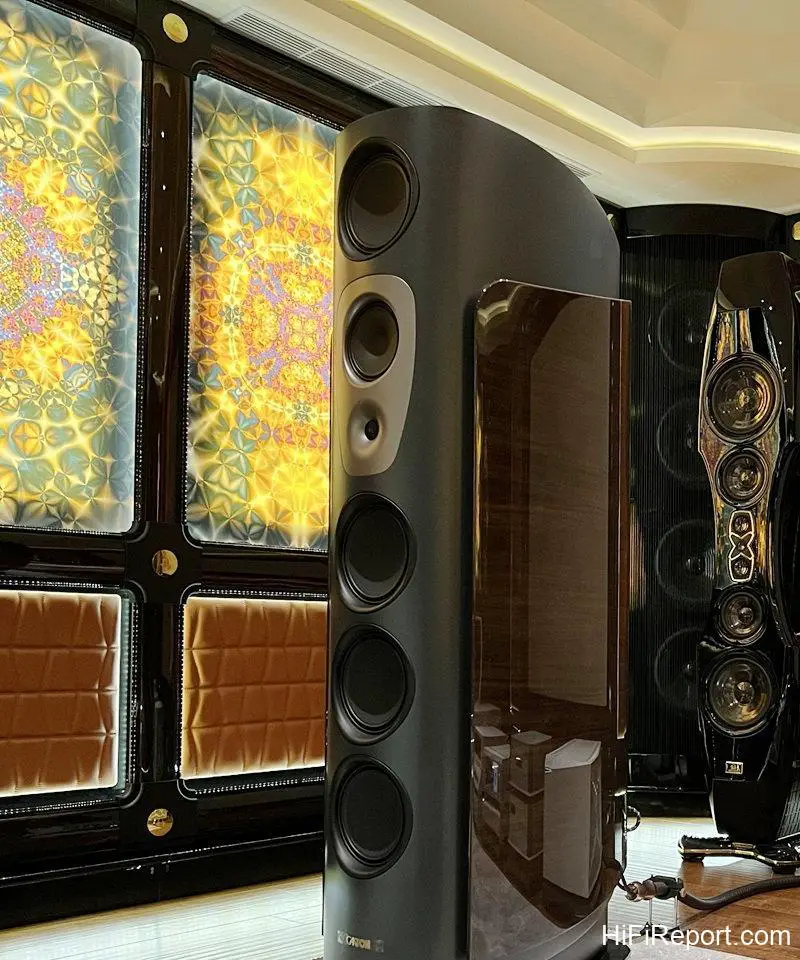
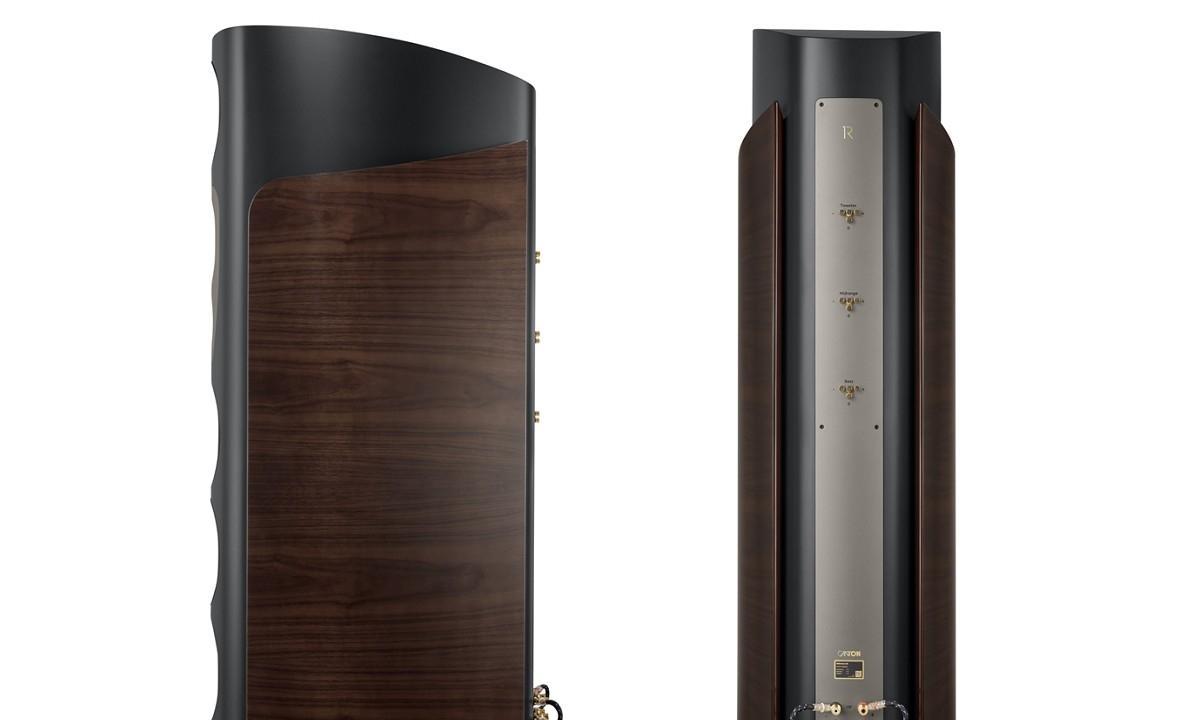
The visual beauty of the Reference GS Limited Edition is awe-inspiring. The curved front baffle is a massive 81mm thick, meticulously carved using a five-axis CNC machine. The stunning side panels are crafted from multiple layers of 30mm board, pressed together and finished with a high-quality paint job that anyone would admire.
What’s truly astonishing is the 10-year warranty offered for these speakers. Honestly, aside from products from Canadian manufacturer Moon, I rarely encounter high-end audio equipment daring to offer a decade-long warranty.
Unique Cabinet and Driver Technology
You won’t find a single right angle or parallel surface on the Reference GS Limited Edition’s cabinet. Every edge and surface is rounded or curved, including the top surface which is sloped. This non-rectangular cabinet design is something I believe is a first for Canton.
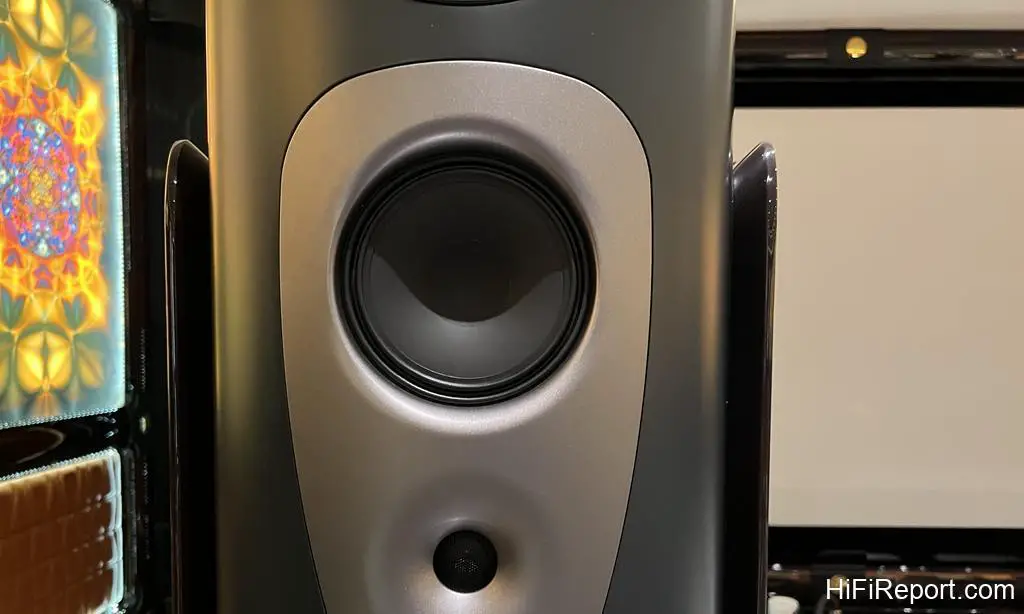
The Reference GS Limited Edition is a three-way, six-driver, bass-reflex design. The bass-reflex port fires downwards, necessitating a robust and beautifully designed base. At the top of the cabinet is a 219mm woofer, followed by a 174mm midrange driver and a 25mm tweeter, both mounted on a single metal plate. Below these are three more 219mm woofers.
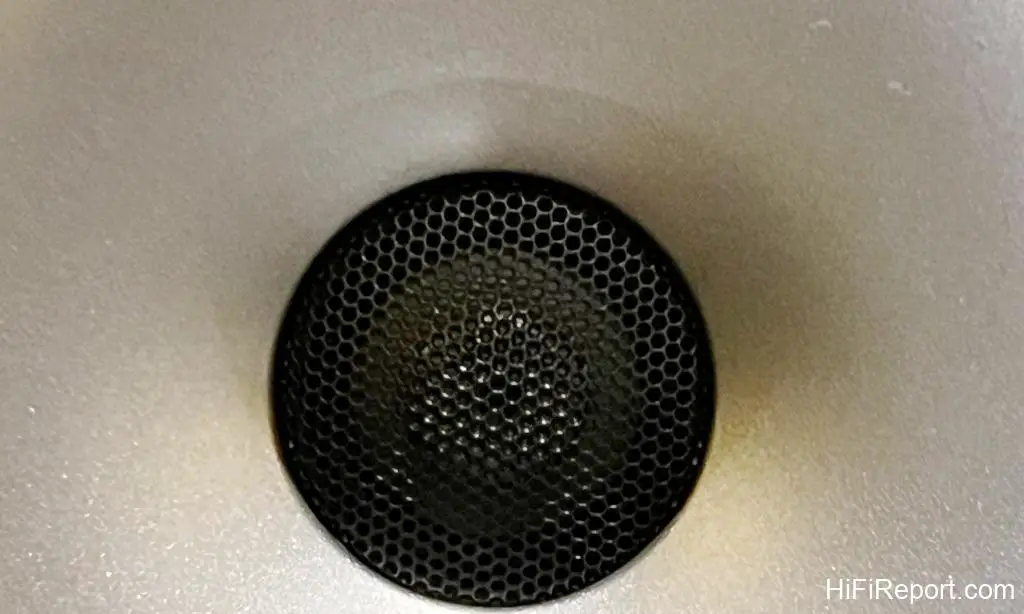
The tweeter in the Reference GS Limited Edition uses a diamond material called DCC (Diamant Ceramic Carbon). This is also the first time I’ve seen a diamond tweeter used in a Canton speaker; they’ve never employed one before.
Bass Performance and Control
When the Reference GS Limited Edition was playing, I closely observed the piston-like movement of the woofers at close range. I noticed that even with very strong low-frequency energy, the diaphragm movement was quite limited. This is attributed to the Reference GS Limited Edition’s crossover network, which incorporates Canton’s proprietary “Displacement Control” technology. This control allows the Reference GS Limited Edition to produce more precise and faster bass response.
It also helps explain why four woofers are needed; with such limited diaphragm excursion, more drivers are required to compensate for volume output.
Black Ceramic and BCT Diaphragms
What about the black ceramic? We know that ceramic has very high hardness. Many of Accuton’s famous driver diaphragms are made of white ceramic, which is harder than many metals and highly scratch-resistant. The BCT diaphragm combines tungsten with ceramic material to create a diaphragm that is both hard and lightweight.
In fact, the base of the BCT diaphragm is an aluminum alloy. 25% of the aluminum alloy diaphragm is converted into a ceramic structure, and then tungsten and other metals are deposited onto the ceramic surface. This is how the so-called BCT diaphragm is formed. Besides the Reference GS Limited Edition, Canton’s Reference series speakers also utilize BCT diaphragms.
Rear Panel and Room Compensation
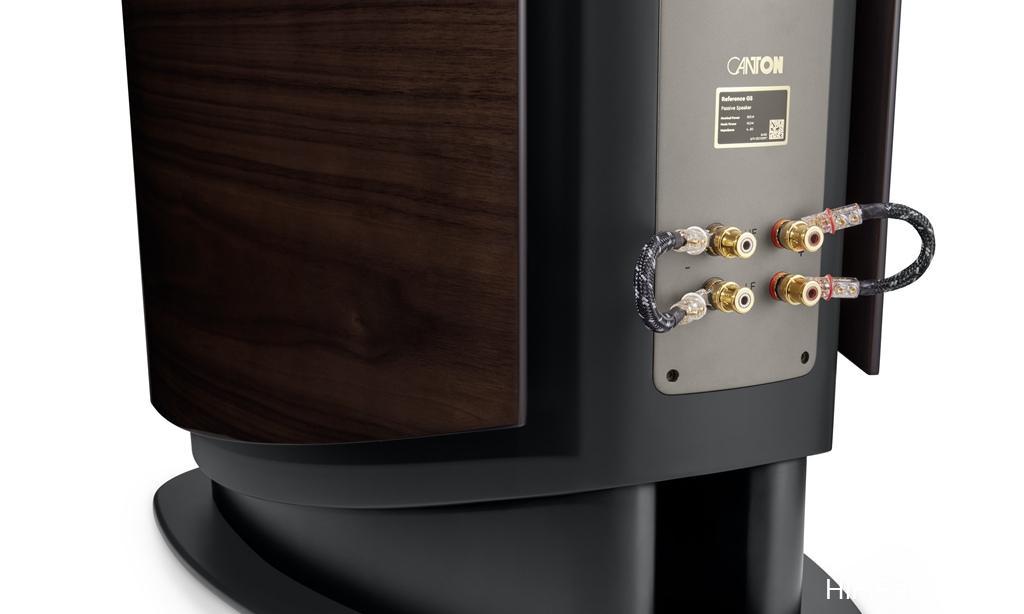
The Reference GS Limited Edition features a bi-wiring design.
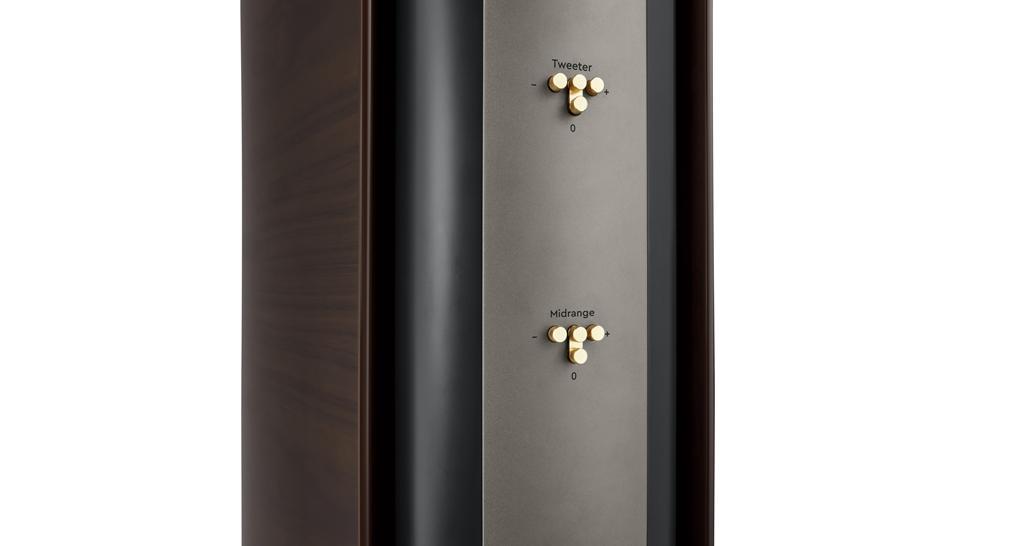
Looking at the back, you’ll see three sets of small round knobs, each set containing four knobs. These three sets are labeled Tweeter, Midrange, and Woofer, and each set has a small metal plate. The knobs are marked 0, +, and -. Connecting the center knob to the + knob increases the volume by 1.5dB; connecting it to the – knob decreases the volume by 1.5dB; connecting it to the 0 knob keeps the volume unchanged.
The Reference GS Limited Edition uses this “most primitive” method to adjust high, mid, and low frequencies precisely to avoid degrading sound quality through more complex electronic adjustments. This demonstrates thoughtful design. The adjustment range is limited to just 1.5dB, suggesting it’s intended for fine-tuning rather than drastic changes. Canton refers to this design for adjusting high, mid, and low frequencies as RC (Room Compensation) Technology.
Listening Environment and Associated Equipment
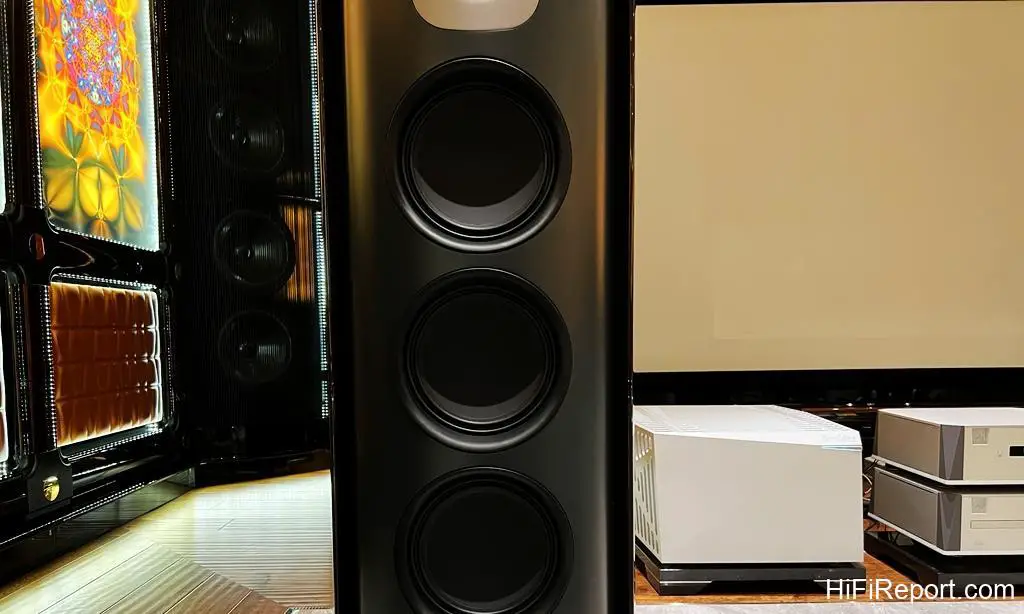
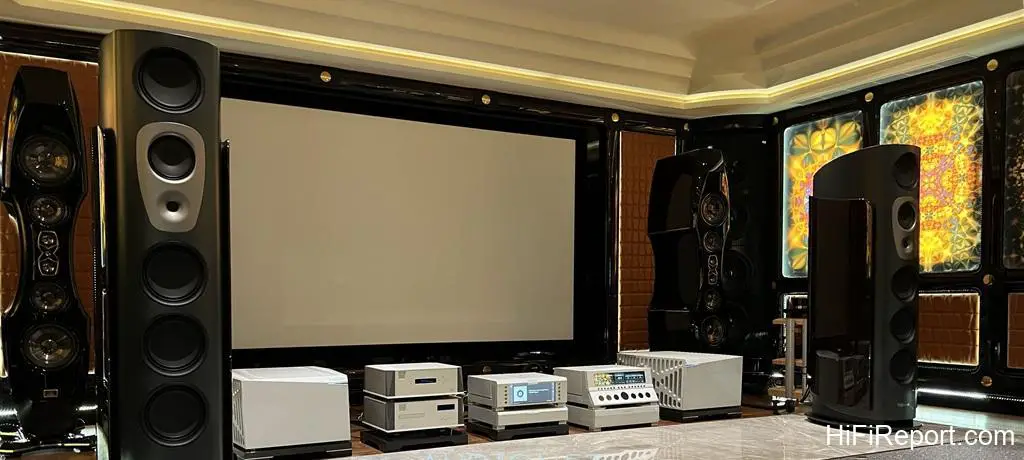
Weighing 155 kilograms, the Reference GS Limited Edition is a significant loudspeaker. The distributor invited me to their listening room for an “on-location” review. Since their listening space is specially designed, I gladly accepted. The listening session took place in their largest listening room, which was custom-built by Kharma. All components were prefabricated in the Netherlands and shipped to Taiwan for assembly, a project costing tens of millions.
However, the flooring in this listening room was recently renovated. The original thick carpet was removed and replaced with a special flooring material that Kharma has been using at audio shows in recent years, complemented by marble borders. Overall, the sound in the room felt more lively than before, and the shimmer in the high frequencies was more beautiful. The equipment used that day included the 3010 preamplifier, 3050 monoblock power amplifiers, and the 2120 DAC.
Initial Impressions and Adjustments
Following my usual practice for on-location reviews, I first listened to a few familiar music tracks. This allowed me to become acquainted with the new listening environment and also evaluate the sound based on my personal preferences. I found the high frequencies of the Reference GS Limited Edition to be beautiful – detailed, clear, yet sweet, with excellent definition for high-frequency instruments.
The midrange performance in this room was also quite good, solid and palpable with well-defined contours, presenting a sense of 3D relief. And the bass? By my standards, I felt the low-frequency foundation wasn’t quite full and robust enough.
Bass Potential and Room Interaction
Given that the Reference GS Limited Edition has four woofers, why would the bass still feel insufficient? I believe it’s because of the large volume of the listening space, which tends to dilute the sound pressure. Since the Reference GS Limited Edition’s frequency range extends down to 18Hz, the bass should be ample and sufficiently deep unless the room volume is too large.
This listening room has historically been used for Kharma speakers. While the Reference GS Limited Edition stands around 165 centimeters tall, it’s still considered a “slender” speaker. The woofers are only slightly over 8 inches in size. If they were 10-inch woofers, I believe the bass would be fully sufficient. However, this might result in excessive bass quantity in a typical-sized listening room.
Frequency Response Measurement and EQ
Having this feeling, I proceeded to measure the frequency response curve of the Reference GS Limited Edition in this listening room. The measurement confirmed my suspicion: the response was excellent from 63Hz upwards. Above 8kHz, there was a gradual roll-off, which is natural considering the listening position was at least 4 meters away from the speakers – high frequencies attenuate over distance.
Looking at the low frequencies, I found them insufficient below 63Hz and needed to boost them. To compensate for this frequency range, I used Roon’s PEQ to apply a boost, increasing everything below 63Hz by 3dB.
Why 3dB Boost?
Perhaps you might ask why I didn’t boost it more; surely 6dB would also work? I considered the tolerance of both the speakers and the amplifier. Applying a 6dB boost would significantly increase the power load on the amplifier and put more stress on the speaker’s woofers. Driving low frequencies requires substantial power, so I felt a 3dB increase in this low-frequency range was safer and still effective.
Furthermore, a 3dB boost was already clearly audible, making the bass feel much fuller and more substantial.
Since the natural roll-off occurred above 8kHz, before boosting the frequencies below 63Hz, I set the high, mid, and low frequency adjustments on the Reference GS Limited Edition’s rear panel to the +1.5dB position (they were initially set to 0dB). This resulted in a total low-frequency increase of 4.5dB. However, the final 1.5dB was achieved by the speaker’s internal adjustment, which wouldn’t place excessive strain on the amplifier.
The Transformative Effect of Bass
After making these adjustments, I listened to the same tracks again and experienced a complete transformation. This is an experience I’ve had many times before; the key lies in changing the quantity of low frequencies.
My experience shows that once insufficient low-frequency quantity is made sufficient, the overall scale of the soundstage increases, the 3D presence of instruments and vocals within the soundstage emerges, the overall sound becomes thicker and more energetic, and the layering within the soundstage improves. Most importantly, the music achieves better balance, making it sound more alive, more realistic, and more captivating.
At this point, even if the high frequencies are very clear and prominent, they no longer feel aggressive or oppressive. This is all thanks to the sufficient bass quantity.
For example, when listening to Alanis Morissette’s “You Oughta Know” before boosting the frequencies below 63Hz, the bass and kick drum lacked fullness, making the sound feel a bit hard, the bass lacked elasticity, and the high frequencies were more prominent. After boosting the bass, the first impression was a sense of “seeing” the soundstage details become more prominent, tangible, and three-dimensional. Furthermore, the overall sound became fuller, warmer, and more dynamic.
Listening to Dido’s “Don’t Believe in Love,” the bass was initially a bit insufficient, lacking elasticity and the ability to extend deeply. After boosting the bass, the powerful elasticity of the bass emerged, and the quantity was full like a large water balloon. The singer’s voice became warmer and softer, and the soundstage layering and imaging also improved significantly.
Listening to…
High Frequency and Midrange Delicacy
To be honest, I wasn’t very familiar with the sonic characteristics of Canton speakers, as their price range typically falls outside the scope of my reviews. Hearing their flagship for the first time this time left me utterly “amazed.” It didn’t sound anything like an affordable speaker.
Regarding high-frequency performance, the Reference GS Limited Edition is quite different from many other speakers using diamond tweeters. Its high frequencies are detailed, soft, yet clear and sweet. Even after adding 1.5dB, it still had a visual quality reminiscent of lustrous, flowing hair in a commercial. By this, I mean the high frequencies of the Reference GS Limited Edition reveal intricate details, including string sections and cymbal strikes.
For instance, when listening to Lils Mackintosh singing “Pack Your Memories,” the cymbals behind the singer sounded spacious, clear, and expansive, with a rich texture of metal striking and vibrating. Another example: when listening to Perlman playing Shostakovich’s “Violin Concerto No. 1,” the violin sounded eloquent, rounded, and rich in resonance, with beautiful, sweet tone and timbre.
Furthermore, when I listened to Christoph Koncz performing Mozart’s “Violin Concerto No. 5,” that visual sense of flowing hair appeared again. The solo violin was soft, warm, and sweet, while the accompanying orchestra’s strings were delicate and elastic. Together, they created a beautiful sonic effect of the violin and string section.
Piano and Cello Realism
The piano in the Reference GS Limited Edition does not have an overly large presence but is very solid, with excellent tangibility and weight. When listening to Fazil Say playing Turgay Erdener’s piece “Sen Sen Sen” (with mezzo-soprano Senem Demircioglu), the percussive sound of the piano keys was incredibly realistic, almost as if I were leaning on the piano listening to the performance (of course, this is an exaggerated description).
The mezzo-soprano’s voice was also clear and focused, with a palpable presence and beautiful timbre.
Listening to Edgar Moreau playing “Great Dramatic Sonata,” the initial piano performance revealed a very rich sense of string vibration. The piano notes remained incredibly clear, each note distinct and focused without blurring. The cello that followed also had a focused sound line, realistic bowing texture, subtle vibrations dancing in the air, and a warm, slightly nasal quality, creating a very authentic cello sound.
Then listening to Bruno Philippe and…
Dynamic Bass and Soundstage
I’ve already touched upon the bass performance of the Reference GS Limited Edition, but I want to emphasize a few points here. The bass frequencies exhibit very high resolution, rapid response speed, and a very clean sound. The quantity is full, and the elasticity is excellent. Take Emiel Scholosberg’s performance of “Soli2de,” for example.
The gentle, deep, and textured ‘poof’ sound of the bass at the beginning was soft, smooth, and very elastic, like gentle waves of bass airflow lightly hitting the chest.
Following this was the portrayal of a wide soundstage. Within a transparent, clean space, various subtle sounds were distributed throughout, with clear variations in height, depth, and lateral position. This demonstrates the Reference GS Limited Edition’s extremely high resolution and excellent transparency. These examples involved small-scale music. What about large symphonies? Needless to say, the speakers disappeared, leaving only music filling the entire space.
Conclusion: A Unique and Valiant Effort
The Canton Reference GS Limited Edition boasts incredibly fast transient response, precise imaging, focused contours and palpable forms, excellent and neutral timbre, clear and eloquent high frequencies, a full but not bloated midrange, and bass that is deep, punchy, and articulate, capable of both grand power and delicate nuance. The overall music sounds very balanced and full.
The listening experience resulting from the combination of these sonic characteristics is different from high-priced loudspeakers I’ve heard before; it possesses a unique sound signature. Based on my understanding of high-end Hi-Fi speakers, the value-for-money ratio of the Reference GS Limited Edition is truly exceptional.
Unfortunately, the Canton Reference GS Limited Edition is limited to only 50 pairs worldwide and will quickly become a collector’s item. It’s a stunning loudspeaker that evokes a sense of melancholy knowing it will soon be unavailable.
Specifications
* Drivers: 25mm Diamond tweeter ×1, 174mm midrange driver ×1, 219mm woofer ×4
* Frequency Response: 18Hz-40kHz
* Nominal Impedance: 4-8 ohms
* Sensitivity: 89dB (2.83V/1w)
* Dimensions (WHD): 460×1,630×720mm
* Weight: 155 kg