
Cardas Clear Reflection Power Cable Review
Founded in 1987, American cable manufacturer Cardas has developed an incredibly comprehensive and dense product line over the years, satisfying both seasoned audiophiles and general consumers alike.
Among the many product series from Cardas, the Clear Reflection series is positioned to deliver performance approximating that of the flagship products, but at a more accessible price point, giving a wider audience the chance to experience Cardas’s high-end technology.
For audiophiles with a bit more capability, the Clear Reflection Power cable truly represents an appropriate entry point into the world of Cardas products.
Features Top-Tier E-5 Connectors
The Clear Reflection Power cable is entirely black, a departure from the traditional blue often favored by Cardas. This color choice perhaps underscores the unique positioning of the Clear Reflection series.
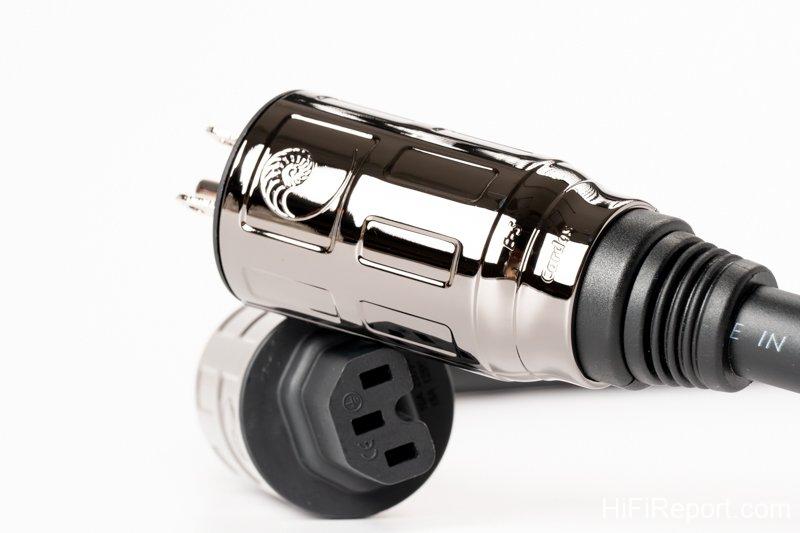
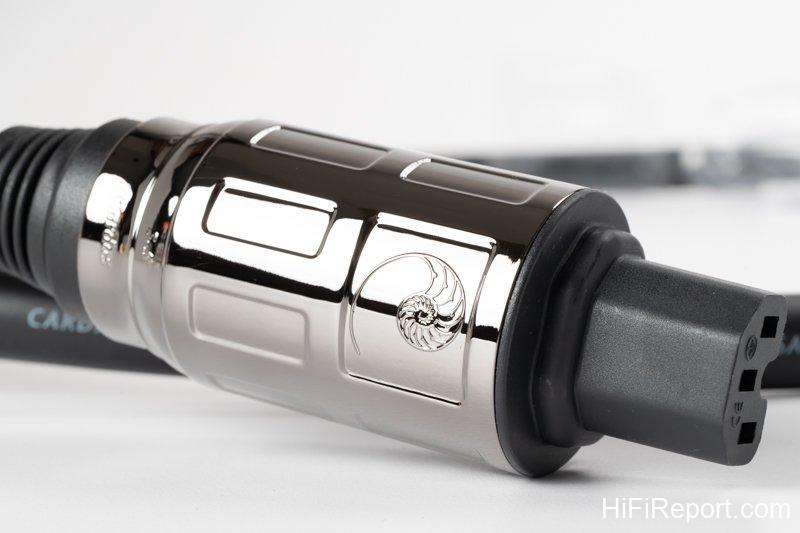
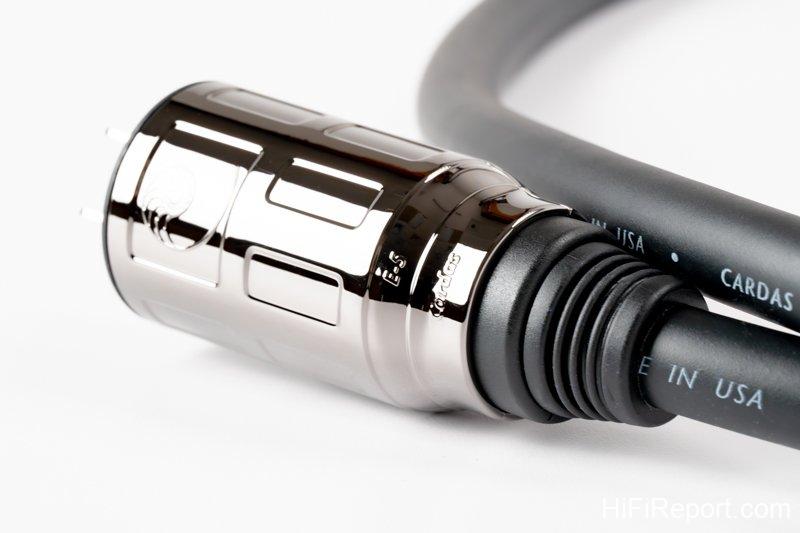
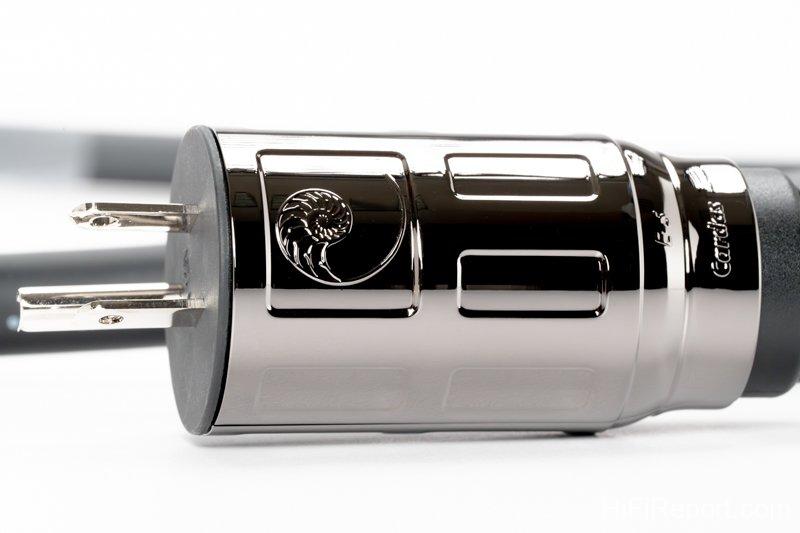
Ranked just below the higher-end Clear series, the Clear Reflection Power cable’s most distinctive feature is its use of Cardas’s proprietary E-5 power connectors, the same found on their top-tier power cables. The metal contact surfaces are made from pure copper, plated first with silver and then with rhodium, enhancing conductivity and improving durability.
The connection between the cable and the connectors utilizes both crimping and soldering techniques, providing a more secure and conductive link compared to simple screw fastening.

The conductors within the Clear Reflection Power cable employ Cardas Grade 1 copper, a material identified as 6N oxygen-free copper.
Cardas Grade 1 copper is also found in Cardas’s most premium cables, while the entry-level 101 and Crosslink series use Cardas Grade 2 copper.
According to Cardas, the performance of their Grade 1 copper is equivalent to, if not superior to, contemporary OCC single-crystal copper. This is why Cardas has exclusively used its proprietary Grade 1 and Grade 2 copper for many years.
Litz Wire + Golden Ratio Structure
In terms of cable structure, the Clear Reflection Power cable naturally incorporates Cardas’s proudly touted and long-standing “Golden Ratio” geometry.
Cardas cables use Litz wire for their conductors – essentially enameled wire where each fine strand is individually insulated. This construction, when twisted, helps to mitigate both skin effect and proximity effect in the conductors.
Furthermore, Cardas employs a layered twisting process with different wire gauges of Litz wire. The finest strands are at the center, progressively thicker strands are layered around the outside, with varying twist directions. This creates a concentric structure where the different wire gauges maintain a “Golden Ratio” relationship of 1:1.618033…
What’s the benefit of this? It corrects the issue where the dielectric transmits charge slower than the conductor, ensuring a more uniform transmission speed for signals or current. This preserves the integrity of the music signal and enhances dynamic range presentation.
The hot, neutral, and ground conductors within the Clear Reflection Power cable are each 11.5 AWG in gauge. During the twisting process, PE air tubes are mixed in. The conductors are then doubly shielded with both plated copper wires and enamel-coated wires before being encased in a soft TPR outer jacket.
The final diameter of the Clear Reflection Power cable reaches 15.5 mm, which is quite substantial. Despite its thickness, the cable remains very flexible and easy to bend, making it highly convenient to use.
Well-Balanced Performance
The listening evaluation was conducted in the HiFiReport listening room. The system included an Intel NUC running Roon Core, a Lampizator Big 7 MK3 tube DAC, a Linear Acoustic LA V5 preamp, AVM MA 30.3 MK2 monoblock power amplifiers, and Dynaudio Contour 60 loudspeakers.
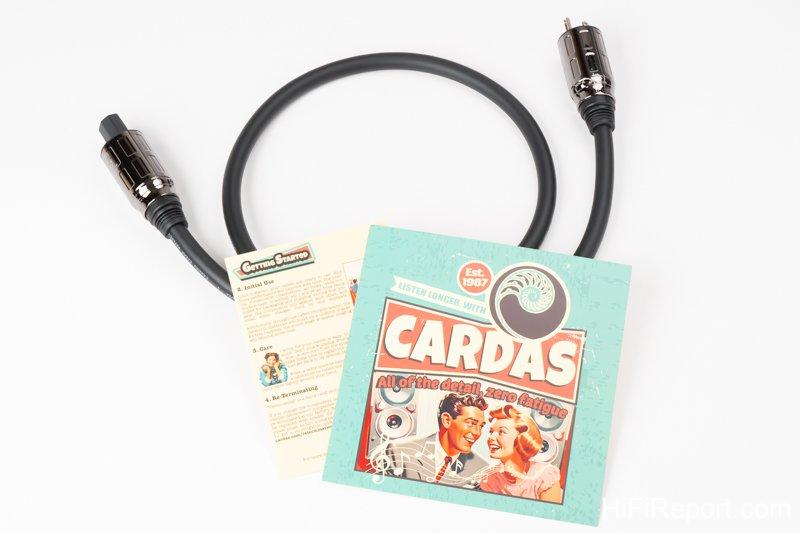
I first inserted the Clear Reflection Power cable into the LA V5 preamp, using a standard black power cable as the reference for comparison.
Beginning with “Immediately Blessed” from a Blue Coast Records compilation, the track features two acoustic guitars accompanying a rough-voiced male singer, with another male voice joining for harmonies later on. The track has a simple arrangement, but the recording quality is superb.
The comparison immediately revealed the Clear Reflection Power cable’s clear superiority. The outlines of the two guitars’ notes were sharper, their positioning more precise, sounding more tangible. The width, height, and foundation of the soundstage were all presented with greater clarity and definition. The tonal quality was bright yet possessed a pleasant richness, a touch of sweetness, without being overly rounded or warm – a fantastic balance. Sound in every frequency band was clear, transparent, textured, and comfortable to listen to.
In contrast, the reference cable felt as if something was missing. The sound was slightly blurred, the form of the instruments less distinct. It felt like there should be more musical information coming through, but it wasn’t quite there.
Logically, a power cable shouldn’t affect the *amount* of detail, but this was the distinct subjective impression.
The Clear Reflection Power cable’s clarity in the mid and low frequencies was particularly appealing, as was its excellent transient response.
Although this song is a small-ensemble piece, with just two guitars and vocals, the close microphone placement results in significant volume and dynamic shifts. The Clear Reflection Power cable rendered these changes from soft to loud with incredibly rich and clear gradations. When the vocals reached peak volume, the power surged forward smoothly and with force. The reference cable, by comparison, sounded abrupt and even a little uncontrolled at high volumes, creating listening pressure, despite the Clear Reflection cable actually being played at a slightly higher level.
Clear Yet Stable Sound
Next, I played Karajan conducting the Berlin Philharmonic in “Also Sprach Zarathustra.” With the Clear Reflection Power cable, the low-frequency presence of the opening organ line wasn’t necessarily greater than with the reference cable, but it was perfectly judged. The sound had much better focus, with contours and positioning presented more clearly and concretely. The subtle undulations of the organ tone were also more apparent. Furthermore, the downward extension was excellent, and the sound felt incredibly grounded, giving the impression of the soundstage foundation reaching lower.
After the prelude, as the brass swells from quiet, emerging from the back of the orchestra, the instruments felt positioned further away, suggesting improved soundstage depth.
As the brass grew louder and the trumpets climbed in pitch, the height and width of the soundstage also expanded, creating a larger overall sonic space.
Perhaps the soundstage wasn’t literally larger, but the increased detail and energy brought forward made the soundstage scale more apparent, giving the *feeling* of expansion.
Previously, the Clear Reflection Power cable was connected to the preamp. The power amplifiers were AVM MA 30.3 MK2 monoblocks. I now wanted to try the cable on the power amplifier, so I switched the amplifier to a Linear Acoustic LA 200 stereo power amplifier. This way, even with only one Clear Reflection Power cable, I could test it on the power stage.
Listening again to “Also Sprach Zarathustra,” the improvements delivered by the Clear Reflection Power cable were in the same direction as when used on the preamp, but I found the degree of improvement to be even greater. This suggests that the Clear Reflection Power cable offers potentially higher value when used with power amplifiers or integrated amplifiers.
This isn’t to say it’s unsuitable for sources or preamps, but rather that it excels particularly well on power stages.
Enhanced Dynamics and Impact
When playing Mariah Carey’s “Hero,” the Clear Reflection Power cable was connected to the power amplifier.
Comparing it again to the reference cable, the reference cable felt somewhat insubstantial from the start of the song. Even though the intro only features piano and strings, the piano notes lacked solidity, and the subsequent vocals seemed a bit too gentle, lacking power.
The Clear Reflection Power cable, however, presented the music densely, clearly, with appropriate body. Dynamics were well-defined, while still maintaining a lively and agile feel.
Moreover, the Clear Reflection Power cable provided a very desirable sense of clarity. The “air” within the musical picture felt clean and transparent, with the soundstage width and depth clearly defined. High frequencies had a lovely upward lift, making extension seem effortless.
After the A section, as the song moved into the B section and the bass and drums entered, the bass line exhibited much better tightness and definition. The impact of the kick drum was more precise and immediate. The soundstage foundation became more solid, making the lower half of the soundstage larger and clearer, while the upper half remained open and light. The overall musical atmosphere felt more vibrant, and the emotional impact was heightened.
Balanced, Accurate, and Substantial Improvement
Generally speaking, when considering overall tonal balance, the standard black power cable often included with equipment can be considered the most neutral. The Clear Reflection Power cable shares this characteristic; its overall balance is excellent, the soundstage is very accurate, and the sonic presentation is extremely healthy.
Building upon this foundation, it brings about improvements in various aspects: increased body and substance, enhanced soundstage transparency, greater tonal clarity, sharper image outlines, and better soundstage shape and scale. These improvements are substantial and come without any negative side effects.
Oh, and it has another benefit: its soft body makes it easy to bend, which is particularly convenient in practical use.
Specifications
* **Type:** Power Cable
* **Conductor:** 6N Oxygen-Free Copper Litz Wire
* **Gauge:** 11.5 AWG × 3
* **Outer Diameter:** 15.49 mm
* **Connectors:** Cardas E-5 Power Plugs, Silver/Rhodium Plated Contacts