
CCA C10 Review
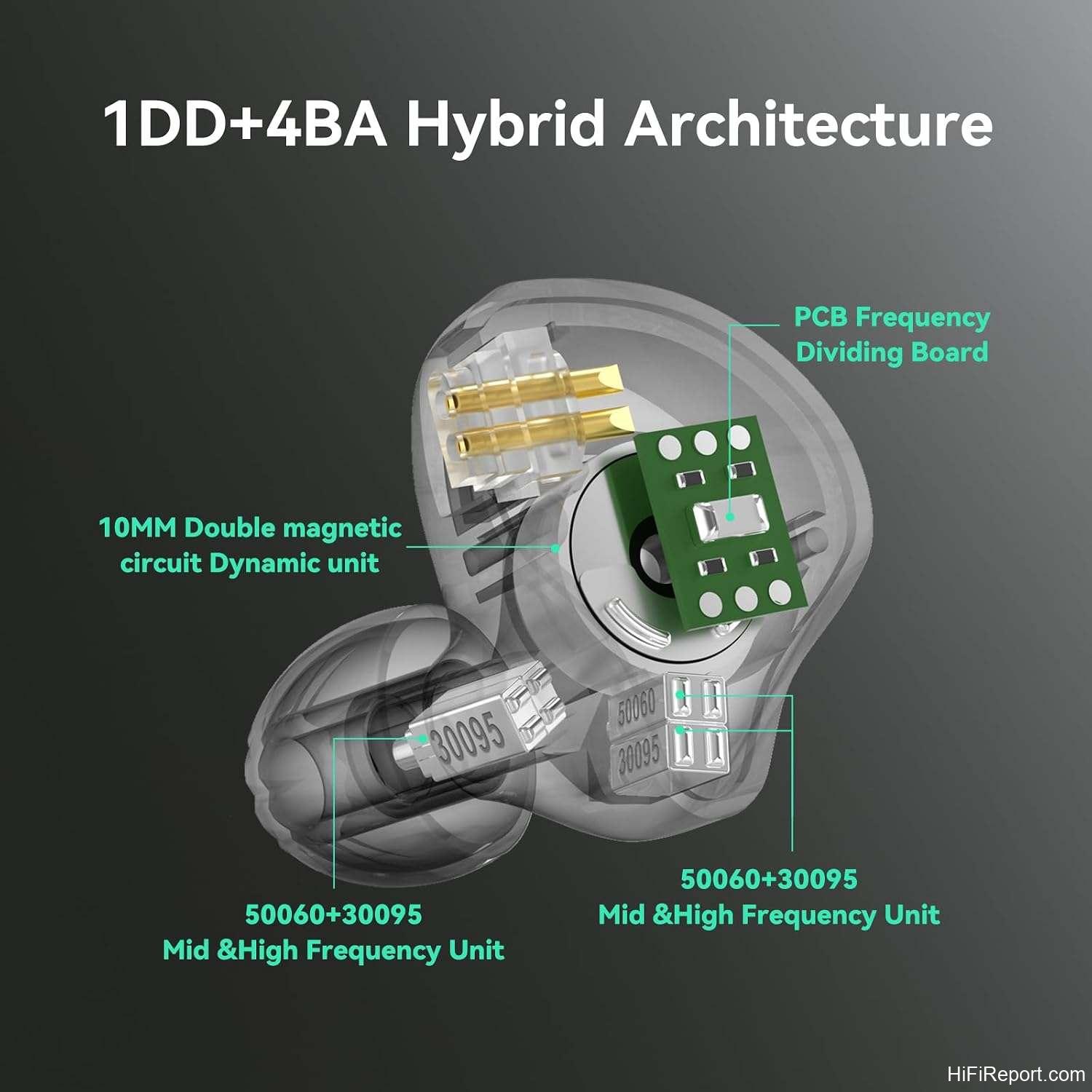
The CCA C10 is a 10-driver hybrid in-ear monitor: four balanced armatures and one dynamic driver per side, housed in a zinc alloy and resin shell with a detachable 0.75mm 2-pin cable. That driver count sits at the high end of the universal-fit IEM category, and a built-in MEMS noise-cancelling element adds a second isolation layer on top of the physical tip seal. The question is whether the tuning holds up under real listening conditions, or whether the multi-driver architecture just multiplies the problems.
The pages that follow work through the driver layout, the sound signature in plain listening terms, fit and build, and what actual owners report across drumming, guitar, mixing, and everyday use. The verdict at the end names the listener this tuning actually serves.
At a Glance
- Driver configuration: 4 BA + 1 DD per side (10 total)
- Shell: zinc alloy + resin
- Cable: detachable, 0.75mm 2-pin, 3.5mm gold-plated plug, 5N 4-core silver-plated included
- Noise handling: built-in MEMS element
- Included tips: 3 pairs of silicone ear tips
Drivers and Design
The CCA C10 splits its ten drivers into two families: four balanced armatures and one dynamic driver per ear. The armatures handle the upper and mid-frequency ranges while the dynamic driver covers the low end. This hybrid philosophy is common in studio and stage IEMs, but the driver count here pushes past what most universal-fit sets offer. The shell combines a zinc alloy face plate with a resin body, giving a rigid outer surface and a lighter inner structure.
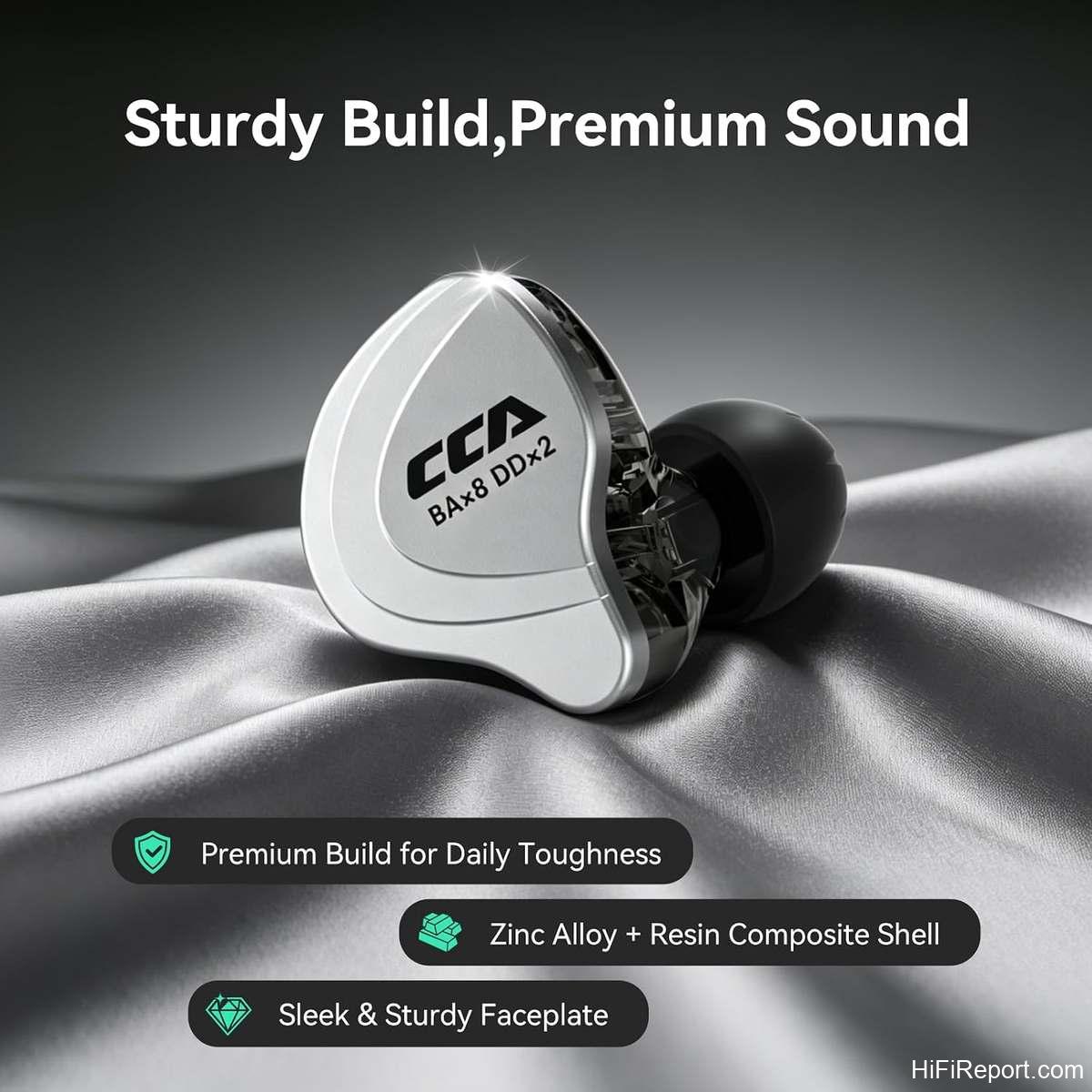
The acoustic path includes a MEMS noise-cancelling element that the product documentation describes as reducing environmental noise and distractions. In practice it works alongside the physical seal of the ear tip: the MEMS element dampens ambient pressure changes while the tip blocks direct sound. Owners report the combined isolation as noticeably tighter than a single-tip seal, though it does not match the attenuation of a custom-molded in-ear.
Tuning and Sound Signature
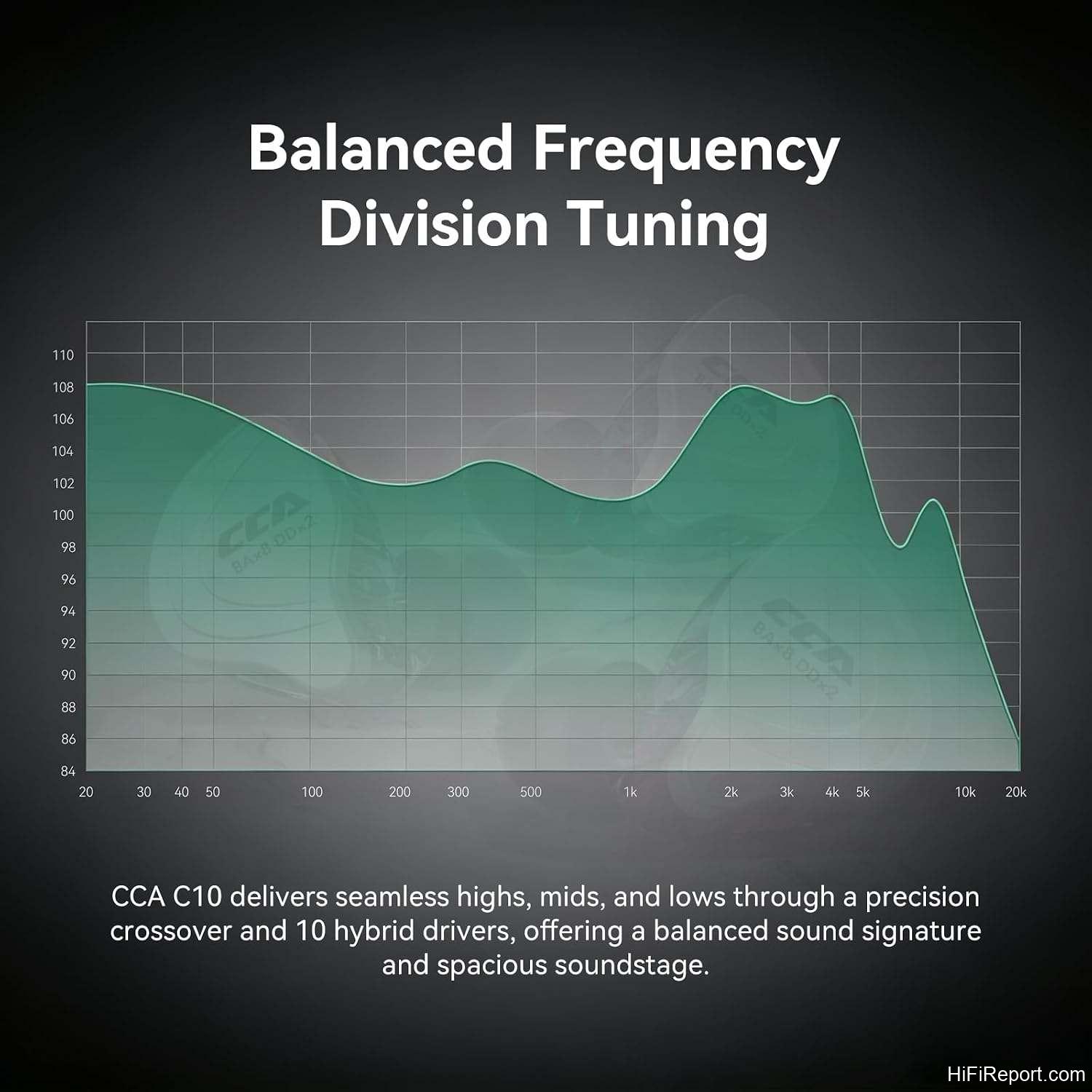
The CCA C10 presents a balanced-to-bright tuning with a forward midrange and an extended, detailed treble. The most consistent owner report is that the highs are the most prominent part of the sound: crisp, detailed, and occasionally sharp, particularly on material with sibilant vocals or aggressive cymbal work. The midrange sits forward and carries strong vocal presence, which multiple drummers and guitarists specifically cite as the reason they can follow a click track or hear their own part clearly in a mix.
Bass and Low End
The low end is present and textured, but it is the least consistent area across owner reports. One reviewer playing bass guitar described the fundamental as almost absent in a live setting, leaving mostly upper harmonics and pickup noise. Others call the bass “authentic and clear” and “very present but not distorted or over-emphasized.” The dynamic driver handles controlled listening well, but the overall tilt toward the top means low-frequency fundamentals can get buried when volume is pushed in a loud room.
Treble and Midrange Detail
The upper mids and treble are where the CCA C10 earns its reputation. Multiple owners note that instrument separation improves dramatically compared with single-driver earbuds: individual keys in a piano part, hi-hat stick attack in a drum mix, and vocal sibilance all become clearly audible. One mixing engineer reported being able to pick out separate instruments in a Logic Pro session with ease. The trade-off is that the same extended treble that rewards detail becomes fatiguing for listeners sensitive to high-frequency energy, and sibilance on poorly mastered tracks can reach a level several reviewers describe as uncomfortable.
Getting the Fit
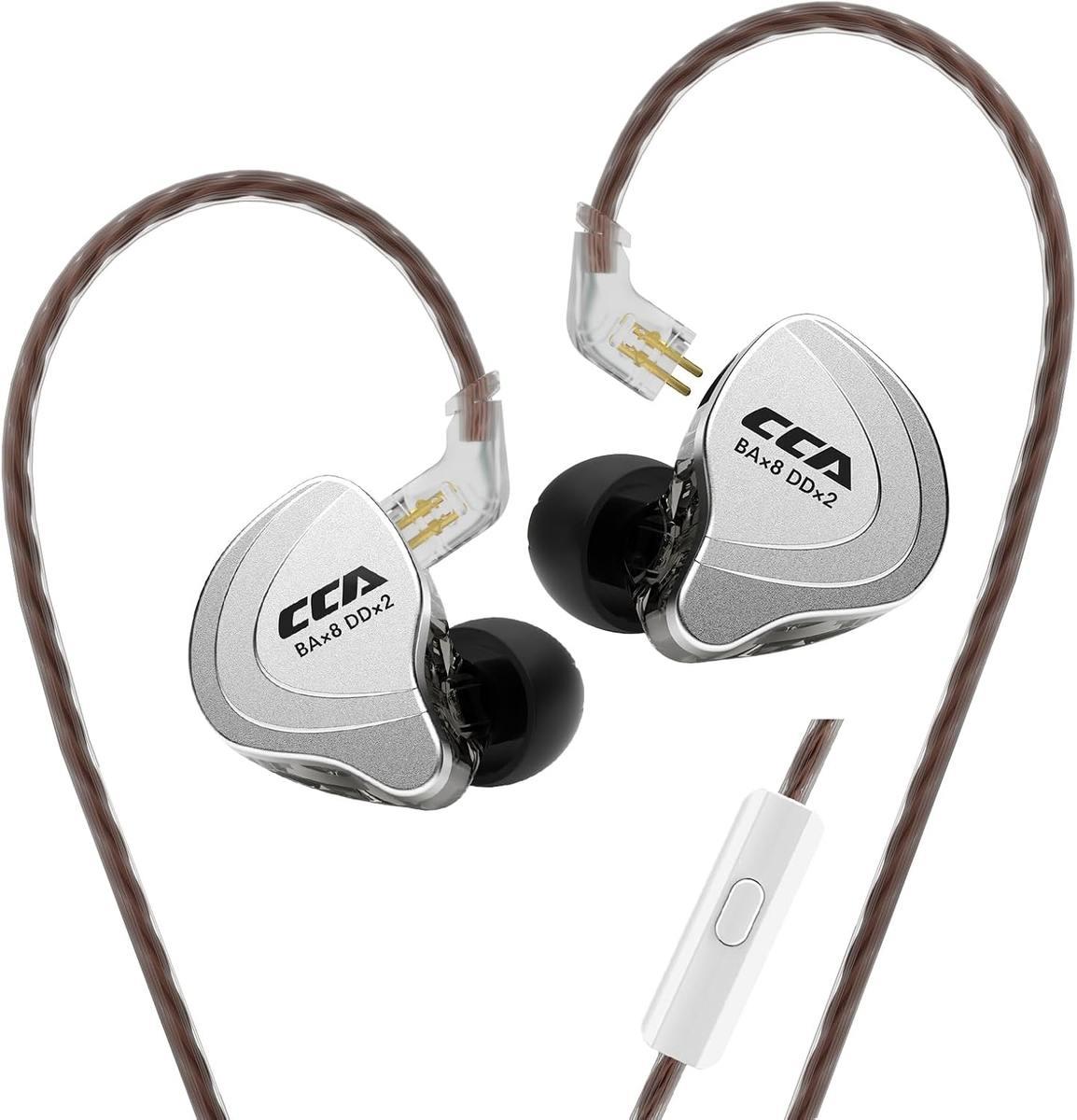
The CCA C10 ships with three pairs of silicone ear tips in different sizes. The shell has a compact, slightly odd shape that makes it look like it will not seat well, but several owners confirm it locks into the ear once pushed firmly past the canal entrance. Isolation improves noticeably with a snug fit; one reviewer noted that both bass response and noise rejection get better when the tip seals completely. For users in loud environments such as a church sanctuary or a rehearsal room, foam tips improve isolation further at the cost of some comfort. The shell sits comfortably with glasses, provided the frames are not thick plastic.
Build and Accessories
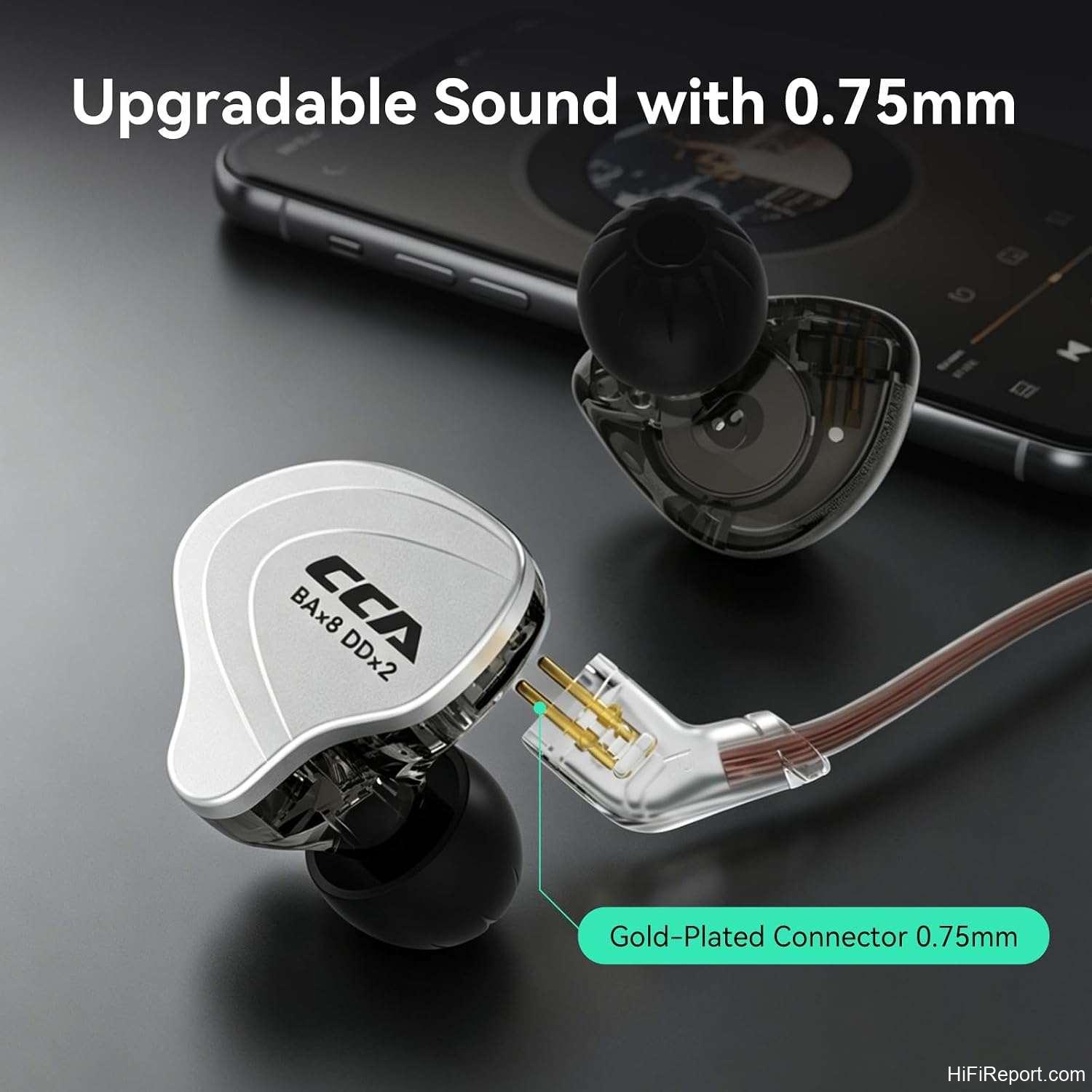
The included cable is a 5N 4-core silver-plated braided wire with a 3.5mm gold-plated plug and 0.75mm 2-pin connectors on the IEM end. The cable is detachable on both sides: the plug end can be swapped for a different jack size, and the 2-pin end can be replaced with an upgrade cable. The main braid feels solid and supple, but the final split into two thin double-braided leads for each ear is the weak point. Multiple owners flag that section as fragile and prone to tangling, comparing it to the fine wires on older phone earbuds. The zinc alloy face plate is rigid and resists bending, and the resin body keeps the overall weight down.
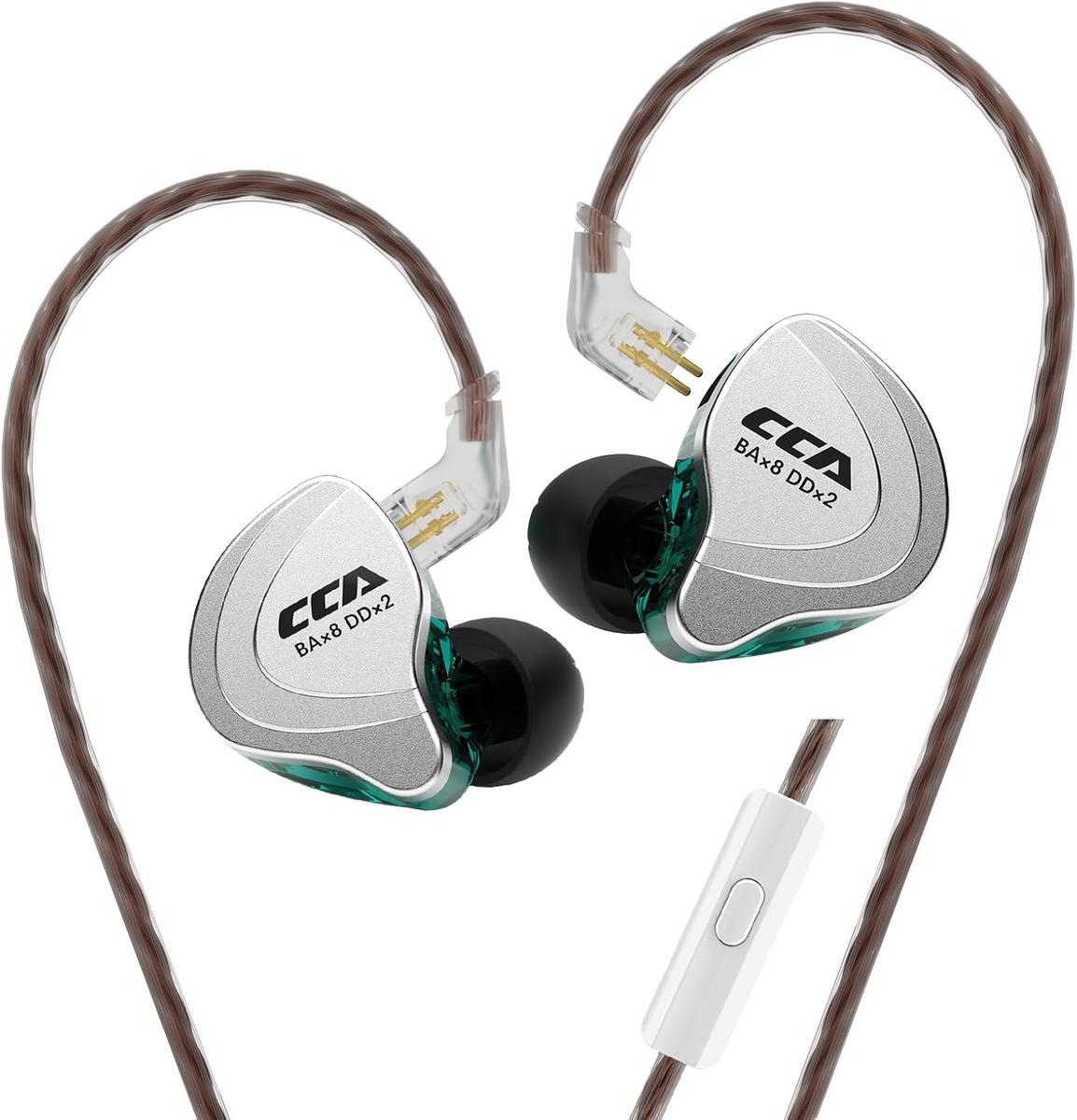
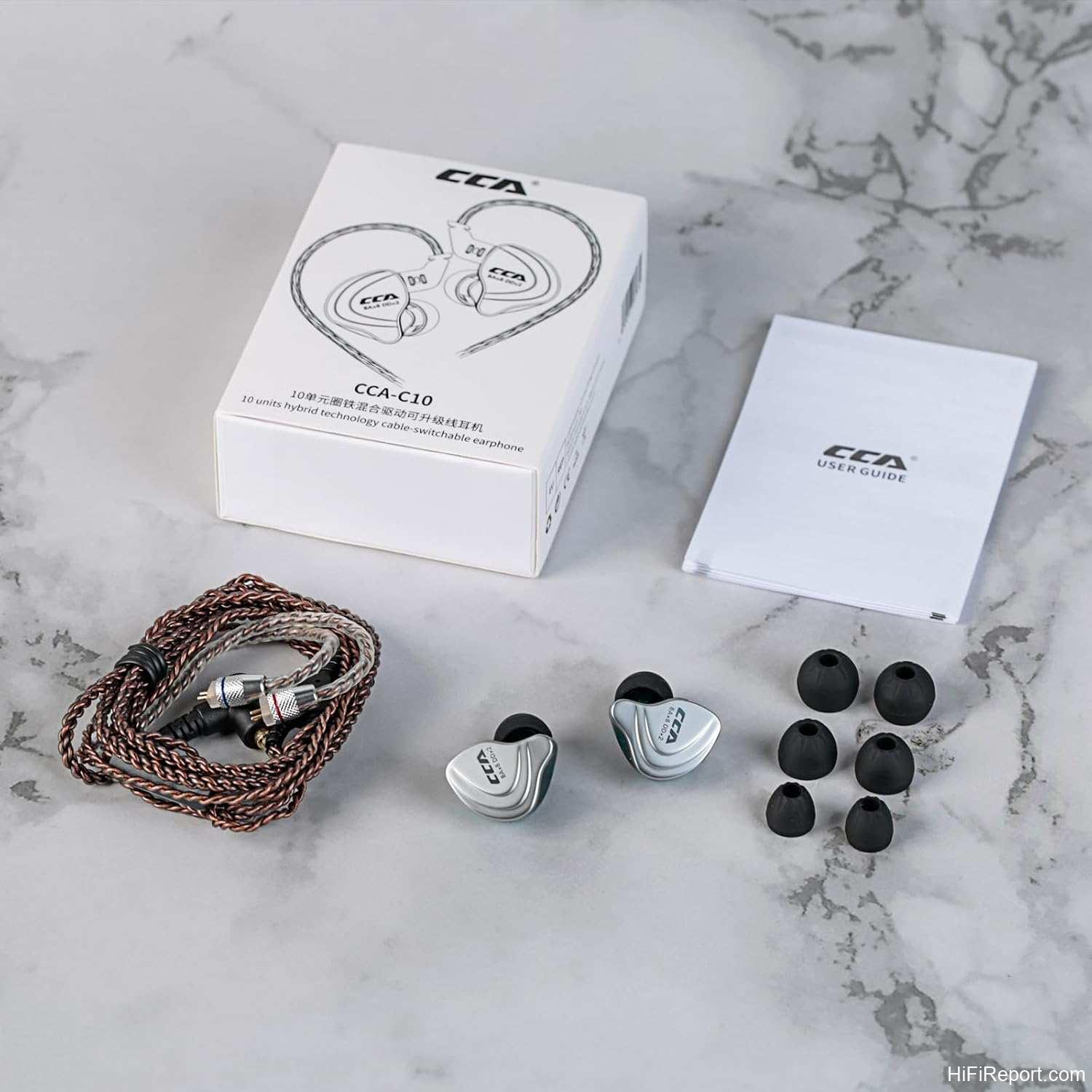
The package includes the CCA C10 IEMs, one detachable cable, and three pairs of silicone tips. There is no microphone on this variant, and no carrying case is included.
Listening Impressions
The CCA C10 is most at home in live-monitoring and instrumental genres where midrange clarity and treble detail matter more than sub-bass weight. Drummers across multiple reviews describe hearing every component of a pattern clearly: snare crack, hi-hat stick attack, and the body of a floor tom all arrive with distinct texture, and a click track cuts through without forcing the volume up. A Roland V-Drums user reported no distortion even at high output, and the bottom end from kick and floor toms stayed clean.

For guitar and bass the picture is more mixed. A guitarist using a Line 6 Helix found the vocal and drum elements sounded natural and pleasant, while the guitar tone needed small adjustments to sit well in the mix. A bass player in a live gig found the fundamental almost inaudible; no amount of tip swapping or volume increase recovered the weight. The CCA C10 works for guitarists who prefer a bright, cutting tone and can dial back the high end with a small EQ move, but it is a poor fit for anyone relying on the fundamental weight of a bass or low guitar part to lock in with a drummer.
In a studio or mixing context the driver count pays off. One owner uses the C10 for mixing a virtual band in Logic Pro and can separate individual instruments with ease. The forward mids make vocal editing and mid-range EQ decisions more transparent, while the treble detail reveals mastering artifacts that flatter-only tunings hide. The limitation repeats: heavy low-frequency content in the material will not carry the physical weight a warmer, deeper tuning provides.
For everyday listening the CCA C10 rewards detail-oriented listeners who sit at moderate to high volume and want to hear layer separation in a track. The brightness that makes the C10 revealing in a quiet room becomes grating on a commute or in a noisy environment where the user cranks the volume to fight ambient sound.
What Owners Say
The praise clusters around three themes. The sound quality relative to the cost draws the most attention: multiple owners who have used Shure or Sennheiser IEMs describe the CCA C10 as comparable or, in the mids and highs, superior. One drummer who lost a pair of premium Shure monitors at church called the C10 every bit as good. Instrument separation is the second major point: mixing engineers and instrumentalists consistently note that individual parts in a mix become easier to isolate, which is the primary reason they keep reaching for the C10 even after replacing it with a custom set. The build holds up: the zinc alloy shell survives gym bags and stage use, and the detachable cable means a frayed wire does not kill the entire set.
The complaints track two issues. The split cable leads are thin, tangle easily, and more than one owner worries about long-term durability at that point. The treble, while praised for detail, produces sibilance and cymbal edge that several listeners find uncomfortable or outright painful, particularly on tracks with pronounced high-frequency content or poor mastering. A bass guitar player’s review is the starkest counterpoint: in a live gig the low end dropped to a point where the fundamental was inaudible, and no amount of tip swapping or volume adjustment recovered it.
What We Like / What We Don’t
What we like:
- Strong midrange and treble detail that makes instrument separation and vocal clarity stand out
- Detachable 2-pin cable with a 3.5mm gold-plated plug, open to upgrade options
- Rigid zinc alloy shell that survives rehearsal rooms, stages, and daily carry
- MEMS noise-cancelling element adds a second isolation layer on top of the tip seal
- Forward vocal presence that serves live monitoring and click-track use well
What we don’t like:
© hifireport.com – Original review content by hifireport.com. Reprinting without written permission is not allowed.
- Split cable leads are thin and tangle easily, a likely wear point over time
- Treble extension can fatigue the ear and amplify sibilance on poorly mastered material
- Low-end fundamental loses weight in loud, live monitoring scenarios
- No microphone on this variant; the included cable is a passive 3.5mm lead
- Stock silicone tips provide a workable seal but not the isolation of foam or custom tips
The Verdict
The CCA C10 is built for a specific listener: the instrumentalist or studio user who values midrange transparency, treble detail, and vocal forwardness over sub-bass weight. If you are a drummer, a click-track player, or a mixing engineer who needs to hear where a vocal sits in the mix or whether a snare is running too hot, the tuning rewards you directly. The ten-driver architecture and the MEMS isolation layer make the C10 a genuinely capable monitor at a low cost, and the detachable cable means the shell outlives the wire.
© hifireport.com – Original review content by hifireport.com. Reprinting without written permission is not allowed.
The listener who should look elsewhere is the one who needs deep, physical bass in a live setting or who has a documented sensitivity to high-frequency energy. The CCA C10’s bright, forward tuning is a feature for the detail-oriented user and a liability for the bass-forward or treble-sensitive ear. It is a strong first or second IEM for the monitoring role, but it is not a replacement for a dedicated low-end reference set.
Key Specs
- Driver configuration: 4 balanced armatures + 1 dynamic driver per side (10 total)
- Shell material: zinc alloy + resin
- Cable: detachable, 0.75mm 2-pin, 5N 4-core silver-plated braided, 3.5mm gold-plated plug
- Noise handling: built-in MEMS element
- Impedance: low, suitable for direct drive off a computer or mobile device
- In the box: 1 pair CCA C10 IEMs, 1 detachable cable, 3 pairs of silicone ear tips
- Microphone: none on this variant
- Color: black
- Amazon rating: 4.5 out of 5 stars (994 reviews)
Common Questions
Do I need to buy different ear tips?
The three included silicone tips provide a workable seal, but several owners report that foam tips improve isolation and bass response noticeably. If you use the CCA C10 in loud environments such as a rehearsal room or a church, a set of quality foam tips is worth adding to the setup. The stock silicone tips are fine for quiet, at-home listening.
Will the cable survive long-term use on stage or in a bag?
The main braided section of the included cable feels solid, but the split leads that feed into each ear shell are thin double-braided wire and tangle easily. More than one owner describes them as fragile. The 2-pin design means you can swap in a stiffer or shielded cable without replacing the IEMs, which is the main reason the detachable connector matters for long-term use.
Can I drive the CCA C10 from a phone or laptop without an external amp?
Yes. The product describes the IEMs as low-impedance, and multiple owners confirm they reach high volume directly from a computer or mobile device. No external amplifier is required for normal listening levels, though a small DAC/amp will tighten the low end and reduce noise floor.
How does the CCA C10 compare to a Shure or Sennheiser IEM at a higher price point?
Several owners who have used Shure or Sennheiser products say the CCA C10 matches or exceeds them in midrange and treble detail. The gap shows up in low-end weight and build refinement: the CCA C10’s bass fundamental is less solid in a loud gig, and the cable is more fragile. For studio monitoring and click-track use, the difference narrows considerably.

- 【10 Driver Hybrid Earbuds】: CCA C10 earphone has 10 drivers hybrid technology. 1 dynamic&4 balanced armature each ear exclusively dedicated to silky highs, detailed mids, and deep bass. High-intensity resolution, rich sense of quality, full of vocals. True pure listening experience for you. Every nuance comes alive like hearing your favorite music for the first time.
- 【Durable Zinc Alloy Shell+Resin】: High quality function matches form with an extremely lightweight yet durable zinc alloy shell+resin. A combination of fine craftsmanship forged a sleek and sturdy look. The CCA C10 can handle any condition you put them in, whether it's at the bottom of your gym bag or just casual listening. Lightweight and ergonomic design offers you extra flexibility, portability and durability. Great for running, jogging, hiking, biking, gym etc.
- 【Noise Cancelling and High Sound Quality】: Built-In MEMS noise cancelling, reduces environmental noise and distractions by up for an immersive auditory experience. The sound is pure. It has a good balance of high, midsand low frequency. The tone won't been too bright or too dark. High frequency extension is good, delicate and supple. Low dive deep, full of elasticity and intensity. The sound stage has a natural expansion and the width magnitude is able to give a spacious feeling.