Moondrop CHU II DSP Review
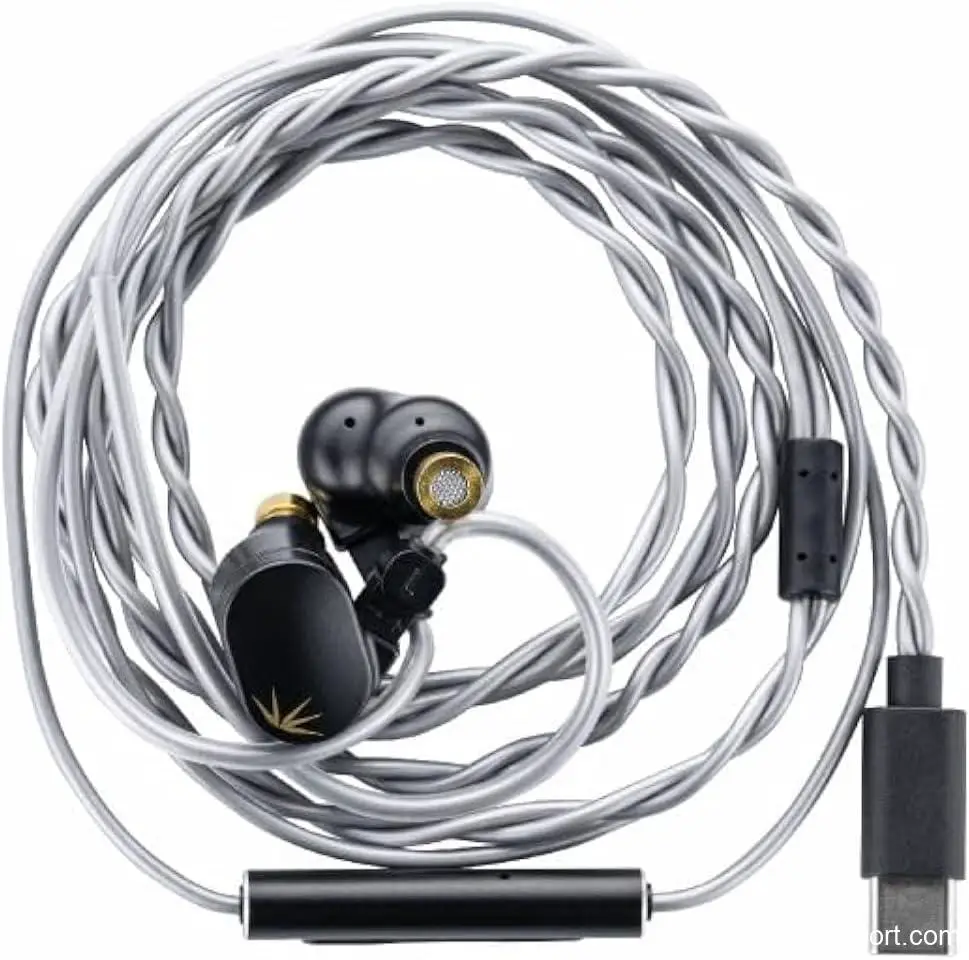
The CHU II DSP is Moondrop’s current entry-point dynamic driver IEM, built around a 10mm driver with an aluminum-magnesium alloy composite dome diaphragm and a zinc-alloy casting cavity. The USB-C plug connects directly to phones and laptops without a separate DAC, and a built-in DSP chip carries three switchable bass presets accessible through the Moondrop Link app. Those three spec choices define the product’s class position: a metal-bodied, plug-and-play IEM aimed at buyers who want wired detail without carrying extra hardware. This review covers what that combination sounds like in the ear, how it fits, and where the build shows its limits.
Spec Snapshot
- Driver: 10mm dynamic
- Diaphragm: Aluminum-magnesium alloy composite dome
- Cavity: Zinc-alloy (ZN alloy), alloy casting construction
- Cable jack: 0.78mm 2-pin, detachable
- Plug: USB-C with inline microphone
- Frequency response: 15Hz to 38kHz (effective 20Hz to 20kHz, IEC60318-4, -3dB)
- THD: ≤0.5% at 1kHz, 94dB
What’s Inside
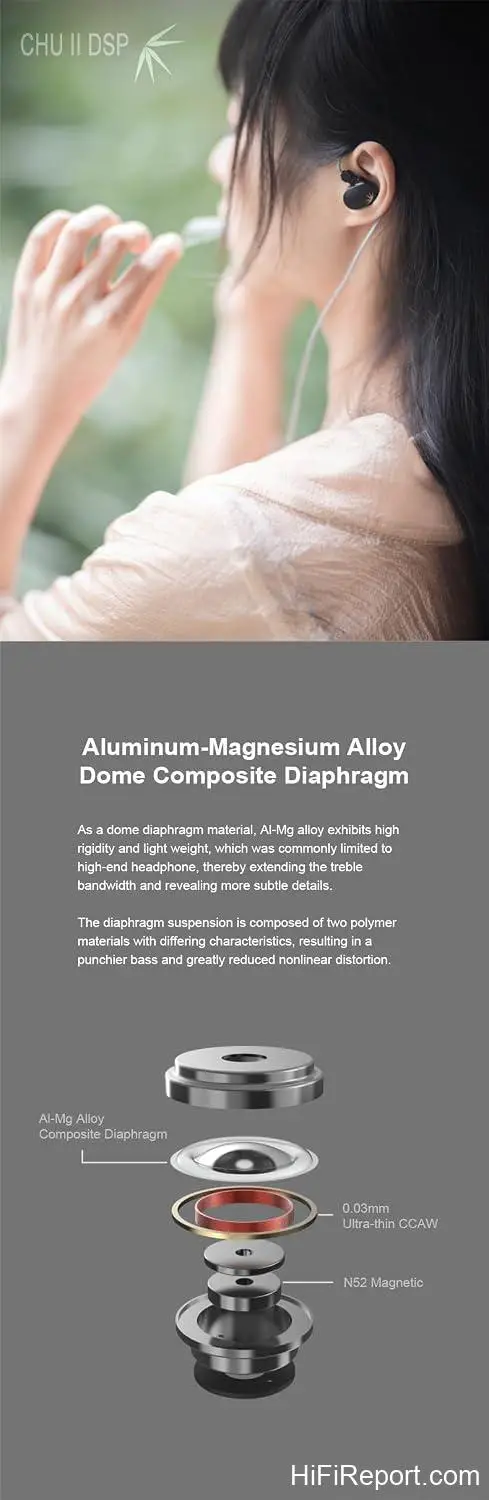
The driver is a single 10mm dynamic unit. The diaphragm is a composite dome made from aluminum-magnesium alloy, a material Moondrop notes is commonly reserved for higher-tier headphone designs. The rigidity-to-weight ratio of that alloy extends the treble bandwidth and surfaces finer upper-register detail compared with a pure polymer dome.
The acoustic cavity is cast from zinc alloy using Moondrop’s alloy casting process, which the company describes as producing both structural rigidity and fine surface texture. A paint layer over the metal shell protects against corrosion. The acoustic nozzle is a separate brass component machined by CNC, which Moondrop credits with higher precision and material density that translate to more stable timbre.
A DSP chip sits inside the housing. It carries three bass preset tunings that the user selects through the Moondrop Link app on a connected phone. The DSP version is distinct from the non-DSP CHU II in two ways: the plug is USB-C rather than a standard cable termination, and the app-based tuning replaces a fixed frequency curve with user-selectable low-end character.
Produced by hifireport.com. Copying, scraping, or republishing is strictly prohibited.
The Tuning
The CHU II DSP sounds warm-neutral with a detailed treble and a bass that is clean but restrained. The bottom line in the ear: this is a tuning built for acoustic music, rock, and vocal-heavy recordings where you want to hear the space around the singer rather than feel the sub-bass physically.
Mids and Treble
Vocal mids sit slightly recessed according to multiple owners, but the recess is mild and does not color the voice. Treble extends into the upper register without the sharpness or sibilance that plagues cheaper IEMs. One owner described hearing “different layers of harmonies and many details in every single song” that were absent on flagship Bluetooth earbuds. The 15Hz to 38kHz response range supports the extended upper band, and the Al-Mg dome does its job: cymbal tails and hi-hat detail carry through without becoming fatiguing.
Bass and the DSP Presets
Out of the box, the bass section is clean and articulate but lacks the punch that EDM and hip-hop listeners tend to want. The three DSP bass presets let you add sub-bass weight without smearing the mids. Owners who use the app report that the presets shift the character of the low end in audible ways rather than applying a flat boost. If your rotation is mostly acoustic, jazz, or vocal performance music, the default or mildest preset will feel right. For heavier material, the strongest preset helps but does not reach the depth of dedicated bass-forward IEMs.
Fit and Ear Tips
The CHU II DSP ships with S, M, and L silicone ear tips. Moondrop also lists the T41 tip at 4.1mm inside diameter and the T55 at 5.5mm for different ear canal widths. The in-canal design means the tips seal inside the canal, providing good passive isolation from ambient noise.
Owners with smaller ear canals report a comfortable, secure fit with the small tip. One noted the buds fit nicely without creating excessive pressure or pain points, a notable improvement over the bulkier frames of Bluetooth earbuds. The wear-around-ear cable design keeps the bud seated, and one owner said they rarely come loose. The trade-off is that the in-canal seal makes the ear feel warm and waxy after extended wear, and lying on the ear with the buds inserted is uncomfortable.
Cable and Build
The stock cable is a braided wire terminating in a USB-C plug with an inline microphone. The 0.78mm 2-pin connection at the earpiece is detachable, making the cable replaceable. Because it is a standard 0.78mm termination, the IEM also works with Bluetooth neckbands, TWS ear-hook transmitters, or any aftermarket 0.78mm cable for different usage scenarios.
The housing is zinc alloy with a painted finish. The brass CNC nozzle adds a small weight at the earpiece that one owner described as a positive, weighted feel. A leather carrying case and a wearing card come in the box. The main cable gripe from owners is that the earpiece-side connector does not flex well enough to stay seated when the cable swings. One reviewer called it a small sacrifice. Moondrop sells a replaceable acoustic nozzle separately for the CHU II.
Listening Impressions
The CHU II DSP is the IEM to reach for when you want to hear a recording the way it was laid down. Listeners who need the low end to hit physically will find the single 10mm driver’s ceiling quickly. Owners consistently land on acoustic performance, rock, vocals, and performance-based music as the sweet spot where the tuning feels organic.
In acoustic and vocal material, the tuning reveals texture. Guitar decay, room ambience, and the subtle separation between backing vocal layers come through clearly. One owner compared the experience to being on set in real life versus the compressed, TV-like quality of Bluetooth earbuds. The slight mid recess keeps vocals forward without smearing them, and the treble detail makes the performance feel present in the room.
For EDM and bass-heavy material, the IEM falls short. One owner who listens primarily to EDM noted the bass is not on the same level as the Ling’s Zero 2 and explicitly steered bass-forward listeners toward that model instead. The DSP presets add weight, but the single 10mm dynamic driver has a physical ceiling that no firmware tweak fully overcomes.
Volume is on the higher side. One owner reported having to turn the source device down frequently, noting the IEM is loud and perhaps too loud for casual listening. In practice, that means the CHU II DSP drives efficiently from a phone without needing a dedicated amplifier.
Next to the Usual Picks
Within Moondrop’s own IEM lineup, the CHU II DSP sits in the single dynamic driver tier. The CHU III is the newer single-DD model, while the Blessing 3 and Meteor move into multi-driver designs with balanced armature and planar elements alongside the dynamic driver. The DSP version differentiates itself from the non-DSP CHU II by adding the USB-C plug and app-based tuning in place of a fixed curve.
The cross-brand comparison that surfaces in owner feedback is the Ling’s Zero 2 for bass depth in EDM. Beyond that, Moondrop’s product pages position the CHU II series as the accessible entry point before the multi-driver models, and the DSP variant is the simplest on-ramp in that family: one driver, one cable, one USB-C connection.
Produced by hifireport.com. Copying, scraping, or republishing is strictly prohibited.
What Owners Say
The praise centers on three themes. First, the sound quality relative to the cost: nearly every positive review uses some version of “incredible for the price” or “punches above its weight.” Second, the USB-C plug-and-play convenience: no adapters, no separate DAC, no extra cable to manage. Third, the physical build: the metal housing, leather case, and overall finish give a sense of quality that extends past the price tier.
The complaints fall into two clusters. The reliability issue is the most serious: multiple owners report an earbud going dead or developing a crackling noise within a few months of use, with one noting a cracked right earbud after six months. Moondrop’s customer support handled replacements, but the recurring nature of the fault is a genuine concern. The second cluster is practical: the USB-C-only plug excludes devices without a USB-C port, the cable does not flex well to hold its position at the earpiece, and the in-canal seal becomes uncomfortable on the longest sessions.
Strengths and Weaknesses
Strengths
- Detailed, organic tuning well suited to acoustic, rock, and vocal music
- USB-C plug-and-play reduces the need for a separate DAC or cable with a standard termination
- Three DSP bass presets give adjustable low-end character without a second cable
- Metal zinc-alloy housing with brass CNC nozzle feels substantially built
- 0.78mm detachable cable supports Bluetooth transmitters and aftermarket options
Weaknesses
- Multiple owners report earbud failure or crackling within months of use
- Bass lacks the depth needed for EDM and hip-hop even on the strongest DSP preset
- USB-C-only plug excludes phones and devices without a USB-C port
- Cable does not flex well enough to stay seated at the earpiece
- Mids run slightly recessed, which some vocal-forward listeners find less engaging
The Verdict
The CHU II DSP serves a specific listener: someone stepping from Bluetooth earbuds or phone-provided earbuds into wired IEM territory, who listens mostly to acoustic, rock, jazz, and vocal-heavy material, and who values the simplicity of a single USB-C cable over the flexibility of a standard aux termination. The DSP presets add a layer of personalization that a fixed-tuning IEM in this tier does not offer, and the metal build feels like a clear step up in hand-feel.
If your rotation is heavily EDM, bass-driven hip-hop, or film soundtracks where sub-bass is the main event, the single 10mm dynamic driver will not satisfy you. The reliability reports on the earbud drivers are a concern that no amount of tuning fixes, and a six-month failure window is shorter than most buyers want from an IEM. For the acoustic-to-rock listener who accepts that trade-off and wants a clean, detailed, plug-in-and-go experience, the CHU II DSP is a strong first IEM.
Produced by hifireport.com. Copying, scraping, or republishing is strictly prohibited.
Key Specs
- Driver: 10mm dynamic
- Diaphragm: Aluminum-magnesium alloy composite dome
- Cavity material: Zinc alloy (ZN alloy), alloy casting
- Cavity finish: Paint layer over metal shell
- Acoustic nozzle: Brass, CNC-machined, separate component
- Cable jack: 0.78mm 2-pin, detachable
- Plug: USB-C with inline microphone
- Frequency response range: 15Hz to 38kHz
- Effective frequency response: 20Hz to 20kHz (IEC60318-4, -3dB)
- THD: ≤0.5% at 1kHz, 94dB
- DSP presets: Three bass tuning options via Moondrop Link app
- Ear tips included: S, M, L silicone
- Available tip models: T41 (4.1mm inside diameter), T55 (5.5mm inside diameter)
- In the box: Earphones, wearing card, certificate, manual, cable, leather case, S/M/L ear tips
FAQ
Does the CHU II DSP work with older phones that only have a standard headphone jack?
No. The DSP model uses a USB-C plug only; there is no aux version of this particular SKU. If your phone lacks a USB-C port, you would need a USB-C to standard-jack adapter, which adds a connection point and defeats the plug-and-play benefit. The non-DSP CHU II uses a standard cable termination instead.
Can I swap the stock cable for a Bluetooth transmitter or aftermarket cable?
Yes. The 0.78mm 2-pin jack is universal across IEMs, so any 0.78mm Bluetooth neckband, TWS ear-hook transmitter, or braided cable will connect. The USB-C plug and DSP chip live in the stock cable, so swapping to a Bluetooth transmitter disables the app-based bass presets.
What ear tip size should I start with, and what do the T41 and T55 options mean?
The box includes S, M, and L silicone tips, and most ears fit M or L out of the box. Moondrop lists the T41 tip at 4.1mm inside diameter for narrower canals and the T55 at 5.5mm for wider ones. Owners with smaller ears report the S tip gives the most comfortable seal without pressure points.
Do the three DSP bass presets make an audible difference?
Yes. Owners who use the Moondrop Link app report that the presets shift the low-end character in clearly audible ways rather than applying a simple equalizer boost. The gap between the mildest and strongest preset is comparable to moving from a neutral tuning to a warm, bass-forward one, and the app also lets you download profiles that other users have created.

- 【Aluminum-Magnesium Alloy Dome Composite Diaphragm】As a dome diaphragm material, Al-Mg alloy exhibits high rigidity and light weight, which was commonly limited to high-end headphone, thereby extending the treble bandwidth and revealing more subtle details.
- 【Alloy Casting Cavity】The acoustic cavity of the Chu 2 DSP is manufactured using MOONDROP's mature alloy casting technology, ensuring both rigidity and fine texture. A durable paint layer protects the metal shell from corrosion.
- 【Acoustic Design +DSP Accurate Tuning】Chu 2 DSP is built-in three bass preset tunings, it can be switched through MOONDROP LINK APP, users can freely select the bass performance suits their preferences.