
Constellation Inspiration Preamplifier and Power Amplifier Review
I recently revisited High-End retailer HiFiReport, this time specifically for Constellation. It’s always a pleasure to audition top-tier American amplifiers. HiFiReport has reviewed Constellation equipment before, each time leaving a deep impression. It’s a brand that truly embodies technology, quality, and exceptional sound.
On this occasion, I listened to the Inspiration series, featuring the Preamp 1.0 and Stereo 1.0 power amplifier – Constellation’s entry-level series and the most accessible in their product line.
Flagship Launch, Instant Acclaim
Constellation Audio, though a relatively young brand, made a bold entry into the high-end audio world. Their debut was the Reference series, a flagship line aimed squarely at perfection. This audacious approach, launching directly at the pinnacle, proved to be a resounding success. It demonstrated that a strong design team could indeed achieve greatness, though the price, understandably, reflected this exceptional performance, placing it beyond the reach of many audiophiles.
Subsequently, the brand gradually expanded downwards, introducing more accessible series, each inheriting technology from the flagship while offering increasingly approachable price points.
Inspiration Series: Accessible Excellence
The Inspiration series, the focus of this review, aims to deliver near-flagship performance at a more attainable price. The design team meticulously refined this series to closely mirror the high-end models before finalizing the design, making it not only the most affordable Constellation series, but perhaps also the most value-driven.
The Inspiration line consists of three core products: the Preamp 1.0 preamplifier, the Stereo 1.0 two-channel power amplifier, and the Mono 1.0 monoblock power amplifier. At this year’s CES, they unveiled an integrated amplifier, further rounding out the product line. The Inspiration series inherits many design elements from Constellation’s higher-end offerings, including the external chassis, vibration isolation systems, core circuit technologies, and dual-mono circuit layouts.
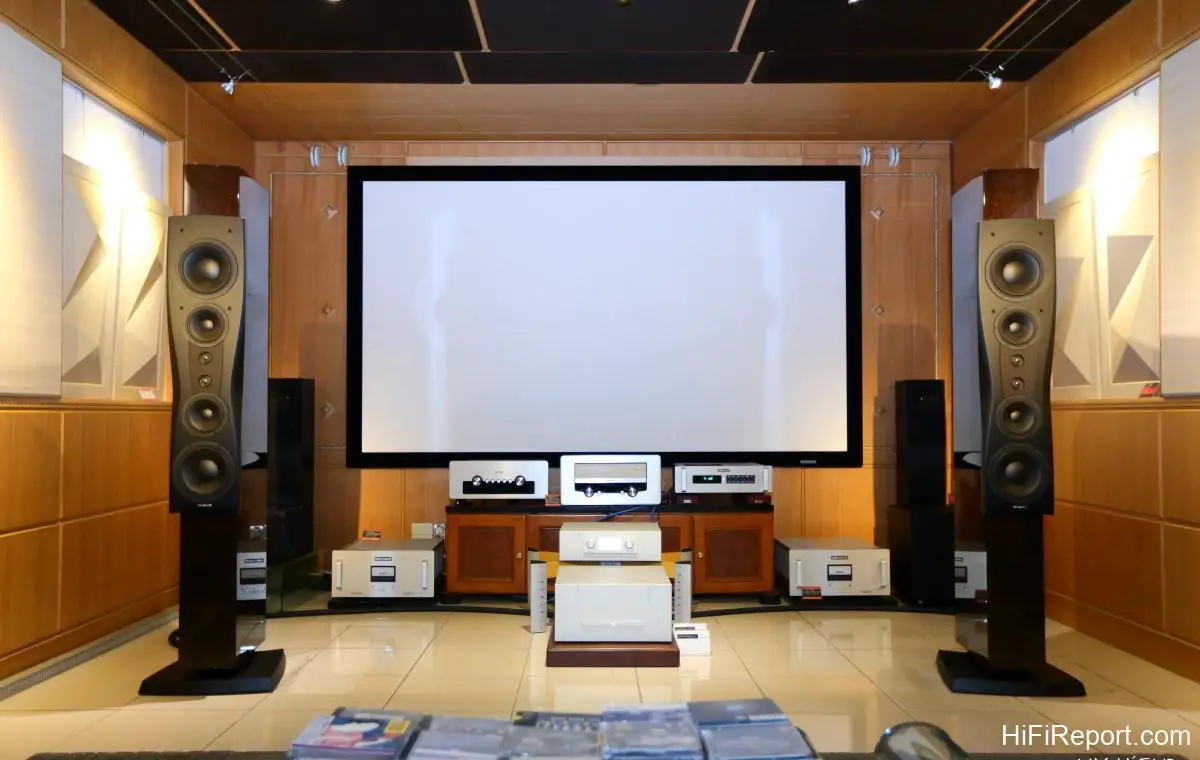
For this audition, I focused on the Preamp 1.0 and Stereo 1.0. Visually, they bear a strong resemblance to previous Constellation products. The enclosures are crafted from CNC-machined metal, with a minimalist front panel design consistent with the higher-end series. The system for this listening session included an Audio Research CD8 as the source and Dynaudio Confidence C4 Platinum loudspeakers.
Flagship Technology Inheritance
The Preamp 1.0’s cornerstone technology is its Line Stage Gain Module. The balanced amplification circuit uses servos to maintain the original balance of the positive and negative halves of the music signal. The design and materials of the Preamp 1.0’s gain module circuit are virtually identical to those found in Constellation’s higher-end preamplifiers. It also incorporates the Constellation Direct interface.
When connected to a Constellation power amplifier using XLR Direct, it bypasses the power amplifier’s input stage, directly feeding the voltage amplification stage for a more direct and pure sound.
Constellation’s unique vibration isolation technology is also implemented in the Preamp 1.0. The power transformer within the chassis is directly mounted to the baseplate, but the audio circuits are not. Instead, they are suspended on flexible materials, connected to other components only by wires. This effectively isolates the audio circuitry from floor vibrations and minor impacts.
The power supply employs three transformers: two R-core transformers dedicated to the left and right channels, and a third EI transformer for the control circuitry. The control circuitry is also completely isolated from the audio circuits. A key difference from higher-end Constellation preamplifiers is the use of a single chassis for the Preamp 1.0, housing both the audio and power supply sections, whereas higher-end models feature separate power supplies.
At first glance, the Preamp 1.0 might appear indistinguishable from higher-end Constellation preamplifiers, due to the shared chassis material, front panel design, and finish. However, closer inspection reveals that the Preamp 1.0’s chassis lines are straighter and simpler, while higher-end models exhibit more curves and complex contours.
Constellation’s build quality is consistently exceptional, with a remarkably refined tactile feel. While the color scheme is consistent across the range, the high quality of the materials and finish prevents any sense of monotony. The front panel features balance and volume knobs, and discreetly concealed beneath the panel are five operation buttons.
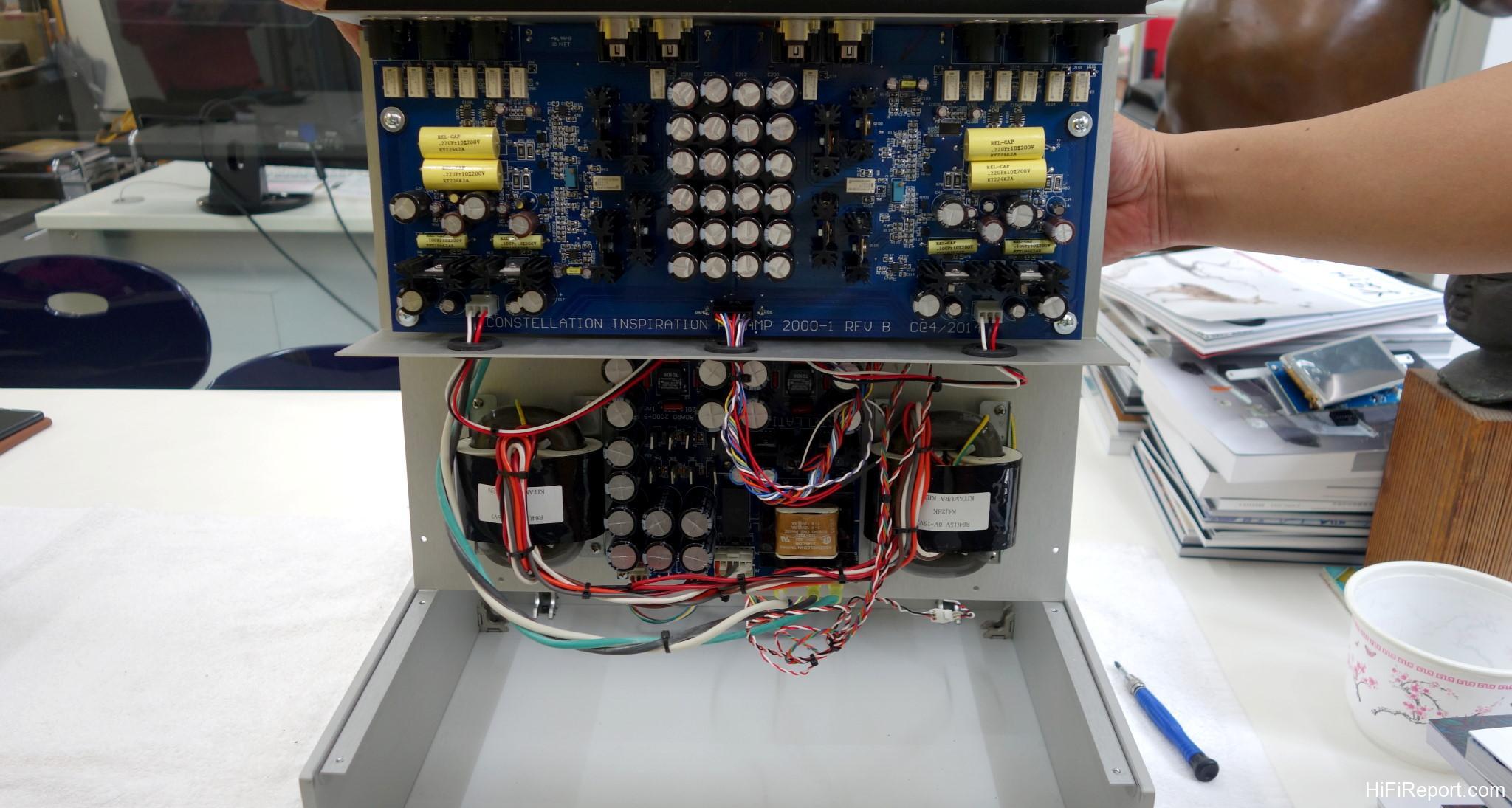
The provided internal photograph clearly shows the power supply section occupying the front half of the chassis, physically separated from the audio circuits in the rear half. The circuit design is fully balanced, ensuring excellent channel separation and soundstage reproduction.
The Stereo 1.0 power amplifier delivers 200 watts per channel into 8 ohms, with a distortion rate of less than 0.2%. It also inherits key technologies from Constellation’s higher-end power amplifiers, most notably the Balanced Bridged circuit. This design connects multiple single-ended amplifiers in a fully balanced configuration, utilizing only N-type output transistors. This ensures perfect balance between the positive and negative waveforms of the music signal.
Such a design necessitates a perfectly balanced waveform output from the preamplifier, underscoring the importance of using the Direct mode when connecting Constellation pre and power amplifiers to fully realize this technology.
The circuit principles of the Stereo 1.0 and higher-end Constellation power amplifiers are the same, and they share many components. The primary differences lie in the integration of the input and gain stages in the Stereo 1.0, unlike the discrete design in higher-end models, and the lower output power compared to its more expensive siblings. It employs a custom-designed toroidal transformer and 24 capacitors totaling 240,000 μF to ensure clean power and ample current delivery.
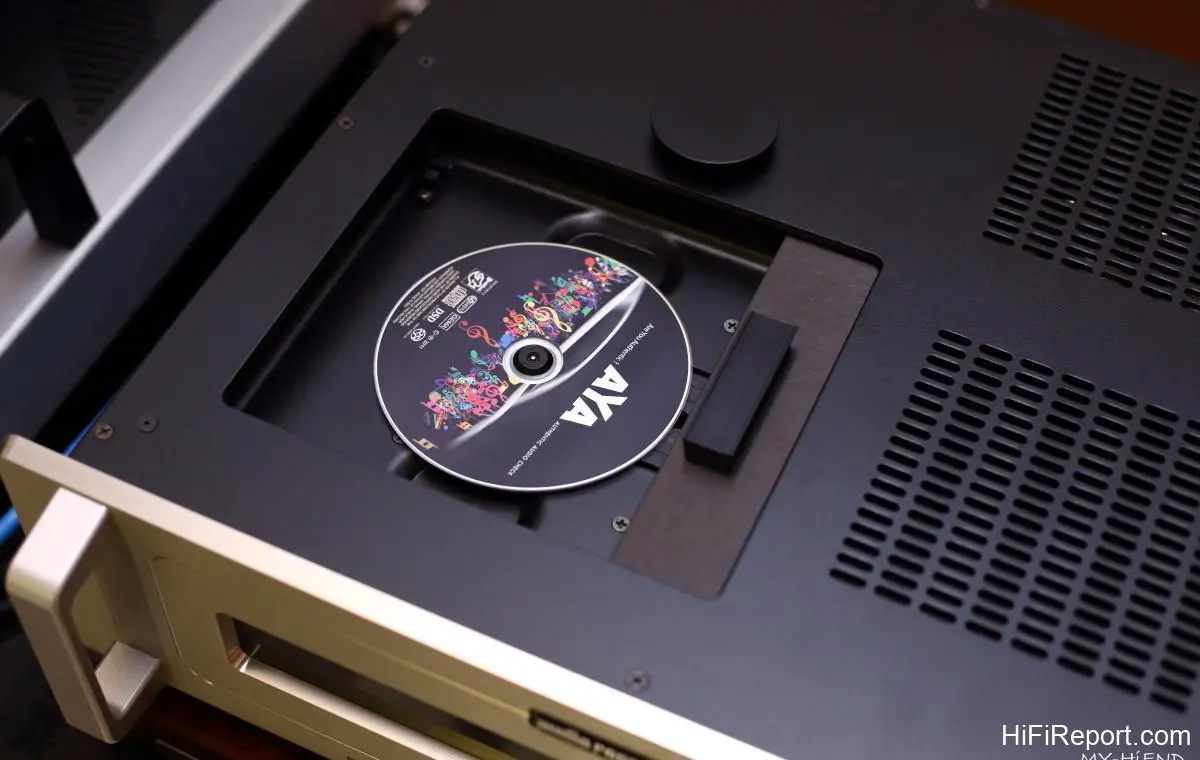
The source for this listening session was the Audio Research CD8 CD player. A standout feature of the CD8 is its top-loading Philips PRO2R transport mechanism.
The Philips PRO2R transport is located on the top of the unit. Sliding open the cover reveals an elegant magnetic CD clamp.
Dynaudio Confidence Platinum Synergy
The loudspeakers used were Dynaudio Confidence C4 Platinum. The Confidence C4 Platinum is the flagship of the Confidence series, featuring a slender and tall cabinet design. Despite its height of 1732 mm, its width and depth are a modest 250 x 445 mm, making it relatively space-saving. This height provides sufficient cabinet volume and accommodates six drivers. High, mid, and low-frequency drivers are arranged symmetrically in pairs.
It utilizes Dynaudio’s proprietary DDC (Dynaudio Directivity Control) sound technology, designed to minimize reflections from the ceiling and floor, which can cause sound delays and distortions, aiming to deliver more accurate and precise sound to the listener.
Constellation’s sonic signature is familiar, having experienced it in various settings, including previous sessions at HiFiReport. Regardless of the partnered loudspeakers, the fundamental character of Constellation’s sound remains consistent: pure and refined.
Agile Transient Response
When visiting a new listening room, I always enjoy starting with the host’s preferred test tracks. The Siltech Demo CD is a prized reference disc at HiFiReport, and I’ve listened to it here several times before. It’s an excellent test album. Playing the first track, , the playful cartoon theme, immediately brought forth the familiar rich Constellation sound. I’ve always perceived it as having a sonic texture akin to thick silk – dense, smooth, and comfortable.
The saxophone in the track was effortlessly expressive, possessing fullness without sounding bloated or muddy, elegantly permeating the space. The second track, , highlighted the agility of the bass. My typical listening volume isn’t particularly loud, and the bass quality wasn’t about quantity or volume, but rather solidity.
The bass notes appeared quickly, extended appropriately into the space, and then promptly dissipated, the entire process seamless and without any lingering muddiness.
Sweet Midrange, Emotionally Engaging
Moving to a familiar album, Priscilla Chan’s <Girl’s Prayer>, her sweet vocals were truly captivating. The subtle details of her singing, such as lip and breath sounds, were remarkably clear. In the past, such pronounced lip sounds could sometimes feel intrusive, perhaps due to a lack of sonic smoothness or refinement making them sound unpleasant. However, with Constellation, these details were rendered naturally and without any harshness.
Revealing Subtle Nuances
On the emotionally rich album , Constellation’s sonic foundation added significant value to the music. The details of each instrument were distinct and clearly imaged. The extension of harmonics enhanced the ethereal quality of the Chinese musical pieces. Particularly impressive was the reproduction of subtle nuances against a remarkably black background, appearing natural and distinct. The excellent separation contributed to a quieter and more expansive soundstage.
Vocals were clear and vibrant, possessing substance even in delicate passages. The singer, despite a soft vocal style, conveyed ample breath support and power.
Dynamic Range, Exceptional Control
Switching to the audiophile favorite, Hugh Masekela’s , testing transient response and control began. On track 12, , the trumpet performance was astonishing – incredibly penetrating, yet not aggressively sharp. It possessed a degree of fullness while maintaining its incisiveness. The opening passage displayed impressive dynamic progression and speed, all under tight control.
The contrast within the track was particularly well-rendered, especially in the subtle dynamic shifts of the background accompaniment, effectively building musical tension.
Price and Performance: Truly “Inspirational”
Constellation products, from the exterior to the interior, consistently convey an impression of absolute quality. The metal chassis is free of visible screws, the minimalist front panel devoid of unnecessary embellishments. Internally, they house proprietary technologies, generously applied across the product range, from flagship to entry-level, with the Inspiration series designed to be more compact and cost-effective, making Constellation ownership more attainable.
Ultimately, Inspiration achieves its goal of maintaining Constellation’s signature sonic excellence – quality, detail, and control. For those who have long admired Constellation but were deterred by the price, the Inspiration series offers a solution, bringing the dream within reach.
Constellation Inspiration Preamp 1.0 Specifications
* Inputs: 3 XLR stereo, 3 RCA stereo, USB (for control)
* Outputs: 2 XLR stereo, 2 RCA stereo, 12-volt trigger
* THD+N: <0.001%, 20 Hz – 20 kHz @ 2V out, <0.1%, 20 Hz – 20 kHz @ 10V out * Frequency response: 10 Hz to 100 kHz, ±0.5 dB * Signal-to-noise ratio: >-105 dB, A-weighted
* Input impedance: (balanced) 20 KΩ
* Input impedance: (unbalanced) 10 KΩ
* Output impedance: < 50Ω
* Volume control resolution 0.5dB from 0dB to -90 dBFS
* Weight: 25 lbs / 11.3 kg
* Dimensions (W x H x D): 17 x 5.25 x 15 in (whd), 43.2 x 13.3 x 38.1 cm (whd)
Constellation Inspiration Stereo 1.0 Specifications
* Inputs: 1 Constellation Direct XLR, 1 standard balanced XLR, 1 unbalanced RCA
* Outputs: metal binding posts
* Power output per channel, 8Ω (1 kHz @ 1% THD+N) 200 watts
* Power output per channel, 4Ω (1 kHz @ 1% THD+N) 400 watts
* Frequency response: 10 Hz to 80 kHz, +0/-0.5 dB
* Gain 14dB Constellation Direct, 26 dB Balanced & RCA
* THD+N (1 kHz @ up to 90% of rated power): <0.05% * Output impedance: 0.1Ω * Damping factor: (8Ω load) 80 * Input impedance: 20KΩ Constellation Direct, 10KΩ RCA unbalanced, 20KΩ XLR balanced * Signal-to-noise ratio >-95 dB, A-weighted
* Output noise <70 �V, 500 kHz BW, -116 dB @ 250 watts
* Weight: 80 lbs / 36.3 kg