
Dali Epikore 7 Floorstanding Speaker Review
At the Munich High End show in 2022, Dali unveiled a super flagship: the Dali Kore.
These flagship speakers embodied forty years of Dali’s speaker know-how, integrating their latest and most cutting-edge technology.
When developing these speakers, management gave the “unlimited R&D” directive, a green light allowing engineers to create a completely new, all-encompassing flagship, leading to the birth of the Kore.
A year later, back at the Dali booth in Munich, I saw a pair of speakers that looked very much like the Kore, but were slightly smaller.
That was the Epikore 11, the sub-flagship beneath the Dali Kore.
Epikore, Epicon, Epikore, Epicon, Epikore… This, it turns out, is Dali’s strategy – after creating a super flagship, trickle down the technology to elevate the performance of the high-end series.
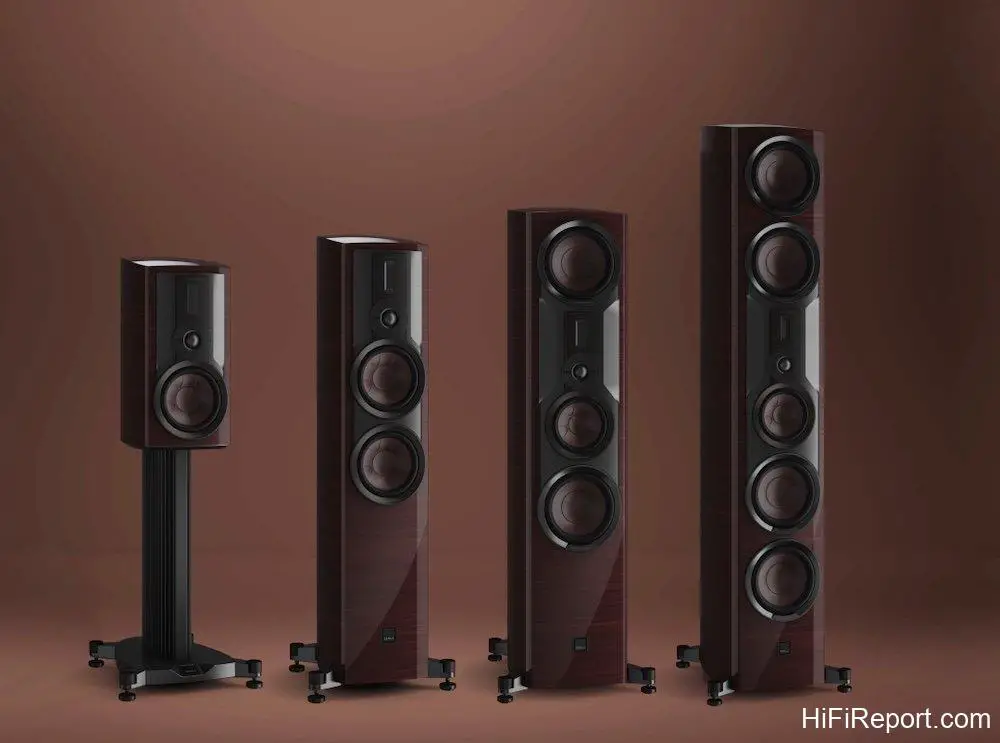
After roughly another year of planning, the Epikore product line is becoming complete, now featuring three floorstanding models—Epikore 11, Epikore 9, Epikore 7—and one bookshelf model, the Epikore 3.
Will the skipped numbers in between be filled in? When? Are there plans for center or surround speakers? We’ll wait and see, and remain optimistic.
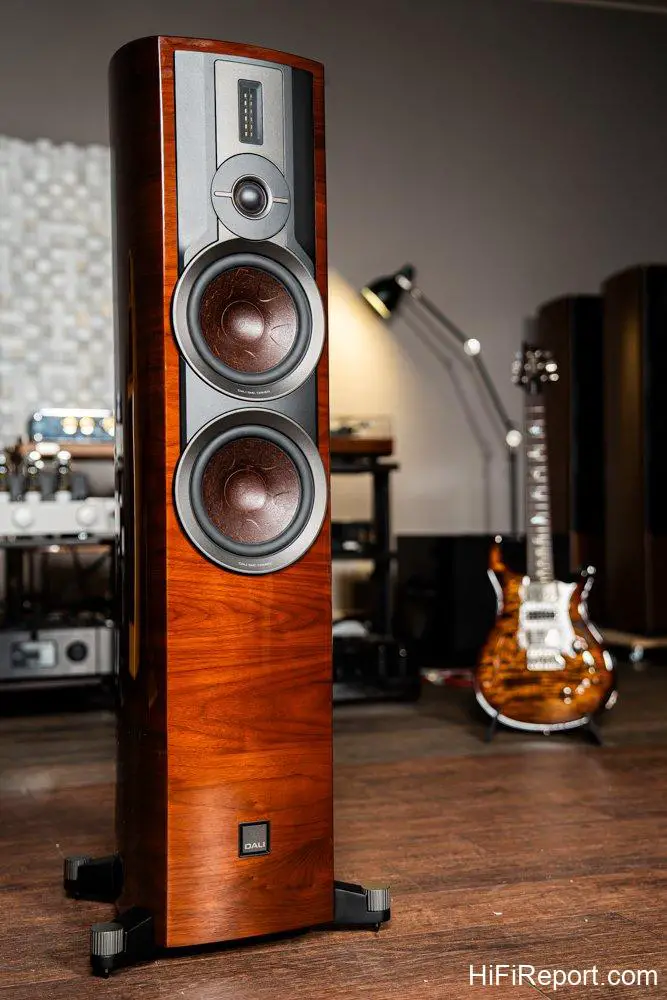
The Epikore 7 reviewed here is the smallest floorstanding speaker in the Epikore series, featuring a 4-driver, 3.5-way, bass-reflex design.
But it’s far more than can be conveyed in a simple sentence.
The Epikore series speakers inherit multiple technologies used in the Dali Kore. Let’s delve into these aspects in detail.
EVO-K Hybrid Tweeter from Kore
First is the tweeter design.
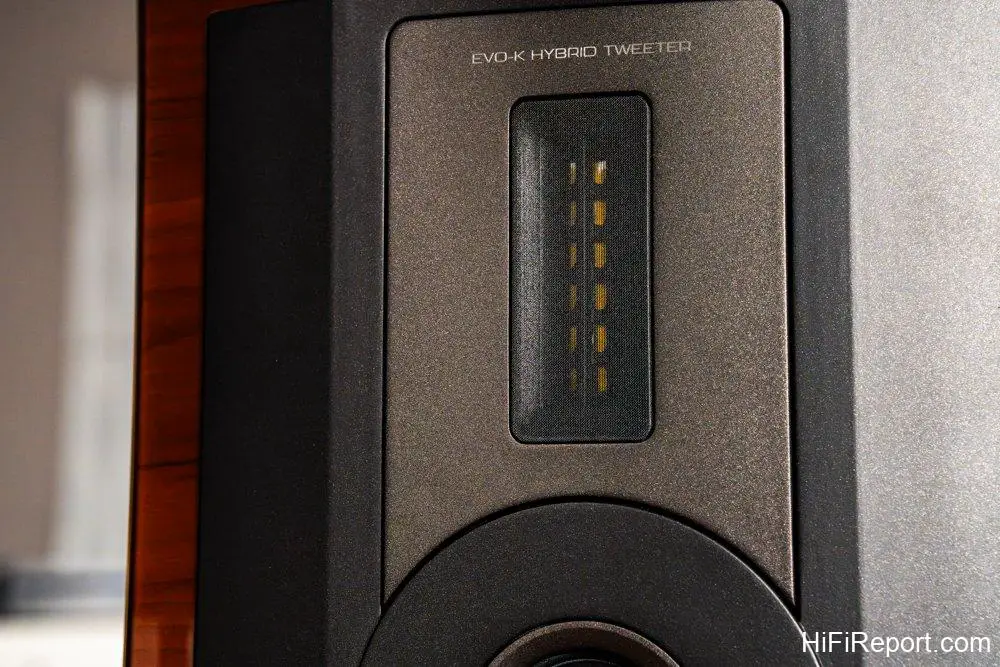
One of Dali’s signature features is the Hybrid Tweeter, which combines a soft dome tweeter with a ribbon tweeter to form a dual-tweeter module.
Dali’s first use of a hybrid tweeter dates back to the Dali 700 speaker launched in 1990.
For over thirty years, they have continuously refined this design, widely adopting it in their mid-to-high-end speakers, making it almost a defining characteristic of Dali.
The Epikore features the same level of EVO-K hybrid tweeter as the Kore, including a 35mm soft dome tweeter and a neodymium magnet-driven ribbon tweeter.
This EVO-K evolved from the tweeter used in the previous flagship Epicon series, with enhanced materials, structure, and performance for lower treble distortion.
Being a hybrid ribbon/dynamic design, the high-frequency response extends up to 34kHz.
The ribbon tweeter handles the frequency range above 12.5kHz, while the soft dome tweeter covers the range below 12.5kHz and above 2.5kHz.
Splitting the high-frequency workload allows both drivers to operate within their most linear, lowest distortion range, far from their resonant points.
Dual 7-inch Mid-Woofer Material and Technology Also from Kore R&D
Below the EVO-K hybrid tweeter are two 7-inch mid-woofer drivers.
Dali used both 8-inch and 6.5-inch mid-woofers on the Epikore 11 and Epikore 9, but the Epikore 7 uses a single size 7-inch driver, the same as the Epikore 3 bookshelf speaker. These are newly developed and manufactured in-house at Dali’s Danish factory.
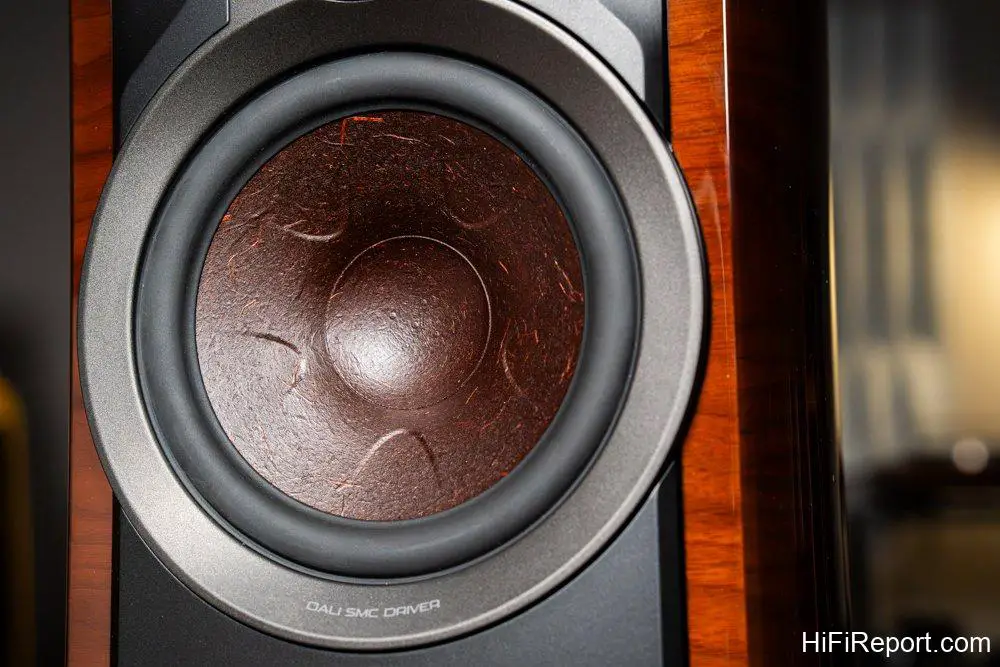
The diaphragm of the mid-woofer incorporates technology and formula trickled down from the Kore, known as Clarity Cone technology.
The diaphragm material is still Dali’s signature wood fiber cone. The dark red diaphragm surface has a special coating, combined with a precisely calculated 3D texture, further enhancing rigidity and damping beyond the material itself.
Furthermore, a lightweight design makes this driver more agile, resulting in more complete information reproduction.
The movement of a dynamic driver relies on a magnetic system composed of a magnet and a voice coil. Changes in current alter the magnetic field, causing pushing and pulling actions that result in the piston-like movement of the driver.
The voice coil cannot simply exist as a winding; it needs a support structure, which is the voice coil former.
The voice coil former is attached to the diaphragm, causing the diaphragm to produce sound when the voice coil interacts magnetically with the magnet.
The Epikore 7’s voice coil diameter is 38mm, mirroring the Kore’s design, and uses a titanium voice coil former.
A voice coil former needs to be hard and rigid to avoid energy loss during operation. Second, it must avoid magnetic induction to prevent eddy currents when the voice coil moves.
Titanium voice coil formers perfectly meet both requirements, being superior to common aluminum alloy and fiberglass voice coil formers.
The magnetic system of the Epikore 7’s mid-woofer incorporates one of Dali’s signature technologies: Soft Magnetic Compound (SMC generation 2).
Typically, the pole pieces of a driver’s magnet are made of iron, but iron inevitably produces eddy currents, reducing conductivity. SMC is a granular substance used to replace iron pole pieces, which can be molded into shape.
Dali has long adopted SMC technology for driver production. In the Kore’s mid-woofer driver, they introduced the second generation, SMC Gen-2, for the first time.
Compared to iron, SMC’s conductivity is 1/10,000 that of iron, and the second generation SMC Gen-2 is 2.5 times lower than the first generation, equivalent to 1/25,000 of iron, making it significantly less prone to generating eddy currents.
What’s wrong with eddy currents? Eddy currents form a secondary magnetic field in the pole piece or T-yoke area, interfering with the voice coil’s movement – this is a form of distortion.
SMC technology aims to resolve this distortion problem.
Crossover Featuring Self-Manufactured Inductors with SMC Gen-2
The EVO-K hybrid tweeter is a trickle-down technology from the Kore, the diaphragm and SMC Gen-2 technology used in the mid-woofers are also from the Kore’s R&D, and the crossover design also carries the Kore’s technical genes.
Dali states in their white paper that the crossover is not merely for assigning frequency ranges to each driver; it is also related to the speaker’s frequency response, reaction time, time alignment, dispersion, detail, timbre, and balance. Therefore, crossover design is far from simple; a crucial aspect is the selection of components.
Dali’s highest principle for selecting components for the Epikore 7 is sound quality; other factors like component price or size are secondary. Sound is paramount.
Many manufacturers boast about using expensive air-core inductors from specific brands, but Dali takes a different approach.
They manufacture their own inductors, using SMC Gen-2 instead of common iron powder core windings. The result is lower impedance than typical air-core inductors, a shorter signal path, less susceptibility to crosstalk, and reduced current distortion compared to iron-core inductors.
As for capacitors, the Epikore 7 uses low-loss capacitors from Mundorf.
Exquisite and Premium Speaker Terminals with Superb Feel
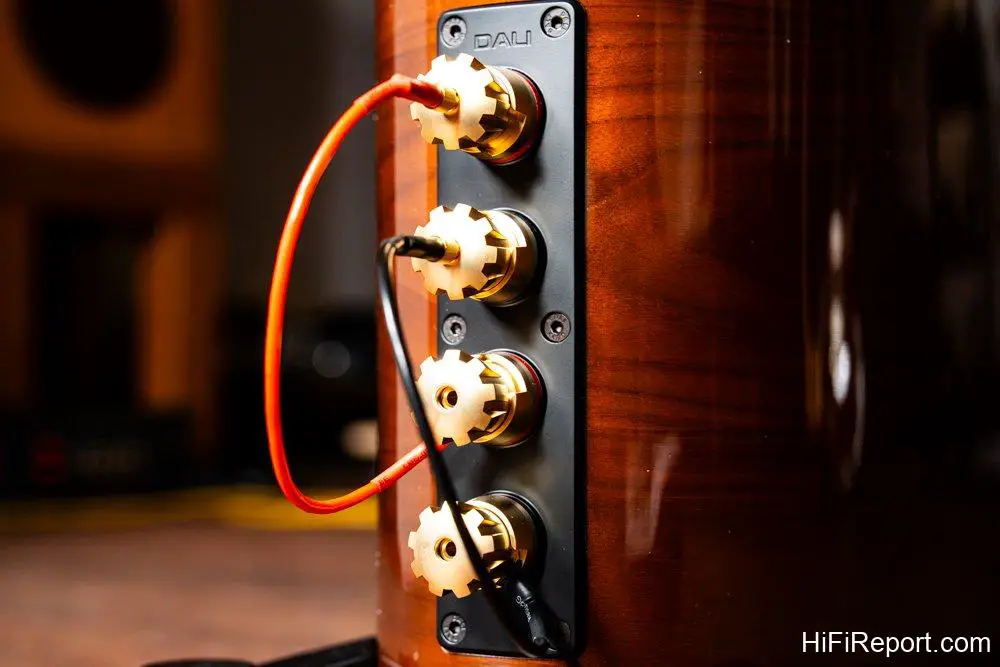
High-quality oxygen-free copper stranded wire is used for the internal wiring, and the terminals are newly developed large speaker terminals.
I must emphasize here, these terminals are truly a delightful surprise.
I have always been impressed by the custom terminals supplied with Dali speakers; they have large casings, are easy to grip, and allow for good leverage.
Their speaker terminals are, in my opinion, model-student quality.
However, the terminals seen on the Epikore 7 are machined from solid brass and gold-plated, with an exquisite texture.
The factory does not supply common brass jumpers but uses equally high-quality jump wires.
One end of the jump wire is a banana plug, the other is a spade connector, allowing it to match the user’s preferred speaker cable termination.
Meticulous Cabinet Workmanship and Higher Manufacturing Difficulty
The cabinet’s manufacturing quality is, of course, outstanding.
Dali’s speaker cabinet manufacturing has always been excellent, but it is clear that the Epikore and Kore represent a different level of craftsmanship.
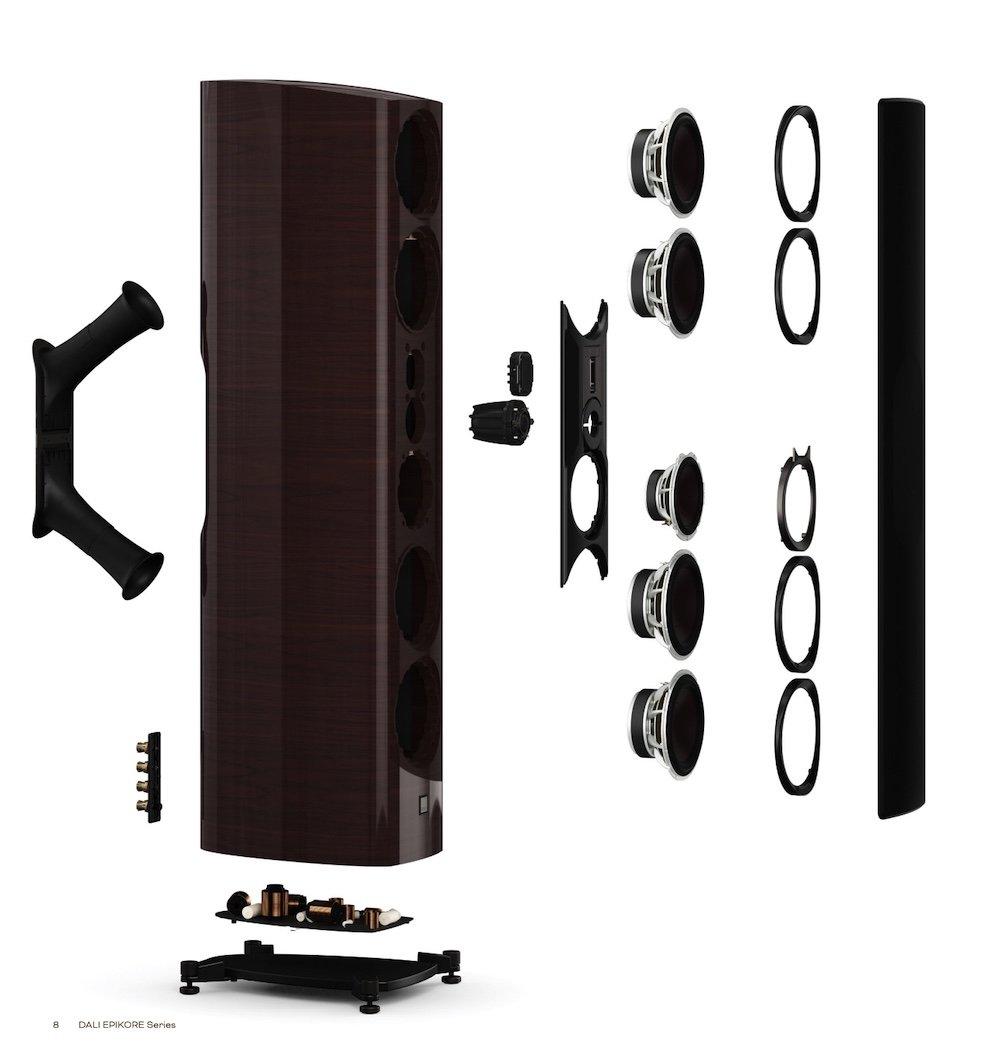
The curved cabinets, made from processed MDF, lack parallel surfaces, which not only reduces internal standing wave resonances but also enhances cabinet rigidity.
The front baffle of the Epikore speakers is specially thickened, and the EVO-K hybrid tweeter has a dedicated cast aluminum baffle set into the front panel.
The cabinet interior is reinforced with complex structural bracing, while the exterior features exquisite real wood veneer and piano lacquer finish.
Piano lacquer finish is something many can do, but the quality of the piano finish on the Dali Epikore is genuinely superb, with a flat and even surface.
The quality of the piano finish is evident in how undistorted reflections appear on its surface.
The bass reflex ports are located on the rear of the speaker, featuring two angled channels.
The factory calls this reflex port design “Continuous Flare,” meaning it can guide airflow quickly and continuously, not only aiding bass extension and quantity but also maintaining cleanliness and resolution.
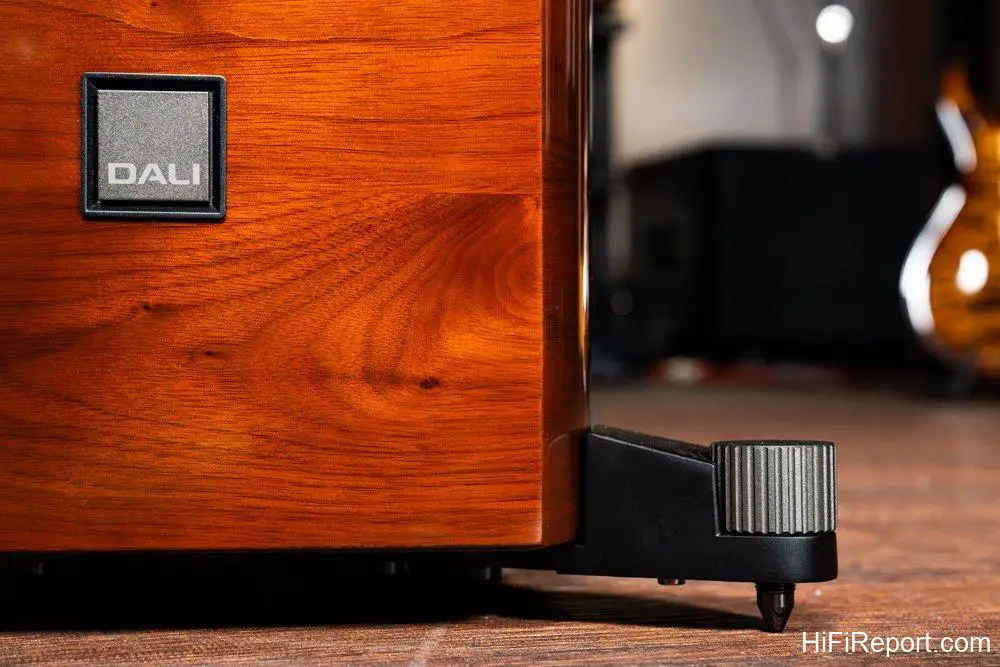
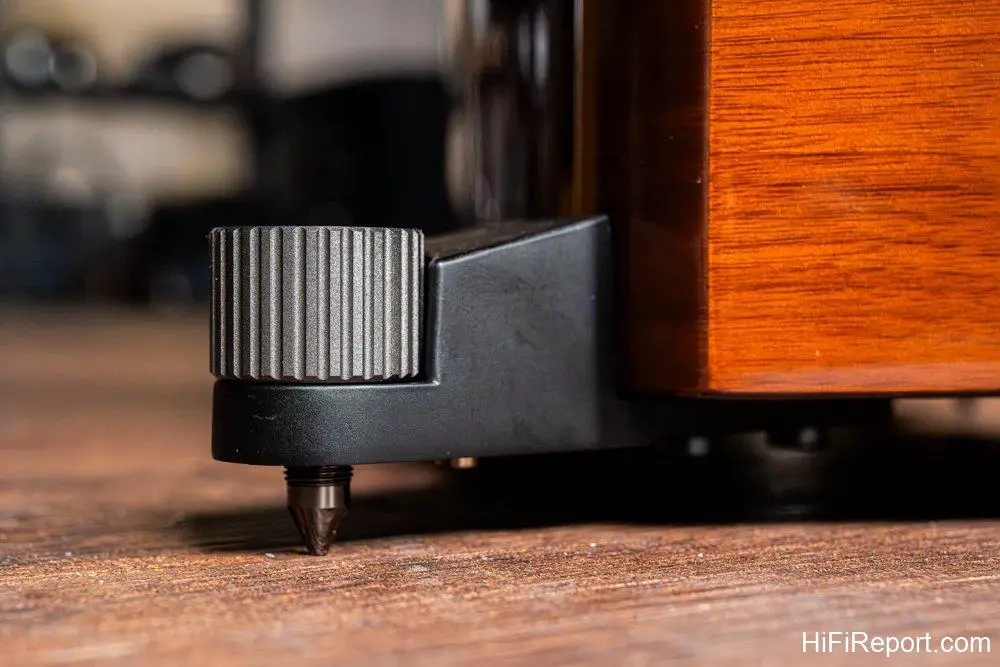
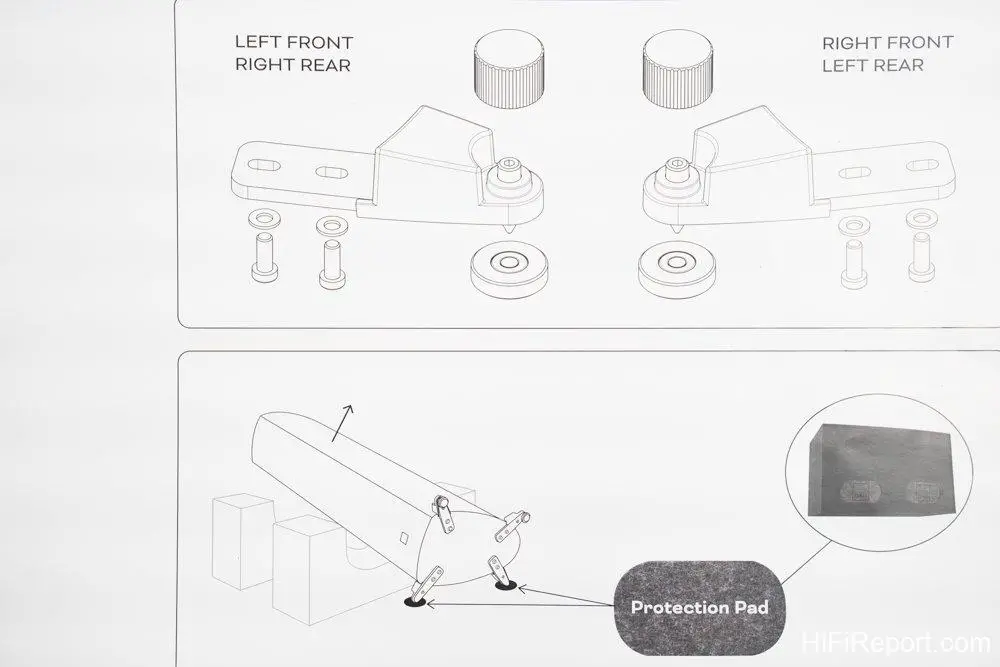
Outrigger feet extend from the bottom of the speaker, paired with adjustable height spikes, providing both stability for the floorstander and excellent isolation.
Manufacturing Philosophy: Individual Assembly and Testing
Besides the design and technology aspects mentioned above, one point is worth highlighting: Dali has a special manufacturing philosophy where each pair of speakers, from assembly to testing, is completed by the same skilled technician. The factory calls this “Individually Crafted.”
Furthermore, they require every speaker to undergo numerous tests, including impedance, frequency response, distortion, sensitivity, phase, etc., and all test values must match the prototype data for that model to pass.
This ensures that every single Dali speaker of a particular model has the same high quality.
What was discussed earlier only covered the design and technology of the Epikore 7. Adding this point provides even greater peace of mind for the buyer.
Sound Performance: Comprehensive, Delicate, and Grand
The listening session took place in the company’s listening room.
As soon as the Dali Epikore 7 started playing, it impressed me and several colleagues. “The sound is great!” “It’s very balanced, the treble is smooth, and the extension is beautiful.” “The bass is quite deep, this bass sounds good.” Comments and discussions flowed among us.
Actually, a pair of Dali Rubikore 6 floorstanding speakers had been here not long before. Editor-in-Chief Kuo’s review described them as “smooth and easy to listen to.”
The Epikore 7 also possesses this smooth and graceful foundation, but it is far more comprehensive than the Rubikore 6.
The Epikore 7 has better high-frequency sheen, better transparency in the musical image, and superior mid-range resolution and bass solidity compared to the Rubikore 6.
As the smallest floorstanding speaker in the Dali Epikore series, the Epikore 7 isn’t large, yet its sound performance possesses a grandeur that exceeds its physical size.
Whether playing orchestral music with its magnificent scale or rock music with its impactful punch, it delivers both scale and power with considerable skill.
When playing smaller ensemble music like chamber music or jazz trios, the texture of the instruments it presents is truly outstanding—vivid and refined, with natural musical sheen, neither excessive to be fatiguing nor insufficient to make the music sound dull.
Whether listening to violin, piano, or jazz drums’ cymbals, or saxophone, it can accurately and delicately capture their timbre and tone.
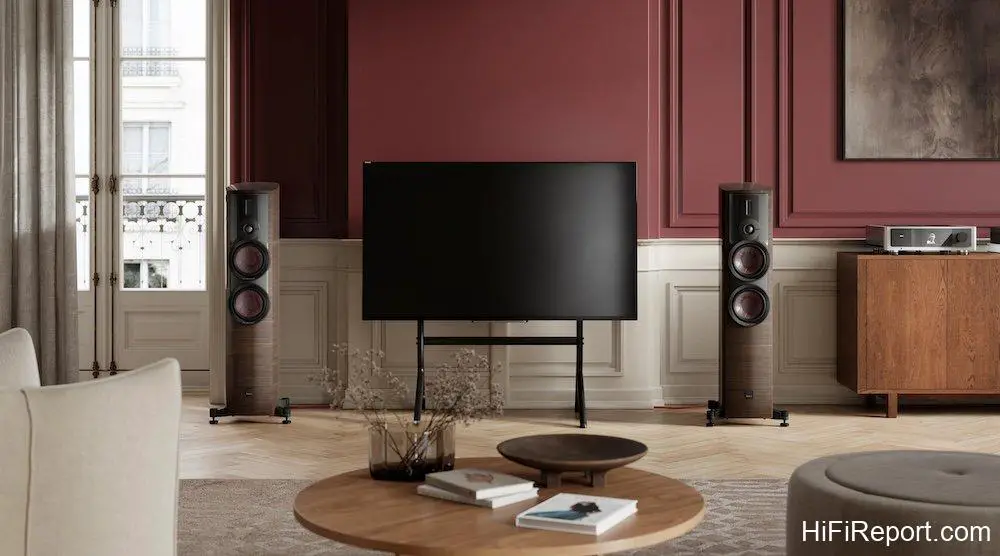
The HiFiReport listening room is a large space, over twenty ping (approx. 66 square meters), and the Dali Epikore 7 performs comfortably within it, not feeling constrained.
Dali always includes speaker placement recommendations in their manual, including spacing width and distance from walls.
For the Epikore series speakers, the factory recommends a speaker spacing of 3-5 meters, 35cm to 120cm from the rear wall. Furthermore, because the Epikore speakers have excellent horizontal dispersion, Dali recommends users do not adjust the toe-in angle; simply face the speakers straight forward and sit at the apex of an equilateral triangle.
In practical use, this proved to be true. Firstly, the speakers could be placed quite far apart. Secondly, there was indeed no need for additional toe-in to achieve clear imaging.
However, the instructions in the factory manual are ultimately just recommendations. In practice, how to place the speakers also needs to consider the listening environment and the user’s sound preferences. The factory’s suggestions are general principles; maintaining flexibility based on the specific location allows for maximum listening enjoyment.
Two amplifier setups were used for pairing: one was the EAR Yoshino 868 preamplifier with the 509 MK2 power amplifier, and the other was the EAM Lab Classic 202i integrated amplifier. The former is a 100W tube pre/power combination, the latter a 200W solid-state integrated. Both drove the Epikore 7 effortlessly, though with different flavors.
The EAR tube pre/power delivered a slightly softer sound, with a warmer sheen. Classical and jazz music sounded refined and smooth, very enjoyable.
The EAM Lab had excellent solidity and more noticeable impact and dynamic force. The sound layers were also clearer and more distinct. Playing pop or rock music with it was more exciting.
Editor-in-Chief Kuo once asked the factory if Dali speakers sound better with solid-state amplifiers. The factory’s answer was that Dali speakers have fast reaction speed, so it’s not a matter of whether tube or solid-state is better, but rather whether the amplifier can allow the speakers to exhibit their speed and reproduce high information content.
Using Swan Lake to Illustrate How It Balances Seemingly Extreme Delicacy and Grandeur
With a full soundstage, solid texture, expansive imaging, and effortless, natural extension at both ends, the Epikore 7, when playing Tchaikovsky’s Swan Lake Suite, is capable of presenting both a grand scene and intense emotions, as well as providing elegant posture and refined texture.
Listening to the classic version conducted by Rostropovich with the Berlin Philharmonic, the first track begins with pizzicato strings—the liveliness of that pizzicato is truly superb.
Then the three-beat waltz begins; after the elegant and light steps, a section of orchestral tutti with added percussion follows.
Listening to this passage, which moves from soft to loud, the dynamic range of the music is wide, yet it unfolds effortlessly. That sense of composure is a quality typically found only in larger speakers, but the Epikore 7, though not that large, displays the same unhurried grace.
The striking bass drum has full weightiness. After this, the music recedes, and the triangle gently rings—that transparent soundscape is truly beautiful! In the Dance of the Little Swans section, woodwinds and strings intertwine, painting a playful and humorous scene.
Listening to the woodwind playing here, the instrumental textures presented by the Epikore 7 are not only clear but also natural, even real. It immediately tells you: this is the bassoon, and then the clarinet joins in… as if witnessing the performance firsthand.
Accurate timbre and realistic texture—these are true skills.
The subsequent harp solo section, the plucking strings resonate like rippling water, followed by the violin singing melancholically and gracefully.
Later, the music’s tempo quickens, accompanied by plucked rhythms, and the mood brightens.
With detailed and precise descriptive power, and the ability to convey atmosphere and vitality, the Epikore 7 goes beyond mere fidelity to capture the spirit.
The final movement is the battle with the evil sorcerer, with rushing music brewing uneasy tension.
Suddenly, the bass drum strikes forcefully, and the battle begins. The end of this battle scene features a timpani roll, followed by the intensely emotional main theme, played first by dense strings, then the warm sound of the French horn, fading out with harp arpeggios.
In a short passage of music, varying with the plot development, the Epikore 7 can produce ample energy during the orchestra’s fervent tutti and clearly reproduce melody lines during quiet passages.
In these crucial moments, the Epikore 7 handles dynamics with precision.
Hearing This Piano Sound, Both Rounded and Solid, Deep and Luminous
On Tchaikovsky’s Swan Lake Suite, the Epikore 7 simultaneously showcased its ability to handle both delicacy and grandeur.
Let’s take Martha Argerich’s performance of Shostakovich’s Piano Concerto No. 1 as another example, illustrating how musical the Epikore 7’s sound is—solid, dense, yet with a natural sheen.
The first movement begins with a dazzling entrance by the piano, the notes feeling substantial yet retaining a rounded texture.
This incredibly convincing piano opening comes from both the pianist and the Dali Epikore 7.
I greatly appreciate the Epikore 7’s high degree of fidelity to the essence of instruments, especially the piano.
The piano’s sound production mechanism is complex, and its loudness and bandwidth are astonishing, second only to the pipe organ among instruments.
Furthermore, it produces sound by hammers striking strings; the rich harmonics from string resonance, combined with velocity control, force variations, and harmonic layering, create the piano sound’s variability.
Compared to other instruments, the piano has more expressive capabilities and more room for interpretation.
For this reason, fully reproducing piano music is not easy; without full-range large speakers, playback always involves some compromise.
I would classify the Epikore 7 as a “medium-small” floorstanding speaker. Based on experience, speakers of this size usually have limitations in reproducing piano.
However, the Epikore 7 performed exceptionally well across all aspects of reproducing piano—timbre, loudness, force, texture, and scale—exceeding my expectations.
When I heard several instances of deep bass notes descending into the depths—deep, clean, and powerful—I couldn’t help but exclaim (I actually let out an “Oh…” aloud).
Shostakovich’s piece is quite unique; the orchestra consists only of the five string sections, without other winds or percussion, plus a piano and a trumpet.
The Epikore 7 clearly portrays the trumpet’s metallic sheen and texture. At times, it sounds golden; at other times, very warm and soft; and sometimes, when a mute is used, it sounds sharp.
These rich variations and multiple facets in timbre and texture are clearly audible on the Epikore 7.
As for the strings, they are dense and delicate, with violins sounding slender and luminous, while the low strings provide support with their thick ensemble sound.
The second movement develops in this way: the string leads into the piano’s narrative, then enters a climax where the piano plays music full of tension.
Even with a relatively simple orchestral setup, there are still layers present.
In my experience listening to Dali speakers, they always “disappear” easily in front of you.
Close your eyes, and a vivid live performance is in front, rather than just “sound” coming from two speakers.
Dali’s pride in their speakers’ excellent dispersion is well-founded.
With the Epikore 7, this seems to be a piece of cake.
Playing Organ Music Reveals the Epikore 7’s Unexpected Energy Handling
Piano is difficult to reproduce, but the pipe organ is even more challenging. It has the widest pitch range and the largest dynamic range.
Besides the manuals played by hand, there’s also a pedal keyboard, allowing the organist to use both hands and feet to produce richer harmonies, exceeding even an orchestra.
The organ can also change its timbre by adjusting the stops, allowing the same organ to produce different sounds with the same playing technique.
The organ in the Weiwuying Concert Hall is Asia’s largest concert hall organ, with as many as 9,085 pipes and 127 stops, paired with a mobile electronic console, making it a very advanced design among modern organs.
Latvian organist Iveta Apkalna performed at Weiwuying and left a brilliant recording.
Taking Widor’s Organ Symphony No. 5 from this album as an example, the Epikore 7’s sonic scale is much larger than its visible size would suggest. Its extension at both ends is effortless and natural, especially the low end from the two mere 7-inch bass drivers, which allows the organ’s bass to descend easily.
The first movement’s opening theme presentation begins with bass notes, creating a thick sound.
The higher stops then answer the bass, creating an offsetting effect. The subsequent theme variations begin softly and elegantly, followed by variations that are grand and impassioned, and then variations that soften the volume, returning to a gentle mood.
The Epikore 7’s sonic scale is large enough, its frequency response wide enough, coupled with wide dynamics, to easily handle the first movement’s theme and variations.
When you hear the latter part of this movement, the grand and colorful organ sound reveals the Epikore 7’s prowess.
Its ability to unravel musical layers is also worth mentioning. The Epikore 7 can make complex music clear and understandable.
Is this difficult? It depends on how complex the music is, how loud you listen, and how well you understand the piece.
Regarding this, I want to use the most famous movement of this piece, the Toccata, as an example. This movement is often played separately and even appears at several celebrity weddings.
The movement begins with brilliant arpeggios accompanied by rich harmonies. The bright treble should not be piercing but should have sufficient metallic sheen to convey the sense of grandeur. At the same time, there is weighty, thick, and full bass accompaniment. This development between high and low registers gives the music brilliant colors and a majestic aura, constructing a grand and magnificent architecture.
The organ sound in the Weiwuying Concert Hall is truly beautiful. The difference between a concert hall organ and a church organ lies in the length of the spatial reverberation. The organ here sounds clean, clear, and layered.
The Epikore 7 is the most comprehensive performer among floorstanding speakers of its size that I have encountered when reproducing organ music. Bravo!
Deep Yet Clean, Contrabass with Detail and Soundstage, Who Wouldn’t Love It?
Over the years, I’ve listened to many pairs of Dali speakers. Their bass performance, of course, varies with speaker size.
But quantity is secondary; quality is paramount. Dali speakers generally don’t lack in bass quantity, and the quality is often very good.
The Epikore 7 is no exception. Piano bass is one kind, organ bass is another, what about contrabass? I’ll use Edgar Meyer and Christian McBride’s album “But Who’s Gonna Play the Melody,” a collaboration between two significant double bassists.
Contrabass isn’t just about muffled low frequencies; what I heard here was the instrument sounding full and deep while retaining resolution. Where is the resolution? In the texture of the bow strokes when bowing, and the articulation of the notes when plucking, plus the resonance of the strings vibrating and the instrument body. This resonance sound is actually very rich, not just simple bass.
The Epikore 7 portrays the bass from these two instruments with great presence and confidence.
Looking solely at the specifications, a mere 35Hz might not seem particularly impressive, but that’s just a number; what matters is what you can hear through it.
Outstanding Spatial Rendering, Expansive and Deep; Vocals Lively, Textures Discernible
The characteristic thick warmth of Dali speakers is also present in the Epikore 7.
Their favored wood fiber cone mid-woofer is essentially a paper cone. In my personal experience, I particularly enjoy vocals reproduced by speakers using paper cone drivers; the Dali Epikore 7 possesses this charm.
Listening to Eivør’s album “Eivør Live,” the drums in the first track are solid and powerful, while keyboards and synthesizers create a hypnotic atmosphere, drawing out a distant mood.
Eivør has a versatile vocal style, and live concert recordings often add some reverb to make the sound richer and fuller; these recording characteristics are clearly audible.
The splendid performance earns roaring applause from the audience, and those sounds of the crowd and clapping create a wide space. Indeed, the spatial imaging created by the Dali Epikore 7 is expansive and open.
I also want to mention the guitar in “Where Are the Angels.” Hearing the clear tone of the guitar, rich in resonance, the richness and projection of the sound reproduction are related to the speaker’s ability to reproduce harmonics and are a crucial indicator for evaluating speaker performance.
In the song “Sum sólja og bøur,” Eivør’s poetic and folk-flavored singing is what makes the song captivating.
The Epikore 7’s clean, warm, transparent, and dense mid-range allows one to clearly hear the texture in the singer’s voice. When her incredibly penetrating high notes arrive, it showcases the dynamic performance in the mid-to-high frequency range.
The Epikore 7 is truly impressive at reproducing vocals!
Listening to Live Recording Albums Makes You Feel As If You Were There
Another example is the Eagles’ 1994 MTV live recording album “Hell Freezes Over.” Let’s listen to the most famous track, “Hotel California.”
The intro, over two minutes long, is loved by Eagles fans and even more so by audiophiles.
It begins with Don Felder and Glenn Frey on guitar, the sound so clear it’s as if the notes are leaping out one by one. Not only are the notes rounded and articulate, but the movements of the guitar playing are also clearly reproduced due to the completeness of the sound information.
As for the drums here, it’s a combination of several Latin percussion instruments played by the drummer using hands instead of sticks; this makes the drum sound we hear different from the usual drum kit.
These images, through the Epikore 7’s resolution, allow one to clearly distinguish them and conjure up imaginative pictures in the mind.
Lead singer Don Henley’s husky voice, weathered by time, singing “Hotel California” has a unique flavor.
“Take It Easy” features Glenn Frey on lead vocals, with bassist Timothy Schmit and Don Henley, who returns to the drums here, providing backup vocals.
With the addition of harmonies, the vocals gain richer layers. Here we hear the drum kit we are accustomed to; the drum sound is solid and powerful, combined with the seemingly more forward vocals, paired with the country rock rhythm, and Joe Walsh’s improvisational electric guitar solo. All these elements together, how could they fail to stir the emotions of the live audience?
As for “Desperado,” the fervent emotion is reined in. Glenn Frey is at the piano, quietly playing the main melody, and then Don Henley, in a narrative tone like a monologue, slowly and steadily sings the song.
I perceived a prominent, three-dimensional, and lively soundstage and was easily drawn into the mournful, sorrowful, seemingly desperate mood.
Subsequently, the addition of the string orchestra adds further lyrical depth to the song—the arrangement for this concert’s setlist is truly brilliant.
Through the Epikore 7’s playback, this song is one that immediately pulls you into its emotional world.
This Level of High-End Character is Truly Captivating!
I have previously reviewed Dali’s Rubicon and Epicon speakers, but listening to the Epikore this time, I feel a profound sense that its design and craftsmanship possess a much higher level of High-End quality.
When we used to think of Dali, we often considered them “affordable speakers,” indeed representatives of great sound at a reasonable price.
Today, there are still affordably priced Dali speakers available, but for consumers who prioritize quality, they now also offer more refined products—the Epikore and Kore.
If you have a speaker budget of around $33,000, in addition to the brands already operating in this price range, you should definitely listen to Dali.
And if your space is limited and you can only accommodate small to medium-sized floorstanding speakers, the Dali Epikore 7 is one of the best-looking and best-sounding speakers you can buy for under $33,000.
Specifications
* **Type:** 4-driver, 3.5-way, bass-reflex floorstanding speaker
* **Drivers:** 1 x 10×55 mm Planar Ribbon Tweeter, 1 x 35 mm Silk Soft Dome Tweeter, 2 x 7-inch Clarity Cone Wood Fibre Mid-Woofers
* **Frequency Response:** 35 Hz – 34 kHz (+/-3dB)
* **Sensitivity:** 88 dB
* **Nominal Impedance:** 6 Ω
* **Maximum SPL:** 110 dB
* **Recommended Amplifier Power:** 40-400 Watts
* **Crossover Frequencies:** 800 Hz, 2.5 kHz, 12.5 kHz
* **Dimensions:** 1120 × 380 × 420 mm (H × W × D)
* **Weight:** 40.5 kg