
DALI IO-12 Review
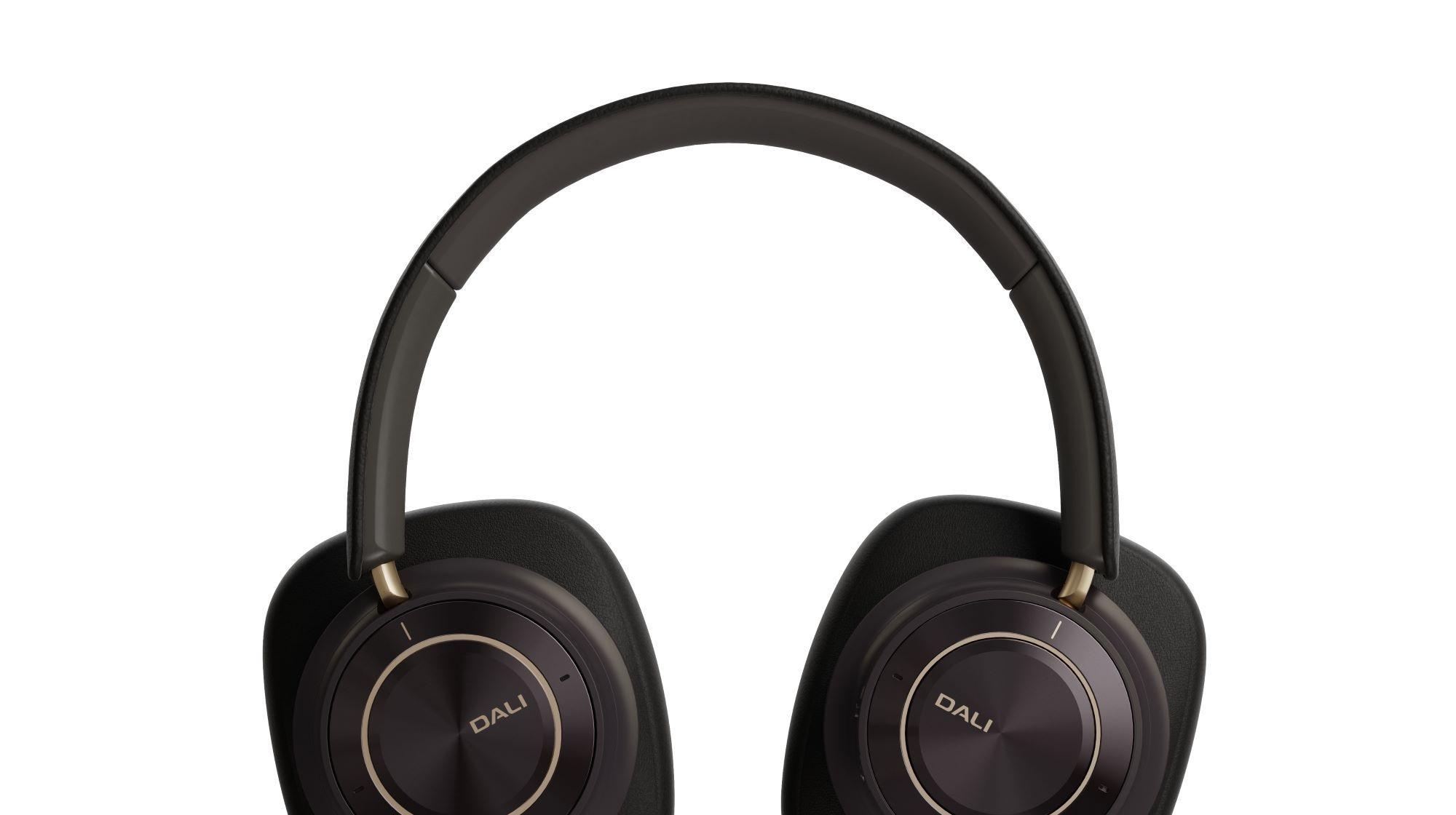
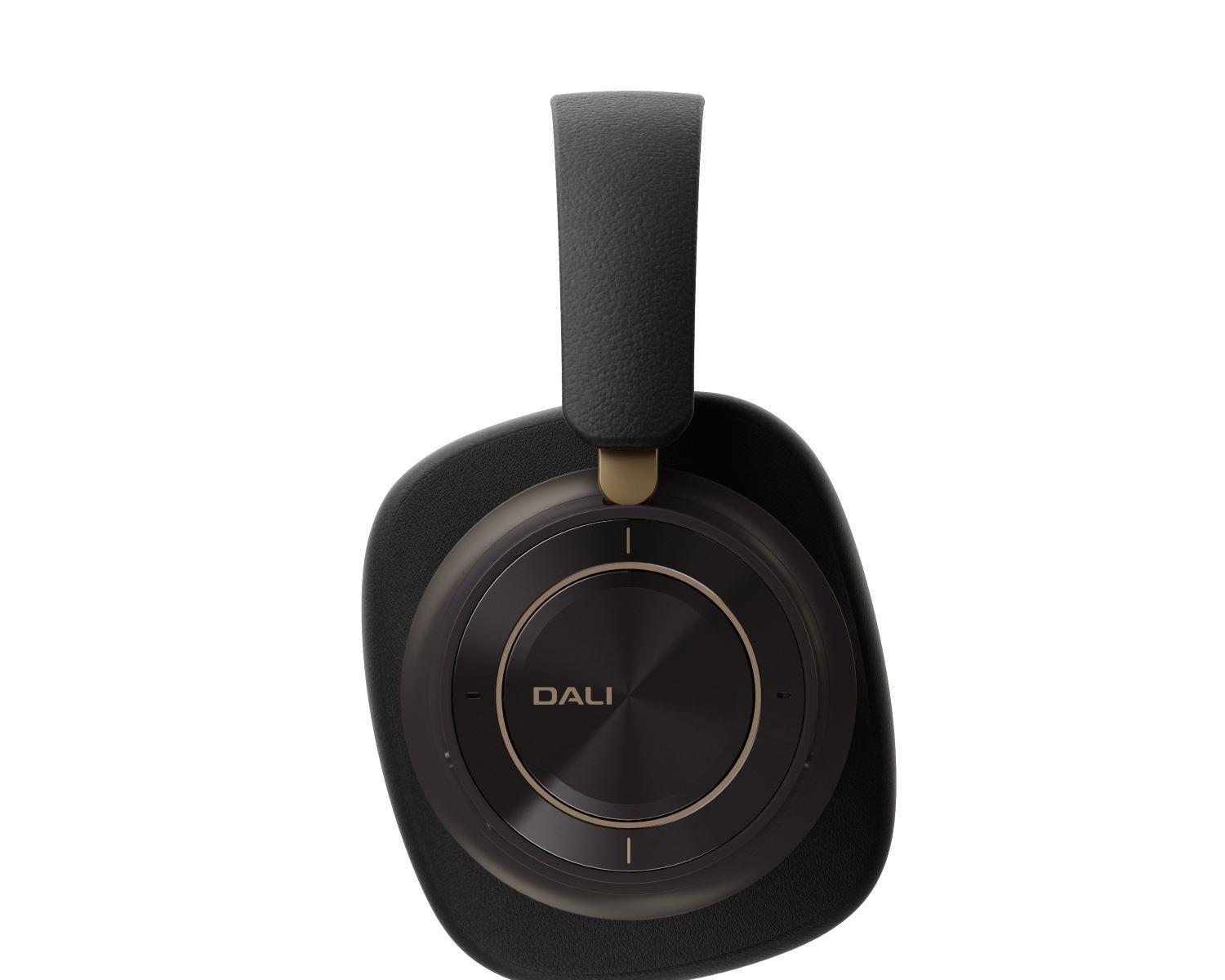
The IO-12 inherits the stylish design language of its predecessors, the IO-6 and IO-4 headphones. Areas that contact the body, such as the headband and ear pads, are crafted from exquisite leather. The main panels and buttons are metal, while the adjustable arms and brand logo are accented with contrasting metallic finishes. To emphasize its flagship status, the IO-12 is offered in only one color scheme: Real Leather Brown paired with Dark Copper trim.
This combination mirrors the color configuration of DALI’s flagship KORE loudspeakers, making the headphones feel as fashionable as carrying an Hermès bag, whether worn on the head or around the neck.
Its exterior is not only refined and luxurious but also emphasizes ergonomics. The ear pad design has been changed to a rectangular shape, accommodating a wider variety of head and ear shapes. Furthermore, the combination of memory foam and genuine leather provides a breathable, comfortable, and sealed wearing experience. Not only does this prevent sound leakage that might disturb others, but it also offers excellent passive noise isolation.
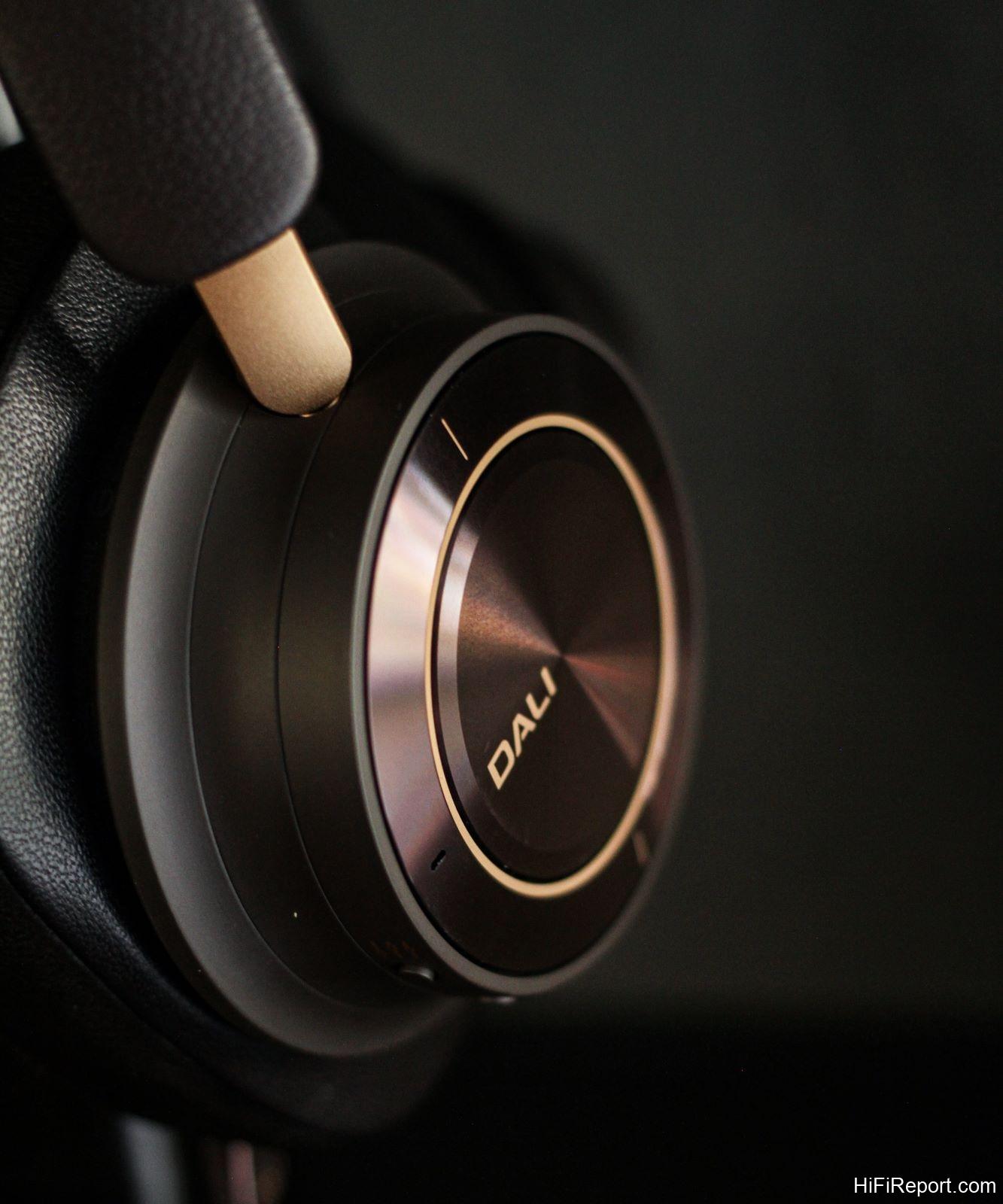
Despite the headphones weighing 370 grams, the wide and thick ear pads and headband design distribute the pressure remarkably evenly. Based on two hours of wear, I experienced no noticeable pressure on the top of my head or the “clamping” sensation from the earcups. For headphones of this “weight class,” I haven’t worn anything more comfortable than the IO-12.
Audio Engineering: Drivers and Technology
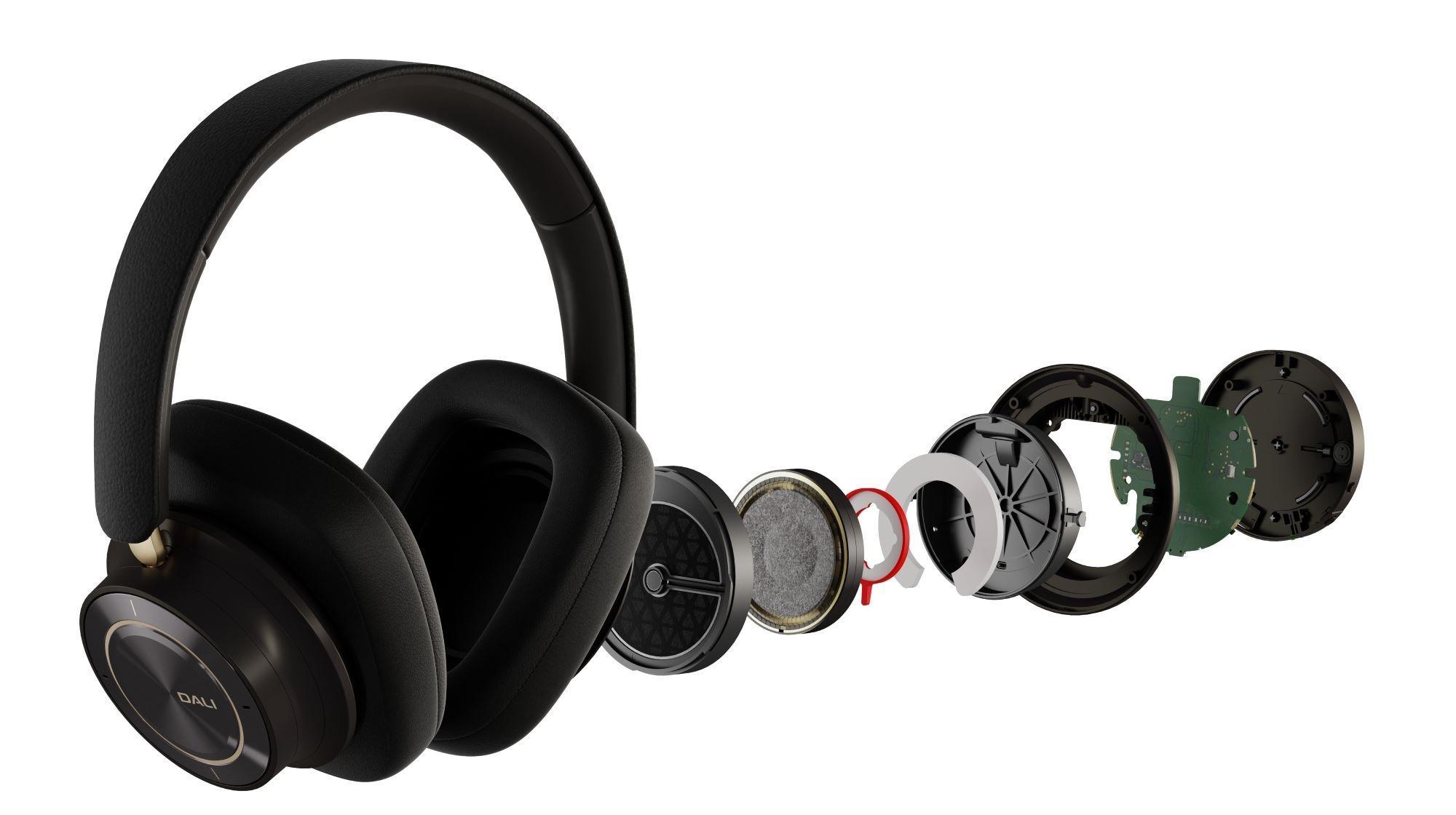
The biggest highlight of the IO-12 is the implementation of DALI’s patented 50mm paper fiber cone drivers driven by SMC magnetic material. It’s essentially like taking a miniature version of a high-end loudspeaker driver and placing it inside headphone cups. This design allows for a frequency response range of 10 Hz to 48 kHz within ±3 dB, truly making it a performance champion in the world of Bluetooth headphones.
Connectivity and Versatile Modes
In addition to functioning as pure passive headphones via the 3.5mm analog input, the IO-12 supports Bluetooth 5.2 and is compatible with various high-resolution audio codecs including AAC, aptX, aptX HD, and aptX Adaptive, making its usage virtually limitless. Moreover, the USB-C port on the IO-12 not only serves for charging but can also function as a high-resolution (24-bit/96kHz) USB audio device.
Furthermore, catering to different musical preferences, the IO-12 offers two digital processing modes (DSP) that can be toggled: “Bass” and “Hifi.” For general listening, the “Hifi” mode provides the optimal sound quality experience, while for moments requiring impactful bass, the “Bass” mode delivers a sensation akin to being bombarded by sub-bass on a nightclub dance floor.
Given that the IO-12 features three input methods—analog, Bluetooth, and USB—DALI has specifically designed four modes to accommodate different usage scenarios: Wireless Active, Wired Active USB, Analog Wired Active, and Analog Wired Passive. While the terminology might sound a bit convoluted, the concept is quite simple.
“Active” in the manual essentially means the headphones’ power is “On,” indicating that the input signal will pass through Digital Signal Processing (DSP) and Active Noise Cancellation (ANC). The “Analog Wired Passive” mode is the most straightforward, no different from conventional passive headphones.

The “Analog Wired Active” mode is particularly interesting. In this mode, users can input an analog signal via the 3.5mm port, which is then converted to a digital signal by an Analog-to-Digital Converter (ADC). This digital signal subsequently undergoes DSP and ANC processing before being decoded and amplified by the headphone amplifier to produce sound.
Although this process is the most complex and potentially introduces the most points for signal degradation, it proves incredibly useful in situations like needing noise cancellation on an airplane when your source device only has an analog output. It’s clear DALI has considered the needs of many travelers!
The “Wireless Active” mode is the standard Bluetooth input. The “Wired Active USB” mode not only supports the highest digital signal input (24-bit/96kHz) but is also compatible with systems like Windows, Mac, and iPad, allowing for listening while charging! You can even adjust the noise cancellation mode in this state! After carefully reading the manual, I can only say one thing: My goodness, the IO-12 is truly versatile!
Design Philosophy: Focus on Performance
Like its predecessors, the IO-12 does not come with a dedicated app for control and adjustments. I believe the reason is quite simple: within the confined casing of Bluetooth headphones, there’s already a need to house components like the battery, Bluetooth receiver, microphone, ADC, ANC, DSP, DAC chips, and headphone amplifier circuits. It’s genuinely quite crowded. To pursue excellent performance, the spatial arrangement within the headphone shell must be as streamlined as possible.
Therefore, DALI opted to forgo a more personalized app, minimizing the components that need to be squeezed inside the chassis to achieve the best possible performance from the drivers. I think this was a remarkably wise trade-off.
Noise Cancellation and Battery Life
As headphones oriented towards “sound quality,” the goal of the active noise cancellation function is undoubtedly to enhance listening comfort while minimizing impact on the original audio quality. Consequently, the ANC effect on the IO-12 is quite gentle among the Bluetooth headphones I’ve heard, leaning towards processing noise across the full frequency range.
Combined with the inherent passive isolation provided by the excellent chamber design, this significantly improves comfort during daily commutes. I also accidentally discovered that when practicing piano while wearing the IO-12 with ANC activated, the headphones helped eliminate excessive room reverberation, allowing me to better perceive the subtle timbral changes resulting from variations in my touch. It’s genuinely an “unexpectedly” practical use case.
For outdoor use, the IO-12’s wind noise suppression is also quite impressive. Whether walking or cycling, you are unlikely to notice significant wind noise. Battery life is another strength of the IO-12, providing up to 35 hours of playback on a single charge. Furthermore, while the IO-12 lacks wear detection, DALI has implemented an auto-off feature to prevent users from forgetting to turn the headphones off.
The IO-12 will automatically shut down after an hour of inactivity without signal input, which is a great boon for the forgetful among us.
Sound Quality
Users willing to spend over approximately $1,200 USD on Bluetooth headphones are surely the most demanding regarding sound quality, and I believe the IO-12 will not disappoint any user’s expectations. As a pure passive headphone, given its closed-back design, the soundstage is quite expansive with no obvious sense of boundary. Even more surprising is that the performance when connected via Bluetooth achieves about ninety percent of the capability of a desktop headphone system!
This speaks volumes about the quality of decoding and headphone amplification circuitry packed into that small headphone chamber! Therefore, the listening evaluation will focus on the most frequent and easily accessible mode: “Wireless Active Mode” (i.e., traditional Bluetooth noise-canceling headphones).
This time, I prepared an “all-Danish” playlist to test the IO-12, aiming to see how the national advantage might influence the results! First up was Asger Hamerik’s “Choral Symphony,” a massive work comparable to Beethoven’s Ninth, recorded by Danish label Dacapo. The performers, of course, were the Danish National Symphony Orchestra and Choir conducted by Danish conductor Thomas Dausgaard. The soundstage effect of the IO-12 felt somewhat surrounding.
Rather than the conductor’s position, I felt closer to the center of the orchestra, near the second violin principal’s position looking backward. The first violins and cellos were clearly positioned “diagonally behind” their standing places. Naturally, this position offers the most enjoyable experience for listening to woodwinds; details are clear without being overly overwhelming. The overall timbre of the orchestra and choir was quite gentle, and the brass particularly warm.
The canon between the mezzo-soprano and flute in the second movement was utterly captivating.
As for chamber music, it is the music type where the IO-12 performs best. Again, I chose Danish composer Friedrich Kuhlau’s “Piano Quartet No. 3” (yes, the same composer frequently encountered when practicing “sonatinas” on the piano). This piano quartet, stylistic between Mozart and Beethoven, is wonderfully written, and the IO-12 made me feel like I was a microphone placed on the music stand, facing the piano, surrounded by three string instruments.
It was like an ASMR experience, but not overly aggressive, feeling like listening to the performers whispering secrets to me.
Conclusion
For me, the DALI IO-12 is a masterpiece that combines luxury, style, and exquisite sound quality. From its appearance and sound quality details to its usage modes, habits, and battery life, there is absolutely nothing to fault. During the short two weeks of reviewing it, I developed quite an attachment to the IO-12, and it has become one of my reference headphones for evaluating new recordings. I believe we will meet again in the future!
Specifications
* Product Type: Active Noise Cancelling Bluetooth Headphones
* Connectivity: Bluetooth 5.2, USB-C, 3.5mm (Analog)
* Supported Bluetooth Codecs: AAC, aptX, aptX HD, aptX Adaptive
* Decoding Specification: 24-bit/96kHz (USB-C)
* Frequency Response: 10–48KHz (±3 dB)
* Driver Specification: 50mm Patented SMC Magnet with Paper Fibre Cone
* Headphone Impedance: 25 ohm
* Battery Life: 35 hours
* Weight: 370 grams