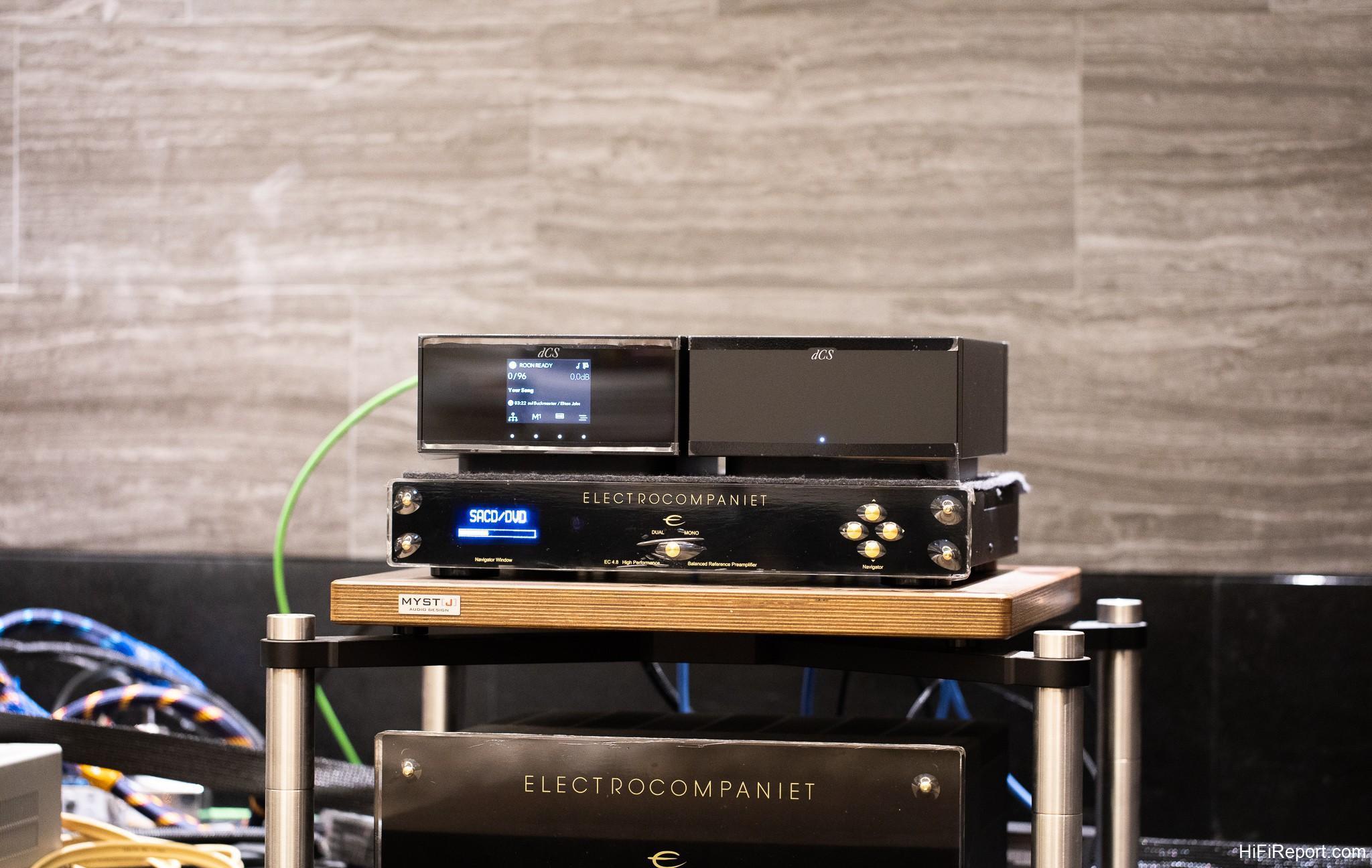
dCS LINA DAC & Clock Review
Just two days after the Munich High End Show concluded last year (2022), dCS unveiled a brand new series designed specifically for headphone enthusiasts – LINA. This was quite unexpected, as manufacturers typically choose the Munich show for new product launches. One might speculate that dCS placed particular importance on the LINA’s debut, opting to avoid the exhibition’s hectic atmosphere for a more focused reveal. The precise reason remains unknown to me.
Mirroring other dCS products, as HiFiReport has previously covered, LINA adopts a three-piece component design, encompassing a Digital Streaming DAC, a Master Clock, and a Headphone Amplifier.
Given LINA’s focus on headphone users, the design prioritizes headphone performance while also demanding a more compact chassis size for easier placement and portability, unlike the full-size designs of dCS’s two-channel Vivaldi, Rossini, and Bartók series. While chassis design was relatively straightforward, the real challenge for the dCS R&D team lay in accommodating the necessary circuitry and components within the limited space without compromising sound quality.
After all, dCS couldn’t afford to tarnish its reputation. Following over two years of dedicated effort, including the innovative use of foldable circuit boards, LINA successfully overcame these hurdles and was officially launched.

Astute readers might notice that MY-HIEND is reviewing not the complete LINA three-piece system, but rather only the DAC and Clock components. Indeed, we are not evaluating the LINA headphone amplifier in this instance. Instead, we are focusing on the two-channel performance of the LINA source and Clock combination. Although the LINA series was conceived for headphone systems, many audiophiles have discovered its exceptional performance as a source in two-channel setups.
I have frequently observed LINA being utilized in two-channel demonstrations at major international audio exhibitions. The manufacturer has also explicitly confirmed LINA’s suitability as a two-channel source. Pricewise, the combined cost of the LINA DAC and Clock is quite close to that of a dCS Bartók APEX (without the headphone amplifier). This price proximity presents a genuine dilemma for prospective dCS purchasers, sparking considerable online discussion.
Rest assured, both options deliver dCS’s top-tier sound and performance. From my personal experience, if headphones hold a significant place in your system, I would recommend LINA. If two-channel audio is your primary focus, then the Bartók APEX is the better choice. Of course, budget permitting, owning separate dCS systems for both two-channel and headphones would be the ultimate luxury.

Chassis & Build Quality
The LINA chassis, like all dCS products, is meticulously crafted from a single block of high-quality, aerospace-grade aluminum alloy using CNC machining. The resulting texture and finish are exceptional, demonstrating an extremely high level of manufacturing precision.
The LINA DAC serves as the heart of the LINA system. It is built upon dCS’s renowned, proprietary Ring DAC and Digital Processing Platform. Beyond size, its functionalities mirror those of other dCS DACs, supporting PCM up to 384kHz and DSD 128, and accommodating a comprehensive range of music formats, streaming protocols, and services, including Tidal, Qobuz, and Roon Ready.
Furthermore, it offers upsampling and multiple digital filter modes, providing users with flexibility in sound customization and listening enjoyment. Adjustable analog output gain ensures compatibility with diverse downstream equipment. dCS employs custom-written FPGA circuitry in its devices, enabling virtually limitless upgrade potential. Since LINA’s launch, the manufacturer has already released two free firmware upgrades, enhancing both functionality and sonic performance.

* LINA 1.1: Added volume control and fixed volume output options.
* LINA 2.0: Introduced 2 Mapper settings, DSD 128 upsampling, additional PCM/DSD Digital Filters, channel balance adjustment, display font size adjustment, and remote control support.
Industry-Leading Digital Filtering
Since its inception in 1987, dCS has dedicated itself to Analog-to-Digital and Digital-to-Analog conversion, achieving numerous world firsts. This core technological expertise has been consistently maintained throughout its history. dCS’s full name, “Data Conversion Systems Ltd,” directly reflects this focus. Arguably, no company understands the intricacies of digital-to-analog conversion better than dCS.

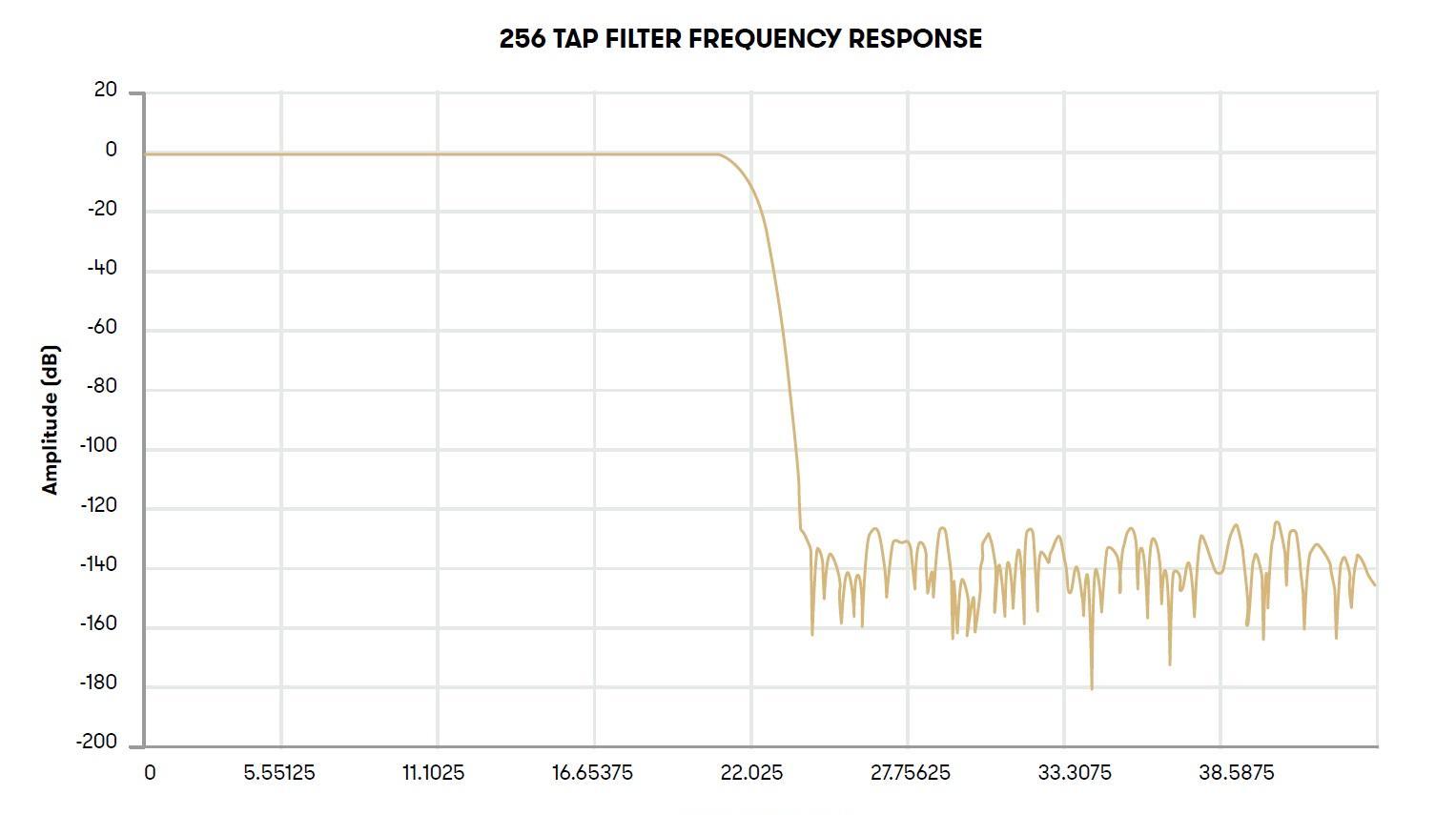
One might wonder why dCS invests so much effort in providing multiple filter modes in their DACs. Why not just offer the “best” one? The crux of the matter lies in the fact that there is no single “best” digital filter. We lack knowledge of the specific filtering applied during the recording process of each album. Therefore, dCS has developed various digital filters using their proprietary technology, empowering users to experiment and choose according to their preference.
dCS has published a technical white paper elucidating the digital filtering aspect. However, the content may be challenging to grasp for those without a technical background, involving trade-offs between -6dB point, filter length, and windowing techniques, which are quite complex. For a basic understanding of these filter characteristics, consult the LINA user manual. Nevertheless, dCS ultimately recommends trusting your ears, as there is no definitive “correct” answer.
Beyond digital filters, dCS provides three Mapper modes, a unique feature absent in DACs from other manufacturers. Mapper technology is intrinsically linked to the dCS Ring DAC. I briefly discussed this aspect in an interview with dCS, which may be of interest to some readers. Following the LINA 2.0 release, three Mapper modes are available:

* MAP 1: Default setting, Ring DAC operates at 5.644 or 6.14M.
* MAP 2: Classic early setting, Ring DAC operates at 2.822 or 3.07MHz.
* MAP 3: Alternative option, Ring DAC also operates at 5.644 or 6.14M.

Touchscreen Interface
The LINA DAC features a touchscreen display on its front panel, marking dCS’s first implementation of touchscreen technology in their products.
Rear Panel Connectivity
The LINA DAC’s rear panel is comprehensive, including network, USB, SPDIF, AES, and optical digital inputs, clock input, RCA and balanced analog outputs, and a POWER LINK for synchronized power on/off with other dCS components.
LINA Master Clock
The LINA CLOCK master clock utilizes high-precision (> +/-1 ppm) and temperature-controlled, stabilized dual crystal oscillators as its core. It incorporates dCS’s proprietary clocking technology, honed over 30 years, with two clock outputs dedicated to 44.1kHz (Output 1) and 48kHz (Output 2) respectively. LINA CLOCK minimizes jitter and distortion.
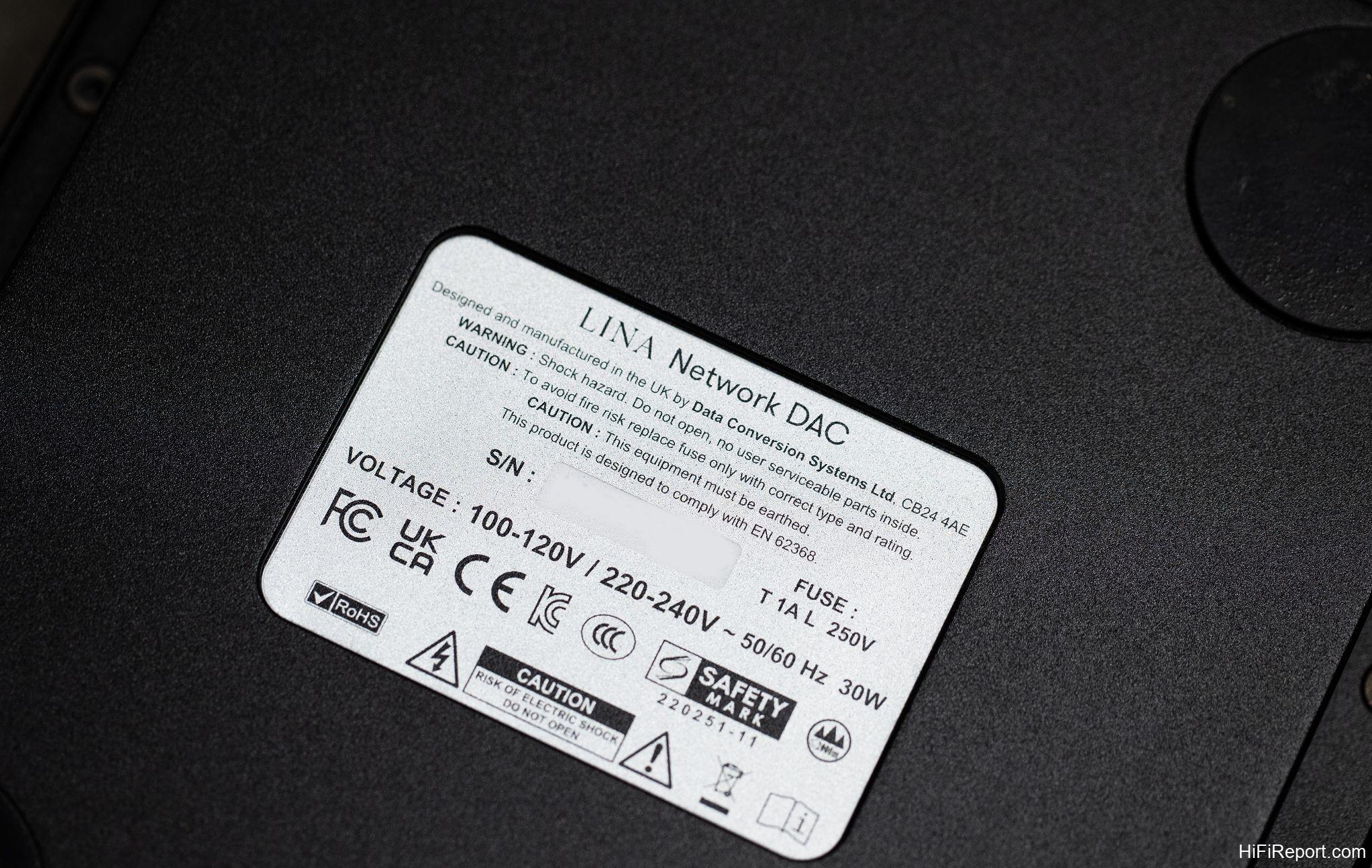
Clock Rear Panel
The rear panel of the LINA CLOCK master clock. The manufacturer recommends a warm-up period of at least 10 minutes for stable operation. Clock transmission utilizes BNC connectors with a 75-ohm impedance.
Latest Entry-Level System (Ted Chen)
The dCS Lina Network DAC prioritizes two key functionalities: network digital streaming and digital-to-analog conversion. Digital-to-analog conversion has long been dCS’s hallmark, with the dCS Ring DAC becoming a highly sought-after hardware technology among audiophiles. Despite its success, the company has remained committed to continuous refinement and evolution of the Ring DAC. While the name remains the same, ongoing enhancements are consistently implemented.
With the rise of network digital streaming in recent years, dCS, as a high-end source provider, naturally ventured into this new domain. They introduced standalone network streaming devices and eventually integrated network streaming into their existing product lines, including familiar high-end models like Vivaldi and Rossini, as well as the later Bartók. This year, they launched the more accessible Lina series. The reduced size of the Lina series offers several advantages.

Firstly, it caters to the modern preference for smaller living spaces. Younger generations no longer require bulky, heavy equipment; compact, agile, and modern designs are the future trend. Secondly, it allows for cost reduction. High-end equipment chassis often involve significant design and manufacturing expenses. Smaller chassis sizes contribute to more controlled final retail prices.
Furthermore, the Lina Network DAC provides switchable digital volume control, effectively functioning as a preamplifier, further streamlining system configuration for users.
Versatile Control Options
In addition to the Network DAC, the Lina series includes the Master Clock, also featured here, and a separate headphone amplifier, specifically tailored for headphone enthusiasts. However, our focus is on two-channel performance, so the headphone amplifier is not included in this review. Among the three components, the Network DAC is undoubtedly the system’s central hub, capable of working independently or in conjunction with the other two components.

The Network DAC and headphone amplifier can be used separately, while the Master Clock requires the Network DAC for operation. Control of the Lina Network DAC is achieved through two primary methods. Firstly, the front panel touchscreen allows direct setting of input sources, filters, volume, and other parameters. Secondly, the dCS Mosaic APP, installable on tablets, provides comprehensive control, including online music service login and playback operations.
The dCS Mosaic APP is a free service for users and is continuously updated. Users who utilize Roon can also employ Roon as their music management and playback interface.
Comprehensive High-Standard Performance
During listening tests, I referenced Miko Marks’s “Water to Wine.” The dCS Network DAC rendered a transparent, highly resolving, and richly dense sound. The simple piano introduction showcased crystalline notes, demonstrating an exceptionally complete level of musicality. Timbre, density, resolution, transparency, imaging, soundstage depth, and overall envelopment were all remarkably complete and balanced, resulting in a supremely comfortable and high-quality listening experience.
The dCS Network DAC’s sound is not about superficial flashiness; instead, it delivers vibrancy, liveliness, and contrast, most importantly, in a natural manner, presenting these understated yet harmoniously balanced qualities.
Filter Flexibility for Sound Customization
Another key feature of the dCS Network DAC is its provision of numerous sonic options. For instance, incoming music files undergo a fixed upsampling digital processing stage, allowing users to select DXD, DSD, or 2x DSD. This choice significantly impacts the final sound. Furthermore, multiple filter selections and DSD filter switching are available, along with Mapper options within the Ring DAC. These features empower users to tailor the sound to their preferences.
The manufacturer places control directly in the user’s hands, with a vast array of combinations, offering substantial sonic exploration. All these settings can be switched instantaneously via the Mosaic APP during playback, enabling real-time comparisons without interrupting the music, allowing users to fine-tune settings to match different musical selections. We conducted brief comparisons and observed more pronounced changes between DXD, DSD, and 2x DSD.

Personally, I found DSD to offer slightly more sonic richness and soundstage layering, while DXD tended to be more focused, cohesive, and transparent. Other filters yielded subtler variations. With numerous possible combinations, a comprehensive description of each is impractical. Users are encouraged to explore and discover their own preferences.
Enhanced Performance with External Clock
Next, we explored a more significant alteration by incorporating the Master Clock with the Network DAC. Without the external Master Clock, the DAC relies on its internal clock system. We listened to “Duelles,” performed by young musicians Raphaëlle Moreau (violin) and Célia Oneto Bensaid (piano). The most notable difference with the external clock was a marked increase in sonic refinement, coherence, and image definition.
Both overall listening experience and detailed examination of individual instrument frequencies revealed substantial improvements. The three-dimensionality of the soundstage also became more pronounced. Our extensive experience with external clocks consistently indicates sonic advancements in approximately 80% of cases, making them worthwhile investments.
Powerful and Realistic Sound (Wacko Wang)
Starting with Lauren Spencer-Smith’s cover of “Someone You Loved,” the piano performance immediately captivated. It possessed a full, crystalline quality, like rounded pearls with the brilliance of diamonds, making a striking first impression. The vocal performance was equally impressive, sounding remarkably resonant, robust, and forceful. The sound presentation was not merely a point or a line, but a substantial, almost planar presence, filling the space and enveloping the listener.
Simultaneously, despite this powerful sonic delivery, a refined and elegant quality remained evident. A delicate, lingering reverb surrounded the sound, allowing listeners to clearly perceive sonic nuances and variations in vocal articulation, vividly picturing facial expressions and mouth movements. During listening, I also experimented with the dCS LINA’s built-in upsampling and other functions.
Comparing DXD and DSD, DXD sounded relatively more balanced, with consistent sonic weight across the frequency spectrum, appearing full and substantial. DSD, on the other hand, exhibited a slightly lighter quality in certain passages, creating a more pronounced contrast. These diverse sonic presentations can rekindle appreciation for even familiar tracks.
Excellent Contrast and Harmony
Moving on to Shane Filan’s “Beautiful To Me,” the dCS LINA’s instrument reproduction was striking. String instruments and background music felt exquisitely detailed, and their interplay enhanced the string sound, highlighting clear string texture, vibrant resonance, and bounce, while also lending a touch of liquidity to the sound. Even when the song showcased dynamism, it never sounded overly dry.
The background chimes, though delicate, crisp, and occasionally airy, always felt distinct and clear, never overshadowed by the more focused vocals or instrumental sounds.
Switching to Sitti’s duet with Shane Filan on “Need You Now,” the song presented a remarkably even and balanced soundstage. The sonic presentation was complete, well-distributed, and smoothly laid out before the listener. Even during the male-female duet sections, this harmonious balance was maintained. The female vocals occasionally emerged from the male vocals, then gently floated above, creating an interwoven tapestry with subtle contrasts and enriching the music’s complexity.

I also experimented with the built-in filter functions. Selecting DXD filter 5 accentuated the vocals, while switching to filter 6 slightly enhanced soundstage depth, adding a touch of three-dimensionality to the image. Users who prioritize vocals or enjoy subtle sonic enhancements will likely find their preferred sound here.
Fast, Detailed, and Tightly Controlled
Finally, listening to Colbie Caillat’s “Bigger Love,” the dCS LINA with the Clock demonstrated exceptional versatility, delivering a balanced, refined, and complete sound across dynamic ranges. This track, more dynamic than previous selections, still exhibited excellent sonic balance. Unlike the gentle flow of previous tracks, the sound here was fully and evenly dispersed in all directions. The interplay of piano, drums, and vocals created a rich sonic tapestry.
During the chorus, as the drum rhythm intensified, the soundstage expanded and became more complex and rapid, yet remained remarkably clear, with no detail obscured. Drum impact was substantial while maintaining clear articulation of vocals and lyrics. The drum’s excellent airiness remained evident amidst the rapid sonic flow, avoiding any heaviness. Sound decay was clean and concise, coexisting with solidity, creating a realistic sense of sonic impact and rhythm that was highly enjoyable.

Lastly, switching to 2x DSD upsampling with filter 2 resulted in a more unrestrained sound, with music exhibiting a more aggressive, expansive character. Switching to filter 4 yielded a more controlled sound, with rounded edges and a sense of refinement. The dynamism remained, but with a touch of added control. These diverse sonic presentations are ideal for users who enjoy exploring different sonic flavors.
dCS Lina Network DAC Specifications
* Crosstalk: Better than –115dB0, 20Hz-20kHz
* Streaming: UPnP, Qobuz, Deezer, Tidal, Internet Radio, Spotify, Apple AirPlay 2 (support at 44.1 or 48kS/s), RoonReady

* Upsampling: Multi-stage DXD oversampling, user-selectable DSD Upsampling (1-bit 2.822 or 3.07MS/s), DSDx2 Upsampling (1-bit 5.644 or 6.14MS/s)
Frequency Response (filter 1):
* Fs = 44.1 or 48kS/s +/-0.1dB, 10Hz-20kHz, Fs = 88.2 or 96kS/s +/-0.1dB, 10Hz-20kHz -3dB @ >38kHz
* Fs = 176.4 or 192kS/s +/-0.1dB, 10Hz-20kHz -3dB @ >67kHz

* Fs = 352.8 or 384kS/s +/-0.1dB, 10Hz-20kHz -3dB @ >100kHz
* DSD64 +/-0.1dB, 10Hz-20kHz -3dB @ >90kHz
* DSD128 +/-0.1dB, 10Hz-20kHz -3dB @ >100kHz
Residual Noise (6V output):
* 16-bit data: Better than –96dB0, 20Hz-20kHz unweighted,
* 24-bit data: Better than –113dB0, 20Hz-20kHz unweighted
* Sampling Rates and Formats: 44.1-384kS/s up to 24 bits, DSD/64, DSD/128, Native DSD + DoP (input dependent), FLAC, WAV, AIFF, MQA
* Digital Inputs: 2 x AES/EBU XLR 44.1-384kS/s, 1 x S/PDIF BNC Coax 44.1-192kS/s, 1 x S/PDIF on RCA 44.1-192kS/s, 1 x Toslink 44.1-96kS/s, 1 x USB Type B 44.1-384kS/s, PCM and DSD, DSDx2 in Async Mode, 1 x USB Type A connector for mass storage devices (navigated using Mosaic)
* Analog Outputs: Stereo Balanced XLR x 1 pair, Stereo Unbalanced RCA x 1 pair
* Output Levels: 0.2V, 0.6V, 2V, 6V rms, adjustable via menu
* Dimensions: 121.5mm (H) x 220mm (W) x 339mm (D)
* Weight: 7.4 kg
dCS Lina Master Clock Specifications
* Warm-up Time: 10 minutes
* Clock Accuracy: Better than +/-1 ppm when shipped over an ambient temperature range of +5°C to +45°C
Outputs:
* 2 x independently buffered TTL-compatible output on 75Ω BNC connectors
* Output 1: fixed at 44.1kHz
* Output 2: fixed at 48kHz
* Dimensions: 121.5mm (H) x 220mm (W) x 339mm (D)
* Weight: 7 kg