
dCS Rossini Player + Master Clock Review
When discussing the pinnacle of digital audio source brands, opinions may vary, but dCS of England undoubtedly holds a top spot in many audiophiles’ hearts. Founded in 1987, dCS has dedicated itself to the realm of digital sources and decoding. Historically, dCS provided electronic hardware and software engineering expertise to the British military for applications in radar and sonar, and also designed high-precision circuit designs and testing systems for commercial satellite systems.
This background in demanding technological development and precision laid the foundation for dCS’s commitment to producing top-tier products for the home audio market.
Rossini Player and Master Clock System
HiFiReport recently sent us the dCS Rossini Player and its companion Master Clock. This system currently ranks second in the dCS hierarchy, surpassed only by the renowned Vivaldi series. The Vivaldi is a four-piece source system comprising a transport, upsampler, DAC, and clock. In contrast, the Rossini Player integrates the transport, upsampler, and DAC into a single chassis, complemented by an external Master Clock.
Another distinction is that Vivaldi can natively read SACDs, while the Rossini cannot. However, Rossini can play the CD layer of hybrid SACDs.
Versatile Playback: CD and Network Streaming
The Rossini Player offers dual capabilities: CD playback and network streaming, both processed with upsampling and decoding. It would be more accurate to call it an Upsampling CD/Network Player, as limiting your perception to its traditional disc-playing ability would only reveal half of its functionality.
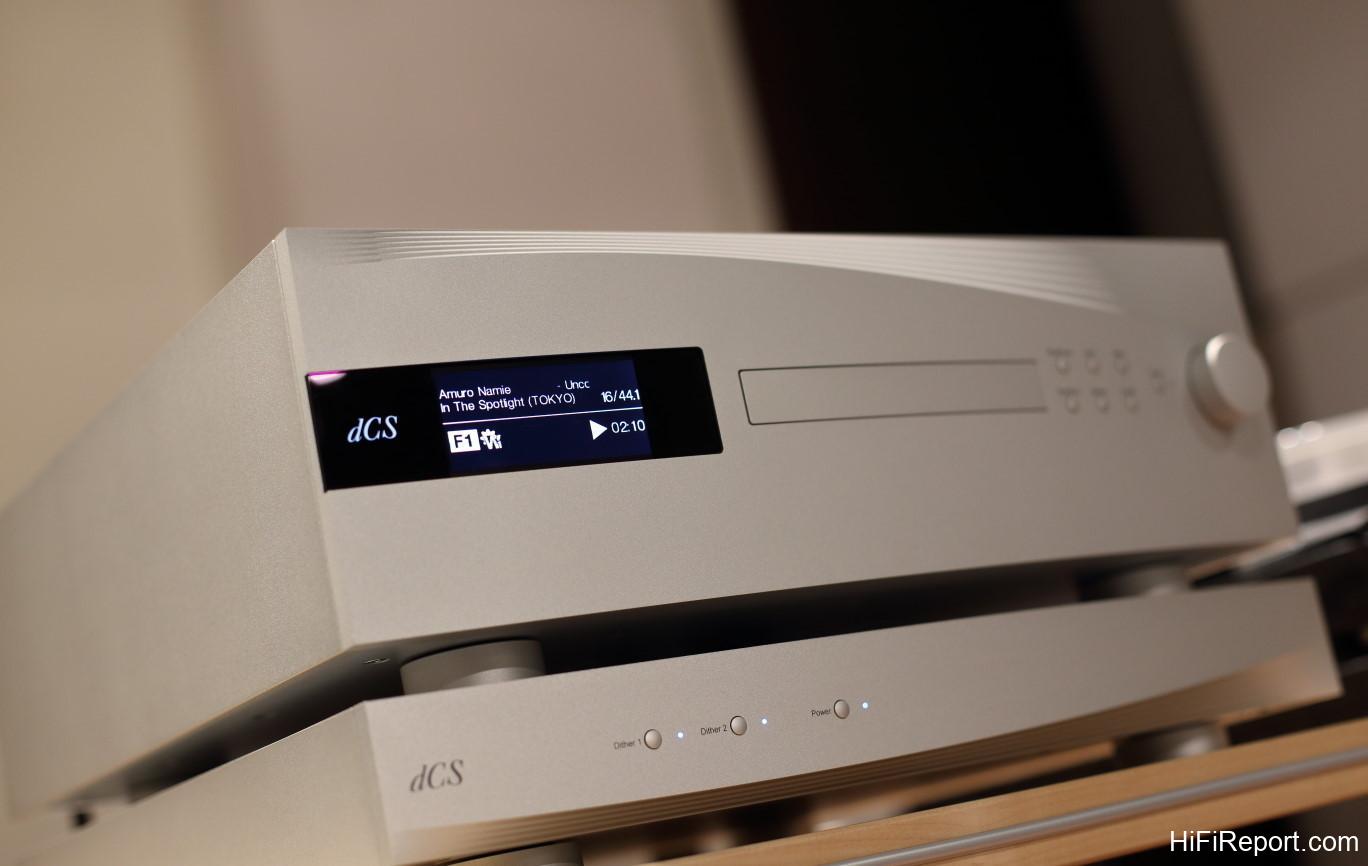
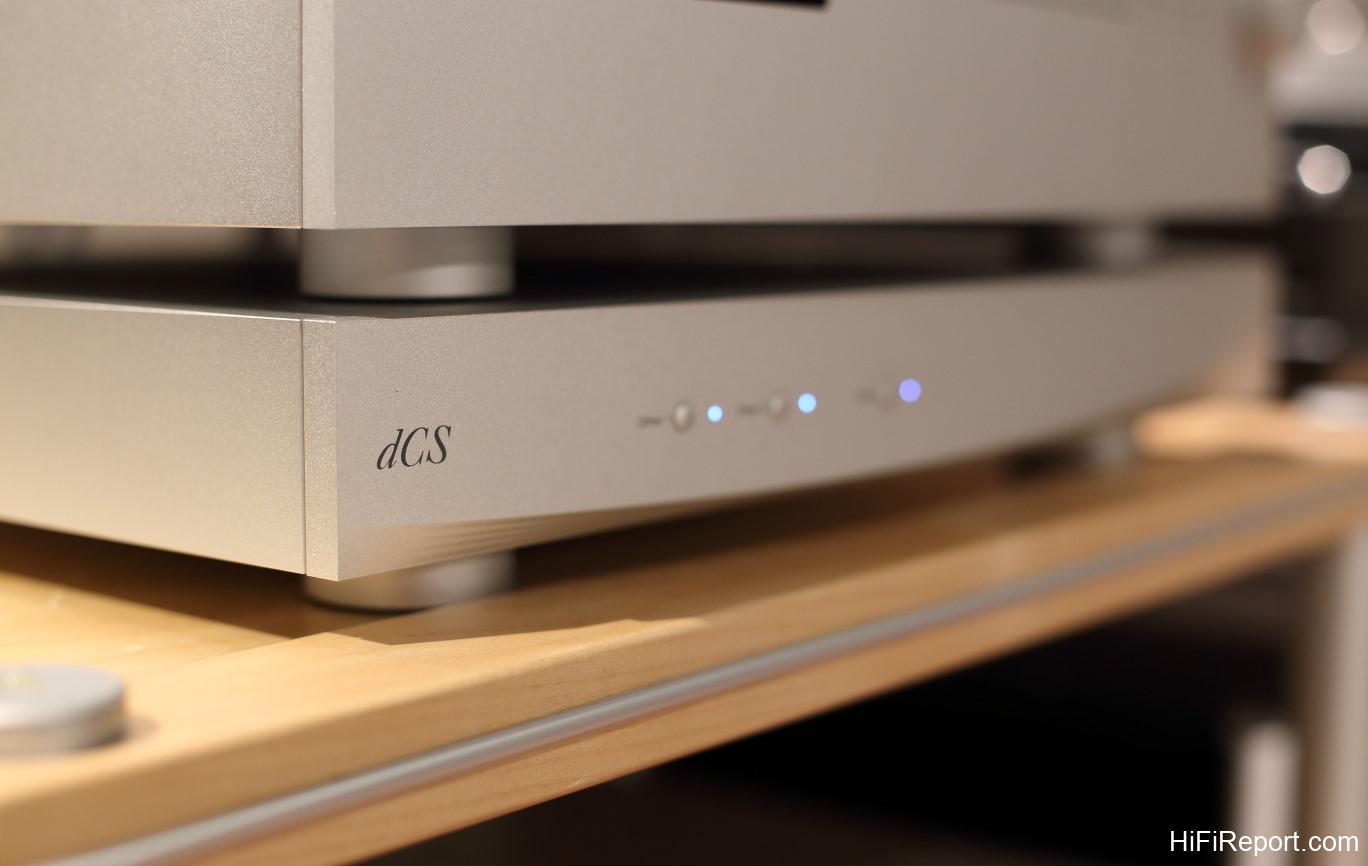
The Rossini Player is positioned above, with the Rossini Master Clock below. The Player features a display screen on the left, showing track names, original formats, playback status, and time. The center houses the CD tray, and to the right are seven small buttons for power and CD playback controls. The far right features a volume control, typically set to the maximum 0dB. The Master Clock below has Ditter 1 and Ditter 2 buttons, along with a power switch.
Signature Design: The Ring DAC
dCS’s leadership in digital audio sources stems not only from its engineering background but also from its development of groundbreaking designs for audio products. Foremost among these is the proprietary Ring DAC circuit. The Ring DAC differs significantly from designs that utilize commercially available DAC chips and then build around them. For sample rate conversion, the Ring DAC employs a unique 5-bit/2.822MHz specification, unseen in other brands.
The 2.822MHz sampling frequency is the same as DSD. dCS believes that at this sampling rate, the time intervals between audio samples are small enough, allowing the waveform to closely approximate an analog signal. However, DSD uses a 1-bit bit depth, which only records the difference between successive samples, limiting its dynamic range. To overcome this, dCS increased the bit depth 32 times to 5-bit.
Increasing bit depth requires doubling the chip count for each bit added, making infinite increases impractical. dCS determined 5-bit to be a balanced and optimal number. Beyond specifications, a DAC’s performance also hinges on analog processing. Rossini’s DAC circuit board includes voltage regulation, analog filtering, and a Class A output stage, all implemented in a fully balanced design from start to finish.
Achieving exceptional sound often relies more on the power supply and analog sections than solely on decoding specifications. Crucially, the Rossini utilizes the exact same Ring DAC as the flagship Vivaldi.
Enhanced Sound Through Oversampling
Another key aspect of dCS’s design philosophy is upsampling, a signal processing technique widely used in modern digital sources. The Rossini integrates this upsampling within its chassis, while Vivaldi houses it in a separate enclosure. Internally, dCS actually employs oversampling processing, subtly different from upsampling. This distinction arises from the waveform characteristics when digital signals are converted to analog.
Digital signals are not perfect continuous waveforms; they exhibit “steps” or discontinuities between sampling points. These discontinuities create quantization noise. As the term “noise” implies, this is an issue that needs to be addressed. Many modern digital sources use oversampling to mathematically increase the sampling rate of the original CD signal (44.1kHz) by multiples, reaching much higher frequencies.
This reduces the size of the steps between sampling points, resulting in a waveform that more closely resembles an analog signal after digital-to-analog conversion.
Furthermore, oversampling shifts noise to higher frequency ranges (Noise Shaping). A low-pass filter is then used to remove this high-frequency noise. This makes the quality of the low-pass filter critically important. Additionally, noise originally present in the inaudible low-frequency range can also be pushed into the audible range. Managing this aspect is a challenge that tests the skill of designers.
There are numerous other processing details to resolve, which explains why some upsampled audio equipment doesn’t necessarily sound better. The Rossini uniformly upsamples all incoming digital signals to multi-stage DXD oversampling. DXD has a specification of 24bit/352.8kHz, approximately four times that of DSD files. Rossini further upsamples 512x DXD to 32bit/705.6kHz, ultimately decoding via the DAC in DXD or converted to DSD. Rossini’s oversampling primarily targets PCM music files.
DSD files, when transmitted as DSD, are not oversampled but played directly.
Evolving Digital and Signal Processing Capabilities
Beyond the Ring DAC, dCS places great emphasis on its Digital Processing Platform and Signal Processing. For its digital processing platform, dCS utilizes highly flexible FPGAs (Field-Programmable Gate Arrays) and ICs (Integrated Circuits). These programmable platforms allow for virtually any logic and signal processing to be implemented in hardware. This flexibility allows for new features to be added through software updates. With an internet connection, updates can be performed online.
This platform is the core of dCS’s technology. The unique signal processing, working in conjunction with the Ring DAC, is what achieves the exceptional sound quality. All DACs require filtering or other processing to make the reconstructed waveform closely resemble the original. Many DAC circuits are therefore influenced by the chosen chips or filters, resulting in different sonic characteristics. dCS’s unique signal processing, controlled by the FPGA, mitigates this variability.
Since FPGAs are freely programmable, they eliminate the fixed sonic imprint found in other DAC designs.
Maintaining Precise Clock Output
While the Rossini Player already incorporates a high-precision clock, dCS is a manufacturer deeply committed to clock systems. This is evident in their history of offering standalone clock devices. They believe that a precise clock is even more critical than controlling jitter. Jitter arises from variations in the signal transmission time, causing timing errors in analog-to-digital and digital-to-analog converters during sampling and reconstruction.
In real-time music playback, this can have a significant detrimental impact. Another source of inaccuracy is an insufficiently precise clock signal itself. Even without transmission-induced jitter, an inaccurate clock signal from the outset can lead to distortion. Therefore, a high-quality clock system is paramount.
dCS not only uses high-precision crystal oscillators but also takes meticulous care to protect them. External vibrations or temperature fluctuations can affect crystal oscillators, introducing errors. The clock source must be carefully shielded to ensure that the clock signal remains as accurate at its destination as it was upon generation. In operation, everything from the power supply to the signal processing is synchronized with the master clock to achieve the highest possible precision.
Dedicated Master Clock with Dual Crystal Oscillators
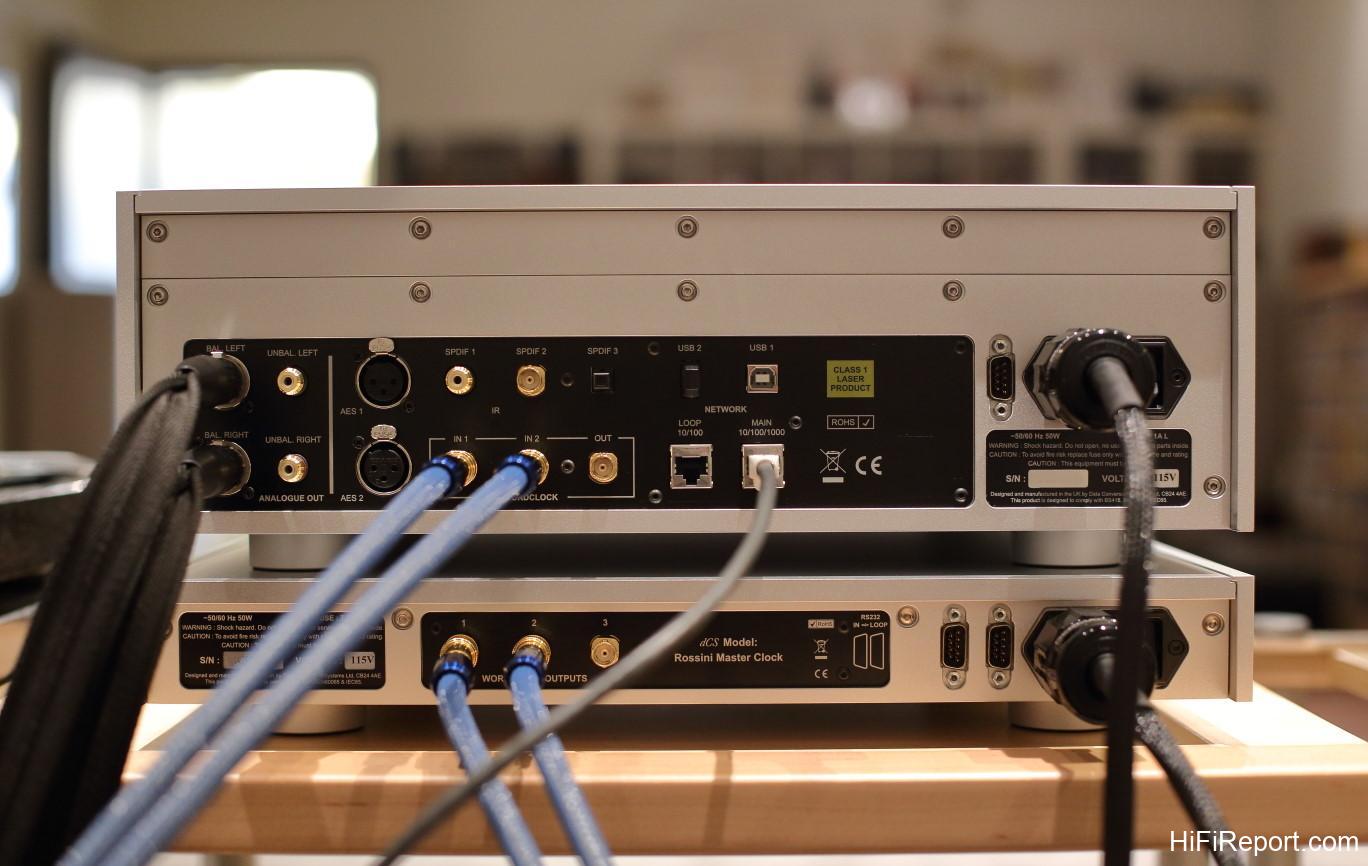
For discerning users, a dedicated Master Clock is available as an upgrade to the Player’s internal clock system. The Rossini Master Clock utilizes dual crystal oscillators and the latest multi-stage PLL (Phase-Locked Loop) technology, reaching world-class levels of performance. It generates a highly precise clock signal and effectively controls jitter originating from the input signal.
All crystal oscillators selected for the Master Clock undergo rigorous testing to ensure long-term stability and performance. Rossini’s internal microcontroller system ensures temperature compensation, maintaining a smooth and precise signal, delivering stability even surpassing atomic clocks.
The Rossini Master Clock offers three outputs, using industry-standard 75-ohm coaxial BNC connectors. This allows for simultaneous use with other brands of equipment. When used with the Rossini Player, it automatically locks onto the music file’s sampling rate, whether 44.1kHz or 48kHz and their multiples, eliminating the need for manual switching.
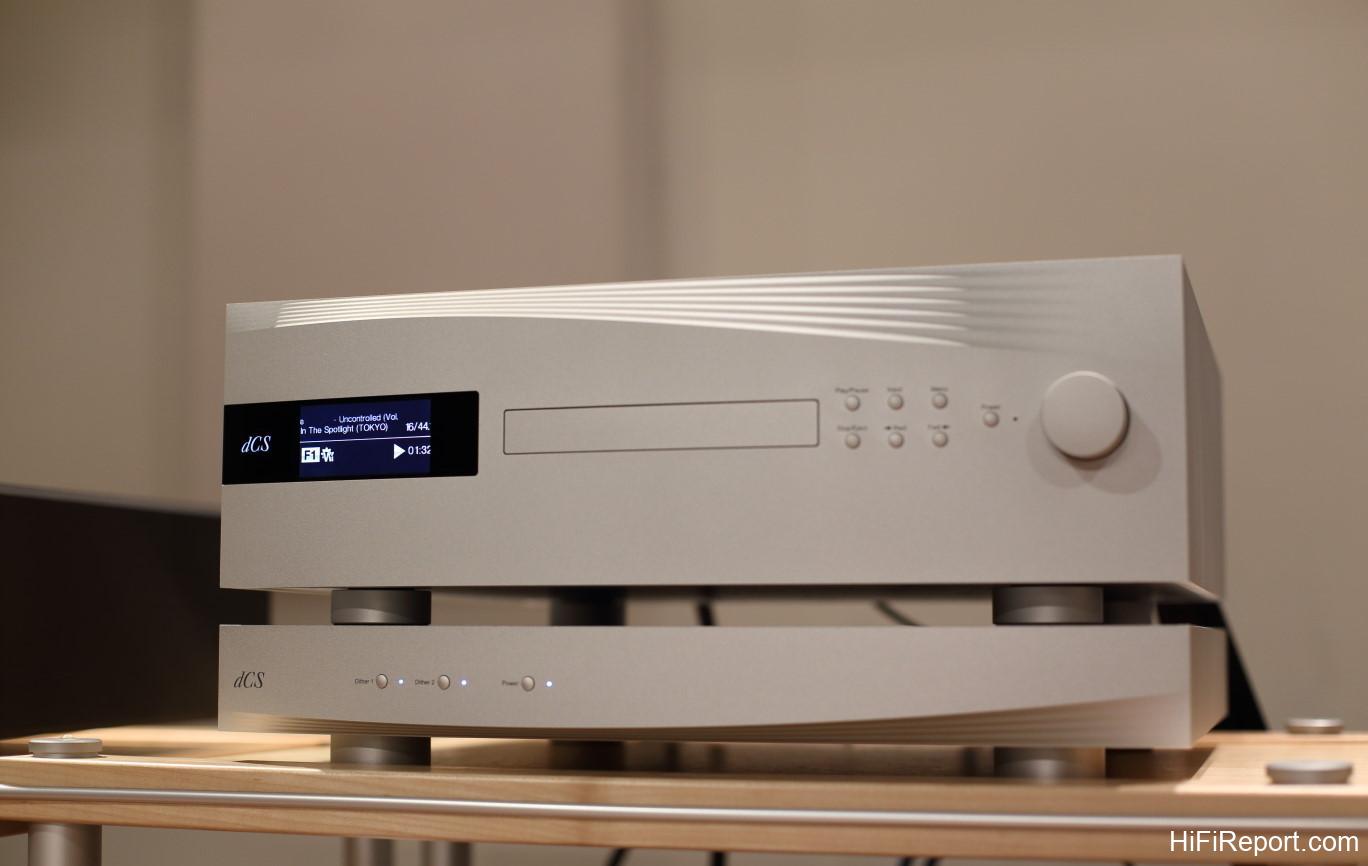
Comprehensive Inputs and Outputs
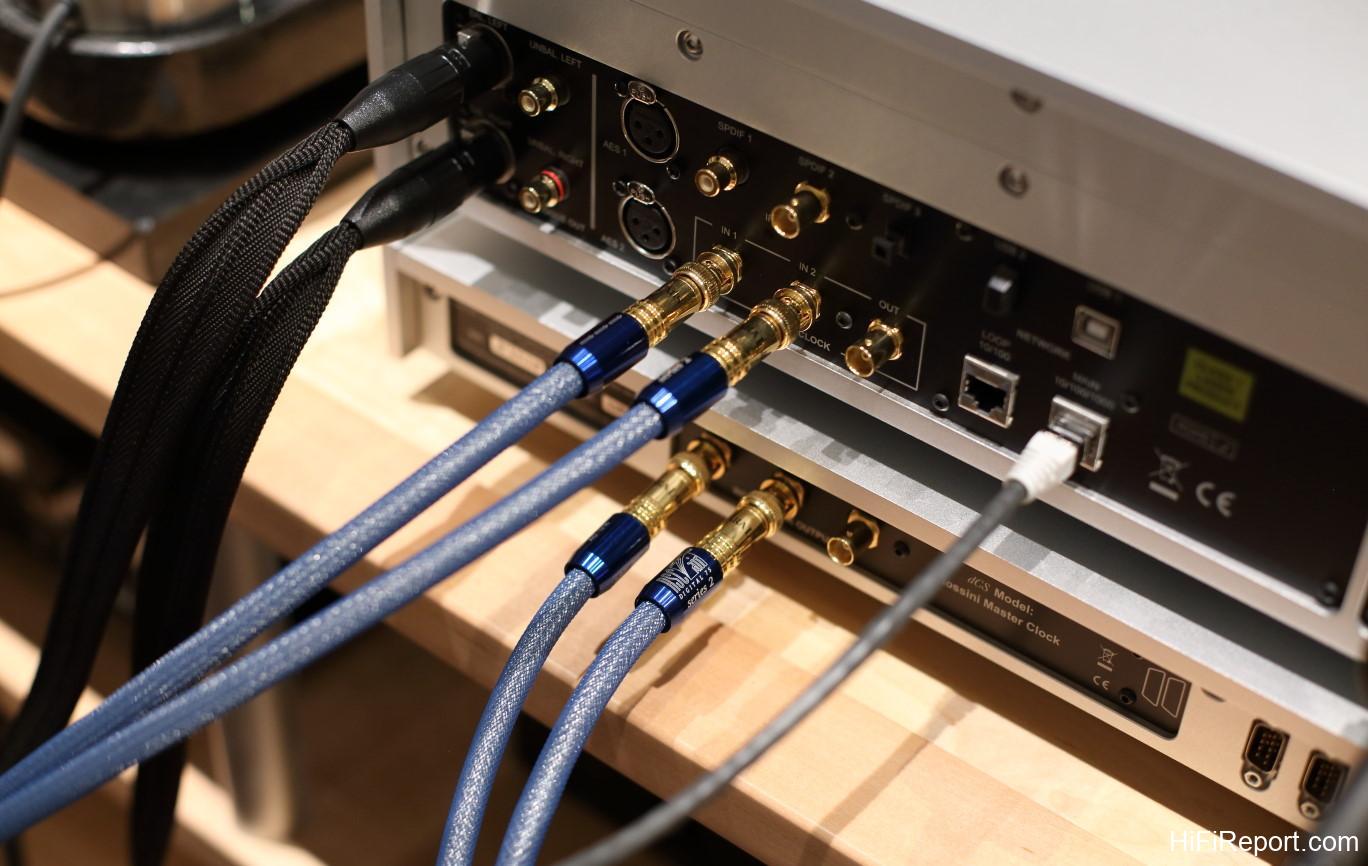
The upper unit is the Rossini Player. Analog outputs are located on the left, offering one balanced XLR and one unbalanced RCA output. Output voltage is adjustable between 2V and 6V.
Digital inputs include two AES inputs (single input maximum PCM 24bit/192kHz, DSD64; using both doubles the capacity).
Three SPDIF inputs: RCA (maximum PCM 24bit/192kHz, DSD64), BNC (maximum PCM 24bit/192kHz, DSD64), and TOSLINK (maximum PCM 24bit/96kHz).
One USB A Type and one USB B Type input each (maximum PCM 24bit/384kHz, DSD128), for connecting to computers or USB drives.
Two network interfaces: one for connecting to a local network, and another to pass the network signal to other devices.
Network Streaming and App-Controlled Functionality
The addition of network capabilities makes the Rossini even more versatile. Firstly, the new dCS app software allows for comprehensive control. By connecting an iPad to the same network, launching the app establishes a connection with the Rossini. Within the app, numerous Rossini settings can be adjusted, and network streaming can be utilized to play music from NAS devices or online streaming services.
The independent Master Clock further enhances sonic stability and precision. The photograph shows TARA Labs 75-ohm BNC signal cables being used.
Intuitive Control App and Specifications
Upon launching the app, the first screen displays connected devices. In this case, only the dCS Rossini Player is connected. If other dCS products were present, they would also be shown. Before entering playback mode, options for Tools and Settings are visible at the bottom. Let’s explore the available settings.
Within the Configuration options, you’ll find Device Info, Settings, Playback Controls, Configuration, Test, and Online Services. I will highlight the more important ones.
Device Settings displays clock mode and output voltage, with four options, primarily 2V and 6V. This can be adjusted to suit the downstream amplifier. For high-quality amplifiers with strong output capabilities, 2V is recommended. For amplifiers with limited drive, switching to 6V here may be beneficial. The Buffer setting can be toggled on or off, which affects the sound. Upsampling options are DXD and DSD. DXD maintains PCM format without converting to DSD.
Playback Controls primarily offers filter selection. There are six PCM filter options and four DSD filter options. Additionally, there are channel balance adjustments and a phase invert function.
The playback screen displays source selection at the top, including created playlists, UPnP network streaming, USB drives, CD playback, other digital inputs, and computer USB input. The Favorites section below is customizable and can store frequently used functions or playlists. The playback status is shown at the bottom.
Selecting UPnP displays connected NAS devices or other UPnP-compatible storage.
Album art is displayed when browsing the HiFiReport NAS. Display options include large cover art tiles or list views showing album title information.
List view is also available.
Playlists can be created and edited, including playlist naming and content management.
Digital Input allows selection of other digital input sources. During playback, the app allows for direct source switching. USB drive and computer USB input operate similarly. While the dCS app’s interface may not be visually flashy, its comprehensive functionality is presented without unnecessary complexity. It is clear, easy to navigate, and memorize.
It provides control over virtually all essential Rossini functions, making operation quick and convenient, eliminating the need for complex and confusing manuals. The app operation is also smooth, with no encountered issues.
For users already using Roon or considering it, dCS network streaming devices now support Roon integration.
Specifications
* **Type:** Upsampling CD/Network Player with Master Clock
* **Digital Inputs:**
* 2 x AES/EBU (up to 24-bit/192kHz PCM, DSD64)
* 2 x SPDIF RCA (up to 24-bit/192kHz PCM, DSD64)
* 1 x SPDIF BNC (up to 24-bit/192kHz PCM, DSD64)
* 1 x SPDIF TOSLINK (up to 24-bit/96kHz PCM)
* 1 x USB Type-B (up to 24-bit/384kHz PCM, DSD128)
* 1 x USB Type-A (for USB drives)
* 2 x Ethernet (1 for network, 1 for network loop-through)
* **Analog Outputs:**
* 1 x Balanced XLR (adjustable 2V or 6V)
* 1 x Unbalanced RCA (adjustable 2V or 6V)
* **Clock Inputs:**
* 2 x Word Clock Inputs (BNC)
* **Sample Rates:**
* PCM: 44.1kHz, 48kHz, 88.2kHz, 96kHz, 176.4kHz, 192kHz, 352.8kHz, 384kHz
* DSD: DSD64, DSD128
* **Upsampling:** DXD (24-bit/352.8kHz) or DSD (selectable)
* **DAC Architecture:** dCS Ring DAC
* **Control App:** dCS Rossini App (iOS)
* **Network Streaming:** UPnP, Roon Ready
* **Dimensions (Player):** 444mm (W) x 435mm (D) x 125mm (H)
* **Dimensions (Master Clock):** 444mm (W) x 435mm (D) x 105mm (H)
* **Weight (Player):** 17.2kg
* **Weight (Master Clock):** 9.4kg