
Denon DCD-900NE Review
In a previous issue, we had the opportunity to review DENON’s first standard-sized streaming integrated amplifier, the PMA-900HNE. At that time, we mentioned that this streaming amp made its simultaneous debut alongside the DCD-900NE CD player at this year’s Munich High End show. This revelation immediately piqued my interest in the player.
Compounded by my own substantial personal CD collection, when I heard this unit was scheduled for review next, I eagerly volunteered to properly acquaint myself with this new CD player.
Playback Capabilities and File Support
The DCD-900NE CD player offers more than just playback of standard CDs, or audio files burned onto CD-R and CD-RW discs. It’s also capable of playing audio content stored on USB drives formatted as FAT16 or FAT32. It supports a wide array of popular file types, including WAV, FLAC, AIFF, ALAC, MP3, WMA, AAC, and importantly, DSD.
This means it can handle high-resolution audio up to 192kHz/24bit PCM and 5.6MHz DSD, effectively catering to the listening needs for both physical CDs and modern high-resolution digital sources.
Advanced Circuitry and AL32 Processing
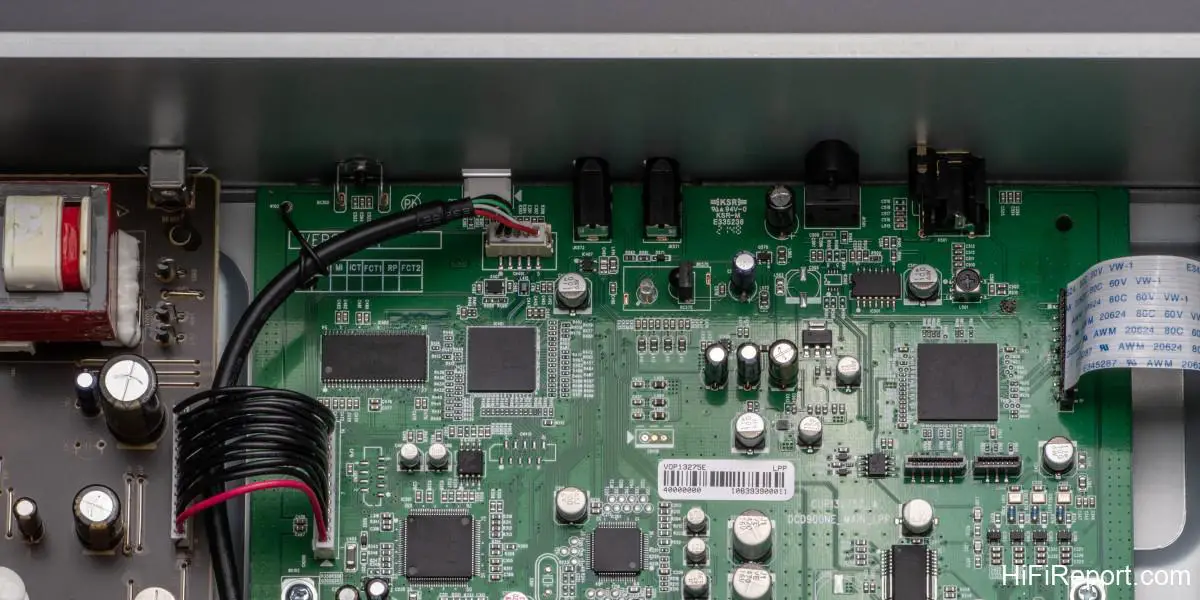
Delving into the DCD-900NE’s circuit design, the digital-to-analog conversion circuitry in this CD player employs a design philosophy similar to the PMA-900HNE. This includes the implementation of a high-precision oscillator aimed at significantly reducing jitter, a common issue generated during digital audio transmission. Furthermore, the I/V conversion circuit features high-performance Op-Amp chips known for their high slew rates, imbuing the player with enhanced dynamic characteristics.
Perhaps most notably, it incorporates Denon’s exclusive “Advanced AL32 Processing Plus” technology.
This “Advanced AL32 Processing Plus” technology is specifically designed to oversample and optimize the audio quality from CD sources. Even when reading standard 44.1kHz/16bit lossless signals, it automatically oversamples and expands the data to a high-resolution specification of 705.6kHz/32bit. This sophisticated sampling process utilizes Denon’s unique high-precision algorithms for compensation, aiming to restore a more linear frequency response.
According to the manufacturer’s explanation, this technique allows for precise compensation of richer musical detail while remaining utterly faithful to the original sound, subsequently improving soundstage localization and the perceived texture and depth of low frequencies.
To further elevate the DCD-900NE’s sound quality, Denon has specifically engineered the previously mentioned I/V conversion circuit and differential amplifier circuits with demonstrably lower noise and higher efficiency compared to earlier models in this class. This meticulous design ensures audio signals are transmitted in their purest and most complete state.
Internal Design and Power Supply
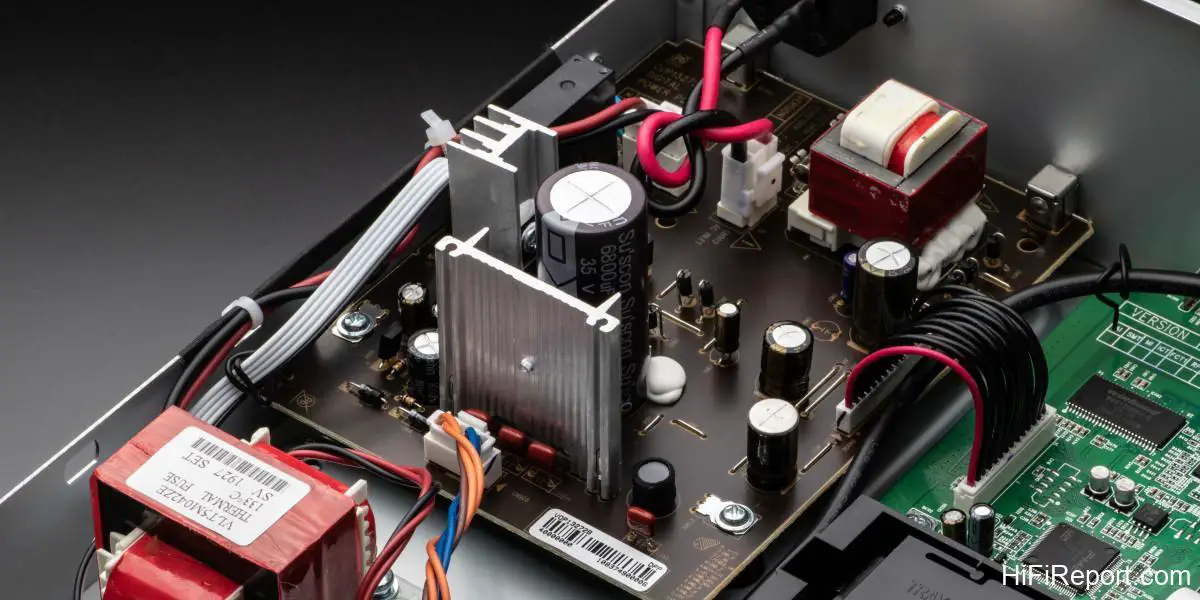
Moreover, because the amplifier circuitry in this CD player utilizes a larger PCB, Denon engineers had ample space to implement a symmetrical layout. This symmetrical arrangement enhances the signal path’s symmetry between the left and right channels, leading to more precise imaging and a greater sense of spatial detail.
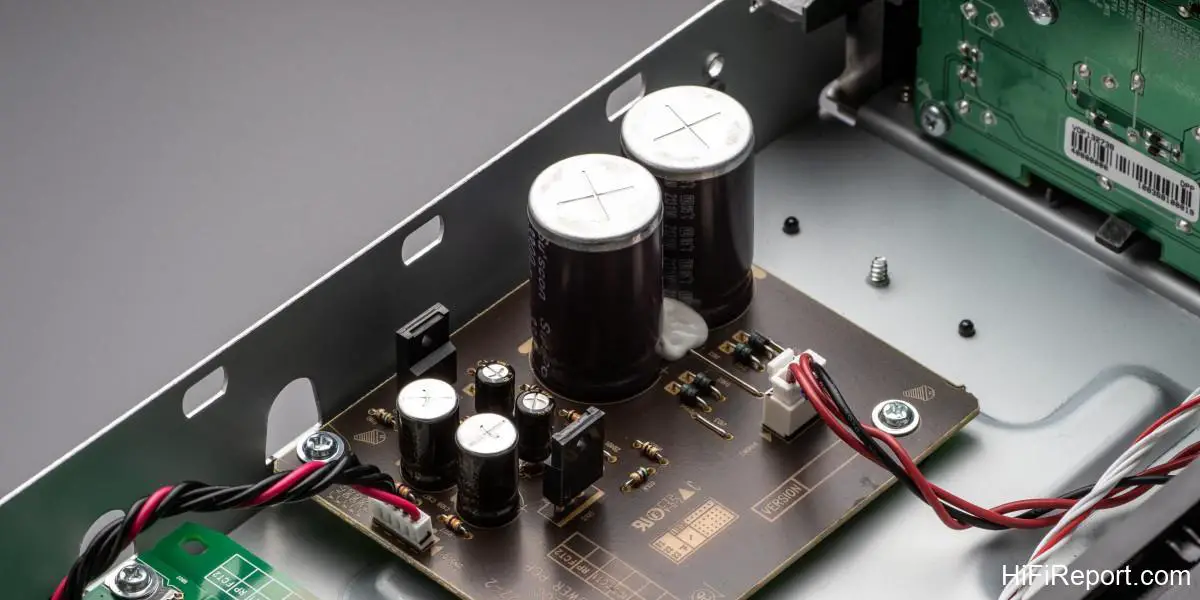
Concerning the power supply, the DCD-900NE’s development process included improvements benchmarked against the higher-end DCD-A110, allowing it to provide more stable and sufficient power to its internal components. Denon specifically opted for an independent power supply design for the digital and analog circuits, ensuring power is supplied separately to these distinct sections. This approach effectively helps reduce noise interference during sensitive audio signal transmission.
Additionally, to sculpt this CD player to meet Denon’s ideal “Vivid & Spacious” sound quality standard, the development team thoughtfully incorporated numerous Hi-End grade audiophile components throughout the design.
These components are the fruits of long-term collaboration between Denon’s acoustic engineers and specialized parts manufacturers, essentially proprietary high-grade components tailored for the brand. This includes specific carbon film resistors, Melf resistors, and multilayer polymer film capacitors used in both the digital and analog circuits, all contributing to the player’s enhanced sonic refinement.
Particularly worthy of mention is the large-capacity electrolytic capacitor, hand-picked by Denon’s esteemed Sound Master, Shinichi Yamauchi. With a generous capacity of 3,300μF, it not only ensures a stable and ample power reserve but also contributes to a more linear and accurate frequency response for the audio signal.
Robust Vibration Control
Experienced audiophiles understand that vibrations are inevitably generated by the power transformer and the disc drive mechanism during operation inside any CD player. These vibrations can be significant factors capable of impacting audio signal transmission quality. To counteract this potential issue, Denon has specifically integrated a “Direct Mechanical Ground Construction” design into the DCD-900NE.
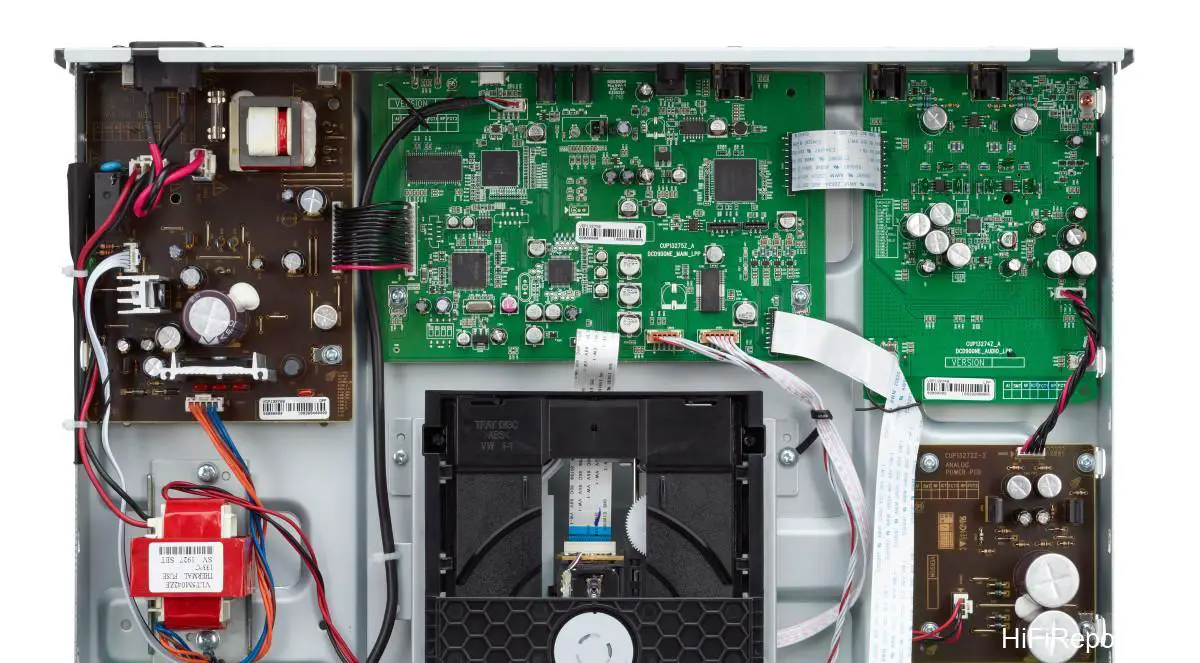
This design strategically positions the power transformer near the feet and the reading mechanism in the precise center of the chassis. Combined with the chassis’s unique damping structure, this construction significantly absorbs vibrations originating from both the transformer and the reading mechanism, ensuring the audio signal remains unaffected by unwanted resonances from the moment it’s read to the moment it’s output.
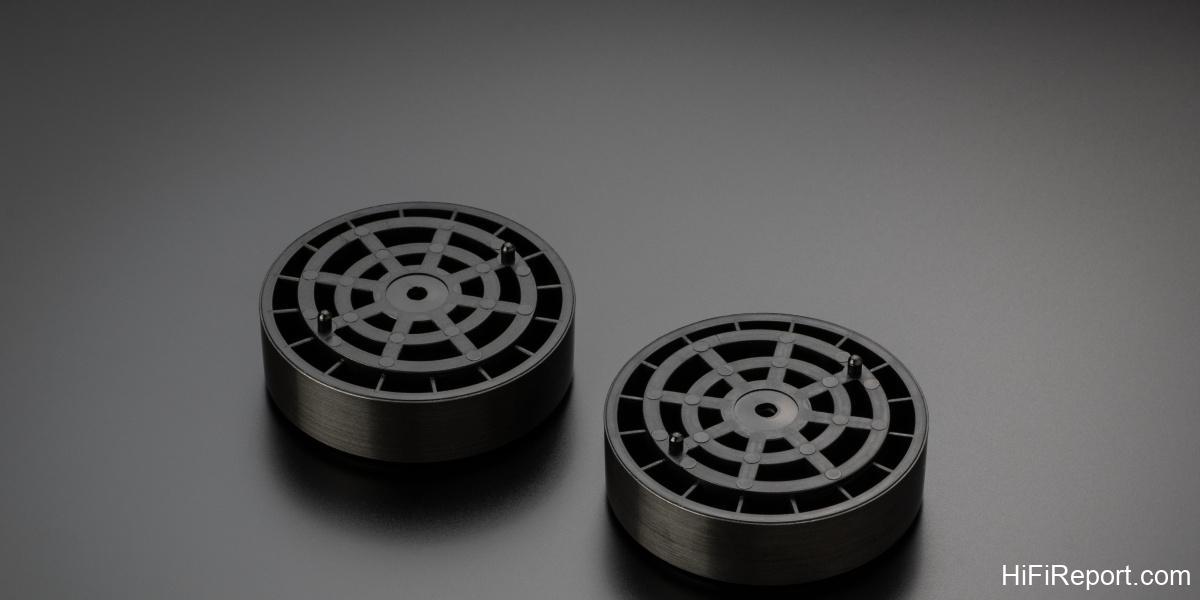
To further bolster the DCD-900NE’s vibration damping capabilities, Denon has carefully selected the same type of foot design used in their higher-end models. You’ll notice the round rubber feet feature a special mesh structure in the center. According to Denon, this particular structure is highly effective at reducing sound coloration caused by the player’s operation, resulting in audio reproduction that is closer to the original signal’s integrity.
Functionality and Connectivity
Functionally, the player includes a useful Source Direct feature. When activated, this function conveniently switches off the LED display and the digital output to eliminate any potential noise interference from these sources, further minimizing sound coloration.
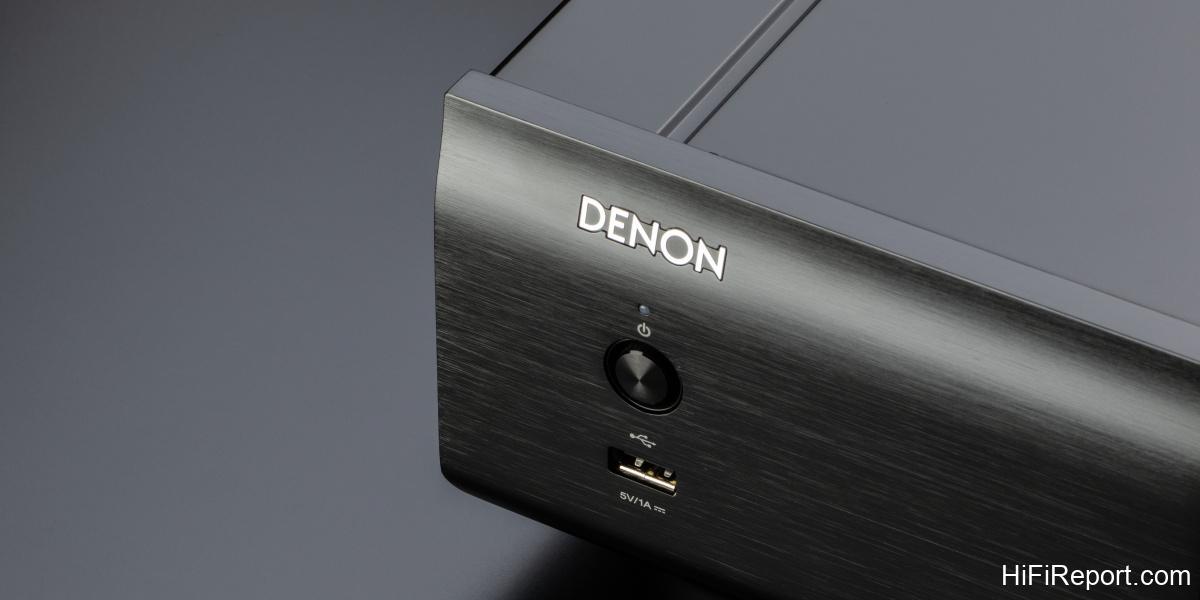
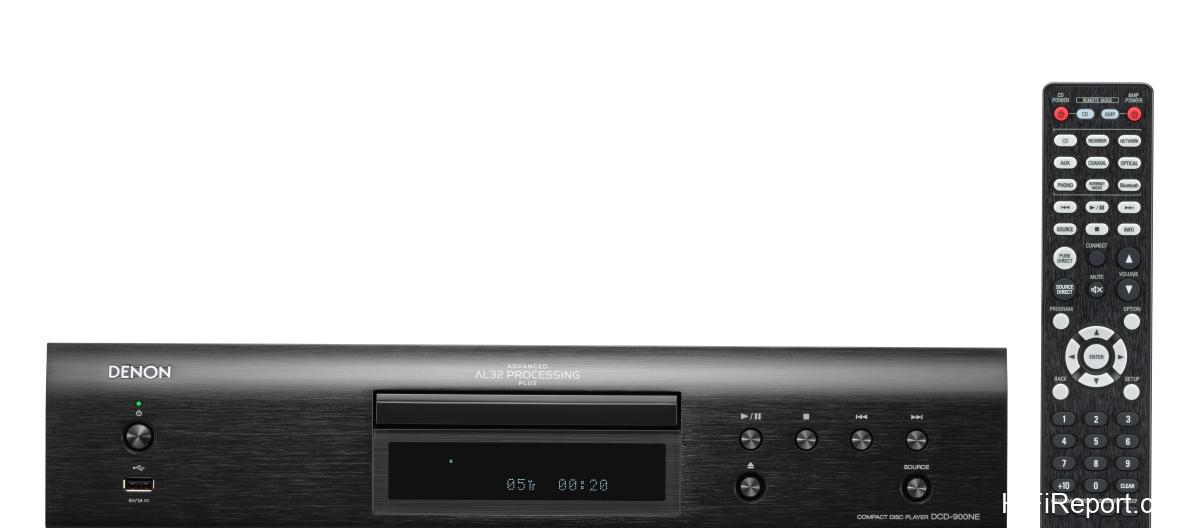
From an aesthetic perspective, the DCD-900NE shares a strikingly similar design language with the PMA-900HNE. Whether placed side-by-side or stacked, they present a cohesive and rather impressive “system” look. Visually, the DCD-900NE maintains a minimalist approach. The front panel features only the CD tray, control buttons, power button, and a USB slot, perfectly aligning with modern tastes for simplicity and clean design.
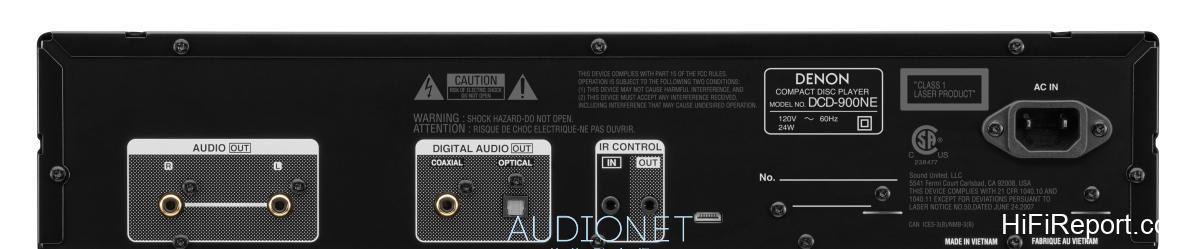
The rear panel is equally uncluttered, containing solely an AC inlet, one set of gold-plated RCA analog outputs, one gold-plated digital coaxial output, one digital optical output, and one set of gold-plated IR control input/output terminals. This is precisely the configuration you’d expect from a classic, dedicated CD player. Furthermore, these output terminals are manufactured to Denon’s high standards, offering excellent connection stability and transmission efficiency.
Discussing the Specifications
According to Denon’s official data, when the DCD-900NE plays audio in PCM format, it boasts an impressive signal-to-noise ratio of 115dB, a dynamic range of 110dB (24bit), and harmonic distortion figures of 0.002% (24bit) and 0.0025% (16bit). When playing high-resolution DSD audio, the performance remains stellar, with a signal-to-noise ratio of 110dB, dynamic range figures of 108dB (DSD) and 101dB (16bit DSD), and a harmonic distortion figure of 0.0015%.
These specifications clearly indicate excellent performance regardless of whether you’re playing PCM or DSD audio formats. However, it’s important to note that when playing DSD files, the player automatically disables the digital audio output, meaning you can only utilize the RCA analog outputs in this mode.
Listening Experience: Setup and Usability
For the actual listening evaluation, I paired the DCD-900NE with the PMA-900HNE, leveraging their complementary design as a complete system. The loudspeakers used were our standard review equipment, the Pioneer S-1EX floorstanders. During use, I discovered several thoughtful and convenient small details about this CD player. For instance, the remote control is designed to also operate the PMA-900HNE, simplifying system control.
The LED display offers four adjustable brightness levels, and the unit automatically enters standby mode after 30 minutes of inactivity. These subtle features collectively help the DCD-900NE integrate more seamlessly into an audiophile’s daily listening habits.
Listening Experience: High Frequencies
Listening to the album “Brahms: The Hungarian Connection” with the DCD-900NE, I was immediately struck by the incredibly elastic and expansive harp lines. The strings possessed a palpable sense of solid, full-bodied power, both attacking and decaying with impressive speed and control.
In the later passages, when various instruments like the violin, French horn, and flute joined in, the distinct and subtle textures of each instrument remained clearly audible, allowing for effortless identification of their materials and timbres. At this point, I also specifically noted that the high frequencies reproduced by this CD player exhibited remarkably rich extension and an abundance of fine detail.
For example, when listening to Nemanja Radulović’s album “Journey East,” the subtle string textures of the violin were rendered with exquisite detail. Particularly noticeable were the decays of the strings at the end of notes, which had a captivating visual quality of gradually fading away. The overall character was bright yet smooth. This delicate and refined presentation further highlighted the player’s excellent high-frequency performance.
Similarly, when listening to Sven Helbig’s “Pocket Symphonies” album, I heard the violins and piano in the high frequencies with a clear, lustrous, and almost crystalline quality. Frankly, if blindfolded, you might genuinely struggle to discern that this was “just” CD quality sound playback.
While the DCD-900NE reproduced the violin with a delicate and refined texture, it never felt soft or slow. This is primarily due to the sheer abundance of fine detail, which allows the strings to exhibit such nuanced characteristics without losing their energy. This impressive quality is also evident with other instruments.
For instance, listening to Chopin’s “Nocturnes” performed by Maria Joao Pires, I could distinctly hear the pianist’s touch and the precise articulation of her fingers on the keys. Each piano key strike also had rich and complex decay details. The individual notes seemed to vary in weight and presence depending on whether they were in the high or low frequencies, contributing to a realistic presentation.
Even with solo piano pieces, it effortlessly created a captivating stage effect with great depth and a wide sense of spaciousness. This demonstrates the excellent performance of this CD player across both high and low-frequency extension.
Listening Experience: Mid-Range
In the mid-range, the DCD-900NE exhibits a substantial, full, and solid presentation. Listening to the album “Beneath the Skin” by the band Of Monsters and Men, the distinct vocal details of both the female and male lead singers in their dual vocal arrangements were clearly audible. You could truly feel the texture of the gentle and delicate female voice as well as the rugged and powerful male voice.
Even subtle vocal nuances, pitch shifts, and breath details were rendered distinctly, allowing the listener to fully appreciate the singers’ genuine emotions and the unique charm and character of their voices.
This full and rich mid-range characteristic was also fully apparent when listening to the albums “” (Wedding Road) by the band (Shallow Bay) and “” (Bird Bird Bird) by deca joins. The vocalist’s large vocal image was placed firmly in the center of the soundstage with impressive presence. I could hear very subtle details in the singing, and the emotionally charged vocals were truly a pleasure to listen to.
At this point, I also specifically noticed that this CD player not only faithfully reproduces the vocal and instrument decays deliberately created by the recording engineer but also presents a complete, layered, and three-dimensional stage picture, allowing the listener to naturally and effortlessly immerse themselves within the soundstage.
Listening Experience: Low Frequencies
I also consistently found that the low-frequency texture rendered by the DCD-900NE was exceptionally refined and detailed. For instance, on the aforementioned deca joins album “,” I could clearly hear the linear descent and texture of the jazz drums. In track 4, “” (Mist), the drum sounds were presented with a very large, impactful presence at the furthest layer of the sonic picture.
The full, solid texture made the track sound more powerful and engaging without negatively affecting the clarity or balance of the overall presentation. This impressive quality was also evident when listening to the band Meiyo’s album “” (King of Colorful Treasure Mountain).
As most tracks on this album feature very large and impactful bass effects, I could hear a very distinct sense of low-frequency impact and punch, yet simultaneously, there were excellent details in the bass extension and texture. While the overall soundstage felt energetic and vibrant, it consistently remained well-controlled and balanced.
Overall Sound and Conclusion
In summary, this CD player shares a very similar sonic signature with the amplifier it is designed to pair with. The high-frequency extension is incredibly rich in fine detail, and the low frequencies offer linear and textured extension. The mid-range is full, robust, and solid. Overall, the sound presents a balanced, pyramid-like character, wide at the bottom and gradually tapering towards the top.
Regardless of the music genre, it consistently provides a balanced and expansive soundstage with impressive layering and depth. For a product in its class, this represents truly outstanding performance.
In an era where dedicated CD players are becoming increasingly scarce on the market, this Japanese-made player, crafted with genuine dedication and offering exceptional sound quality at an accessible price point, is undoubtedly an affordable piece of equipment that serious CD enthusiasts should not overlook.
Specifications
* Type: CD Player
* Inputs: CD, CD-R, CD-RW, USB
* Outputs: Analog RCA, Digital Coaxial, Digital Optical
* Supported Audio Formats: DSD, WAV, FLAC, AIFF, ALAC, MP3, WMA, AAC
* Signal-to-Noise Ratio: 115dB (PCM), 110dB (DSD)
* Dynamic Range: 110dB (PCM, 24bit), 108dB (DSD)
* Total Harmonic Distortion: 0.002% (PCM, 24bit), 0.0015% (DSD)
* Maximum Audio Specifications: 24bit/192kHz (PCM), 5.6MHz (DSD)
* Power Consumption: 24W, 0.3W (Standby)
* Dimensions (W.H.D): 434×107×328mm
* Weight: 4.9kg
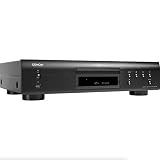
- LISTEN TO YOUR FAVORITE SONGS WITH IMPECCABLE PRECISION – Denon’s advanced AL32 Processing Plus technology, coupled with an innovative circuitry structure in this music CD player for home, accurately reproduces sound closest to the original recording
- MASTERFUL AUDIO – This mini CD player is designed to playback CDs, CD-R/RW, MP3, WAV/FLAC, and WMA & DSD files, supporting detailed, clear audio and lossless music playback
- ELEVATE YOUR LISTENING EXPERIENCE – Add Denon’S PMA-900HNE stereo amplifier for an unparalleled audio experience; bring out the best in audio and give an instant boost to your treasured CD collection
- SLIM, VIBRATION-RESISTANT DESIGN – This stereo CD player fits Power Transformers next to insulators inside the slim 4” body, preventing vibrations; exclusive Direct Mechanical Ground Construction delivers pristine sound, free of interferences
- HIGH-GRADE AUDIO COMPONENTS – With a 110-year legacy of designing premium audio components, trust the Denon DCD-900NE compact CD player for home; it has undergone rigorous testing with solid build quality & sound quality which is built to last