
Divini Audio PT-Z 7N-OCC Flagship Power Cable Review
Not long ago, I reviewed Divini Audio’s flagship speaker cable, the TRANS-Z, and was thoroughly impressed by their manufacturing prowess. This cable boasts a beautiful aesthetic, with the cable body, connectors, and splitter all designed in Taiwan, crafted from precious solid wood combined with CNC aluminum structures. In terms of exquisite craftsmanship and technical execution, it stands toe-to-toe with products from major European and American cable manufacturers.
What impressed me more was Divini’s unique tuning philosophy. The TRANS-Z’s sound lacks any pleasing coloration, instead focusing on playback accuracy, faithfully reproducing the musical structure, instrument timbres, and inherent beauty. After auditioning the TRANS-Z speaker cable, I immediately called the manufacturer to express my admiration.
During the conversation, Mr. Wu from Divini also informed me that there was another cable in the flagship Z series – the PT-Z power cable – whose sound performance would be even more astonishing. Finally, this month, Divini arranged for the review of the PT-Z power cable, allowing me to once again experience the capability of their flagship cables.
Exquisite Design and Materials
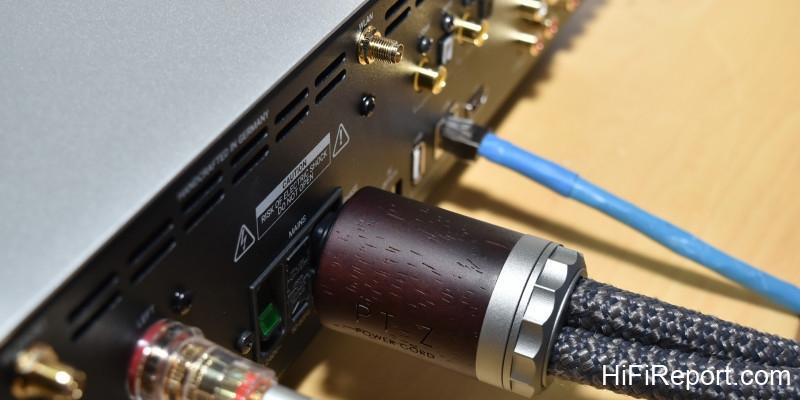
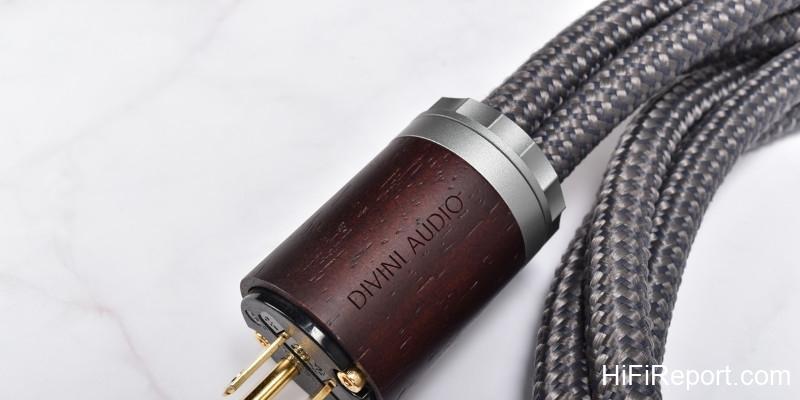
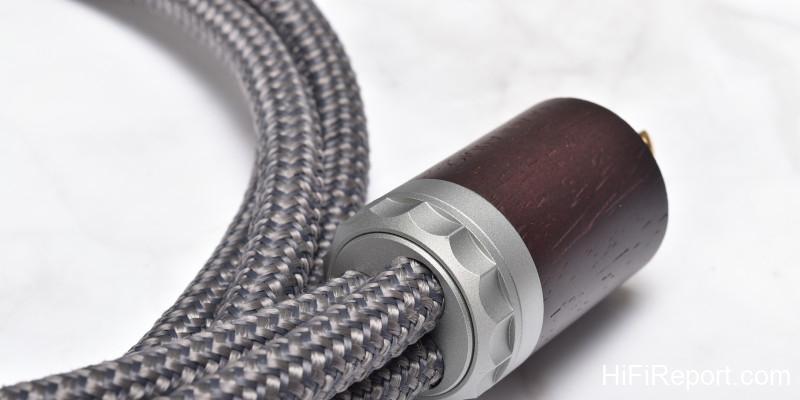
The Divini PT-Z power cable shares a similar design lineage with the speaker cable. The power plug and connector bodies are crafted from CNC-machined aluminum, finished with a matte texture. Compared to most audio products manufactured in Taiwan, Divini cables have an incredibly refined feel. Even the wave-like grooves on the bottom are smooth and non-abrasive; the metalwork is truly of boutique quality.
The plug housing is further made from specially selected Taiwanese Red Sandalwood, revealing a warm wood grain that complements the metal, adding visual depth. This combination of materials also leverages their distinct resonant characteristics to reduce electromagnetic interference and enhance vibration damping.
Divini invested significantly in developing their own power plugs, a choice closely linked to the PT-Z’s unique design. The cable’s most significant feature is the separation of the live, neutral, and ground conductors into independent runs. Consequently, the cable entry point on the plug has three equally sized CNC-machined circular openings. This is deliberately done to provide maximum isolation between the three conductors, minimizing mutual interference.
Therefore, this power plug is specific to this cable and not interchangeable with standard commercially available plugs. Unlike the brass conductors typically used in standard plugs, the PT-Z sockets utilize pure copper, which offers superior conductivity, albeit at a higher manufacturing cost. A layer of pure gold plating is then applied to prevent copper oxidation, ensuring the power cable maintains optimal conductive efficiency.
Meticulous Internal Construction
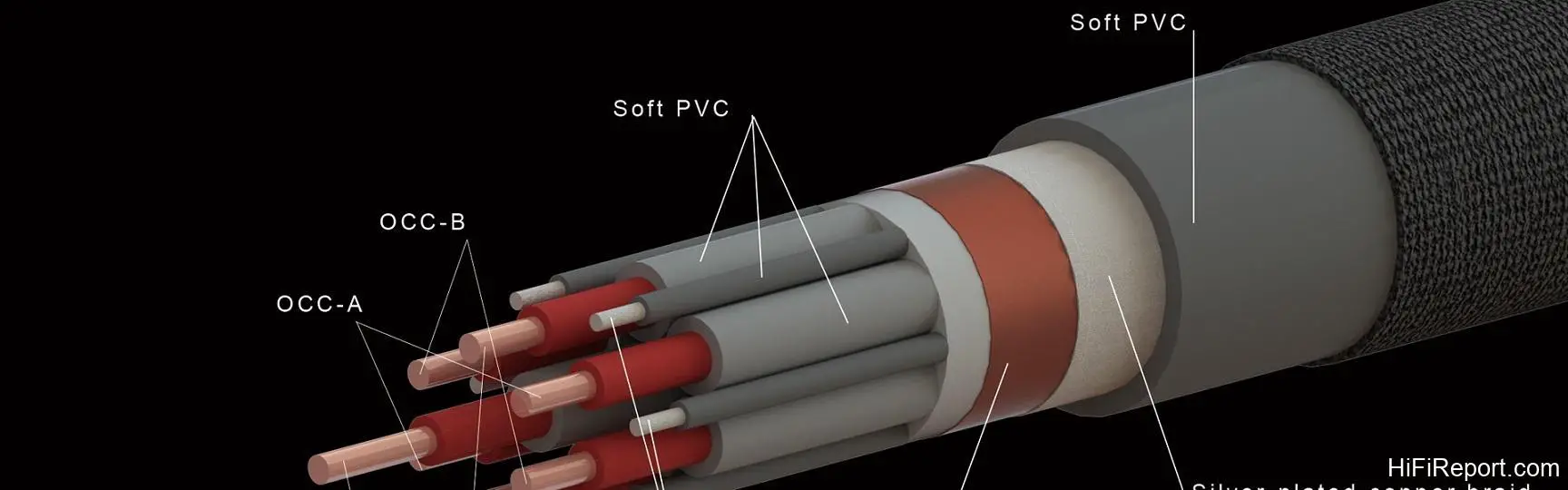
The construction of the PT-Z cable body is also exceptionally meticulous. Firstly, standard power cables typically use a thicker gauge for the live and neutral wires while treating the ground wire as a secondary conductor and using a thinner gauge. However, Divini believes this approach can lead to fluctuations in ground potential, negatively impacting sound quality. Therefore, the PT-Z employs conductors of identical gauge and strand count for the live, neutral, and ground wires.
These three conductors are kept entirely separate. Each conductor has a substantial cross-section equivalent to 10 AWG, providing a more ample ground area for stable power grounding and enhancing sonic purity.
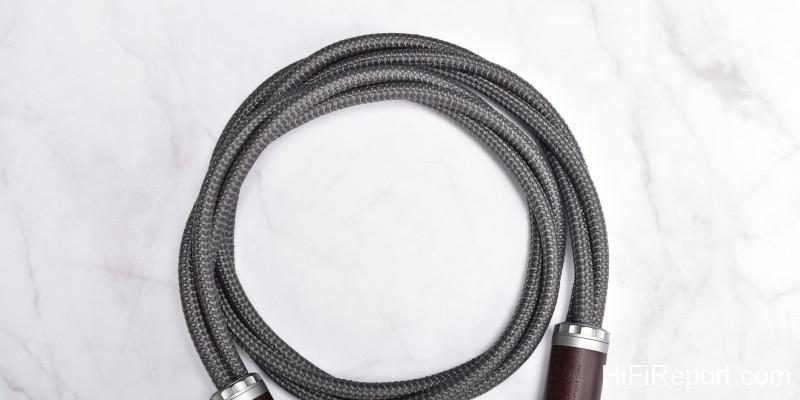
Each conductor consists of 7 strands of 7N OCC single-crystal copper. Each individual strand is insulated with two layers, the outer layer being flexible PVC. Furthermore, the 7 strands within each conductor have entirely different gauges, allowing signals across various frequency ranges to pass through completely and reducing the impact of the skin effect. Between the conductors, cotton fiber fillers are used to enhance vibration damping within the cable.
The exterior is shielded with two layers: a copper foil and a silver-plated OFC braided mesh, effectively blocking external electromagnetic interference.
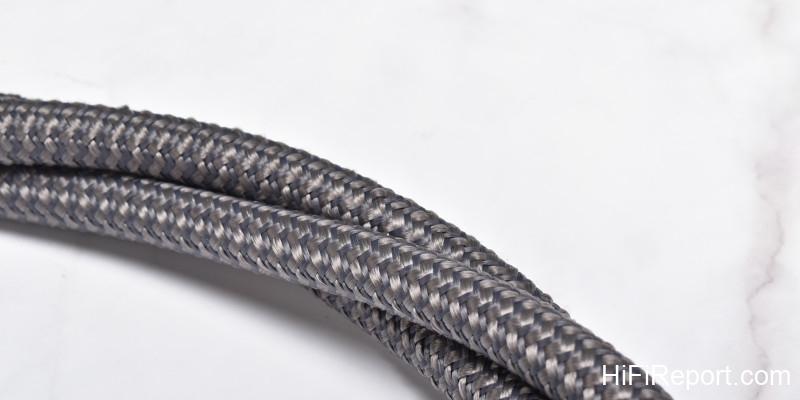
Following this, another layer of PVC serves as the outer jacket, and finally, we have the visible grey dust net. Although the PT-Z’s internal structure is robust, resulting in a substantial overall diameter of 39mm and a visually impressive heft, its design with three independent twisted conductors makes it surprisingly more flexible than single-body power cables of comparable diameter. During practical use, even with equipment placed close to a wall, bending the cable poses no difficulty.
Listening Impression: Headphone System
For testing, I first used the COS H1 headphone amplifier paired with Focal Stellia headphones. Playing the Quartetto Italiano’s rendition of “The Art of Fugue” by Bach, I immediately noticed that the instruments sounded larger and more full-bodied after switching to the PT-Z power cable. The cable provides ample energy, yet it’s refined, not stiff, making the string textures sound dense and solid, with bow strokes rendered vividly and naturally.
The PT-Z’s frequency balance is exceptionally neutral. The violin tone wasn’t the type that sounds excessively opulent or ethereal; instead, it was neutral, unadorned, and sweet. The decay after notes revealed a rich wooden resonance, and the shimmer was captivating. The cello also possessed high density in its nasal tone, with clear, steady body resonance and bow textures audible. Furthermore, the PT-Z creates a jet-black background, increasing the separation between the four instruments.
In the fugue, the four violins sometimes weave together in complex layers, and sometimes individual voices break apart, allowing the listener to savor the lively interplay between the instruments and experience more nuanced musical layers.
Next, I played “Bird” from Canadian singer Dominique Fils-Aimé’s album “Nameless.” The PT-Z’s portrayal of vocals is equally neutral but far from bland. It faithfully reveals the artist’s subtle and natural vocal nuances. The vocal image has density and weight. The full midrange not only lends intimacy to the voice but also renders sibilance smoothly and non-irritatingly, allowing for detailed, dense throat textures to be heard.
The double bass in this track is particularly exaggerated in the recording, and its energy can easily become uncontrolled. However, under the PT-Z’s refinement, the bass control is superb. Every plucked note reveals a rich, “beefy” texture, and the solid impact hits you directly, with absolutely no loose or unrestrained energy.
Listening Impression: Speaker System
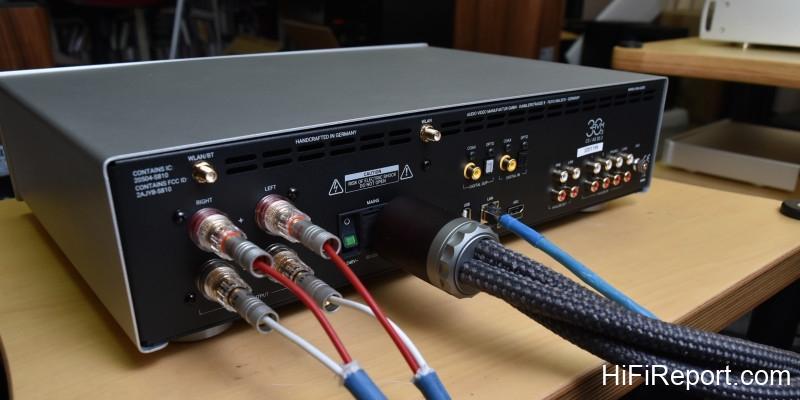
I then connected the PT-Z to an AVM CS 30.3 all-in-one streaming amplifier paired with ELAC Vela BS404 bookshelf speakers. This purely German audio system typically has a rational, precise sound signature. However, introducing the equally neutral PT-Z paradoxically softened the musical presentation. From the first note, I felt as though instruments and voices had taken a super-strength pill, sounding incredibly solid and full-bodied. Sound density reached an absolute peak!
Playing “N.E.W.” from the “Blue Giant” anime film soundtrack, the opening saxophone solo emerged from a dark background, a life-sized image standing front and center. The texture was vivid and palpable. The playing felt imbued with boundless energy; every breath intake and exhale conveyed lively power and elasticity. The “key clatter” sound produced by the air friction within the instrument’s body became utterly penetrating.
As the rhythm section entered, the piano’s bass notes sounded deep and clear, with sharp, elastic key strikes. Coupled with the powerful kick drum hits, the dynamic range was explosive, and the bass notes started and stopped with speed and precision, instantly invigorating the listener. Many power cables I’ve encountered that prioritize speed often sacrifice some body and energy. I believe the PT-Z’s most remarkable trait is its powerful dynamics combined with ample substance and detail.
It feels like a heavyweight boxer throwing punches that are both fast and fierce, delivering pure exhilaration!
The PT-Z doesn’t just provide a stable foundation; all instruments exhibit extremely high density, as if built from countless substantial details, presenting vivid and palpable forms. Under these characteristics, the piano’s notes feel particularly weighty, solidifying in the space one by one. The upper register is filled with a moist radiance, allowing for the delicate nuances of the wood to be heard without sounding thin.
When encountering heavy bass chords, you can feel the hum of the piano’s soundboard resonating in the room, painting a realistic picture of the performance.
Next, I played the seventh track, “Night Journeys,” from the familiar “Across The Stars” album. The PT-Z’s transient response across the entire frequency range is outstanding. From the opening, you immediately sense a deeper, more expansive soundstage. The space feels transparent, as if a thin mist has lifted. The massive orchestral forces now have clearer positioning. When the low strings play together, you feel the bass energy filling the entire space with a sense of envelopment.
The contrabass strings vibrate deeply and loosely, providing a thoroughly satisfying listening experience.
The PT-Z’s slightly rounded treble contour lends a captivating sweetness to the violin, even during Mutter’s fiery and intense playing. The lines are smooth and full-bodied. The moment the bow strikes the string, you can clearly perceive the subtle dynamics of the player’s effort. Strong bowing in the upper positions is also very penetrating. Even in the extreme high frequencies, there is still substance, without any sharpness or thinness.
When the full orchestra plays together, it creates a grand and expansive scale. Within the massive musical dynamics, the orchestral arrangement remains uncluttered, allowing you to hear the clear timbre and texture of every instrument.
Overall Sonic Impact and Conclusion
The Divini Audio PT-Z power cable delivers neutral and accurate sound reproduction, making it versatile for any system. It’s a potent remedy for audio setups lacking energy or vitality, providing a significant tuning effect. If your system is already well-balanced, the PT-Z serves as an exceptional upgrade, enhancing the tangibility of voices and instruments, completing the musical picture, and delivering comprehensive sonic improvement.
Specifications
* Type: Power Cable
* Conductor: 7N OCC Single Crystal Copper
* Shielding: Copper Foil + Silver-plated OFC Braided Mesh
* Conductor Gauge: 10 AWG x 3c
* Outer Diameter: 13mm x 3