
DS Audio DS Master3 Review
Before diving into the DS Audio DS Master3 optical cartridge system, I took a moment to look back at my previous reviews. It turns out it’s been six years since I last listened to the DS-E1 optical cartridge – time certainly flies.
Most vinyl enthusiasts have years of experience and insights into MM (Moving Magnet) and MC (Moving Coil) cartridges. However, the unique technology behind how optical cartridges retrieve analog signals offers high-end vinyl lovers a fresh avenue to explore, uncovering new layers of enjoyment in playing records.
Significant Progress, More Models
In the intervening years, the entry-level DS-E1 has evolved into the third-generation DS-E3. The Master, which was the flagship model back then, has now progressed to the DS Master3. What was once the top tier is now the third in line, with the even higher-end Grand Master and Grand Master EX sitting above it in the lineup.
My last listen to the DS-E1 at HiFiReport almost led me to an impulsive purchase. Fortunately, the editorial department’s two turntables only have space for one tonearm each, leaving no room for a third cartridge. So, when KECES recently mentioned they wanted to send a DS Audio cartridge for review, I quickly replied, “Please, don’t send it. The editor-in-chief will come to listen himself.” And so, a time was set for me to visit the KECES listening room in Banqiao.
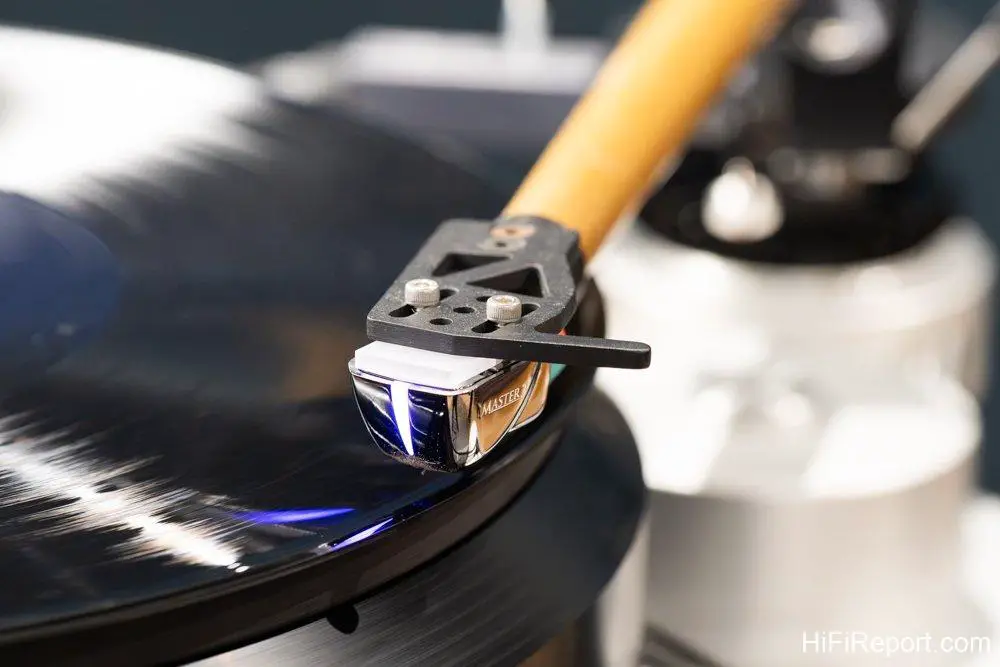
Why would the editor-in-chief seem scared when someone offers to send a DS Audio optical cartridge for testing? Of course, I’m scared! Mounting a cartridge always carries risks. It’s easy to accidentally damage it, and my eyesight isn’t what it used to be – I’m clumsy. Even with assurances that I wouldn’t have to pay if I broke it, how could I possibly accept that responsibility? If you break something expensive, you pay for it. That’s just how it works in the real world, isn’t it? Since the editor-in-chief was coming in person, there was no need to stick to the entry-level model. KECES generously brought out the high-end DS Master 3 cartridge system to give me a real eye-opener – or rather, ear-opener! Frankly, I was quite excited for the opportunity to hear a high-end DS Audio cartridge.
Optical vs. Laser Turntables
Speaking of optical cartridges, many people mistake them for laser systems, but they are different things. The term “laser turntable system” usually refers to the Japanese ELP system, first introduced in 1989. Laser turntables use a laser beam as the “pickup head” for vinyl. The laser light is projected onto the groove at a specific angle. As the record spins, changes in the width and depth of the groove cause the angle of the laser beam to vary, retrieving the analog signal. Since the laser beam itself has no weight, the vinyl record theoretically experiences no wear.
No wear on the record sounds fantastic, right? So why aren’t they popular? Because there’s no tracking force, the sound often lacks substance and solidity, feeling light and airy. It also struggles with density. Furthermore, optical reading is very susceptible to dust, making pops and clicks unavoidable. Despite this, laser turntables still have a niche demand, particularly in the world’s “talking book libraries.” To ensure their vinyl audio collections can be preserved for future generations, these libraries often choose laser turntables as their playback equipment.
Revolutionary Product of its Time
As for optical cartridges, they aren’t entirely new either. JVC introduced them in the 1970s, marketing them as a “revolutionary product for vinyl cartridges.” How were they considered “revolutionary”? Both Moving Magnet (MM) and Moving Coil (MC) cartridges require the cantilever to carry either a magnet (MM) or a coil (MC) at its rear. Magnets are heavier, leading to slightly less extended high frequencies, but since the coil is external, more windings are possible, resulting in higher output voltage and potentially better low-frequency performance. MC cartridges can reduce the mass of the coil and use a larger external magnet, giving them an inherent advantage in the mid-to-high frequency range compared to MM. However, reducing the coil windings leads to lower output, requiring higher gain from the phono preamplifier, which can increase background noise.
From this, it’s clear that both MM and MC cartridges face inherent structural challenges. Crucially, both require the cantilever to bear mass (either a magnet or a coil), which impacts the stylus’s agility. Optical cartridges, however, employ a different principle. They place a shading plate at the rear of the cantilever, with a light source in front. The movement of the cantilever causes the shading plate to cast a varying shadow on a photo-sensitive element, which generates a voltage difference proportional to the analog music signal.
Photo-Sensitive Element Outputs Analog Signal
Using the voltage changes in a photo-sensitive element to retrieve the music signal from vinyl offers a significant advantage over MM or MC cartridges: output level. Through Phono-electric Conversion, the output voltage can reach up to 70 mV. This is easily ten times the output of an MM cartridge and dozens of times higher than an MC cartridge. Consequently, optical cartridges offer greater musical dynamics, and their dedicated phono preamplifiers require less gain, allowing for a quieter background.
Reading this, some might wonder: If this technology appeared over fifty years ago and offers such a large output advantage over traditional MM and MC cartridges, why was it unpopular for so long? And why is DS Audio seemingly the only company engaged in this “exclusive business” of making optical cartridges?
LED Revives Optical Cartridges
Indeed, the technical architecture proposed for optical cartridges to retrieve analog signals from vinyl was truly “revolutionary” at the time. However, limitations in the technology available in the 1970s caused optical cartridges to disappear from the market after only a year or two. Back then, only incandescent light bulbs were available. Lighting up the optical cartridge would generate heat, and this heat would soften the cartridge’s damping materials. As a result, those early optical cartridges would start to sound poor after listening for a short while, and prolonged playback could even lead to failure. Cartridges that sound bad and are prone to breaking were naturally phased out by the market.
But how is DS Audio able to produce optical cartridges, and not just for a few years, but for over a decade? They first introduced the DS-001 in 2013 and have released numerous models since. The key is modern LED technology. LEDs provide sufficient brightness without generating heat. It’s truly creative of DS Audio to think of using LEDs for optical cartridges.
DS Audio’s Unique Position
Still, why is DS Audio the only company making “non-heating LED source” optical cartridges? The answer is simple: firstly, the technical barrier remains high. Even knowing that LEDs are used as the light source, the design of the shading plate, the precise assembly of the shading plate and photo-sensitive element, and the design of a dedicated RIAA equalization and phono preamplifier for optical cartridges are all complex endeavors.
Even if the technical development hurdles are overcome, to mass-produce and launch such a product requires competing with DS Audio. The question then becomes whether market demand can translate into sufficient profit to sustain the company. Considering the current audio market, vinyl remains a niche. DS Audio seized the opportunity, leveraging its technical advantage to establish market differentiation successfully. With over a decade of accumulated experience, they have solidified their position in this niche market. Consequently, no one else has emerged to challenge DS Audio directly, leaving them with a unique “sole proprietorship” in the optical cartridge market.
Proprietary Phono Stage Required
The analog signal retrieved from vinyl using an optical cartridge requires a different RIAA equalization curve than traditional RIAA. Therefore, a dedicated phono preamplifier specifically designed for optical cartridges must be used. This is why DS Audio cannot sell just the optical cartridge; they must also manufacture phono preamplifiers suitable for use with their optical cartridges.
Let’s look at the Master3 optical cartridge system, which includes the Master3 optical cartridge and the Master3 phono equalizer. While the Master3 optical cartridge should theoretically work with all of DS Audio’s phono stages, the “matching” pairing with the Master3 phono stage feels most appropriate.
Please note: DS Audio’s phono preamplifiers are designed specifically for optical cartridges. You absolutely must not connect traditional MM or MC cartridges to them. It’s not that you won’t get sound; you could potentially damage the MM or MC cartridge. This is because optical cartridges require power to light up the LED. Sending this power to a traditional MM or MC cartridge could burn out its coils. This is crucial to understand.
High Price Reflects Exquisite Materials and Craftsmanship
Comparing the DS Master3 to the entry-level DS E3, the high-end DS Master3 is roughly ten times the price. Why such a huge price difference? When I heard the entry-level DS-E1 before, I was almost tempted to buy it. The new DS-E3 has evolved further, with output increasing from 50 mV to 70 mV, yet the price hasn’t increased significantly. At around $2,728 USD (88,000 NTD) for the optical cartridge and dedicated phono stage, it’s not necessarily more expensive than an MC cartridge setup with a comparable phono stage. However, the $27,280 USD (880,000 NTD) DS Master3 is in a completely different league.
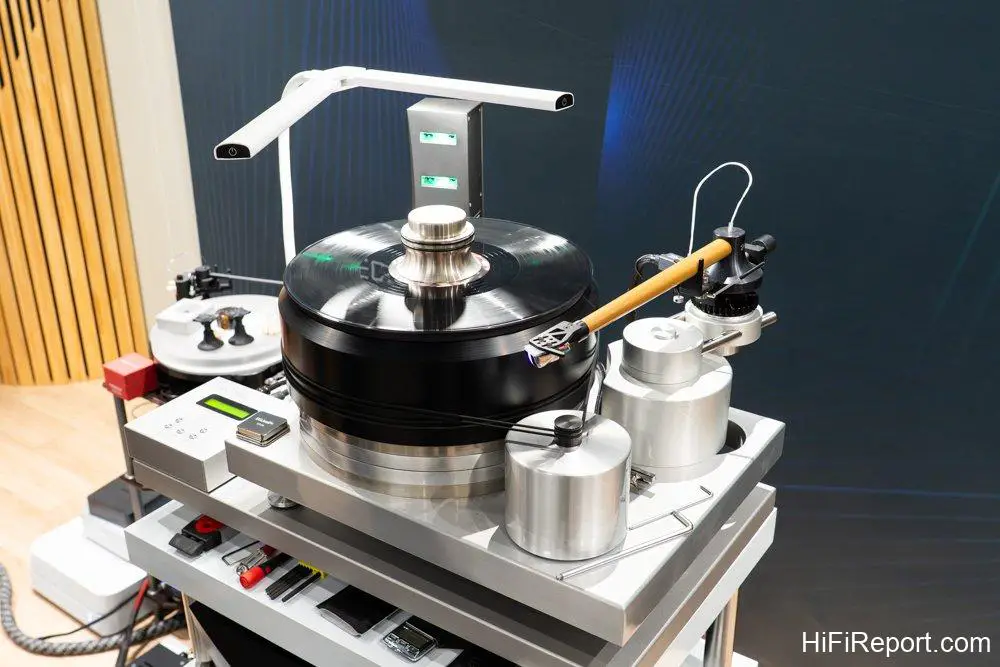
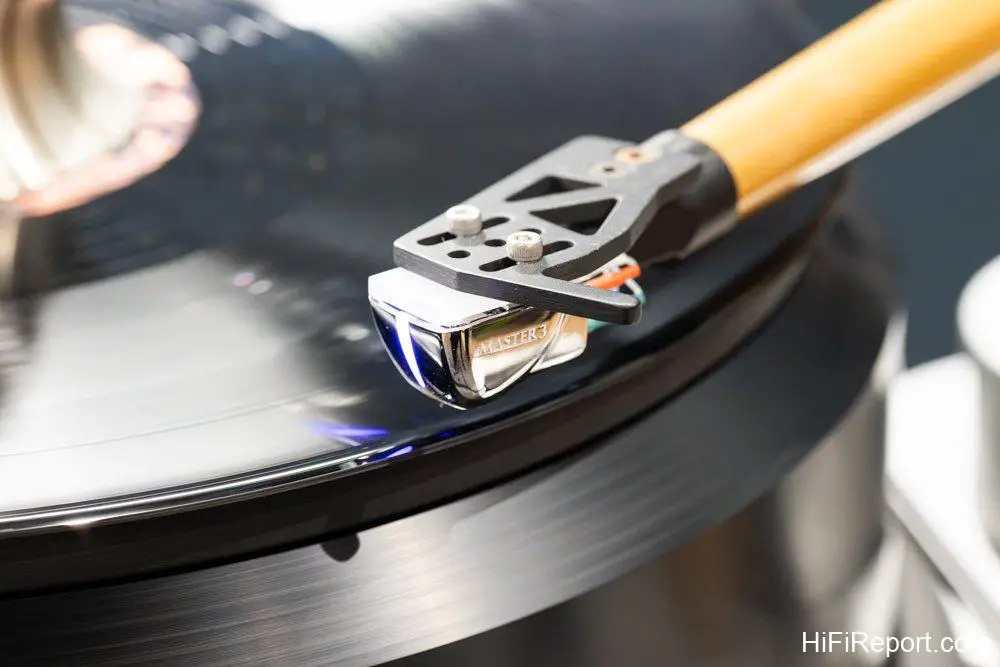
Why the substantial price increase for the DS Master3? It boils down to the exquisite materials used throughout. For instance, the cantilever of the DS Master3 cartridge is made of a square diamond rod, a material significantly more expensive than aluminum or boron cantilevers. The stylus tip is a Micro Ridge shape, a type of Line-Contact stylus. This shape has a larger contact area with the record groove than a traditional Fine-Line, but it doesn’t penetrate as deeply into the groove as a Shibata or Van den Hul, and its angle isn’t as steep, making alignment relatively less sensitive.
50% Lighter Shading Plate
What else has improved? The third-generation DS Master3 cartridge features a key technological advancement: the shading plate’s weight has been reduced by 50%. This makes the cantilever’s load lighter, allowing for more agile movement in retrieving information from the record groove, naturally leading to better musical detail. One reason for the shading plate’s weight reduction is a slight decrease in size; another is the switch from aluminum to 99.99% Beryllium, another expensive material. Furthermore, the internal wiring has been thickened by 1.6 times to further reduce impedance.
Regarding the cartridge body, the DS Master3 uses Super Duralumin, an aerospace-grade material. However, the cartridge body is quite small, and not much material is used, so this is likely not the primary reason for the cost. Rather, it’s the extremely limited production runs and precise manual metalworking involved; the labor costs probably outweigh the material costs.
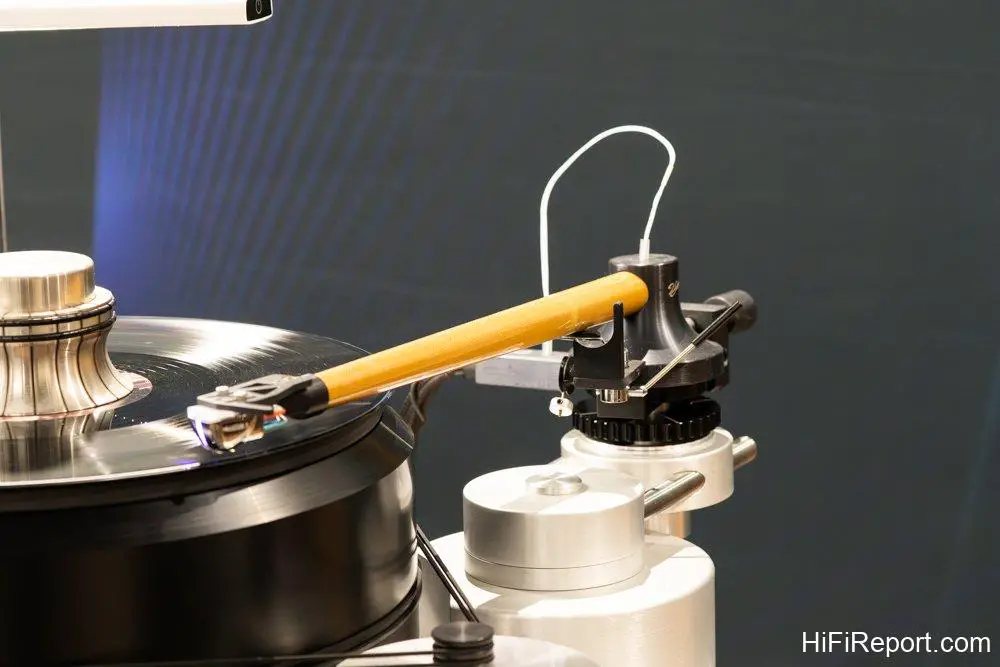
As for the DS Master3 phono equalizer, its sheer size hints at the substantial materials used. It weighs a remarkable 23 kilograms – for just a phono stage! Paired with the DS Master3 cartridge, this phono stage offers an output of up to 500 mV. Given that the DS Master3 cartridge outputs 70 mV, the gain required is significantly less than for traditional MC cartridges, making it easier to achieve a better signal-to-noise ratio.
Six Outputs with Three Transformers
The DS Master3 phono equalizer has only one RCA input but is equipped with three RCA outputs and three XLR outputs. It features a strictly dual-mono design, utilizing a total of three transformers. It offers six output modes: three with a 30 Hz low-frequency cutoff and three with a 50 Hz cutoff. These filter out extreme low frequencies to reduce interference from turntable rumble. The three outputs with 30 Hz and 50 Hz cutoffs also feature different rolloff slopes for the extreme low frequencies, allowing users to select the most suitable slope based on the characteristics of their turntable and tonearm.
KECES, Horns, and J. Sikora
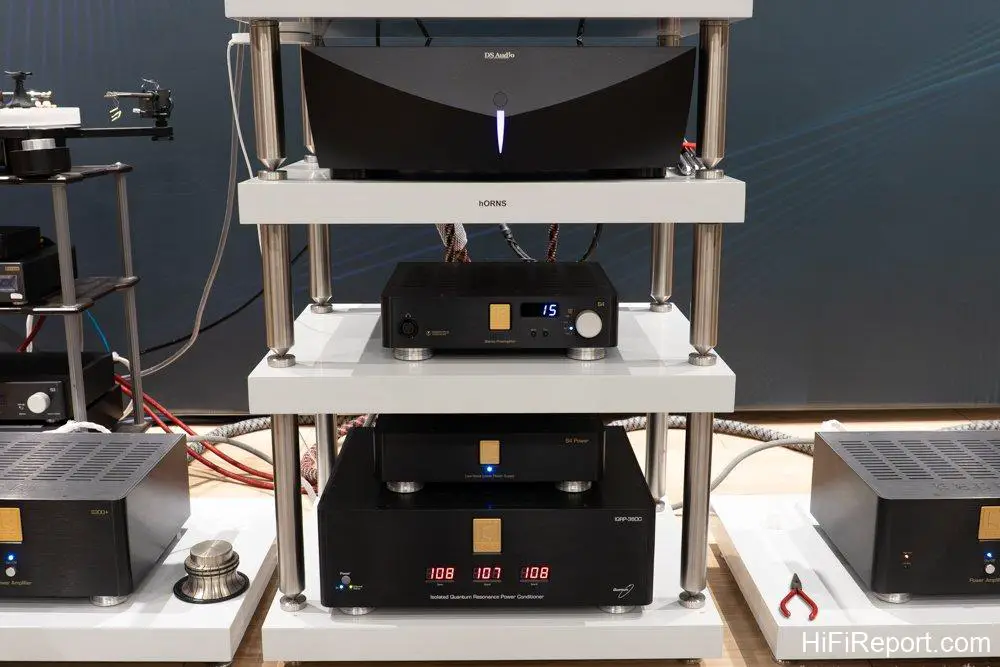
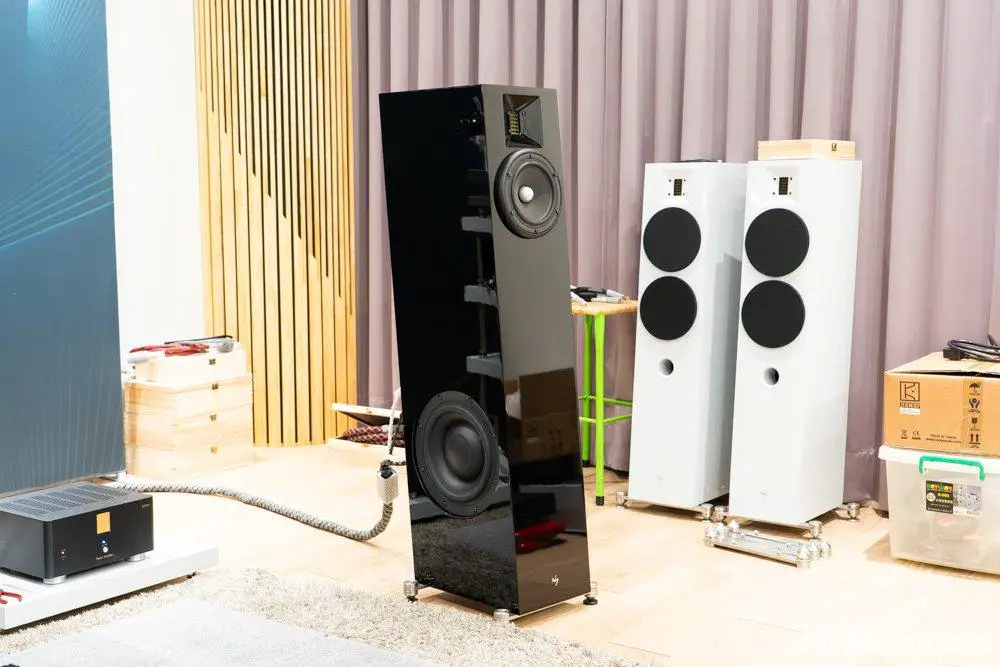
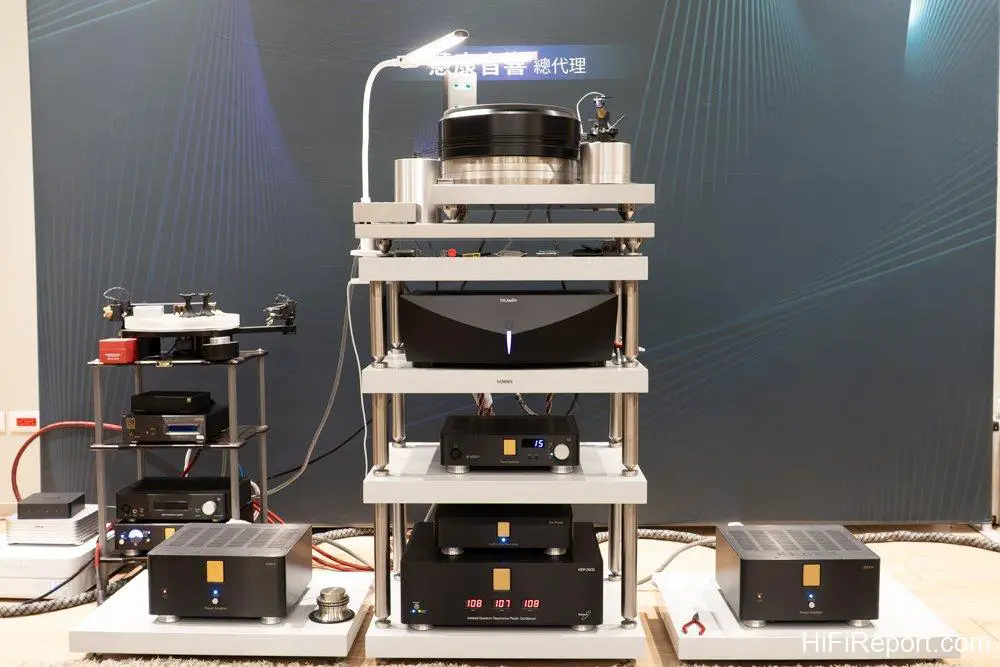
Having covered the DS Master3 optical cartridge and phono equalizer in detail, it’s time to listen to some music. KECES provided their own amplification: an S4 preamplifier paired with a set of S300+ monoblock power amplifiers configured for bi-amplification. Power conditioning was handled by the KECES IQRP-3600. These components drove the Horns 5 Degree 110 floorstanding speakers. Although the brand is Horns, the new 5 Degree 110 is not a horn speaker; it’s a floorstander equipped with an AMT (Air Motion Transformer) tweeter. The name “5 Degree” refers to the backward tilt angle of the speaker baffle, which is designed to achieve mechanical time alignment for the high, mid, and low frequencies.
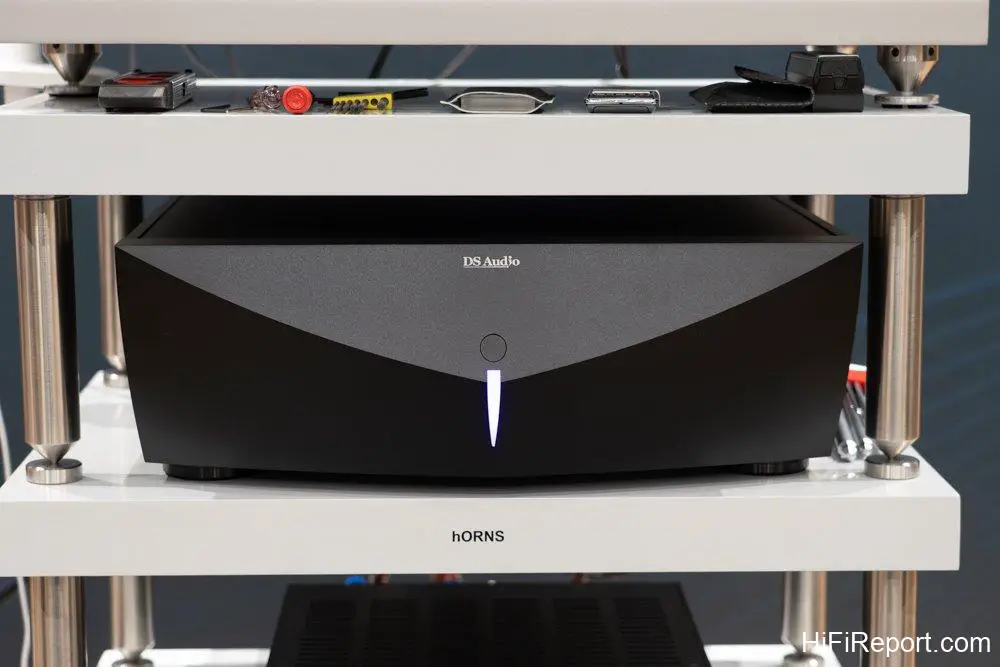
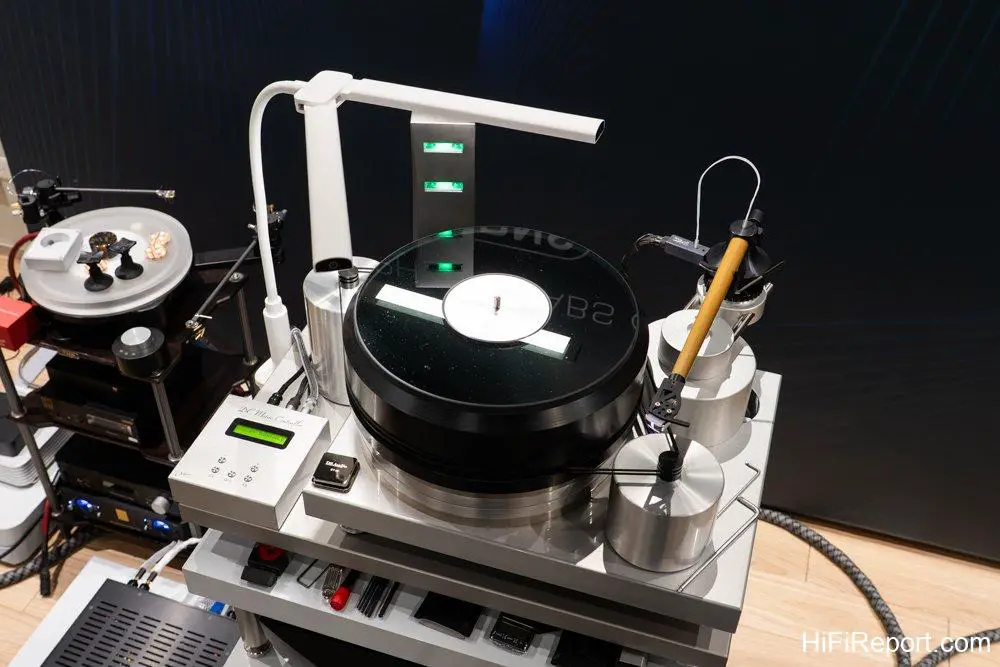
The turntable used was the Polish J. Sikora Standard, paired with a KV12 MAX tonearm. The founder of this company, Janusz Sikora, is a veteran audiophile who transitioned from a passion for vinyl to designing and manufacturing turntable systems. The company was founded in 2007, making it eighteen years old.
The equipment used for this listening session is either designed and manufactured in-house by KECES (or HiFiReport) or imported and distributed by them.
The KECES listening room is a separate space within the factory premises, designed to approximate good acoustic conditions with diffusion and damping. However, being in an industrial area means some external environmental noise is unavoidable, such as the sounds of trucks unloading or forklifts working. I will disregard these and focus solely on the music during my listening.
Cello Solo: Focused and Balanced
Starting simply, I chose Casals’ recording of Bach’s Unaccompanied Cello Suites, specifically the Prelude from Suite No. 1. The familiar melody unfolded with dignity, carrying the distinct flavor of old analog recordings. Beneath the cello’s voice, subtle analog tape hiss added to the recording’s vintage feel. Casals’ cello was focused squarely in the center of the soundstage. I immediately commented to the KECES team that the turntable setup was excellent. With simple pieces like a solo cello, if the turntable isn’t set up correctly, the image can easily drift to one side. My choice of the Bach Unaccompanied Suites for the first track, though seemingly simple, acts like a truth serum – if the soundstage is off-center, you’ll hear it immediately.
The DS Master3 presented the cello with smooth lines, and a rich, full resonance, without becoming overly thick. The transparency of the soundstage was excellent. As I listened, I took notes, and before I knew it, three tracks had played. Casals is credited with rediscovering the Bach Unaccompanied Suites and was the first cellist to record them. His interpretation is authoritative, carrying the weight of a premiere performance, and his control of tempo is distinctly his own.
The DS Master3 clearly conveyed the subtle variations in his fingerwork. Listening to the Courante, the transitions between phrases, the dynamics of loud and soft, the interplay of slow and fast tempos – even with this very familiar melody, listening with the DS Master3 brought a sense of freshness. It felt as if I were hearing even richer information from the vinyl grooves, experiencing more of the musician’s emotion.
Unlocking Hidden Emotions in the Recording
Switching to vocals, I put on the 2014 remastered album “Maria Callas: Pure,” selecting the aria “Casta Diva” from the opera Norma. Callas is arguably the embodiment of a goddess; she sang this role 89 times throughout her career, a feat almost unmatched before or since. Today, we can only trace her presence through recordings.
The 2014 remastering is masterful, skillfully blending the original mono recording into stereo. The opening string section created a wide soundstage. The DS Master3 presented Callas’s voice with a focused, vivid presence, centered in the soundstage. In terms of vocal thickness, Callas couldn’t compare to Caballe of that era. For sweet tone, Freni might have surpassed her. Yet, Callas’s rendition of “Casta Diva” possessed a unique character. With the orchestral arpeggios as the backdrop, Callas progressed from the structured phrases to the climactic florid passages of the aria. The DS Master3 conveyed the emotional depth beyond the mere vocal technique. Her soaring voice felt like an outpouring of infinite emotion, tinged with melancholy and sorrow, yet simultaneously conveying a sense of peaceful serenity. When the music reaches such a level of expression, the emotions contained within are truly beyond description.
Triple Concerto: Seeing the Trees and the Forest
For a larger scale, I put on the Beethoven Triple Concerto with Mutter, Ma, and Barenboim. I listened to the third movement, the Rondo alla Polacca. Since it started midway through side B, I listened to the entire movement to gauge the KECES setup’s ability to handle even the inner grooves.
The opening theme of the third movement was led by the cello, followed by the violin’s repetition, and then the piano joined the two instruments. The DS Master3 truly combines the fullness of MM with the noble refinement of MC. The high output voltage allowed the orchestra’s power to fully emerge. Yet, when the cello, violin, and piano played solo passages, their individual timbres were so beautiful. The cello’s solidity contrasted with the violin’s brightness. After the piano entered, its sparkling notes intertwined with the cello and violin to create a richer, more substantial concerto texture. The DS Master3 effectively expanded the orchestral scale while allowing each solo instrument to showcase its unique tonal charm. I was quickly drawn in, listening intently until the movement ended before getting up to change the record.
Pop Music: Full and Solid Bass
If it can render orchestral music with grandeur and scale while revealing the subtle nuances of instrumental timbre, how does it handle pop music? I listened to John Mayer’s album “Continuum,” selecting “Gravity.” The track opened with drums, sustained keyboard notes providing a foundation, and the electric guitar playing those “Grammy-winning” phrases. The DS Master3 brought out the electric guitar’s tone with a hint of tube-like warmth.
Even though the accompanying KECES amplifiers are solid-state, the electric guitar used in the recording employed a vintage tube amplifier. The DS Master3 beautifully presented this tone, adding a touch of rich, sweet moisture. John Mayer’s voice sounded like he was singing close to the microphone, with clear sibilance that wasn’t harsh. Beautiful electric guitar flourishes layered behind the vocals added excellent depth.
Jazz: Clear and Distinct Recording Scene
Finally, it was time for jazz. I put on Miles Davis’s classic album “Kind of Blue,” starting directly with track one on side A, “So What.” The subtle analog recording noise was faithfully picked up by the DS Master3, accurately retrieving the musical signal from the groove. The simple opening notes of the double bass and piano caused the mid-bass drivers of the 5 Degree 110 speakers to visibly move. The texture of the bass was firm and elastic. The brass and drums then initiated the main theme. The drums played delicate cymbal patterns on the right side of the soundstage, the piano was on the left, and the brass was centered, with the positions of the various brass instruments shifting subtly.
The DS Master3 clearly revealed the relative positions of the instruments in the recording space. I know this requires two things: first, a capable system like the DS Master3 optical cartridge setup, and second, excellent setup and alignment. The KECES team did a fantastic job. Anyone interested should definitely arrange a listening session here.
A Worthwhile New Analog Frontier
After spending an afternoon in the KECES listening room in Banqiao, I was left wanting more. However, is the DS Master3 truly worth its high price tag? I don’t have a definitive answer because price is ultimately determined by the market. If people buy it, the brand can continue production. If not, setting a high price is meaningless. So, whether the price is “worth it” is not a question the editor-in-chief can answer.
However, if you’ve been using an MM cartridge and find that while the output level and dynamics are good, you lack silky, refined high frequencies, and if you’ve tried MC cartridges and found that while they offer silken highs, they lack solid mid-bass and fullness, then the optical cartridge, which retrieves signals from vinyl grooves using a completely different principle, is a new frontier worth exploring. You don’t have to immediately jump to the expensive DS Master3. You could start with the entry-level DS-E3. If you truly develop an appreciation for the technology, then considering the higher-priced DS Audio cartridges might be even more enjoyable.
Specifications
DS Audio DS Master3 Optical Cartridge + Phono Equalizer System
* Type: Optical Cartridge
* Signal Output: Photo-electric Conversion
* Output Level: 70 mV
* Tracking Force Range: 2.0 g ~ 2.2 g; Recommended 2.1 g
* Channel Separation: 27 dB
* Cantilever: Diamond
* Stylus Tip: Micro-ridge Stylus
* Cartridge Body: Super Duralumin
* Weight: 7.9 g
DS Master3 Phono Equalizer
* Rated Output: 500 mV (1 kHz)
* Impedance: 120 Ohms
* Input Terminals: RCA
* Output Terminals: RCA x 3, XLR x 3
* Dimensions: 452 x 7153 x 484 mm (Width x Height x Depth)
* Weight: 23 kg