
Dynaudio Confidence 20 Review
Dynaudio Confidence 20: First Impressions
Dynaudio’s Confidence series received a significant update in 2019. I previously experienced the flagship Confidence 60 floor-standing speakers at HiFiReport on two occasions, once with Constellation and another time with Audio Research electronics. This time, HiFiReport invited me to audition the most compact bookshelf speaker in the Confidence lineup, the Confidence 20, paired with a complete Ayre system.
Confidence 20: The Sole Bookshelf Offering
Dubbed the “New Confidence” series, this major update expanded the lineup from three to four models. The floor-standing options include the Confidence 60, Confidence 50, and Confidence 30, while the sole bookshelf speaker is the Confidence 20.
Looking at the product range, it’s evident that floor-standing speakers are the dominant force in the high-end audio market, with bookshelf speakers occupying a smaller niche. Therefore, the Confidence revamp expanded the floor-standing options while retaining just a single bookshelf offering.
The entirely new Confidence series is a ground-up redesign. The speaker cabinets adopt a curved form, moving away from traditional rectangular boxes. All drivers are updated, with the famous silk soft dome tweeter evolving into the Esotar 3, now featuring the innovative Hexis inner dome to mitigate rear chamber resonances. The mid/bass driver retains the NeoTec MSP cone, while the front baffle is constructed from Compex composite, enhancing stiffness and damping. The Confidence 20 benefits from all these technological refinements.
Confidence 20: Key Design Variations
However, as a two-way, two-driver bookshelf speaker employing a point-source configuration, the Confidence 20 cannot incorporate the new DDC Lens. This is the sole Dynaudio proprietary technology absent from the Confidence 20.
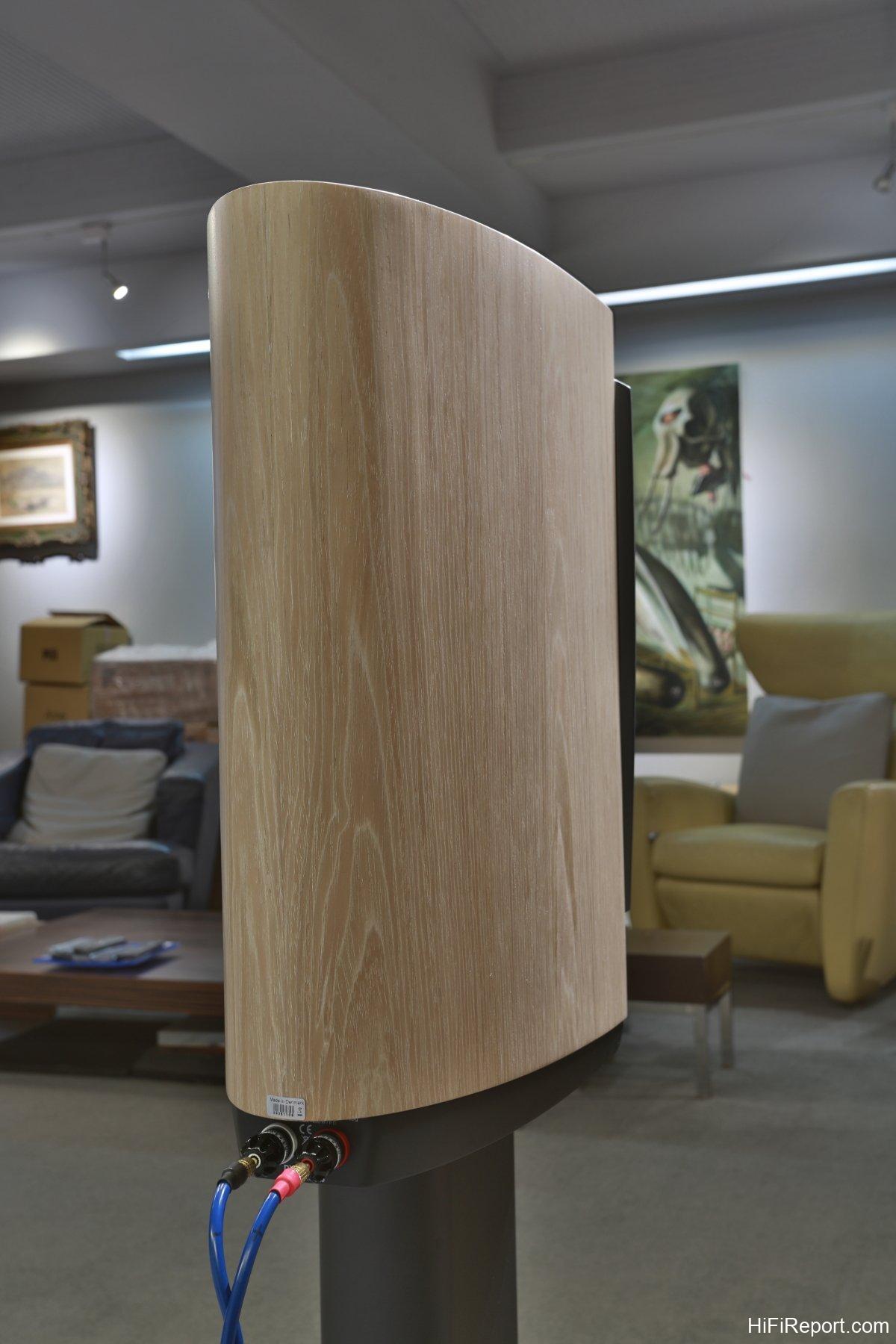
Beyond the omission of the DDC Lens, the Confidence 20’s mid/bass driver also presents distinctions. While other Confidence series speakers utilize NeoTec MSP cones with copper voice coil windings, the Confidence 20 adheres to Dynaudio’s traditional preference for aluminum wire, capitalizing on its lighter mass. Furthermore, the mid/bass driver employs a glass fiber voice coil former, again emphasizing lightweight construction. This signals that even with a single mid/bass driver, Dynaudio prioritizes swift driver response, thus the focus on minimizing the mass of the voice coil and former.
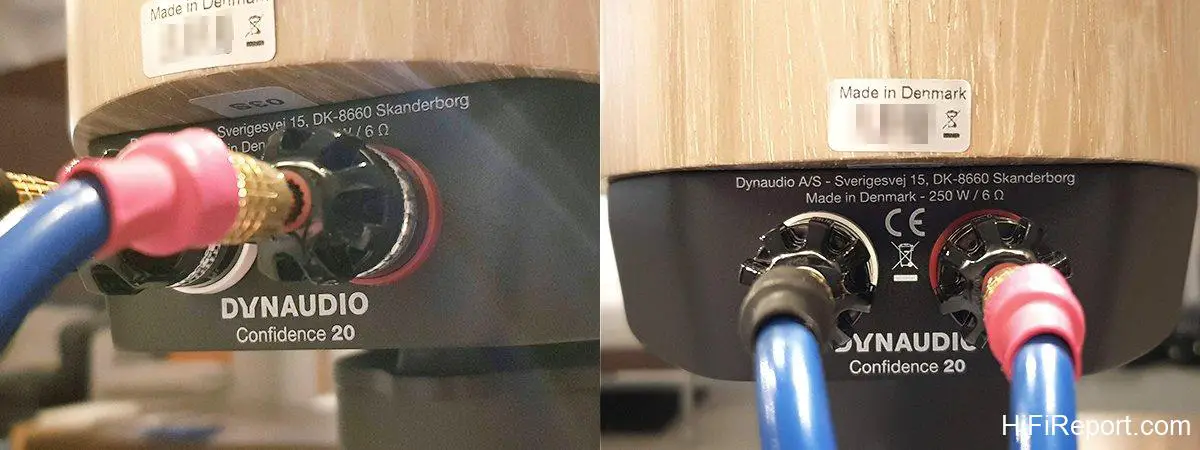
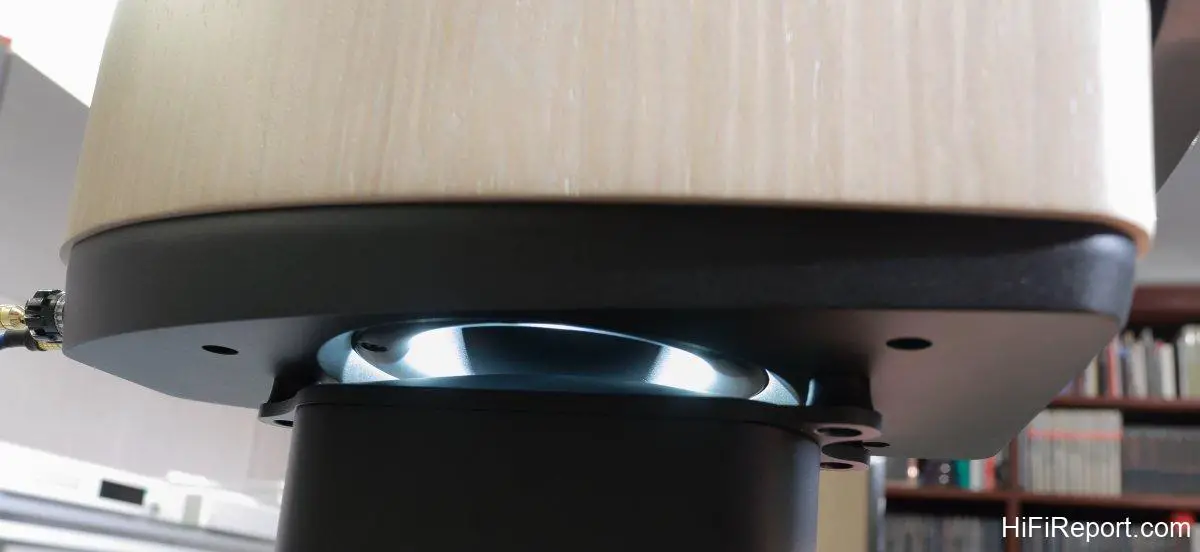
Moreover, while the Confidence 20 is a bookshelf speaker, dedicated stands are mandatory, as the bass reflex port and speaker stand are designed as a unified system! The Confidence 20 features a down-firing bass reflex port, and the stand’s top plate maintains a precise distance from the port, directing low-frequency airflow through the central gap.
Furthermore, the stand’s top plate isn’t flat but incorporates a subtly convex curve and is constructed from a specialized material. This aerodynamic design for low-frequency dispersion ensures rapid and unhindered bass propagation, while also minimizing port turbulence and noise.
Intimate Listening Space, Refined Setup
When experiencing audio at HiFiReport, one follows the host’s lead. This Confidence 20 audition was a bit different, taking place not in the usual large space but in a smaller, adjacent listening room – a space I hadn’t visited for equipment reviews in some time.
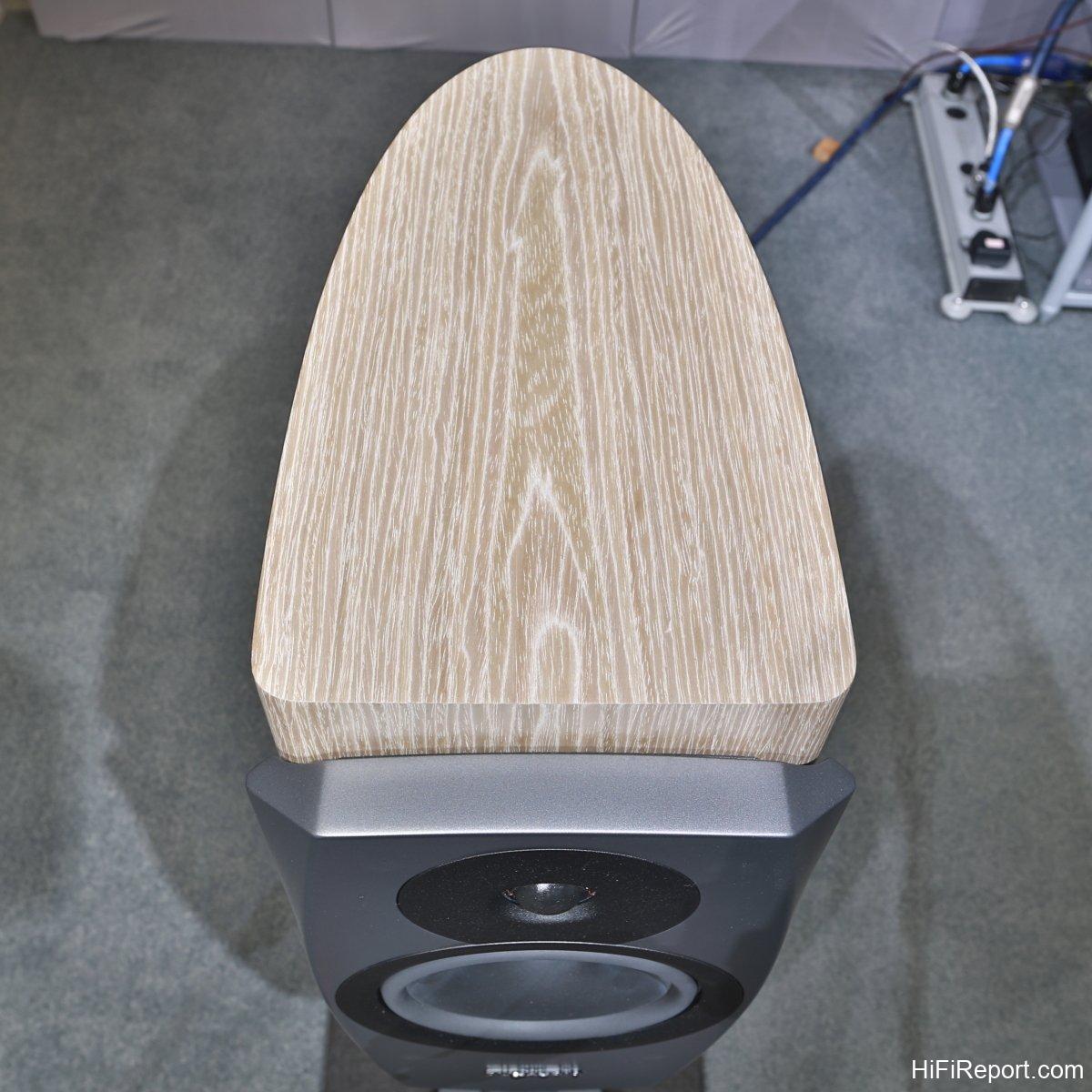
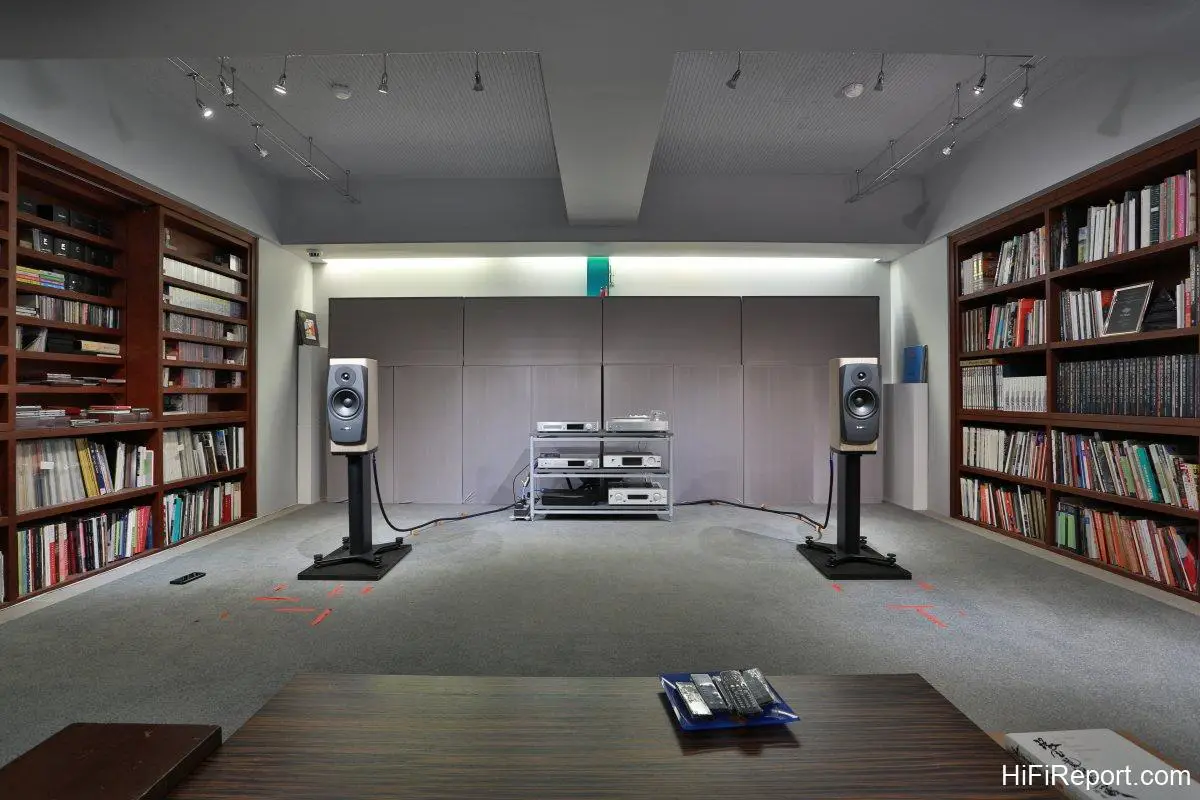
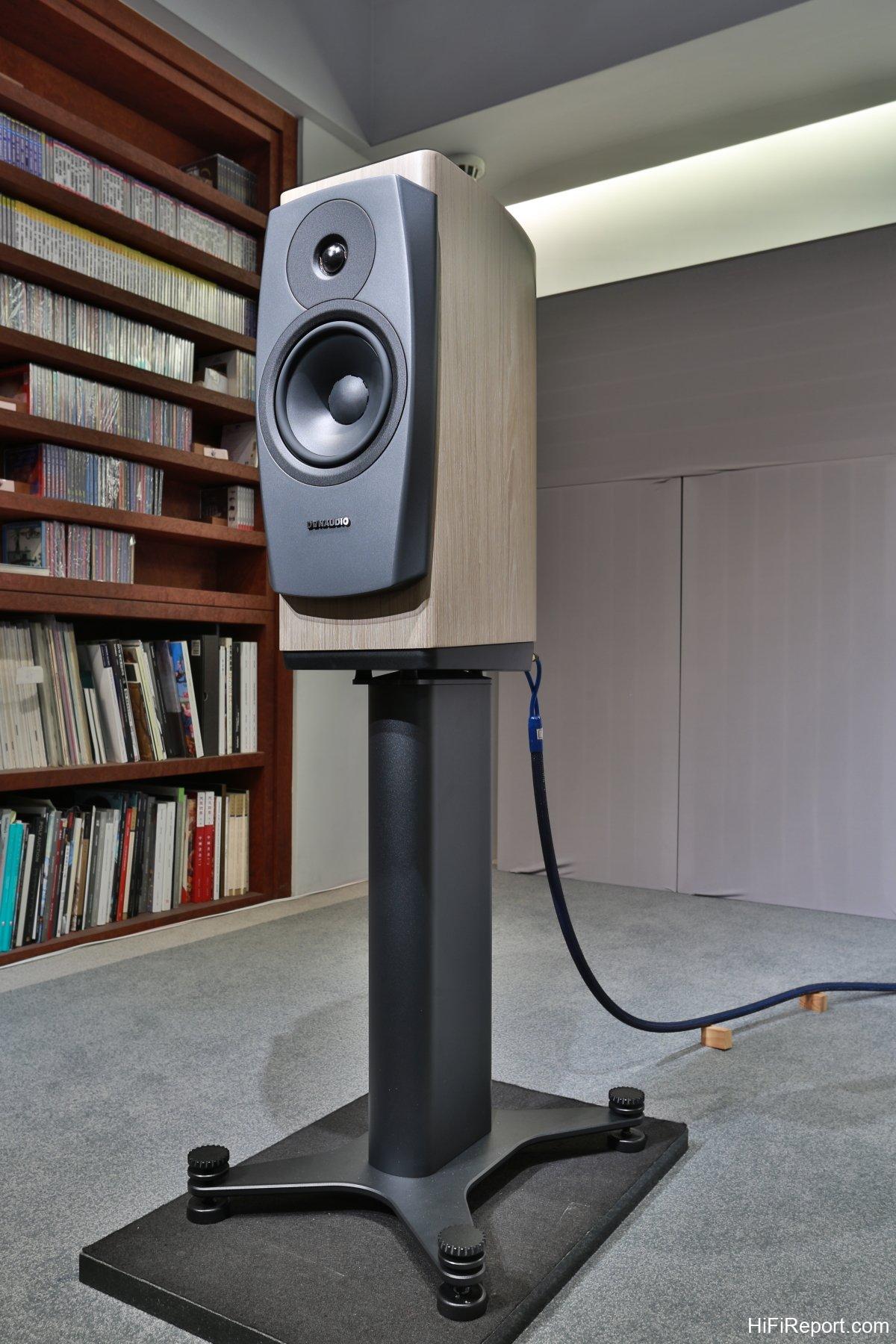
Within this room, the Confidence 20’s visual scale felt perfectly balanced – neither overwhelming nor undersized. The dedicated stands elevated the Confidence 20’s stance and overall impression.
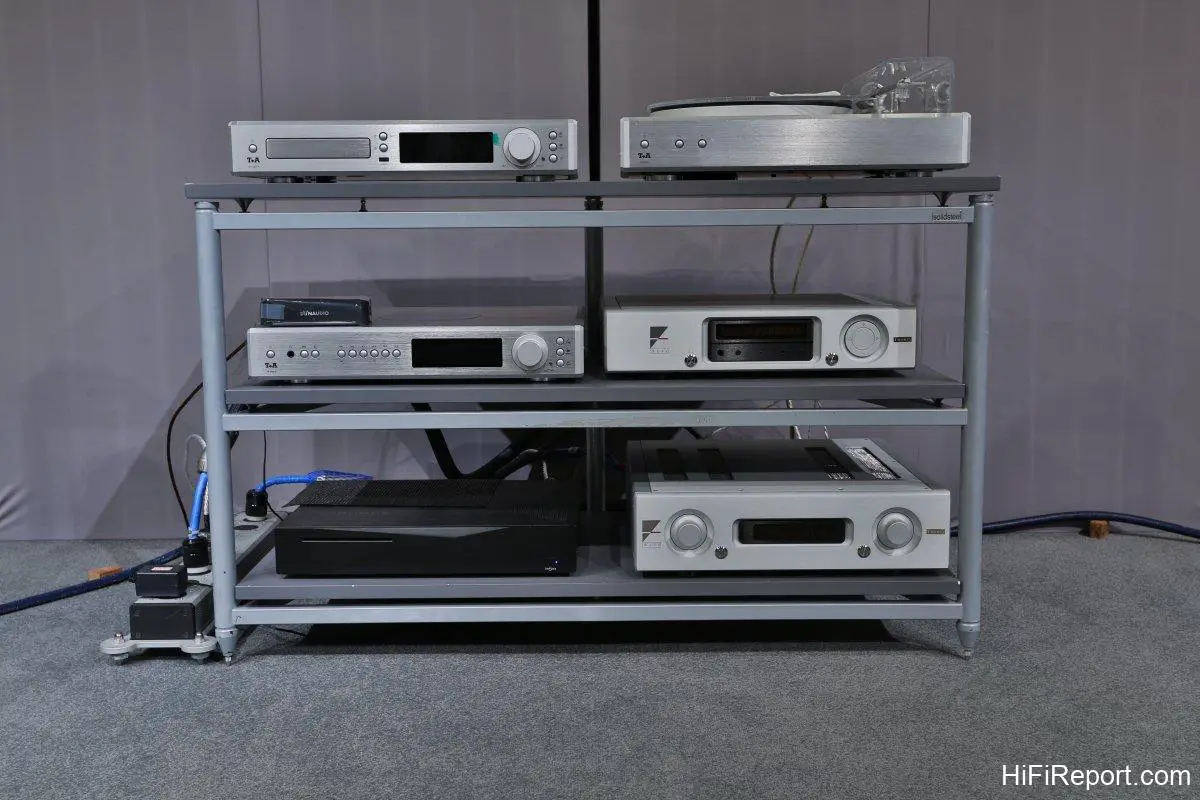
I noted the system configuration: an Innuos Music Server as the source, feeding an Ayre QX-5 Twenty digital streaming player, with amplification from the AX-5 Twenty. Focusing on digital streaming (hence, no CDs), I observed the network switch, a Cisco unit rather than the usual SoTM. I was informed that the SoTM was currently unavailable, so the standard switch remained in place.
Ayre and Dynaudio – it had been some time since I experienced this pairing, and this was an exclusively digital streaming session. It appears the days of reviewers carrying CDs to auditions are drawing to a close.
The music library was curated using Roon. I browsed for familiar tracks on the iPad.
Ah, Sonny Rollins’ “Way Out West.” A classic “ping-pong stereo” recording, known for its stark left-right channel separation. I began with the upbeat and lively “I’m an Old Cowhand.”
Excellent System Synergy and Setup
HiFiReport had clearly invested effort in system optimization prior to the audition. The soundstage was expansive and transparent. The cowbell strikes from the drum kit emerged distinctly from the right of the soundstage. Sonny Rollins’ saxophone was positioned center-right, contrasting with the drums anchored on the left. The double bass and rhythm section drums were placed on the right, creating a balanced stereo image with the saxophone solo on the left.
While the “ping-pong stereo” effects, artificially created in studios during that era, might seem contrived, on a system with precise soundstaging, they become remarkably vivid and engaging, generating an exciting, almost “high” sensation, reminiscent of being seated right in front of a jazz club stage.
Furthermore, HiFiReport opted for the AX-5 Twenty integrated amplifier, suggesting the Confidence 20 is not a demanding load. A 125-watt integrated amplifier proved sufficient.
Indeed, Dynaudio historically held a reputation for being power-hungry. However, recent Dynaudio speaker designs are considerably less demanding. The Confidence 20, for instance, boasts a sensitivity of 87 dB and a nominal impedance of 6 ohms, a more amplifier-friendly load than the traditional 4 ohms. The manufacturer also highlights the speaker’s benign impedance curve, dipping to a minimum of only 5 ohms. The AX-5 Twenty integrated amplifier effortlessly drove the Confidence 20, dispelling any concerns about amplifier strain.
Expressive and Engaging Sound
Exploring familiar tracks in the Roon library, I selected Rebecca Pidgeon’s “The Raven,” naturally choosing “Spanish Harlem.” The double bass intro unfolded with composure and depth. Increasing the volume, I was struck by how convincingly the Confidence 20 defied its bookshelf designation. The bass extension and the scale of the double bass image were remarkably akin to floor-standing speakers.
Rebecca Pidgeon’s sweetly rendered vocals, followed by the piano notes that seemed to float in the air, the vivid musical expression, and the balanced bass response all proved captivating.
During the instrumental break, the smooth violin lines and the crisp percussive accents, combined with the Confidence 20’s wealth of musical detail and its transparent, deep soundstage, were undeniably impressive.
Of course, this wasn’t solely attributable to the speakers and electronics. HiFiReport’s meticulous setup and placement undeniably maximized the system’s potential, demonstrating their expertise. While the listening room might appear simple at first glance, the speaker back wall features diffusion panels, and the ceiling incorporates specialized materials to mitigate standing waves. Beneath the surface simplicity lies a well-considered acoustic environment.
Spaciousness and Refined Decay
The accompanying QX-5 Twenty streaming player supports DSD playback, so I selected Patricia Barber’s “Night Club” album in DSD and played “Autumn Leaves.” Patricia Barber’s captivating voice, accompanied by pizzicato bass, delivered the classic tune. The Confidence 20’s expansive soundstage beautifully captured the reverberant decay of notes. The pizzicato bass exhibited both depth and agility, rich yet articulate, revealing ample low-frequency nuance. The double bass solo, whether single notes, double stops, plucked or bowed, was remarkably nuanced. When the piano and drums joined in, the Confidence 20 convincingly recreated the atmosphere of a live jazz performance, the speakers effectively disappearing within the room, transforming the space into an intimate jazz club setting.
I couldn’t directly compare the new Confidence to its predecessor, as a side-by-side comparison wasn’t possible. However, I could discern that the new Confidence 20 offered a more pristine sonic character, with a smooth and extended mid-high frequency response and a more organic musical presentation.
Seeking simpler musical textures for further evaluation, I selected Arrau’s rendition of “Beethoven Piano Sonata: Eroica Variations” (Op. 35). The theme of these variations is derived from the fourth movement of Beethoven’s Symphony No. 3 “Eroica,” transcribed for piano. I employed this solo piano piece to assess the Confidence 20’s sonic purity.
Exceptional Piano Tone
The theme opens with sustained, powerful chords, followed by the bass theme in the left hand, with the right hand melody joining in subsequently. The Confidence 20 rendered the separation between the left and right hands with effortless clarity. Arrau’s ascending arpeggios were articulated with precise note clarity, free from muddiness. The Confidence 20 vividly conveyed the pianist’s masterful fingerwork. As the variations progressed and grew in intensity, the pianist not only increased dynamic force, but subtle breaths and the delicate sounds of fingertips contacting the keys enhanced the recording’s sense of immediacy.
I listened intently through all fifteen variations, a twenty-plus minute composition, and Arrau’s expressive nuance in each section was striking. Intriguingly, I own this CD set myself. Why hadn’t I previously appreciated Arrau’s Beethoven to this extent? It must be the Confidence 20’s exceptional resolution that unveiled the master’s nuanced and focused musicality.
Revealing Recording Nuances Across Eras
Next, let’s explore a larger orchestral work. I selected Mutter’s recording of Mozart’s Violin Concerto No. 3 (K. 216) with the London Symphony Orchestra, focusing on the joyous third movement Rondo. The classical structure begins with the orchestra’s exposition, followed by the violin soloist. The Confidence 20 rendered a sumptuous tonal palette, the string section light and agile, the woodwinds responding with a rich yet airy texture. When Mutter’s violin solo entered, her radiant musicality was truly captivating – this is joyful Mozart indeed! The 2005 DG recording, from the digital era, boasts a pristine sonic backdrop, and the Confidence 20 mirrored this with its pure and clean sonic presentation.
For the same concerto, I located Grumiaux’s older Philips recording in the Roon library, dating back to 1961 – certainly an analog era recording, though now digitized. Also with the London Symphony Orchestra, under the baton of Colin Davis. Listening to the same third movement of Mozart’s Violin Concerto No. 3, the older Philips recording exhibited a more expansive soundstage. In contrast, the DG recording presented a more forward image. Furthermore, Grumiaux’s violin displayed a richer tonal color, with finer lines in its articulation, whereas Mutter’s violin sounded larger in scale and positioned closer to the listener.
I recognized these distinctions stemmed from the different recording approaches. However, the Confidence 20 adeptly revealed the nuances between the two versions, enabling us to bridge the temporal gap and compare the interpretive approaches of musicians from different eras. Is this not precisely the rewarding aspect of appreciating high-fidelity audio?
Refined Sonic Purity
Over an afternoon at HiFiReport, I auditioned a diverse range of musical genres through the Confidence 20, encompassing classical, jazz, vintage and contemporary recordings. The Confidence 20 effortlessly conveyed the vintage character of older recordings, faithfully rendering the sonic signature of each. Moreover, the new generation Esotar 3 tweeter, coupled with the Hexis resonance control inner dome, endows the Confidence series with enhanced mid-high frequency detail and refined sonic purity. However, the listening experience at HiFiReport is not solely about the speakers; it’s also about the expertly curated system synergy.
Naturally, this initial audition of the Confidence 20 is not the final word. Given the opportunity, I intend to borrow the speakers for extended listening at our editorial facilities, allowing for more in-depth exploration and potentially yielding further insights.
Specifications
* Type: 2-driver, 2-way bass-reflex bookshelf speaker
* Drivers: 1 x 28 mm Esotar 3 silk soft dome tweeter, 1 x 180 mm MSP woofer
* Frequency Response: 42 Hz – 22 kHz
* Sensitivity: 87 dB
* Impedance: 6 ohms (minimum 5 ohms @ 155 Hz)
* Crossover Frequency: 2325 Hz (2nd order)
* Dimensions: 368 × 1134 × 458 mm (H×W×D, with stand)
* Weight: 27 kg (with stand)