
Dynaudio Contour Legacy Review
This is the rebirth of a classic, long awaited.
This embodies the image many hold of what a Dynaudio speaker should be.
This is a limited edition speaker, with only 1000 pairs available worldwide.
This is the Dynaudio Contour Legacy.
Reviving classics is a business.
Some vintage-inspired products only replicate the appearance, lacking the essence.
Perhaps due to a short brand history, the revival is merely following a trend.
Perhaps due to changes in ownership, the lineage has been severed.
Nonetheless, even if the revival isn’t perfect, it still qualifies as retro, making it a viable business with buyers ready to commit.
However, if a brand has maintained its integrity throughout, continuing its legacy, and now revisits past classic products, rebuilding them with new technology, materials, and concepts after innovation – that’s a story worth exploring.
Dynaudio’s recent classic reissues fit this description perfectly.
In the winter of 2020, Dynaudio introduced the Heritage Special bookshelf speaker. Its classic wooden cabinet paid tribute to past models like the Craft, Sapphire, and Contour, stirring memories for many who grew up with these speakers.
This wasn’t a one-off; Dynaudio had more retro-inspired creations up their sleeve.
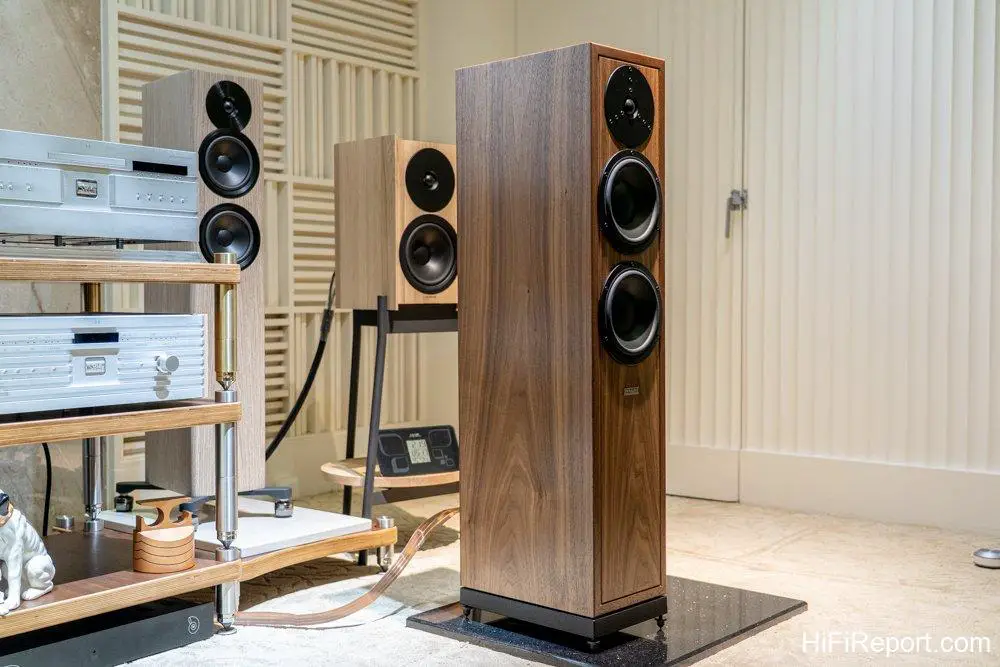
In 2024, they launched the Contour Legacy floorstanding speaker, astonishing listeners once again.
Paying tribute to Contour 1.8
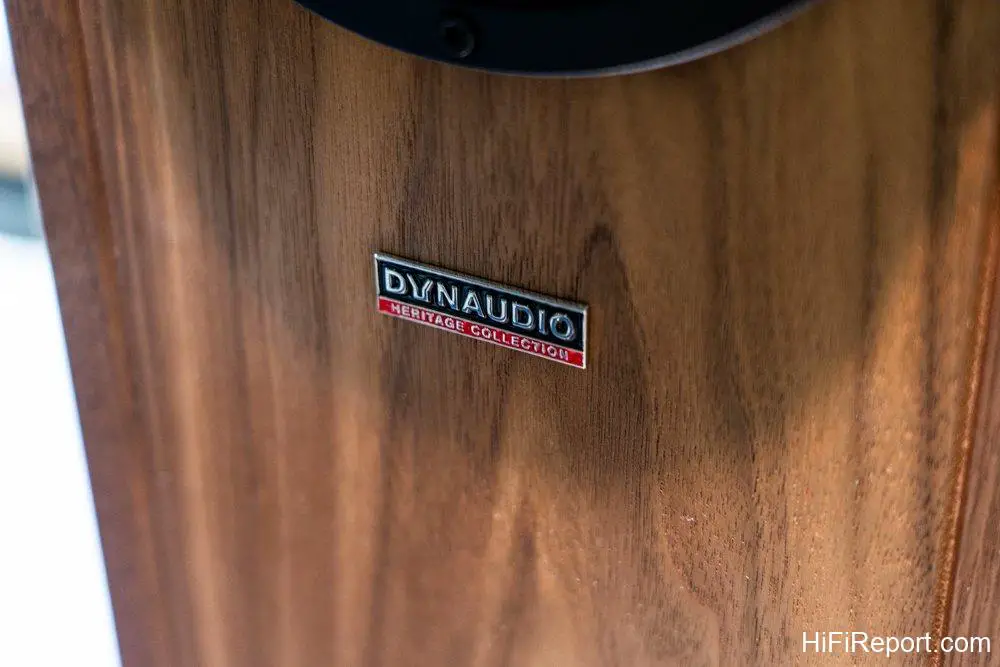
The Contour Legacy directly pays homage to the Contour 1.8.
Its handcrafted, rectilinear wooden cabinet, clean lines, and the sculpted groove on the front baffle, the vintage-flavored walnut veneer finish, and Dynaudio’s classic driver configuration – this is more than just a reproduction. It fully embodies the impression we have of the Dynaudio brand.
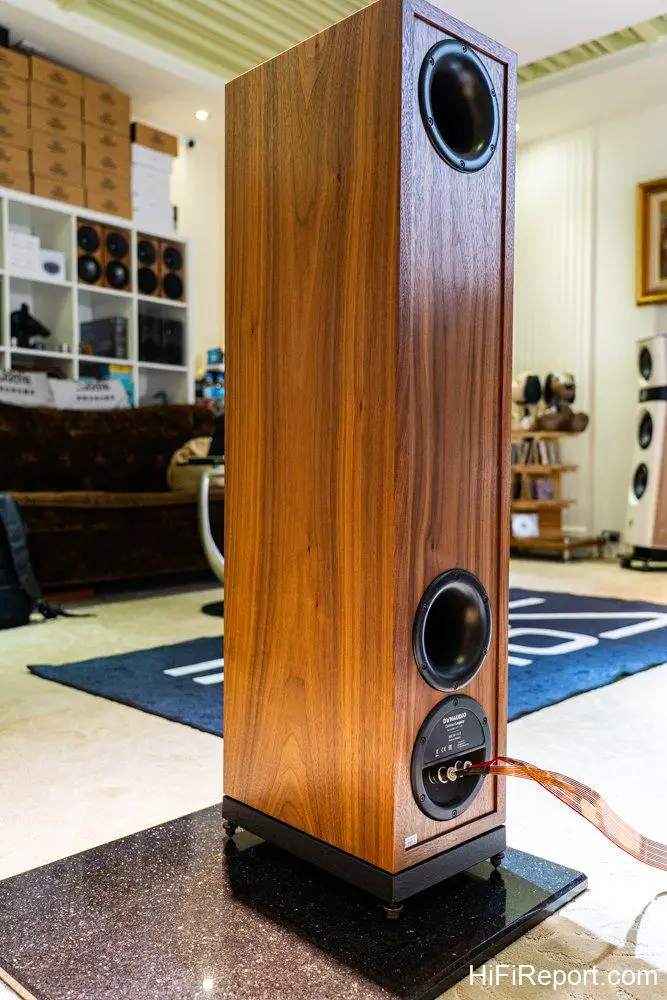
Yes, this *is* Dynaudio.
With no disrespect intended, I feel compelled to say: This is what Dynaudio *should* be.
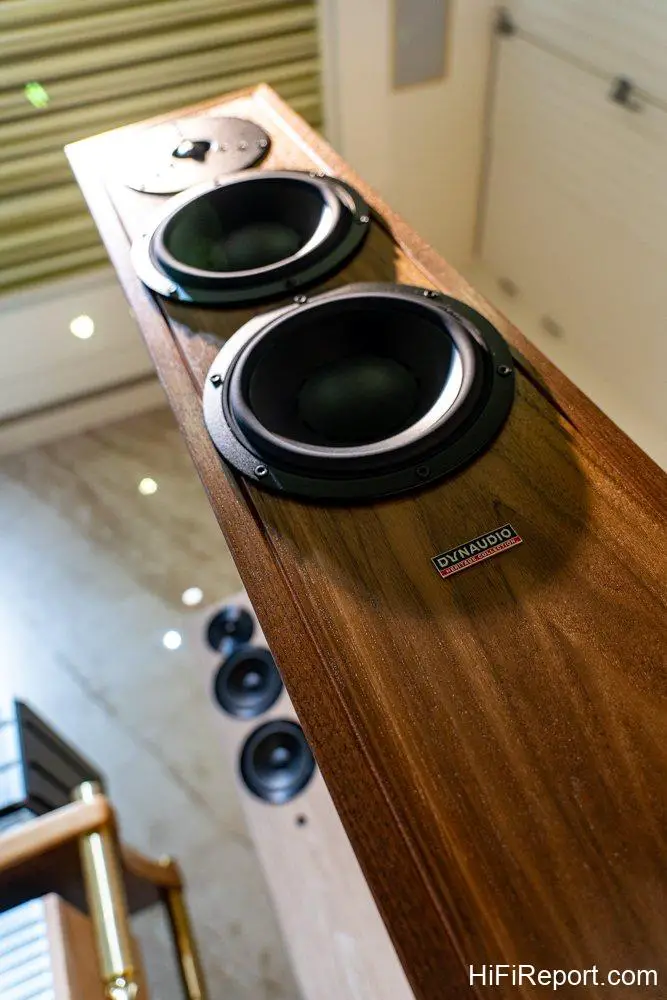
2.5-way design, featuring the flagship Esotar 3 tweeter
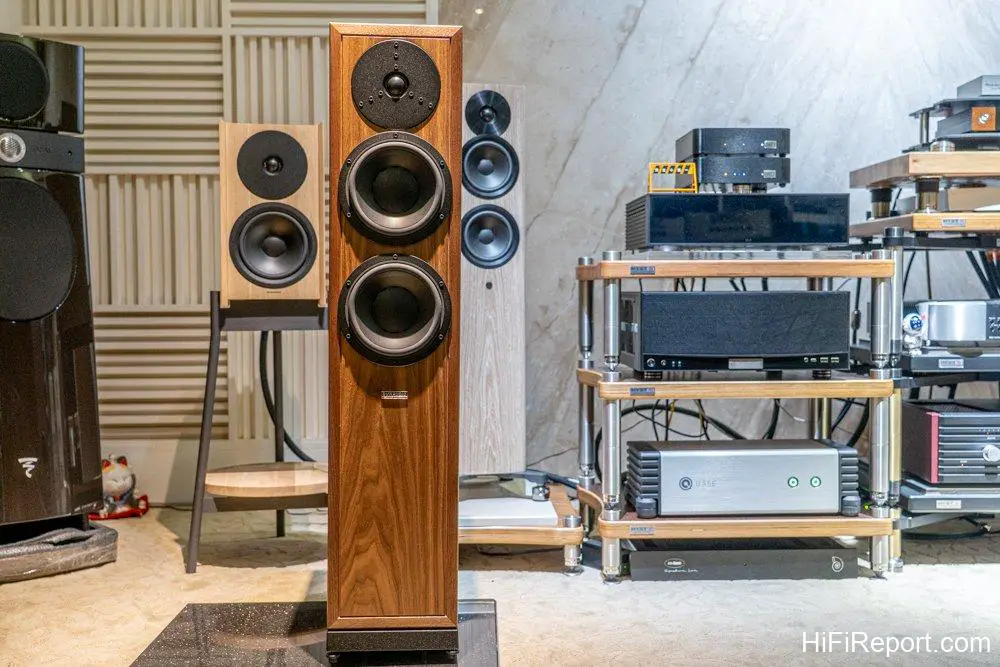
The Contour Legacy employs a three-driver, 2.5-way configuration. For a compact floorstanding speaker standing just about a meter tall, this is an extremely sensible design.
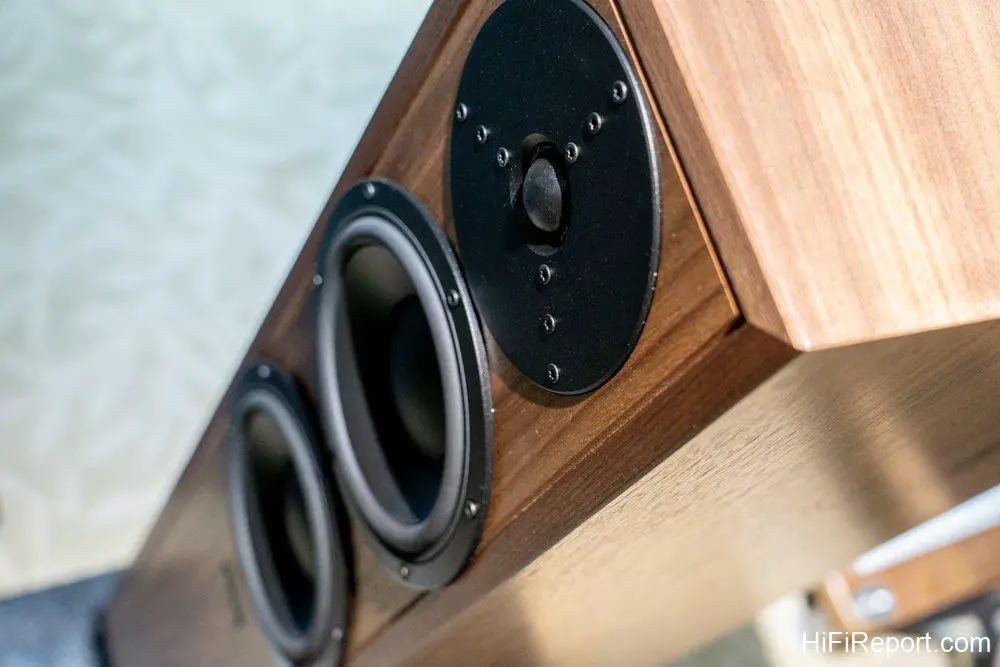
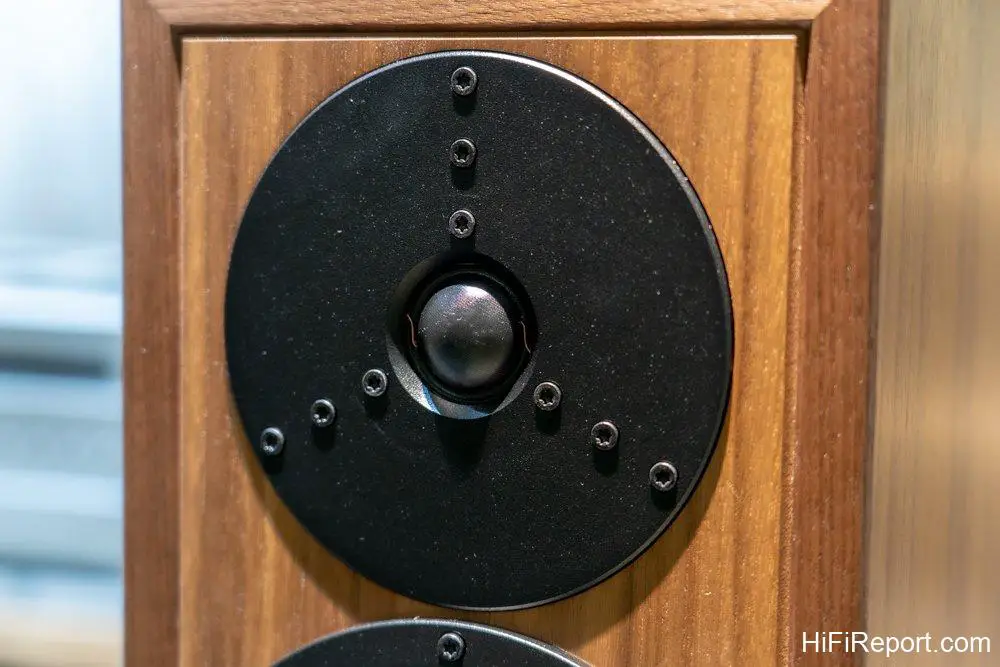
Its signature silk soft-dome tweeter might look similar to earlier versions, but this 28mm Esotar 3 soft-dome tweeter is Dynaudio’s latest driver, the same unit used in the flagship Confidence series.
The Esotar 3 tweeter is powered by a potent neodymium magnet. Behind it is a large chamber, paired with the Hexis device behind the diaphragm, designed to break up and absorb rearward radiation, contributing to the purity of the high frequencies.
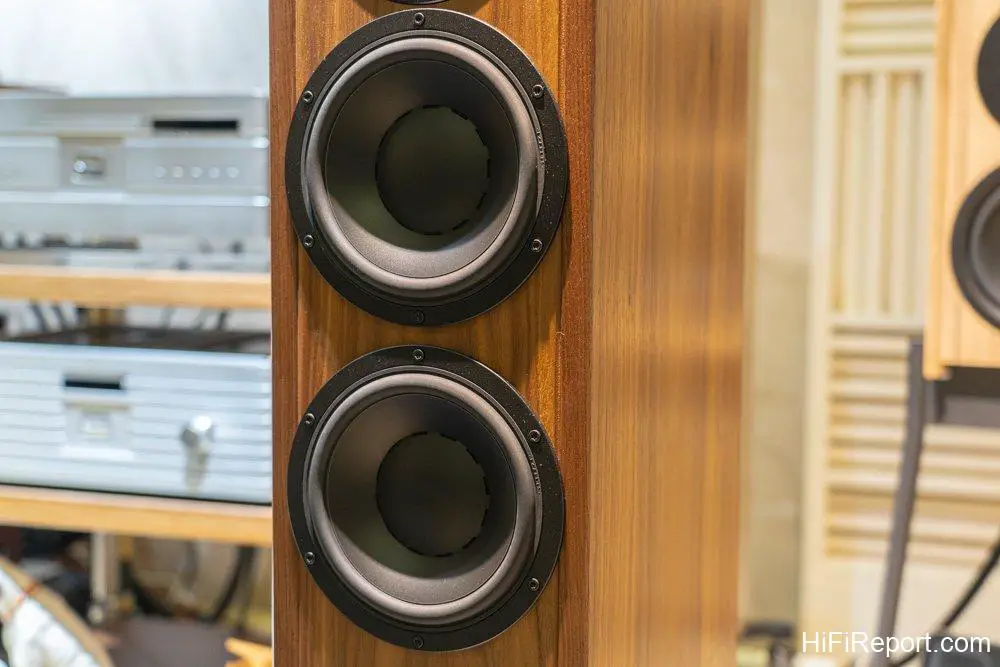
Dual 18cm MSP woofers derived from Evidence Platinum
Below the tweeter are two 18cm MSP woofers. Dynaudio’s engineering team studied the woofers from the previous flagship, the Evidence Platinum, modified them, and incorporated them into the Contour Legacy. These can be considered an upgraded version of the former flagship drivers.
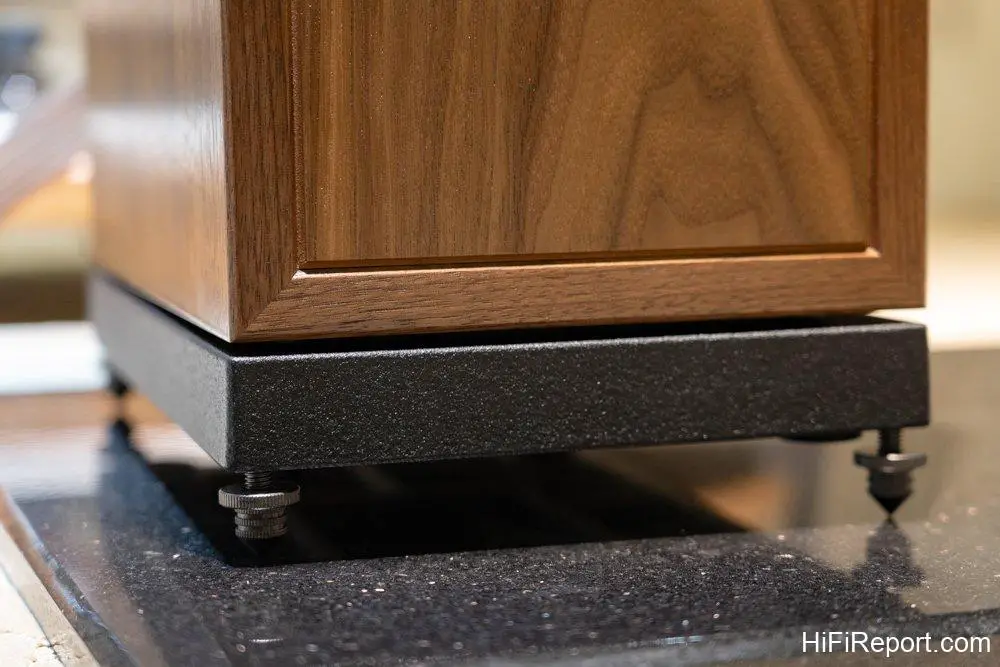
One of Dynaudio’s greatest sources of pride over the years is their ability to manufacture their own drivers, even designing specific drivers for each speaker model.
The MSP (Magnesium Silicate Polymer) diaphragm formulation is lightweight yet rigid, possessing excellent internal damping – a diaphragm material favored by Dynaudio for many years.
Of the two woofers, the upper one integrates with the tweeter and is responsible for all frequencies below the 3.4kHz crossover point.

The lower woofer handles only the bass frequencies. It’s the parallel connection of this lower woofer that increases the sensitivity of the upper woofer unit.
Interestingly, Dynaudio’s specifications don’t list the low-pass crossover frequency for the lower woofer.
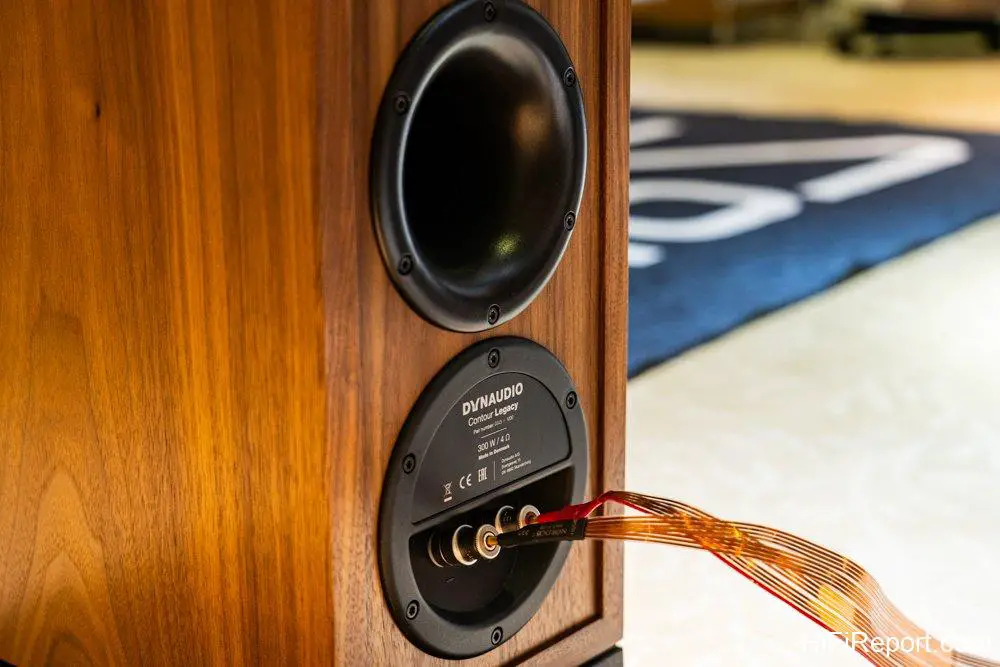
A closer reading of the accompanying text reveals that the “0.5” part of the Contour Legacy’s crossover isn’t achieved through a conventional crossover component setting, but rather by using a voice coil with higher impedance for the lower woofer.
This method is something I’ve never encountered before, and it’s a technique only possible for a manufacturer like Dynaudio that produces its own drivers.
Select premium components, rigorously tested and fine-tuned by ear
For the crossover, Dynaudio engineers opted for a combination of first and second-order filters.
Fewer crossover components mean lower potential loss, which contributes to the overall efficiency of the speaker.
However, the engineers were meticulous in selecting high-quality passive components for the Contour Legacy, including capacitors, inductors, and internal wiring from brands like Duelund, Mundorf, and Van den Hul.
According to the factory, the combination of these premium components creates a cumulative benefit.
Every new speaker launch requires extensive fine-tuning.
At their Danish headquarters, Dynaudio boasts the Jupiter acoustic laboratory, one of the world’s largest acoustic measurement centers. Since the advent of the Jupiter lab, every Dynaudio speaker must pass the “Jupiter test.”
The Contour Legacy is no exception. While instruments in the lab can potentially identify issues within 20 minutes, Dynaudio isn’t satisfied with just that.
The engineering team insists on spending an additional two weeks listening and making adjustments to find problems, refining the sound by ear.
Could traditional methods truly be more accurate than scientific instruments? This is simply the Dynaudio way – they respect science, but they respect the human element even more.
Handcrafted cabinets embodying human touch and artisanal spirit
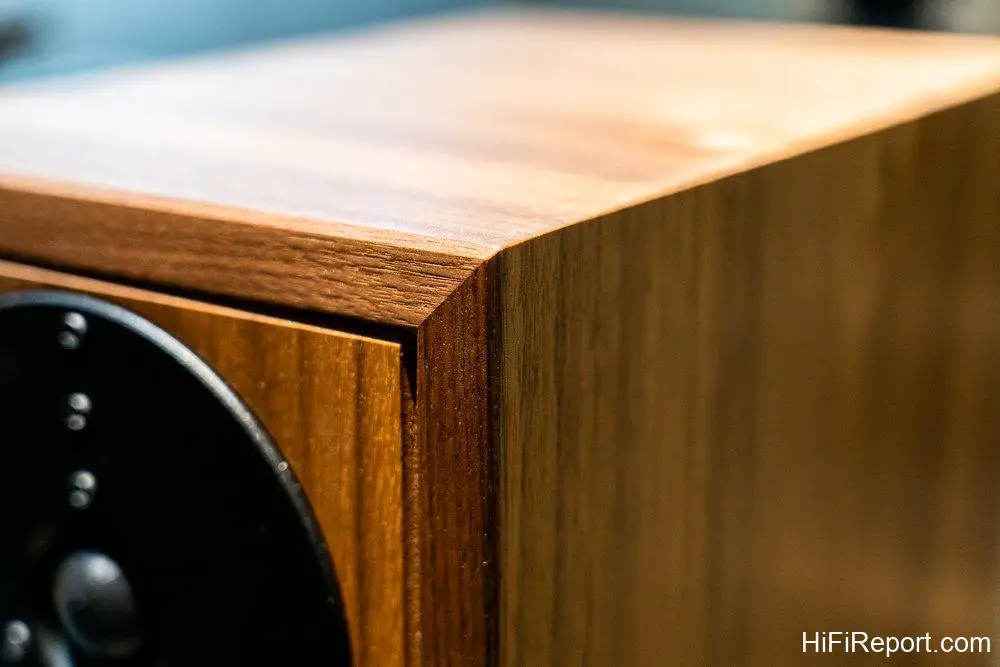
The most striking aspect of this return to classic design is, of course, the speaker cabinet.
In recent years, Dynaudio speakers have tended towards sleek, rounded shapes with fewer parallel surfaces, a trend seen across their new products from high-end to entry-level.
However, traditionally, our perception of Dynaudio speakers has been characterized by their rectilinear, clean-lined, finely crafted wooden cabinets with a genuine wood feel.
The Heritage Special released a few years ago fit this description, and the new Contour Legacy follows suit. While seemingly lacking novel external design, it represents a return to the core principles of craftsmanship.
On their official website, Dynaudio describes the cabinet story with a poetic flair: “Each pair of Contour Legacy are like swans, living life together as a pair… Each panel of the multi-layered cabinet is chosen like selecting a wine region… Martin, who has worked at Dynaudio for two decades, selects them pair by pair, ensuring the grain matches, which can only be done by eye. This work is filled with love and can never be replaced by anonymous robots.” Even the cabinet bonding is treated with utmost seriousness. “Robots don’t care about precision when clamping joints, won’t worry about the angle of the cut, won’t consider the weather’s effect on the glue, and won’t reject a speaker because it has a tiny, almost invisible flaw. Robots also can’t feel what you feel running your finger over the small groove on the front baffle. Every pair of Contour Legacy is handcrafted by people. We call the colleague who meticulously crafts the cabinets our Glue Master.”
Reading this passage while researching the product details, my heart skipped a beat. Engineering factors like drivers and crossovers, mentioned earlier, are not enough to elevate a product to the level of a boutique item. Once the parameters and designs of these components are set, they can be mass-produced. But each individual speaker cabinet, crafted by just one or two dedicated individuals who focus solely on this woodworking with the utmost rigor – that embodiment of spirit is High End, that is Boutique.
Listening to a Simple Yet Sophisticated Setup at Jiadeng Audio
The location for this audition of the Dynaudio Contour Legacy was Jiadeng Audio in Neihu.
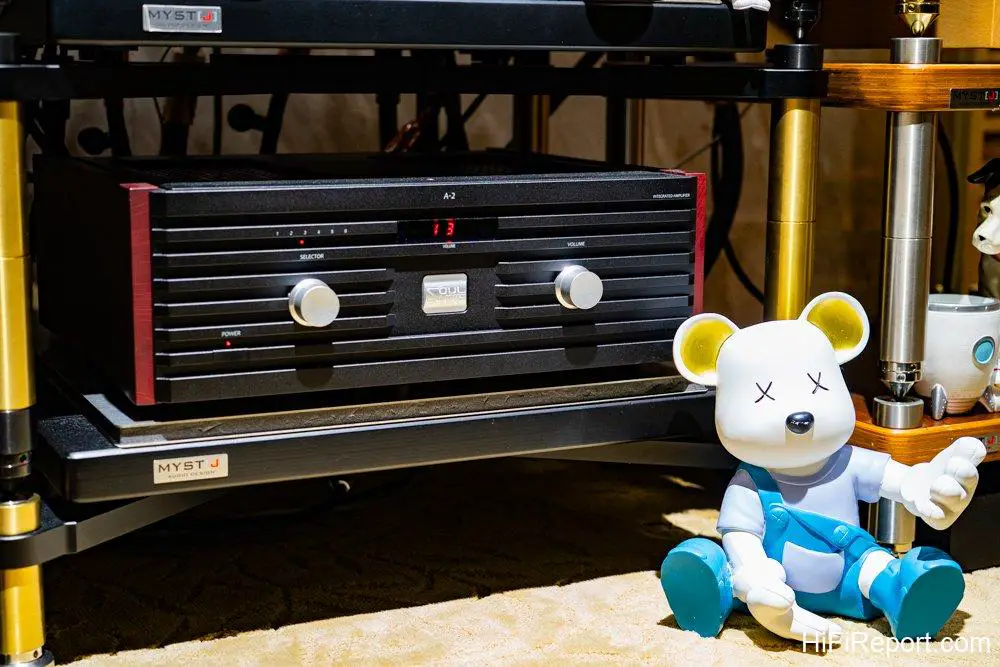
Jiadeng paired the Contour Legacy with a very simple system: the Soulnote A-2 integrated amplifier. At 200W per channel into 4-ohm speakers, it drove the Contour Legacy with ease and enjoyment.
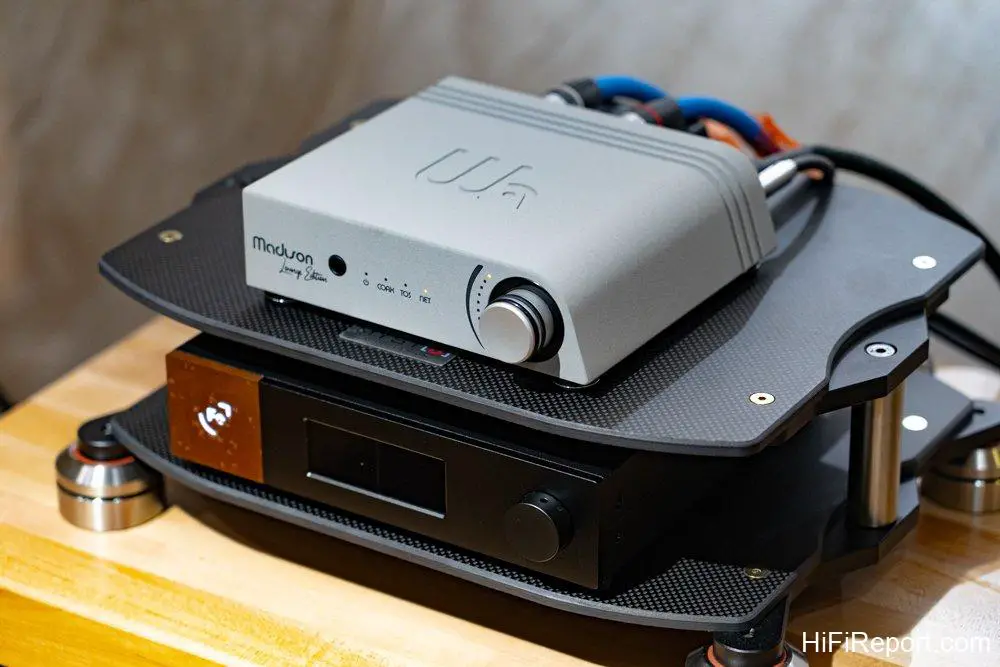
The source was a Wattson Madison (Lounge Edition) streaming DAC from Switzerland, directly handling streaming playback and digital-to-analog conversion, outputting via balanced connection to the A-2. This formed a classic three-piece setup: source, amplifier, and speakers. Streaming was handled by Roon, utilizing a music server developed by Jiadeng as the Roon Server.
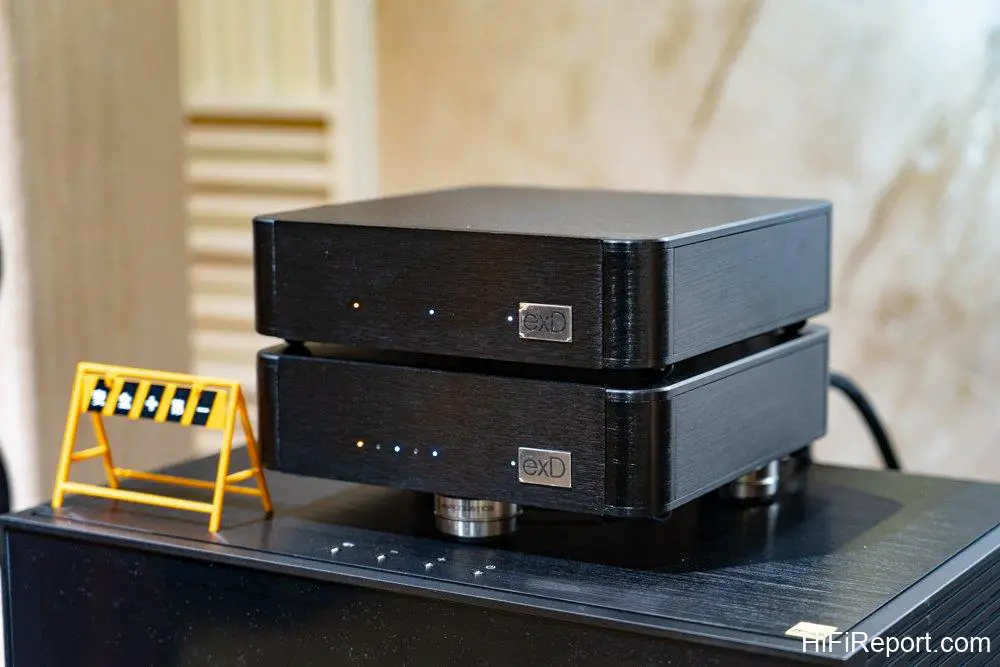
Of course, achieving high-quality streaming requires some attention to detail. Jiadeng did at least two things for the Madison. Firstly, they added a Ferrum Hypsos linear power supply. Replacing the stock power supply with a linear one for equipment using DC input is almost a necessary step for pursuing better sound. Wattson also recommends upgrading the power supply, and the adjustable voltage Ferrum Hypsos is a highly practical and versatile product. Secondly, in the network path, Jiadeng employed an ExD optical isolation “purifier.” This unit converts the signal from the RJ45 network cable into an optical signal, then back into an electronic signal, outputting it again via RJ45, thereby isolating network noise.
In the limited space of the Jiadeng listening room, they positioned the Contour Legacy speakers widely apart. I sat on the sofa, leaning back, precisely at the apex of an equilateral triangle. The distance between the points (measured with a phone rangefinder app) was 2.75 meters. This space is roughly equivalent to a typical home living room. If one were to dedicate a room to listening, the space and listening distance would likely be similar.
Open Sound, Warm Tone, Dense Texture, High Transparency
Through this simple yet thoughtfully assembled system, the sound of the Contour Legacy unfolded with a deeply musical character.
The midrange is full-bodied, carrying a slightly warm hue, dense and solid. Whether playing instrumental music or vocals, it presents concrete forms and clear images. The treble possesses a beautiful sheen, bright but never harsh – just listen to the captivating decay of piano notes to understand.
Looking solely at the specs, the Contour Legacy’s bass extension down to approximately 42 Hz doesn’t seem particularly remarkable. Yet, in actual listening, it delivers more abundant bass than the Contour 1.8 it pays tribute to, with significant weight to the sound. Jiadeng’s setup with wide speaker spacing and minimal toe-in (almost facing straight forward) severely tests a speaker’s dispersion. The Contour Legacy, however, demonstrates Dynaudio’s consistently excellent dispersion, creating a wide and expansive soundstage. Simultaneously, the central image remains focused and solid, without collapsing. Furthermore, sitting in the “sweet spot,” the speakers have virtually no presence; you only hear the music in front of you, without feeling it emanating directly from the speakers.
Clear and Complete Detail, Excellent Sense of Ambience
Take Sara Bareilles’ live album, “Brave Enough,” as an example. The recording captures a wealth of information, with rich detail in the singer’s voice and a tangible sense of the live atmosphere, creating a vivid and lifelike presentation. Listening to the Contour Legacy here at Jiadeng, it felt less like listening to such relatively small speakers and more like listening to mid-sized floorstanders like the Contour 60 at my office. The full-bodied image, ample energy, and broad soundstage were utterly convincing.
Sara Bareilles’ voice image is clear, focused but not excessively large, with unobscured vocal details distinctly audible. The way she trails off notes at the end of phrases, uses nasal resonance during transitions, alternates between chest and head voice, or unleashes powerful force on high notes – all are clearly audible and imbued with a sense of realism and live presence. The electric piano notes are full and rounded, while the guitar’s string vibrations and body resonance, combined with the force of the strumming, create a highly vivid sonic picture. As for the interactions with the live audience – applause, cheers, laughter, singalongs – describing them merely as “realistic” would be an understatement. The sense of atmosphere truly draws you deeper into the performance!
Solid and Full-Bodied Sound Quality, Providing a Foundation for Realistic Listening
Speaking of guitar, I’d like to cite Nils Lofgren’s “Keith Don’t Go.” The guitar notes at the beginning of the piece are rich and full, with abundant body resonance interspersed with the sound of the left hand sliding over the strings when changing frets. This layered sound is the source of the realism. As Nils Lofgren’s vocals enter, one can’t help but praise the Contour Legacy’s midrange performance: this midrange is wonderful for both female and male voices! In the middle section of the piece, the guitar delivers powerful, forceful notes. Hearing the notes burst forth from the plucked strings requires ample information to construct such a listening experience. Perhaps the Soulnote A-2’s excellent intrinsic quality played a significant role in shaping this full and rich sound, and perhaps the Wattson source indeed possesses a strong analog character, but the speaker’s capability is undeniable.
Distinct Layers, Precise Positioning, High-End Sound Visualization
Playing large-scale orchestral pieces further showcases the Contour Legacy’s capabilities. Listening to “John Williams in Vienna,” the orchestra is presented in miniature form before you, with width, depth, and layering. Most stunning is the impact when the timpani and electronic drums strike, their weighty thud dropping downwards with tremendous force. The rhythm in “The Imperial March” is powerful and steady, with the snare drums accompanying the string section’s tempo, like a marching army. In the middle section’s motive, Darth Vader’s theme is interwoven, played by French horns from the rear. Both the texture and positioning contribute to a visualization of the sound. As for the “Jaws Suite,” the woodwinds in the “Out to Sea” segment are cheerful and light, while the strings attempt to echo with a two-part fugue. The later fugue is even more brilliant: the low strings lead, the mid-range strings follow, and then, in counterpoint with the brass, the third part unfolds. The dense texture of the string section sounds absolutely wonderful; this is precisely the string sound we associate with Dynaudio! No, it seems even better, because within this layered orchestral sound, the Contour Legacy demonstrates even greater transparency. When the final timpani strike hits – boom! The Contour Legacy wins! That heavy and full, deep and massive timpani sound is truly something extraordinary. If I don’t have a space of several hundred square feet, instead of placing a pair of large speakers like the Contour 60i, I’d rather place a pair of Contour Legacy in a more modest 200-250 square feet.
Piano Notes are Warm Yet Powerful, Sounding Even More Classic Than The Original
The sound signature achieved with this system setup is dense, warm, and rich, excelling at conveying musical emotion. The emotionally charged compositions of Rachmaninoff are particularly captivating on such a system. Listening to Mikhail Pletnev on piano with Kent Nagano conducting the Rachmaninoff International Orchestra in Rachmaninoff’s Piano Concerto No. 3 – a piece demanding immense physical and technical prowess from the performer, containing many difficult passages and giving the piano virtually no rest. The Contour Legacy reproduces the piano notes with warmth and richness, with full-bodied keystrokes. When powerful chords are struck forcefully, the richness of the piano sound is faithfully conveyed. The orchestra’s performance is clearly layered, with instruments possessing authentic textures and precise positioning, exhibiting excellent balance throughout the entire concerto. Back in the day, Dynaudio’s Contour speakers appealed strongly to classical music lovers, partly due to their neutral accuracy, and partly due to their dense and solid sound quality, lending the music an ineffable sense of realistic beauty. With the Contour Legacy, these characteristics remain, but are even better.
Heavy Metal is Just As Fierce and Explosive
What does the refined Contour Legacy sound like playing rebellious heavy metal? Let me tell you upfront: if you’re a metalhead, buy with confidence! Listening to Metallica’s self-titled album, the Contour Legacy’s performance is truly fierce, powerful, and aggressive. “Enter Sandman,” the album’s opening track, is immediately impactful. The drums are strong and brutal, with powerful impact. The kick drum hits are startlingly large and heavy – is this really the Contour Legacy? The electric guitars build a thick, richly textured yet solid wall of sound. “The Unforgiven” begins with a strong lyrical guitar passage, and when the drums enter, the emotion swells. James Hetfield’s deep, restrained yet powerful voice also has great character. The Contour Legacy reproduces vocals that can be soft, detailed, or aggressive. Whatever the music is, it delivers precisely that!
Ample Bass Quantity Exceeding Expectations Based on Specifications
When it comes to audio, many specifications are truly just reference points. I’m not saying the manufacturers are inaccurate, but rather that “data is not music,” and “frequency response is not music.” What you should be asking isn’t about its specifications, but whether the music it reproduces can move you. If it can’t move you, then no matter how good the speaker’s specifications or how famous the brand, it won’t convince you to buy it (unless you buy things based solely on brand name, regardless of personal preference). According to Dynaudio’s specifications, the Contour Legacy extends down to 42Hz. Is this enough? It’s not a question of sufficiency. The key is whether the sound is natural when reproducing the music’s bass frequencies, and whether it allows you to feel the music’s inherent power to move you. We’re not buying bass; we’re buying speakers that can reproduce music. We aren’t listening to bass; we’re listening to music. Take Edgar Meyer and Christian McBride’s collaboration on the album “But Who’s Gonna Play the Melody?” as an example. Yes, I’ve heard speakers with deeper bass, but the Contour Legacy certainly gave me two large and deeply pitched double basses. In the interplay between the two musicians, the notes were full-bodied and possessed a slightly rough texture. Between bowing and plucking, the alluring qualities of the double bass were revealed. Was there not enough bass? I absolutely didn’t feel that way; I only felt like I had experienced a bass massage feast.
The Biggest Drawback – Limited to 1000 Pairs Worldwide, Gone When Sold Out
When I saw the Dynaudio Contour Legacy at the audio show last year, I was eager for an opportunity to listen to this pair of speakers; now my wish has been granted. The Contour Legacy features Dynaudio’s classic appearance, with seemingly simple lines meticulously crafted by hand, one detail at a time. Beneath the retro exterior lies new technology, providing a guarantee of acoustic performance and sound quality. I truly enjoyed the afternoon I spent with them; every piece of music played had an captivating charm.
That long description of my listening impressions above – honestly, I truly put my heart and soul into writing it. It’s not that I’m forcing myself to write a review; rather, while listening and writing, I had to compel myself to step back from being immersed in the music, to analyze the sound I was hearing with rational thought, and then find the right words to convey the emotions I felt. What a difficult transition! These two activities use different parts of the brain! Anyway. Thinking about it, the opportunity to hear the Contour Legacy is genuinely rare. Limited to 1000 pairs globally, the allocated quota is very limited, and the points of sale and display are even fewer. Factory production takes time, so a large import volume is not possible all at once. In the future, once these 1000 pairs are sold out, they will genuinely be gone. Although I don’t have the means to buy them just because I enjoyed listening, at least I have had the chance to hear them. What about you? Are you interested in becoming one of the only one thousand lucky people worldwide?
Specifications
* Type: 3-driver, 2.5-way, Bass Reflex Floorstanding Speaker
* Drivers: 1x 28mm Esotar 3 silk soft-dome tweeter, 2x 180mm MSP woofers
* Crossover Frequency: 3400Hz
* Frequency Response: 42Hz~29kHz (+/-3dB)
* Sensitivity: 90dB
* Impedance: 4 ohms
* Power Handling: 300W
* Dimensions (WxHxD): 208 x 995 x 345 mm
* Weight: 32.5 kg