
Dynaudio Core Sub Review
Some might think that a subwoofer’s structure is simple and its design straightforward, but in reality, subwoofers involve significant expertise. A quality subwoofer must be able to produce immense energy while maintaining agile response and excellent control. This combination is crucial for generating powerful, impactful bass that isn’t boomy or overwhelming, all while preserving the music’s speed and dynamics. This is a challenging feat.
The Core Sub, which we’re reviewing this issue, is one of the exceptional few that achieves this. Its bass is potent, fast, and clean. Once you’ve heard it, you’ll understand what truly high-quality bass sounds like.
Dynaudio and the Core Series
Audiophiles worldwide are likely familiar with Dynaudio, a renowned global Hi-End loudspeaker brand with a long history of successful models for both professional and home audio markets. Dynaudio’s success, in my opinion, stems from its ability to design its own drivers from the ground up, giving them core control over a speaker’s sonic characteristics.
Starting in 2015, Dynaudio invested heavily in building the massive, state-of-the-art Jupiter acoustic laboratory, a move that significantly advanced their research and testing capabilities and enhanced the precision of their loudspeaker designs.
Naturally, such precise design capabilities needed to be leveraged. Dynaudio embarked on developing a new generation of high-end studio monitors, leading to the Core series, officially launched at the 2019 NAMM show. The initial Core series rollout included the two-way Core 7 and the three-way Core 59. Both models incorporated Dynaudio’s latest driver technology and advanced DSP digital parameter adjustments. Shortly after, the second wave introduced the Core 47 and the Core Sub.
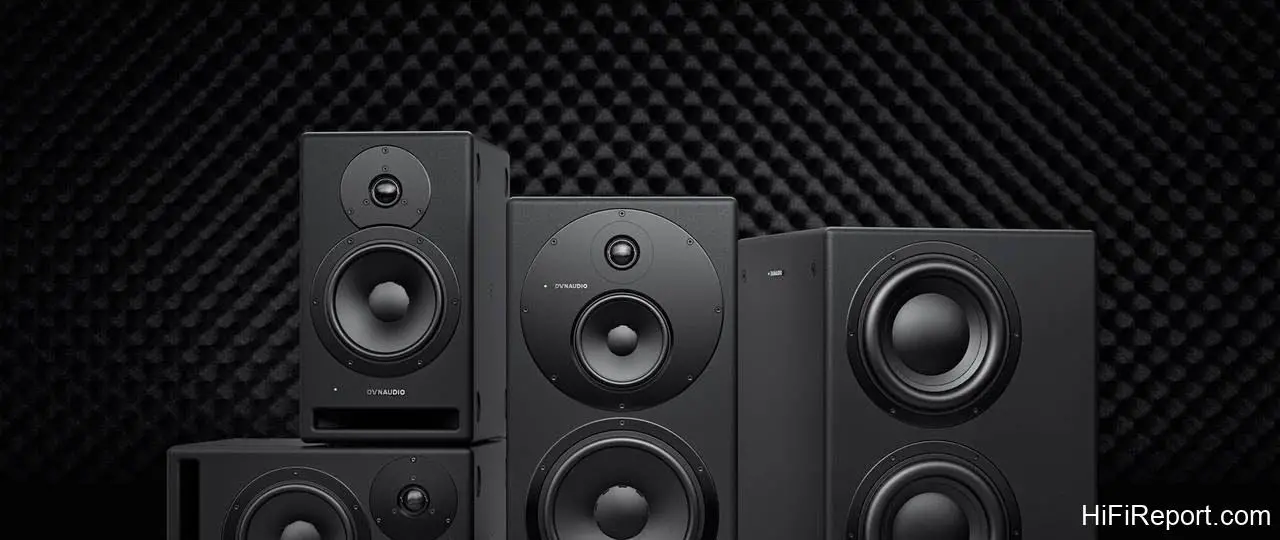
The Core 47 fills the gap between the Core 7 and Core 59, while the Core Sub is a standalone active subwoofer designed to complete the Core series lineup.
In recent years, economic downturns have led to a slowdown in new product releases from many global speaker brands. Against this backdrop, high-end professional products like the Core series shine brightly. We made reviewing them a priority. We recently tested the Core 7 and Core 47, and now the star of the show is the active subwoofer, the Core Sub.
Design and Driver Configuration
The Core Sub is a meticulously engineered product. It wasn’t developed out of thin air by Dynaudio recently; in fact, the Core Sub is based on the successful 18s subwoofer from a few years ago. By incorporating the new technologies and testing methods developed for the Core series, the Core Sub has become one of Dynaudio’s most technically advanced subwoofers to date.
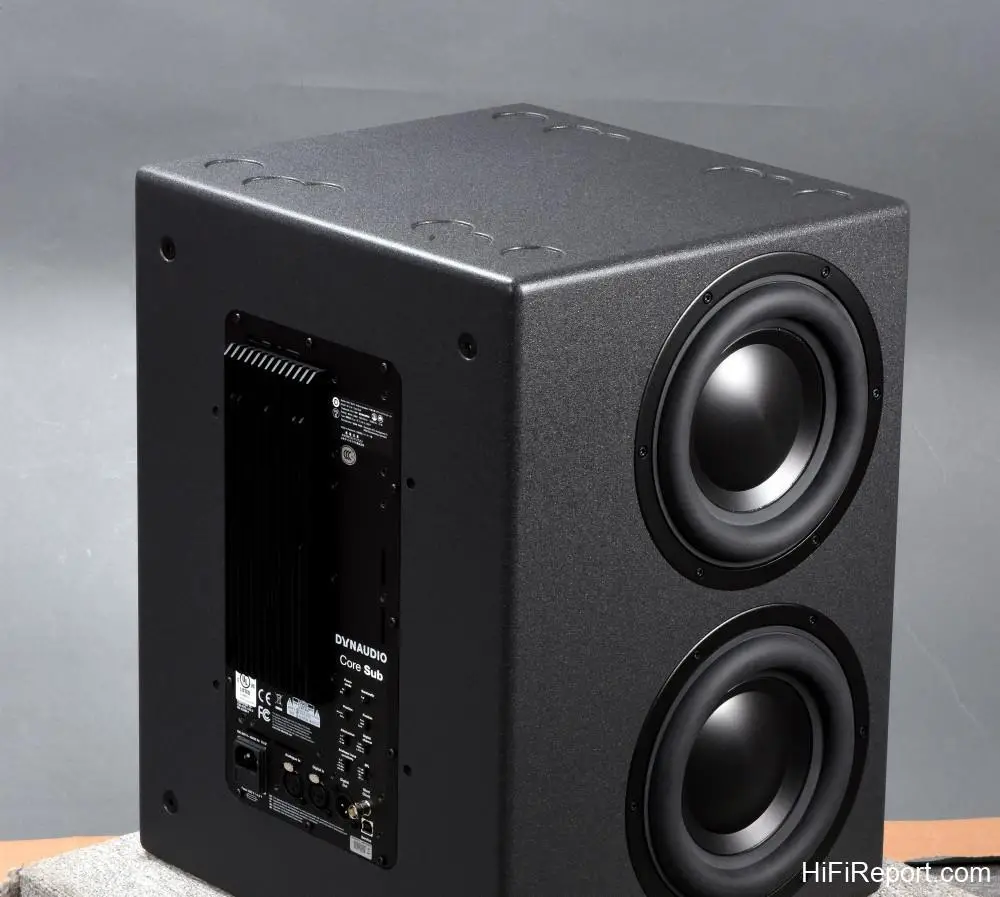
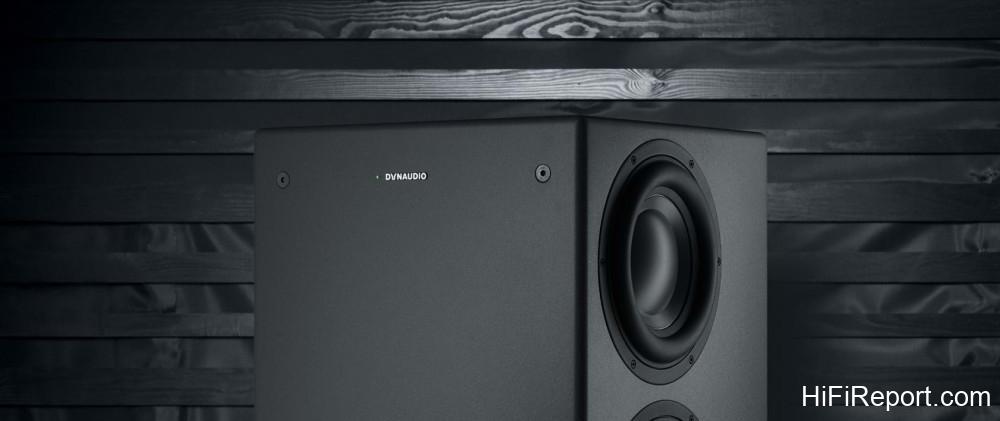
Just looking at the Core Sub suggests its impressive performance. It’s substantial in size, nearly 40cm wide, over 50cm deep, and weighs a hefty 48 kilograms. The Core Sub is equipped with a total of four long-throw bass drivers, each measuring 9 inches. The combined surface area for moving air is equivalent to a 36-inch driver. These four drivers are symmetrically mounted on the sides of the cabinet, with two on each side.
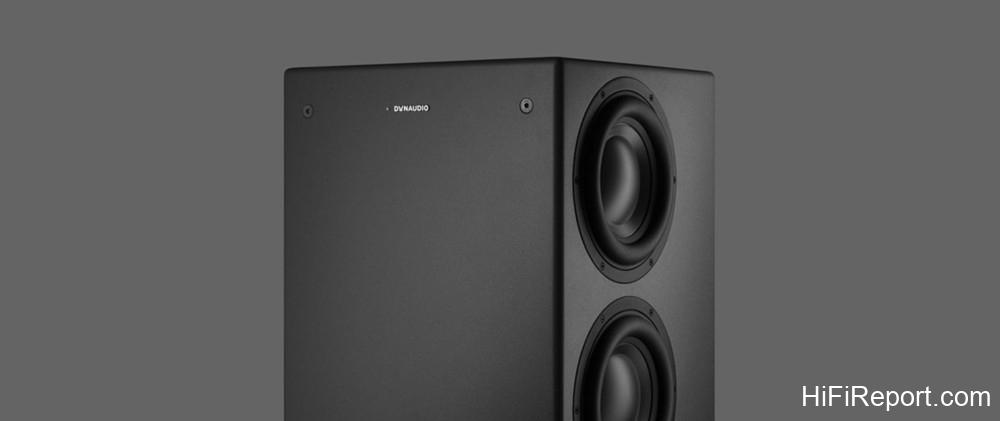
Why this specific design? Why are the drivers on the sides? Why four 9-inch drivers instead of three 12-inch drivers? There’s science behind these choices. Firstly, the larger the diaphragm size, the greater its mass, making it more difficult to achieve good control. Using multiple smaller diaphragms allows for faster response (better control) while still providing ample energy. So, four 9-inch drivers are generally superior to three 12-inch drivers, particularly in terms of speed.
Secondly, large bass drivers generate significant vibration during movement. These vibrations affect not only the cabinet but also other drivers, leading to increased distortion and sonic coloration. The Core Sub’s four drivers are configured symmetrically in pairs. When they operate simultaneously, the drivers on opposing sides move outwards or inwards together, inherently counteracting cabinet vibrations and reducing the potential for coloration.
Advanced Driver Technology
Regarding the diaphragm design, Dynaudio has frequently used MSP (Magnesium Silicate Polymer) diaphragms in their mid-bass drivers in recent years. This material strikes an excellent balance between rigidity, mass, and damping properties, making it a superb mid-bass diaphragm material. However, the Core Sub handles the much larger vibrations and higher energy of low frequencies, demanding even greater diaphragm stability.
Therefore, Dynaudio designed a specialized diaphragm for the Core Sub called the MSP+ hybrid diaphragm. It’s based on an aluminum foundation combined with MSP material, creating a diaphragm with higher rigidity that is less prone to cone breakup (deformation), making it more suitable for subwoofer applications.
While aluminum cones offer better rigidity, creating them in such large sizes can raise concerns about ‘ringing’ during vigorous back-and-forth motion. To mitigate this, the Core Sub incorporates two specific design features to enhance the drivers’ damping properties, which the manufacturer calls the Dual-Action Damping System. The first is the placement of paper damping material behind the driver, and the second is a damping dust cap made from MSP material, positioned in front of the diaphragm.
These measures work together to suppress excess energy and minimize coloration as much as possible.
Amplification and Connectivity
Having excellent drivers isn’t enough; they need equally capable amplification to unleash their full potential. The Core Sub inspires confidence in this regard, as it uses amplifiers from Pascal Audio in Denmark. Pascal Audio is a company specializing in producing high-quality Class D amplifier modules. According to the manufacturer’s specifications, the Core Sub houses two 500-watt Class D amplifier modules, for a total power output of a staggering 1000 watts.
This enables the Core Sub to deliver a maximum sound pressure level of 120dB, an astonishing output.

Regarding inputs and outputs, because the Core Sub is positioned as professional studio equipment, its connectivity differs slightly from typical home subwoofers. It includes AES3 digital input, digital output, and analog input, all utilizing XLR balanced connectors. Most home audio systems do not support AES3 connectors, so you’ll likely need to use the analog input. When using the analog input, an LED on the front panel of the Core Sub lights up red to indicate if the input level is too high.
In this case, you should reduce the overall volume or the analog input level. Additionally, like other Core series models, it includes internal DSP processing, allowing you to make adjustments based on its placement location via controls on the rear panel.
Cabinet Design
Finally, concerning the cabinet design, the manufacturer states that all Core series products are manufactured at Dynaudio’s factory in Skanderborg, Denmark. The Core Sub utilizes a sealed cabinet, which naturally balances internal and external pressure, creating an “air spring” effect that helps deliver more precise sound. This design aligns with the pursuit of professional monitoring performance.
Listening Impressions
Moving on to testing impressions, we tried two system configurations. One involved pairing it with an NAD C658 streaming preamplifier, which features Dirac Live automatic room correction and balanced outputs, allowing us to form a 2.1 system with a pair of Core 47s. The second configuration involved integrating it into a home theater system with an AV receiver, where the Core Sub handled the ultra-low frequencies.
We started by listening to two-channel music (in the 2.1 system setup), and the Core Sub certainly lived up to its price tag and Dynaudio’s reputation; its performance in the bass frequencies is truly exceptional. The Core Sub can reach very low extensions. For instance, when playing Saint-Saëns’ Symphony No. 3 (Organ Symphony), the organ’s low notes were incredibly clear. At high volumes, we could even feel the bass energy vibrating our skin and disturbing the air.
What impressed us even more was the Core Sub’s remarkably clean bass. During the organ passage, for example, there was absolutely no overly thick or bloated low-frequency response. It beautifully articulated the organ’s changing pitches and layers.
Furthermore, the bass produced by the Core Sub is incredibly solid. When playing Ottorino Respighi’s “War Dance,” the large drum hits were exceptionally tight and focused, with concentrated energy. And because the low-frequency range was so clean, it didn’t interfere with the mid-high frequencies at all. When other mid-high range instruments appeared, we could still hear their beautiful and delicate textures clearly. Adding the subwoofer didn’t muddy the sound in the slightest.
The Core Sub’s solidity and power are truly exhilarating when listening to popular music. For example, playing Maroon 5’s “Moves Like Jagger,” the electronic drum beat in the background hit with immense, potent energy, possessing both weight and punch. We also noticed the Core Sub’s extremely fast low-frequency response, making the track sound incredibly tight and energetic.
Its clean bass characteristic meant that even at high volumes, we didn’t experience the discomfort associated with bloated bass, making it both enjoyable and enduring to listen to.
Having passed the test with the demands of nuanced two-channel music, I anticipated no issues with multi-channel movie soundtracks, and indeed, it performed even better than expected. The Core Sub’s quick response, rich layering, and powerful impact were evident. During intense movie sound effects like gunshots or car crashes, you could feel the tension of energy instantly exploding, but without any uncontrolled or overwhelming output.
Instead, the energy was concentrated, hitting your eardrums and body squarely. This type of bass has a far more compelling impact than typical flabby or swollen low frequencies.
Conclusion
After a round of testing, we can confirm that the Core Sub is absolutely one of the best-performing active subwoofers newly released in recent years. If you are seeking fast, precise, clean, and powerfully impactful low frequencies, it comes highly recommended.
Features
* Developed specifically for the flagship Core monitoring series
* Development aided by the Jupiter acoustic laboratory
* MSP+ hybrid diaphragm optimized specifically for subwoofers
* Equipped with four 9-inch bass drivers
* Internal amplification uses Danish Pascal Class D amplifiers
* Total internal amplifier power is 1000 watts
* Includes DSP processing, adjustable based on placement
* Ultra-low frequencies can extend down to 15Hz (+-3dB)
Specifications
* Design: Active Subwoofer
* Drivers: 9-inch MSP+ Hybrid Diaphragm Bass Driver × 4
* Built-in Amplifier Power: Pascal Class D Amplifier 500W × 2
* Frequency Response (-6dB): 13.5Hz~200Hz
* Frequency Response (+/-3dB): 15Hz~165Hz
* Inputs/Outputs: XLR Analog Input, AES3 Digital Input, XLR Digital Output
* Maximum SPL: 120dB
* Weight: 48 kg