
DYNAUDIO FOCUS 200 XD Review
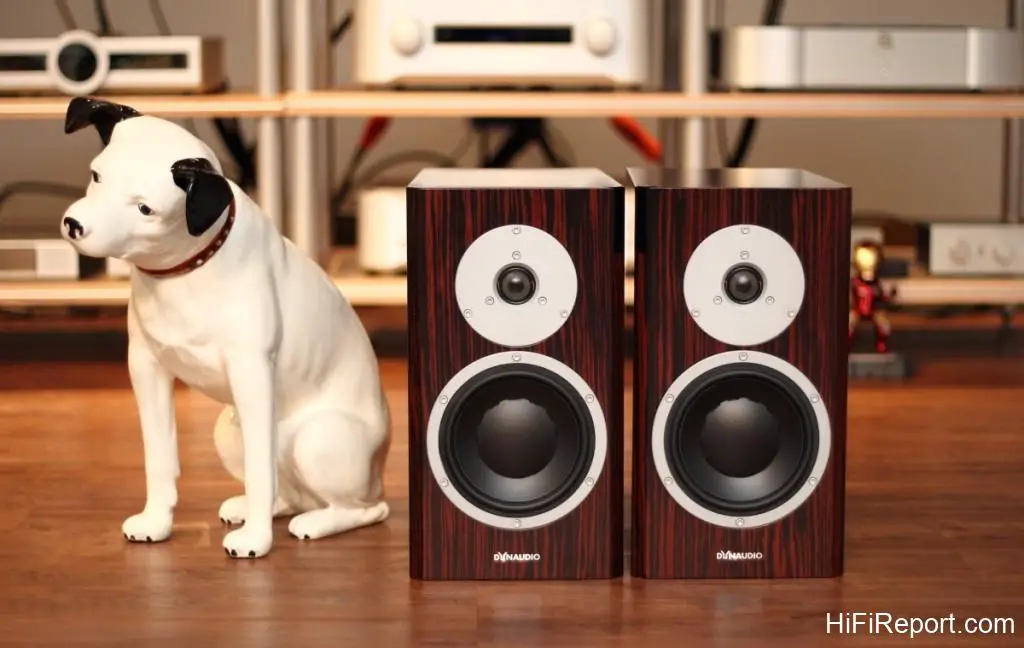
Danish loudspeaker giant Dynaudio launched their new generation Focus XD series at this year’s Munich High End Show, highlighting “Digital, Active, and High-Resolution.” The Focus XD series has just arrived, and we at HiFiReport were promptly sent a set of Focus 200 XD for review. We are incredibly excited to see what kind of amazing performance this all-new type of active bookshelf speaker can deliver.
Danish Design and Manufacturing
The Focus XD series features an active speaker design with built-in digital amplifiers. From the moment the digital signal enters the speaker terminals, it is processed digitally until the very last moment when it’s converted to analog to drive the speaker units. This emphasizes digital precision, handling high-resolution signals up to 24bit/192kHz. The Focus XD series includes three models: 200 XD, 400 XD, and 600 XD.
The 200 XD is a bookshelf speaker, while the other two are floor-standing models. All Focus XD series speakers, including the dedicated 200 XD speaker stands, are 100% designed and manufactured in Denmark.
[Image: Dynaudio Focus XD introduction video thumbnail]
*Dynaudio’s introduction video for the Focus XD series*
[Image: Focus 200 XD unboxing]
*The Focus XD series just arrived, and HiFiReport gets the first look unboxing the Focus 200 XD*
[Image: Tweeter protection cover]
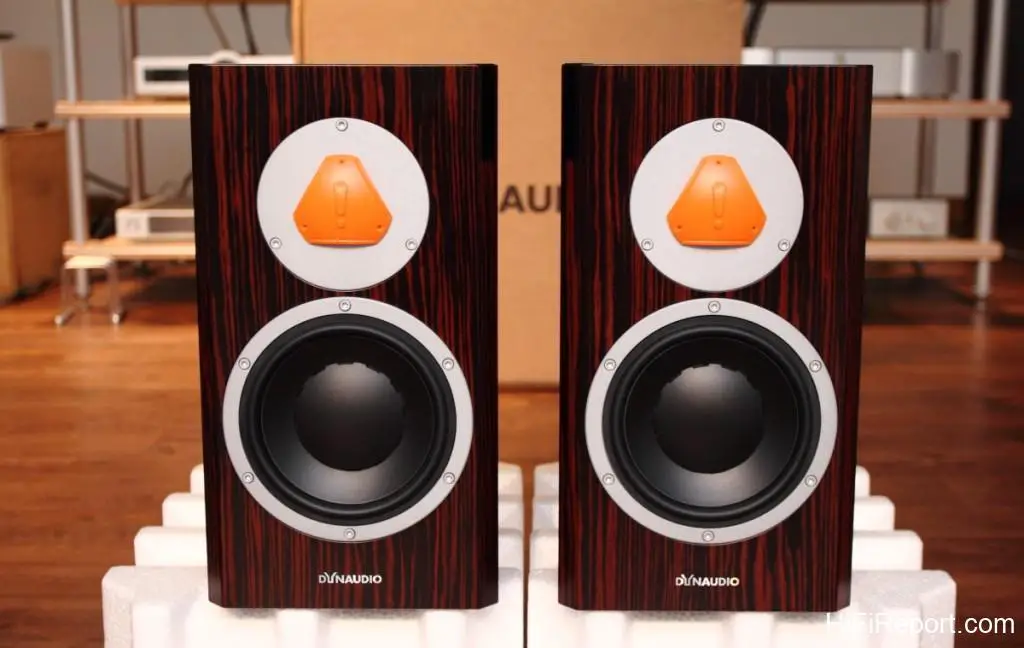
*The orange protective cover on top is for the soft dome tweeter, preventing damage during transportation.*
[Image: Accessories box]
*The accessories box contains a remote control, two types of power cords with different plugs, and a user manual.*
Digital Processing
In traditional speaker systems, the audio signal, whether from a CD player, streaming server, or computer, must be converted to analog at the source before entering pre- and power amplifiers, and finally reaching the speakers through speaker cables to produce sound. Converting to analog signals too early in the chain creates a long signal path with numerous variables.
Different DACs, amplifiers, various cables, and volume controls can all alter the state of the analog signal and affect its tonal characteristics. Worse still, signal accuracy can be lost in the process, introducing too many uncertainties for the user. The Focus XD series changes this paradigm. It keeps the signal in the digital domain until the very last moment before driving the speaker units, ensuring the highest possible precision throughout the process.
High-Quality Drivers
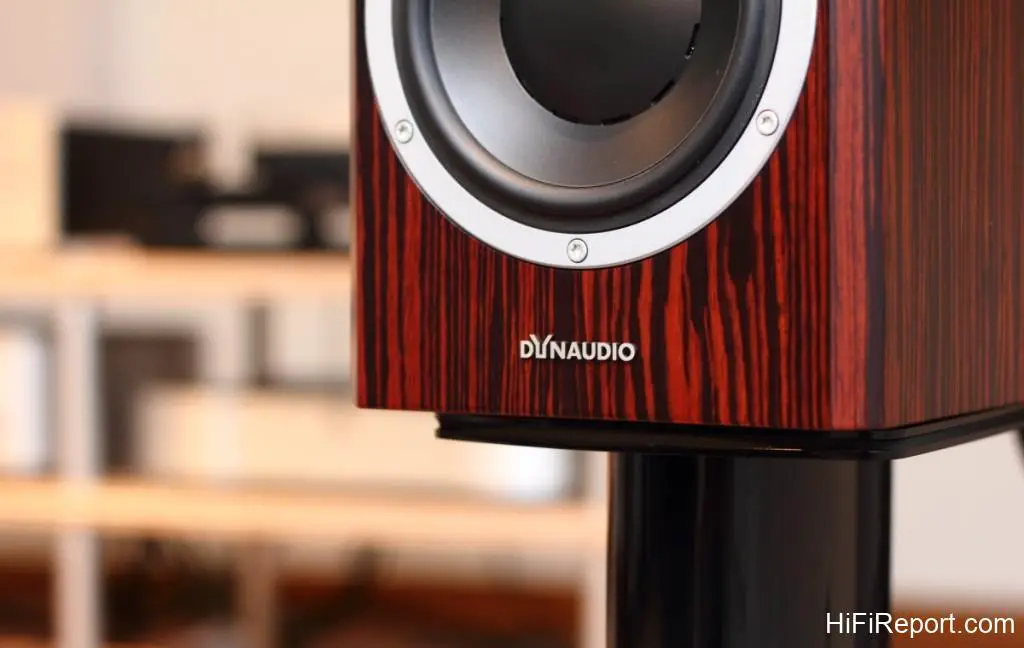
As a world-renowned high-end speaker manufacturer, Dynaudio’s greatest strength lies in its driver technology. The Focus XD series is no exception, with all design and production taking place in their own Danish factory. The Focus XD utilizes Esotec+ series drivers, featuring ultra-lightweight aluminum voice coils, MSP cone technology, soft dome tweeters coated with a special material, powerful Ferrite+ magnetic drive, and rigid aluminum frames with excellent vibration damping.
300W Mono Amplification & 24bit/192kHz High-Resolution
The Focus XD series incorporates built-in digital amplification circuits. Even within the same speaker cabinet, each driver is independently powered by a robust 150-watt amplifier, resulting in a staggering 300 watts per channel for the two-driver Focus 200 XD. The amplification circuit directly amplifies the digital signal, including digital volume control, making it a truly “Totally Digital” system.
This eliminates the sonic variations introduced by different amplifiers and analog volume controls, delivering the authentic Dynaudio sound to the listener. The Focus XD can handle digital signals up to 24bit/192kHz, which is exceptionally high-resolution. Modern recording formats are often very high quality, and limiting oneself to CD’s 16bit/44.1kHz would be a waste. Focus XD aims to provide listeners with a more high-end audio experience.
The Focus XD can accept digital coaxial input. Furthermore, like the previous XEO series, by pairing it with Dynaudio’s wireless Hub, it can achieve wireless music streaming, establish multi-room listening systems, and provide wireless transmission management, offering greater flexibility and a cleaner listening space. What if the source is analog? The Focus XD has a built-in high-quality A/D converter.
When an analog signal enters the Focus XD via RCA, it is immediately converted to a 24bit/192kHz digital signal. All subsequent signal amplification and volume control are performed digitally, and finally converted back to analog to directly drive the speaker units. The Focus XD also employs precise DSP technology, allowing for bass energy adjustment based on speaker placement. Whether positioned against a wall, in a corner, or in a free-standing position, the bass response can be optimized.
[Image: LED indicator on speaker cabinet]
*On the inner side of the speaker cabinet, there are two LED indicators that display volume level and various operational statuses.*
[Image: Bass reflex port]
*The Focus 200 XD uses a bass reflex design, and the bass output level can be adjusted.*
Specifications
* Frequency Response: 39Hz~24kHz
* Crossover: 2-way, 2500Hz
* Tweeter: 27mm soft dome tweeter
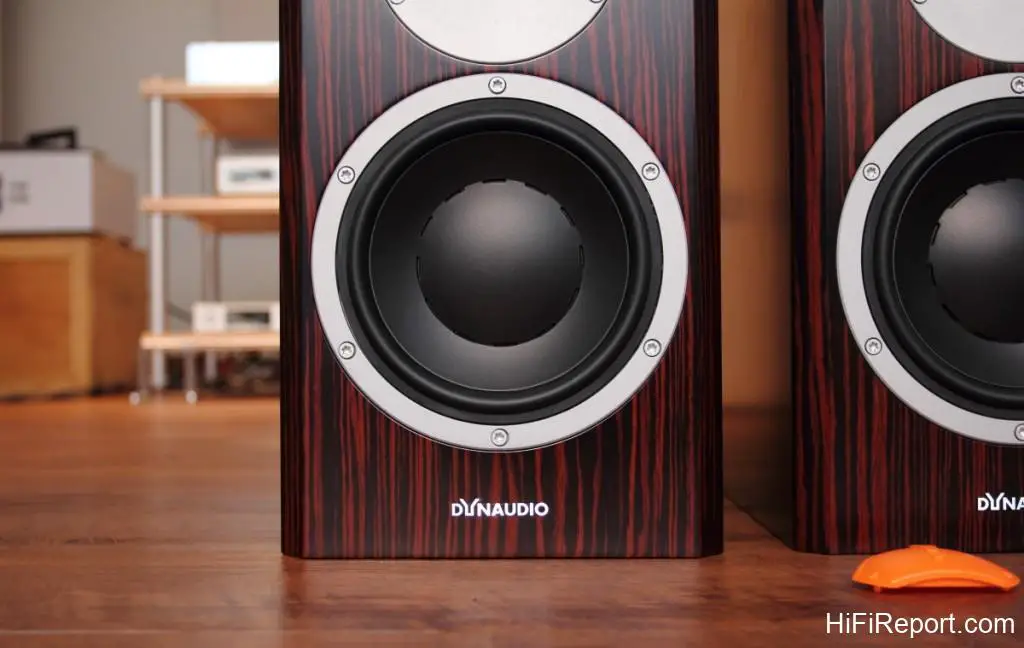
* Woofer: 74mm MSP cone
* Input Terminals: Digital Coaxial x 1 (24bit/192kHz), Analog RCA x 1
* Output Terminals: Digital Coaxial x 1 (24bit/192kHz)
* Amplifier Power: Tweeter 150W x 1, Woofer 150W x 1
* Wireless Transmission: Hub 16bit/48kHz, Direct input Playback 24bit/96kHz
Using the Focus 200 XD in practice is incredibly straightforward. After connecting the digital coaxial output from my source to the master speaker and turning on the power, playback started immediately without any further setup. The two Focus 200 XD speaker cabinets are designated as left and right channels, clearly marked on the rear panels.
After positioning them according to their designations, a switch on the back allows one to be set as “Master,” which receives the digital signal from the source and then sends it to the “Slave” speaker. Can either speaker be set as the master? Yes, both speakers have identical back panel settings and can function as the master. Users can place the source near either the left or right speaker, whichever is more convenient for signal connection to the Focus 200 XD.
The other speaker then becomes the slave, with its switch set to “Slave.”
Wireless & Wired Connection
There are two ways to transmit signals between the Focus master and slave speakers. The first is wireless transmission. As a slave speaker, it only needs to be plugged into a power outlet to operate. This is because the Focus XD has built-in wireless signal transmitters and receivers, allowing the master speaker to wirelessly send signals to the slave speaker’s receiver module. So why is there still a cable connecting the two speakers in the photos?
The second method involves using an RCA signal cable to transmit the digital signal from the master speaker to the slave speaker. Given the wireless option, why is a wired connection still needed? The key difference lies in the sampling rate capability. To achieve the highest resolution of 24bit/192kHz, a wired connection is necessary. Wireless transmission is limited to 24bit/96kHz, which is still an excellent specification.
If playing music with a sampling rate of 24bit/96kHz or lower, and the signal cable between the two speakers is connected, the Focus XD will prioritize wired transmission. If you unplug the RCA cable during music playback, it will automatically switch to wireless transmission. These changes occur seamlessly without needing to use the remote control.
[Image: LED indicator during volume adjustment]
*This is the LED indicator. When initially powered on in Standby mode, a red light is displayed at the bottom. During operation, it turns blue. The light pattern in the photo appears when adjusting the volume, with more white segments indicating a higher volume level. Although the Focus XD is an active speaker, it can also be connected to a preamplifier, allowing volume control to be handled by the preamp.*
Sound and Bass Adjustment
[Image: Rear control panel]
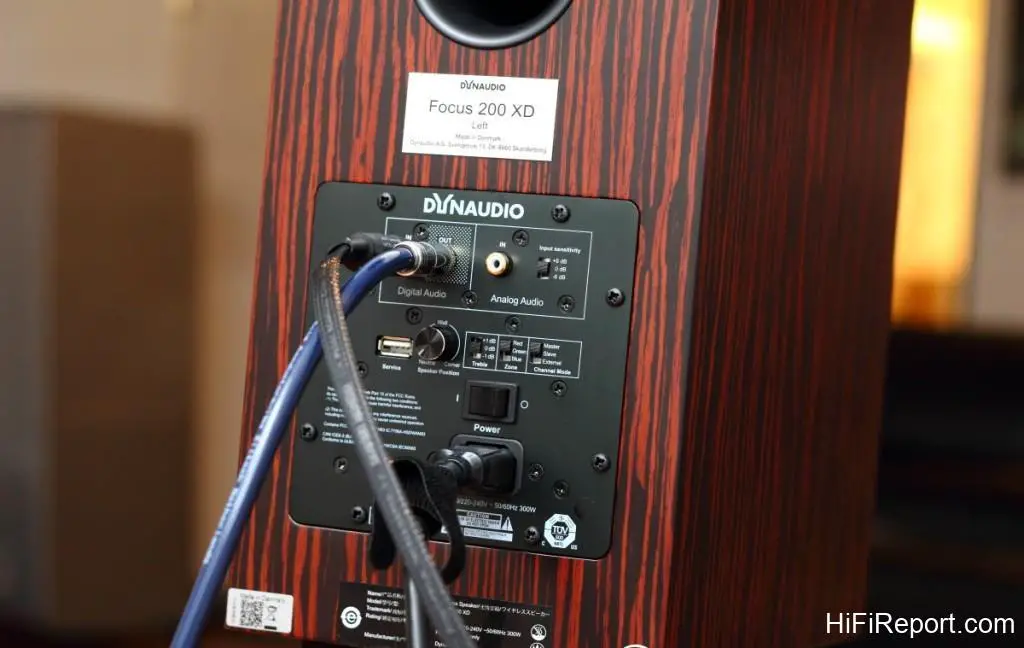
*The rear control panel, besides the AC power input, features a black RCA coaxial connector on the left for connecting the source (master speaker only), and a blue RCA signal cable on the right for connecting the two speaker cabinets (optional, but note music file sampling rate limitations). To the right of these is another RCA connector for analog input.
As mentioned earlier, analog signals input into the speaker are first converted to digital by the built-in A/D converter before undergoing signal amplification and volume adjustment. When using analog input, it’s important to note that the source signal still needs to be split into left and right channels, entering the respective left and right Focus speaker cabinets, unlike digital input which only needs to connect to the master speaker.
Next to the analog input terminal, there is a sensitivity gain adjustment that can be set to positive or negative 6dB. *
The back panel also offers four additional adjustment options. On the far right is the switch to set the speaker as master or slave. In the middle is the multi-room setting, similar to XEO’s Hub functionality. When using more than two sets of Focus XD or XEO speakers in a home, and using a Hub wireless transmitter to send wireless music signals to the Focus XD or XEO, this setting is used to identify which speaker group the Hub should send signals to.
Another is the tone control, adjustable by ±1dB. Increasing the dB setting adds brightness, while decreasing it adds warmth. There is also a rotary knob for EQ, which allows adjusting the bass level based on speaker placement. Different placements can result in varying bass levels, and there are three settings: normal position, against a wall, and in a corner. The USB port on the far left is not for playing music files, but for future firmware updates.
Listening Experience
After several hours of both exploring the features and listening, I found the Focus 200 XD to possess excellent bass capabilities. Many bass-heavy tracks are delivered with full dynamics and energy. As with Dynaudio bookshelf speakers I’ve listened to in the past, this aspect never disappoints. The voice coil of the Focus 200 XD’s woofer is quite large, significantly larger than that of the XEO.
Of course, these two series are not positioned in the same market segment, with Focus XD being closer to high-end products. However, the Focus XD truly combines the strengths of both the XEO and Focus series, offering both convenience and modernity while maintaining Dynaudio’s excellent sonic tradition. The midrange and treble provide ample clarity and transparency to the music. Piano keys sound crisp and bright, and vocals are clear and engaging.
While not particularly sweet, the neutral sound profile highlights sonic details even further.
Wireless Streaming with Hub
The Focus 200 XD can also stream files wirelessly, requiring only a Dynaudio Hub. The Focus 200 XD has built-in wireless receivers and transmitters and is compatible with the Dynaudio Hub. When used together, the Focus 200 XD active speakers only need to be connected to power, resulting in a very clean and minimalist cable setup.
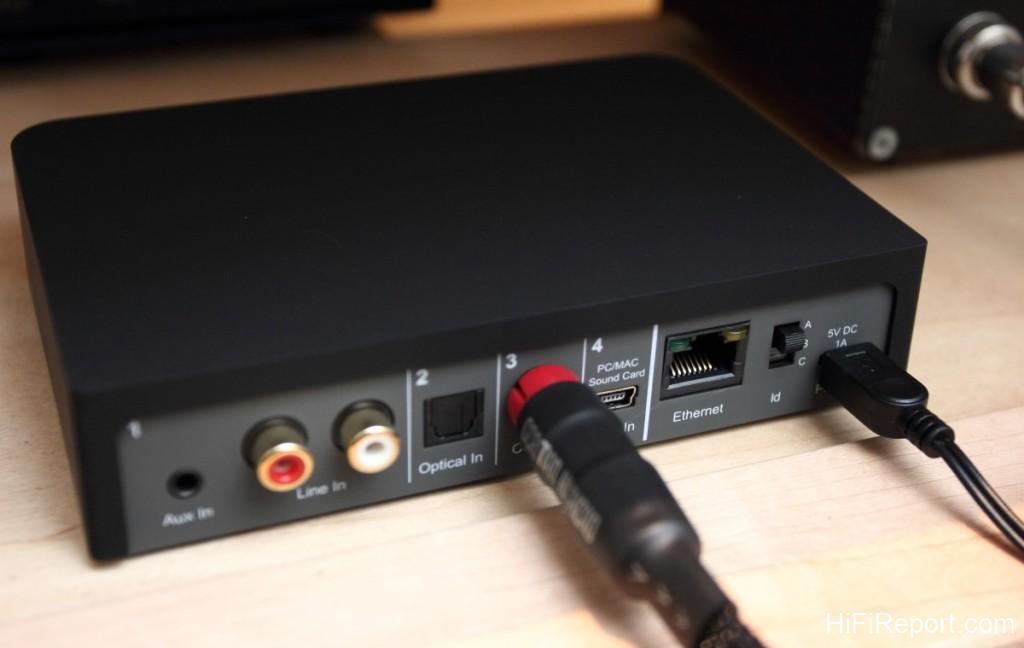
The Dynaudio Hub is the same Hub used in the XEO series. Everything the XEO series can do, the Focus 200 XD can also do, and with even better speaker drivers and superior sound quality. Using the Dynaudio Hub, files up to 24bit/96kHz can be transmitted.
The biggest advantage of using the Hub is wireless operation, along with a variety of input options, including RCA Line In, optical input, coaxial input, and USB. The Hub converts analog signals it receives into digital signals before transmitting them to the Focus 200 XD.
In practical use, one thing to note is that the Dynaudio Hub can provide three signal transmission frequencies: 2.4GHz, 5.2GHz, and 5.8GHz. The rear panel ID switch, labeled A, B, and C, corresponds to these three frequencies. If set to A, for example, when using the remote control, you must first press “Hub A” to find the correct transmission source, and then switch to the correct input source.
Therefore, you can use up to three Dynaudio Hubs simultaneously, or one Hub for multiple sets of speakers, providing ample capacity for multi-room systems.
Listening Experience (Continued)
I immediately pulled out “Absolutely Sound 2014” from TAS. On track 10, “Caruso,” I heard a deep, resonant voice. The Focus 200 XD truly lives up to the Dynaudio lineage, exhibiting thickness in the midrange and bass, and a solid, rock-steady presence. The image size and sonic weight are proportionally balanced. “Caruso” is a love song written for an American girl, conveying the pain of separation and longing.
The Focus 200 XD reproduced Christian Willisohn’s incredibly rich and deeply emotional vocals with great effect.
Track 12 is “Sonata In B Minor For Violin And Piano Ⅱ, Andante Espressivo” by Italian composer Respighi, composed in 1917. This version is performed by violinist Franco Gulli and pianist Enrica Cavallo. Through the Focus 200 XD, the piano keys have substantial weight, each note striking with presence, creating a grand and majestic impression.
The violin’s performance is continuous, deeply emotive, and the string tones are delicate and dynamic, as if drawing lines of sound in the air with a magic wand. While both instruments maintain their independence, there are moments of fusion and interplay. Listening to this track late at night will undoubtedly allow one to more clearly appreciate their collaborative and competitive relationship and emotional nuances. Track 13 is “Chopin: Piano Concerto No.2 Op.21 Ⅲ. Allegro Vivace.”
This piece features rapid, agile, and technically rich piano playing. The Focus 200 XD presents the piano’s dynamic range exceptionally well, even more dynamically than the previous track. The treble range is not only clear and bright but also distinctly differentiates between loud and soft passages. When the orchestral accompaniment enters with its grand sonic scale, it further highlights the piano, showcasing excellent balance between speaker reproduction and recording quality.
Next, I played a more expansive piece, track 13 from the 2015 Hong Kong High-End Audio Visual Show CD: “Mahler: Symphony No. 1, D Major, Ⅳ. Sturmisch bewegt (excerpt).” The track immediately reveals a distinct sense of depth and layering in the soundstage. Gradually, different instruments join in, initiating Mahler’s characteristic grandeur. The Focus 200 XD is absolutely capable of rendering such impressive movements.
The power of the brass and drums, and the detail reproduction of various metallic percussion instruments and strings are all top-notch. During the climactic tutti sections, not only is the momentum awe-inspiring, but many sonic details are also clearly discernible. Each instrument, regardless of volume, retains its distinct character. This kind of reproduction is thoroughly enjoyable. Both the recording production and the playback equipment demonstrate excellent balance and refinement.
Playing Jannifer Warnes’ “Rock You Gently,” the powerful opening drum sounds remain a favorite of mine. The Focus 200 XD’s performance in this area is no less impressive than previous listening experiences. Jannifer Warnes’ voice is quite neutral yet carries a hint of feminine strength and tenderness. If the playback equipment colors the sound, the character will definitely change. It might become overly neutral and cold, losing the tenderness, or become too warm, lacking the strength.
The Focus 200 XD faithfully presents Jannifer Warnes’ vocal characteristics. The vocal details and sense of solitude throughout the album are also conveyed appropriately.