
Epson EH-LS12000B Review
With streaming services now bringing theatrical releases directly into homes, the trend of home theater supplanting the traditional cinema experience is undeniably gaining momentum.
A recent research report indicates a surge in sales of extra-large displays (defined internationally as over 74 inches) in the first half of 2021. This suggests that enjoying movies on substantial screens at home isn’t solely the domain of dedicated enthusiasts anymore; it’s a notion embraced by the broader public. However, for a truly immersive movie experience, you need to dim the lights and fill a large canvas.
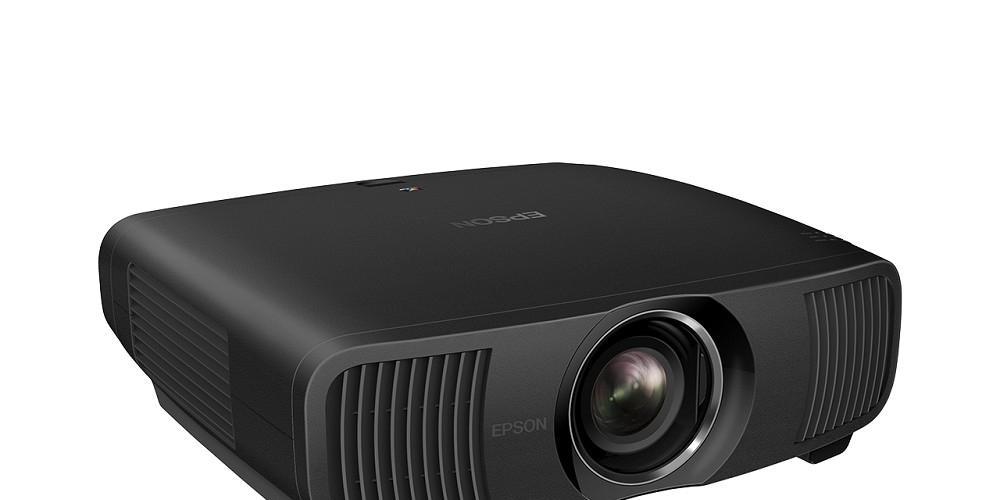
This review focuses on Epson’s latest high-performance home theater offering: the EH-LS12000B 4K laser projector.

Epson’s Laser History
Epson pioneered the laser light source in home projection with the EH-LS10000 in 2015, a model that garnered an EISA award that very year. Its 2017 successor, the EH-LS10500, also earned widespread acclaim from professional reviewers and enthusiasts alike. Both models stood as Epson’s flagship 4K projectors, distinguished by their laser illumination and three-chip architecture utilizing Epson’s proprietary 3LCD technology.
These early models, from the EH-LS10000 to the EH-LS10500, were positioned at the high end, typically retailing for over $9,900.
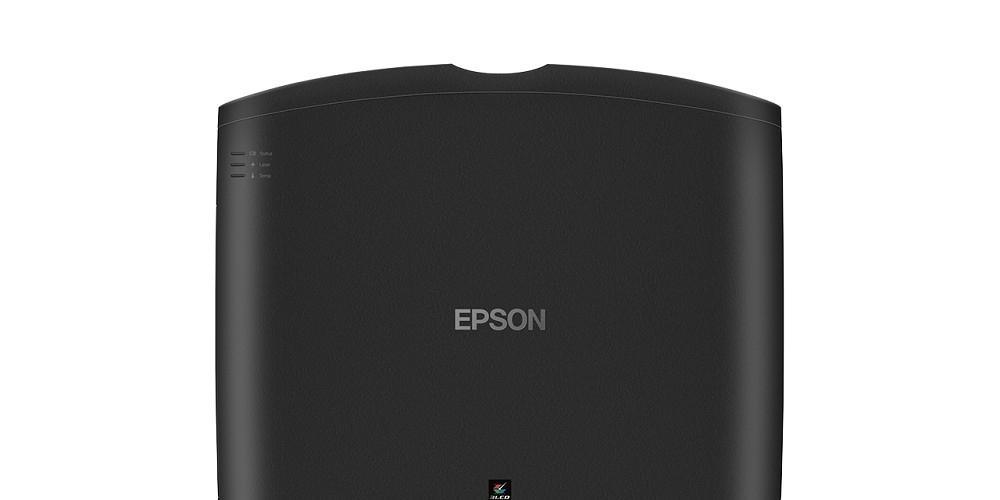
The EH-LS12000B’s model designation signals its status as Epson’s latest home theater flagship. Departing from the more overtly “muscular” designs of its predecessors, it adopts a more minimalist aesthetic, yet it retains premium features like the motorized lens cover. It employs a laser light engine, boasting a robust peak light output of 2,700 lumens – nearly double the 1,500 lumens offered by the EH-LS10000 and EH-LS10500.

Crucially, the EH-LS12000B carries a reference price of approximately $5,900, placing it at roughly half the cost of Epson’s previous flagship home cinema projectors.
Pixel Shifting Explained
As of now, only a select few manufacturers produce high-end 4K projectors utilizing native 4K imaging chips. These models are typically priced well above $6,600, with some even exceeding $33,000. The vast majority of other 4K projectors employ a “pixel shifting” technique to achieve 4K resolution. The EH-LS12000B belongs to this latter category, utilizing a 0.74-inch micro-LCD panel with FHD resolution coupled with pixel shifting.
The availability of such pixel-shifting technology is precisely why we’ve seen the emergence of more accessible 4K projector options.

Pixel-shifting 4K projectors can be broadly divided into “single-chip” and “three-chip” designs. Single-chip projectors are predominantly DLP-based, employing a single DMD element to display the Red, Green, and Blue components sequentially, in addition to performing pixel shifting. Higher-tier DLP models typically use a 0.66-inch DMD with a resolution of 2716×1528 pixels, performing two shifts, while more budget-friendly models achieve 4K resolution via a 0.46-inch FHD DMD using four shifts.
While the effective pixel density generated by a 0.66-inch DMD with two shifts might numerically approach that of a 0.46-inch FHD DMD with four shifts, the resulting disparity in image quality is quite noticeable. A significant factor in this difference is the display time available for each pixel. The former technology allows a pixel to be illuminated for up to half of the frame duration, while the latter is restricted to one-quarter.
When considering the display time for each individual R, G, and B color component per pixel, the advantage is even starker: up to 1/6 of the frame time versus 1/12. This disparity directly contributes to the enhanced sense of solidity and dimensionality observed with the technology offering longer illumination times.

Additionally, a larger imaging chip typically requires a larger, and consequently often higher-quality, optical system. Projectors equipped with larger panels tend to offer superior sharpness and image depth, leading to better overall picture quality – a principle similar to evaluating camera performance based on sensor size and lens characteristics.
The EH-LS12000B employs a three-chip design, which means it displays the Red, Green, and Blue image components “simultaneously” rather than sequentially, as single-chip DLP systems do. This architecture allows each color component for every pixel to be displayed for up to 1/2 of the frame time – a significant advantage, offering 3 to 6 times the display duration compared to sequential color systems in DLP projectors.
Combined with the relatively large 0.74-inch 3LCD imaging panels, the EH-LS12000B possesses a substantial objective advantage in image solidity and leveraging the characteristics of its optical system. Moreover, because it displays colors concurrently, it completely eliminates the “rainbow effect” often perceived by some viewers with single-chip DLP projectors in dynamic scenes.
Laser Light Advantages
In the transition period from Full HD to 4K, higher-end projectors universally incorporated advanced image processing that analyzed input brightness in real-time to implement dynamic dimming tailored to scene content. Projectors using traditional high-pressure mercury lamps often employed a mechanical “Lamp Iris” positioned between the bulb and the imaging system.
This mechanical aperture would instantly adjust the light output – constricting for dark scenes to enhance black levels and opening fully for bright scenes to maximize impact. This technique served to boost dynamic contrast by making dark areas darker and bright areas brighter.
Since its initial flagship 4K laser projector, Epson has capitalized on the inherent speed of laser technology. Instead of a mechanical iris, they directly modulate the intensity of the laser diodes, allowing for instantaneous adjustments to match scene brightness variations. This is a significant advantage over older mechanical iris systems, where the gradual dimming or brightening during scene changes could sometimes be noticeable to the viewer.

Laser dimming is remarkably swift, virtually undetectable, and operates in complete silence, free from the clicking or whirring sounds of mechanical parts. This precise laser light control enables the EH-LS12000B to deliver a staggering dynamic contrast ratio of 2,500,000:1.
A significant benefit of laser illumination is its extended lifespan. According to Epson, the laser light source in the EH-LS12000B is rated for 20,000 hours, a figure attainable regardless of whether the laser power setting is maximum, medium, or low. If you were to use the projector for, say, 5 hours every evening after work – essentially treating it like a large television – the EH-LS12000B could operate for nearly 11 years before requiring light source maintenance.
This offers a substantial cost saving compared to projectors utilizing traditional high-pressure mercury lamps, which typically need bulb replacement every 2,000 to 4,000 hours, adding up to considerable expense over time.

Setup Flexibility
The EH-LS12000B proudly continues Epson’s strong legacy of offering superb installation flexibility in their home theater projectors. It’s outfitted with a powered 2.1x zoom lens. For instance, when projecting onto a 100-inch 16:9 screen, the throw distance ranges from a minimum of 3 meters to a maximum of 6.4 meters. Beyond flexible placement distance, the EH-LS12000B also frees you from needing to align the lens precisely with the screen center.
Even if your ceiling mount is off-center horizontally or vertically, you can utilize the generous Lens Shift feature to precisely position the image onto the screen *without* tilting the projector and resorting to keystone correction, which degrades image quality. The projector offers a remarkable horizontal lens shift capability of up to ±96.3% of the image width and a vertical shift of up to ±47.1% of the image height.
For cinephiles seeking an even more immersive experience with a wider 21:9 screen (broader than 16:9) to replicate the cinematic aspect ratio and broaden the horizontal field of view within the constraints of room height, the EH-LS12000B includes a Lens Memory function, allowing you to store different aspect ratio settings for easy recall.
Optics Quality
While setting up the projector, using grid test patterns to fine-tune image position, zoom, and focus, I immediately recognized the superb quality of the EH-LS12000B’s lens. While minimal geometric distortion is to be expected at this level, I was particularly impressed by the consistent sharpness and minimal edge diffusion of fine lines in the test pattern, from the very center of the screen outwards to the periphery.
Provided the lens is properly aligned (level) and focus is dialed in accurately, the sheer image cohesion and sharpness underscore its premium optical quality – a tangible illustration of “you get what you pay for.” The optical performance distinctly sets it apart, justifying its price difference compared to projectors typically priced around $3,300.
Connectivity
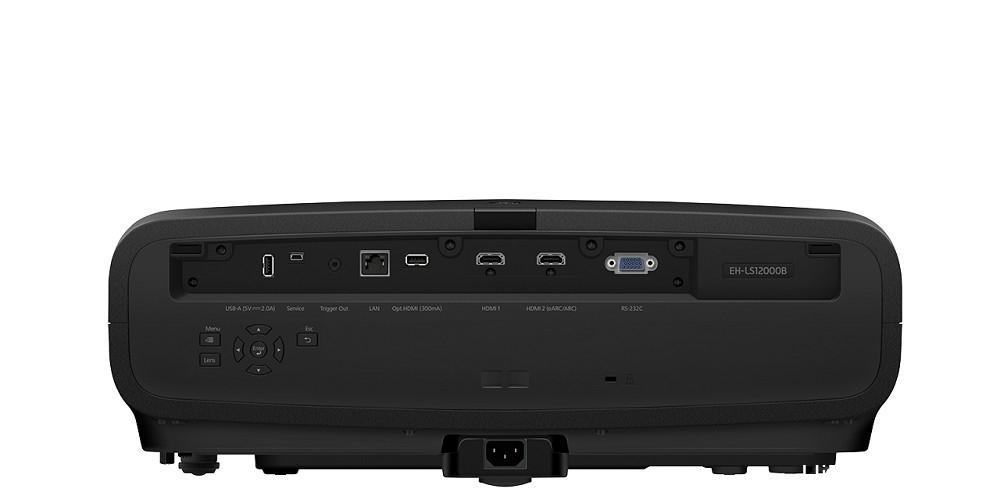
Connectivity has been brought up to date with HDMI 2.1 ports, supporting 4K/60p signals and compatibility with HDR10+ (dynamic HDR), alongside a competitive low input lag of 20ms.
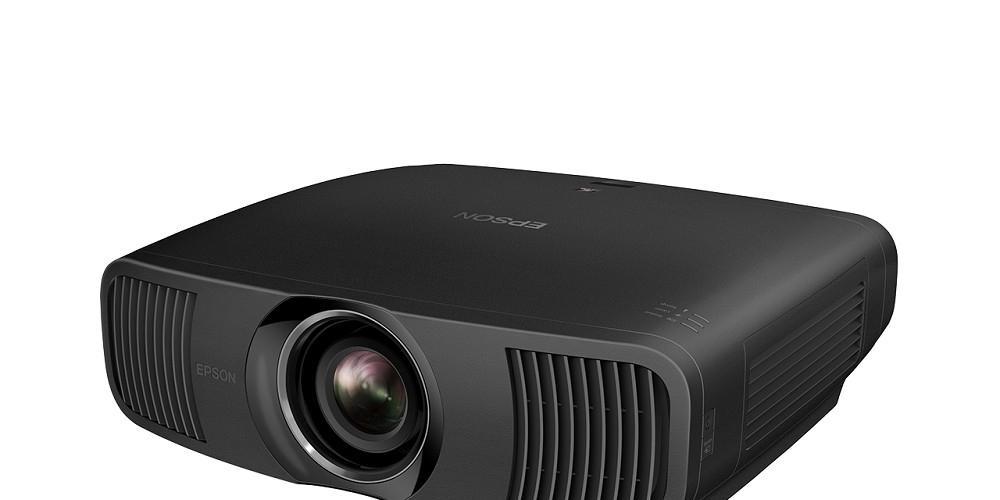
Image Processing Engine
Image processing is handled by a new chip, enabling 4K frame interpolation – essentially applying motion smoothing directly to 4K content. This marks a significant improvement over previous Epson generations (like the EH-TW7000), which could only perform frame interpolation on Full HD signals.
This advancement allows the EH-LS12000B to deliver enhanced dynamic resolution for both native 4K video and upscaled Full HD content. Beyond 4K frame interpolation, the new processing silicon also boasts “4K Super Resolution,” along with adaptive Gamma correction and automatic contrast adjustment that dynamically respond to variations in image gradation and brightness across scenes.
Testing Performance
Having covered the EH-LS12000B’s technical specifications and key features, I will now delve into the results of our performance testing. As is standard practice, I’ll begin with dynamic resolution, a metric I consider absolutely essential when evaluating any display device, given that we primarily consume “moving images” rather than static photographs on TVs and projectors.
Dynamic Resolution
Testing commenced with the “Resolution Pattern: 6.5ppf” sequence from the FPD Benchmark Software. Evaluating the dynamic resolution with frame interpolation set to “Off,” “Low,” “Medium,” and “High,” we measured 650, 1080, 1080, and 1080 lines, respectively. It’s worth noting that this test software uses a BD (Blu-ray) source, for which the maximum score is 1080 lines. Many 4K projectors struggle to reach 1080 lines on this particular clip, even with frame interpolation maximized.
Previous Epson 4K models, including their laser TVs, typically topped out around 1000 lines. These results definitively show a tangible improvement in the EH-LS12000B’s dynamic resolution performance.
Next, I transitioned to the “Resolution Pattern: 12.5ppf” clip, designed with a faster pan speed. Here, I measured a dynamic resolution of 600 lines with “Frame Interpolation: Low,” and 700 lines for both the “Normal” and “High” settings. These test outcomes indicate that the EH-LS12000B exhibits higher dynamic resolution than the majority of projectors, positioning it at a performance level comparable to many 4K OLED televisions in this regard.
Motion Clarity
The exceptionally low level of motion blur translates directly into outstanding clarity during dynamic sequences. Even the subtle texture of the wooden pendulum arm swinging back and forth in the classic metronome test pattern was clearly discernible. I can confidently state that among Epson projectors I’ve reviewed, this model excels at rendering the intricate textures of moving subjects.
Moving on to street scene footage from Japan, the small characters on license plates remained crisp and free from any ghosting. Furthermore, observing people’s faces as they moved revealed no distracting banding artifacts, confirming that the objects displayed by the EH-LS12000B maintain fine gradation and detail on moving objects without the visual loss often observed on displays struggling with motion.
This level of performance is quite challenging to achieve, and I’ve encountered some more expensive models that failed to deliver this.
When displaying 24p content, typical of movies, selecting “Frame Interpolation: Off” presents the video exactly as intended, preserving the characteristic filmic judder of camera pans and object motion. Engaging “Frame Interpolation: Low” begins to mitigate this motion judder. Stepping up to “Frame Interpolation: Normal” reduces judder considerably, resulting in noticeably smoother flow of scenes.
Finally, with “Frame Interpolation: High,” the motion appears exceptionally smooth, and the perception of motion blur on moving elements is dramatically reduced.
Color Accuracy and Gamut
Concerning color reproduction, please refer to the dedicated section titled “Color Gamut Test Results for Epson EH-LS12000B” for a comprehensive analysis of the unit’s color space coverage in both HDR and SDR modes. In terms of its maximum color capability, the EH-LS12000B covers over 85% of the DCI-P3 color space. This is slightly less than previous Epson flagship models, which I had measured as covering almost the entirety of DCI-P3.
I suspect this was a deliberate design choice made early in the development of the EH-LS12000B – perhaps by utilizing less saturated primary color filters. In essence, it’s a trade-off where a fraction of the color gamut is exchanged for significantly increased light output.
Personally, I view this as a rather astute decision, as the higher light output provides greater immunity to ambient light, allowing for enjoyable movie watching or gaming even during daytime hours on weekends, even if your room isn’t perfectly blacked out. Furthermore, the specific nature of the color gamut “sacrifice” made is remarkably intelligent:
SDR Color Performance and Calibration
When fed with SDR video signals, with the exception of the “Dynamic” mode, the color gamut of the other four picture modes adheres very closely to Rec.709, the standard for HDTV. This careful adherence means the projector doesn’t need to employ “color gamut expansion,” making it easier to maintain the accurate saturation levels of various colors and preventing certain hues from appearing unnaturally oversaturated. Among these modes, the “Natural” mode demonstrates the highest color accuracy.

Subjectively, this setting delivers a picture that looks remarkably akin to a professionally calibrated display – it’s very neutral, rendering color depth and the subtle distinctions between similar shades with excellent fidelity and appropriate saturation levels.
The measured coordinates for the primary (RGB) and secondary (CMY) colors exhibit near-perfect alignment with the standard target points, and the color temperature across the majority of luminance levels stays within a tight window of ±50K around the D65 (6500K) standard.
Reviewing the instrument readings, I was genuinely impressed and happy for prospective owners: the EH-LS12000B’s “out-of-the-box” default accuracy in Natural mode is effectively at a “professionally calibrated” PRO-level standard! Such precise factory calibration ensures that non-HDR content, typical of everyday broadcasting and many older films, is displayed with colors that are faithful to reality.

HDR Color Performance
After performing HDR color measurements, I uncovered a rather intriguing design choice. Epson clearly recognized that achieving a high light output of 2,700 lumens from the EH-LS12000B, with a maximum power draw of just 302 watts, would necessitate a trade-off in color gamut coverage.
What’s particularly clever is *where* that compromise was made: over 10% of the unit’s shortfall from the full DCI-P3 space occurs within the Blue-Cyan-Green (BCG) portion of the spectrum, where the human eye is notably less sensitive to subtle color variations. Conversely, the coverage within the Red-Yellow-Green (RYG) warm color quadrant is significantly better. As a result, subjectively, the EH-LS12000B still *appears* to possess a wide color gamut capability.
The intensity of red hues, and the saturation of skin tones and yellows, are rendered quite effectively.

Brightness and Modes
Upon powering on the EH-LS12000B for the first time, the default picture preset is “Bright Cinema.” This initial setting immediately signals the projector’s intended use case: adapting well to typical living room environments where complete light suppression isn’t always possible. The “Bright Cinema” mode delivers exactly what its name suggests.
Projecting onto a 120-inch screen, even one with a modest gain of approximately 0.8, the projector rendered outdoor scenes under bright sun with notable intensity and perceived luminance. As scenes transitioned, the viewer experienced a significant shift in brightness levels, contributing to a viewing experience where the combination of high light output and dynamic contrast made the image feel akin to watching a very large 120-inch television.
If your preference is to shift from a “TV-like” viewing experience to a more authentic “cinematic feeling,” and your room offers good light control, simply switch the color mode to “Cinema” or “Natural.” In these modes, the EH-LS12000B adopts an image style reminiscent of a professional cinema projector. The “Natural” mode, in particular, applies minimal processing by default – foregoing extra noise reduction, frame interpolation (unless manually enabled), or artificial contrast enhancement.
This approach ensures the picture remains faithful to the source material, delivering a visual presentation closer to watching the original film print.
Super Resolution
To be entirely candid, even before commencing my review, I fully expected this unit to benefit from exceptionally well-executed factory calibration. This has been a consistently strong tradition I’ve witnessed in Epson projectors throughout my reviewing career, which spans back to the 1990s. The inherent high dynamic contrast capability of its laser light source was also anticipated.
However, what genuinely surpassed my expectations was the effectiveness of the EH-LS12000B’s “4K Super Resolution” processing.
With earlier generations of Epson 4K projectors, Super Resolution processing was largely confined to enhancing the detail of upscaled Full HD content. This time, however, I noted a significant increase in the “degree of detail refinement” when upscaling Full HD to 4K. Crucially, I also tested this feature with native 4K online video sources (like YouTube).
Within the Super Resolution settings, adjusting “Fine Line Adjustment” and “Soft Focus Detail” from their minimum values (which effectively disable the processing) to higher settings resulted in a visibly improved rendition of textures, such as the nuances of human skin or the delicate strands of kitten fur. There is a palpable enhancement.
I am absolutely certain that the strength of the Super Resolution processing employed by the EH-LS12000B, and its ability to boost “texture resolution” rather than simply sharpening outlines, is dramatically more effective than on previous models.
Conclusion and Recommendation
Savvy enthusiasts understand that very few companies possess the technical prowess to implement truly effective “Super Resolution” processing, and the number of manufacturers that incorporate it into projectors is even smaller. Critically, the success of such processing must be evaluated by its ability to genuinely improve the picture quality of *native 4K* video.
In my assessment, it is precisely the EH-LS12000B’s commendable performance in 4K Super Resolution, coupled with the inherent strengths of its three-chip architecture, laser light source, and optical quality, that collectively establish it as one of the projectors offering the best overall picture quality available for under $6,600. Moreover, it eliminates the need for an expensive professional calibration service, as its factory presets already include professionally tuned color modes.
Based on the Epson EH-LS12000B’s outstanding capabilities, I consider it highly worthy of our prestigious Best Recommendation award.
Specifications
* Type: 3LCD 4K projector
* Imaging Device: 0.74-inch C2Fine LCD panel × 3
* Aspect Ratio: 16:9
* Image Size: 50 to 300 inches
* Light Output: 2,700 lumens
* Dynamic Contrast Ratio: 2,500,000:1
* Lens: f:22.5–46.7mm / F2–3 2.1x Motorized Zoom Lens
* Lens Memory: 10 Presets
* Lens Shift: Vertical ±96.3%, Horizontal ±47.1%
* Laser Light Source: 80mW, 20,000 hours lifespan
* Video Input: HDMI × 2
* Power Consumption: Max 302W, ECO 198W
* Noise Level: Normal 30dB, Eco Mode 22dB
* Dimensions: 520 × 193 × 447mm (WHD)