
Esoteric Grandioso T1 Review
What does it feel like to personally set up a turntable costing over 2 million NTD (roughly $62,000 USD)? What kind of beautiful sound does it produce? The Grandioso T1 is the most expensive turntable I’ve ever had in my home. Naturally, I seized the opportunity to revisit many records, allowing me to understand how the Grandioso T1 differs from other turntables in its sound performance.
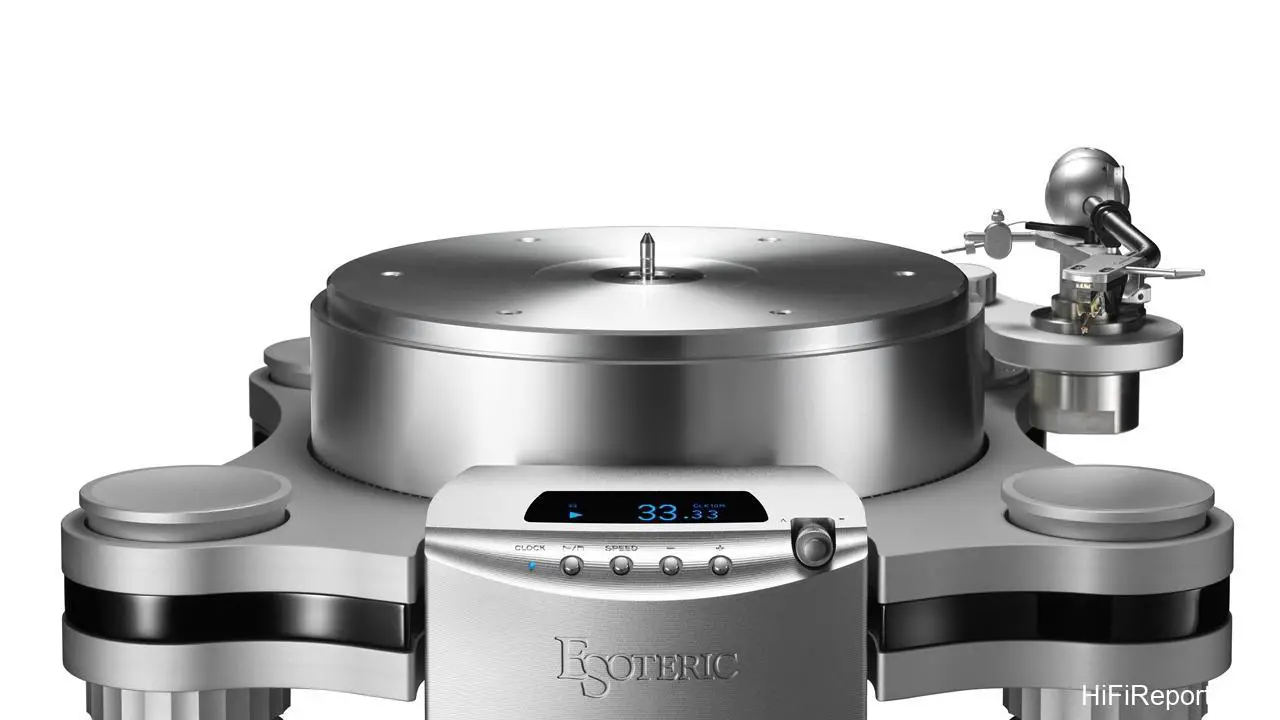
Compared to several other turntables in the million-plus price range, the Grandioso T1 isn’t necessarily larger or heavier. However, it possesses an undeniable presence, an air of dominance. From any angle, it resembles a leopard poised motionlessly on a boulder, ready to launch like an arrow at the appearance of prey. That supercar-like dynamic energy seems to be hidden within the Grandioso T1’s core.
The Grandioso T1 isn’t just imposing; it’s also a masterpiece of balance. It appears perfectly stable and symmetrical from every perspective, exhibiting exquisite harmony without a hint of crudeness or visual awkwardness. This extreme visual balance perfectly embodies the Japanese pursuit of refined Hi-End craftsmanship. Frankly, as I gazed upon the Grandioso T1, an image of Kyoto’s Kinkaku-ji (the Golden Pavilion) inexplicably came to mind.
The pavilion’s profound sense of balanced, stable tranquility seemed reflected in the Grandioso T1 – a truly fascinating sensation.
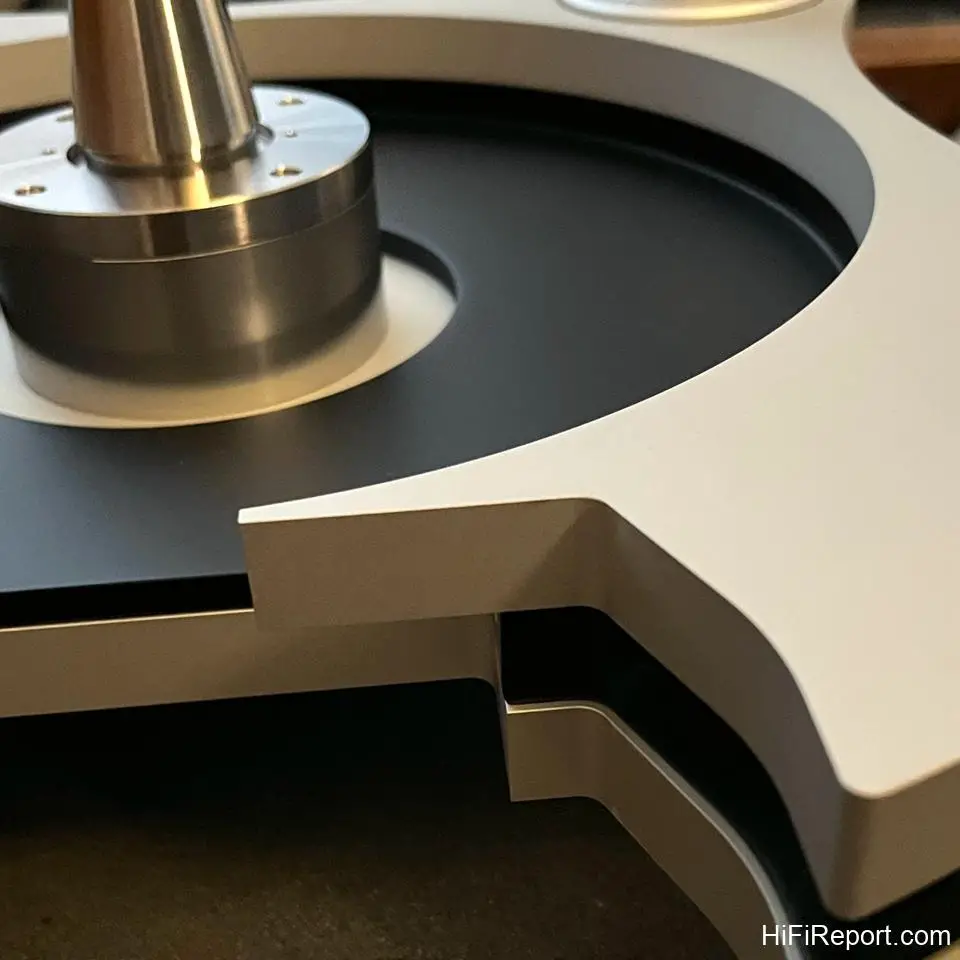
Esoteric was founded in 1987, and the Grandioso T1, launched in 2022, is positioned as their flagship product celebrating the company’s 35th anniversary. I covered the detailed design aspects of the Grandioso T1 in the previous issue (No. 413) of Audio Art magazine. This article will focus primarily on the assembly, adjustment process, and my listening impressions. Nevertheless, for readers’ convenience, I will briefly list the key design features of the Grandioso T1 below.
Key Design Features & Magnetic Drive System
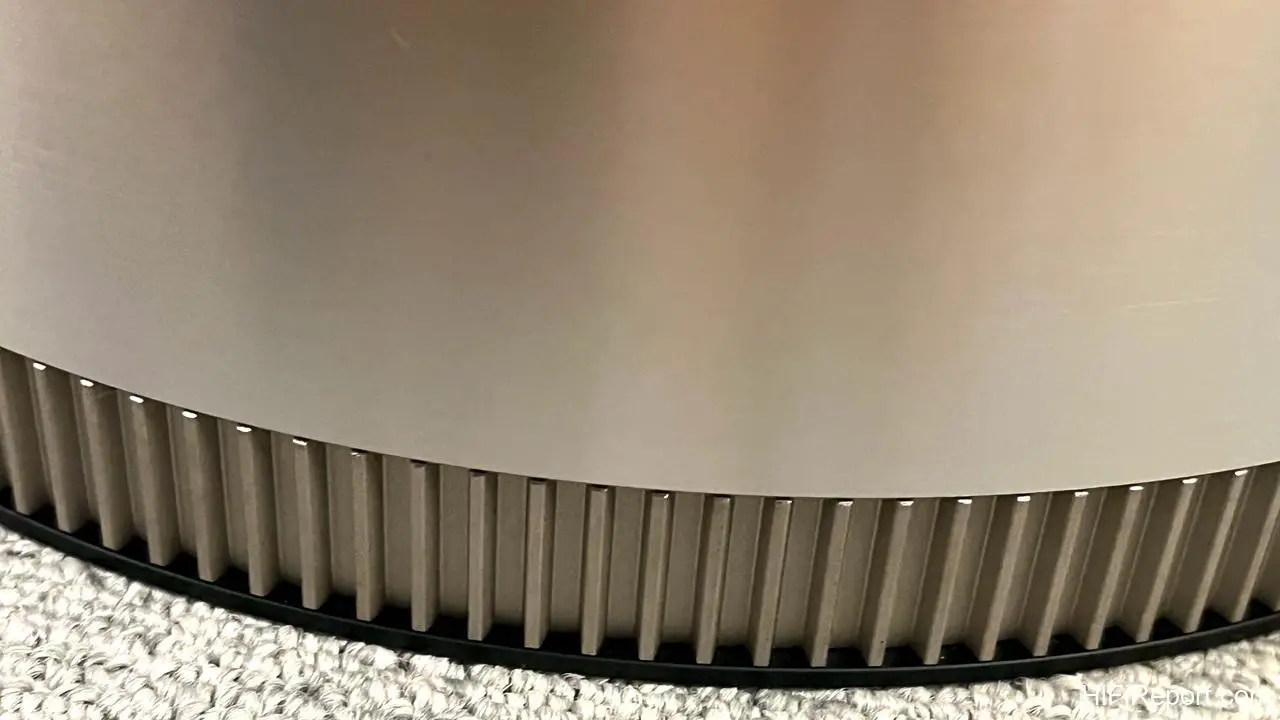
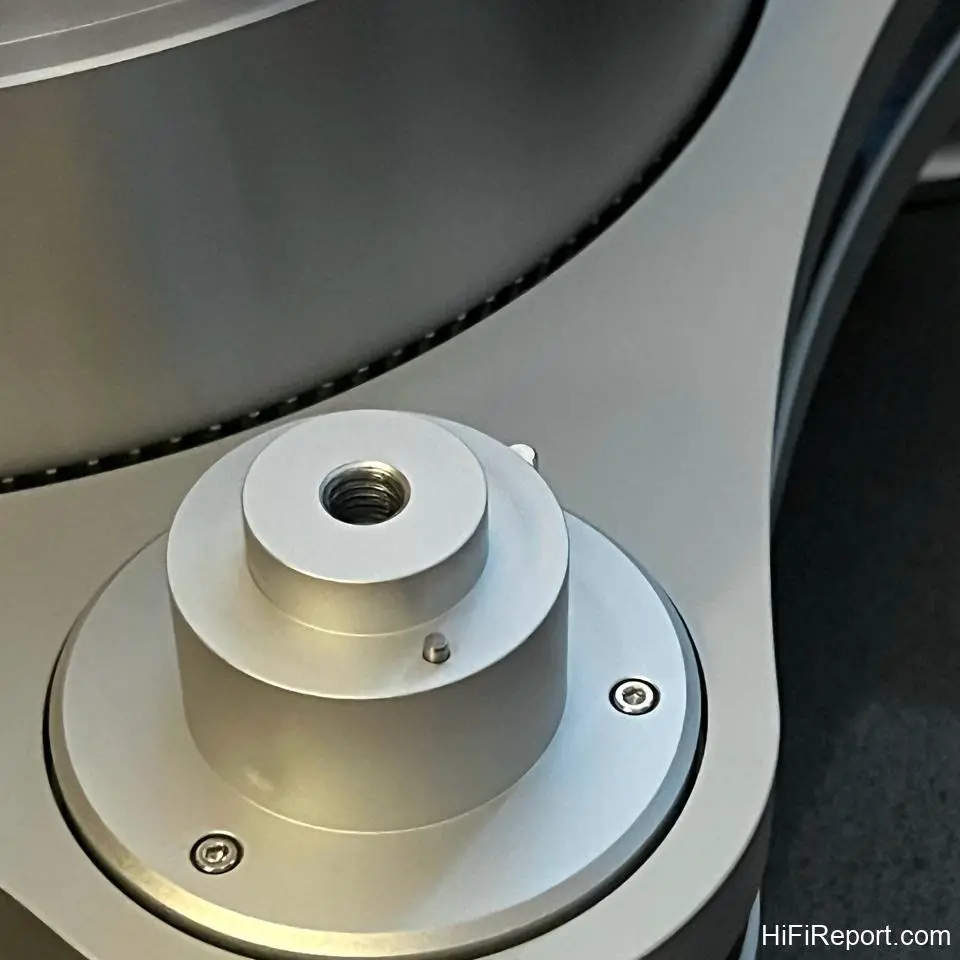
The Grandioso T1 employs a patented magnetic drive system. There is absolutely no physical contact between the driver and the platter; the platter is driven solely by magnetic force. The driver is a cylindrical unit containing a three-phase brushless precision motor, with 18 magnetic poles on its exterior. The platter is made of aluminum alloy, which is non-magnetic. Therefore, a ring of 162 gear-like soft iron teeth is integrated along the lower edge of the platter.
As the driver rotates, the alternating north and south magnetic poles interact with the soft iron, causing the platter to turn. The platter completes one rotation for every nine rotations of the driver. This is the essence of the magnetic drive.
Structure and Components
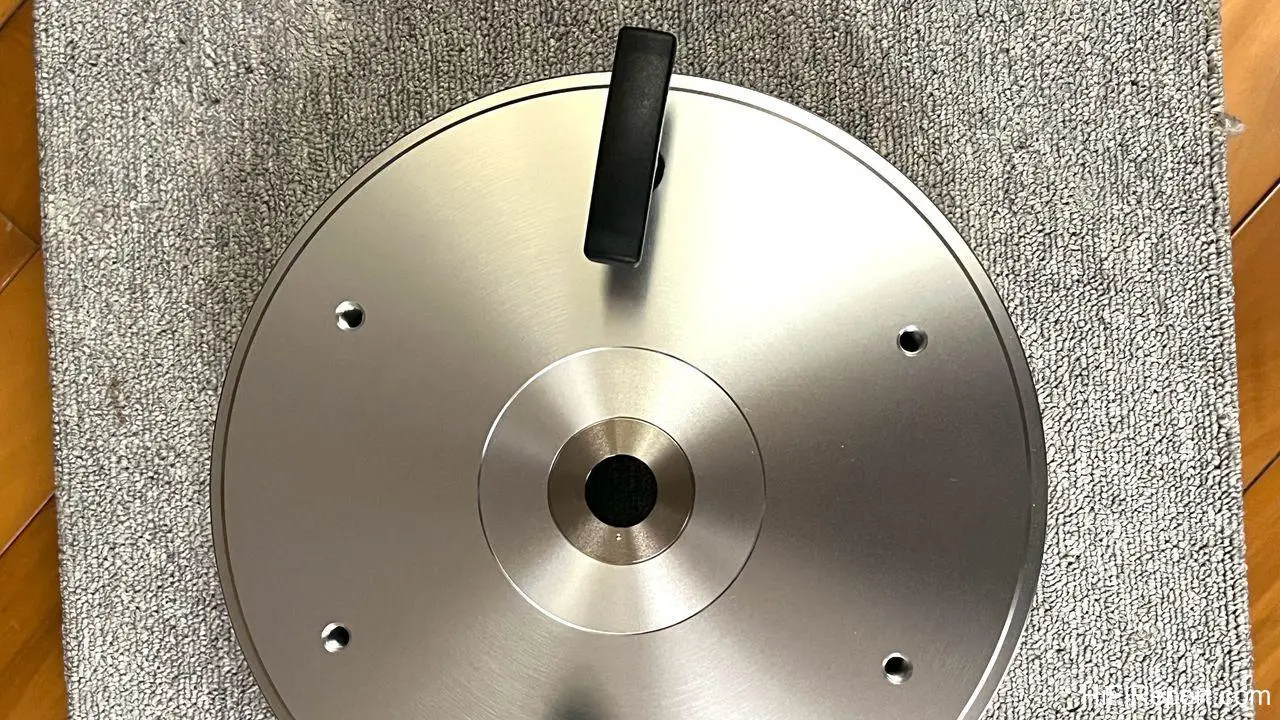
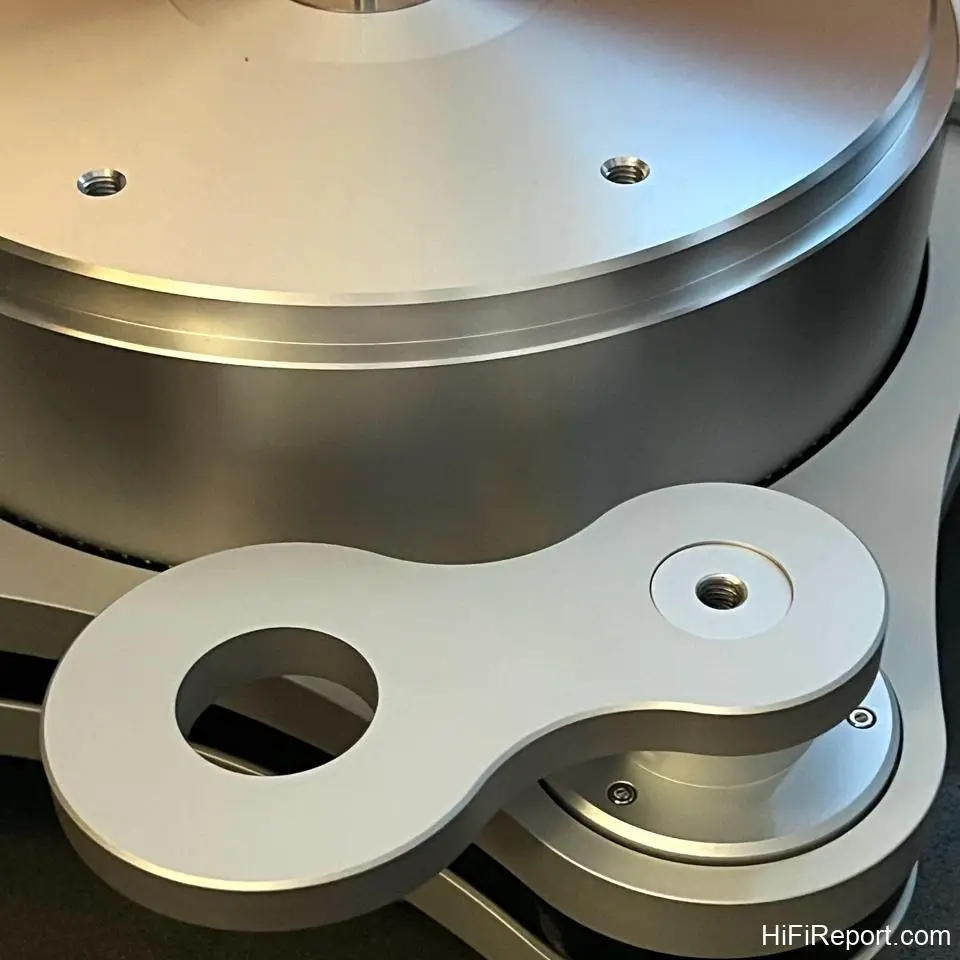
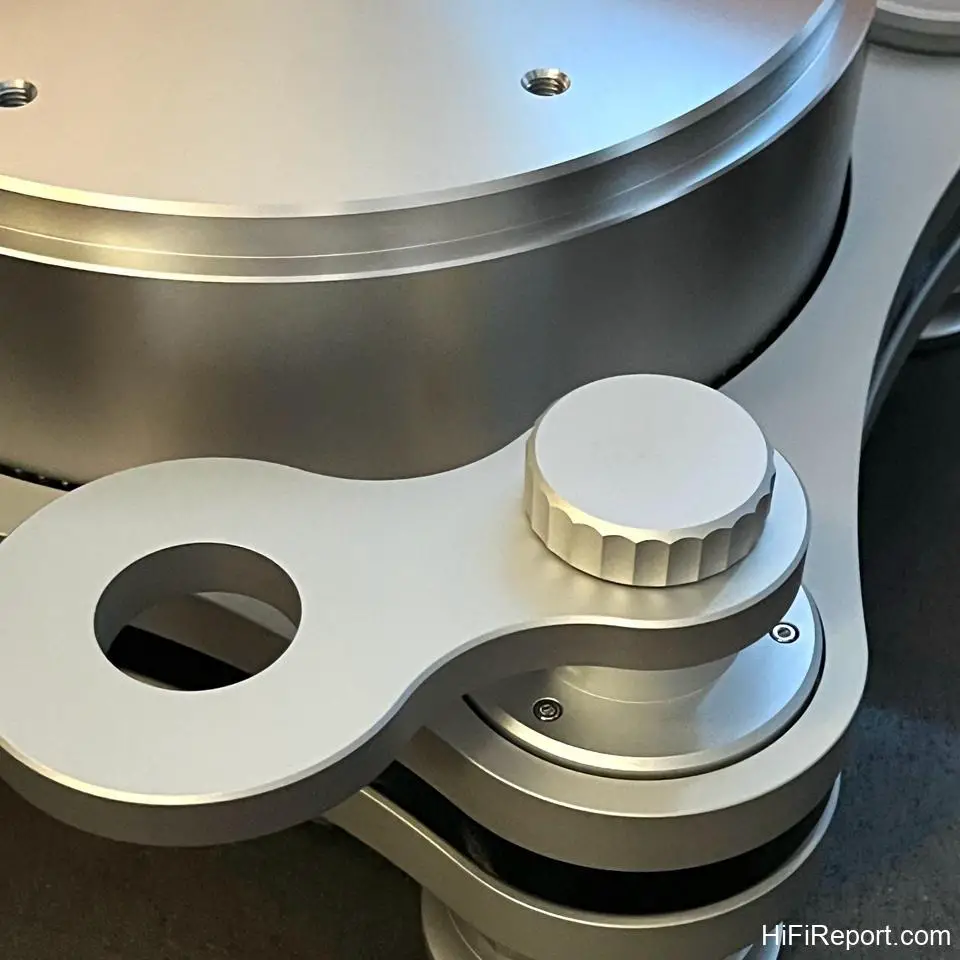
The Grandioso T1 consists of three separate components: The first is the base and platter. The base weighs 17 kg, and the platter weighs 19 kg. These are purely mechanical structures with no electronic components. The second component is the motor unit, featuring a display and control interface, weighing 9 kg. The third is the separate power supply, weighing 18 kg.
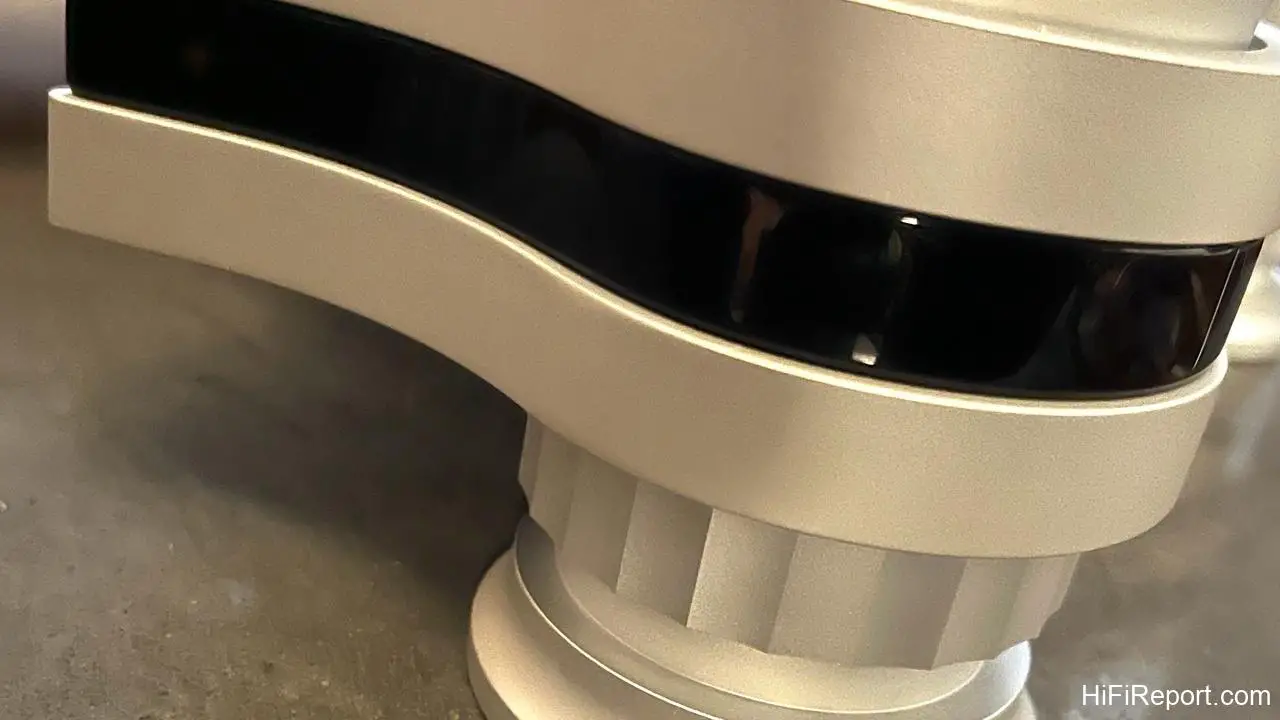
The base of the Grandioso T1 is 60mm thick, constructed from two layers of aluminum alloy sandwiching a central layer of wood (with a piano finish). Each layer is 20mm thick. The tonearm mounting hole connects to the upper aluminum plate, while the spindle and platter interact with the lower aluminum plate. The wooden layer between the two aluminum plates is designed to isolate the tonearm from any subtle vibrations originating from the platter.
Although the Grandioso T1’s platter weighs a substantial 19 kg, the magnetic levitation design results in an effective mass of only 4 kg applied to the spindle. Why precisely 4 kg? Couldn’t the repulsive magnetic force be stronger, reducing the effective mass to 1 kg, 2 kg, or 3 kg? The developers determined that 4 kg yielded the best sonic results after extensive listening tests.
Naturally, some may ask: Since it’s magnetically levitated, will vibrations transmit to the turntable if I deliberately tap it or stomp on the floor? My personal experiments show that such vibrations *do* indeed transmit to the turntable. However, it’s unlikely anyone would do this while playing a record, is it?
The Grandioso T1 utilizes an Inverted Bearing system, meaning the pivot point is at the top rather than the traditional bottom. The advantage of this inverted bearing is that the distance between the shaft and the pivot point is very short, reducing subtle wobbles and vibrations from the spindle during platter rotation.
Speed Control and Torque Adjustment
The motor speed control of the Grandioso T1 is managed by a built-in VCXO (Voltage-Controlled Crystal Oscillator) precision clock. Upon startup, you can see the speed display steadily increase until it stabilizes at 33.33 rpm or 45.00 rpm. Actual speed measurements confirm its remarkable accuracy. If you wish to achieve the 3150Hz speed accuracy found on test records, you can fine-tune the speed within a ±12% range, with each step representing 0.1%.
Should you feel the built-in clock isn’t precise enough, you can connect an external Grandioso G1X clock. I experienced a clear improvement in sound quality when an Esoteric representative connected a G1X in the distributor’s listening room.
Furthermore, the gap between the driver and the platter can be adjusted, which alters the torque. Can you actually hear the difference when changing the torque? Yes! I witnessed this demonstrated by Esoteric personnel in the distributor’s listening room as well. Adjusting the torque is simple: it’s done via a precise knob next to the display. Arrows on either side of the knob indicate whether the driver is moving away from or closer to the platter.
The knob has six detents, with the factory setting at the third detent. One full rotation of the knob corresponds to 25 degrees, and each degree represents 0.01mm of adjustment.
Turning the knob to the right moves the motor away from the platter; turning left moves it closer. Since magnetic field strength is inversely proportional to the square of the distance, changing the distance between the motor driver and the soft iron effectively changes the torque. The prerequisite for adjustment is setting the initial gap between the motor and the platter correctly. A black gauge is provided by the manufacturer.
When this gauge is inserted into the gap, it should feel “a bit snug but not too tight” – that’s the correct setting.
Please note: If the gap between the motor and the platter is too close or too far, the speed arrow on the display window will flicker and become unstable, and the speed numbers may even jump around erratically. You must adjust until the arrow remains fixed and doesn’t flicker; this indicates the gap is within the acceptable range. Therefore, the feeling of “a bit snug but not too tight” with the black gauge is crucial.
Isolation and Leveling
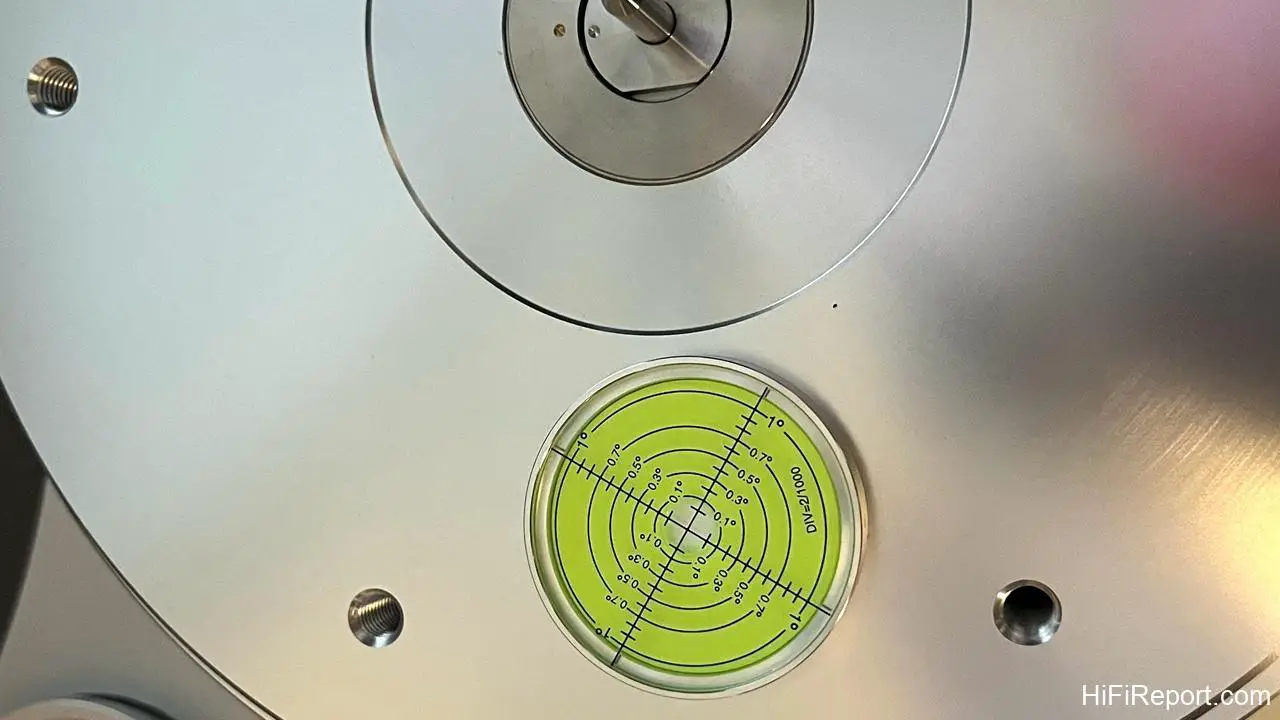
The T1’s base rests on four isolation feet. The outer casing is aluminum alloy, while the interior utilizes steel springs combined with damping materials for shock absorption. These four feet are, of course, height-adjustable to achieve perfect levelness for the entire turntable. It’s important to note that because the base and platter are quite heavy, after initially setting the level and height, the springs will compress slightly over a few days due to the weight, causing the level to drift.
At this point, use the manufacturer-supplied gauge at the four corners to check where the level has shifted. Re-adjust using a spirit level. Once adjusted the second time, the level and height should remain stable.
Tonearm, Cartridge, and Phono Stage
The T1 can accommodate up to three tonearms. The included TA-9D tonearm is clearly an IKEDA product (formerly FR). It appears to be similar to the IKEDA IT-345 9-inch arm. Why choose an IKEDA tonearm? Because IKEDA’s predecessor was FR, and FR tonearms were considered representative Japanese tonearms in their time. Today, IKEDA continues this legacy as a symbol of Japanese audio excellence, hence Esoteric’s collaboration.
Notice the headshell’s front is deliberately shaped with the same curve as the Grandioso front panels, indicating this headshell was custom-made for Esoteric. In fact, not only is the headshell different, but the delicate internal signal wires have also been replaced with Esoteric’s own.
The tracking force on this IKEDA tonearm is applied by a spring, not just the counterweight, making it a dynamically balanced tonearm. VTA adjustment is conveniently performed by turning a small knob, offering a 10mm range (for a 9-inch arm, a 4mm height adjustment corresponds to approximately a 1-degree change in VTA/SRA).
Mounted on this IKEDA tonearm was an IKEDA 9TS MC cartridge. I initially thought this was a factory-matched cartridge, but it turns out the distributor installed it. So, the T1 comes with one tonearm but no cartridge. However, you can also purchase just the turntable without a tonearm.
I listened to the Grandioso T1 system in my home, paired with the matching E-02 phono preamplifier. This phono preamp has XLR and RCA input and output terminals, as well as Esoteric’s proprietary ES-Link terminals on the rear panel. You must switch the input according to the terminals you are using. The front panel features an input selection knob, an impedance selection knob, and three small buttons for degaussing, subsonic filter, and mono.
The impedance options are 10, 50, 100, 200, 300, 500, 1K, 10K, and 47K (MM) ohms. The IKEDA 9TS cartridge has an output of 0.35mV, internal impedance of 6 ohms, and a recommended tracking force of 2.0 grams ±0.2 grams.
Generally, the recommended load impedance for an MC cartridge should be at least 10 times its internal coil impedance. However, the final impedance value should ultimately be determined by how it sounds in your complete audio system, as every listener’s perception is unique. In principle, a higher load impedance will tend to emphasize the high frequencies or make them sound more brilliant. Conversely, a lower load impedance will make the high frequencies sound more restrained.
I experimented multiple times and finally settled on 200 ohms, which gave me the sound I liked best.
System Tuning and Evaluation
Getting a complete vinyl system – turntable, tonearm, and cartridge – perfectly tuned usually requires significant time and iterative adjustments. If you have test and adjustment records like AnalogMagik, you can use them with computer analysis to see actual distortion figures, which provides a more objective reference. Without such tools, you have to rely solely on your experience and ears.
To judge whether a vinyl system is properly tuned by ear, find a few records with powerful piano or violin performances, or male/female operatic vocals. Listen carefully to the sound quality towards the inner grooves. If the sound becomes distorted, fuzzy, or even sibilant, it’s a clear indication that something is not adjusted correctly. However, sometimes sibilance or tracking issues can occur even before reaching the innermost grooves.
For example, the second half of the third track on side A of Ray Chen’s “Reverie,” or the final note of the third track on side B of the “Duets” album, are excellent test passages. These two records are quite common among audiophiles. These specific tracks, when played correctly, should sound smooth, without fuzziness or sibilance. But if the system is poorly adjusted (including anti-skate), or if the cartridge or tonearm tracking ability is inadequate, distinct artifacts will be audible.
Of course, passing these points is just the minimum standard; after clearing these hurdles, you can proceed with more refined micro-adjustments. In short, dialing in a vinyl system is not a matter of a day or two. It requires the user to adjust and evaluate gradually each day, with the correct approach, to achieve the best performance.
Manufacturer Recommendations
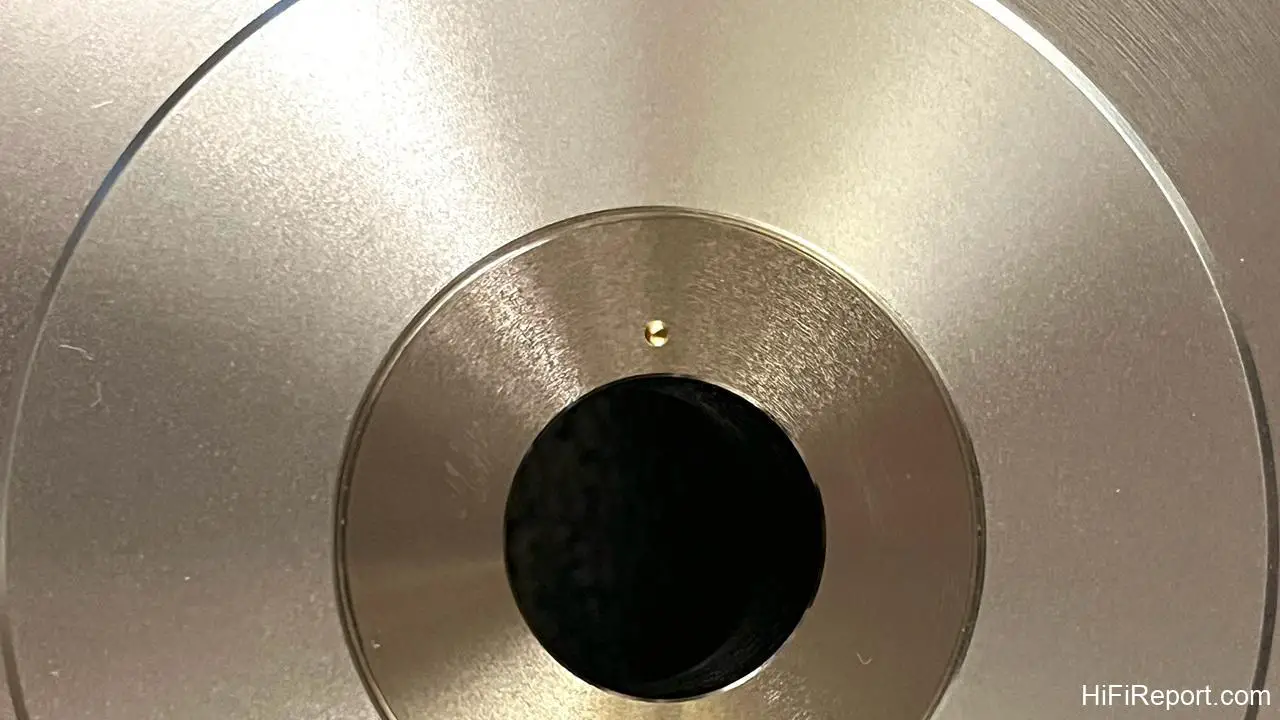
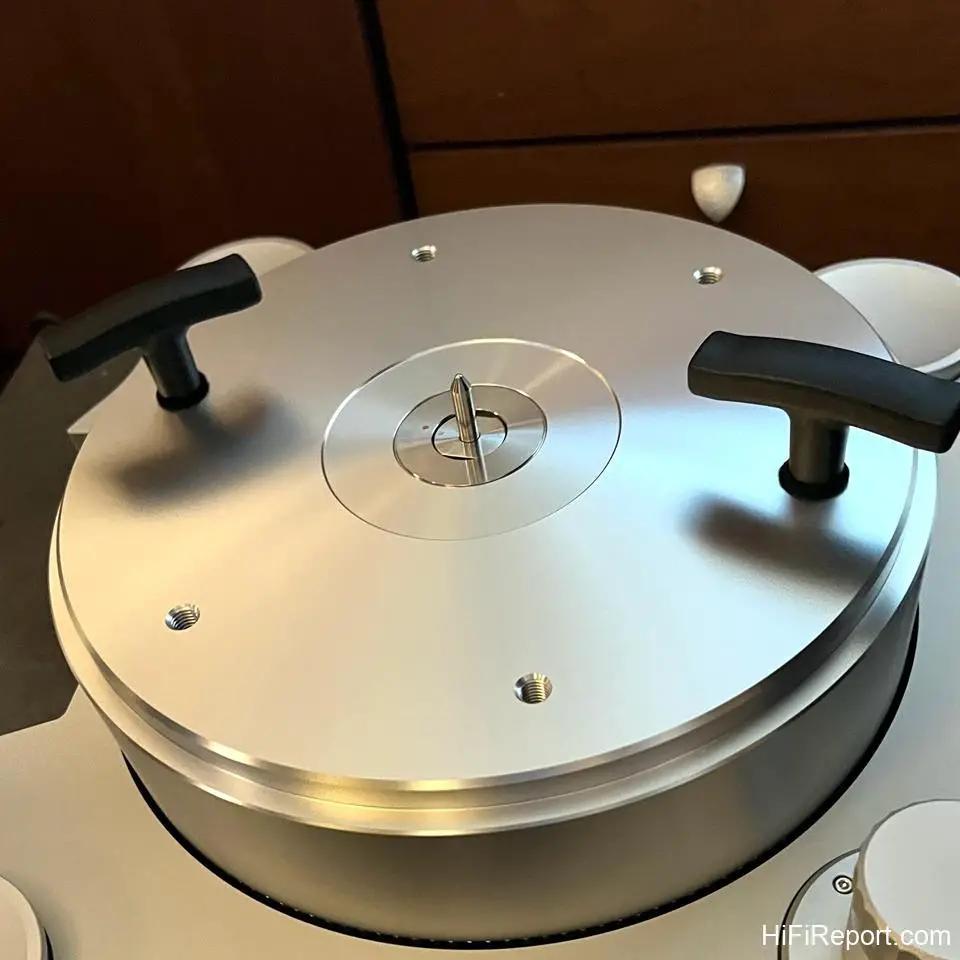
When playing records, the manufacturer recommends not using any mat, allowing the vinyl record to make direct contact with the metal surface of the platter. Furthermore, they also suggest not using a record clamp. I believe these recommendations are based on the manufacturer’s practical experience, and users can certainly take them into account. The manufacturer also includes a thin sheet of *washi* (Japanese paper) as a mat.
If the user prefers not to have the record directly contact the metal surface, they can use this paper mat.
Listening Impressions
I must preface this by saying that the sound performance I experienced was that of the *entire* vinyl system, not solely the Grandioso T1. I am not intimately familiar with the sound characteristics of the Grandioso T1 itself, nor with the IKEDA tonearm and cartridge, and this was my first time hearing the phono preamplifier. When the complete system was playing, it was impossible for me to isolate the specific sonic signature of the Grandioso T1.
In fact, anyone listening to this vinyl system would perceive sonic changes primarily due to differences in VTA (SRA), anti-skate, tracking force, and azimuth adjustments. Therefore, my listening impressions below represent only the differences compared to other vinyl systems I have heard previously.
Listening to Ray Chen’s “Reverie,” I was somewhat startled. This was the richest and most resonant I had ever heard the violin and piano on this record. The double string harmonies sounded even more beautiful. With only two instruments, how could the richness of detail sound different? This is where extremely subtle details come into play. In other words, this vinyl system was capable of revealing more minute sonic details, making the sound of the violin and piano significantly richer.
Please don’t misunderstand; the details I heard on previous systems were not insufficient, but this Esoteric vinyl system simply presented *more* details. Beyond the increased retrieval of subtle details, the violin sound presented by this system had fuller, rounder lines, avoiding any thinness. The piano notes, meanwhile, had a greater sense of body and weight.
When listening to “Conversations,” the collaboration between Anne Bisson and cellist Vincent Blanger, my main focus was on whether the cello would sound coarse or hard. If it did, it would indicate a poorly adjusted vinyl system. A properly tuned system should render the cello naturally relaxed, with clear and rich bowing texture, but without coarseness or hardness.
This system certainly did not disappoint; the cello within sounded exactly as it should when properly adjusted: relaxed, soft-textured with clear bowing detail, and a slight nasal resonance. This is the correct sound for a cello. And Anne Bisson’s voice? Rich and soft, with a beautiful sheen and sweetness, and full vocal lines.
Next, I pulled out Karajan conducting Richard Strauss’s “Don Quixote” (with Fournier on cello). Within minutes, I realized that this system revealed richer sonic details than I had previously heard, and the overall musical harmony was more beautiful. The cello, in particular, was more relaxed, and its timbre was more beautiful.
Although this is one of the noisier records in my collection, I enjoyed it immensely, as the performance and sonic effects were so superb that my ears could automatically filter out the crackling noise. This record reinforced my clear impression that the richness of musical detail is one of this vinyl system’s hallmarks. Additionally, I found that this system delivered a substantial amount of low-frequency energy, providing a solid bass foundation.
Listening to Hilary Hahn’s “Paris,” the first impression was again of a very rich sound. The violin lines were round and full, and the tone was beautiful, delicate, and graceful, conveying a uniquely feminine softness. The sonic character of the violin on this record was distinctly different from Ray Chen’s, and this vinyl system faithfully rendered the differing timbres and tones of the two violins.
Many people find Mercury records sound too hard-edged, not sufficiently refined, or even too crude when played on their vinyl systems. How did this system handle them? I specifically chose Byron Janis playing piano with Antal Doráti conducting the London Symphony Orchestra on the Rachmaninoff Piano Concerto No. 3 (Mercury). My impression with this system was still one of richness and warmth.
The musical details were abundant, filling the entire soundstage, preventing the music from sounding thin or monotonous. Furthermore, the scale of the piano was larger, the woody character felt more pronounced, and the notes were fuller. Overall, the piano felt more real, richer, and warmer, completely devoid of stiffness or metallic clang.

I believe anyone who finds Mercury recordings cold, hard, crude, or aggressive would be astonished to hear them on this system, realizing they had previously misunderstood the true recording quality of Mercury records.
Next, I listened to Sir Georg Solti’s recording of “Venice.” As expected, the soundstage was grand in scale, wide, and deep, with particularly rich low frequencies. This abundant bass foundation instantly expanded the perceived scale of the entire orchestra. Moreover, the delicate sweetness and beautiful sheen of the string section, combined with the rich low-frequency foundation, were utterly captivating.
Listening to Milstein’s compilation album (Angel), the low-frequency tape hiss from the recording was particularly clear. This listening experience also indicated the system’s ability to reproduce abundant low frequencies. Milstein’s violin sounded exceptionally delicate and nuanced on this system. While listening to Kondrashin conducting the RCA Victor Symphony Orchestra in Tchaikovsky’s “Capriccio Italien” and Rimsky-Korsakov’s “Capriccio Espagnol,” I found the sound was full and substantial.

The texture of hand-played tambourine was remarkably realistic, the inner voices of the orchestra were exceptionally clear, and the instruments had tangible body and depth, not just thin layers of sound.
Listening to Starker’s recording of Dvořák’s Cello Concerto (Mercury), I felt the music was particularly quiet and stable, giving the illusion that the speed was slightly slower. In reality, the precise 33.33 rpm figure was displayed on the turntable’s window, so there was no mistake about the speed itself.
Returning to the famous “Duets” album, listening to the first track, I immediately noticed the warmth, depth, and realism of both the vocals and the bass. The vocals sounded meaty, not metallic. Furthermore, the spacing between instruments and between vocals and instruments was exceptionally clear. The outlines of the voices and instruments were rounded and smooth, without any sharpness or irritating edges.
Listening to Heifetz’s recordings of the Bruch and Mozart violin concertos (with Sargent conducting the New Symphony Orchestra of London), I fully appreciated the captivating charm of this system when playing the violin. Heifetz’s violin sounded completely devoid of harshness or coldness; instead, it radiated the natural woody character a violin should possess. From this record, it was also clear that this system leans less towards fiery excitement and more towards warmth and substance.
Listening to the Hungaroton record of Vivaldi’s concertos for lute, violin, harpsichord, and cello, I found that this system reproduced the lute with remarkable realism. The sound was warm yet conveyed a convincing sense of plucked strings, without producing any sharp or metallic ringing. The delicate beauty of the string section was also outstanding, presenting an overall musical aesthetic that was warm, refined, and beautiful.
Listening to the Fone Records test disc of Mendelssohn’s Octet, side A of the first disc is 33 rpm, while side B is half-speed mastered. The producer’s intention was to allow listeners to compare the difference between normal and half-speed mastering, but unfortunately, the selected excerpts were different, preventing a true A/B test. However, both sides conveyed the warmth, refinement, and clarity of the string octet.
Warmth refers to the overall feeling the music imparts, which is not overly bright. Refinement refers to the exquisite beauty presented when the eight string instruments play together. Clarity refers to the fact that you can distinctly hear each of the eight instruments, even when they play together. The second disc, at 45 rpm, features various microphone types and placements, allowing for subtle differences to be discerned.
This demonstrated the excellent subtle resolving power of this vinyl system.
Pulling out Joan Baez’s “Diamonds & Rust in the Bullring,” the low and mid frequencies were full, the highs were not shrill, and the overall sound was warm, clear, and substantial. The cello sound was particularly captivating, especially evident on tracks 1 and 5 of side B. On side B’s track 3, “Txoria Txori,” the audience chorus became exceptionally clear and resolving, yet completely non-aggressive.
And of course, Joan Baez’s voice sounded richer and more full-bodied, rather than merely airy and clean.
Listening to Billie Holiday’s “Songs for Distingué Lovers,” I found her voice sounded softer than I usually hear it, with plenty of breath support, full and rounded, completely lacking the hard-edged, aged sound sometimes associated with 1958 recordings. The accompanying instruments also sounded somewhat softer, less aggressive.
When listening to the Fone Records “The Syd Lawrence Orchestra Big Band Spectacular,” the warmth and thickness of the brass instruments were highly enjoyable, completely avoiding any sharp or abrasive quality. The glorious, brilliant sound and dynamic energy of the big band were truly impressive.
Finally, listening to Dean Martin’s “Dream With Dean – The Intimate Dean Martin,” I again had the illusion that the speed was slightly slower. In fact, this was an illusion created by the sense of quietude. Put differently, when the music output reduces its intensity and everything becomes a bit softer, I tend to experience this illusion. In fact, when I had this feeling, I immediately listened to the same record on my own vinyl system and measured the speed.
I found that my system, when measured at 3150Hz, was actually slightly slower than the Grandioso T1. Clearly, my illusion was a psychological reaction, not because the Grandioso T1 was actually playing slower.
Listening to the Esoteric Grandioso T1 system provided me with another distinct listening experience. While I cannot definitively separate which sonic characteristics were due to the turntable, cartridge, tonearm, or phono preamplifier, it is undeniable that the sound was better than my previous experiences. I believe other high-quality turntables can also provide excellent sound.
However, there is no other turntable in the world that uses a contactless magnetic drive system, and its aesthetic design and craftsmanship are exquisitely elegant. Watching it spin silently is a genuine pleasure in life. If you are a vinyl enthusiast with deep pockets, the Esoteric Grandioso T1, a turntable where “all magnetism returns to its origin,” is absolutely a delightful, beautiful-sounding heirloom.
Specifications
* Magnetic drive turntable. * Introduced in 2022. * Employs magnetic drive, no contact between platter and motor. * Three-component system: Base + Platter, Drive Motor Unit, and Separate Power Supply. * Can accommodate up to three tonearms. * Speeds: 33.33 rpm and 45 rpm with ±12% adjustment. * Wow & Flutter: 0.06% or less. * Base Weight: 17 kg. * Platter Weight: 19 kg. * Motor Unit Weight: 9 kg. * Separate Power Supply Weight: 18 kg.