
EverSolo Play CD Edition Streamer/Amplifier Review
I know, calling something the “Number One Value All-in-One” is bound to attract some flak. After all, there are other brands out there offering almost identical features to the EverSolo Play CD Edition, with the only omission being a CD transport, and their prices are quite competitive. However, the editor-in-chief hasn’t had the chance to audition them yet. Therefore, as far as the editor-in-chief is concerned, the EverSolo Play CD Edition (hereafter referred to as “Play”) is currently the “Number One Value All-in-One”!
The Editor-in-Chief Was Eager to Review the Play
I often say that the most important aspect of enjoying audio is not the equipment itself, but the pursuit of musical enjoyment. As long as you can immerse yourself in the music and feel its emotional impact, that’s what truly matters. The amount invested in audio gear is entirely a matter of personal preference. If you have the means and it brings you joy, there’s nothing wrong with spending more. But does one really need to invest tens of thousands of dollars to get started in Hi-Fi? Isn’t that an unnecessarily high barrier to entry?
Get a Streamer and Amplifier for Just Over $600
Finally, this EverSolo Play offers a new answer: for under $1,000, you can get a complete digital streamer and amplifier, with the option of adding a CD transport. The Play without the physical CD drive is even cheaper by about $100. Of course, you’ll need to pair it with a pair of speakers to bring it to life.
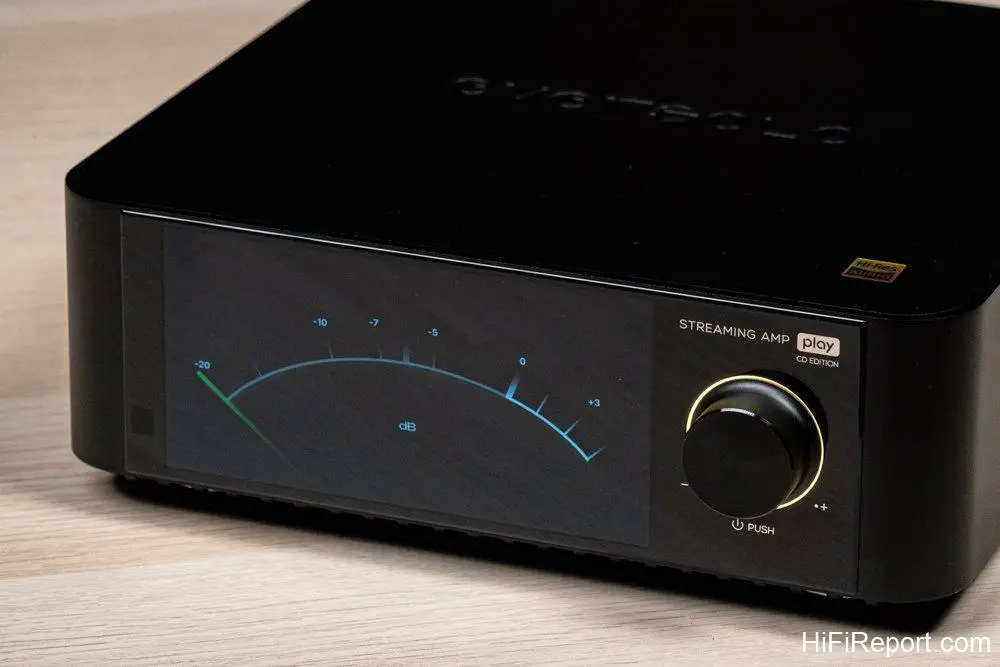
Simply stating that the Play retails for just over $600 might make it sound like its only advantage is its low price. However, its digital streaming capabilities are so comprehensive and its playability so high that it likely surpasses equipment three times its price.
How does the Play achieve this? Its “heart” is an ARM system-on-a-chip, much like the core of a smartphone. This allows the Play to support a diverse range of apps, maximizing the fun of audio playback.
How do you use it? The Play’s touchscreen interface is almost identical to that of a smartphone. Whatever you do on your phone, you can do on the Play. If operating the touchscreen directly on the unit is too much hassle, no problem. Download the EverSolo Control App, and all settings are at your fingertips.
Virtually All-Encompassing Streaming Features
When it comes to streaming, the Play covers almost everything. TIDAL, Qobuz, Spotify, and Deezer, which are popular among audiophiles, are standard. The trending KK Box can also be directly connected. TuneIn Radio and Radio Paradise give you access to countless internet radio stations.
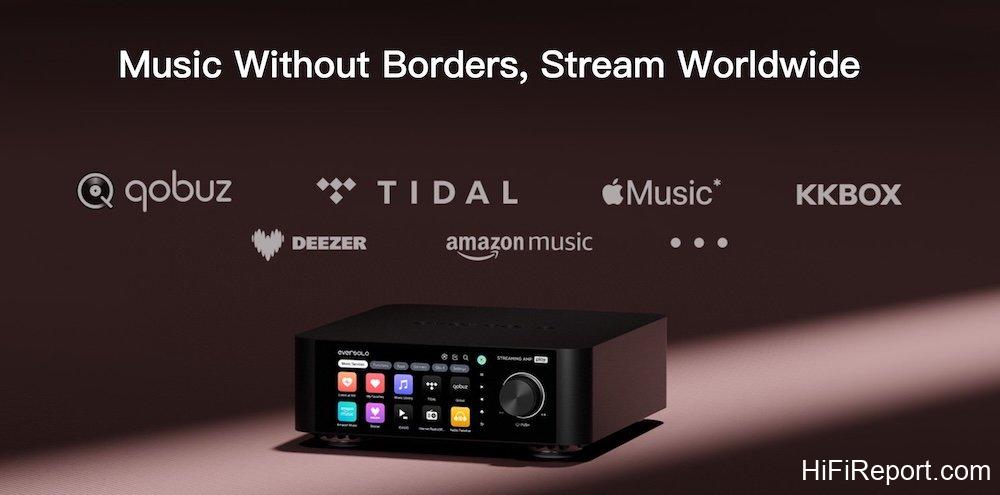
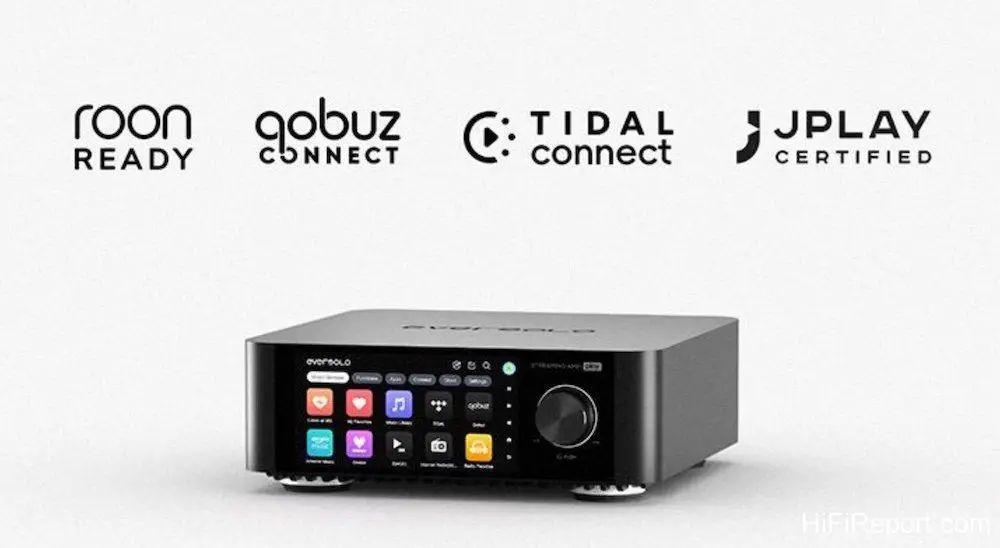
For even greater convenience, the Play supports Roon Ready, Qobuz Connect, TIDAL Connect, and QPLAY streaming protocols. With a dedicated app, you can directly access music streaming platforms.
The ARM core empowers the Play with virtually limitless music app applications. However, to stream music from online platforms, a DAC is required for decoding. The Play utilizes Japan’s Asahi Kasei AKM AK4493SEQ DAC chip, a high-end model from the VELVET SOUND series. The DAC itself boasts an impressive signal-to-noise ratio of 123 dB and a total harmonic distortion (THD) of -115 dB. It supports PCM decoding up to 32bit/768 kHz and DSD up to DSD 512 (22.4 MHz). In terms of specifications, it’s pretty much top-tier.
The CD Edition Adds Physical CD Playback
EverSolo’s previous offerings, the DMP-A6, DMP-A8, and DMP-A10, were all highly acclaimed for their excellent performance-to-price ratios. With the Play, the two most significant additions are the CD playback function and the integrated amplifier. EverSolo’s design team truly understands what audiophiles desire. Even though digital streaming is the dominant application, many still have physical CD collections. This is where the Play CD Edition shines. For new enthusiasts who may not yet have a habit of buying physical CDs, they might eventually consider it. Having a CD transport onboard now means they’ll be ready when that time comes.
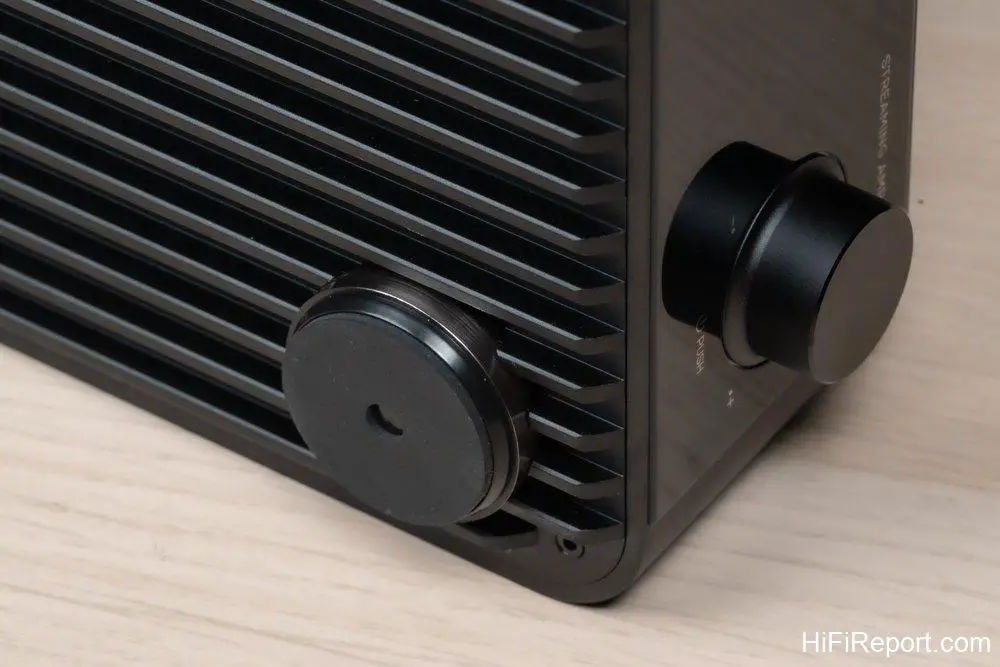
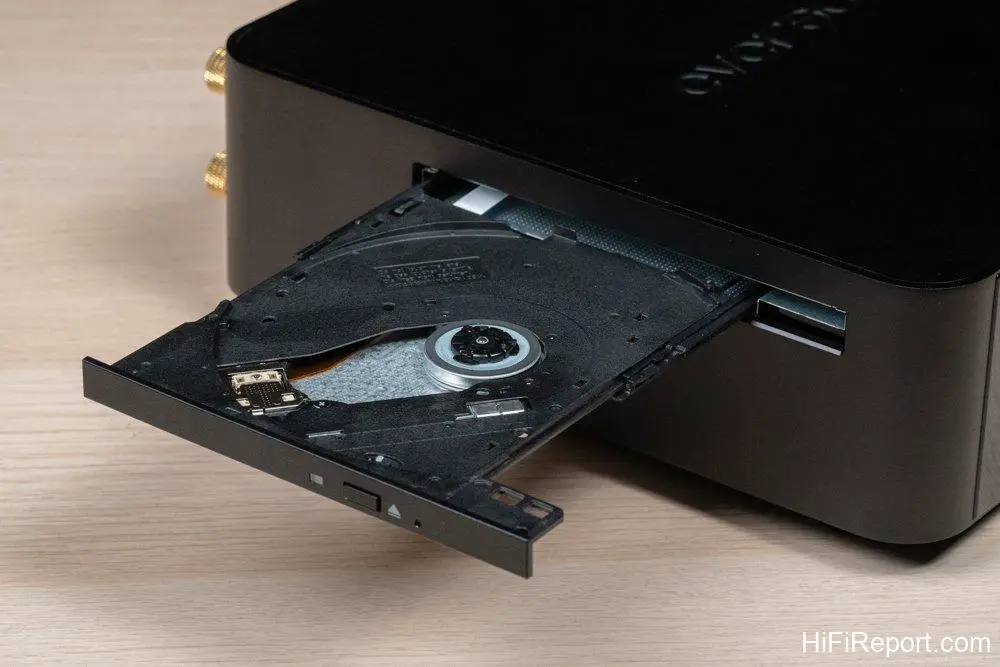
The CD drive on the Play CD Edition is discreetly located on the side of the unit, popping out with a light press. It resembles an external CD-ROM drive. Indeed, it is a Hitachi-LG CD-ROM drive. Some might find this a bit basic, but for long-term parts availability, opting for a CD-ROM drive over a traditional CD transport mechanism is likely more stable. Furthermore, the CD-ROM drive enables the Play to perform CD ripping, allowing you to save digital music files from your physical CDs to an external hard drive and integrate them into your music library.
Comprehensive EQ, PEQ, and Room Acoustic Calibration
Building upon EverSolo’s existing DMP series of stream-and-play devices, the Play inherits many features previously found only in higher-end models. For a full-featured digital streaming amplifier under $1,000, its most impressive aspects are the 15-band EQ, 10-band PEQ, and 23 built-in music style presets. Even if you’re not familiar with EQ settings, you can quickly switch sound profiles using the factory presets.
However, finding the preset music style function within the app was a bit of a treasure hunt for the editor-in-chief. It turns out to be hidden within the graphic equalizer screen, accessible by tapping into the EQ settings, and then the preset style equalization can be found in the top right corner of the app.
Additionally, the Play features built-in room acoustic calibration. By connecting an external microphone, the Play can analyze the room’s acoustic frequency response and automatically compensate for corrections, reducing the interference of room modes.
What if you don’t have a measurement microphone? Don’t worry, you likely have a smartphone. The Play can use the built-in microphone of your Android or iPhone as a sound pickup device for room acoustic calibration, eliminating the need to purchase a separate microphone. How convenient is that?
Direct Digital Amplification Circuitry
In addition to the CD-ROM drive, the Play enhances its already robust digital streaming platform support by adding physical CD listening capabilities. Another highlight, compared to EverSolo’s own DMP series, is its amplification function. The Play offers an output power of 60 watts into 8 ohms or 110 watts into 4 ohms. All you need to do is pair the Play with suitable speakers for a complete audio system.
The Play is equipped with Texas Instruments’ PurePath Ultra HD amplification circuitry, a direct digital Class D amplifier. The front-end DSP receives digital music signals, converts PCM to PWM, and utilizes PWM’s pulse-width modulation to control the high-speed switching of the amplifier circuit, transforming it into analog output power. This direct digital amplification circuitry has been in development for over thirty years and is now quite mature. The fact that the Play’s THD is a mere 0.0037% and its signal-to-noise ratio is a remarkable 109 dB speaks volumes about the prowess of PurePath Ultra HD.
Even Supports MM/MC Phono Inputs
Thanks to the direct digital amplification circuitry and the powerful ARM processor at the front, the Play boasts input options rarely found at this price point, including MM/MC phono amplification. So, listening to vinyl is also possible. However, as it’s a direct digital amplification system, the MM/MC signal is first converted from analog to digital before being sent to the amplification circuit.
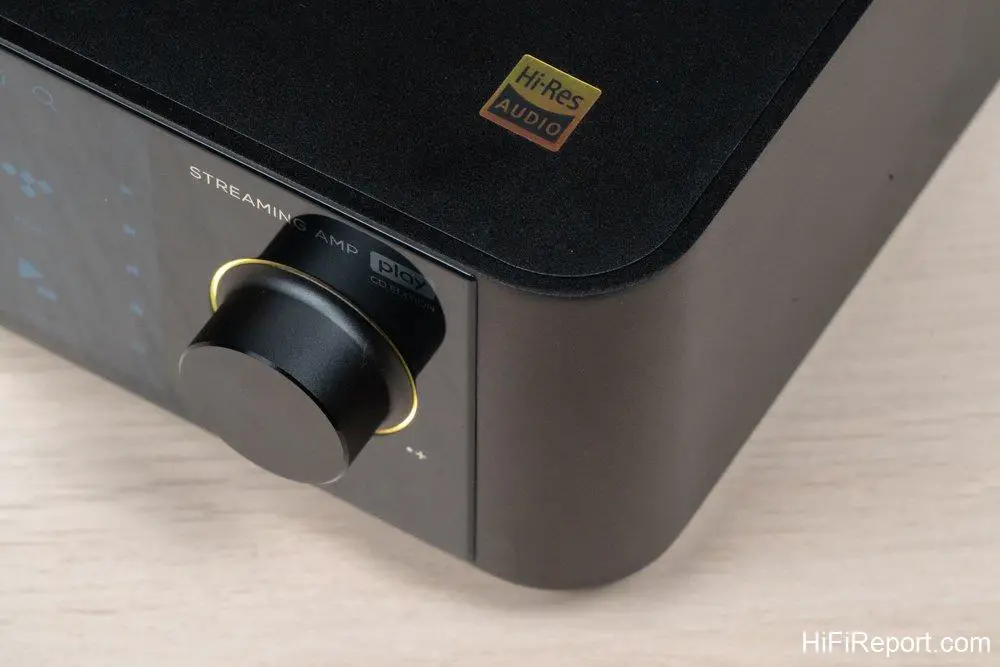
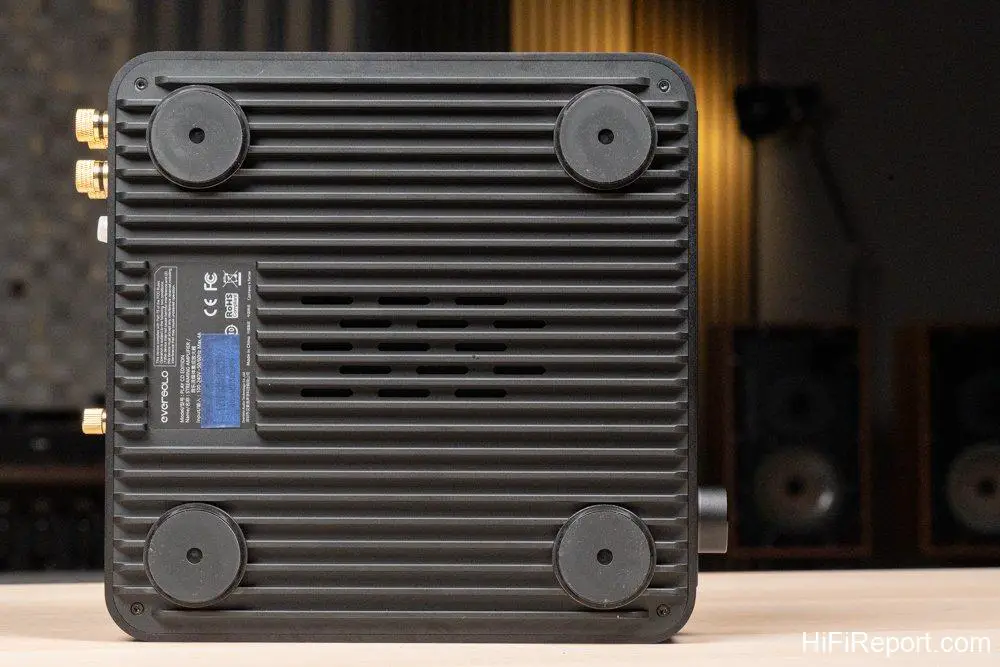
Finally, let’s talk about the Play’s chassis. It’s crafted from CNC-machined aluminum alloy, with heat sinks cleverly hidden on the underside. This gives the Play an industrial design reminiscent of Apple products – sleek and beautiful. To get an aluminum alloy chassis amplifier for under $1,000 is truly exceptional value!
Room for Improvement
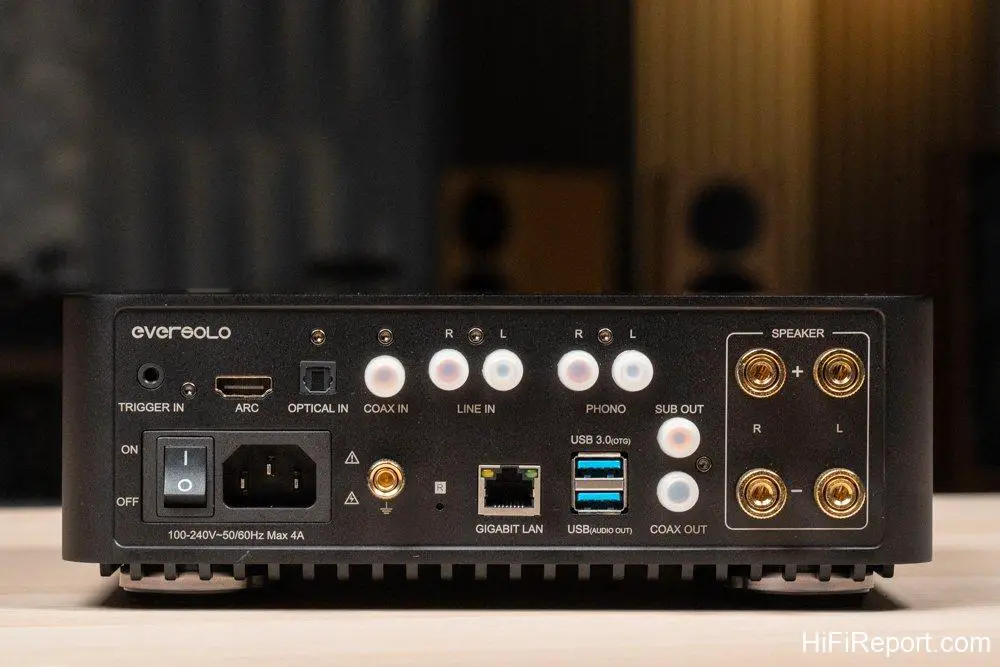
Having discussed so many features and advantages of the Play, are there any functions that are missing? Indeed, there are. The Play lacks Google Cast support. Additionally, due to its compact size, it doesn’t have a line-level analog output, preventing its use as a pre-amplifier. The rear panel also lacks a USB-B port for PC or MAC connectivity. Lastly, the speaker binding posts are spaced relatively close together, which might pose a risk of short circuits with Y-splitters. Banana plugs are recommended.
Of course, these are minor quibbles. Given the Play’s relatively small chassis, accommodating more input or output terminals would be challenging. The speaker terminals had to be a smaller specification, a compromise dictated by the unit’s form factor.
Intuitive and Fluid Operation
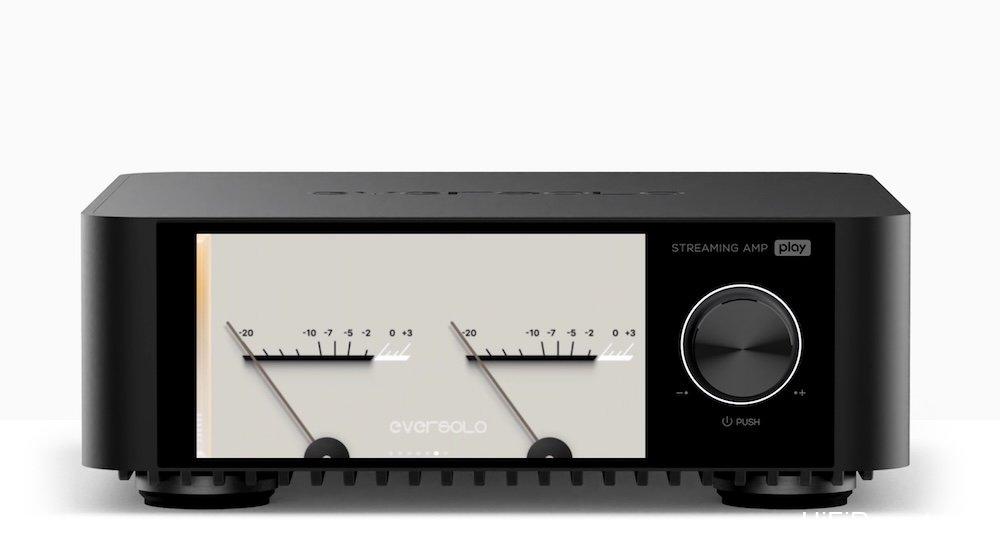
Building upon the foundation of the existing DMP digital streaming players, the Play’s operating interface is not only simple and intuitive but also remarkably responsive. In essence, if you’ve ever used any DMP device, you’ll find the Play equally easy and convenient to use. The display can be switched to show various modes, including album art and music information, or dynamic VU meters, or even vibrant, animated neon lights. It’s enjoyable, visually appealing, and fun.
Furthermore, the Play includes a Sub Out for a subwoofer, meaning it can manage low-frequency output. Combined with the built-in room acoustic calibration, this offers significant flexibility in tailoring the sound to your space. On the input side, besides traditional S/PDIF, the most convenient addition is the HDMI eARC. Connecting your TV to the Play will elevate your viewing experience with enhanced audio.
If you have multi-room listening needs, the app can simultaneously control multiple Play units or other DMP devices.
When using the Play, the least-used function key is likely the power button. Essentially, once you turn it on, you can largely forget about it. After a period of inactivity, the Play automatically enters a low-power sleep mode. It features Wake-on-LAN, so as long as your phone and the Play are on the same Wi-Fi network, simply playing music will wake the Play.
Direct Digital Amp Power is Sufficient
Stepping into the practical setup of the Play, the most common concern is likely the 8-ohm 60-watt and 4-ohm 110-watt output power – is it enough? The editor-in-chief initially had some doubts. However, after pairing it with several pairs of speakers for HiFiReport, as long as the speaker efficiency is 86 dB or higher, the Play should provide adequate driving force.
My initial pairing was with the Vestlyd VC15 speakers, which have an efficiency of 96 dB. The Play handled them with apparent ease. Even when subjected to the thunderous cannons of Tchaikovsky’s “1812 Overture,” the Play performed commendably, at least without distortion. The Play’s volume control is interesting, requiring adjustments beyond the 12 o’clock position. For those seeking high volume, it can even push to full output. Don’t worry, even at maximum, the Play won’t distort. The editor-in-chief pushed it hard, and it was impressive.
(Thankfully, the neighbors didn’t complain.) Considering the Play’s price point of under $1,000, pairing it with the ten-thousand-dollar-class VC15 coaxial speakers felt a bit unbalanced. Therefore, I switched to two more price-appropriate speaker pairs: the KEF Q1 META and the BestVox LS 5/9. The Play clearly showcased the distinct sonic characteristics of each pair. The Q1 META presented a bright and lively sound with a modern flair, while the LS 5/9 offered a warmer midrange, characteristic of BBC monitor speakers. At normal listening volumes, the Play effortlessly controlled both sets of speakers.
Highly Versatile Tone Controls
In terms of tonal characteristics, before adjusting any EQ, the Play’s sound signature is relatively neutral, lacking any thick midrange coloration and possessing a notably transparent and clear foundation. Of course, with its built-in EQ, PEQ, room acoustic calibration, and a variety of preset sound profiles, you can tailor the sound to your personal preferences.
The editor-in-chief recommends starting with all equalization turned off (flat setting). Then, use your familiar music to adjust the EQ or PEQ to find your preferred sound, or select one of the Play’s equalization presets based on the music genre you’re listening to.
Sound Performance Far Exceeds Expectations for the Price
Despite being an entry-level, affordable digital streaming amplifier, the Play’s driving capability and soundstage rendering abilities far exceed my expectations for its price. It can practically challenge amplifiers two or three times its cost! Its left and right channel separation is excellent. Listening to The Beatles’ 2019 remix of “Here Comes the Sun,” the recording clearly retains the effects of the era. The opening acoustic guitar is placed in the left channel, with the right channel remaining silent. Those unfamiliar with the recording might wonder if the right channel is malfunctioning.

Rest assured, the recording intentionally separates the stereo channels. After the acoustic guitar intro, the vocals come in, and the right channel becomes active. Even knowing it’s a multi-track recording creating the soundstage, the Play still conveys the recording’s nuances. The acoustic guitar on the left maintains its crisp arpeggios, with the strummed acoustic guitar providing a backdrop. During the chorus, the handclaps are subtly placed in the background, enhancing the prominence of the vocals.
Factory EQ Settings Are Quite Appealing
Switching to jazz, listening to Ella Fitzgerald and Louis Armstrong’s duet “Can’t Take That Away From Me,” the Play performs with effortless grace even without EQ engaged. Ella’s voice is centered, her tone sweet, and the Play renders her delivery with excellent nuance. The muted trumpet’s embellishments follow the vocals, positioned slightly to the right of the soundstage. When Louis begins to sing, his husky voice and sibilance create a comfortable jazz ambiance.
Next, I accessed the graphic equalizer and selected the “Jazz” preset equalization. The slightly boosted high frequencies add a touch of sparkle to the tone. The change isn’t dramatic, but it’s spot on, enhancing the jazzy swing feel even further.
Classical Music Seems Better with a Natural Sound
Moving to chamber music, I listened to “Mozart Piano Trio K.502” performed by Perahia, Du MÉ, and Wang. The cheerful trio begins with piano and cello. The cello sustains long notes, the piano’s joyful notes dance, and the violin adds embellishments in the middle of phrases. The Play renders a good 3D soundstage.
Upon activating the EverSolo preset “Classical” sound, the treble becomes slightly darker, and the Play’s warmth increases considerably. However, I found myself not preferring this. The sound without EQ feels more direct. Therefore, I turned the EQ off. Of course, this is the editor-in-chief’s personal preference. You are free to experiment with the Play to discover your own preferred sound.
An Outstanding Performer in the Under-$1,000 Category
Is the Play’s stereo listening experience that good? The editor-in-chief wouldn’t claim the Play is groundbreaking, but judged by its sound for its price, the Play is exceptionally good value! The editor-in-chief wants to say, finally, a hero has emerged! In an era where audio equipment is often perceived as expensive, EverSolo’s Play breaks the mold. It can reign supreme in the sub-$1,000 category. If your budget falls within this range, you must add the Play to your audition list. Its incredibly rich feature set guarantees you’ll have a blast diving into the world of Hi-Fi from the start.
Equipment Specifications
**Eversolo Play CD Edition Specifications**
* **Type:** Digital Streaming Amplifier
* **DAC Chip:** AKM AK4493SEQ (32bit)
* **Amplifier Type:** PurePath Ultra HD
* **Output Power:** 60W×2 (8Ω) / 110W×2 (4Ω)
* **Supported Formats:** DSD512, PCM 768kHz/32bit, MQA, FLAC, WAV, APE, AIFF, etc.
* **Digital Inputs:** Optical x1, Coaxial x1, USB-B x1, HDMI ARC x1
* **Analog Inputs:** RCA x1, PHONO (MM/MC) x1
* **Digital Outputs:** Optical x1, Coaxial x1, USB-A x1, HDMI x1
* **Analog Outputs:** RCA x1, XLR x1, Subwoofer Output x1
* **Network Connectivity:** Gigabit Ethernet, Wi-Fi, Bluetooth 5.0
* **Dimensions:** 230 × 230 × 75 mm (W×D×H)
* **Weight:** Approx. 3.5 kg