Final D8000 Pro Limited Edition Review
How exactly did these headphones capture my heart and elicit what could be considered the highest praise? Let’s put it this way: Have you ever heard Robert Plant and Alison Krauss’s album “Raising Sand”? This record is an absolute test disc for any audio system. I believe very few setups can truly reveal the essence of its recording, especially the bass performance. Released in 2007, it won the American Americana Music Honors & Awards Album of the Year in 2008 and a Grammy Award in 2009.
Its recording quality is truly exceptional.
Exceptional Bass Performance
However, even multi-million dollar audio systems often struggle to genuinely convey the recording quality of this album, leading many audiophiles to mistakenly believe it’s a poorly recorded disc. Yet, the D8000 Pro Limited Edition manages to reproduce this album so wonderfully, especially its control over the bass frequencies and precise reproduction of instrumental timbres. This ability definitely surpasses most speaker systems.
Did you know that the D8000 Pro Limited Edition is a Planar Magnetic headphone? This type of driver excels in the high-frequency range, but if not designed properly, it can be weak in the low frequencies. Why? I’ll explain later. The fact that the D8000 Pro Limited Edition handles the challenging bass sections of this album so well alone earns my admiration.
Beyond Bass: Overall Excellence
If that were its only strength, that would be one thing. But in fact, the D8000 Pro Limited Edition’s performance with violins, cellos, pianos, vocals, bass guitars, and drums is also extraordinary – meaning it surpasses the vast majority of headphones. Why don’t I claim it surpasses *all* headphones? Although I’ve listened to many more expensive headphones, there are still many I haven’t heard, so how could I make such a definitive statement?
However, within the range of headphones I have experienced, the D8000 Pro Limited Edition delivers top-tier performance whether listening to pop or classical music. To say the D8000 Pro Limited Edition is one of the best headphones out there is absolutely no exaggeration. The official website states that the D8000 Pro Limited Edition’s tuning leans towards pop music performance, but I believe it excels in both pop and classical music in a way that is beyond the reach of most headphones.
Final’s Craftsmanship
Why is Final capable of creating such outstanding headphones? I think it might be related to the Japanese spirit of craftsmanship. Younger people might not know how eye-catching, brilliant, and unique Final’s products used to be. After decades of evolution, Final is certainly not the same company it once was, but they have carved out their own path in the headphone world.
A Storied History
Final was originally founded by Kanemori Takai in 1974. Their first product was a phono cartridge designed by Yoshihisa Mori. This cartridge was quite special; its cantilever was made from a 1-carat diamond, and the coil was wound as an air-core figure-eight. It was an unusual MC cartridge. By not using an iron core, it avoided many negative effects associated with them. This MC cartridge was truly “shocking” in the audio world at the time and immediately put Final on the map.
Later, Final expanded its product line to include amplifiers, speakers, turntables, and more, with each product being an outstanding piece of craftsmanship. Their speaker designs, in particular, were incredibly creative. In 2013, they released the Opus 204 speakers, weighing 800 kg and featuring highly unusual horn drivers, priced at 450,000 USD.
In 2007, Final faced financial difficulties. With investment from Japan Molex LLC, a large company specializing in connectors, Final collaborated with Daiichi Tsushin Kogyo Ltd., which manufactured certain professional audio products for Sony. Together, they formed S’Next company and became a subsidiary of Molex.
Challenges and Transformation
In 2009, S’Next acquired a Japanese headphone manufacturing company in Clark, Philippines, and under the Final brand, began entering the headphone OEM/ODM business while also producing their own headphone products.
The company continued to develop. The original owner, Takai, sold his shares to S’Next’s CEO, Mitsuru Hosoo. After several more changes, the company continues to operate today, focusing on designing and manufacturing high-end headphones. Final currently has its own R&D department and its own factory.
Current Structure and Product Range
Final’s product lineup includes 11 series of in-ear monitors and three series of over-ear headphones, plus a special Lab Series. This series features only two in-ear models, uniquely constructed using 3D printing with titanium for the earpieces, making them highly distinctive.
Focus on the D Series
The three over-ear headphone series are the UX series, the D series, and the Sonorous series. The D series includes the D8000 Pro Limited Edition (scheduled for launch in December 2022), the D8000 Pro Edition, and the D8000. All three models use Planar Magnetic drivers, commonly referred to as planar diaphragm drivers or orthodynamic drivers. Final calls their technology AFDS (Air Film Damping System).
Planar Magnetic Explained
The D8000 was their first planar magnetic headphone, released in December 2017, priced at approximately 3,803 USD. Following that, the D8000 Pro Edition was released in October 2019, priced at approximately 4,230 USD. The D8000 Pro Limited Edition is set to be launched in December 2022, with the price to be announced at that time.
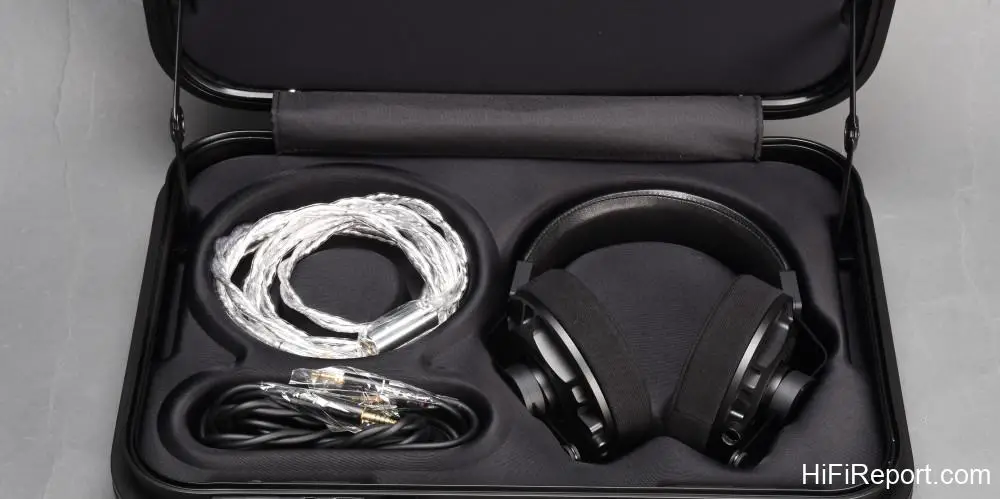
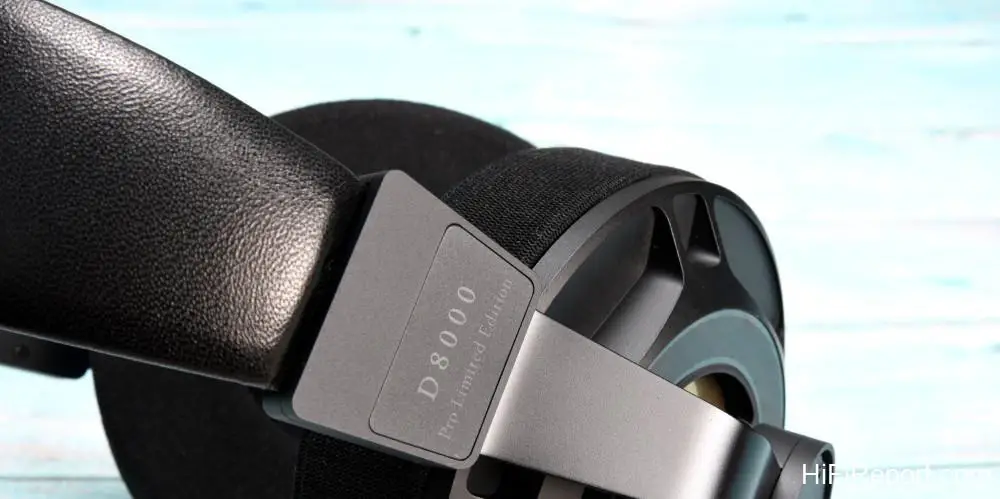
These three models share the same basic design and materials, with only minor differences in detail (such as slightly different earpads) and included cables. Looking at the specifications, they even appear similar, and the prices only differ slightly. Therefore, if you want a long-term investment, the top-tier D8000 Pro Limited Edition is the obvious choice. Furthermore, the D8000 Pro Limited Edition comes packaged in a beautiful Travel Sentry small carrying case, giving it a premium feel.
Having briefly covered Final’s history, let’s return to the D8000 Pro Limited Edition headphones! A planar magnetic driver consists of a voice coil deposited onto a very thin material, forming a concentric circular diaphragm. Magnets are placed in front of and behind the diaphragm. Planar diaphragms are very light and can produce beautiful mid and high frequencies. However, to reproduce sufficient bass, the diaphragm must move significantly back and forth.
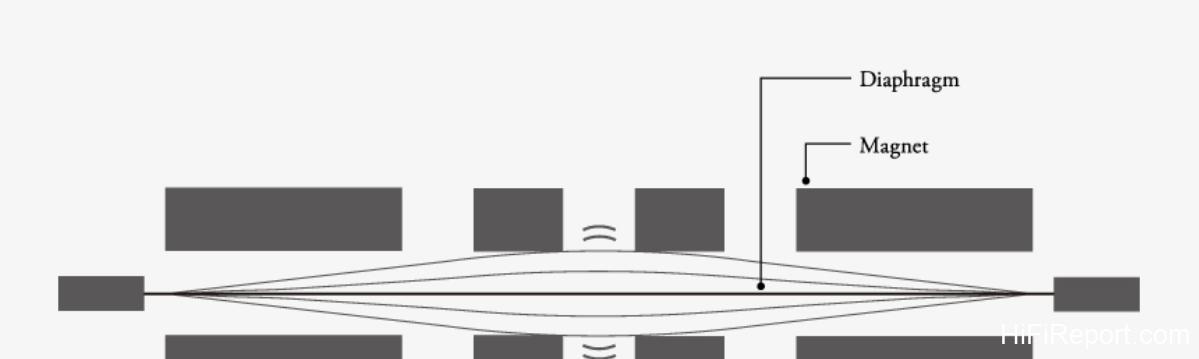
In doing so, the diaphragm can easily collide with the magnets in front or behind, causing distortion. To prevent the diaphragm from hitting the magnets, its excursion must be limited, which in turn reduces bass quantity and depth.
Furthermore, for a planar diaphragm to produce a relatively loud volume, the magnets in front and behind cannot be too large, as they would block the sound waves produced by the diaphragm. However, smaller magnets result in weaker diaphragm drive capability. Think about it, isn’t this a dilemma? Of course it is! Planar magnetic headphones constantly face such dilemmas, making design and manufacturing highly challenging. This is why most headphone brands avoid planar magnetic drivers.
Final’s AFDS Innovation
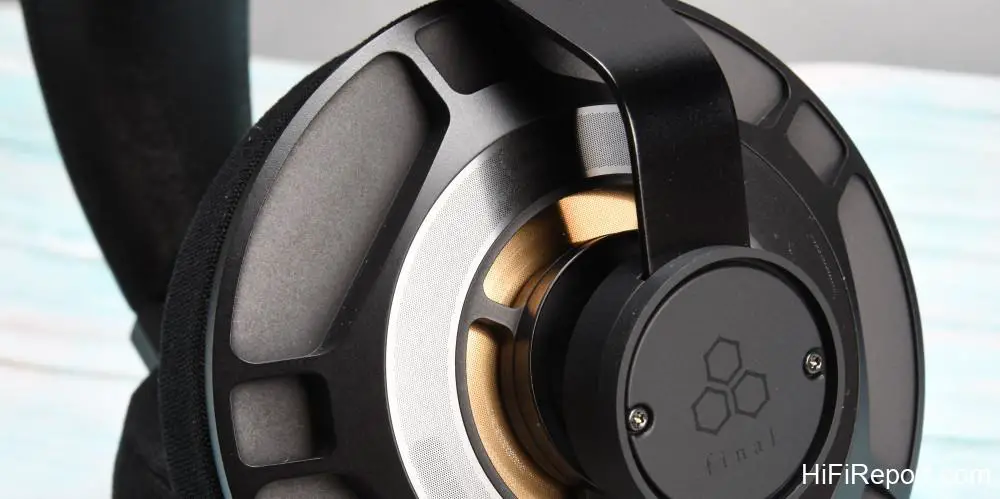
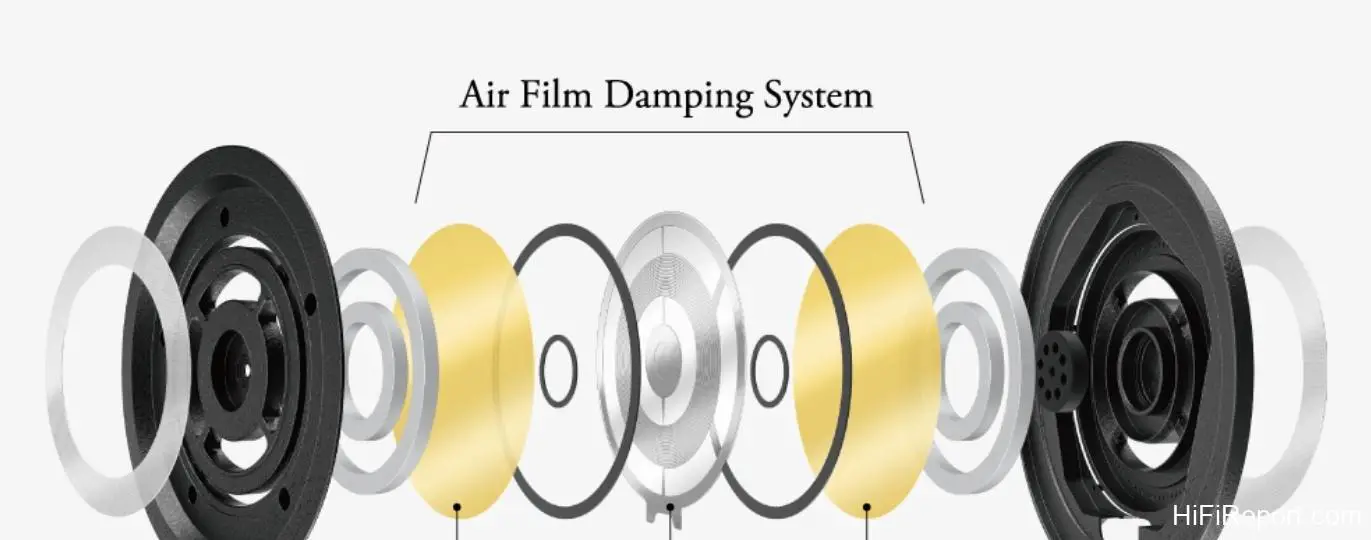
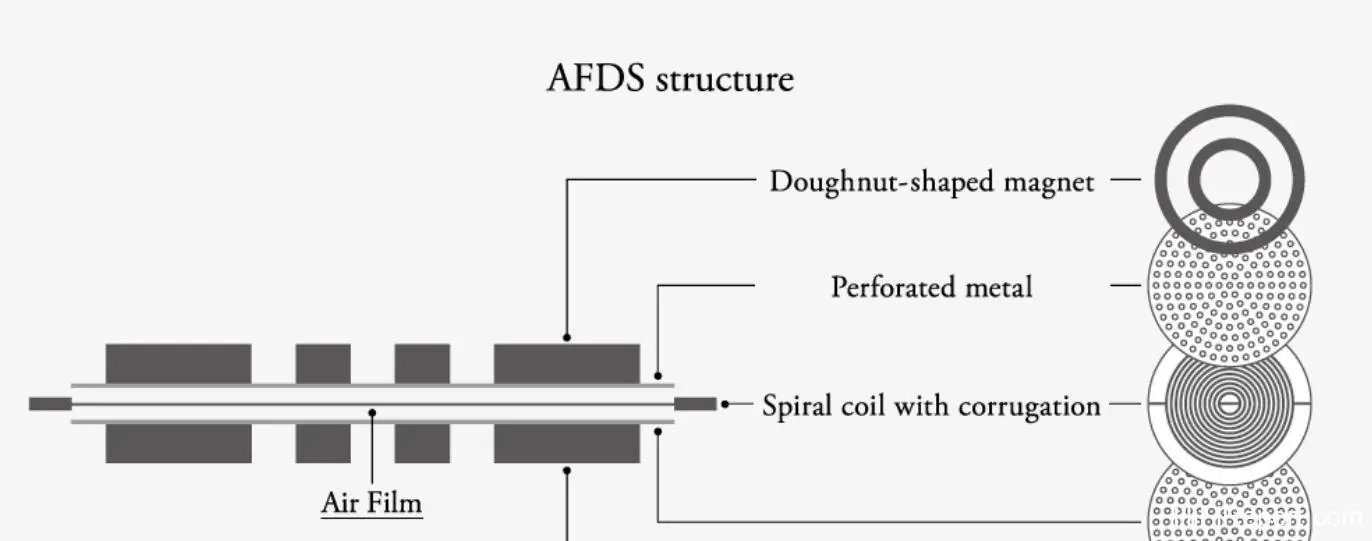
Knowing the difficulty, Final dared to venture into this territory, leading to the creation of the D series. Final’s solution is to use a 50mm circular concentric diaphragm with the aluminum voice coil arranged like a concentric screw thread. The entire diaphragm is one-third lighter than usual. Additionally, the front and rear magnets are shaped like hollow doughnuts.
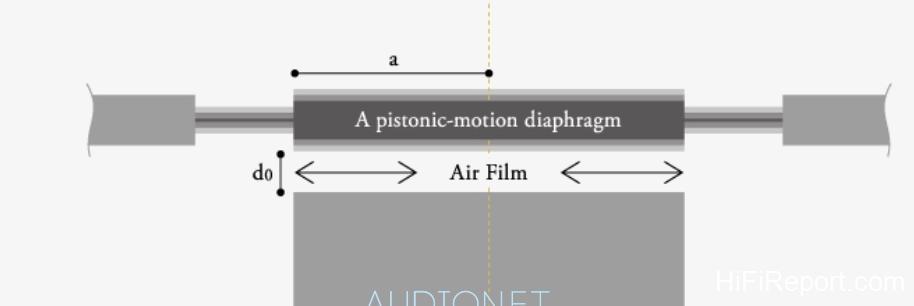
Beyond this, the ultra-thin perforated metal plates protecting the diaphragm on both sides are covered with fine holes, allowing sound waves to pass through extensively. But that’s not all; they also utilize the air gap between the magnets and the perforated metal plates to create air damping (Air Film Damping System), controlling the diaphragm’s movement within its linear range.
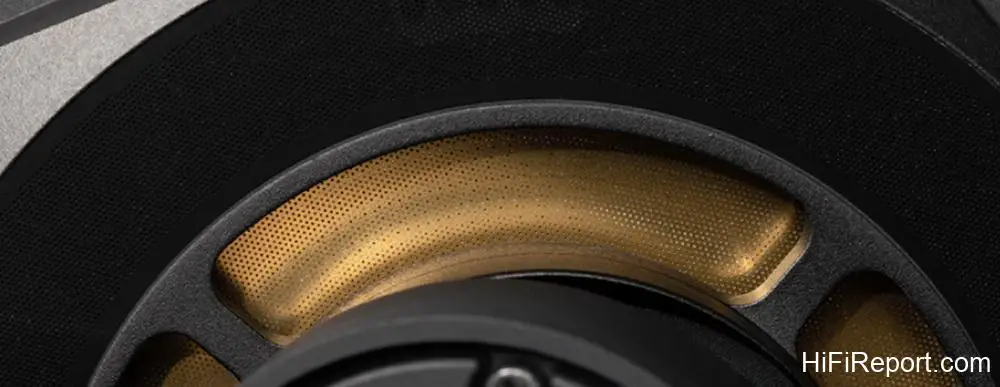
This structure is distinctly different from planar magnetic headphones from other manufacturers and allows the D8000 Pro Limited Edition to achieve sufficient bass quantity, high density, and excellent control.
Aluminum-Magnesium Construction
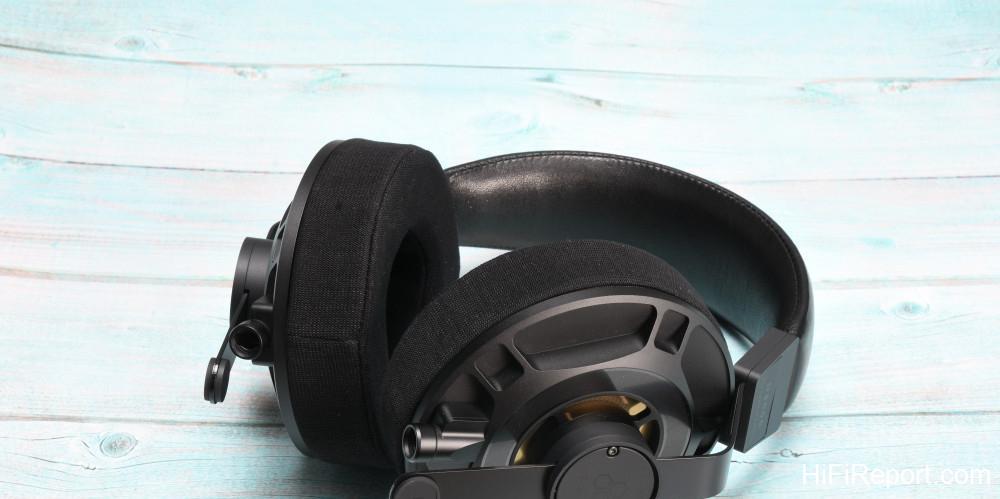
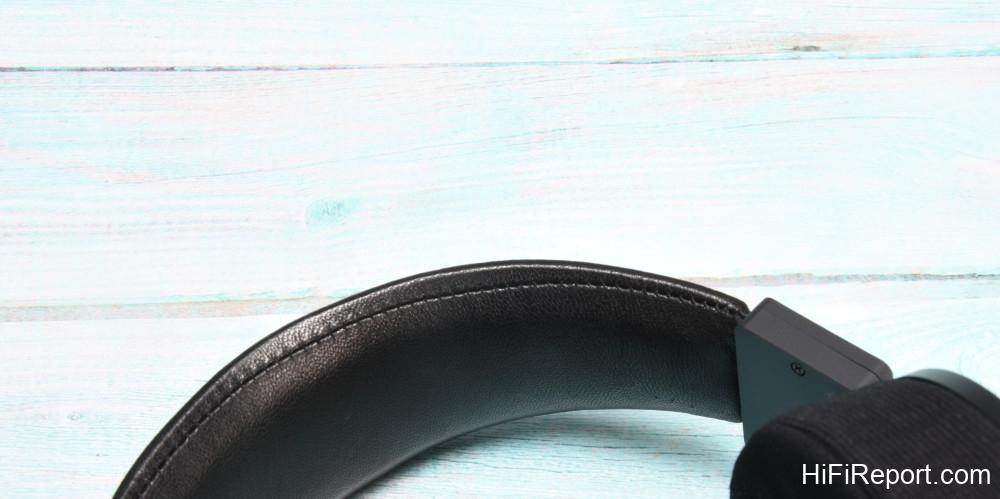
Not only that, but the D8000 Pro Limited Edition’s headphone housing is made of aluminum-magnesium alloy, making it exceptionally sturdy. The earcup can be divided into three concentric circles. The innermost circle is open, allowing you to see the golden perforated protective plate inside. The middle concentric circle is also aluminum-magnesium alloy covered in fine perforations. The outermost concentric circle is completely sealed aluminum-magnesium alloy.
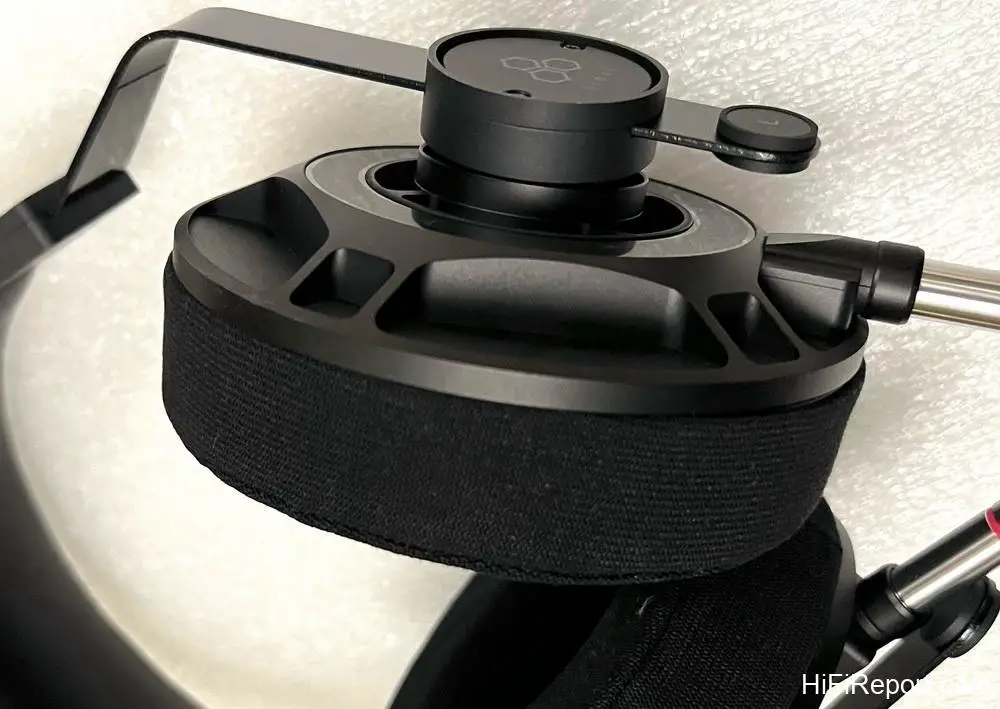
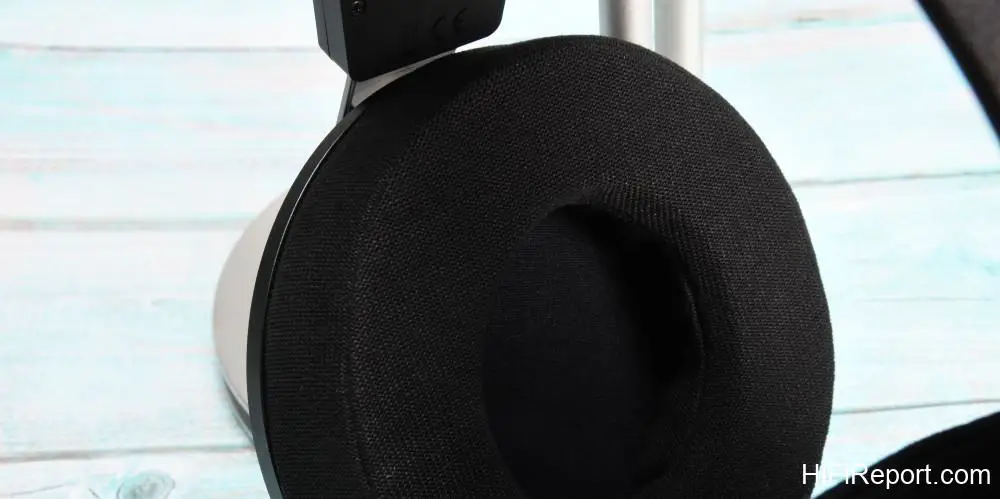
The innermost and middle circles, if not examined closely, might appear to be sealed metal plates; only upon careful inspection do you see they are filled with fine holes. This design is intended to provide an exit path for the diaphragm’s back wave, preventing it from being sealed in and reflecting back onto the diaphragm, causing undue pressure. The official website states that the part of the earpad that touches the ear is made of Japanese Washi paper, but it looks and feels like fabric.
Moderate Sensitivity
Planar magnetic headphones typically have lower sensitivity, and this is indeed the case in practice. The HE1000 is the hardest to drive, with the lowest sensitivity at only 90dB. The D8000 Pro Limited Edition comes next with a sensitivity of 98dB. While the HD800 is considered difficult to drive among headphones, its sensitivity is 102dB, making it the easiest to drive among these three. For listening, I used the Weiss DAC 502.
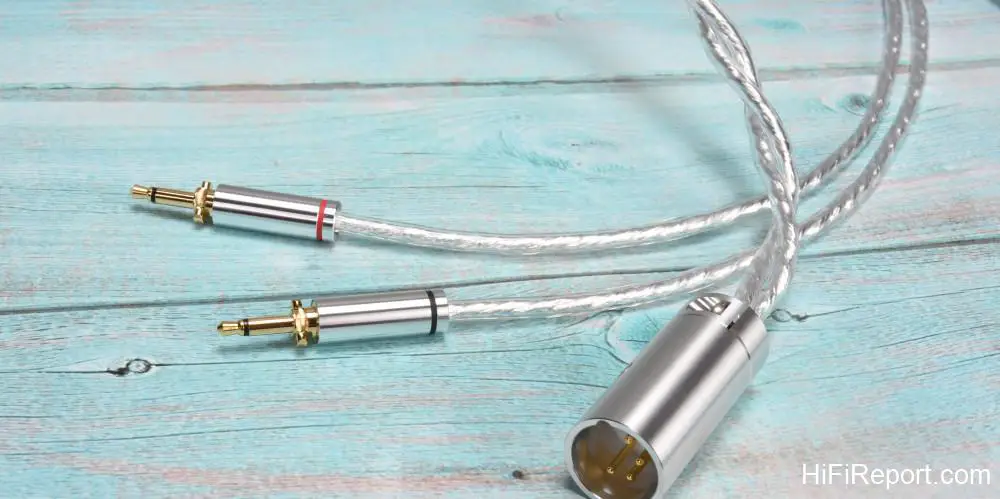
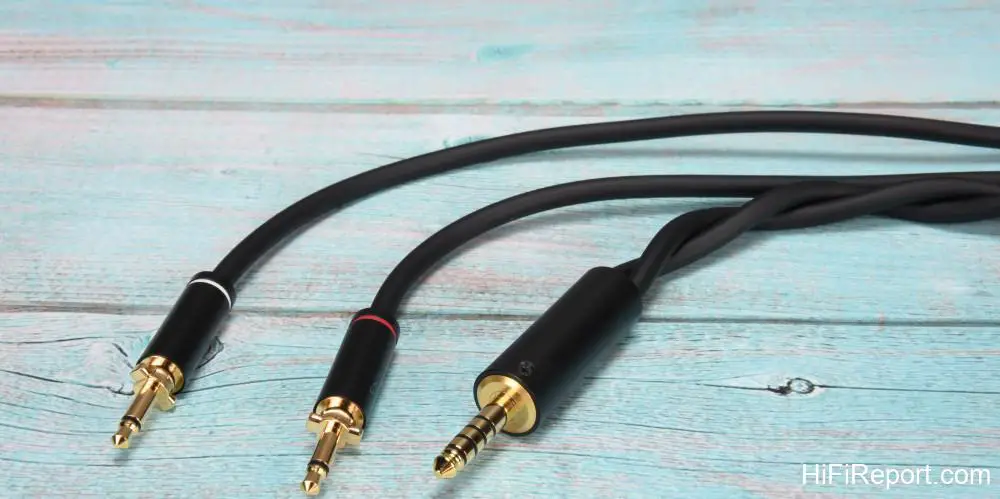
Although its primary role isn’t a headphone amplifier, its headphone section is also very well-executed and includes a “Turbo” mode. When encountering difficult-to-drive headphones like these three, you can access the menu to set the headphone output to 0dB, which provides enough power to drive them forcefully. The Weiss DAC502 has a 6.3mm headphone jack on the front panel and a 4-pin balanced headphone jack on the rear panel.
When listening to the D8000 Pro Limited Edition and HD800, I used the 4-pin jack. For the HE1000, since I couldn’t find a 4-pin cable, I had to settle for using the 6.3mm connection.
Stunning Sound Performance
Comparing these three headphones, I listened to pop, jazz, rock, and classical music, specifically choosing challenging tracks. The result was complete subjugation to the D8000 Pro Limited Edition’s performance in all aspects. The D8000 Pro Limited Edition’s sound character is distinct, full-bodied, dense, with clear lines, strong physicality, precise positioning, powerful impact, fast transient response, extremely clear details, crispness, liveliness, and no sense of sluggishness.
Especially the kick drum is tight, full, and elastic, and the bass notes are incredibly focused and clear in shape. All instruments sound very realistic.

Warmth and Realism
Even better, while the D8000 Pro Limited Edition’s sound is incredibly vivid, violins, cellos, and pianos are filled with a warm, woody character that is never harsh and the timbre is exceptionally beautiful. As for vocals, the outline and form are very full, but without excess bloat, and filled with the fleshy texture a warm voice should have, not sounding sterile.
Timbre and Vocal Presentation
For example, listening to Callas singing opera, I believe you may never have heard her voice sound so beautiful (most people think her voice is sharp and thin).
Imaging and Dynamics
Although listening to headphones doesn’t create a soundstage in the same way speakers do, the D8000 Pro Limited Edition can faithfully present the necessary layering and sense of depth. Listening to the first track, “Spring River Flower Moon Night,” from Zhao Cong’s album “Listening to China,” the localization of the drum deep in the soundscape is rendered excellently. Listening to Kent Nagano conducting the Philadelphia Orchestra in Shostakovich’s Symphony No.
4, even as the orchestra comes crashing in from the start, the layering from the strings in the front to the bass drum at the very back remains distinct, and the impact is incredibly strong, yet the D8000 Pro Limited Edition handles it all without faltering.
Handling Complex Dynamics
Listening to “End of the War” from Shigeru Umebayashi’s soundtrack for “Curse of the Golden Flower,” the bass drum is powerful and expansive, full of elasticity, yet the drum shape is focused, showing no hint of distortion.
Musicality and Emotion
And listening to Leonid Kogan’s performance of Mendelssohn’s Violin Concerto Op. 64, the delicate violin sound is simply so sweet it feels like honey dripping, and the overall orchestral timbre is also superb, possessing a silken beauty. Listening to Radu Lupu playing Grieg’s Piano Concerto in A minor, the tactile clarity of the piano strikes is very physical; the abundance of string harmonics, fullness, and sense of weight are deeply moving.
Emotional Engagement and Realism
Listening to Yo-Yo Ma and Emanuel Ax’s album “Hope Amid Tears,” the spacious and realistic cello, with its subtle vibrato and bow-on-string texture, is truly unforgettable. The piano is also both real and beautiful, leaving nothing more to be said. Honestly, achieving such comprehensive performance from a speaker system is extremely difficult, not just because of the equipment but more severely due to the distortion introduced by the listening space.
A Recording Engineer’s Choice
Does the D8000 Pro Limited Edition have any specific character or “” (quirkiness)? I don’t believe so. It reproduces a very real and beautiful sound, faithfully presenting the timbre and quality of various instruments and voices. Furthermore, its transient response is incredibly fast, subtle dynamic changes are exceptionally clear, reverberant details are extremely rich, the dynamic range is very wide, and it can handle high sound pressure levels.
With the kind of incredibly powerful, real, and beautiful performance offered by the Final D8000 Pro Limited Edition, it’s not just audio enthusiasts who would want to buy it; even recording engineers would be tempted. It is scheduled to be exhibited at the TPAF headphone festival on December 17-18, 2022. You are welcome to attend and experience it. Those interested should act fast and contact Shishihuo Co. Ltd. for inquiries.