
Final Touch Audio Metis Network Cable Review
What comes to mind when you think of Serbia? Frankly, before this, only two people did: Novak Djokovic and Nikola Jokic. The former is a tennis legend, the only male player globally with 24 Grand Slam singles titles and possibly still adding to his count. The latter is the current NBA sensation, an all-around center who led the Denver Nuggets to the NBA championship last year.
From now on, I’ll add another name to that list: Final Touch Audio. Their Metis network cable has left a truly lasting impression on me.
Forged Conductors
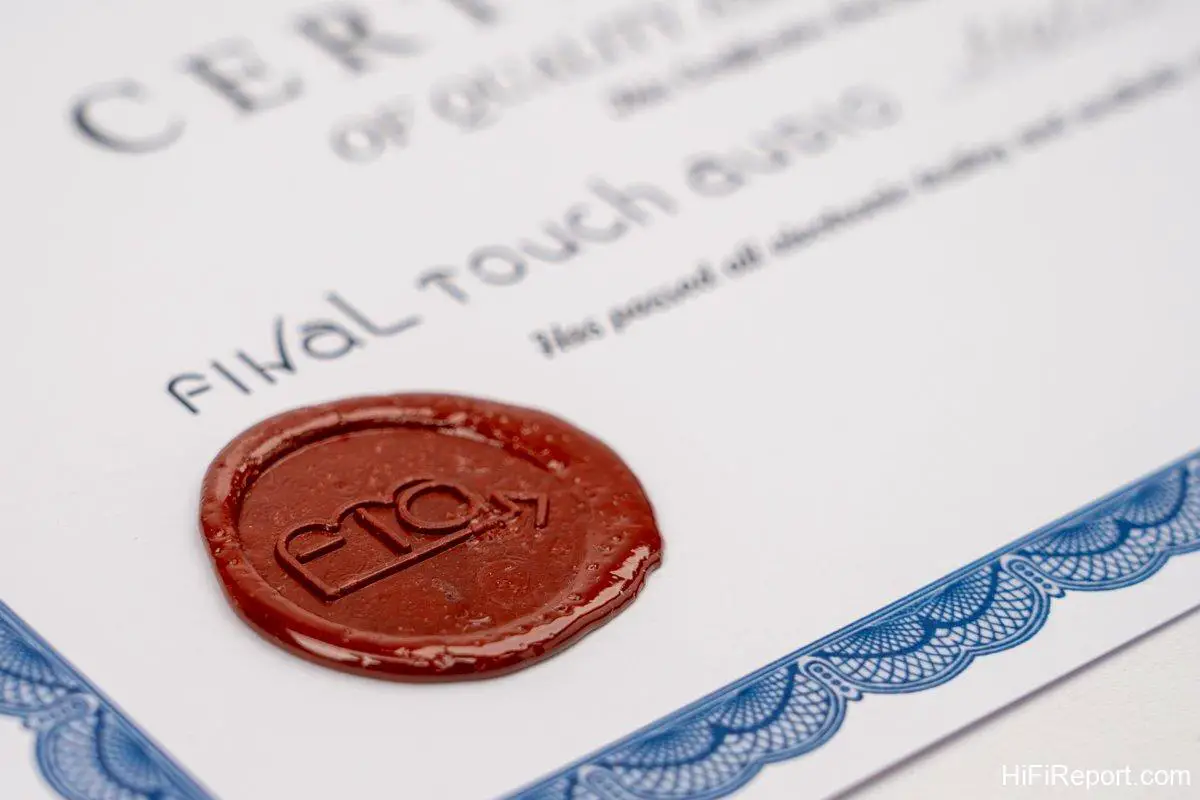
Final Touch Audio (FTA) is based in Belgrade, the capital of Serbia. It was founded by Zoran Zubcic. Why “Final Touch”? Zoran Zubcic hopes that once you’ve experienced FTA, you won’t feel the need to look at other cable brands. Thus, FTA will be your “final touch,” and the name was born.
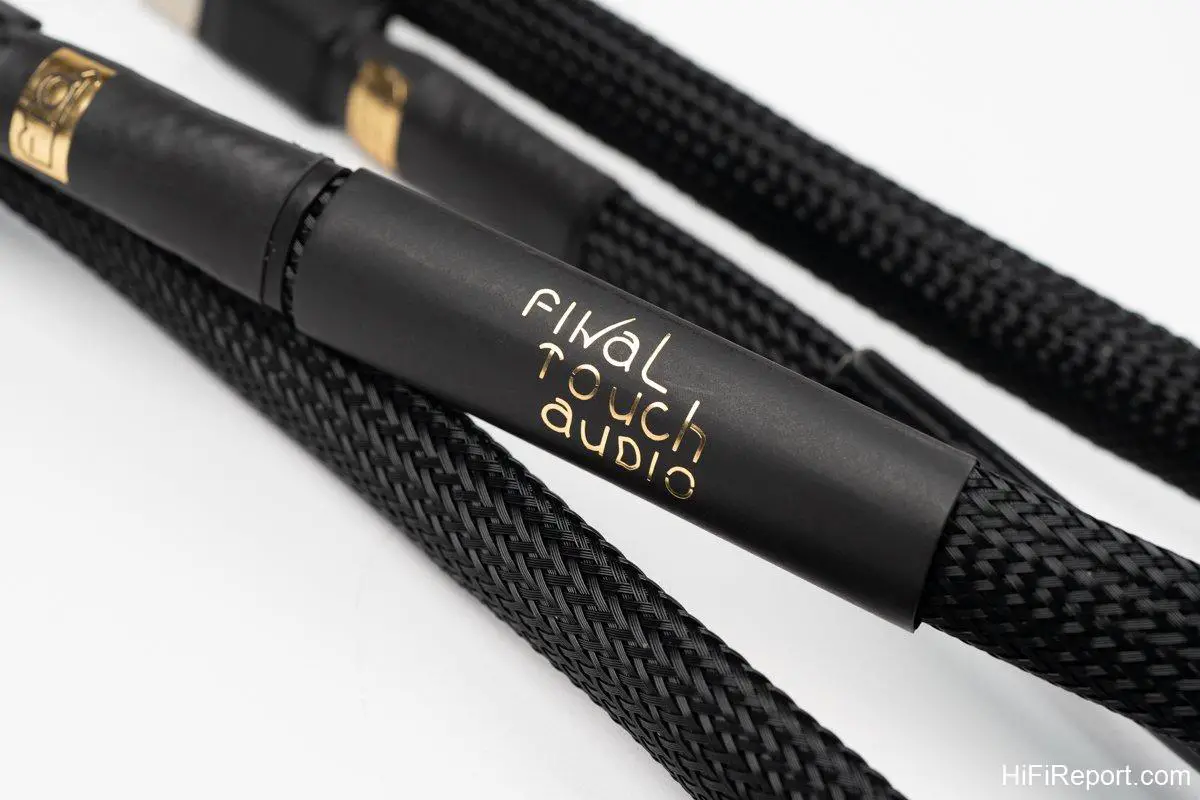
FTA started with USB cables and has since expanded its product line to be quite comprehensive, including power cables, network cables, USB cables, digital cables, and analog interconnects. This range is broad enough for you to potentially outfit your entire system with FTA, eliminating the desire to interact with other brands.

The most distinctive feature of FTA cables lies in their conductors, which are made using a forging process.

Forging involves repeatedly heating and hammering raw, unrefined metal materials to achieve plasticity and deformation, shaping them into a specific form or size. Forging changes the metal’s structure, enhancing its mechanical properties and giving it greater strength and resilience – think of how a samurai sword is made.

Zoran Zubcic drew inspiration from the samurai sword-making process, applying forging techniques to create cable conductors. By hammering the metal to the desired wire diameter and shape, the properties of the conductor are altered, making it more suitable for audio transmission. However, because forging conductors is entirely a manual, time-consuming, and labor-intensive process, mass production is impossible, which inherently drives up the cost.

Dual Conductor Materials
Now, let’s turn our attention to the Metis network cable.
FTA is fond of naming its products after the moons of Jupiter (who are also characters in Greek mythology). Metis is Jupiter’s sixteenth moon and also the first wife of the god Zeus.
The Metis has a unique physical appearance. It’s flat and quite robust, unlike the typical cylindrical network cable. This unusual shape is certainly due to the internal conductor arrangement, though FTA’s official website doesn’t provide extensive details on the conductor structure. According to information from the HiFiReport website, the Metis utilizes two types of forged conductors: forged silver and forged copper. The silver conductors have a larger diameter, while the copper ones are finer. After insulation, the conductors are shielded with two layers: an outer jacket and a copper braided shield. At each end, it’s fitted with the widely acclaimed Telegartner RJ45 connectors.
Richer Harmonics and Reverb
I auditioned the Metis network cable in my own home. The system included KECES’s latest Ebravo streamer, a Holo Audio Spring 3 DAC, a Holo Audio Serene preamplifier, a NuPrime EVO STA power amplifier, and Aurum Cantus Grand Harmony speakers. My reference network cable for comparison was a Linkomm commercial-grade CAT-8 cable.
I connected the Metis between the Ebravo streamer and the network switch. However, the thick, flat cable is not easy to bend at certain angles, so it’s advisable to arrange the relative positions of your player and switch beforehand to facilitate easier cable routing.
I began by listening to Japanese marimba player Makoto Nakura performing Bach’s famous Chaconne from the Partita No. 2 for solo violin on the marimba. Through the unique timbre of this instrument and the intentionally shaped recording effects by the engineer, I noticed a distinct characteristic of the Metis: the decay and reverb were longer and richer. This allowed the resonance within the instrument’s tubes to become more substantial and fuller, consequently creating a deeper sense of space.
Furthermore, concerning the percussive impact of the mallets, the reference cable’s sound was crisper, more concise, and brighter. The Metis, in contrast, was softer, with less crispness and brightness. However, overall, the Metis’s sound was more aligned with the recording’s atmosphere, delivering greater emotional impact and simply sounding more pleasing.
Take, for instance, Australian flutist Ana de la Vega’s performance of Debussy adaptations. Track 2 is the famous “Clair de Lune.” Played through the Metis, the sound was incredibly gentle, warm, and lively, opening up more than the reference cable. The Metis excels in detail retrieval; not only was the vibrato at the end of the flute notes clearer and richer, but I could also discern the subtle sound of breath.
Moreover, in phrases transitioning from soft to loud, the Metis captured the sense of rising dynamic better, making the sound feel more like it was blooming. In contrast, the reference cable felt somewhat constrained, with a slightly compressed sound. At first listen, the reference cable might seem cleaner and brighter, but its texture is also drier.
The Metis’s strength still lies in its sense of airiness. While its underlying sound isn’t as purely transparent, this is likely due to the richer, more extended reverb. Additionally, the Metis painted the texture and grain with more nuance and offered greater timbral richness. The reference cable rendered soundstage lines and shapes with more clarity and definition, placing the image further back and creating a deeper soundstage. However, in terms of overall listening pleasure, the Metis still won out. Put simply, the Metis is more fluid and possesses a greater analog quality.
Enhanced Musicality
Let’s take track 7, “Immediately Blessed,” from the “Blue Coast Collection” compilation as another example. This song features two male vocalists each playing an acoustic guitar, singing a deeply emotional piece. Again, the Metis’s sound was more relaxed and gentle. As a result, some subtle sounds, timbres, and vibrations were clearer and more distinct—such as the sheen of the steel strings, the friction of the left hand sliding positions, the textured vibration of fingernails hitting the strings when plucking, and the subtle hoarseness in the singers’ throats… all became richer. The contrast between soft and loud dynamics was also clearer.
The reference cable isn’t bad sounding; for example, its soundstage image felt slightly more prominent, the outlines clearer, the mid-range thicker, the sense of airy transparency better, and the soundstage height higher. But honestly, the Metis’s musicality still had the edge.
Let me illustrate with a soft string ensemble piece, using track 6 from “Tutti!”, the Andante from Mozart’s Piano Concerto No. 21. Through the Metis’s gentle yet vivid character, the sound of the string section was incredibly dense, the lines fluid and soft. The music retained a sprightly and lively sense of ebb and flow, without becoming sluggish due to the gentler presentation. The subtle grainy texture of bow friction was not lost, and the beautiful sheen expected from strings was undiminished.
Furthermore, the Metis was excellent at harmoniously blending different sections. Its texture was soft, making the sound wonderfully harmonious and comfortable. The richness of timbre was entirely present, and there was no lack of sheen or moisture, lending an ethereal quality to the strings and piano, making them sound more beautiful. Through the Metis, I could also clearly sense the movement of air in the recording venue, making the reverb sound more realistic, rather than just an empty, dark background. In comparison, the reference cable’s string texture was a bit drier and harder, also slightly rough, lacking the same density and fluffiness. The grainy friction sound was also less apparent. However, the reference cable won in terms of section separation, positioning, and image definition, all of which were clearer.
A Different Approach
After auditioning the Metis, I’ve gained a new understanding of network cables for audio systems. Many people say that network cables have no effect on music streaming and are just paying “idiot tax,” because as long as the network cable meets the specifications, the transmitted packet signals are identical, and thus the sound should be identical.
However, after using numerous so-called “audiophile-grade” network cables, I am certain that they bring audible changes to the final sound, and the changes are not insignificant. The only question is whether those changes are to your liking. As for the Metis, I very much like the changes it brings. It enhances the sense of atmosphere, makes the sound more engaging, and gives the music more expression. It is indeed different from most audio network cables currently available.
Specifications
* **Model:** Final Touch Audio Metis Network Cable
* **Conductors:** Forged Copper, Forged Silver