
Final Touch Audio Sinope USB Cable Review
The outer packaging is a black cardboard box, with the words “Final Touch Audio” printed in silver in the lower right corner, presenting a low-key and elegant look.
Sliding off the outer box reveals a white inner box printed with symbols resembling a circuit diagram.
These symbols are actually “FTA,” the abbreviation for Final Touch Audio. This trademark, inspired by circuit diagram symbols, is truly original and clever.
Opening the box reveals surprise after surprise.
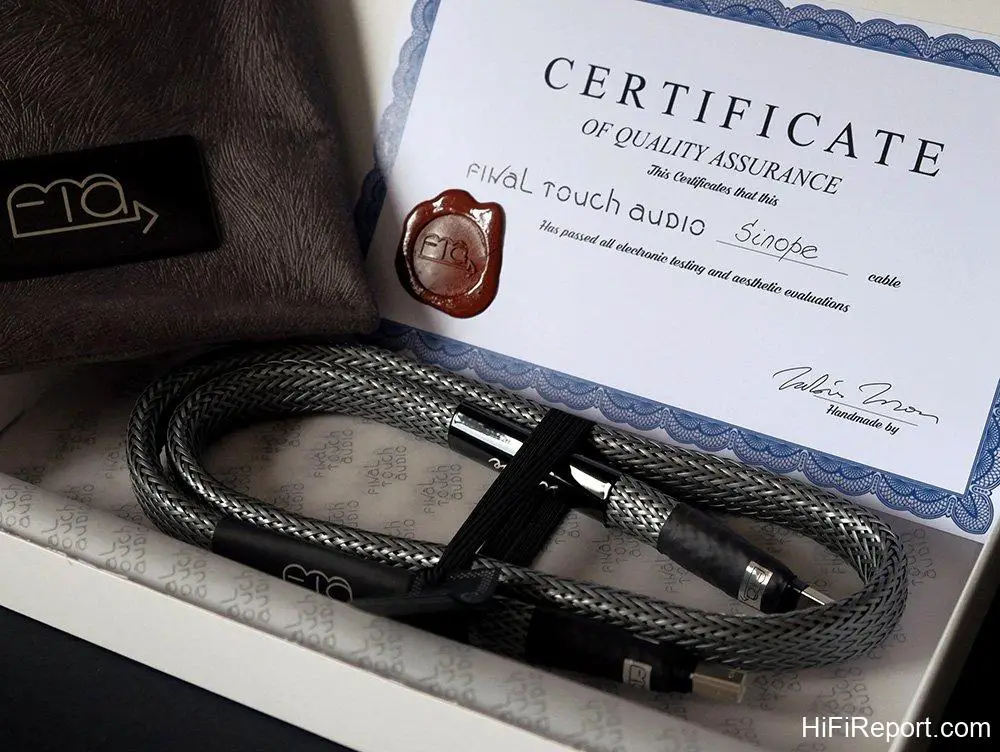
A handmade quality guarantee certificate greets you, adorned with a wax seal featuring the “FTA” trademark and the handwritten signature of the person who crafted the cable.
The cable itself is wrapped in translucent paper printed with the Final Touch Audio logo. The coiled cable is secured with an elastic band and nestled inside a black velvet pouch; this pouch is said to be hand-sewn by the owner’s wife.
Attached to the elastic band holding the cable are three small black cards with gold lettering. The cards display, in order, the brand trademark, the mission statement “We are to extract every single note from your audio system,” and the handwritten signature card of the creator.
Is this just an audio cable? Why does it feel like unboxing a luxury item? Final Touch Audio, this cable company from Serbia, truly has a knack for presentation.
(Image source: Final Touch Audio official website)
Craftsmanship in Every Detail
As an audio media professional, I’ve certainly unboxed my fair share of gear.
Is Final Touch Audio’s cable packaging truly luxurious? Not necessarily.
The cardboard box packaging is actually quite simple and understated.
In terms of sheer luxury, Final Touch Audio’s packaging isn’t close to touching the “luxury” mark.
However, what makes it so impressive are those handmade details and the artisanal quality of the consumer experience they convey.
That feeling is the essence of a premium product, the embodiment of skilled craftsmanship.
It’s a feeling that leaves a lasting impression and compels me to write about it.
A Small Family Company, Gaining Attention with the Callisto USB Cable
Final Touch Audio is a cable company based in Serbia. The principal, Zoran Zubcic, previously worked in the audio industry, is a passionate music lover, and is dedicated to audio research.
To achieve his ideal of music reproduction, he began studying the design and production of audio cables, and Final Touch Audio is the tangible result of this passion.
Being a small family company, with every cable meticulously handcrafted by Zoran himself, Final Touch Audio is not geared for mass production. Every cable leaving Final Touch Audio is a labor of love.
Due to the limited output, the cables initially circulated only within Serbia but garnered significant praise among users.
Even a small voice can eventually be heard.
Christiaan Punter of HiFi-advise.com and Sam Rosen of Positive Feedback, after their initial experience with Final Touch Audio’s Callisto USB cable, were greatly impressed by its natural and fluid sound performance. They subsequently published reviews on their respective websites, which marked the beginning of Final Touch Audio’s wider recognition.
Mr. Chen of HiFiReport also developed an interest in this Belgrade-based cable company as a result and subsequently began importing their products.
The Uncommon Application of “Forged” Conductors
Final Touch Audio uses “forged” conductors in their cables.
This inspiration comes from the process of making Japanese samurai swords.
After forging, a Japanese samurai sword’s steel greatly increases in rigidity and toughness, resulting in a stronger cutting edge. This is because the forging process realigns and makes the metal crystals on the blade surface more uniform.
Final Touch Audio applies mechanical pressure forging (which the manufacturer refers to as “hammering”) to copper containing a certain amount of gold and silver. This process realigns the metal crystals of the conductor, indeed enhancing the overall sound performance.
The first Final Touch Audio cable to utilize forged conductors was the aforementioned Callisto USB cable, the one first tried by the two media outlets.
Hand-Polished, Oil-Treated, Silver-Copper Spiral Structure
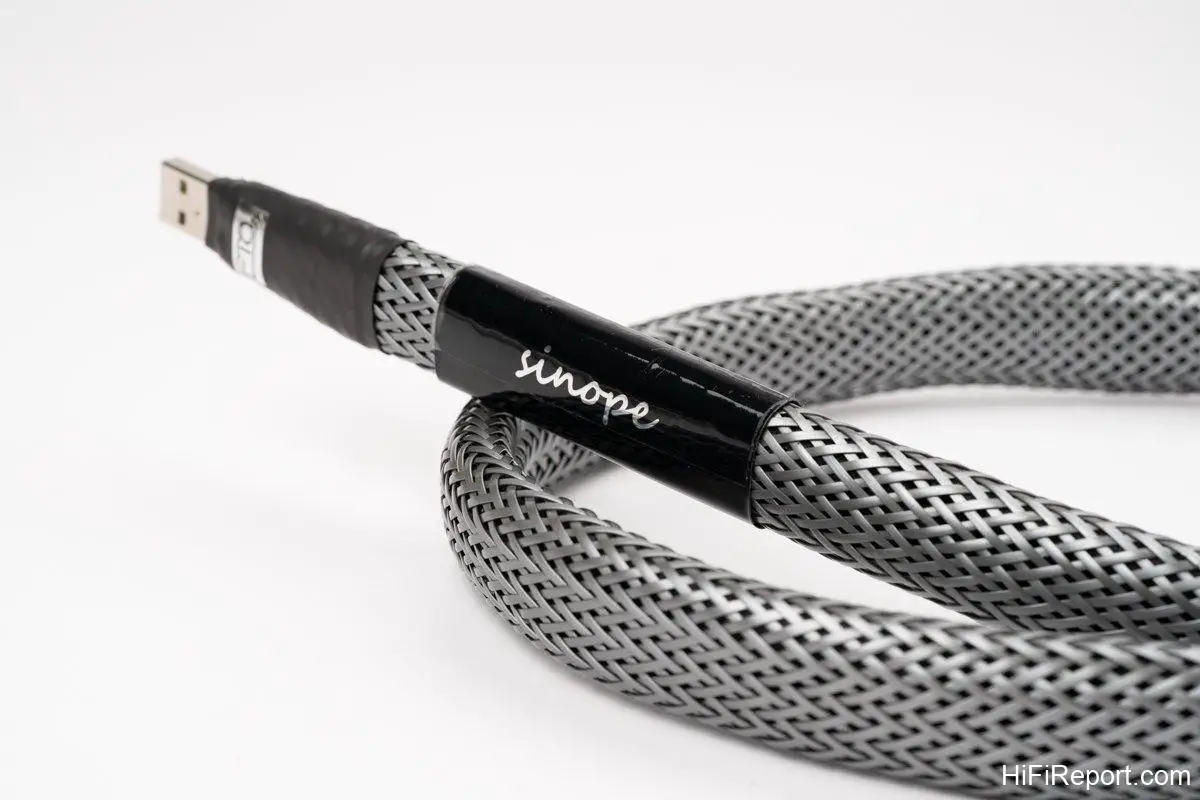
Following the critical acclaim for the forged Callisto USB cable, Final Touch Audio introduced a higher-end USB cable in 2022 – the flagship Sinope.
Interestingly, the technology used in the Sinope is different again.
The conductors in the Sinope USB cable include both copper and silver.
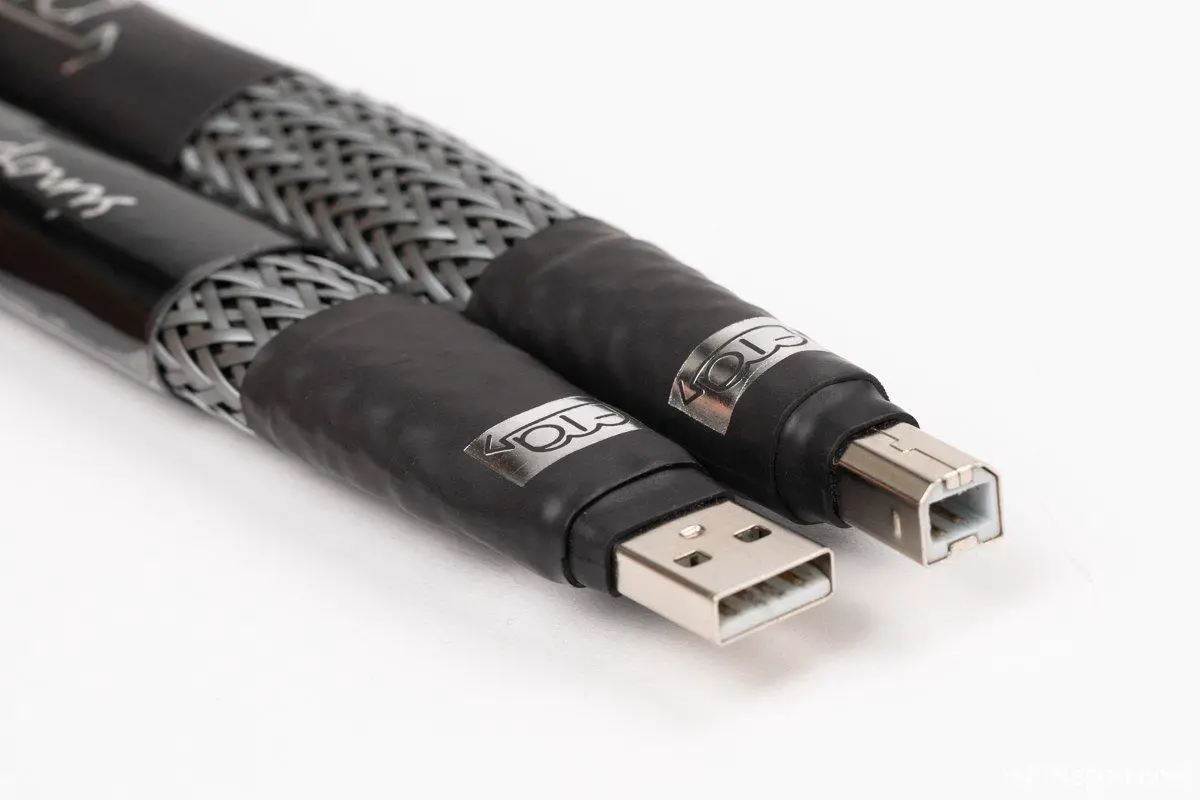
The surface of the ultra-thin copper conductor undergoes hand-polishing and natural oil treatment.
Simultaneously, silver conductors are spirally wound in the opposite direction to the copper conductor, forming a helical structure. The copper and silver conductors make contact during this spiral winding, and a cotton insulating material is added to the exterior.
A USB cable structure includes one pair for data transmission (Data+ and Data-), one wire for transmitting 5V power, and one ground wire.
Each individual wire has its own separate sheathing, and the two signal wires are further equipped with independent shielding layers to prevent signal interference.
Flat Cable Body, Good Flexibility
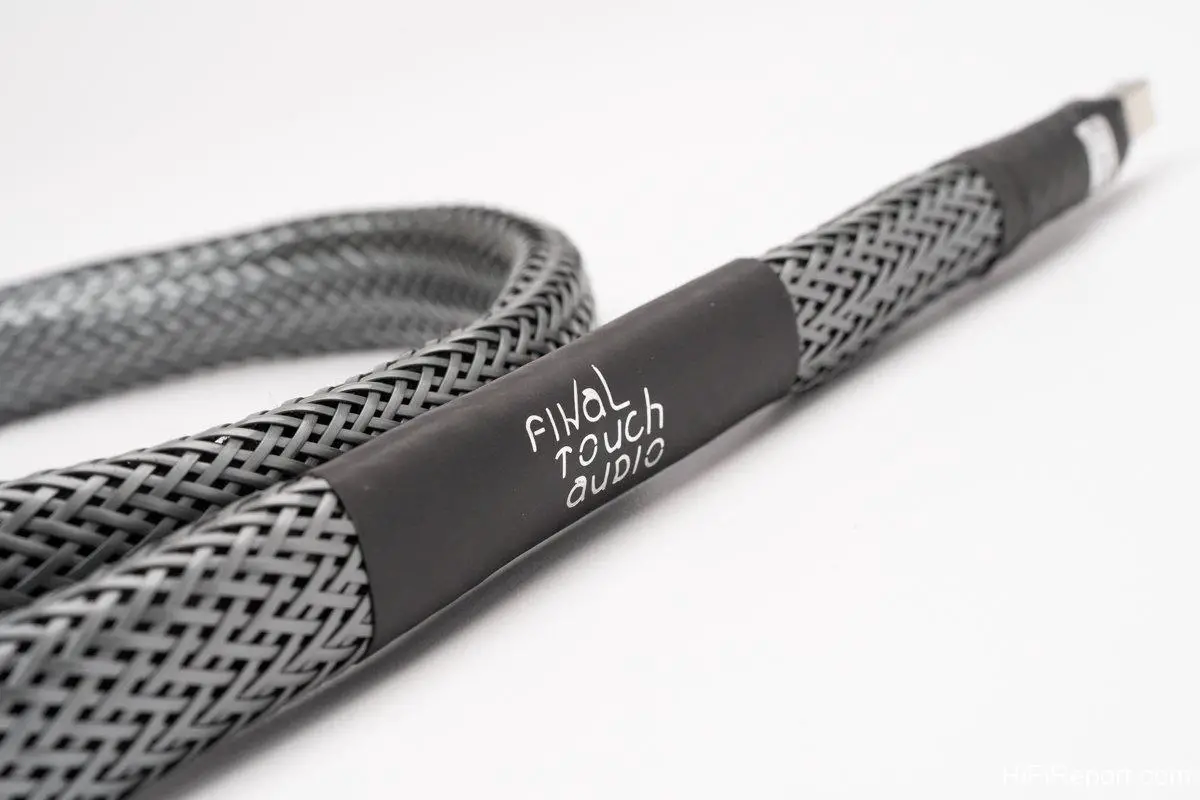
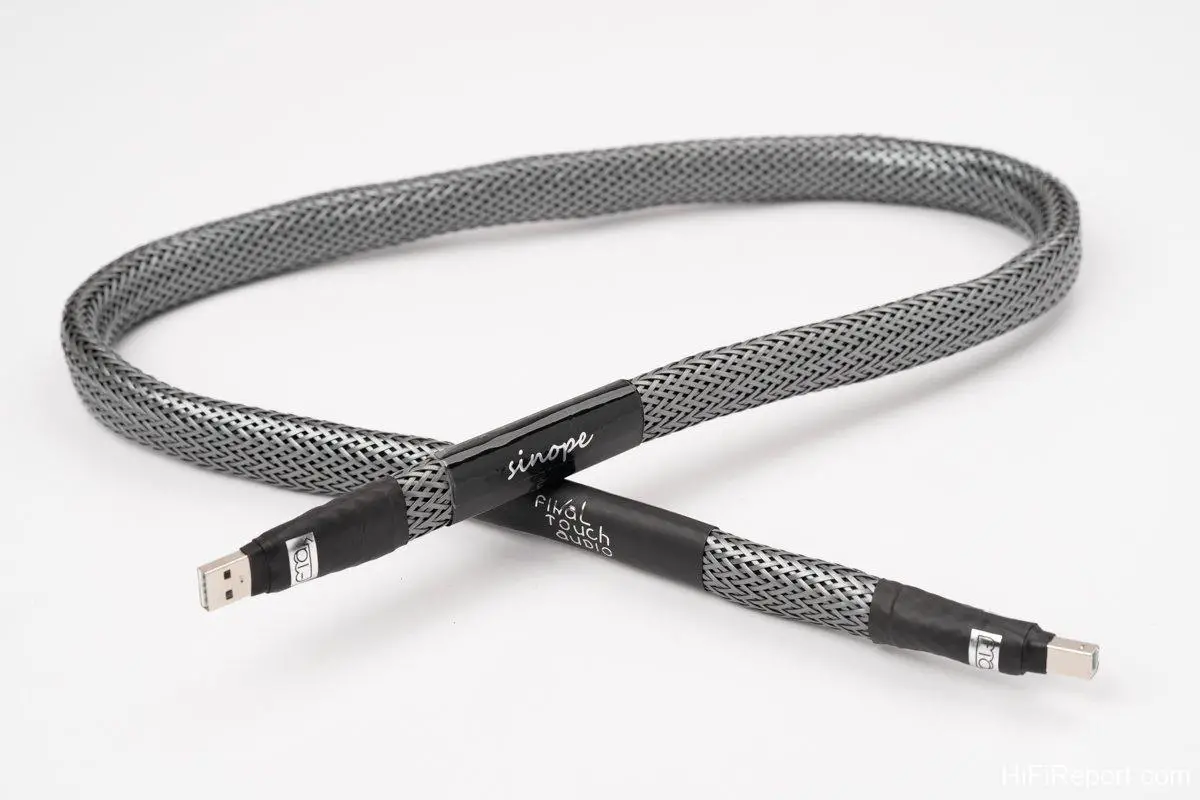
Almost all Final Touch Audio cables, except for power cables, are made in a flat shape, whether they are USB cables, network cables, interconnects, or digital cables.
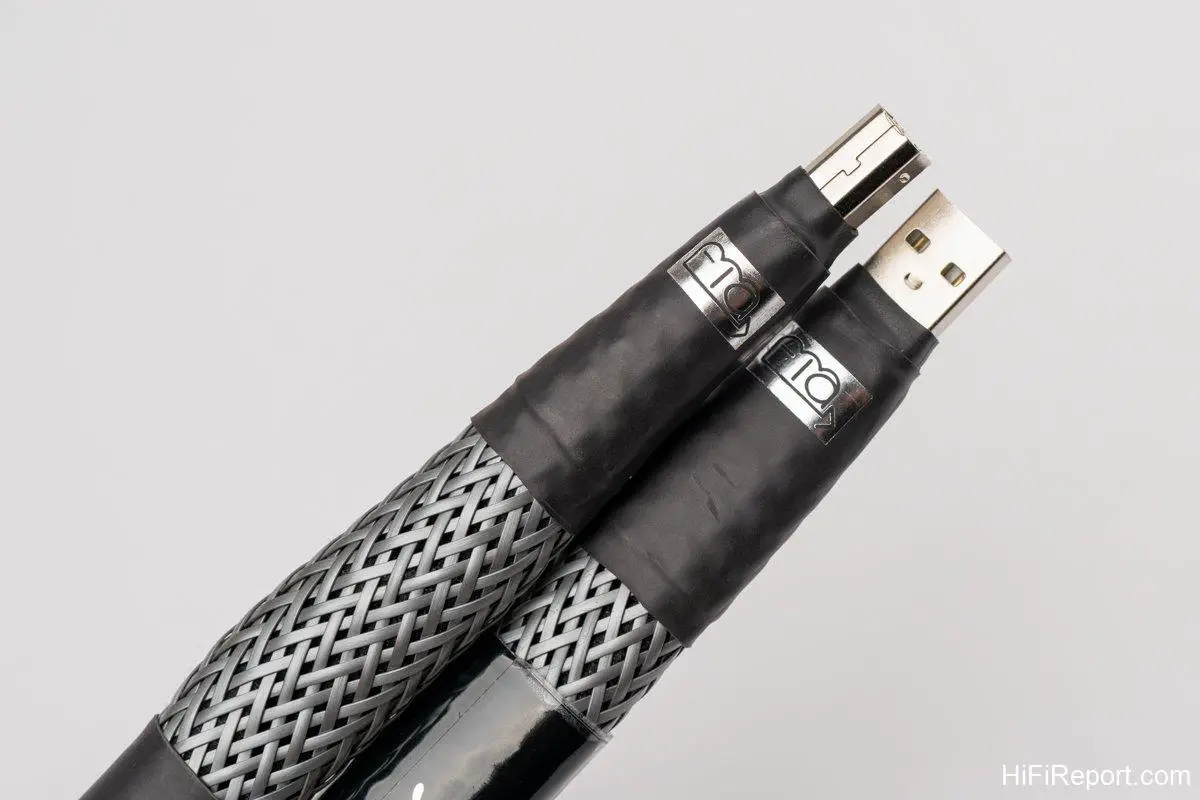
Although they are flat, they still have a noticeable thickness. With the Sinope, you can feel the twisted structure inside.
The Sinope’s cable body is notably flexible. Despite its considerable outer diameter and flat shape, this 1-meter cable is perfectly manageable for normal connection requirements, including hanging and bending.
While using it, I also noticed that Final Touch Audio’s trademark, which resembles a circuit diagram, actually indicates directionality. On the Sinope USB, this trademark is located near the Type B connector and points towards it.
This design is quite ingenious.
Does the sound performance truly live up to the excited descriptions of those reviewers who, upon hearing the Callisto, felt like Archimedes discovering the principle of buoyancy? I wasn’t in a bathtub, I was fully dressed, but the Sinope indeed made me want to exclaim “Eureka!”
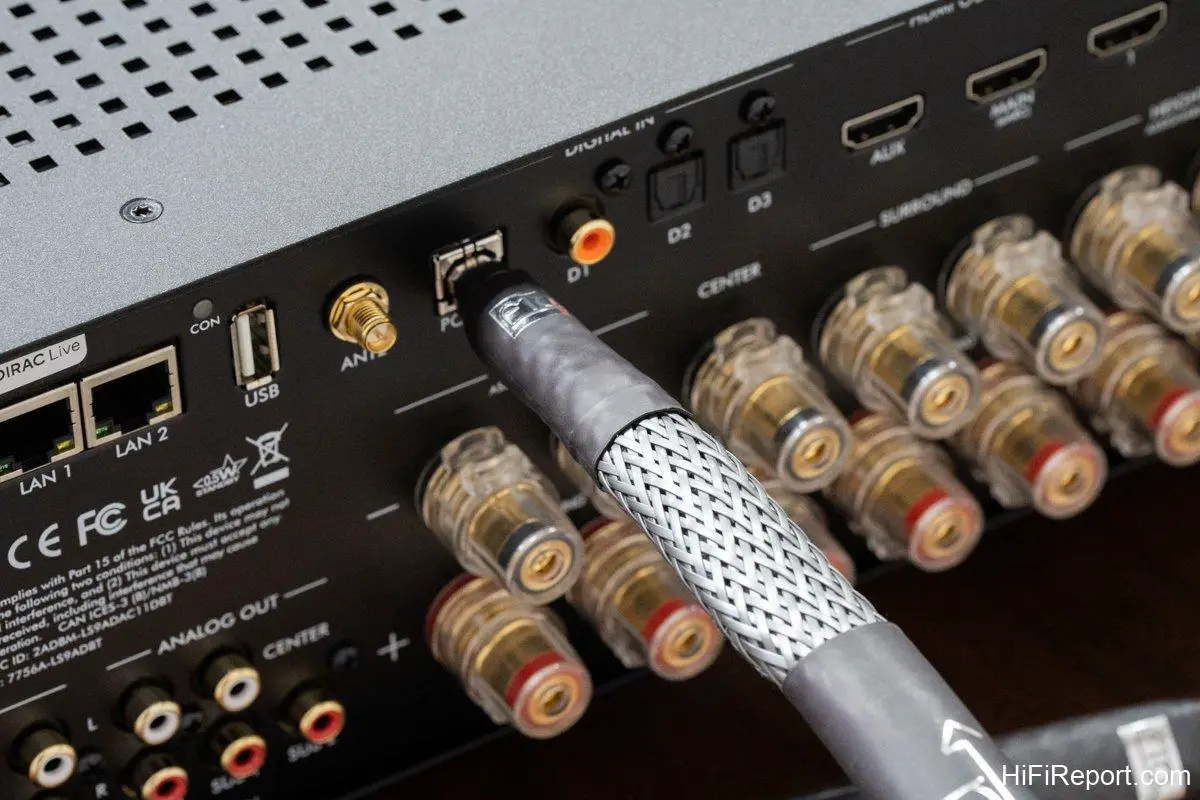
Even though it’s a USB cable – a type of cable many people don’t believe affects sound – replacing my usual cable with the Sinope definitely changed the system’s sound.
The sound became more three-dimensional, the lines sharper, the forms more substantial, the timbre more saturated, the dynamics more layered, and the depth of the soundstage also expanded.
I haven’t heard the Callisto, so I don’t know how much better the Sinope is or where it differs.
But I do know that it unearths more of the music’s brilliance and brings more listening pleasure than my usual USB cable.
The Sinope’s sound is natural and fluid, making the music lively and full of dynamic layers that are rich and clear, rendering it exceptionally vivid.
Take, for example, the album “Adios Nonino” by the Belgian tango orchestra Astoria. The orchestra’s name alone suggests their aspiration to pay tribute to Piazzolla. This album features Piazzolla’s classic pieces, re-arranged to accommodate a richer instrumentation.
In “Michelangelo 70,” the bandoneon’s slightly nasal tone leads the orchestra forward at a steady tempo, the violin’s glissandi flow humorously, and the percussion unfolds colorfully. The music is so lively and varied, but through the Sinope, effortlessly bringing out its order and layers seems only natural.
I particularly appreciate how it reproduces the grace notes.
Grace notes are short and quick, needing to integrate with the main melody to provide embellishment. The Sinope makes these grace notes sound both vivid and clear, yet so smooth and unimpeded.
Switching back to my usual USB cable, that lively, dynamic texture is noticeably diminished.
In “Otono porteno,” the opening forte is powerful and impactful. One of the most striking aspects of the Sinope for me was this: how can the dynamics be so fierce? With a power cable, interconnect, or speaker cable, I might understand, but this is a digital cable, a USB cable at that, yet it brings about a change in energy?
If you can’t figure it out, don’t dwell on it – just listen to the music! Also showcasing the Sinope’s strengths in speed, dynamics, and color is the album “Douo” by Bertrand Renaudin and Olivier Cahours. This recording from the French jazz label C.C. Production is vividly natural, and their recordings are consistently direct and unpolished, unlike the overly refined sound of many audiophile recordings. This “raw” quality, however, is better at capturing the unique flavor of jazz.
This album is just like that. The guitar’s body resonance is rich and full, the high notes struck with force, the notes soaring upwards like sketching a rainbow or striking a lightning bolt in the air. The notes played on the guitar also possess energy and require speed. The Sinope reveals the guitar’s complex character, which is both elegant and wild.
Renaudin’s drum hits are direct and powerful. I really appreciate how the Sinope seems to always uncover richer and more complete information when reproducing the subtle components of a sound. This makes the sound appear more tangible and concrete, giving it not just form but also spirit.
Another impressive aspect of the Sinope is this: how can swapping a USB cable result in such full and naturally extended low frequencies? Take, for example, the album “Doppio espressivo,” featuring Rick Stotijn on double bass with Camerata RCO.
The double bass is not just about the spherical, percussive sound produced by pizzicato in jazz; when bowed, its rough, deep sound, and the effect of even confusing our instrument identification in the upper-mid range, can all be heard in this classical recording.
Camerata RCO’s ensemble playing is elegant, and the ensemble’s tone has the glorious quality of the Concertgebouw in Amsterdam. The Sinope portrays this small-scale chamber orchestra ensemble with both the refinement of a chamber group and the rich, full, and noble tone of the orchestra.
Final Touch Audio states that the Sinope’s conductors are twisted copper and silver, and indeed, it is both warm and bright, rich and luxurious.
The double bass has the largest body in the string family, allowing it to produce lower notes and a different thickness of sound compared to other strings. When bowing in the mid-range, even rapid, rolling triplets maintain good agility despite the increased thickness. The Sinope’s ability to capture subtle dynamic shifts in rapidly moving music is truly outstanding. When playing the low notes, the deep, grounded, full-bodied notes can make you melt.
Listening to Eivör’s live concert recording, “Eivör Live,” the full, robust drum sound in the track “Mín Móðir” is deep and powerful. Accompanied by the keyboard synth bass effects and Eivör’s vocals, the music is enveloped in a mysterious atmosphere.
Eivör’s vocalizations are varied; within her confident and assured singing, she incorporates breathy sounds, chants, tongue clicks, and whispers. All these changes are vividly presented, clear and distinct. Furthermore, this track, which inherently has a wide sense of space due to the recording quality, is enhanced by the Sinope, creating an even larger soundstage with its full sound.
In “Where Are the Angels,” Eivör sets aside the wild singing style and emotion from earlier tracks, adopting a folk-like character here. There are two guitars in this piece, one played by Eivör herself and the other providing accompaniment. The intertwining guitar sounds enrich the overall timbre. The bass notes played on the guitar have rich resonance and decay, and the layers of sound built upon each other possess a certain magic.
It Just Might Be Your Final Cable Stop
Final Touch Audio calls itself “Final Touch” because they possess a certain confidence that once people use their cables and hear their musical sound, they won’t want to use any other cables.
Their cables, they believe, will be the end of the road for users, the final destination, hence “Final Touch.” Is this the case? Will it hold true for you? You’ll have to try it yourself to find out.
For me, this Sinope USB cable has significantly changed my view on the sound of digital streaming via USB transmission. According to a colleague, his experience with their Metis network cable is similar to mine. It seems their effect is quite potent!
Specifications
* Type: USB Digital Cable
* Connectors: Type A to B
* Conductors: Copper + Silver