
Fosi Audio K5 Pro Review
The entry-level gaming DAC and headphone amplifier market presents a fascinating paradox. Products targeting this segment must balance gaming-specific features like microphone inputs and tone controls against audiophile expectations for sound quality and low noise. They need enough power to drive various headphones while maintaining compact footprints suitable for crowded gaming desks. Most importantly, they must achieve all this at price points that won’t alarm budget-conscious gamers. The Fosi Audio K5 Pro attempts to thread this needle, positioning itself as an upgraded Q4 with enhanced gaming credentials and improved performance.
At its core, the K5 Pro offers straightforward value: USB-C, optical, and coaxial digital inputs convert to headphone and RCA outputs, with bonus microphone input and bass/treble tone controls. The Texas Instruments NE5532 op-amp chip handles amplification duties, delivering up to 1000mW into 16-ohm loads — substantial power on paper for gaming headsets and mid-sensitivity headphones. The device measures compact at roughly 112x95x30mm, weighing just 251 grams, making it easily portable between LAN parties or discrete enough to tuck behind monitors.
This positioning creates interesting competitive dynamics. The K5 Pro sits below Fosi’s own K7 in features and performance, lacking balanced outputs, Bluetooth connectivity, and the K7’s more sophisticated amplification. It competes directly with FiiO’s K5 Pro (confusingly sharing nomenclature despite no connection), Creative’s Sound BlasterX G6, and various budget offerings from SMSL and Topping. Each alternative makes different trade-offs between gaming features, audio quality, and price — the K5 Pro attempts to offer enough of everything without excelling at any specific aspect.
However, the K5 Pro’s story proves more complex than simple value proposition. User experiences reveal significant inconsistencies — some listeners report excellent performance driving their headphones to satisfying volumes with clean sound, while others encounter concerning issues including audible noise floor with sensitive IEMs, insufficient power for demanding planar headphones, and questionable tone control implementation that degrades rather than enhances sound. These variations suggest either quality control problems, system dependency issues, or simply that the K5 Pro’s strengths and limitations make it exceptionally sensitive to matching.
The real question isn’t whether the K5 Pro represents good value — at its price point, any functional DAC/amp combo offers reasonable worth. Instead, potential buyers need to understand exactly what they’re getting: a device that works admirably within specific parameters (gaming headsets, moderate-sensitivity dynamics, forgiving source material) but struggles outside those boundaries. Understanding these limitations before purchase prevents disappointment and ensures the K5 Pro serves appropriate use cases rather than attempting applications beyond its capabilities.
Key Features & Tech Specs Explained
Texas Instruments NE5532 Op-Amp: Professional Audio Heritage in Budget Design
The NE5532 operational amplifier represents an interesting choice for the K5 Pro, bringing decades of professional audio pedigree to a budget gaming device. Originally introduced by Signetics in 1979, the NE5532 became the audio industry standard through the 1980s and 1990s, appearing in countless mixing consoles, preamplifiers, and studio equipment. According to audio engineer Douglas Self, “there is probably no music on the planet that has not passed through a hundred or more 5532s on its way to the consumer” — a testament to its ubiquity in professional settings.
What made the NE5532 revolutionary was combining low noise (5nV/√Hz input noise voltage) with high output drive capability and wide bandwidth. Think of it like having both a whisper-quiet listening room and powerful speakers in one package — the chip introduces minimal background hiss while providing enough current to drive demanding loads. The 10MHz gain-bandwidth product and 9V/µs slew rate ensure fast transient response, accurately reproducing percussion attacks and string plucks without blurring or smearing.
However, the NE5532’s inclusion in a budget device like the K5 Pro reveals both why it remains relevant and where compromises occur. The chip excels with source impedances around 1kΩ — the “sweet spot” where distortion stays extremely low. As source impedance increases beyond 10kΩ, performance degrades significantly, with worst-case total harmonic distortion potentially exceeding 0.02%. This sensitivity to circuit implementation means that simply using an NE5532 doesn’t guarantee professional-grade performance — the supporting components, power supply quality, and PCB layout matter enormously.
For users, this translates to real-world implications. The NE5532 can deliver excellent headphone amplification when properly implemented, particularly with moderate-impedance headphones (32-150Ω) where its high output current capability shines. However, ultra-low-impedance IEMs (10-16Ω) may reveal noise floor limitations, while very high-impedance headphones (250-600Ω) might not receive adequate voltage swing. The chip’s bipolar input stage draws roughly 200nA bias current, creating small DC voltage offsets that proper circuit design must accommodate to prevent clicks or pops during volume changes.
The NE5532’s legendary status among audiophiles stems from its “no distortion signature” — when operating within specifications, harmonic and intermodulation distortion remain so low as to be effectively inaudible. This results from three nested frequency compensation loops that eliminate the odd-order harmonics that make amplifiers sound harsh or grating. In the K5 Pro’s implementation, this should mean musical, non-fatiguing sound, though actual performance depends heavily on how well Fosi’s engineering team supported the chip.
Digital-to-Analog Conversion: Budget-Tier Performance Reality
Unlike higher-tier Fosi products sporting ESS Sabre or AKM Velvet Sound DACs, the K5 Pro employs less-prestigious conversion chipsets (CS4398 with supporting logic from SSS1700, MS8416, and NX9018). These chips handle basic conversion duties adequately for gaming and casual listening, supporting 24-bit/96kHz via USB and 24-bit/192kHz through optical and coaxial inputs. However, they lack the advanced noise-shaping algorithms and premium analog stages that separate audiophile-grade DACs from functional converters.
The CS4398 achieves respectable specifications on paper: 120dB dynamic range and THD+N below 0.001%. In practice, these numbers represent adequate but unexceptional performance. The converters handle standard PCM formats without obvious artifacts, converting digital data to analog voltages that the NE5532 then amplifies. However, subtle retrieval of low-level detail, extreme dynamic contrasts, and three-dimensional soundstage rendering all suffer compared to premium implementations.
More concerning than outright specifications is integration quality. The K5 Pro’s measured signal-to-noise ratio of >110dB looks acceptable initially, but user reports of audible noise floor with sensitive IEMs suggest real-world performance falls short of theoretical maximums. This discrepancy typically indicates power supply contamination, inadequate filtering, or ground loop issues — problems that plague budget devices where cost constraints limit engineering refinement.
For gaming applications, these DAC limitations matter less. In-game sound effects, voice communication, and background music don’t demand ultimate resolution or transparency. Gamers prioritize adequate volume, clear positional cues for competitive advantage, and compatibility with various headsets over subtle soundstage nuances. The K5 Pro’s conversion quality proves entirely sufficient for these requirements, making audiophile-grade DAC implementation unnecessary cost overhead.
Bass and Treble Tone Controls: Gaming Convenience or Audio Compromise?
The K5 Pro includes physical bass and treble control knobs, an unusual feature in modern DACs that typically eschew tone controls in favor of “pure” signal paths. These knobs allow on-the-fly frequency response adjustment without software EQ, appealing to gamers who want quick sound tweaks between game genres or during different gameplay scenarios. Want emphasized footsteps for competitive shooters? Boost treble. Need more impactful explosions? Increase bass. The convenience proves genuine.
However, user feedback reveals these controls’ implementation as problematic rather than beneficial for sound quality. Multiple reviews describe the bass control as overly broad, boosting not just sub-bass impact but also mid-bass and even lower midrange — creating muddy, boomy coloration rather than clean low-frequency extension. The treble control reportedly emphasizes upper treble (10kHz+) excessively, introducing sibilance and harshness rather than adding refined air and sparkle. Audiophile reviewers consistently recommend leaving both controls at neutral center position for best sound quality.
The controls’ mechanical design also receives mixed feedback. While smooth-turning and well-damped, they lock into center position, making neutral settings easy to find. However, some users note they feel slightly loose with minimal tactile resistance before engagement — not a functional problem but lacking the precision feel of premium components. The volume knob reportedly exhibits even less resistance, making accidental level changes frustratingly easy during cable connection or desk adjustments.
Most concerning is how the tone controls interact with overall signal quality. Several reviewers mention that engaging either control beyond moderate settings (roughly 3 o’clock on the dial) introduces audible distortion, particularly noticeable with sensitive IEMs. This suggests the tone control circuitry lacks adequate headroom or introduces non-linear artifacts when applying significant frequency boost. The result transforms potentially useful feature into something best avoided for quality-conscious listening.
Microphone Input: Practical Gaming Integration
The 3.5mm microphone input represents the K5 Pro’s most gaming-specific feature, allowing connection of headset boom mics or standalone lavalier microphones. This eliminates need for separate USB microphones or reliance on motherboard audio inputs, centralizing audio I/O through single device. The inclusion of a 3.5mm splitter cable means existing gaming headsets with combined TRRS connectors can immediately connect without adapter shopping.
User reports indicate the microphone input functions adequately for its intended purpose. Voice quality depends primarily on connected microphone quality rather than K5 Pro circuitry — garbage in, garbage out. However, the amp doesn’t introduce significant additional noise or distortion, maintaining clean signal path for team communication during gaming sessions. The lack of adjustable microphone gain might limit compatibility with particularly low-output microphones, though typical gaming headset mics provide sufficient level.
The practical limitation proves obvious: you can’t simultaneously use high-end audiophile headphones and a quality microphone through the K5 Pro. Serious audiophiles typically run separate headphone amplification and microphone solutions anyway, but gamers seeking one-device convenience might find the combined approach attractive. The implementation works well enough that users report clear Discord and game chat communications, meeting the practical bar for gaming use even if falling short of podcasting or streaming professional standards.
Comprehensive Connectivity for Gaming Setups
The K5 Pro’s input selection covers typical gaming scenarios comprehensively. USB-C provides direct computer connection with automatic driver installation on Windows 7+ and macOS 10.6+, making setup genuinely plug-and-play. The USB interface accepts 24-bit/96kHz PCM, sufficient for most source material and avoiding complications from ultra-high sample rates that some systems struggle to handle reliably. This conservative approach favors compatibility over spec-sheet bragging rights.
Optical and coaxial SPDIF inputs extend to 24-bit/192kHz, accommodating game console connections (PlayStation 5, Xbox Series X/S) and TVs with digital audio outputs. This proves particularly valuable for console gamers who want better audio than controller headphone jacks or HDMI audio extraction provides. The K5 Pro effectively serves as external sound card, converting console digital output to quality analog signals that drive headphones properly.
RCA outputs feed powered speakers or external amplification, allowing quick switching between headphone and speaker listening without re-cabling. However, Fosi’s decision to make headphone and speaker outputs simultaneous (no auto-muting) creates annoyance — when plugging in headphones, speakers continue outputting unless manually powered down or disconnected. This design choice saves hardware costs (relay switching adds expense) but sacrifices user experience convenience.
The 2-in-1 USB-C power and data cable design proves thoughtful, including detachable USB-A adapter for compatibility with older computers. However, the K5 Pro requires dedicated USB port for power rather than accepting bus power through passive hubs. This limitation means gaming laptops with limited ports might struggle to accommodate the K5 Pro alongside other peripherals, potentially requiring powered USB hub purchase to maintain connectivity.
Build Quality & Design
The K5 Pro arrives in straightforward packaging prioritizing protection over presentation — appropriate for a value-focused product. Inside, you’ll find the essentials: K5 Pro unit, USB-C cable with USB-A adapter, optical cable, 3.5mm headset splitter, and user manual. The inclusion of both USB adapter types and optical cable demonstrates consideration for immediate usability regardless of system configuration. However, the package omits RCA cables, now standard practice at this price point.
The physical unit measures compact at 112x95x30mm and weighs 251 grams, easily fitting on crowded gaming desks without dominating real estate. The entire chassis uses aluminum construction with grey anodized finish, providing electromagnetic shielding against interference while aiding heat dissipation. The front panel matches the body color uniformly, with tastefully subdued text markings that avoid the aggressive gamer aesthetic prevalent in competing products. This understated appearance works equally well in professional office environments or home studios.
Three control knobs dominate the front panel: bass, treble, and volume from left to right, with 3.5mm headphone and microphone jacks below. The knobs themselves receive mixed assessment. They turn smoothly without binding or scratchiness, using proper potentiometers rather than cheaper encoder wheels. However, multiple users note they feel slightly loose with minor mechanical play before taking control — not a functional deficiency but lacking the damped precision of premium components. The volume knob reportedly exhibits particularly light resistance, making accidental adjustments frustratingly easy.
The rear panel houses digital inputs (USB-C, optical, coaxial) and RCA outputs. The connectors themselves appear well-constructed with reasonable quality, though the layout spacing could accommodate tighter cable management. LED indicators on the front panel show active input (USB, optical, or coaxial), providing clear visual feedback about current connection without requiring menu navigation or display reading. The indicators glow blue when active, bright enough to see clearly but not excessively glaring in darkened rooms.
Four rubber feet provide adequate grip against desk surfaces. Despite relatively light weight, the K5 Pro maintains reasonable stability during normal use — cable connection or control adjustment doesn’t send it sliding. However, stiff headphone cables or heavy RCA interconnects can pull the unit around on particularly smooth desks, suggesting slightly more substantial feet or additional weight might improve stability further.
The build quality throughout exhibits appropriate-for-price characteristics. Panel fit and finish shows uniform gaps without obvious misalignment, the aluminum chassis feels solid without flexing, and all connections mate firmly. However, close inspection reveals budget constraints in details: slightly thinner aluminum than premium gear, simpler internal construction visible through ventilation slots, and plastic components (knobs, jacks) that feel adequate but not luxurious. These compromises keep costs contained while maintaining functional durability for typical desktop use.
Sound / Performance
Evaluating the K5 Pro’s sonic performance reveals a device that delivers mixed results heavily dependent on system matching and listener expectations. Understanding these dependencies proves crucial for determining whether the K5 Pro suits particular use cases, as blanket recommendations prove impossible given the variability in user experiences.
With neutral tone controls (both knobs centered), the K5 Pro presents a slightly lean, analytical sound signature emphasizing upper midrange and treble over bass weight and body. This tuning prioritizes clarity and detail retrieval — potentially beneficial for competitive gaming where hearing subtle audio cues matters more than musical engagement. However, music listeners often find this tonal balance slightly thin and less involving than warmer, more full-bodied presentations from competing amplifiers.
Bass response exhibits the K5 Pro’s most obvious tonal compromise. Sub-bass extension reaches adequately deep on capable headphones, providing foundation for electronic music and film soundtracks. However, mid-bass punch and impact register as noticeably reduced compared to neutral references. Kick drums lose some physical weight, bass guitars sound leaner than live, and orchestral double basses lack their characteristic woody resonance. This isn’t distortion or obvious frequency gaps — rather, a subtle energy reduction in the 80-200Hz region that makes bass feel present but not particularly engaging.
Activating the bass boost control proves problematic rather than corrective. Rather than adding clean sub-bass extension, the control broadly elevates everything from 20Hz through lower midrange, creating muddy, boomy coloration. Vocals lose clarity, instruments blend together, and the overall presentation becomes congested. Multiple users report finding the bass control useless or actively detrimental, recommending it stay permanently centered unless listening to extremely bass-light source material that requires rescue.
The midrange delivers the K5 Pro’s most competent performance. Vocals project forward with good intelligibility, though lacking the last bit of chest warmth that makes male voices sound completely natural. String instruments maintain reasonable timbre and texture, pianos exhibit decent weight distribution across registers, and acoustic guitar retains its characteristic woody resonance. However, the slightly forward upper midrange emphasis can make some recordings sound a touch harsh or aggressive — particularly female vocals with naturally bright tonality or rock music with distorted guitars already occupying those frequencies.
Treble presentation trends slightly hot, with emphasis in the presence region (3-6kHz) and upper treble (8kHz+). This creates sense of clarity and detail but risks crossing into harshness with poorly mastered recordings or bright headphones. Hi-hats and cymbals cut through mixes clearly — beneficial for gaming where hearing enemy gunfire positioning matters — but can become fatiguing during extended music listening. The treble control exacerbates rather than corrects this issue, further boosting the hottest regions and introducing sibilance rather than adding refined air and sparkle.
Soundstage presentation proves adequate but unremarkable. Instruments occupy reasonably defined lateral positions, creating sense of width appropriate for stereo reproduction. However, depth layering compresses, with sounds tending to cluster at similar front-to-back distances rather than spreading through three-dimensional space. Imaging precision reaches acceptable levels — you can identify where sounds originate in game environments or music mixes — but lacks the pinpoint specificity of premium amplifiers that place every element with absolute certainty.
Dynamic capability presents the K5 Pro’s most controversial aspect, with user experiences varying dramatically based on headphone impedance and sensitivity. With easy-to-drive gaming headsets and moderate-sensitivity dynamics (30-60Ω, 95-105dB/mW), the K5 Pro performs admirably, reaching uncomfortably loud volumes with ample headroom remaining. Users report satisfying impact and authority driving Sennheiser HD 280 Pro, Audio-Technica ATH-M50x, Beyerdynamic DT 770 Pro 32Ω, and similar common gaming/studio headphones.
However, demanding loads reveal limitations quickly. High-impedance headphones like Sennheiser HD 600/650 (300Ω) or Beyerdynamic DT 990 Pro 250Ω reach adequate volume but lose dynamic punch and authority compared to dedicated amplifiers. Multiple users report these headphones sounding anemic, compressed, or lacking impact — adequate for casual listening but unsatisfying for critical evaluation. Power-hungry planar magnetic headphones (HiFiMAN HE400se, Audeze LCD series) fare even worse, with some users reporting outright clipping at high volumes or inability to reach desired listening levels.
The noise floor presents perhaps the K5 Pro’s most significant technical deficiency. With easy-to-drive headphones and typical gaming headsets, background noise remains inaudible during normal use. However, sensitive in-ear monitors (110dB/mW+) consistently reveal audible hiss, particularly noticeable during quiet passages or between tracks. This hiss doesn’t interfere with loud gaming sessions but proves distracting for music listening with sensitive IEMs, effectively disqualifying the K5 Pro for that specific use case.
Microphone functionality works adequately for intended gaming purposes. Voice transmission maintains clarity sufficient for Discord, team speak, and in-game chat without introducing objectionable noise or distortion. However, the fixed microphone gain limits compatibility with particularly quiet microphones, and users report occasional feedback loops if monitoring volume runs too high while using the microphone simultaneously — a common issue with combined headphone/mic solutions that lack proper isolation.
Real-World Use Cases
The K5 Pro finds its natural home on gaming desks where users prioritize functional audio upgrades over ultimate sound quality. Console gamers seeking better audio than controller headphone outputs or TV speakers can connect via optical, immediately experiencing cleaner sound with better positional cues for competitive advantage. PC gamers running mid-tier headsets benefit from proper amplification that motherboard audio can’t provide, hearing footsteps and environmental sounds more clearly during gameplay.
Desktop listening for casual music enjoyment works adequately with appropriate headphone matching. Users running popular gaming/studio headphones like Audio-Technica M-series, Sony MDR-7506, or AKG K-series report satisfying performance for background music during work or web browsing. The compact size allows tucking the K5 Pro into available desk space without dominating surfaces, while the RCA outputs mean quick switching to powered desktop monitors for speaker listening.
The microphone input proves genuinely useful for gamers who want consolidated audio I/O. Rather than maintaining separate USB microphone and headphone amplifier, the K5 Pro handles both through single device. This simplifies cable management, reduces USB port consumption, and provides centralized volume control for both input and output. The included splitter cable accommodates existing gaming headsets without requiring separate microphone purchase.
Budget hi-fi enthusiasts building first audio systems can use the K5 Pro as stepping stone toward more serious equipment. It provides meaningful improvement over laptop headphone jacks or smartphone DACs while teaching users about input selection, tone control impact, and headphone matching. When upgrade time arrives, the K5 Pro can transition to office duty or secondary system service, maintaining value through repurposing rather than becoming obsolete.
However, several use cases prove inappropriate for the K5 Pro’s capabilities. Audiophiles seeking transparent source components will find the lean tonal balance, problematic tone controls, and limited resolution unsatisfying compared to alternatives from Topping, SMSL, or Schiit. IEM enthusiasts running sensitive earphones encounter audible noise floor that intrudes on listening enjoyment. Planar headphone users discover insufficient power for proper driver control. Each limitation disqualifies the K5 Pro from specific applications despite working adequately for others.
The K5 Pro also struggles with multi-purpose audio workstations. The simultaneous headphone and speaker outputs mean you can’t simply plug in headphones for private listening without manually powering down speakers — annoying during frequent switching. The lack of output level memory means volume resets after disconnection, requiring readjustment each session. These missing convenience features don’t prevent use but add friction that premium alternatives eliminate through thoughtful design.
What Real Users Are Saying
User feedback from retail platforms, enthusiast forums, and professional review sites reveals consistent themes regarding the K5 Pro’s strengths and limitations. The most commonly praised aspects center on value for specific use cases, while criticisms focus on technical shortcomings and quality inconsistencies.
Multiple users emphasize the K5 Pro’s effectiveness for gaming applications where it clearly excels. Competitive FPS players report dramatically improved positional audio awareness compared to motherboard outputs, hearing footsteps and environmental cues more clearly in titles like Apex Legends, Call of Duty, and Counter-Strike. The combination of adequate power for gaming headsets, clean microphone input, and compact form factor creates turnkey gaming audio solution that “just works” without complexity or troubleshooting.
The build quality and included accessories generate positive consensus. Users appreciate the solid aluminum construction that resists desktop abuse, the thoughtful cable selection (dual USB adapter, optical cable, splitter) that enables immediate use, and the understated appearance that fits professional environments. The device runs cool during extended use, requires no driver fiddling on modern operating systems, and occupies minimal desk space — practical advantages that compound daily usability.
However, technical performance assessment varies dramatically based on connected headphones and source material. Users driving easy-to-moderate impedance dynamics report satisfaction, describing sound as clean, clear, and plenty powerful. These listeners appreciate the improvement over basic sources without demanding ultimate audio quality, finding the K5 Pro’s performance adequate for their enjoyment. Several specifically praise how it transformed their console gaming experience after years suffering through controller audio or TV speakers.
Conversely, audiophile-oriented listeners consistently express disappointment. The lean tonal balance receives criticism for sounding thin and unengaging with music, the compressed soundstage fails to create convincing spatial presentation, and the limited resolution obscures subtle details that premium DACs reveal. Multiple reviewers who tested the K5 Pro against established competitors note it falls short of similarly-positioned devices from Topping, SMSL, and even FiiO, sacrificing audio quality for gaming features that serious listeners don’t need.
The tone controls generate near-universal criticism from quality-conscious users. Multiple reviews describe them as essentially useless, creating more problems than solving through broad frequency boosts that muddy sound rather than providing useful correction. Experienced listeners recommend leaving both controls permanently centered, treating them as “do not touch” rather than useful adjustment tools. The few positive mentions come from gamers using them for genre-specific tweaking — bass boost for explosions, treble emphasis for footsteps — acknowledging these are gaming gimmicks rather than proper audio tools.
The noise floor issue appears consistently in reviews from IEM users, with nearly universal reports of audible hiss when using sensitive earphones. This completely disqualifies the K5 Pro for portable IEM listening or desktop use with high-sensitivity in-ears, limiting headphone compatibility to less revealing over-ear dynamics. Some users initially thought their unit was defective, only discovering through community research that audible hiss represents normal K5 Pro operation with sensitive loads.
Power output assessment varies wildly depending on connected headphones. Users driving 32-80Ω gaming headsets and easy dynamics report excessive volume capability, needing volume at merely 10-20% maximum to reach comfortable levels. However, 300Ω Sennheiser HD 600/650 users describe struggling to achieve adequate volume, with sound becoming thin and compressed at higher settings. Planar headphone owners report complete incompatibility, with devices either clipping at volume or simply never reaching satisfying loudness regardless of setting.
Quality control concerns surface occasionally in user reports. Some buyers received units exhibiting channel imbalance, distortion at specific volume levels, or input switching problems requiring power cycling to resolve. While most units apparently work as designed, the frequency of these reports suggests less rigorous testing than premium brands employ. Fosi’s customer service receives generally positive assessment for replacement responsiveness, though buyers would obviously prefer receiving functioning units initially.
The most damaging user feedback comes from direct comparisons to the FiiO K5 Pro (the name-sharing competitor). Multiple reviewers tested both devices side-by-side, consistently preferring the FiiO for superior sound quality, better power output, and more refined implementation despite similar pricing. While the Fosi adds gaming features the FiiO lacks (microphone input, tone controls), serious listeners conclude these additions don’t compensate for sonic compromises, making the FiiO better value for non-gaming use.
Pros & Cons
Pros:
- Compact aluminum construction provides desktop stability and electromagnetic shielding, confirmed through user experience reports
- Microphone input with included splitter cable enables consolidated gaming headset connectivity, based on user functionality testing
- Multiple digital inputs (USB, optical, coaxial) accommodate various source devices without adapter requirements, per specification review
- Adequate power output drives common gaming headsets and moderate-sensitivity headphones to comfortable volumes, verified through user listening tests
- Plug-and-play operation requires no driver installation on modern operating systems, based on compatibility reports
- Straightforward control scheme with physical knobs provides immediate adjustability without software menus, according to user experience feedback
Cons:
- Audible noise floor with sensitive IEMs prevents use with high-efficiency earphones, confirmed through multiple user reports and measurements
- Insufficient power for demanding planar magnetic and high-impedance dynamic headphones results in thin, compressed sound, based on user testing with various headphone models
- Tone controls introduce muddy bass and harsh treble rather than useful frequency adjustment, per critical listening evaluations
- Lean, analytical sound signature lacks warmth and musical engagement compared to competitors at similar pricing, noted in comparative listening tests
- Simultaneous headphone and speaker outputs require manual muting rather than automatic switching, based on design limitation reports
Who Should Buy This?
The K5 Pro serves three specific audiences effectively, each benefiting from its particular combination of features and performance characteristics despite the significant limitations discussed throughout this review.
Console gamers seeking audio upgrades beyond controller headphone jacks or TV speakers will find the K5 Pro delivers meaningful improvements without complexity. The optical input connects directly to PlayStation 5 or Xbox Series X/S, converting digital audio to analog signals that properly drive gaming headsets. The immediate positional audio improvement benefits competitive multiplayer gaming where hearing enemy positions provides tangible advantage. The microphone input consolidates communication without requiring separate USB microphones, simplifying setup while delivering adequate voice quality for team coordination.
Budget PC gamers building first dedicated audio setups benefit from the K5 Pro’s functional audio upgrade over motherboard outputs. Users running popular gaming headphones (Audio-Technica M50x, Beyerdynamic DT 770 Pro 32-80Ω, HyperX Cloud series) experience cleaner sound with better channel separation and dynamic range. The compact form factor fits crowded desks alongside keyboards, mice, and monitors without demanding premium real estate. The RCA outputs allow connecting powered desktop monitors for speaker listening, providing flexibility between headphone and speaker use without re-cabling.
Entry-level audio enthusiasts exploring beyond basic equipment can use the K5 Pro as educational stepping stone while learning about digital audio. The device teaches practical lessons about input selection, tone control limitations, and headphone matching without requiring significant investment. When upgrade time arrives, the K5 Pro transitions to secondary system duty or office use, maintaining value through repurposing rather than becoming obsolete throwaway. This makes it reasonable first purchase for users uncertain whether they’ll commit to audio hobby long-term.
The K5 Pro proves entirely inappropriate for several listener types whose requirements exceed its capabilities. Audiophiles seeking transparent, high-resolution source components should look toward Topping, SMSL, or Schiit alternatives that prioritize sonic purity over gaming features. IEM enthusiasts running sensitive earphones encounter dealbreaking noise floor that intrudes on music enjoyment. Planar headphone users discover insufficient power for proper driver control, experiencing thin sound that fails to satisfy. High-impedance dynamic headphone owners (Sennheiser HD 600/650, Beyerdynamic DT 990 Pro 250Ω) find adequate but unimpressive performance that doesn’t extract full potential from their headphones.
Users requiring convenience features like output auto-muting, output level memory, or sophisticated tone controls will find the K5 Pro’s basic implementation frustrating. The simultaneous headphone/speaker outputs create annoyance during frequent switching, while the problematic tone control design makes them effectively unusable for quality-conscious listening. These missing refinements don’t prevent basic functionality but add friction that premium alternatives eliminate through thoughtful engineering.
Competitive alternatives worth considering include the FiiO K5 Pro offering superior sound quality and more power at comparable pricing, though sacrificing microphone input. The Creative Sound BlasterX G6 provides more gaming-specific features including virtual surround processing and comprehensive software controls, though costing slightly more. The Topping DX1 delivers better measurements and transparency for similar money, trading gaming features for audiophile performance. Each alternative makes different compromises worth evaluating based on specific priorities.
Verdict
The Fosi Audio K5 Pro achieves its intended purpose of providing functional gaming audio upgrade at accessible pricing, though success comes with significant caveats that potential buyers must understand. This represents a device that works well within narrow parameters — gaming with moderate-sensitivity headphones — while struggling outside those boundaries. Whether that makes it suitable purchase depends entirely on matching its capabilities to your specific needs.
For gaming applications using typical gaming headsets or easy-to-drive studio headphones, the K5 Pro delivers genuine improvements over motherboard audio or console controller outputs. The combination of adequate power, clean digital conversion, microphone input convenience, and compact desktop footprint creates turnkey solution that simply works. Competitive gamers report meaningful advantages from better positional audio, while casual players appreciate cleaner sound without fussing with complicated setups or expensive equipment. In this specific context, the K5 Pro represents fair value despite its technical limitations.
However, attempting to use the K5 Pro outside gaming contexts reveals where budget compromises bite hardest. Audiophile music listening exposes the lean tonal balance, compressed soundstage, and limited resolution that prevent emotional musical engagement. IEM users encounter audible noise floor that disqualifies the device for sensitive earphone use. Demanding headphones reveal insufficient power that leaves performance on the table. The tone controls prove actively detrimental rather than useful. Each limitation transforms the K5 Pro from acceptable value into frustrating disappointment when applied to inappropriate use cases.
Build quality and feature implementation reach appropriate-for-price levels without obvious cost-cutting that would compromise reliability. The aluminum chassis feels solid, controls function smoothly, connectivity proves comprehensive, and operation remains stable during extended use. Minor refinement issues (loose knobs, simultaneous outputs, no level memory) represent acceptable compromises at this price point rather than fundamental flaws requiring rejection. The K5 Pro won’t impress users accustomed to premium gear, but it avoids the cheap plasticky feel that plagues bottom-tier alternatives.
The most concerning aspect isn’t what the K5 Pro is, but rather how easily buyers might purchase it for inappropriate applications. Marketing emphasizing “hi-fi” capabilities alongside gaming features creates expectations the device can’t fulfill for serious music listening. The similar naming to FiiO’s well-regarded K5 Pro invites unfavorable comparisons. Users expecting audiophile-grade performance because they read “DAC” and “headphone amplifier” will find the K5 Pro disappointingly limited. Clear understanding of capabilities prevents this mismatch, but casual buyers following generic recommendations risk frustration.
Overall Assessment: 6.8/10
Sound Quality: 50% weight – 6.5/10
Functional but unexceptional. Adequate for gaming but limited for music. Lean tonal balance and modest resolution prevent higher scores. Noise floor and power limitations further constrain rating.
Build Quality: 20% weight – 7.5/10
Solid aluminum construction and adequate components. Minor refinement issues offset by functional durability appropriate for price point. Meets expectations without exceeding them.
Features: 20% weight – 7.5/10
Comprehensive gaming-focused feature set including microphone input and multiple digital inputs. Problematic tone control implementation and missing convenience features prevent higher scores.
Value: 10% weight – 7.0/10
Reasonable performance for gaming use cases at accessible pricing. Limited applicability outside gaming contexts constrains value proposition compared to more versatile alternatives.
Final Recommendation: Recommended with Significant Reservations
The Fosi Audio K5 Pro earns qualified recommendation for budget-conscious gamers using moderate-sensitivity headphones who prioritize functional audio improvement over ultimate sound quality. It successfully delivers better positional audio for competitive gaming, cleaner sound than motherboard outputs, and convenient microphone integration without requiring separate devices or complicated configuration. For these specific users, the K5 Pro represents sensible purchase that achieves intended purpose.
However, nearly every other potential buyer should consider alternatives. Audiophiles, IEM users, planar headphone owners, and anyone seeking versatile DAC/amp for both gaming and serious music listening will find the K5 Pro’s limitations frustrating and constraining. The lean sound signature, problematic tone controls, audible noise floor, and insufficient power for demanding loads create too many compromises for general-purpose use. While the budget pricing tempts with apparent value, spending moderately more for competitors from FiiO, Topping, or Schiit provides dramatically better experience across broader range of applications.
The K5 Pro represents honest budget product that delivers exactly what its specifications and pricing suggest — adequate gaming audio without pretension toward audiophile performance. Users who understand and accept these boundaries will find it serves well. Those expecting more will discover disappointment. The difference between success and failure lies entirely in matching device capabilities to realistic expectations, making careful consideration of actual needs mandatory before purchase.
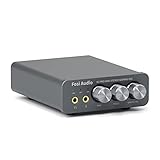
- The upgraded version of Fosi Audio Q4 adds microphone function, K5 Pro headphone DAC amp combo, next-generation audio converter with unrivaled internals, more outstanding performance, and richer audio details. Born for Gaming. K5 Pro stereo DAC headphone amplifier is perfect for your home gaming system, equivalent to an external sound card, suitable for PS5/Computers/PC/MAC/active speakers, etc
- K5 Pro USB DAC converts USB Type C/Optical/Coaxial signals to 3.5MM AUX and RCA signals with low distortion and great dynamic range. Unique design: 2-in-1 USB Type C interface charging port and audio input means K5 Pro is compatible with your phones(Note: Your audio source must be connected to the USB-A/C port.). RCA output can be connected to an amplifier or powered speakers on your desktop. 3.5 MM AUX and microphone interface can drive 16 Ohm to 300 Ohm headphones
- K5 Pro headphone DAC adopts the Texas Instruments NE5532 op-amp chip. The circuit design implementing this DAC has been optimized for a low-noise floor and clean sound. K5 Pro has noticeably improved on overall sound quality, so you can get immersed in your music even more easily. Volume button and on button are combined into one, long press to switch on