
Furman IT-Reference 20i Power Conditioner Review
While the American brand Furman might be relatively unfamiliar to many audiophiles, it has long been a trusted name among professionals in recording studios and live PA sound reinforcement. Furman specializes in products focused on clean, stable, and secure power delivery. The IT-Reference 20i, which we’re reviewing today, is a differential isolated power conditioner boasting 12 power outlets. Beyond incorporating Furman’s years of accumulated proprietary pure power technologies, it also features comprehensive protection circuitry, offering round-the-clock safeguarding for your cherished audio equipment.
First Encounter: Band Days
Receiving the Furman IT-Reference 20i brought back a flood of memories from my college days. Back then, my most serious endeavor wasn’t academics, but playing guitar. It was a popular trend for students to form bands, and I transitioned from acoustic to electric guitar, even seeking out bandmates from other schools. One time, another guitarist in my band invited me to his home to warm up before a band practice. Upon arriving, I was immediately struck by his impressive rack-mounted electric guitar effects setup, within which I spotted a Furman power supply unit.
Why would one pair a Furman power supply with electric guitar effects? As a young man, I naturally didn’t understand. I asked my friend and learned that it provided stable power for multiple effects pedals and guitar amplifiers, significantly reducing hum from the effects, while also offering protection against lightning strikes or power surges that could otherwise fry the downstream equipment.
To my younger self, Furman was an “unheard of” piece of gear. I thought, “Electric guitar effects use such small DC power; why would you need a dedicated power supply? And lightning strikes are incredibly rare; why go to all that trouble to get a Furman for voltage regulation and protection? A single Furman unit could probably buy a Fender Stratocaster! Why invest in power supply instead of another guitar?” Alas, I can only say I was naive back then. Student bands often played gigs with temporarily rented PA systems where the noise floor was already an issue, so investing in a power supply seemed like a waste of money. However, for those involved in home recording, adding a Furman to eliminate equipment hum caused by dirty power would be an absolute godsend, ensuring recordings aren’t plagued by background noise. It’s a truly essential item. I didn’t understand it then, but the longer I’ve been involved in high-fidelity audio, the more I’ve come to appreciate the benefits of “premium power delivery.”
Pure Power, Pure Performance
Furman is a highly specialized company, with over thirty years in power supply manufacturing, emphasizing “Clean Power, Pure Performance.” But why is it that so few audiophiles are aware of this brand? It’s simple: their roots are deeply professional, and power conditioners themselves don’t produce sound; they merely power other equipment. Thus, they tend to remain hidden behind the scenes, easily overlooked.
In reality, Furman equipment is closer to everyone than you might think. From large concerts and music venue backstage areas to smaller live music events and pub performances, you’ll almost always find at least one Furman power conditioning unit tucked away in the audio rack. They are the reliable partners that allow live sound engineers to work with peace of mind.
Pro to Home Transition
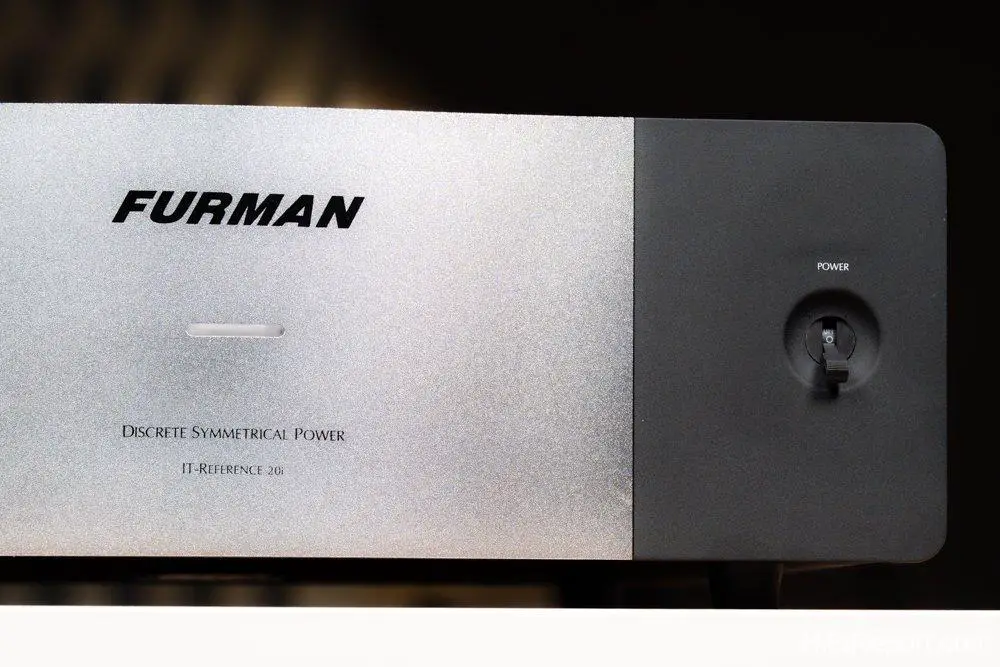
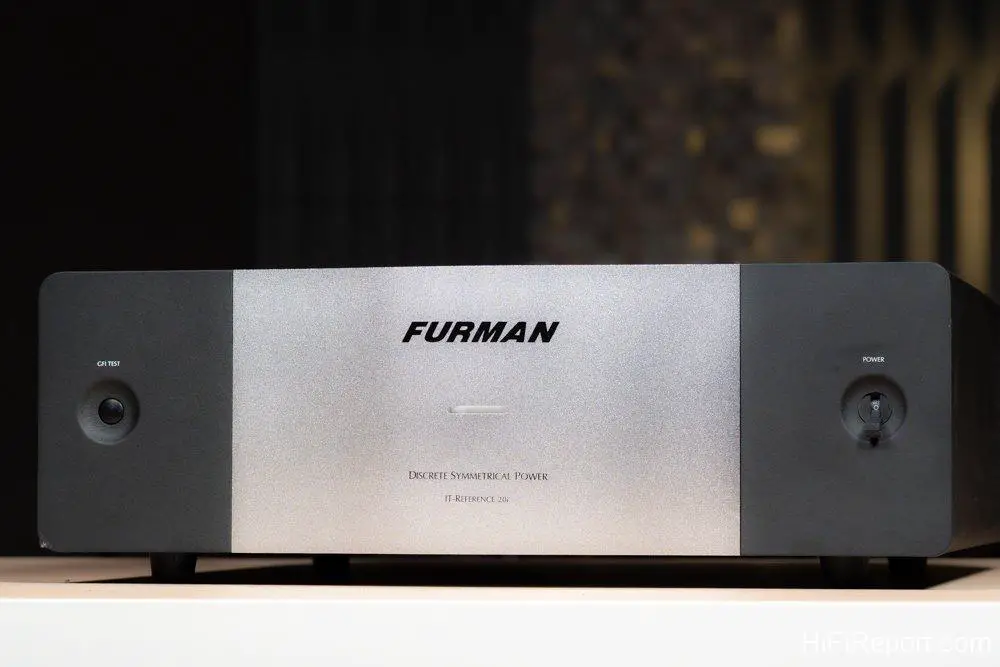
Perhaps because Furman’s reputation in the professional market is so immense, their visibility in the home audio market is comparatively lower. So, when I first received the IT-Reference 20i, my immediate thought was, “Huh? Does Furman also make home versions?” Looking at the IT-Reference 20i, its industrial design is quite “hardcore” – a heavy metal chassis that screams professionalism. If there’s any hint of a “home” aesthetic, it’s probably just the central silver trim.
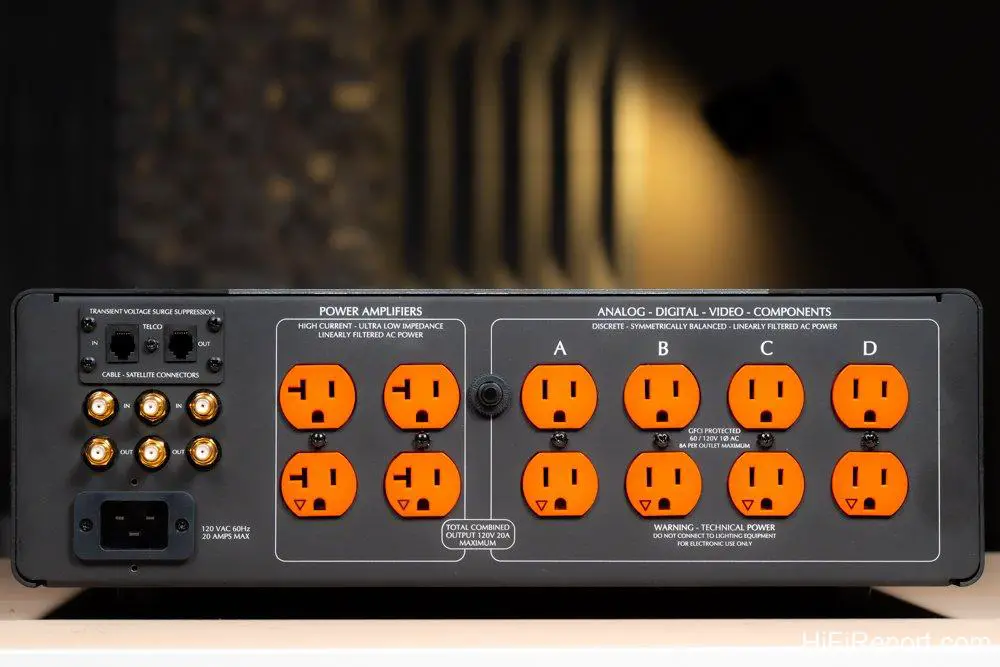
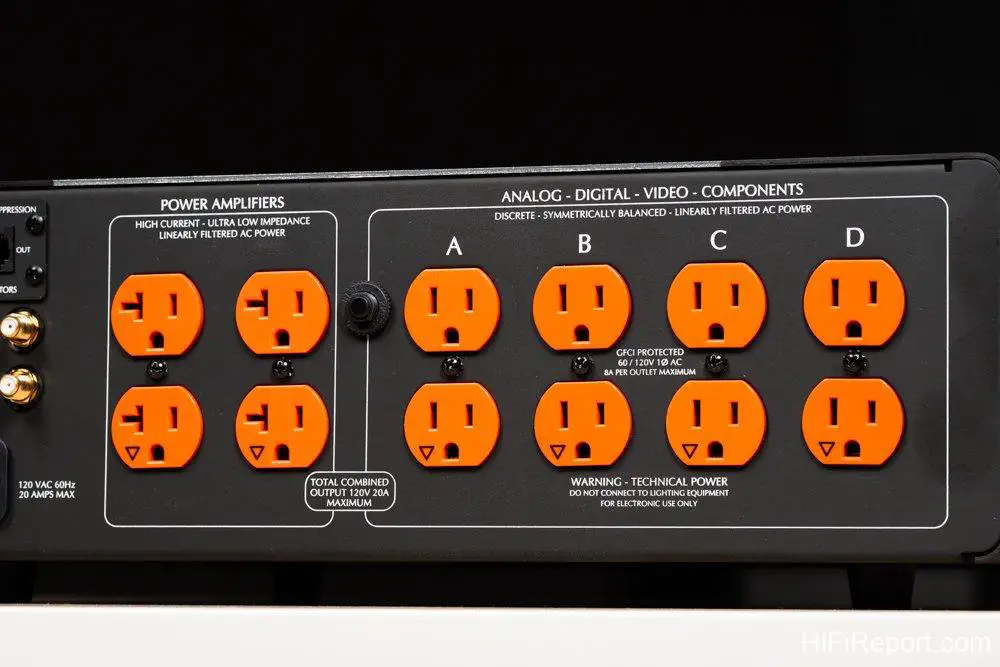
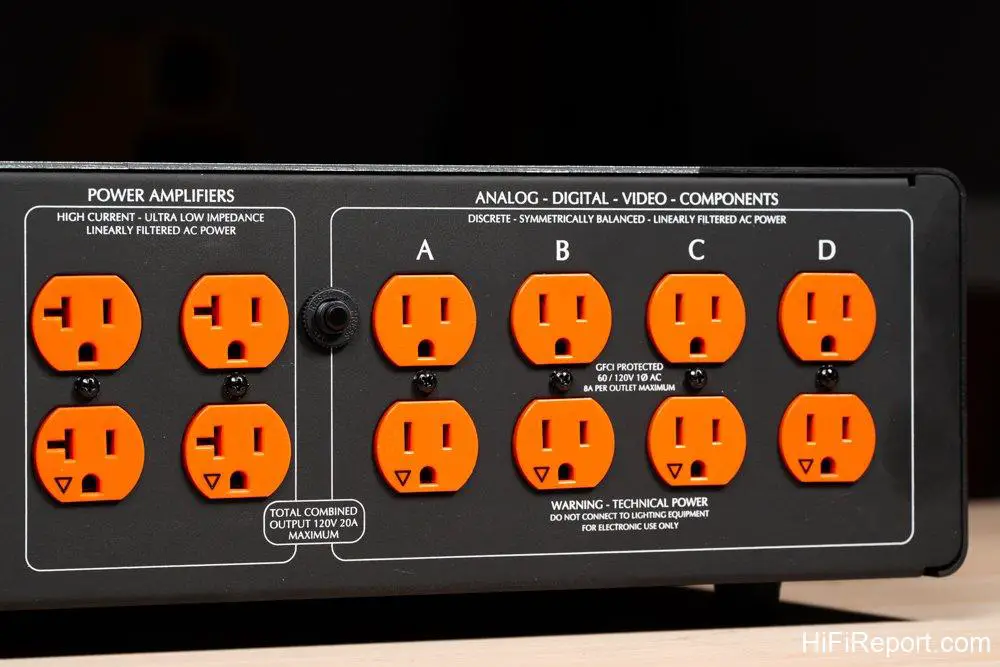
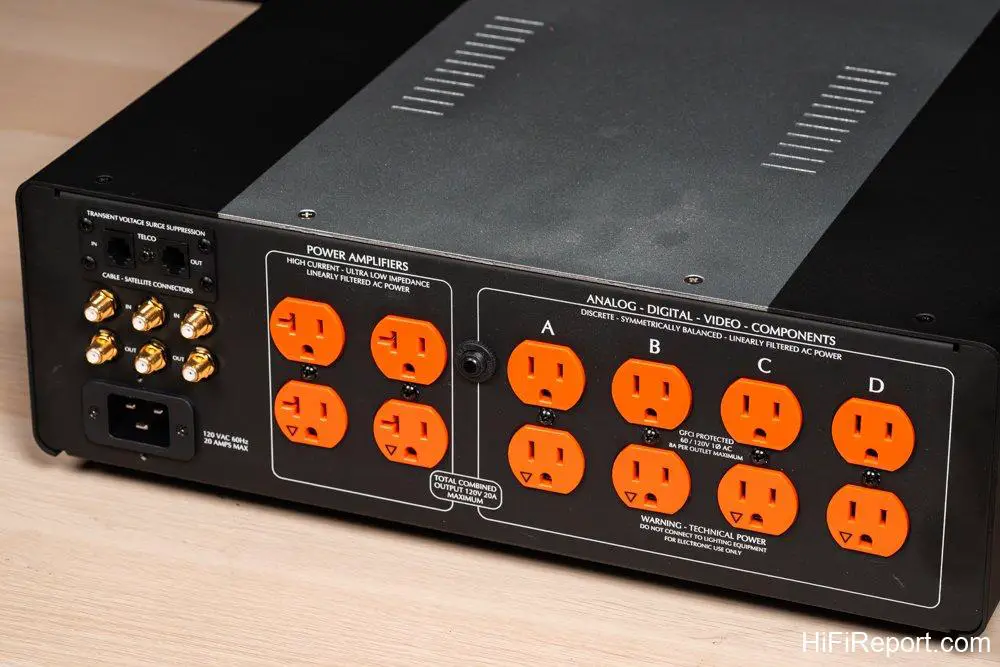
However, for enthusiasts with complex audio systems, the IT-Reference 20i is an excellent front-end power solution. Its most convenient feature is undoubtedly its total of 12 power outputs. This includes four high-current outputs for power amplifiers, plus eight differentially balanced linear filtered outputs for front-end components such as CD players, DACs, network streamers, and preamplifiers. With 8+4 power outlets, even the most intricate systems should find the IT-Reference 20i sufficient.
Flagship Home Power Conditioner
As Furman’s top-tier home power conditioner, the IT-Reference 20i incorporates all of Furman’s proprietary technologies, boasting significant technological prowess. This includes four major exclusive technologies: Power Factor Technology, LiFT (Linear Filtering Technology), Differential Symmetrical Balanced Power, and SMP (Series Multi-Stage Protection). Let’s delve into each one.
Compared to common power filters on the market, the IT-Reference 20i’s unique power technology focuses on power factor correction. Power factor speaks to power utilization efficiency, with an optimal value of 1.0 representing no power loss. Values below 1.0 indicate reactive power, leading to energy loss. Traditional power supplies typically have power factors between 0.6 and 0.8, whereas the IT-Reference 20i, through its proprietary power factor correction technology, can boost the power factor to an ideal value close to 1.0.
Power Factor Correction Benefits
Power factor correction technology isn’t unique to Furman. However, in home audio power supplies, the emphasis is often on noise filtration, as audio equipment typically doesn’t consume large amounts of power, making power factor loss relatively less critical.
But Furman, having originated in the professional domain, ensures the power factor is elevated to an ideal value. Minimizing power factor loss means converting precious electrical energy into truly useful power, which also reduces equipment heat and extends the lifespan of your gear.
High-Bandwidth Filtration
The second proprietary Furman technology is the LiFT (Linear Filtering System). This aspect is similar to common power filtration treatments, but the IT-Reference 20i employs multi-stage series filtration to achieve a high-bandwidth effect, effectively filtering out high-frequency digital noise.

The design of the multi-stage series filtration also considers progressive attenuation, maintaining a smooth frequency response while ensuring low impedance. This means that even with the addition of filtration circuitry, the transient response of the audio signal remains uncompromised.
Differential Balanced Power: CMRR
The third technology is the differential symmetrical balanced power supply architecture. By utilizing a balanced power structure, it leverages the Common Mode Rejection Ratio (CMRR) effect of balanced lines to cancel out power supply noise and reduce ground loop noise.
Furthermore, the balanced power architecture ensures that both the positive and negative half-waves undergo identical filtration processes, guaranteeing symmetrical waveforms.
SMP Multi-Stage Protection
Finally, SMP (Series Multi-Stage Protection) technology provides crucial safety measures for your audio equipment’s power supply.
Within the IT-Reference 20i, there are three levels of protection: The first level is an MOV (Metal Oxide Varistor) surge suppressor, which uses a metal oxide varistor to protect downstream circuitry with a response time of less than 1 nanosecond. The second level employs a GDT (Gas Discharge Tube) to handle large current surges, offering higher tolerance for major voltage transients. The third level features TVS (Transient Voltage Suppression) diodes, ensuring the output voltage remains within a safe range.
With these three levels of protection, the IT-Reference 20i guarantees stable power delivery. Whether faced with a voltage surge or excessively low output voltage, the IT-Reference 20i can automatically trip the circuit, preventing voltage extremes from damaging downstream audio equipment. Naturally, this includes lightning protection and power grid surge protection.
Robust Technical Foundation
Writing this, I must say it’s been years since I’ve reviewed a power conditioner as “technically hardcore” as the IT-Reference 20i. As I delved into Furman’s technical documentation, it felt like reading a textbook, with dense technical explanations covering everything from high-current supply and stable voltage to automatic protection and lightning surge suppression.
Furman’s original product descriptions are highly technical, yet they deliberately avoid claiming that their technologies make the sound “better.” Instead, they emphasize concrete benefits like power factor correction, improved energy efficiency, stable power delivery, and equipment protection.
True professionals, it seems, prioritize practicality over exaggerated sonic claims.
12 Outlets: System Solution
Despite its robust technical foundation, the IT-Reference 20i is straightforward to use. The four high-current outlets are for power-hungry amplifiers, while the eight filtered outlets can accommodate relatively lower-power components like turntables, phono preamps, CD players, DACs, and preamplifiers.
With a total of 12 outlets, even if you run a four-piece speaker system with monoblock amplifiers for both the main speakers and subwoofers, the IT-Reference 20i’s four high-current outputs are sufficient. For the front end, if your digital source comprises a four-piece setup—transport, DAC, master clock, and dedicated power supply—that still only uses four outlets, leaving four more for your preamplifier and other components. So, if you’re running a complex, large-scale audio system, the IT-Reference 20i is an ideal fit, as a single professional power conditioner can manage your entire setup.
During my audition of the IT-Reference 20i, I used two amplifier setups: first, an EAR 868P preamplifier with 509 MK II monoblock power amplifiers, and second, a simpler Van Medevoort MA360 SE integrated amplifier. Digital sources included a YBA CDT-450 CD transport and a Merging NADAC DAC. Even with these, I didn’t utilize half of the IT-Reference 20i’s outputs. So, I added a Linn LP-12 Klimax to approach half capacity. The speakers used for the audition were Wilson Audio Alexia V.
Immediate Impact
I must say, the initial impact of plugging in the IT-Reference 20i was the most noticeable. The mid-bass gained noticeable thickness and elasticity, the soundstage background became blacker, and overall quietness increased. However, once I had the system fully connected and started listening the next day, the IT-Reference 20i performed its function as expected, becoming a “behind-the-scenes hero.” Unless I unplugged the entire system to compare the differences, the immediate impact was primarily felt with the very first CD I played after installation. After that, I almost forgot the IT-Reference 20i was even there.
I believe this might be why many people consider investing in power conditioners only as a final step. Because premium front-end power delivery is essentially foundational infrastructure for an audio system, and everyday occurrences like lightning strikes or power surges are rare. So, deciding whether to add the IT-Reference 20i to your audio system truly requires a decisive “trial by fire.” Have your familiar music ready, because the initial comparison is where you’ll most acutely perceive the difference.
Familiar Music for A/B Testing
Therefore, when preparing to audition the IT-Reference 20i, the very first piece of music you play must be something you know intimately. If you listen to five consecutive tracks with the IT-Reference 20i, you’ll quickly become accustomed to its benefits. When attempting to compare the presence or absence of the IT-Reference 20i, the time spent unplugging and replugging cables can easily dull your perception, making it difficult to discern the benefits of the IT-Reference 20i.
What kind of music should you choose to hear the difference most easily? My answer is always: your most familiar music. Whether the instrumentation is simple or complex doesn’t matter, as long as you’re familiar enough to replay the music in your mind without even playing it. That’s the perfect choice for auditioning the IT-Reference 20i.
Gould’s Humming: Detail Retrieval
To assess with simple instrumentation, consider Glenn Gould’s 1981 recording of “Bach: Goldberg Variations.” The tempo is incredibly slow, and the Arie’s left and right-hand ranges aren’t wide, so it doesn’t challenge the system’s bandwidth. However, it severely tests the quality of piano reproduction. Without the IT-Reference 20i, the warm tonal palette of the EAR tube amplifier delivered a comfortable piano sound. But with the IT-Reference 20i in the system, the musical background became quieter, and surprisingly, the subtle details of Gould humming along as he played became more distinctly separated from the piano melody.
If you claim you’ve never heard Gould humming when listening to this “Goldberg Variations,” the problem likely isn’t with your power supply, but rather that your original audio system’s ability to delineate musical details simply isn’t good enough to reveal Gould’s accompanying vocalizations.
Enhanced Bass Impact and Dynamics
Simple instrumentation reveals texture, while live recordings convey presence. I’d like to cite Eva Cassidy’s “Live At Blues Alley,” specifically “Bridge Over Troubled Water.” With the IT-Reference 20i, the low frequencies showed the most significant improvement. The thickness and dynamic punch of the bass improved, amplifying the live recording’s immersive quality.
This effect of improved bass thickness and dynamism was also evident when listening to Jacques Loussier Trio. On “The Four Seasons” album, the first movement of “Spring” opens with the full-bodied attack of the jazz drums and double bass. With the IT-Reference 20i, the low-end impact was noticeably enhanced. In contrast to the crisp, tinkling details of the high-frequency jazz drums, the overall extension at both ends of the frequency spectrum felt significantly expanded with the IT-Reference 20i in place. Auditioning with this type of music truly conveyed a sense of widened bandwidth.
All-Day System Protection
Regarding the power supply effects of the IT-Reference 20i, if you conduct a comparison, especially focusing on the very first track, and perceive a difference, it indicates that your ears are trained enough to clearly discern the improvement, making the IT-Reference 20i a worthwhile investment for your audio system.
However, even if your actual audition suggests that the IT-Reference 20i doesn’t dramatically alter the sound, another consideration should be Furman’s professional expertise in providing power protection for your audio system, safeguarding it against lightning strikes or power surges. But if safety is your sole concern, there might be other, more affordable options available, so you needn’t be fixated on the IT-Reference 20i. Furman itself offers other more budget-friendly power conditioners that also provide professional power protection.
One Song Says It All
So, should you invest in the IT-Reference 20i? The answer ultimately lies in a personal audition. You don’t need to listen for too long; just prepare one incredibly familiar piece of music and ask your audio dealer to assist with an A/B comparison. If you hear the difference, if you hear the benefits, then it’s worth the investment.
Specifications
* **Model:** Furman IT-Reference 20i
* **Type:** Power Conditioner
* **Power Outputs:** 8 (Symmetrical Balanced), 4 (Power Factor Corrected)
* **Power Input:** 20A
* **Power Output:** 12~20A
* **Dimensions (H x W x D):** 5.75 x 17 x 15.625 inches
* **Weight:** 83 lbs