
Furutech Lineflux NCF RCA Interconnect Review Review
No matter how much the Hi-End cable market innovates, Furutech products consistently hold a cherished place in the hearts of audiophiles. This is because their cables offer sensible pricing, transparent technology, and high intrinsic value. From entry-level to top-tier products, everything is backed by solid theoretical principles, always making you feel that your purchase is well worth it and dependable.
It’s no exaggeration to say that they represent one of the soundest investments in audio cabling.
In the past, the Furutech cables I’ve reviewed have mostly been entry-level models, yet each time I felt they delivered value far exceeding their price point. This time, however, it’s different. What landed in my hands is their Lineflux NCF RCA interconnect. Seeing the Lineflux series, you’ll likely recognize it as Furutech’s flagship cable line. Naturally, Furutech has brought out all their best offerings in terms of technology and structure for this cable.
This immediately sparked my anticipation: just how powerful is this cable’s performance? Will it, like its predecessors, leave flagship cables at the same price point in the dust? Let’s dive right into its design!
Design and Appearance
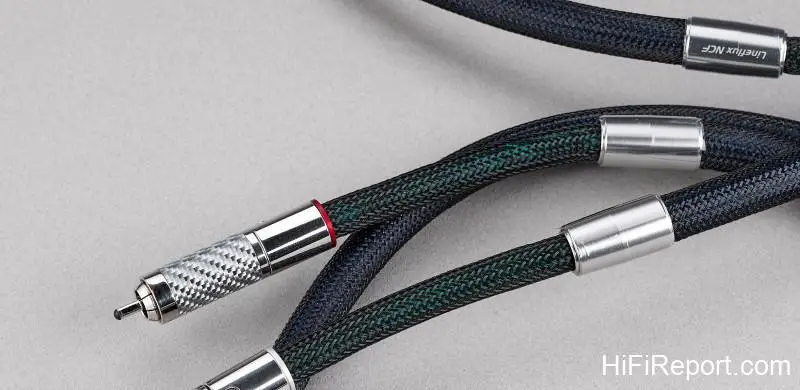
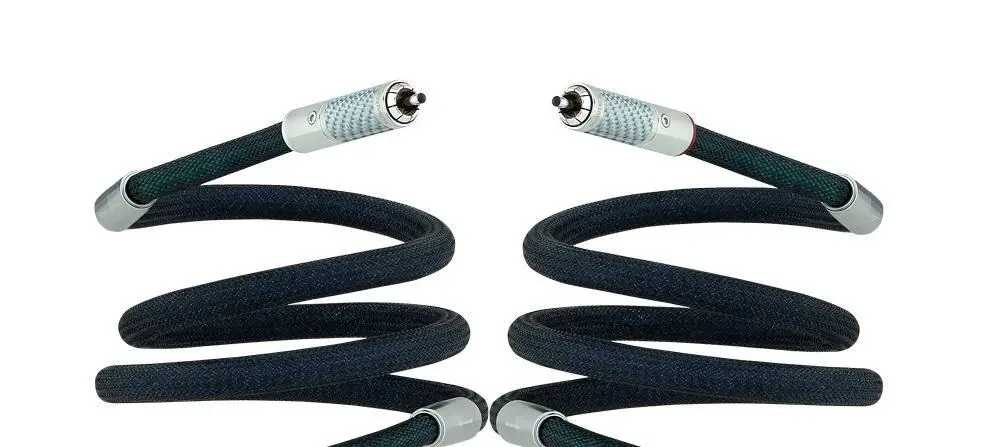
Starting with the appearance, the Lineflux NCF RCA is almost identical to its predecessor. The biggest difference lies in the connector, which utilizes their latest development, the highest-grade CF-102 NCF RCA plug. It features a silver carbon fiber structure, whereas the previous generation used the CF-102(R) terminal with a black carbon fiber exterior. The new plug looks substantially more impressive.
The metal part is Furutech’s familiar silver-white finish, and underneath the transparent surface of the connector shell, you can see a silver braided mesh. This connector alone speaks volumes about the cable’s premium status!
Moving to the cable body itself, it’s quite robust but lightweight and maintains a certain degree of flexibility. The connectors also feature a locking structure, providing a more stable connection to your equipment – quite practical. The surface is a deep blue braided mesh. Each cable is fitted with two silver-white metal rings printed with the “Lineflux NCF” lettering to verify its identity.
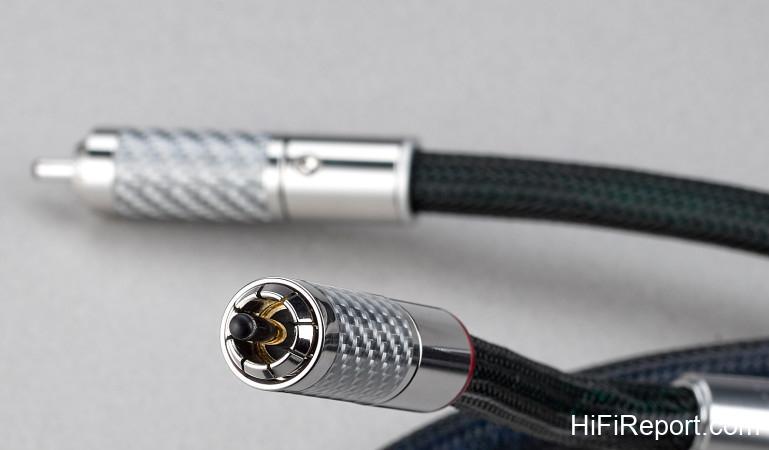
The overall texture is very high-end, and the structure feels solid, truly embodying the essence of a flagship cable.
Technology
Beyond its high-end appearance, a closer inspection reveals that the Lineflux NCF RCA possesses an exceptionally high technological content.
The CF-102 NCF RCA Connector
Let’s start with the most significant upgrade: the CF-102 NCF RCA connector. Previously, this silver carbon fiber structure was only seen on the flagship Powerflux-NCF power cable. Now, the manufacturer has officially brought this technology down to the signal cable line, and the structure is an entirely new design.
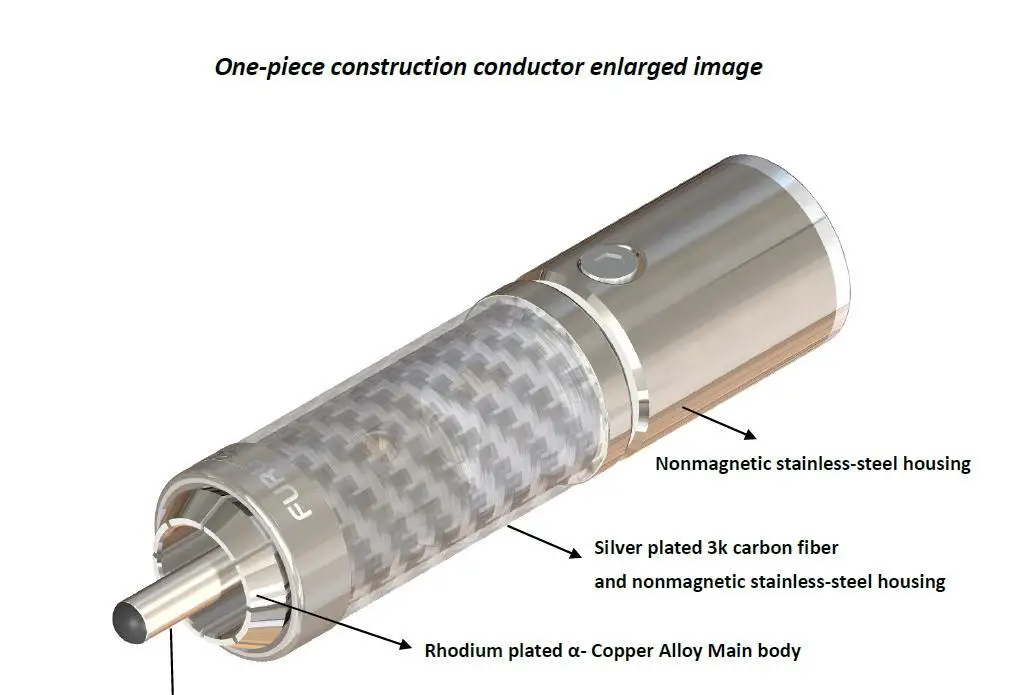
Looking at the structural diagram on the official website, you’ll notice that even the outer shell is divided into three layers. First, the main body is made from non-magnetic high-grade stainless steel. The surface of the mid-section incorporates a layer of hard, translucent material, while the interior features a unique braided layer made from silver-plated carbon fiber material. Besides being aesthetically refined, this design also provides excellent vibration damping for the connector head.
Examining the internal structure, the conductor in contact with the CF-102 NCF RCA terminal is made entirely from Furutech’s renowned α (Alpha) monocrystalline oxygen-free copper, which is then treated with rhodium plating. This increases the connector’s hardness and resistance to oxidation, keeping it like new and maintaining optimal conductivity for years to come. Is that all? Where does Furutech’s proudly featured NCF material come in?
Don’t worry, look at the central pin of the connector, and you’ll see a black plastic cap at the tip – this is the NCF material. Opening up a cross-section of the connector reveals even more: the signal pin is actually a hollow tube structure. In addition to the tubular body being made of Alpha copper conductor with rhodium plating, the center is completely filled with NCF material, not just the visible round cap.
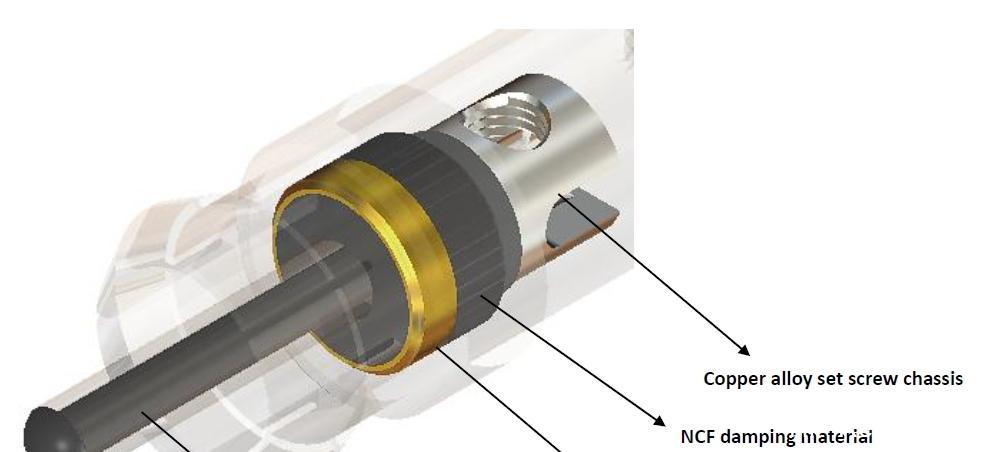
Behind the signal pin, two damping rings made of copper alloy and NCF material are added separately to enhance the connector’s anti-static and vibration damping capabilities. Wherever NCF could potentially be used, the manufacturer has utilized it to its fullest extent. Seeing this, you can’t help to want to cheer for Furutech: for such a small RCA plug, who could be more meticulous!
The Cable Body Structure
The cable body structure of the Lineflux NCF RCA is, of course, a culmination of the manufacturer’s technology. Starting from the innermost conductor, it employs two strands of 1.3mm diameter α (Alpha) monocrystalline copper conductors. These undergo Furutech’s unique conductor treatment technology, primarily consisting of a two-step process: “Ultra Low Temperature Treatment” and “Demagnetization Treatment.”
The process of ultra-low temperature treatment followed by slow warming helps to eliminate stress within the conductor’s crystal structure. Subsequently, a large demagnetization machine is used to remove even trace amounts of magnetism from the conductor, minimizing its susceptibility to magnetic fields and resulting in better conductivity. The conductors are solid core, each insulated with a high-grade PE layer.
Moving outwards, soft cotton threads made of polyester fiber are used as filling material for vibration damping. This is followed by the first shielding layer, composed of aluminum foil wrapped with PET plastic. The second shielding layer is a braided mesh made of Alpha monocrystalline copper. This layer serves two purposes: it isolates external electromagnetic waves and more effectively conducts away absorbed electromagnetic noise, ensuring the purity of the sound quality.
Outside the shielding layers, there is a paper layer acting as a buffer. The outer sheath beyond this layer is quite remarkable! First, the manufacturer incorporates nano-sized ceramic and carbon particles into the polyvinyl chloride (PVC) body. This gives the sheath excellent resonant characteristics, making it difficult for even the slightest external vibration to affect it.
Finally, the visible deep blue cable body is a dust-proof mesh woven from the same PVC material with nano-sized ceramic and carbon particles used in the isolation layer, combined with nylon. This outer layer also possesses vibration absorption capabilities. The structure, from inside to out, is like a textbook on cable construction, leaving no detail overlooked.
Listening Test
Test Setup
For this review, my system setup used a Lumin D2 streamer as the preamp, a Keces S300 power amplifier connected by the Lineflux NCF RCA, driving Dynaudio Emit 30 floorstanding speakers. I compared the sound quality with my internal reference RCA cables. The Lumin D2 has a warm and gentle sound signature, the S300 power amp is also characterized by a thick sound, and the Emit 30 speakers are very neutral.
Overall Sonic Impression
Before swapping the cable, the overall system presented a somewhat pyramid-shaped frequency distribution. However, when I switched to the Lineflux NCF, the distribution across the three frequency bands became more balanced, and the resolution significantly improved. Although it’s a copper cable, it possessed the transparent and smooth texture typically associated with high-quality silver cables, as if lifting a thin veil from the music.
Soundstage, image density, and soundstage all became more outstanding.
Performance with Different Genres
Listening to the piano trio on “Sitkovetsky Trio – Ravel & Saint-Saëns,” right from the start, I could feel a deep and expansive soundstage unfolding. Against a pure black background, the outlines of the instruments became more distinct and three-dimensional, with no fuzzy areas. The violin’s texture was smooth and full of luster, and the wood resonance gained a fresh sweetness, completely eliminating any previous roughness.
The piano notes were crystal clear, the key strikes sounded crisp and nimble, and the subtle nuances of the musicians’ performance and dynamic shifts were incredibly vivid. The low notes had a brisk and sharp weight, and the sustain carried the delicate resonance of the soundboard.
Furthermore, the cable’s mid-bass performance is quite captivating, revealing excellent transient response. This resulted in the cello’s “nasal” sound feeling very clean. I could hear deep yet clear bowing details, and the wood body resonance felt tight and not bloated. It clearly sculpted the physical presence of the instruments, allowing me to feel the distance between them and more leisurely appreciate the performance details and layering.
The cable’s brisk transient performance is also very adept at interpreting popular music. Listening to “Call Me The Breeze” from John Mayer’s “Paradise Valley” album, the vocals retreated slightly within the more expansive soundstage, but the details of the performance were not diluted. The vocal image became more focused and prominent, and the nuances of lips and mouth shapes were clearer and more natural.
Simultaneously, the separation of the accompanying instruments also increased significantly. The guitar outlines were also sharper, the note texture had a slight sweetness, and the wood body resonance was clean and not sluggish. The previously bloated and indistinct low frequency had excellent control. The plucking of the electric bass revealed better elasticity, and the thud of the kick drum was short and impactful, with energy that felt effortlessly controlled.
This instilled a kind of effortless foundation into the popular music.
Conclusion
The sound signature of this Lineflux NCF RCA is quite clear: it belongs to the category of resolving, fast, and elastic bass. Used in the right system, it will bring about a comprehensive improvement in sonic performance! If your audio system suffers from a constricted soundstage, bloated mid-bass, or insufficient resolution, I believe this cable will be an excellent remedy.
Specifications
* **Product Type:** RCA Interconnect Cable
* **Conductor:** Alpha OCC 1.3mm diameter High-Purity Copper Conductor
* **Treatment:** α (Alpha) Process (Ultra Low Temperature Deep Cryogenic Treatment, Demagnetization Treatment)
* **Insulation:** PE layer, PVC layer containing carbon fiber particles
* **Shielding & Sheath:** μ–OFC Oxygen-Free Copper Isolation Mesh, Soft PVC Layer, Nylon Mesh
* **Connectors:** CF-102 NCF(R) Connectors, containing exclusive NCF material
* **Cable Diameter:** 3.69mm