
Furutech Project V1-L-XLR Review
I entered the world of audio media in early 2015. Unconsciously, it’s been a decade since I started this journey.
Before I became a professional reviewer, when I was just an audiophile enthusiast, Furutech was the first brand that came to mind when I needed connectors, plugs, or a length of bulk cable for DIY projects. I never really paid attention to their finished cables.
It was only after joining the media industry that I truly came to appreciate Furutech’s strength and charm.
Recent Signal Cable Delights
The starting point was the Furutech NanoFlux power cable. This cable is still available for sale today, albeit evolved into the NanoFlux NCF with updated technology.
The first generation NanoFlux was priced at over NTD 180,000 (approx. USD 5,625). For a rookie editor like myself at the time, that listening session was an unprecedented experience.
Did an NTD 180,000 power cable deliver NTD 180,000 worth of enjoyment? It’s difficult to quantify enjoyment in monetary terms, but I genuinely witnessed what truly clean and clear sound means, what distinct layering is, what expansive depth implies, what effortless dynamics feel like, and what refined texture sounds like.
That encounter with Furutech elevated my reference experience and broadened my horizons.
Over these past ten years, I’ve encountered numerous Furutech products, not just cables, but also various NCF products derived from their material technology. These include plug stabilizers for power outlets, power purifiers for eliminating static electricity, and the hugely popular NCF cable lifters.
They’ve even applied NCF technology to power distributors, ensuring that their power strips, regardless of whether they incorporate filtering circuits, deliver audible improvements.
Furthermore, they’ve widely extended NCF technology to their cables, utilizing the special Nano Crystal² Formula (NCF) in terminals and insulation materials.
From the time I joined the media to the present, I’ve essentially witnessed Furutech’s leap forward and transformation. They are no longer just manufacturers of parts and bulk cables; Furutech has clearly established itself as a High-End cable manufacturer with a complete product line.
Flagship Project Series Unveiled
Speaking of Furutech’s new generation of signal cables, I first had the pleasure of listening to the Lineflux-NCF XLR signal cable two years ago.
This was one of their mid-range models, featuring connectors incorporating the NCF formula nanoparticles, complemented by a silver-plated carbon fiber braid layer.
The silver-white braid paired with exquisitely polished stainless steel connector shells exuded a delicate yet noble texture. The LineFlux-NCF signal cable was not only visually appealing but sounded excellent too.
Its pitch-black background allowed musical information to emerge naturally. The dense texture made the sound profoundly realistic. The rich timbre still managed to display remarkable layering. Within the clean and clear sonic foundation, a refreshing and lively character shone through. The spacious soundstage presented a clearly defined layout of instruments and voices. It was truly a delightful listening experience.
Later, I auditioned their bulk cable, the DAS-4.1 signal cable. The distributor, Zhongmin, had prepared a finished cable using Furutech’s top-tier CF-102 NCF RCA plugs for the editorial department to review.
This is Furutech’s flagship in their bulk signal cable range, featuring an unusual inverse triple-layer twisting design. The inner core uses Alpha OCC single-crystal copper conductors, the middle layer uses Alpha DUCC long-crystal copper conductors twisted in the opposite direction, and the third layer again twists a circle of Alpha DUCC conductors in the inverse direction.
This unique design resulted in excellent transparency and separation, sharp outlines and palpable forms, and superb independence of sound sources, making the musical image exceptionally layered. As a bulk cable, the DAS-4.1 would be an excellent value-for-money choice for DIY enthusiasts.
Advanced Conductor Design
What I’m listening to this time is even more impressive. Following the flagship Project V1 power cable, Furutech has introduced the Project V1-L signal cable, available concurrently in single-ended (Project V1-L RCA) and balanced (Project V1-L XLR) versions.
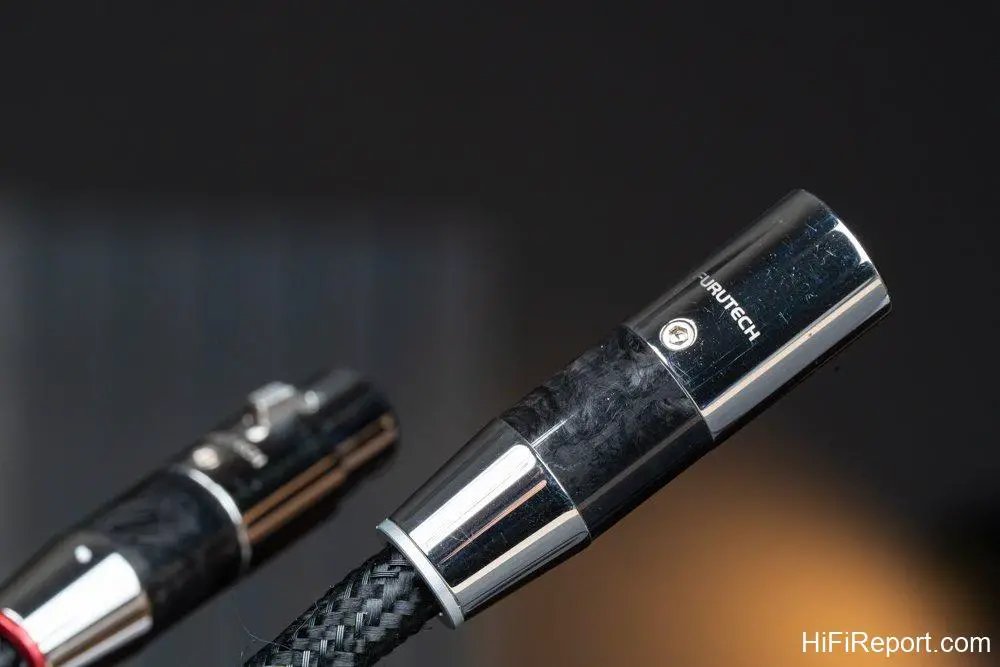
The editorial department received the XLR version. I carefully read the official description of the Project V1-L XLR on Furutech’s website and was struck by the structural similarities to the DAS-4.1 I reviewed a year ago, although with more luxurious conductors, a more complex structural design, and more meticulous attention to damping and insulation.
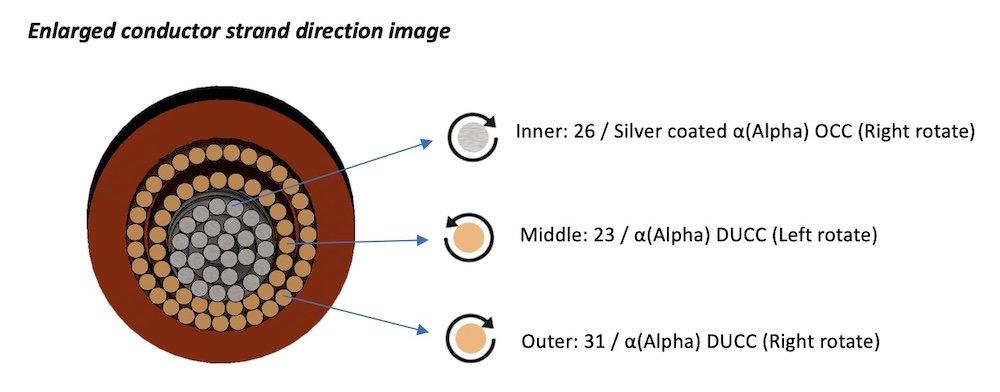
Let’s start with the conductor design. The Project V1-L XLR’s core conductors also employ a three-layer counter-rotating design.
The central layer consists of 26 silver-plated Alpha OCC single-crystal copper conductors twisted to the right. The middle layer comprises 23 Alpha DUCC conductors twisted to the left. The outer layer then uses 31 Alpha DUCC conductors, this time twisted to the right. These three layers of conductors are twisted in alternating directions, which is why I refer to it as a triple-layer counter-rotating twist.
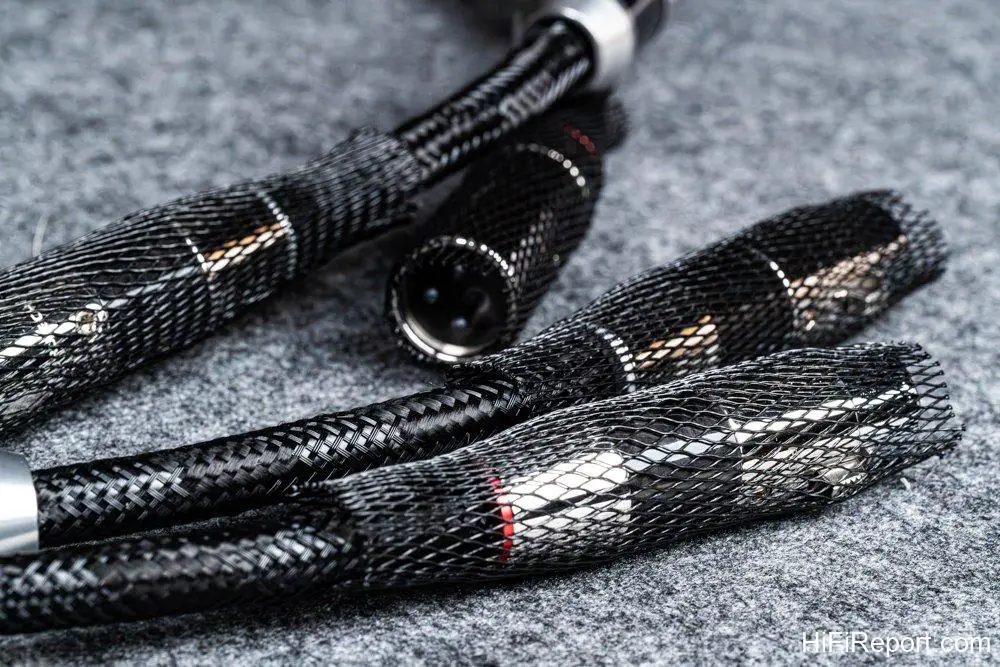
OCC single-crystal copper boasts the longest crystal length and fewest crystal boundaries, offering optimal transmission. While DUCC may not equal OCC single-crystal copper, its crystal area is still significantly larger than that of ordinary OFC oxygen-free copper, with far fewer crystal boundaries. This DUCC is a long-crystal high-purity copper produced by Mitsubishi Materials Corporation, considered by Furutech engineers to be one of the best conductors currently available, and is widely used in their higher-end cables. Furutech further combines it with OCC single-crystal copper to form a dual-conductor, counter-rotating twisted structure.
Moreover, all these conductors undergo Furutech’s proudly touted “Alpha Process,” which includes ultra-low temperature and demagnetizing treatment, further enhancing the purity and reliability of signal transmission.
Meticulous Construction Details
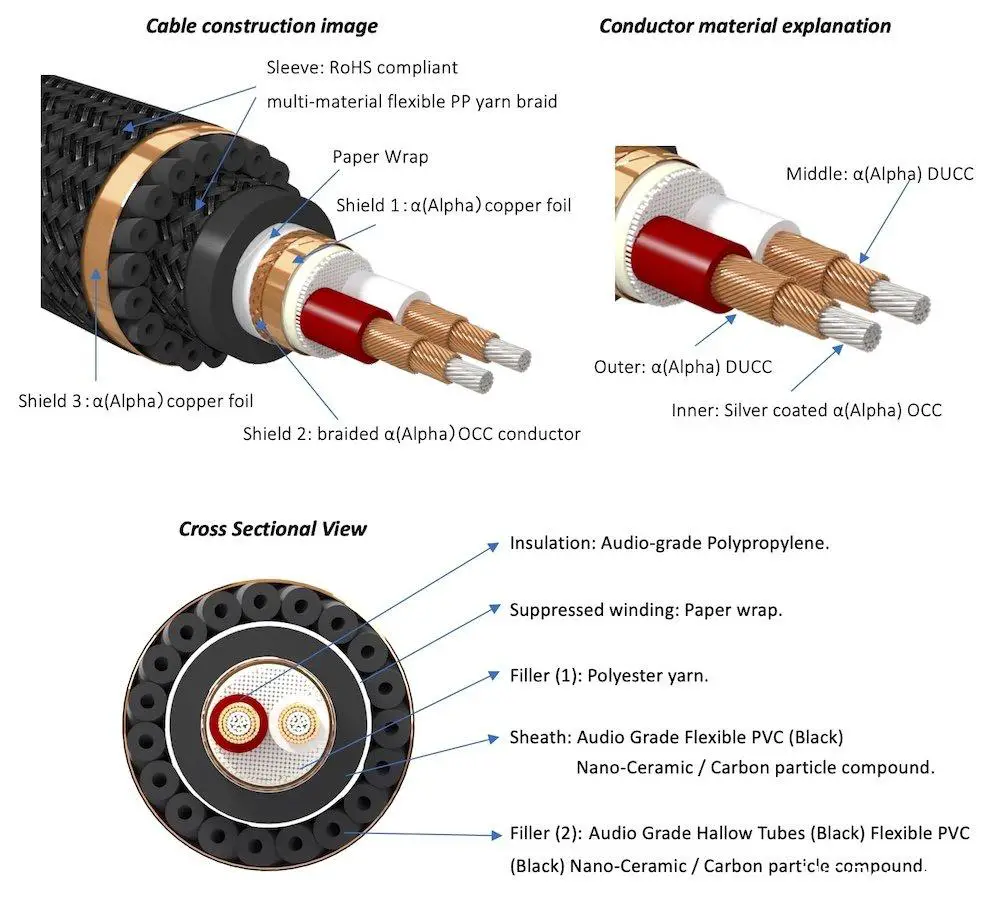
Beyond the conductors, meticulous attention is paid to insulation, shielding, and damping. A detailed structural rendering from the official website would make this easier to understand.
However, two structural designs are particularly noteworthy. First, the cable features three layers of shielding. One layer of Alpha-processed copper foil wraps the conductors, immediately followed by another layer of Alpha-processed OCC single-crystal copper mesh. On the outermost layer of the cable, within the outer sheath, there is yet another layer of copper foil wrap, also treated with the Alpha Process. This rigorous triple-layer shielding aims to block all forms of noise interference.
Second is the cable’s damping treatment. Within the cable’s core, just outside the PP insulation of the two conductor bundles, nylon yarn filler is used. Outside the two shielding layers, an audio-grade elastic PVC combined with a composite material of ceramic and graphite nanometer particles is applied. Separated by a paper wrap isolation layer, several hollow damping tubes are arranged around it. The material of these damping tubes is the same composite mixture used in the middle damping layer.
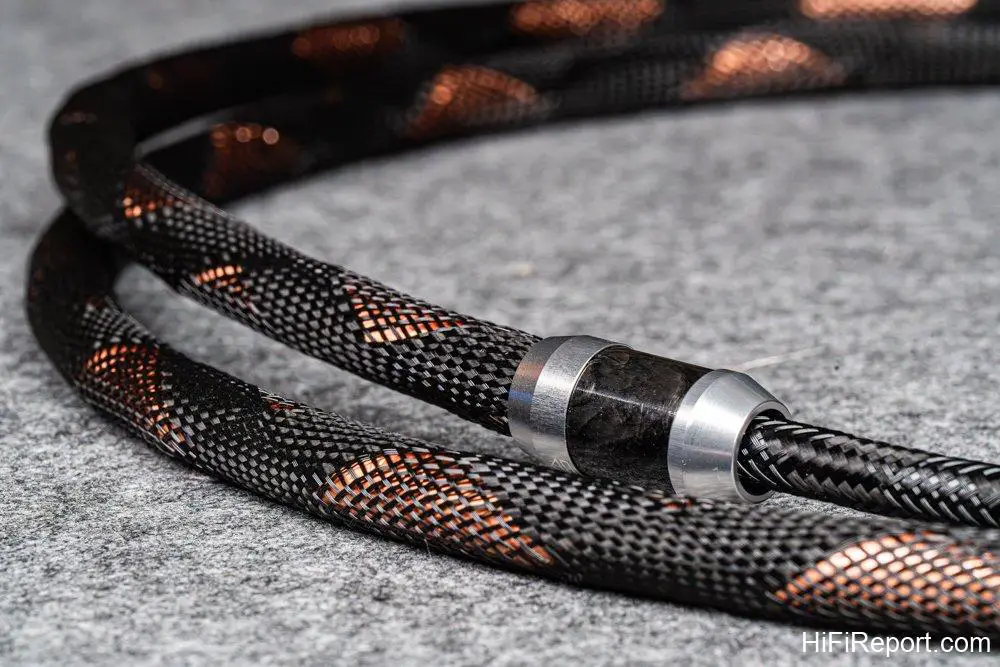
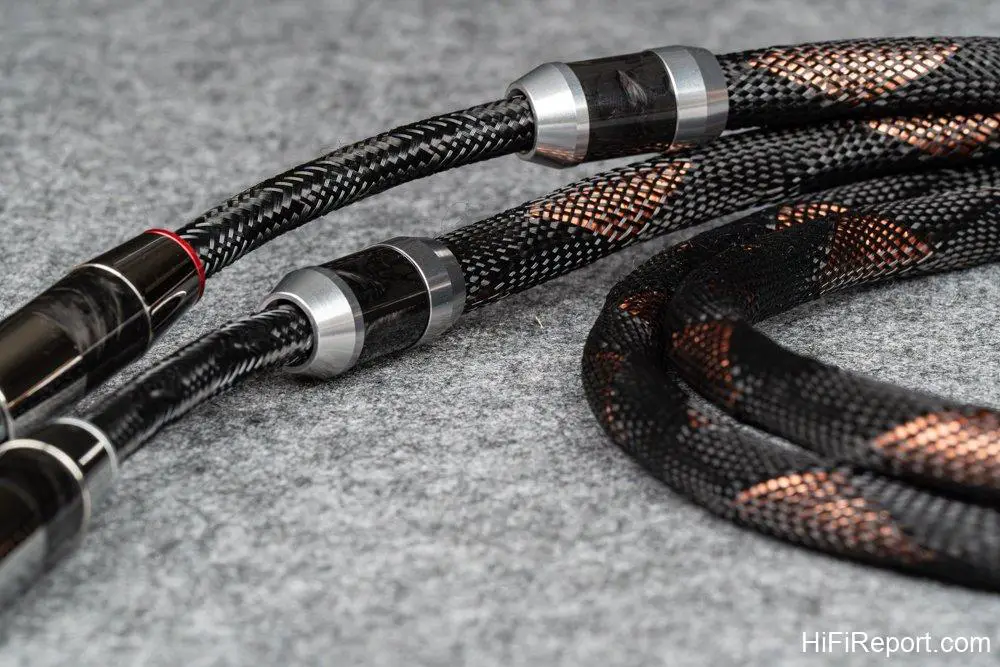
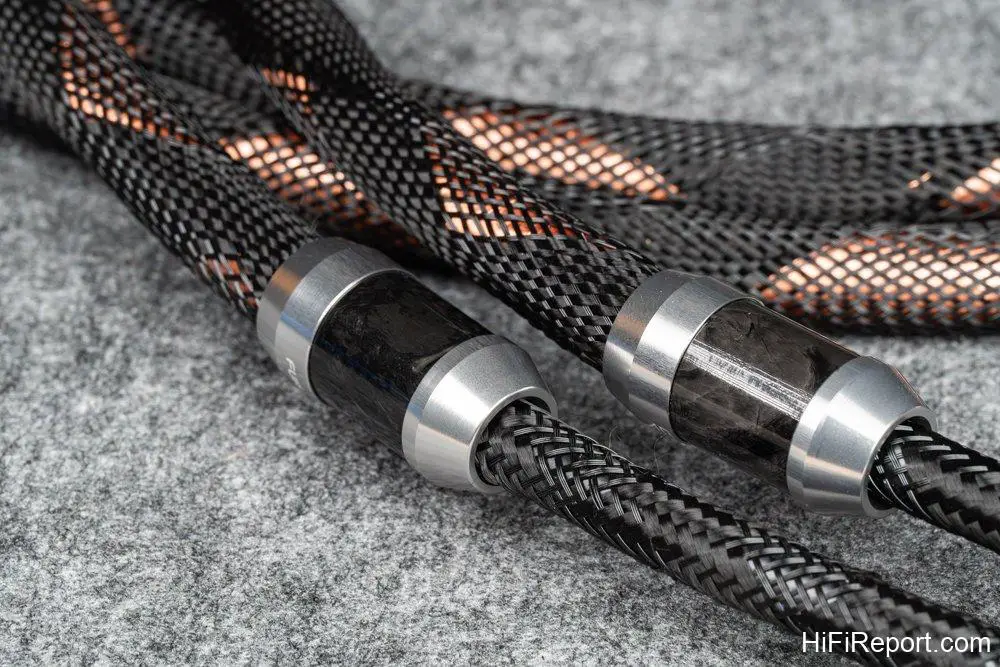
As for the outermost isolation mesh, it is no ordinary material either. It is cross-woven with high-quality soft damping PP and hard fibers, designed to reduce resonance and stress on the cable body while maintaining considerable flexibility. Insulation, shielding, and damping – a three-pronged strategy implemented by Furutech for the Project V1-L XLR.
Exclusive NCF Connectors
Besides the cable body, the connectors used on the Project V1-L are also quite special.
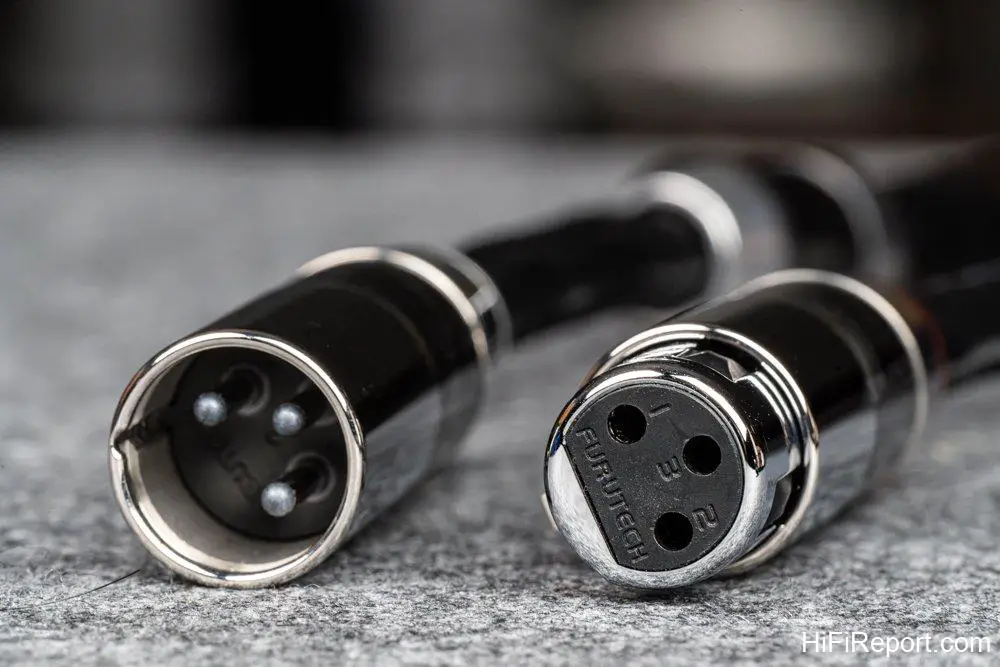
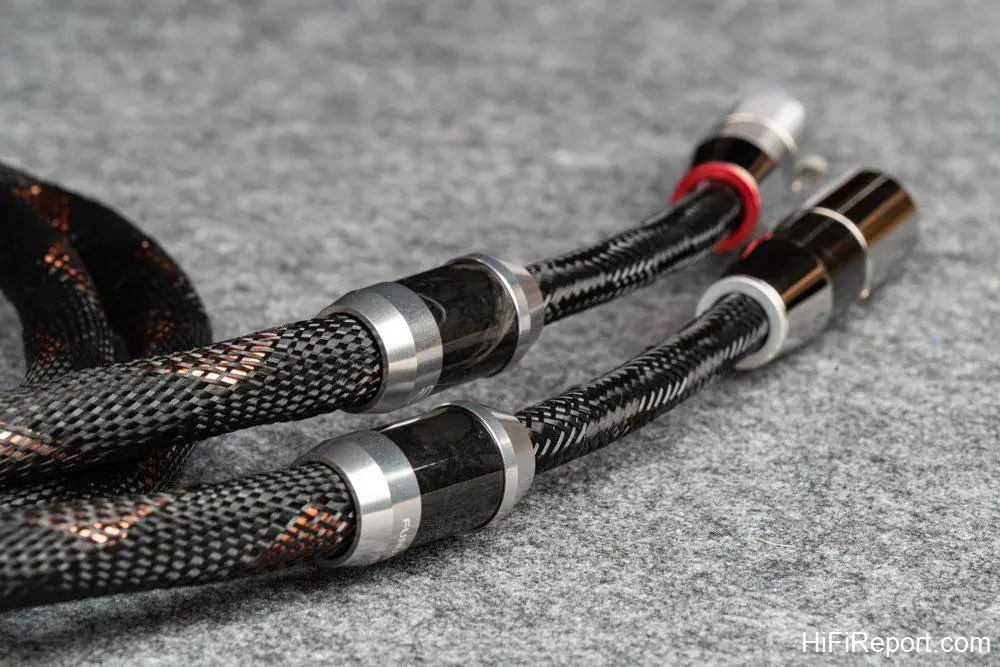
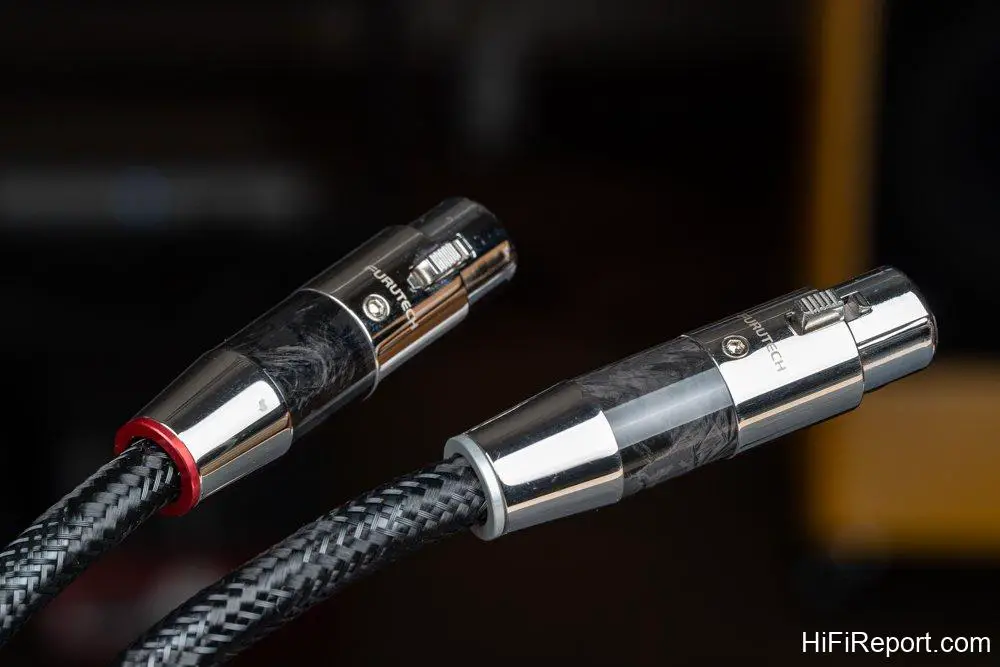
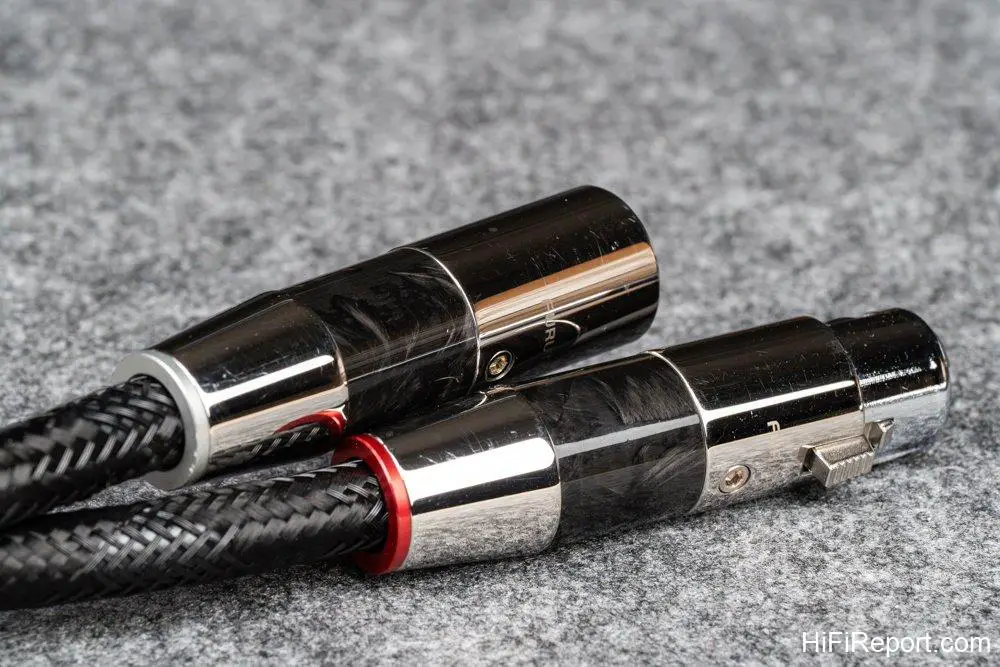
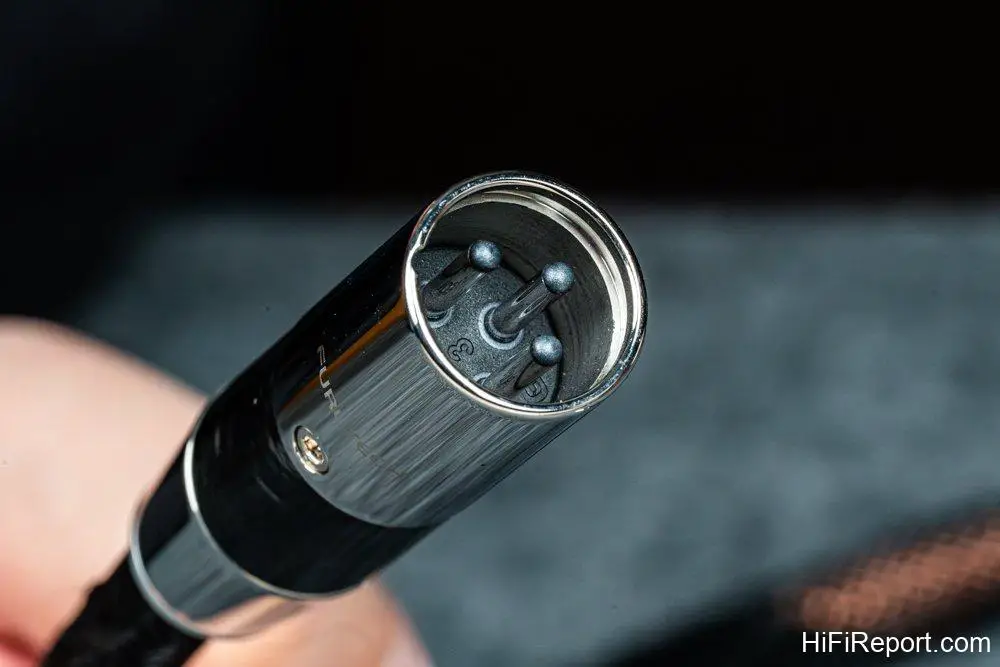
The RCA version uses CF-102 NCF(R)-P connectors, while the XLR version uses CF-601M/602F NCF(R)-P. The model numbers are similar to Furutech’s highest-end retail connectors but include an “(R)-P” marking at the end to denote distinction. In fact, the appearance is also quite different from the retail flagship connectors.
Previously, Furutech commonly used woven carbon fiber as a damping ring. The damping ring on the retail flagship connectors was further silver-plated for a more aesthetically pleasing look. This time, the connectors marked with “(R)-P” are exclusively for the Project V1-L signal cable and are not currently available for retail sale.
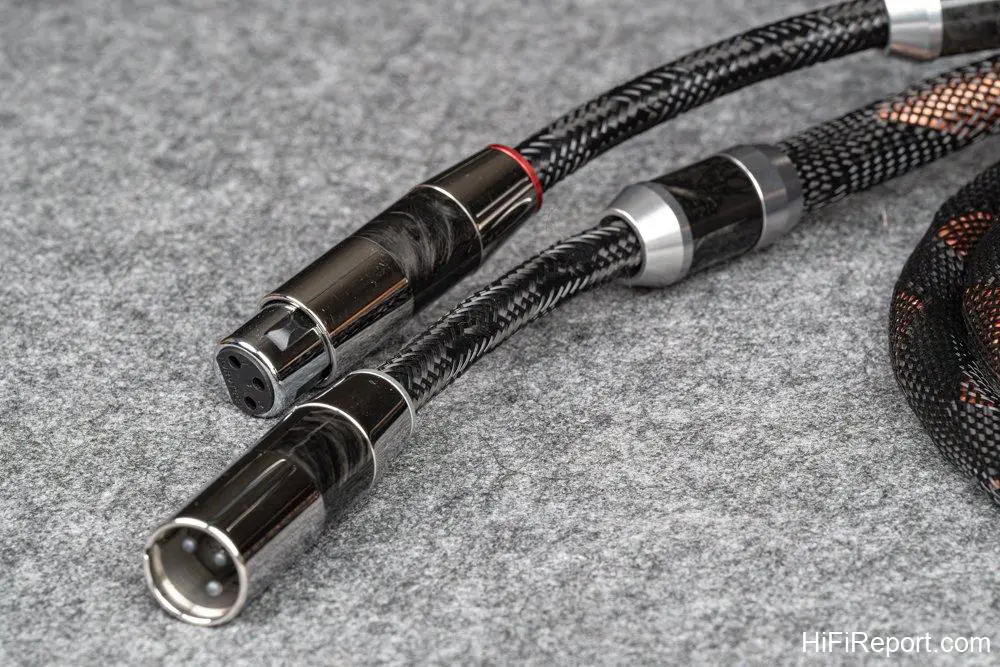
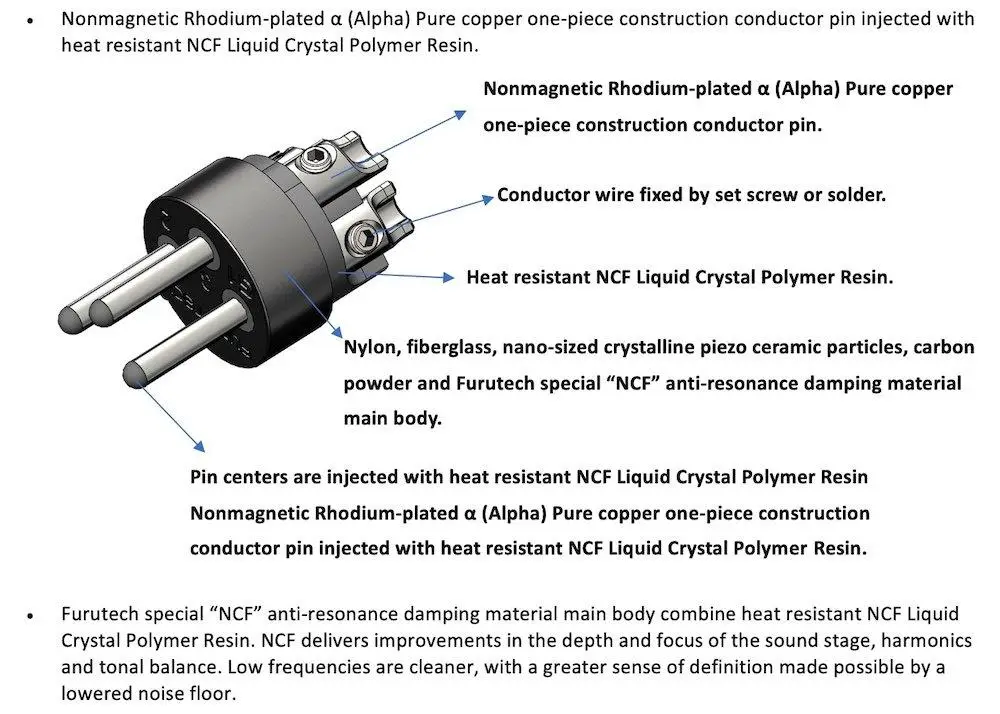
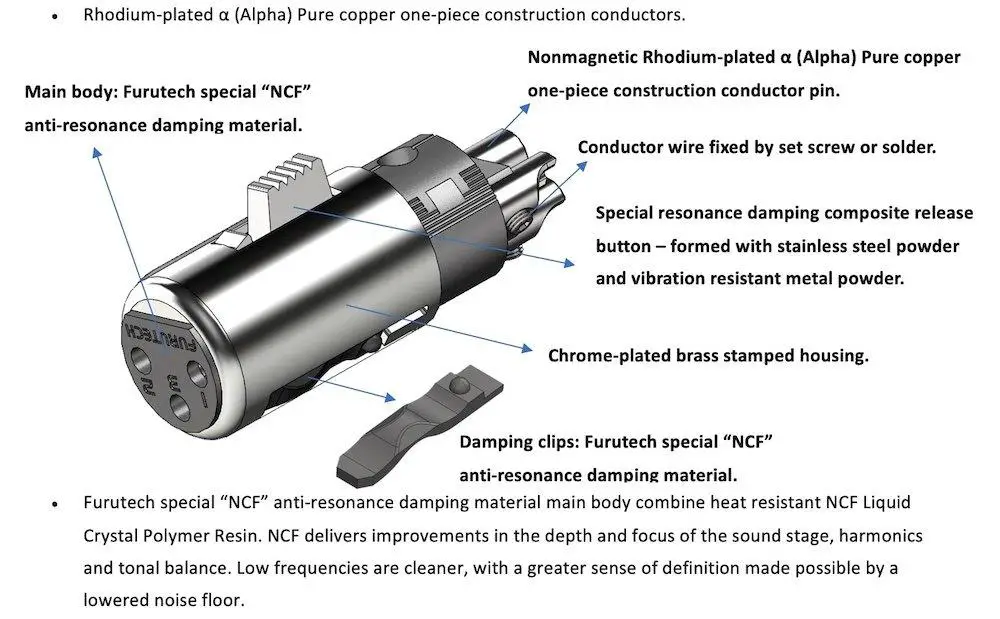
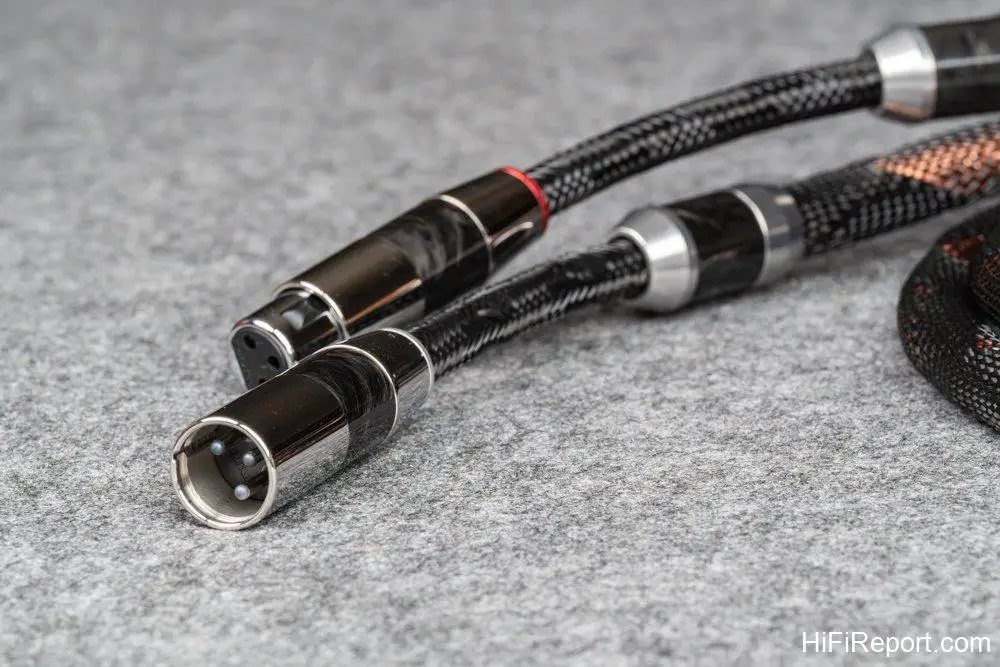
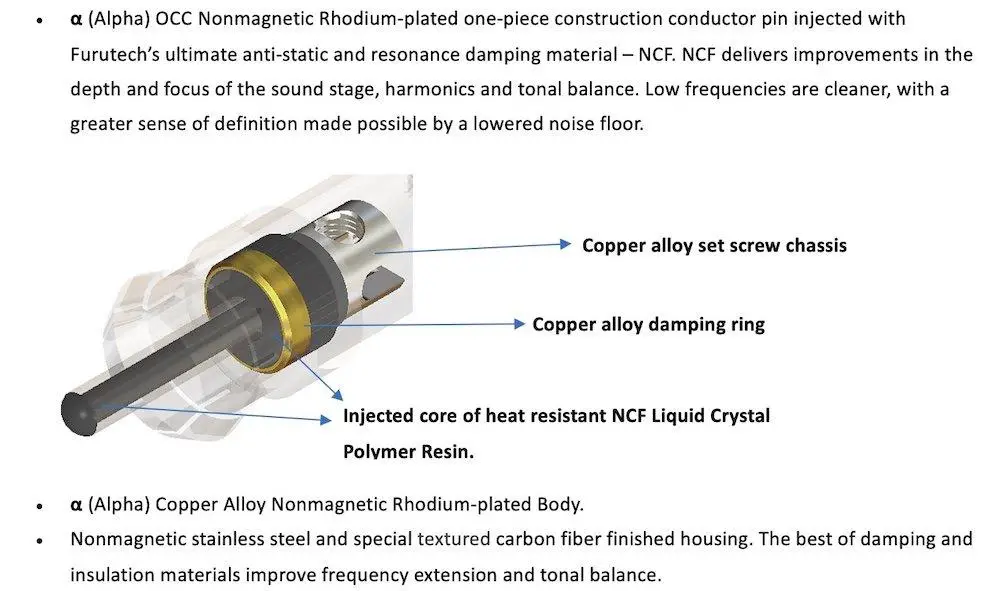
The connector bodies are largely the same as the standard retail versions, featuring non-magnetic stainless steel housings, integrated pure copper rhodium-plated contacts, composite material infused with the NCF formula for the connector casing, and NCF components installed in the male connector’s center pin. However, the most significant visual difference lies in the damping ring.
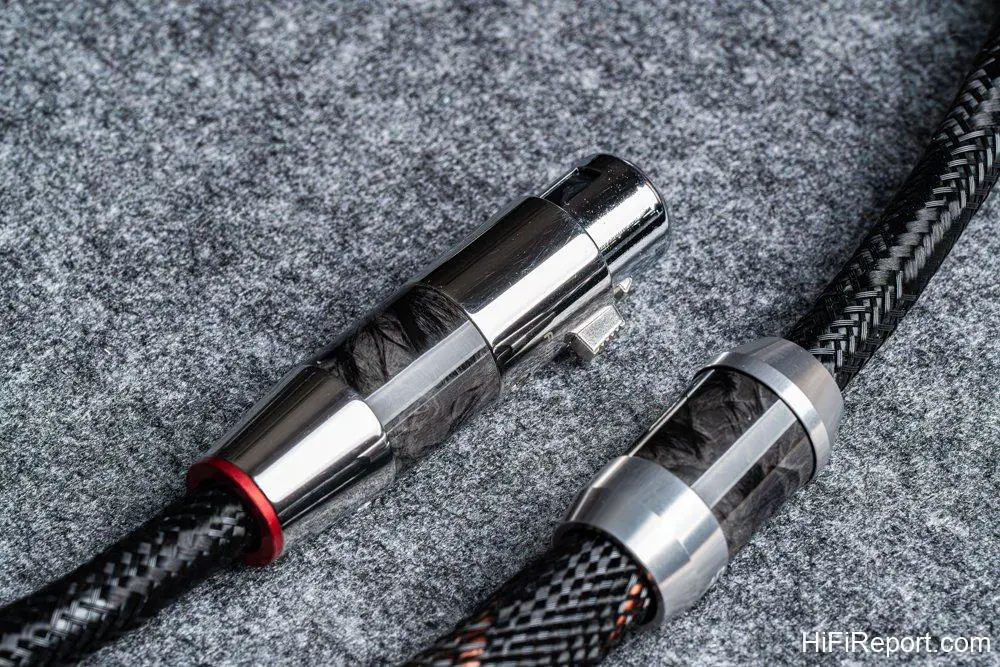
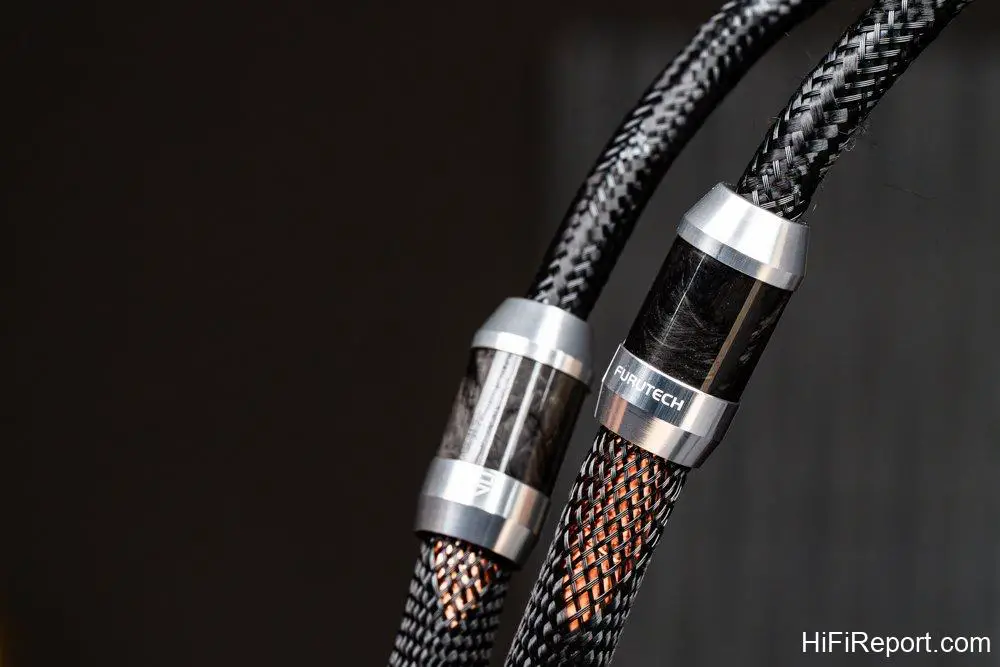
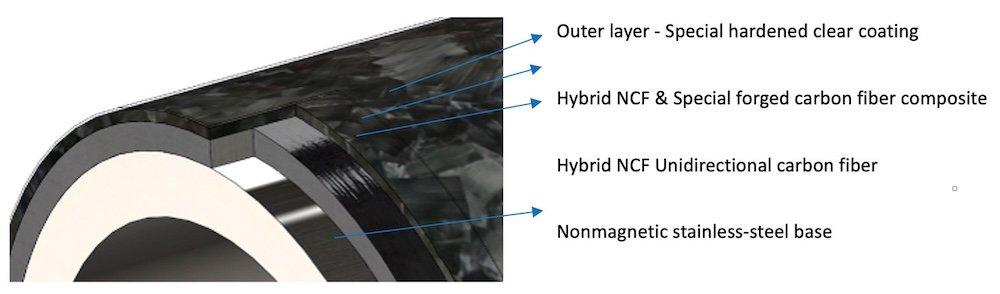
This connector damping ring is primarily black with irregular gray blocky patterns, resembling mica, or perhaps mother-of-pearl, even having a texture reminiscent of a meteorite surface or Damascus steel. But it is none of these. This is undeniably the NCF formula material, only this time, instead of hardened woven carbon fiber, it uses a special forging method to create this carbon fiber composite containing the NCF formula. Observing its completely irregular texture arrangement is precisely the result Furutech engineers desired, as it offers superior damping characteristics.
Furthermore, the Project V1-L XLR cable body features an additional damping ring, also made of non-magnetic stainless steel, paired with that special NCF damping material. According to the manufacturer, this damping ring is not merely for decoration (though it certainly looks more upscale), but rather to reduce mechanical and electrical distortion along the cable body through the NCF components.
Sonic Performance: Simply Astounding
How does it sound? Simply fantastic! In the HiFiReport listening room, I used an EAR Yoshino 868 preamplifier and 509 MK2 power amplifiers paired with Wilson Audio Alexia V speakers as the main system. The Furutech Project V1-L XLR signal cable was connected between the pre and power amplifiers. The sources included a YBA CDT-450 transport with a Merging NADAC DAC and a Cambridge EXN streaming player. The former was used for playing CDs, while the latter streamed music via Roon Core running on a Rock-NUC.
The Project V1-L is indeed a flagship signal cable from Furutech. The moment it was introduced into the system, the difference was immediately palpable. The sonic picture became exceptionally clear, separation was outstanding, and the positioning and distribution of musical layers were crystal clear.
Its spatial presentation is superb, with an expansive and deep soundstage. The distinct, layered perspective makes it seem as though everything on the stage can be fully and completely reproduced.
In terms of timbre, the Project V1-L offers incredibly rich, accurate, and natural colors. Identifying various instruments is effortless, and the nuances of the performers’ interpretations are fully conveyed.
It also excels at rendering fine details. Whether it’s faint sounds, subtle textures, or gentle dynamic swells, the completeness of the information provided by the Project V1-L leaves no doubt that you’re missing anything. Another impressive aspect is its dynamic performance; the ebb and flow of musical energy, the variations in loudness, intensity, and dynamics, are handled with effortless grace.
Dynamics, Transients, Timbre
Take, for example, the performance of Dukas’ “The Sorcerer’s Apprentice” conducted by Andre Previn with the Los Angeles Philharmonic (as recorded for HiFiReport, it seems the reviewer is referencing a specific recording or context here). This piece is Dukas’ most famous work and the one listeners are most familiar with today. While Walt Disney’s use of the piece certainly elevated its recognition, Dukas’ exquisite orchestral technique and brilliant melodic colors are undeniably the primary reasons for the widespread popularity of this scherzo.
If an audio system lacks good dynamics, produces a monotonous timbre, and exhibits poor layering, one simply won’t grasp how wonderful and engaging this piece is. With the Project V1-L signal cable in the system, replaying this piece elicited repeated gasps of astonishment from me. I’m not exaggerating for effect; I included “The Sorcerer’s Apprentice” in recent guided listening sessions, so I’ve heard it countless times lately.
I’ve listened to it on different headphones and two-channel systems, and I compared numerous versions before finally selecting this performance by Previn and the LA Phil. Because I know the piece so well, I know exactly where the differences lie.
The opening prelude depicts the apprentice casting a spell, with violins playing a gentle motif, and the clarinet responding in concert with other woodwinds. This motif is soft, yet the texture of each instrument is clearly recorded; even the gently played violins have detail. Why the gasps? Because all this information, which I might not even perceive clearly on headphones, was suddenly laid bare, one detail after another. (Of course, DAC/headphone amps and Bluetooth headphones can’t use the Project V1-L!)
Subsequently, the music surges forth abruptly, and with the appearance of the piece’s main motif, the core of the scherzo is introduced. Listening to the dynamics and transient response, this cable completely justifies its significant price tag. In the bustling, colorful ensemble passages, the different sections intertwine, progressing forward. The simple main motif transforms into multifaceted guises, and even with repeated iterations, it never feels tedious. This is Dukas’ genius, and it’s also Furutech’s genius. Or perhaps, the Furutech Project V1-L XLR allowed me to more deeply appreciate Dukas’ compositional skill.
Switching back to an ordinary balanced cable, the apprentice is still there struggling with the broom, but the sense of color is diminished, the sonic image becomes flat, the three-dimensional feel is reduced, the layering is blurred, and the vivacity is dampened. If one day your favorite noodle shop reduces the amount of noodles, soup, beef, and green onions, would you still go there?
Orchestral Clarity & Texture
The clean, transparent soundstage makes the texture and structure of the music clear and distinct. Furthermore, its sound is bright, radiant, and full of vitality. However, please don’t misinterpret “bright and radiant” as implying the sound is sharp, irritating, or harsh. On the contrary, its sound has absolutely no unpleasant edginess. Its radiance is more like a reflection, like the shimmer of light on a gemstone.
And it’s not the dazzling brilliance of a GIA 3EX diamond under high-intensity lighting, but rather a warm, gentle quality, a rich and beautiful luster.
Take, for example, Pierné’s ballet music “Cydalise et le Chèvre-pied.” There aren’t many recordings of this piece, and it’s usually performed by French orchestras. However, this piece is truly spectacular. Pierné was a student of Massenet and considered Franck’s successor; this piece fully demonstrates that he was worthy of his predecessors’ guidance and legacy.
In addition to the standard orchestral setup, the piece includes harp, celesta, piano, harpsichord, and percussion instruments like castanets, triangle, tambourine, and xylophone – a rich instrumentation indeed. Seeing the orchestral setup, can you imagine the sonic effects of the piece? Regardless of how many times I’ve heard this piece, several familiar passages in the first act sounded completely different after passing through the Project V1-L. I found myself repeatedly exclaiming, “Oh, so this is how it sounds here,” or “Oh, I didn’t realize this was here.”
I really appreciate the stage presence it creates – expansive, wide, and deep. In the “March of the Young Satyrs” section from “The School of the Satyrs,” the pizzicato in the low strings combined with the tambourine provides a clear rhythmic foundation for this march, while the winds handle the melody. Listening to the rhythm here, formed by different instruments working together, is far from a simple beat. I could clearly perceive the composition of notes at each beat and the sense of depth created by the front-to-back spacing between the woodwinds. When the brass joined, I immediately noticed the change in the ensemble.
The piccolo soared upwards, its sound high-pitched and sharp, yet maintaining good density and retaining a hint of a moist texture. Is this difficult to reproduce? Let me put it this way: with the Project V1-L, I didn’t need to strain my imagination; the spatial information and textural nuances were sufficiently abundant.
As for my favorite section, “The Dance Lesson of the Satyrs,” the first half is a theme and variations, a clever repetition that is not the composer lazily padding the score, but like a classroom lesson – I perform a move, and you follow suit. The ABA structure of the theme and variations adds extra variation to the piece. Even with repetitions necessitated by the drama, the music never becomes dry; instead, it’s utterly fascinating. With clear deconstruction of parts and precise instrumental textures, the Project V1-L renders this theme and variations with lively animation.
The fifth variation deviates considerably from the theme, like a mischievous interlude by the young satyrs. Following it is the brilliant rondo section of this piece. As the theme repeatedly appears, the instrumentation gradually increases, the volume swells, and the entire orchestra, in a magnificent ensemble, drives the piece towards its climax, concluding the section with grandeur. This process of layered progression – what instrumentation is added, what results from the ensemble, what color the soaring piccolo and high woodwinds contribute, what glorious effect the building brass brings – the Project V1-L XLR articulates each aspect with such convincing power.
Whether it’s Dukas’ “The Sorcerer’s Apprentice” or Pierné’s “Cydalise et le Chèvre-pied,” these are pieces I am familiar with. However, this listening session made these familiar pieces feel completely refreshed, brimming with new insights. Thanks to this cable, I was able to understand the intricacies and beauty within these pieces even more deeply and thoroughly before my lecture. Without it, I would have thought that what I had heard in the past was everything there was. Apparently, there was still more.
Transparent Yet Textured
The texture of instruments and the luminous quality I emphasized earlier can be further illustrated with chamber music recordings. Taking Schubert’s “Trout Quintet,” performed by Renaud Capuçon and other soloists, as an example, the contribution of the Project V1-L XLR to the entire system is considerable.
This recording inherently leans towards cleanliness and transparency. With the Project V1-L XLR in circuit, this cleanliness and transparency are infused with added texture; it’s not merely sterile cleanliness or bare transparency, but rather the cleanliness and transparency serve to highlight the texture of the music. The piano is crystal clear, the violin tells its story, the viola and cello provide richness and warmth, and the double bass lays down depth and weight; all of which reveal the joy and vitality of this “Trout.”
Chamber music involves fewer instruments, making localization easier to discern. The picture provided by the Project V1-L XLR is clear and transparent, laying everything bare. The density of each instrument’s sound is excellent, the organization is dense and rich, and the lines are clearly defined. It makes even ordinary CDs sound as textured as vinyl records and as detailed as high-resolution files.
Can a cable make such a big difference? And this is a Furutech cable, not from a well-known European or American manufacturer? You have to try it. Without trying it, I wouldn’t believe it myself.
While I could share more, including how Abbado’s Tchaikovsky sounded, how Chailly’s Beethoven performed, or tell you how much I enjoyed listening to Arrau playing Chopin’s Preludes and Pires’ Mozart Sonatas, what about playing pop music? It handles that just as well!
Imaging, Detail, Impact
Listening to Jennifer Warnes’ album “Famous Blue Raincoat,” the abundant vitality brought by the Project V1-L makes it even clearer why this album is a classic. The mixing is truly superb! In “First We Take Manhattan,” the radio broadcast appears on the left at the beginning, a steady rhythm introduces the drums and electric guitar, followed by keyboards, synthesizers, and backing vocals.
Although there are many elements, they appear one by one, in an orderly sequence, gradually unfolding. More importantly, the balance of the mix allows this diverse and rich musical composition to spread out evenly. The drums are solid and powerful, capable of conveying speed and impact. The tone of the accompanying electric guitar is truly beautiful, and its multifaceted colors make it sound like another person singing. Who is the guitarist? Stevie Ray Vaughan!
The opening drum sound in “Bird on a Wire” is full and deep, with ample impact, giving the song a powerful presence. Meanwhile, the rhythms scattered around provide the song with a lively groove. This sense of density, this imaging capability, this resolution, this abundance of information – the Project V1-L XLR provides not just a High-End accent and tone, but an inherent essence.
In the title track, “Famous Blue Raincoat,” the texture of the saxophone and bass is truly outstanding, not only clear but also possessing a sense of intimacy. As for Jennifer Warnes’ vocals, they are warm and clear, with the texture and detail of her voice being distinct but not overly prominent. Instead, they organize a dense, full-bodied sound with abundant information. Especially in “Famous Blue Raincoat,” the almost spoken-word delivery pulls you into the song as you listen.
A High-End Powerhouse
Are you, like my former self, still seeing Furutech primarily as a manufacturer of parts and bulk cables, and not taking their finished cables seriously? Wrong! This perception is completely mistaken! Unless you’ve experienced them, you won’t know. Once you try them, you’ll understand that Furutech’s products are truly substantial, possessing not only technical prowess but also sonic excellence. The fact that even renowned European and American High-End manufacturers are eager to use their parts is the most genuine validation.
If you have the opportunity, you must try Furutech’s finished cables. And the further up the range you go, the more you’ll realize that their cables are truly extraordinary. I’ve auditioned three pairs of their signal cables in the past two years, and this time, experiencing the latest flagship, the Project V1-L XLR, has solidified this belief.
A signal cable priced over NTD 200,000 (approx. USD 6,250) is certainly not inexpensive. However, when used in a system costing over NTD 2,000,000 (approx. USD 62,500), what is there to hesitate about? Instead, you’ll find immense satisfaction in the exquisite listening experience the Project V1-L provides. Moreover, you’ll see another mountain peak alongside those of the European and American cable giants – another high-end powerhouse.
Specifications
* Furutech Project V1-L-XLR
* Type: XLR Balanced Signal Cable
* Conductor: Center / Silver-plated Alpha OCC single-core copper conductor (x26), Middle layer / Alpha DUCC conductor (x23) twisted left, Outer layer / Alpha DUCC conductor (x31) twisted right
* Shielding: Triple-layer shielding (note: description detailed three layers, spec says double, likely means conductor shielding + outer shielding)
* Connectors: Furutech CF-601M NCF(R)-P, Furutech CF-602F NCF(R)-P
* Length: 1.2 M