
Gryphon Trident II Review
Some say that the most expensive component in a Hi-Fi system is space itself. This is especially true in places where land is incredibly valuable. But does limited space mean you have to give up on the dream of owning massive speakers? After my second encounter with the Gryphon Trident II, I believe it might be the most space-adaptable reference-grade behemoth currently available.
A Second Listen to Trident II
One day, I received a call from Gryphon, asking if I was interested in listening to the Trident II again. Of course! We scheduled a time, and I happily went for the audition. It was only when I returned to write this review that I realized I had actually heard the Trident II back in 2015, the year it was launched. (You can read that review here). However, it felt like my first time experiencing the Trident II. Reading my words from 2015 and comparing them with my impressions from this recent session, I can confidently say that my second listen to the Trident II was even more impactful, with a deeper connection to the music.
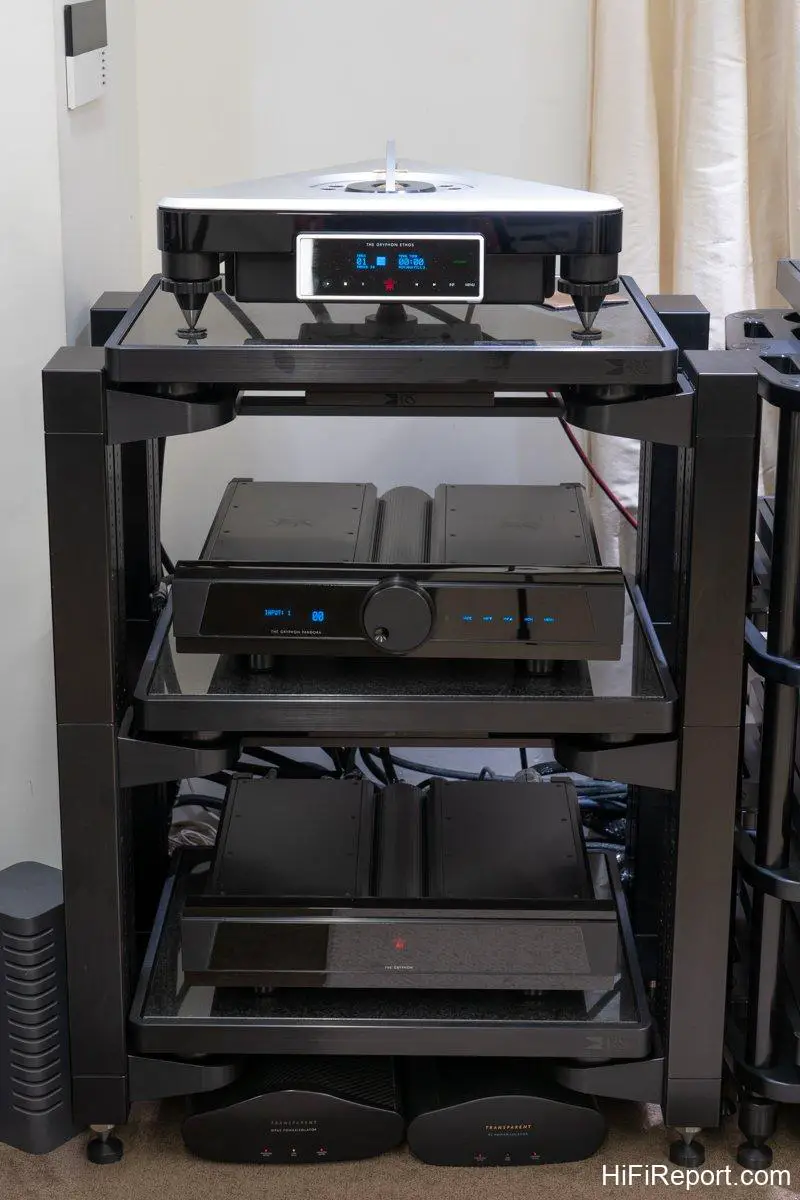
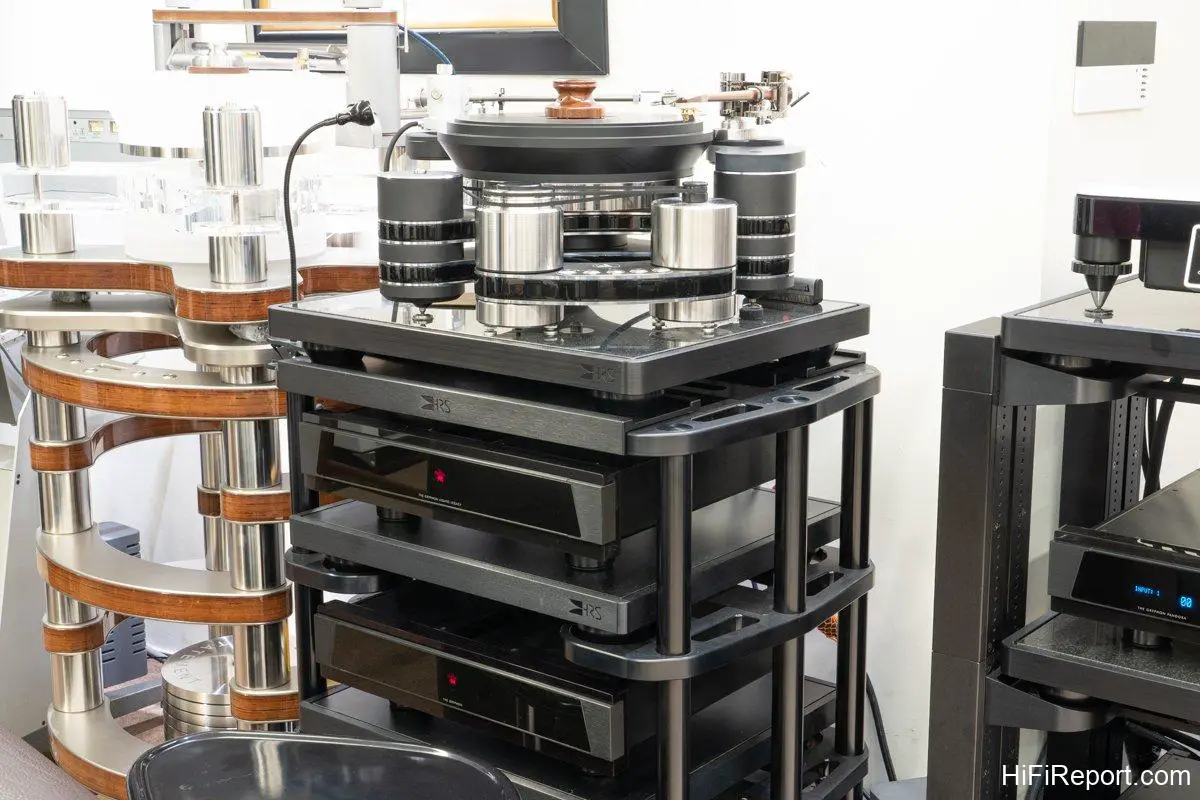
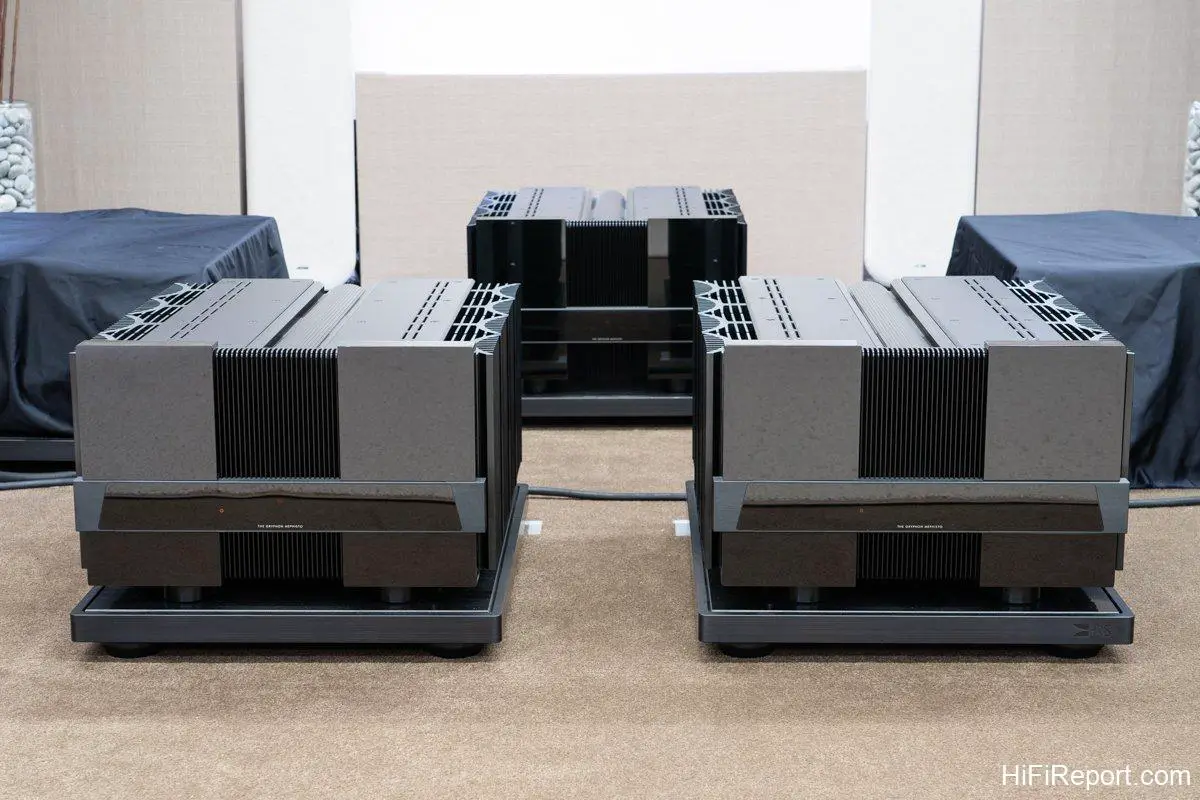
Why did the Trident II sound more stunning and moving the second time around in the same space? One reason is the advancement of the accompanying equipment. During my first Trident II experience, the system was also all Gryphon, including the Mirage preamp and Colosseum stereo power amplifier. This time, however, the entire system was composed of Gryphon’s latest generation components. The preamp was the Pandora, and the power amplification was generously handled by the Mephisto Mono monoblocks. The digital source was the Ethos CD player. It wasn’t just newer Gryphon gear; it was also a higher-tier system overall.
Unique Q Control Feature
Another reason for the even more impressive Trident II experience was likely the refined expertise in Gryphon system matching and setup. In the same listening room, through continuous experimentation and adjustments, the entire audio system was gradually and perfectly matched to the space. Moreover, the sound could be shaped and altered at will. This kind of flexible fine-tuning isn’t achievable with all speakers; it’s a unique capability of the Trident II.
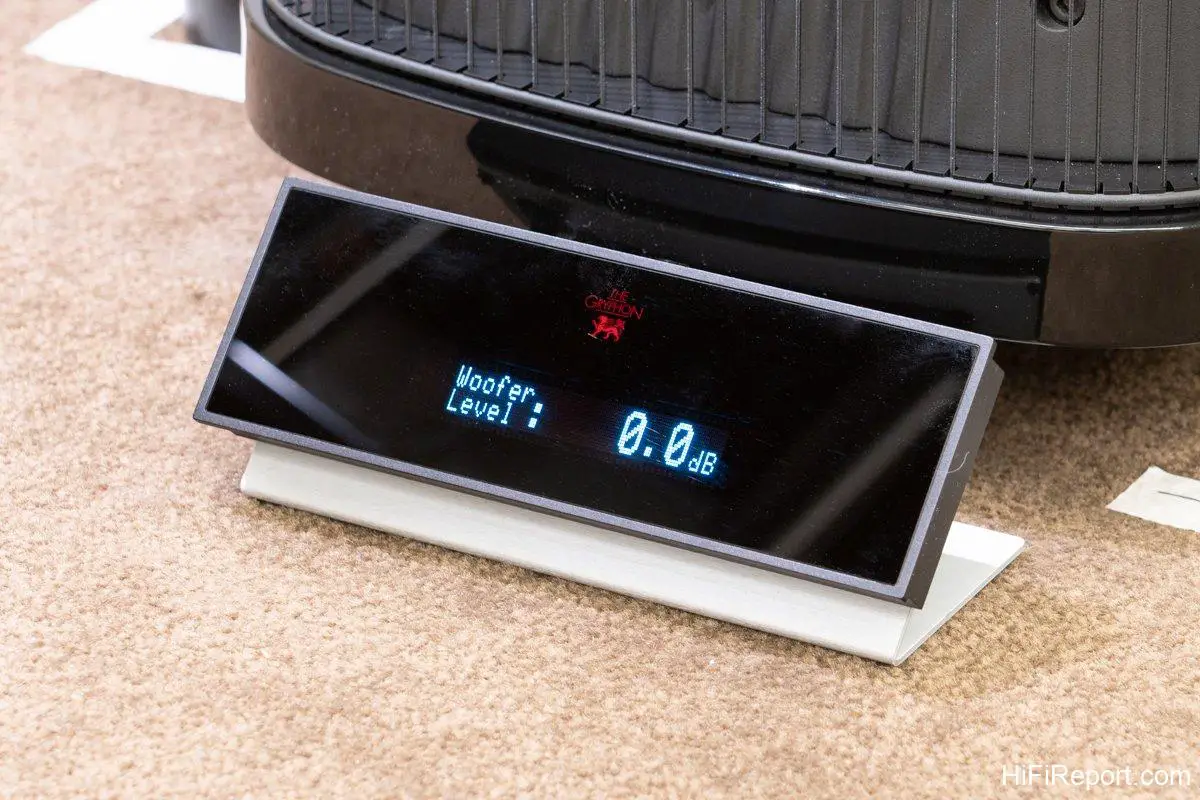
What is this special feature? It’s adjustable bass level combined with bass Q value control. Any Gryphon semi-active speaker possesses this functionality, a result of over a decade of Gryphon’s research, granting their speakers maximum adaptability to different listening environments. This is a truly remarkable achievement.
Music and Sound: Art of Time
Let’s rewind a bit. Music is an art form in time. Notes rise and fall in the flow of time, creating music. Each note is a sound, and a speaker’s reproduction of sound is also intrinsically linked to time. Since we listen to multi-way speakers, with high, mid, and low frequencies each handled by dedicated drivers, ensuring that the sound from each frequency band reaches our ears simultaneously is what we call time-phase coherence. Gryphon has placed particular emphasis on accurate time-phase since introducing their first bookshelf speaker, the Cantata, in 2002.
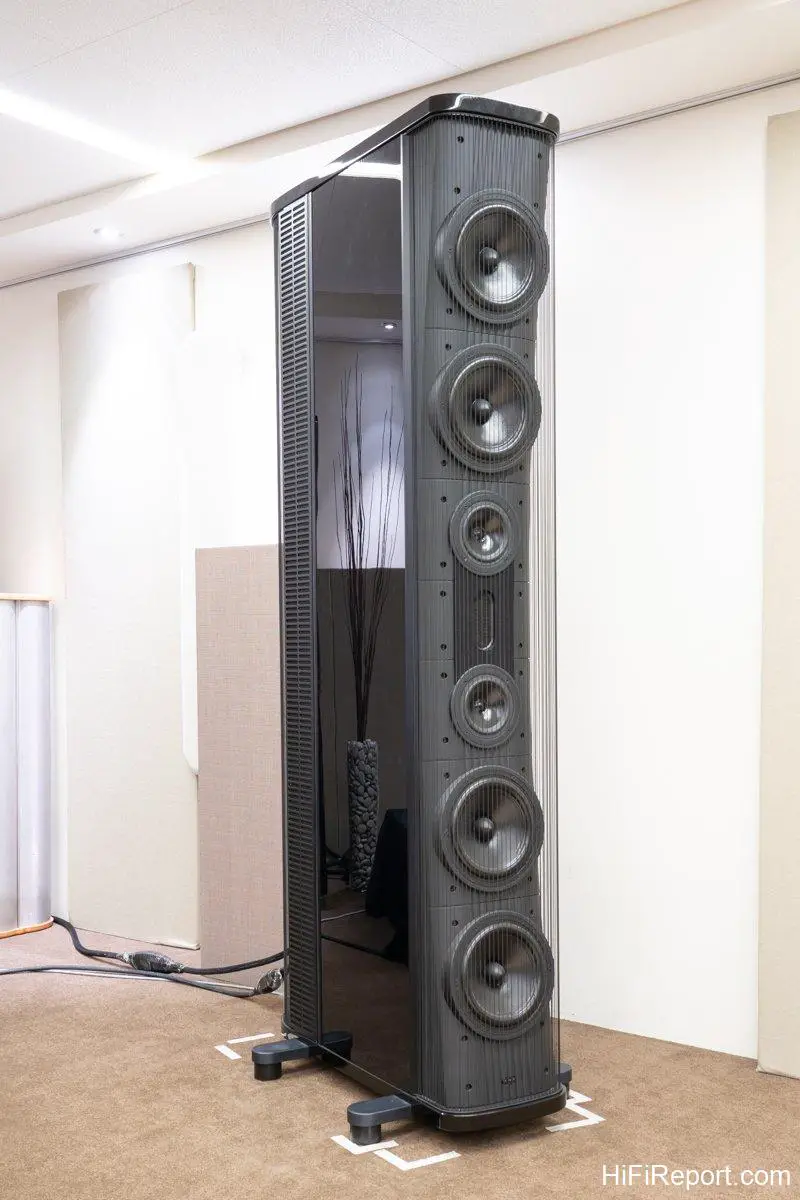
How do you achieve time-phase coherence across high, mid, and low frequencies? Gryphon’s approach is the “curved” front baffle. This design principle has been in place since the first generation Trident and continues in the Trident II. We know that sound waves travel through air, with high frequencies moving faster and low frequencies slower. By positioning the tweeter slightly rearward and the woofer slightly forward, or by employing a front baffle with a specific angle, the time-phase of high, mid, and low frequencies can be subtly adjusted and corrected. Gryphon’s “curved” design further considers the dispersion characteristics of speaker drivers, precisely correcting time-phase coherence. This is what Gryphon refers to as “Constant Phase.”
Innovative Modular Cabinet
In the first generation Trident, the front baffle was a single piece of thick material. In the Trident II, it has evolved into a modular design. Each driver is mounted on its own small piece of front baffle. This provides enhanced rigidity. Imagine a large speaker baffle; although it has high mass, controlling resonance in a long, flat panel is more challenging. By shrinking it to a modular design, the most suitable front baffle can be used to firmly secure drivers for high, mid, and low frequency modules. This is wisdom accumulated over time. The experience with the first-generation Trident paved the way for creating an even better design, leading to the evolution of the Trident II.
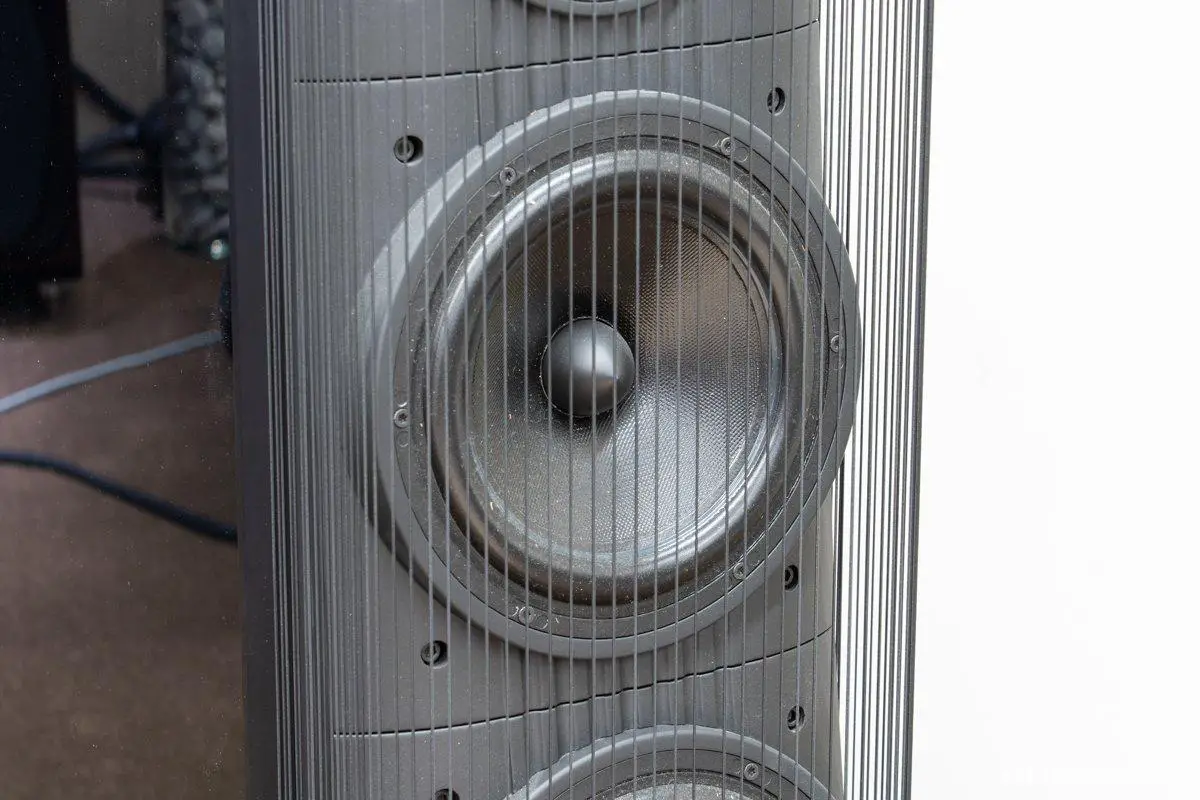
Building upon the foundation of constant phase with the special curved front baffle, the next crucial aspect is the quality of the drivers themselves. Gryphon’s drivers are custom-made by Danish manufacturer Scan-Speak, but the specifications are entirely dictated by Gryphon.
Gryphon’s Custom Scan-Speak Drivers
I recall during a factory visit, Gryphon recounting the story of their collaboration with Scan-Speak. They approached Scan-Speak with their drivers, praising their performance but suggesting that improvements could be made by modifying the diaphragm, surround, spider, voice coil, dust cap, and so on. Scan-Speak’s engineers were stunned, asking, “If all the parts are replaced, what’s left?” Gryphon replied, “The metal frame is good, no need to change that.”
Imagine, Scan-Speak, a renowned Danish speaker driver manufacturer, how could they accept such a proposition? Initially, they were reluctant to collaborate with Gryphon. However, Gryphon’s offer was too enticing – a no-expense-spared, custom-designed project. Yet, Scan-Speak didn’t want it known that their driver evolution was based on Gryphon’s suggestions. So, while Scan-Speak accepted the custom driver order, they requested that Gryphon not advertise that these were Scan-Speak-made drivers.
Gryphon agreed to this condition. Initially, we were unaware of who manufactured Gryphon’s speaker drivers. However, after Gryphon speakers gained significant recognition, everyone was asking where to buy the drivers. Scan-Speak surprisingly came forward, stating that they made the drivers for Gryphon, which ironically became one of Scan-Speak’s marketing highlights.
Tweeter Upgrade to Mundorf AMT
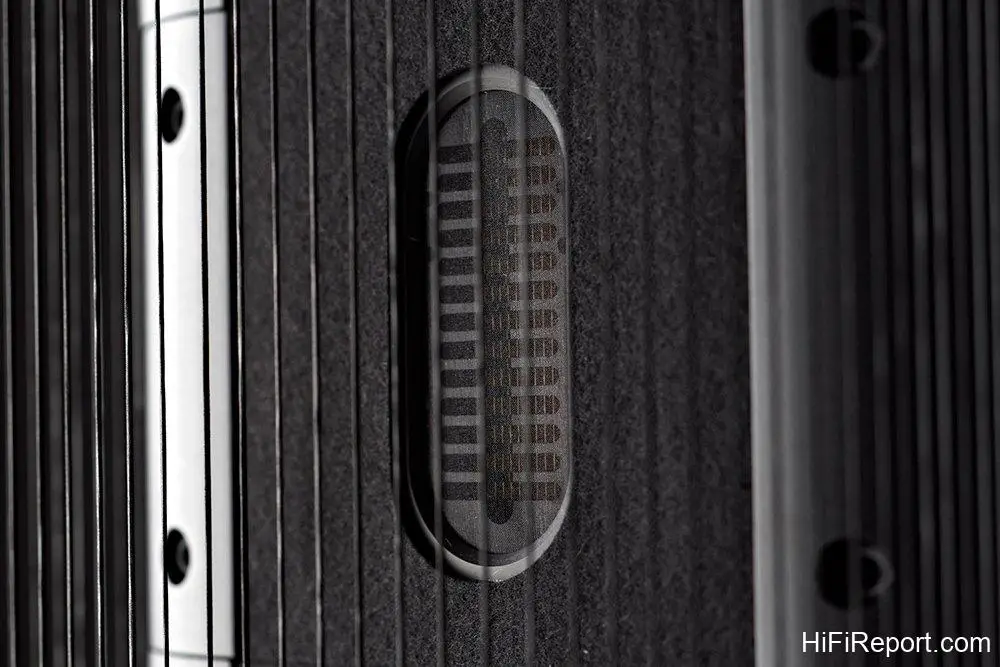
While the first generation Trident used exclusively Gryphon custom-made Scan-Speak drivers, the Trident II upgraded the tweeter to a Mundorf Air Motion Transformer (AMT) driver. This tweeter theoretically extends up to 40 kHz, although Trident II conservatively specifies 27 kHz.
The midrange is handled by two custom-made 5-inch Kevlar diaphragm drivers. The bass section employs four custom-made 8-inch drivers. These drivers are not available off-the-shelf; they are custom-designed by Gryphon to meet the Trident II’s specific requirements.
The Trident II’s crossover design is linked to another legend in the Danish audio world, Steen Duelund. Audiophiles familiar with DIY components surely know Duelund capacitors, inductors, and resistors. They are produced in extremely limited quantities, priced very high, but are undoubtedly key passive components for achieving audiophile-grade sound. Gryphon has a close relationship with Steen Duelund, even receiving custom orders to Gryphon’s special specifications. Duelund was also a significant early supporter of Gryphon’s speaker ventures, providing numerous design insights. Sadly, Steen Duelund passed away in 2005, but his son successfully took over the company, continuing the Duelund legacy of high-end passive components.
The Trident II’s crossover is certainly a collection of top-tier components, but its exact contents remain a mystery, as it’s encapsulated in epoxy resin, making it impossible to see. Based on Gryphon’s information, it includes copper foil air-core inductors and metal film capacitors. Furthermore, the capacitors in the Trident II crossover are biased with a 28V DC voltage to eliminate zero-crossing distortion. The manufacturer claims this enhances imaging and makes the soundstage and timbre more fluid and coherent.
Unprecedented Q Value Adjustment
The design aspects of the Trident II discussed above, from the curved front baffle and drivers to the crossover, all reflect Gryphon’s design philosophy. However, while time-phase coherence, custom drivers, and unique crossover components are common topics in speaker design, they are not exclusive to Gryphon. But Q Control is Gryphon’s exclusive technology. To date, I haven’t seen any other audio brand introduce similar functionality, and this feature gives the Trident II its exceptional adaptability to different listening environments.
The theory behind Q Control was proposed by Linkwitz and Greiner as early as the 1950s, but it remained in the theoretical realm. No one had actually created a speaker with controllable Q value until Gryphon, arguably making them the first in speaker development history.
Speaker Q value is a relatively abstract concept. When designing speakers, the speaker’s inherent Q value can be measured using instruments. However, speakers must operate within a room, and in enclosed spaces, “Room Gain” phenomenon occurs, amplifying frequencies below the room’s resonant frequency. If the Room Gain effect is too strong, it can make the bass muddy and difficult to control.
Solving Room Gain Issues
Gryphon’s Q Control function is based on the definition of Room Gain, calculating the complementary resonance between the speaker and the room to adjust the speaker’s Q value.
I understand this paragraph is difficult to comprehend. Even after reading it multiple times, it feels like Martian language. I can only speculate on how Gryphon sets the Q value adjustment parameters. The truth is, I have no idea what Gryphon actually does. But after actual listening, the effect of Trident II’s Q Control is very noticeable, effectively addressing the Room Gain issue.
Room Gain is a phenomenon present in any listening space. The strength of gain depends on room size and room damping. Therefore, Trident II has two powerful tools for control: first, adjustable bass level; second, Q Control. Combining these two adjustments provides Trident II with maximum adaptability to listening spaces.
Bass Level and Q Control for Versatile Adjustment
Bass level adjustment ranges from +6 dB to -112 dB, a total adjustment range of 118 dB. If Room Gain is severe, appropriately reducing the bass level can minimize its interference. Q value adjustment is divided into high, medium, and low settings. Both of these adjustment functions can be operated remotely, which is very convenient. Remote control allows you to change the sound signature and find your preferred settings.
Precise control over bass level and Q value also relies on the assistance of Gryphon amplifiers. Trident II employs a semi-active design. Midrange and tweeter drivers require amplifier drive, while the four 8-inch woofers per channel are driven by dedicated power amplification specifically for the bass section.
The power module integrated into Trident II houses 18 Sanken power transistors per channel, paired with a massive 200,000 uF capacitor bank, delivering a power output of up to 500 watts, with a peak output of 2,000 watts. This firmly controls the woofers’ operation. Combined with precise bass level control and Q Control, no matter the acoustic condition of the listening space, regardless of the Room Gain magnitude, the Trident II can seamlessly adapt.
Subtle Adjustments, Significant Impact
Re-engaging with the Trident II was still full of novelty. Seated in the listening sweet spot, I played “Meet Me In London” by Antonio Forcione and Sabina Sciubba, a simple combination of female vocals and fingerstyle guitar. Listening to the classic “Take Five” adaptation, the unusual five-beat rhythm, repeating the same chords, Sabina Sciubba’s vocals swayed with the guitar. Trident II presented a massive and realistic guitar and vocal image. This is a studio recording, allowing Antonio Forcione to play both rhythm and solo parts himself. The full-bodied guitar sound, note articulation clear and solid.
I was engrossed, about to praise the sound tuning prowess when Mr. Huang from Artist World asked me how it sounded. I paused for a moment, saying the bass seemed a bit faster. In my memory, Gryphon’s bass could be more substantial and full-bodied. But I wasn’t entirely confident in my answer because “Meet Me In London” has a relatively small instrumentation and limited bandwidth. Perhaps with large-scale orchestral music, the Trident II’s bass would fully unleash.
At this point, Mr. Huang produced another remote control, specifically for the Trident II, and increased the Q value by one step, asking me to listen again. Antonio Forcione’s guitar image moved slightly closer, but the depth of the soundstage improved, and the width also expanded. The bass range gained a bit more presence, but the speed seemed even quicker and more agile, making Antonio Forcione’s virtuosic fingerstyle playing even more expressive. Impressive! Just adjusting the Q value by one step produced such a significant change. Combined with the 118 dB range of bass level adjustment, the listening space for Trident II can be said to be virtually unrestricted!
Bass: The Most Expensive Frequency
I often tell friends that when buying audio equipment, the most expensive part is the bass. To hear sweet and clear mids and highs, quality small speakers are sufficient. However, lacking abundant bass is a significant deficiency. Bass is the most costly to achieve. To have sufficient bass level and extension, speakers must have adequate volume, drivers must be large enough, and the amplifier must be able to control them. And you need a suitable space to accommodate the bass. All conditions must be met, which is very difficult. Now, Trident II uses unique bass level and Q Control to solve the Room Gain problem. It not only gives you enough bass but also allows you to easily control it.
To test the bass, I brought out Marcus Miller, listening to the first track “Blast” from “Free.” Fast electric bass fingerstyle, leading into an energetic funky dance track. Each thumb slap on the electric bass is a bass удар, while the index and middle fingers virtuously shred melodies.
Mr. Zhang handed me the Trident II remote, letting me play. It was truly fun. Q Control only has three settings, but the changes in bass texture, musical expression, and dynamic intensity are substantial. I’m hesitant to describe these three settings as bright, moderate, and rich changes because the actual effect might be related to the Room Gain of the listening space itself. The three Q Control settings may not always manifest in exactly those ways.
After repeatedly listening to “Blast” several times, comparing Q Control settings, and then adjusting bass level, the 118 dB adjustment range is truly extensive. Even in a very small space with strong Room Gain, Trident II can reduce the bass level significantly, working with Room Gain to achieve balanced and clear bass. And the Trident II’s bass level is absolutely controllable at will. 500 watts per channel driving four 8-inch woofers, there’s no fear of insufficient bass; rather, the concern is too much bass. Even in Artist World’s large listening room, a subtractive approach was needed, appropriately attenuating the Trident II’s bass level.
Effortless Musical Expression Control
After experimenting with Q Control and bass level settings, I returned to the original settings – a sound profile with cleaner bass and clearer outlines. But I knew if I wanted the bass to be fuller, richer, I could just add a bit of Q value. Also, the bass performance varies across recordings. For smaller ensemble music, I could moderately add some bass richness. If listening to large-scale orchestral works, I could enhance bass definition. Trident II not only adapts well to different spaces but can also be tailored to the music content, setting up bass profiles suitable for rock, jazz, and classical music. It’s truly enjoyable.
Continuing to listen, I switched to the relaxed “Cooking With Miles Davis Quintet,” listening to the jazz classic “My Funny Valentine.” Trident II presented relaxed and swinging double bass lines. Miles Davis’s trumpet playing was bright and transparent, with the mute’s timbre variations vividly reproduced. Switching to piano solo, the piano key strikes were full of woody texture, with a moderately rich and warm tonality, making you unconsciously want to sway to the rhythm.
Did I want to switch Q Control again? No, I just wanted to enjoy the music.
How about rock music on the Trident II? It’s a piece of cake, completely effortless. Listening to Pink Floyd’s classic “Dark Side of the Moon,” my favorite track is “Money.” The sounds of cash registers and tearing receipts, dropping coins, interweave between the left and right channels, creating highly imaginative percussion. This album utilizes numerous complex recording and mixing techniques, a classic reference example of multi-track recording. Listening on the Trident II, the left-right channel separation is excellent, forming an extremely clear soundstage positioning. I know these instrument position changes are effects created in the studio, but Trident II faithfully presents the recording as it is, showcasing the rich musical expression of multi-track recording.
Warm and Ethereal Golden High-Frequency Extension
Time for classical music. I inserted Yoshikazu Mera’s “Romance” album into the Ethos CD player, listening to Handel’s “Ombra mai fu.” The clean and spacious organ prelude, Trident II not only presented the transparent organ chord timbre, but also subtle breathy details in the reverb, the sound of air friction from the organ pipes being pumped. Yoshikazu Mera is a countertenor, his vocal timbre somewhat like a falsetto, but with better vocal thickness, a very distinctive countertenor voice.
The first section of the song has a simple instrumentation. After repetitions, pizzicato strings are added, along with the crystalline sounds of the glockenspiel. Trident II’s resolution is excellent, but the tonal foundation is sufficiently full-bodied. Beyond the bright timbre, there’s also excellent richness. This kind of high frequency sounds truly comfortable. In the final repeated section, the orchestra becomes more intense, harps pluck chords, adding to the music’s fluidity, and the bright timbre of the chimes embellishes, presenting a “golden wings”-like noble timbre.
Powerful Contrast: Explosive and Delicate
Expanding the instrumentation, I listened to Martha Argerich’s solo performance with the National Symphony Orchestra conducted by Mstislav Rostropovich in Schumann’s Piano Concerto in A minor, Op. 54. The first movement is a decisive piece, because the opening is an orchestral prelude, with fierce piano chords falling like a storm. If it falters at the very beginning, the audio system truly loses face.
Repeating the beginning of the first movement, I set the Pandora preamp volume to my satisfaction. The orchestral fortes unleashed by the Trident II can be described as overwhelmingly powerful, with surging, passionate emotion.
After the explosive opening, the music immediately transitions to a gentle mood. Woodwind solos emerge from the center of the soundstage. Trident II carved out a deep soundstage. The piano solo echoes the woodwind theme, solitary and alone. The orchestra joins in, gradually intensifying the music’s momentum, from soft to loud, and then the piano stirs up waves again, with orchestral fortes responding, before returning to piano soliloquy. At this point, the piano is no longer gentle; it transforms into a resolute expression. Listening intently, Trident II seemed to transport me to the concert hall at the Kennedy Center that day.
Stark Contrast: From Hell to Heaven
For a reference-grade giant speaker like Trident II, how could I miss Mahler? I put on Bernstein conducting the Royal Concertgebouw Orchestra in Mahler’s Symphony No. 1 “Titan,” directly listening to the fourth movement “Stürmisch bewegt – Allegro energico.” As the movement title suggests, the opening is earth-shattering, the orchestral sound massive and piercing, erupting suddenly. Trident II powerfully unleashed the force of the orchestral symphony.
This is a scene from hell, of course, the sound carries a sense of oppression. The explosive orchestra relentlessly presses forward wave after wave, the brass roars to a peak, strings frantically swirling, then gradually subside, welcoming the utterly romantic string section, a tender and graceful mood, like a light waltz. Trident II presented romantic and beautiful strings, bringing out silk-like delicate luster, soft and comfortable. And this heavenly scene is quickly shattered by an apocalyptic vision, brass once again roaring and urging forward. Trident II’s music energy, both controlled and unrestrained, is a supreme musical listening enjoyment for Mahler.
Gryphon truly caters to audiophiles’ playful spirit. Trident II can be adjusted at will to create diverse musical facets, from delicate to bold, from light to heavy. I often feel that musical preferences are like gourmet tastes; everyone has their own inclinations. This is why audiophiles frequently have the urge to upgrade equipment. After all, every piece of equipment has its own sonic personality. Sometimes you just want to change flavors. Now, Gryphon hands over the power to adjust the timbre to you, for free variation.
Your Customized Trident II: The Best Sound
As for what the best sound of the Trident II is? It’s the sound profile you customize yourself! If you are fortunate enough to own Trident II, you can tune out your favorite sound, and also adjust the tonal richness according to the characteristics of the music, creating the sonic flavor you desire. Possessing diverse musical personalities, from now on, there’s no need to change speakers. Knowing how to adjust the Trident II, in any space, you can have the best sound in your heart!
Specifications
* Type: 3-way semi-active sealed enclosure floorstanding speaker
* Frequency Response: 16 Hz-27 kHz (-3 dB)
* Crossover Frequency: 250 Hz, 2 kHz
* Sensitivity: 95 dB
* Built-in Amplifier Power: 500 watts per channel (peak 2,000 watts), with active Q Control
* Nominal Impedance: 4 ohms
* Dimensions: 193 × 51 × 81 cm (H×W×D)
* Weight: 237 kg per speaker