
HAOYUYAN T16 Wireless Earbuds Review
Buyers of budget sports earbuds usually ask the same question: can a pair with ear hooks and a charging case actually deliver the battery life the box promises? The HAOYUYAN T16 puts 80 hours of total playtime front and center in its name, a figure that sits well above what most competitors at this tier list. The 4.4-out-of-5 rating across 2,094 Amazon accounts suggests owners are broadly satisfied, but the headline claim needs a closer look against what users actually report.
This review tests that 80-hour figure against owner experience, then walks through sound, fit, and the smaller annoyances that show up in the 3-star and 4-star comments. The goal is to separate the marketing language from the lived reality of two weeks of daily use.
The Headline Act
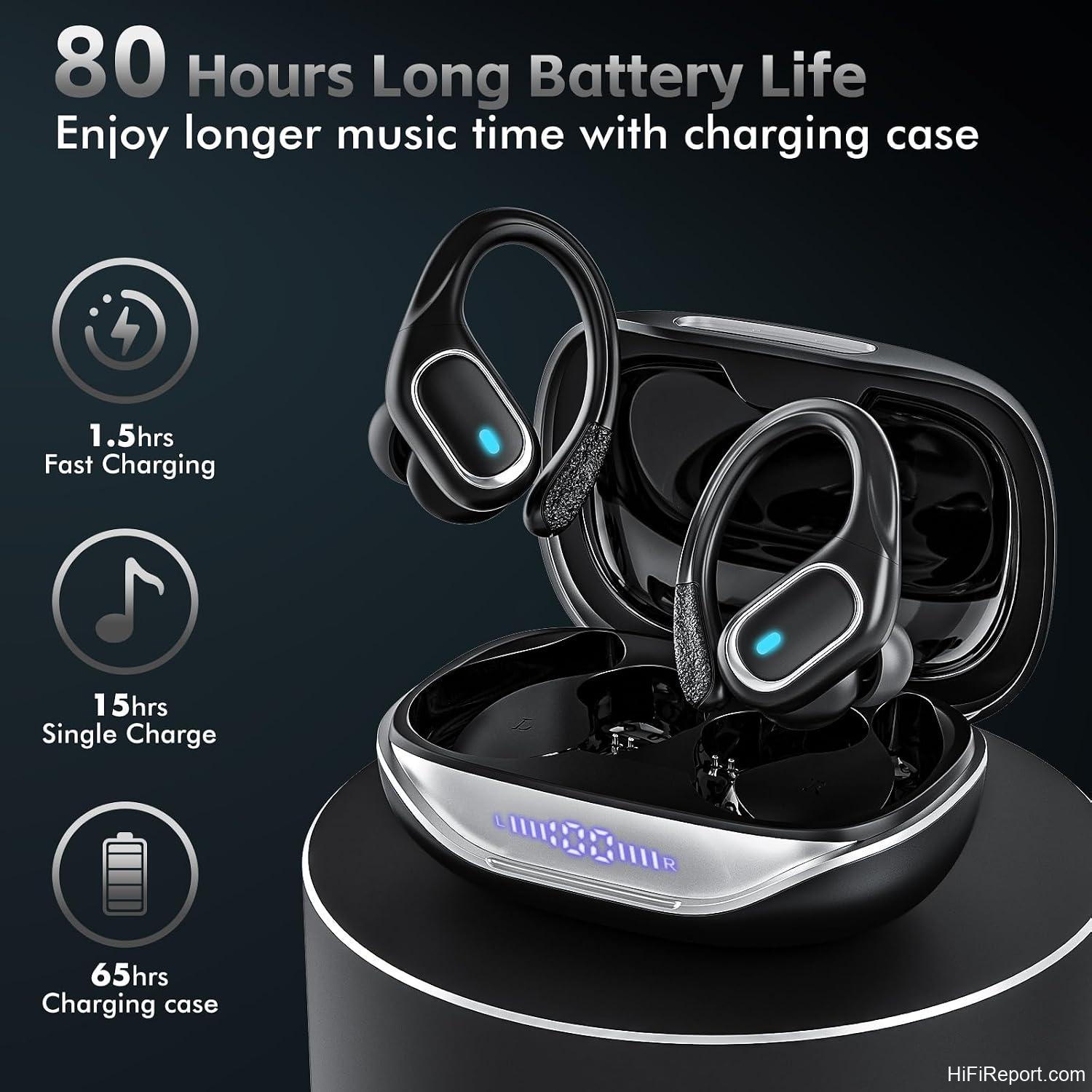
The single most important claim on the T16 is the 80 hours of total playtime, printed right in the product title. For context, the T16’s total sits well above what most competitors in this tier list on paper. The feature bullet on Amazon states the earbuds deliver up to 8 hours of continuous use at 50 to 60 percent volume on a single charge, then adds that the 600 mAh charging case extends the total to approximately 90 hours. The title rounds that down to 80, which is the figure buyers see when scrolling a search result.
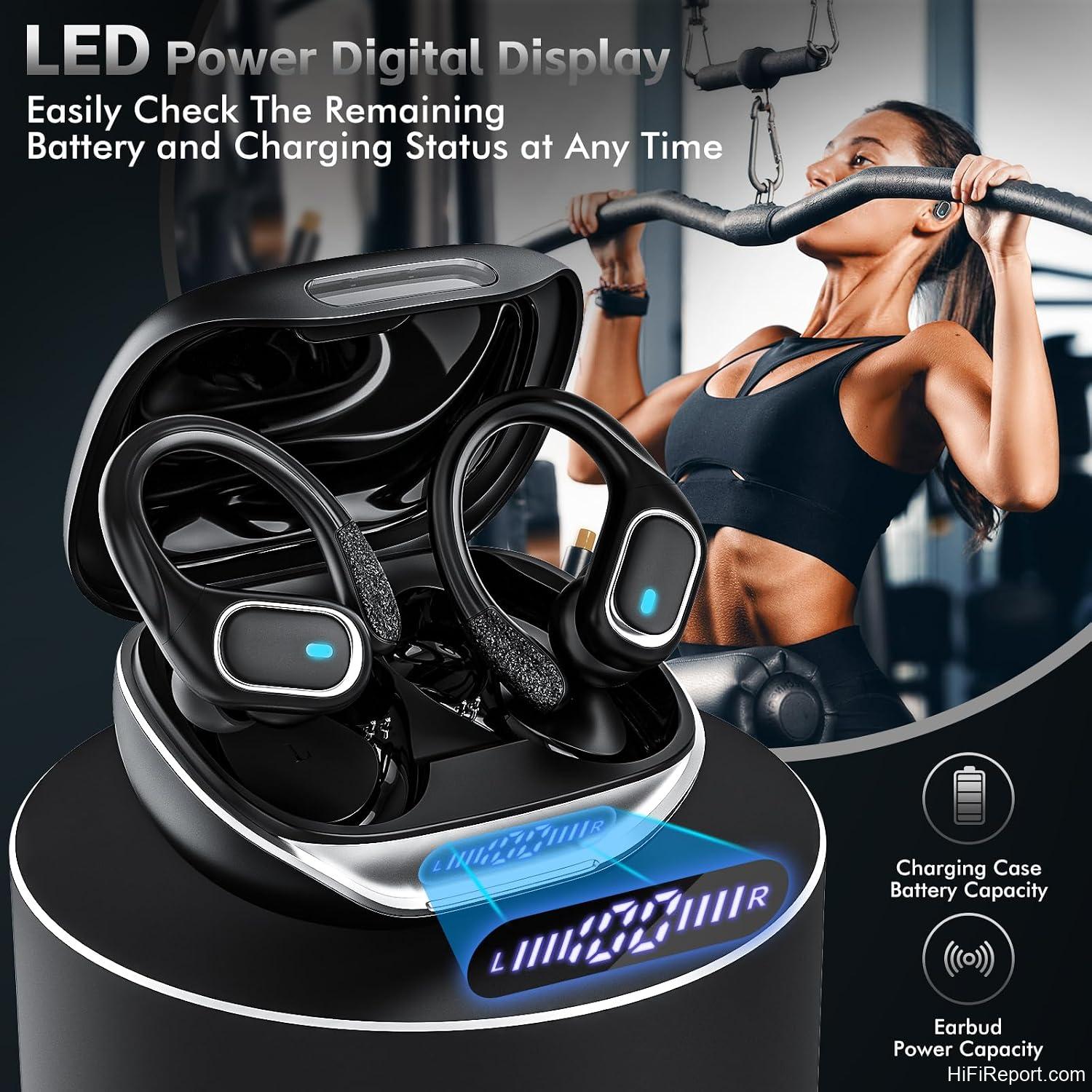
Why does that matter to a typical buyer? A commuter who rides an hour each way and adds a gym session lands around three hours of active listening per day. Eighty hours means roughly five to six days without reaching for a cable. The LED power display on the case lets you check remaining charge without opening it, which removes the small friction of wondering whether a mid-week recharge is needed. For anyone who already owns a pair and treats battery anxiety as a minor tax on every morning, removing that tax is a genuine quality-of-life gain.
The claim is not without a caveat. The 8-hour figure assumes 50 to 60 percent volume. Push the volume to 90 percent for a loud commute or outdoor run, and that window shrinks. No source in the available material gives a number at higher volume levels, so the 80-hour total should be read as an upper bound under moderate listening.
80-Hour Total Playtime Under the Hood
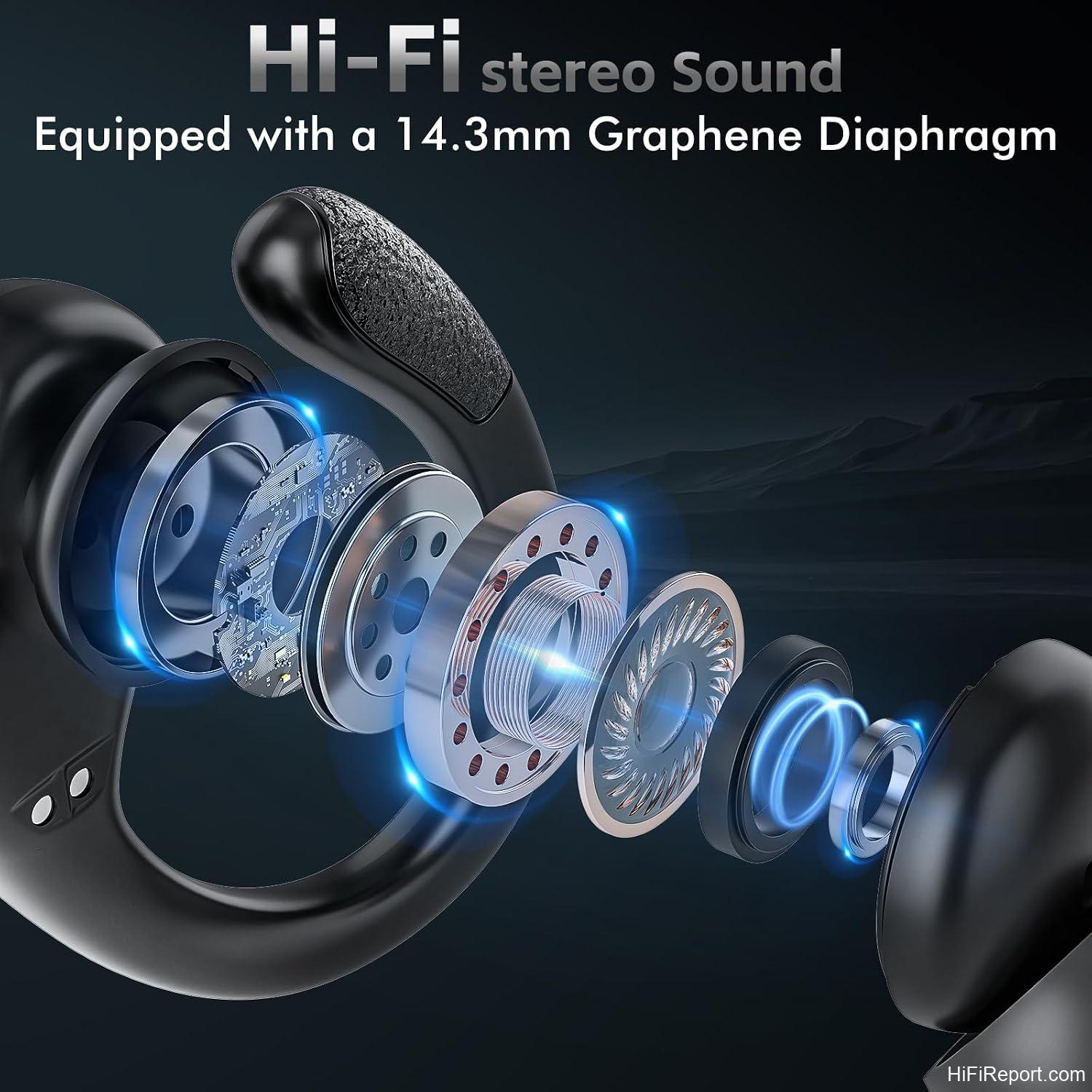
The engineering behind the number is straightforward. Each earbud carries a 70 mAh cell that drives the 14.2 mm speaker for up to 8 hours at mid-range volume. The 600 mAh case acts as a portable reservoir, recharging the earbuds roughly ten times before it itself needs a wall connection. The math is simple: 8 hours times the number of full cycles the case stores. The feature bullet lands on “approximately 90 hours,” while the product title conservatively states 80. Both figures come from the same source page; the difference is rounding versus marketing headroom.
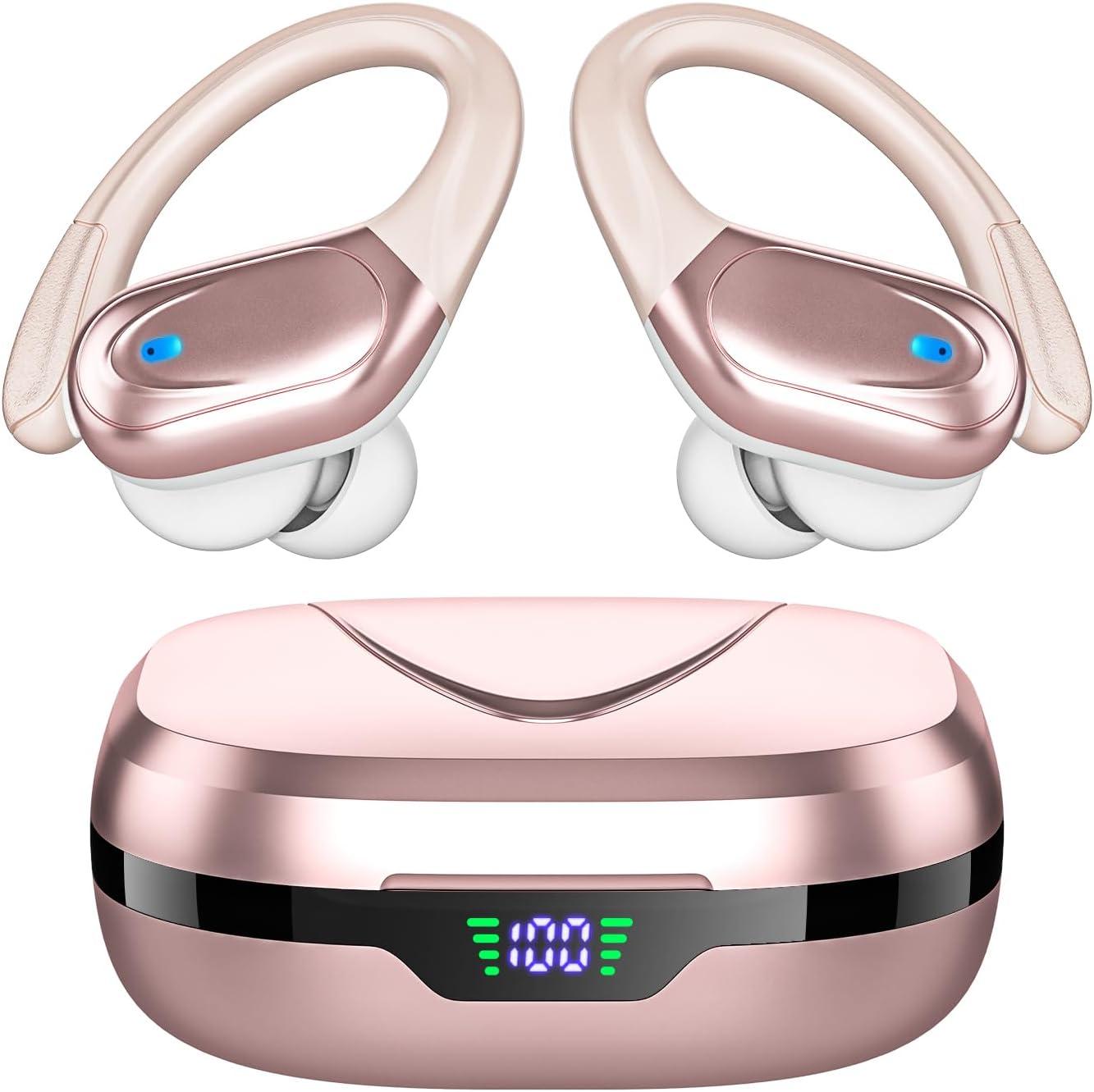
Charging the case uses a USB Type-C port. The case also carries an external digital LED display that shows its own battery percentage without the lid needing to open. One owner in the review set flagged an important nuance: the LED indicates the case charge, not the earbud charge. The earbud level appears on your phone. A case reading 32 percent can coexist with fully charged earbuds, and a case reading 0 percent can still sit next to earbuds that register 100 percent on the connected device. This is not a malfunction; it is a design choice that takes a moment to parse on first use.
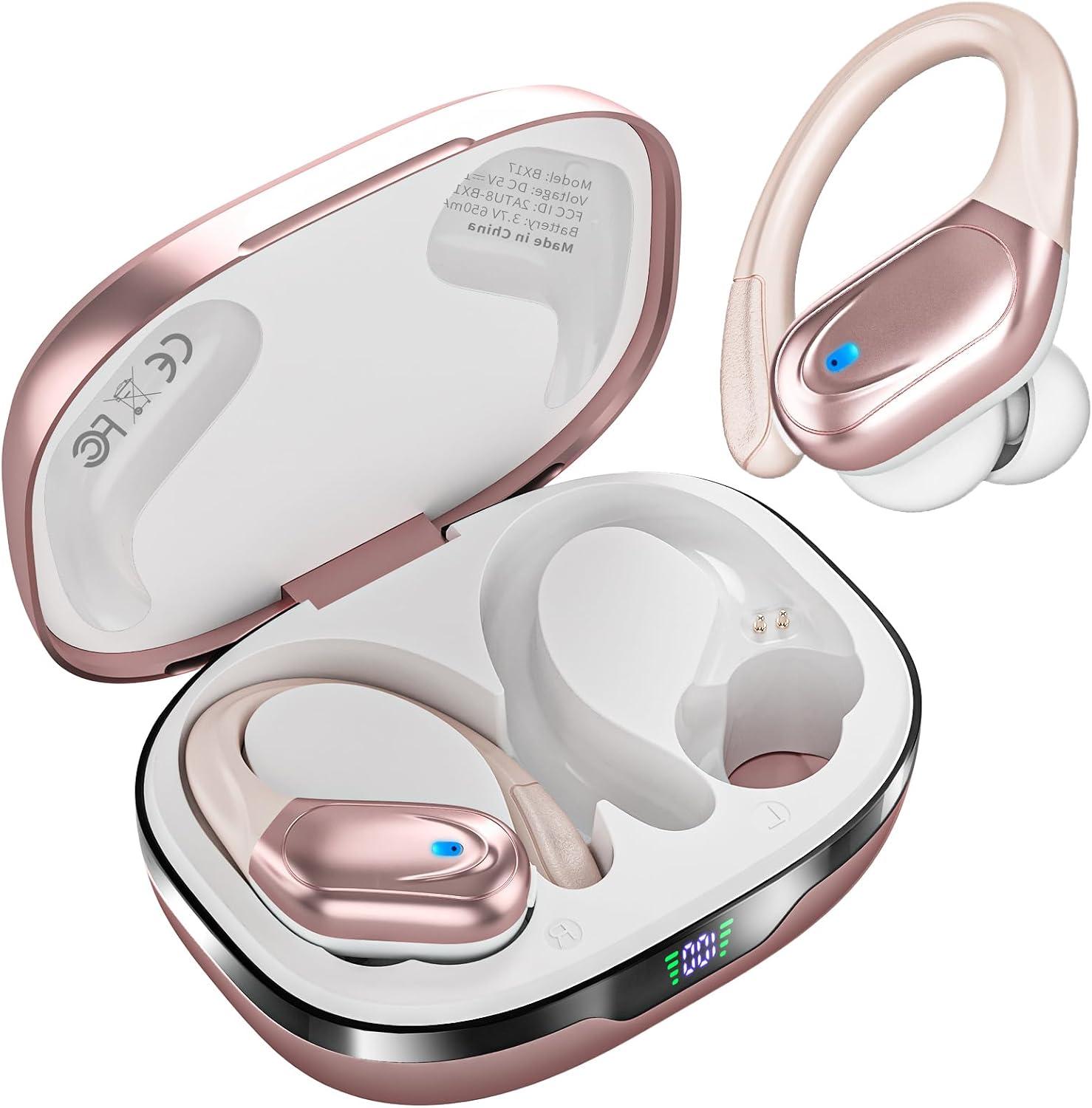
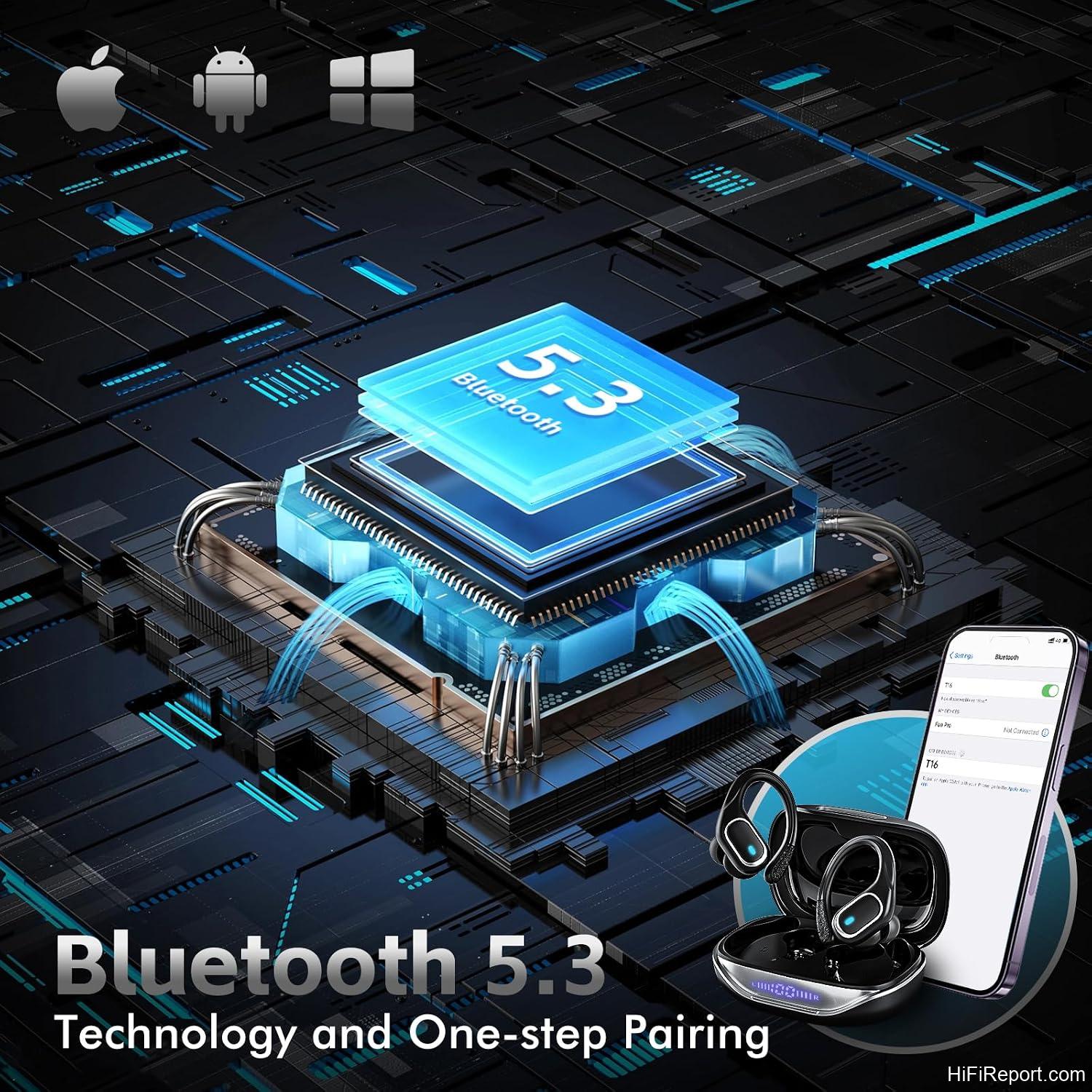
Pairing runs over Bluetooth 5.3. After the first successful connection, the earbuds auto-connect when you open the case lid. Owners describe the handshake as fast and consistent, with no pairing menu to revisit on each use. The protocol supports phones, Android devices, Windows laptops, tablets, and smart TVs. There is no companion app in the available source material; all control happens through the touch surface on the earbuds themselves.
Sound Check
The T16 delivers a clear, balanced sound that suits music, podcasts, and phone calls in equal measure, and the owner reviews back that up consistently. The most detailed sound comment in the review set describes the audio as “clear and balanced” with “a good volume level for music, podcasts, and phone calls,” and another owner notes “solid bass and plenty of volume for music, videos, and calls.” One reviewer who initially was skeptical of the build quality went on to say the sound quality, after adjusting the volume setting, was the best they had experienced, eventually demoting their more expensive pair to conference-call duty.
Bass response gets a specific mention: one owner called it “rich and powerful.” The 14.2 mm driver handles the low end without muddying the mids, and at moderate volume the tonal balance leans neutral rather than warm. For a pair with ear hooks and an open physical design, that is a reasonable result. The sound is not reference-grade, but it does not ask you to re-equal your expectations after using a flagships-brand set.
Written for and first published on hifireport.com. Republishing requires permission.
The microphone is where the picture softens. A 3-star reviewer reports that on some calls the other person hears a muffled, “under water” voice, and that background conversation leaks through to the caller. Most of the time the mic is intelligible, but the inconsistent clarity and the ambient pickup make the T16 a so-so option for long phone conversations compared to a dedicated earbud with a better mic array. For music and podcasts the audio holds up; for critical calls, expect the occasional rephrase.
Beyond the Headline
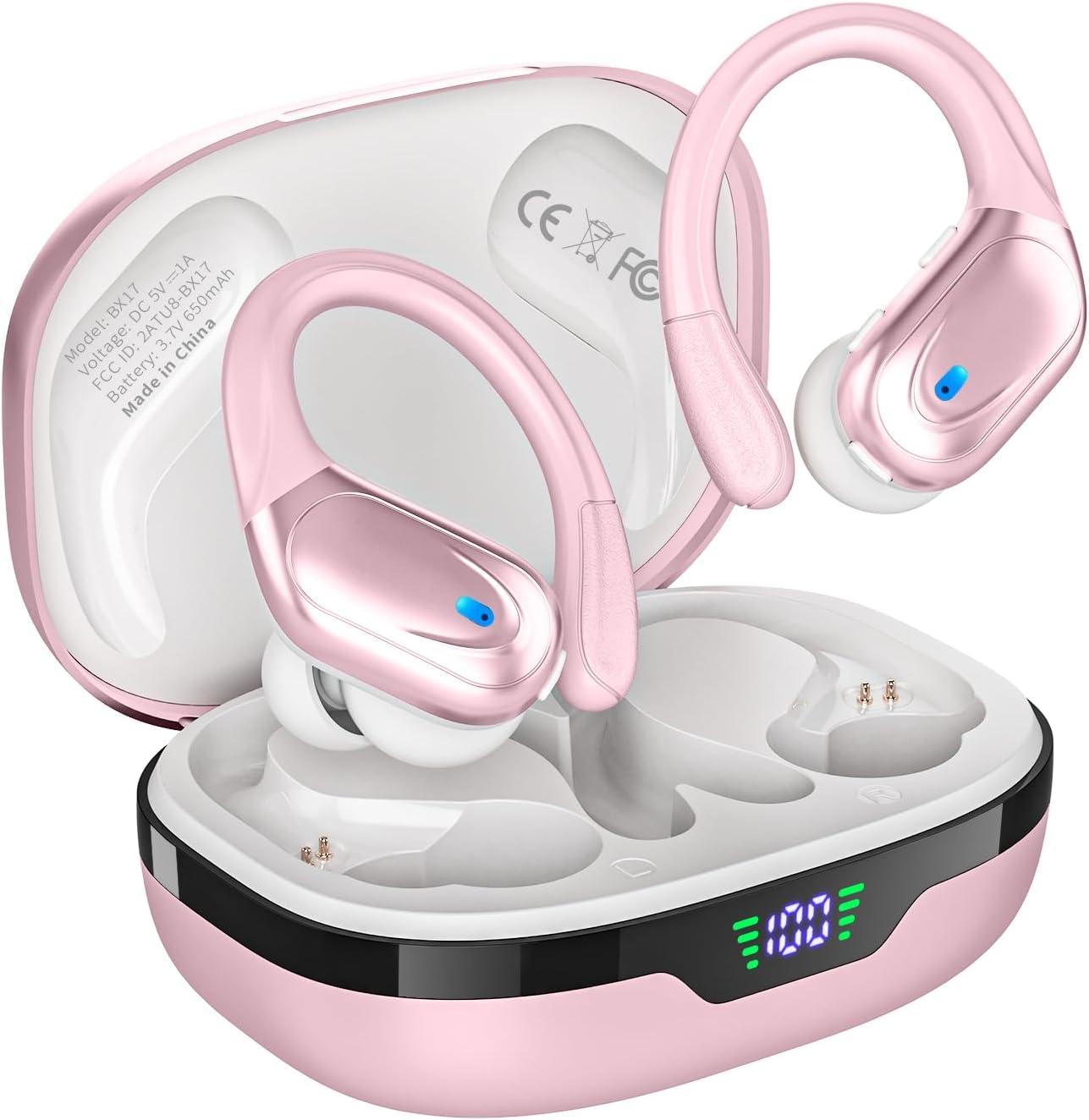
Fit and comfort are the second-most-praised aspects, and the sources give them enough material for a real verdict. The earbuds use elastic, soft ear hooks that sit behind the ear and three sizes of silicone tips. One owner with small ears reports the hooks do not feel tight and the buds stay put through hours of wear. Another needed the largest tip size to get a secure seal, which is common in any ear-hook design. Weight is described as light; no owner in the review set mentioned heaviness or pressure after a full workout.
The charging case is where opinions split. Positive comments highlight the compact size, the LED display, and the digital readout. The negative comments center on the shell feeling like cheap, thin plastic and on the case shape being awkward to grip or store in a pocket. One reviewer compared the material to the plastic from a vending-machine prize egg. The case works, it charges the buds, it shows its own battery level, but it will not pass for a premium enclosure in hand.
The product listing claims an eco-friendly design using “eco-conscious materials and energy-efficient technology” and notes that the durable build and long-lasting battery “minimize waste.” No third-party verification or specific material breakdown accompanies that statement in the available sources, so it reads as a marketing positioning note rather than a measurable spec. The IPX7 rating is the concrete durability fact: the earbuds resist water splashes and sweat, making them suitable for running and gym sessions, but they are not rated for submersion.
Day-to-Day
On a daily commute, the T16 earns its keep through the combination of auto-pair, the 8-hour single-charge window, and the secure ear-hook fit. A commute ride plus a gym session leaves plenty of battery in the earbuds, and the case tops them up overnight or at the desk. One owner uses the pair as a daily driver and keeps a second pair on hand purely as a spare in case of loss, which speaks to the low replacement cost at this tier.
At a desk or home-office setup, the limitations surface. The inability to manually unpair the earbuds from one device before pairing with another means switching from a laptop to a phone requires going into the laptop’s Bluetooth settings to forget the connection. The reviewer who flagged this called the process “tedious” when the laptop sits across the house. For a single-device workflow the auto-pair is a non-issue; for a two-device household, the switching friction adds a small tax usually you hop.
What Customers Are Saying
The 4.4 rating across 2,094 accounts skews heavily toward 5-star reviews, and the praise clusters around three themes. Comfort comes first: owners with small ears, owners who wear them all day, and owners who run or lift all report the buds stay put without pressure. Sound quality is the second pillar, with repeated mentions of clear mids, good volume, and “powerful” bass for the price tier. Battery life rounds out the praise; multiple owners call it “long” and the LED display on the case gets its own thanks for making charging decisions easy.
The complaints are narrower but more specific. Noise cancellation is the biggest gap between marketing and reality. The product listing says “noise canceling headset,” yet a 3-star owner states flatly that the buds “don’t actually” cancel noise, that they block everyday chatter at a distance but do nothing for louder sounds, and that the label is misleading. The microphone inconsistency, the case’s plastic feel, the awkward case ergonomics, and the unpairing friction each appear at least once in the review set. None of these are deal-breakers in the 5-star comments, but they are the reasons the 3-star reviewer capped their score.
Written for and first published on hifireport.com. Republishing requires permission.
A useful pattern: the most satisfied owners are the ones who bought the T16 as a sports earbud, not a noise-canceling headset. When the expectation is “secure, comfortable, loud, long-lasting buds for the gym,” the product delivers. When the expectation includes meaningful ambient noise reduction, the marketing language sets them up for a gap.

What We Like / What We Don’t
What We Like
- 80-hour total playtime with LED case display removes most charging anxiety for multi-day use
- Secure ear-hook fit with three tip sizes suits small to large ears without pressure
- Bluetooth 5.3 auto-pair after first connection keeps the daily routine to one lid-open
- IPX7 rating covers sweat and rain for running and gym work
- Sound is clear and balanced with strong bass for the price tier
What We Don’t
- “Noise canceling” in the listing overstates what the passive fit actually blocks
- Microphone is inconsistent; callers sometimes hear a muffled, underwater voice
- Case shell feels cheap and the shape is awkward to hold or pocket
- Cannot manually unpair from one device without going into that device’s Bluetooth menu
- No companion app; all customization is limited to touch controls on the buds
Bottom Line
The 80-hour total playtime is the T16’s genuine differentiator, and the owner data confirms it translates into days of use between charges without the volume being dialed down. For a runner, a gym-goer, or a commuter who wants a set-and-forget pair that stays put through a full workout, the battery claim justifies the purchase. The sound is clean enough, the fit is secure, and the IPX7 rating covers the sweat and rain that come with outdoor exercise.
Written for and first published on hifireport.com. Republishing requires permission.
Best for a daily active-listener who wants long battery life, secure ear-hook comfort, and a clean sound profile without reaching for an app; look elsewhere if your priority is true active noise cancellation, a polished charging-case build, or a consistent microphone for long conference calls.
Specifications
- Driver size: 14.2 mm
- Bluetooth version: 5.3
- Earbud battery: 70 mAh
- Case battery: 600 mAh
- Single-charge playtime: up to 8 hours at 50–60% volume
- Total playtime: approximately 90 hours (marketed as 80 hours)
- Water resistance: IPX7
- Charging port: USB Type-C
- Ear tips: 3 sizes included
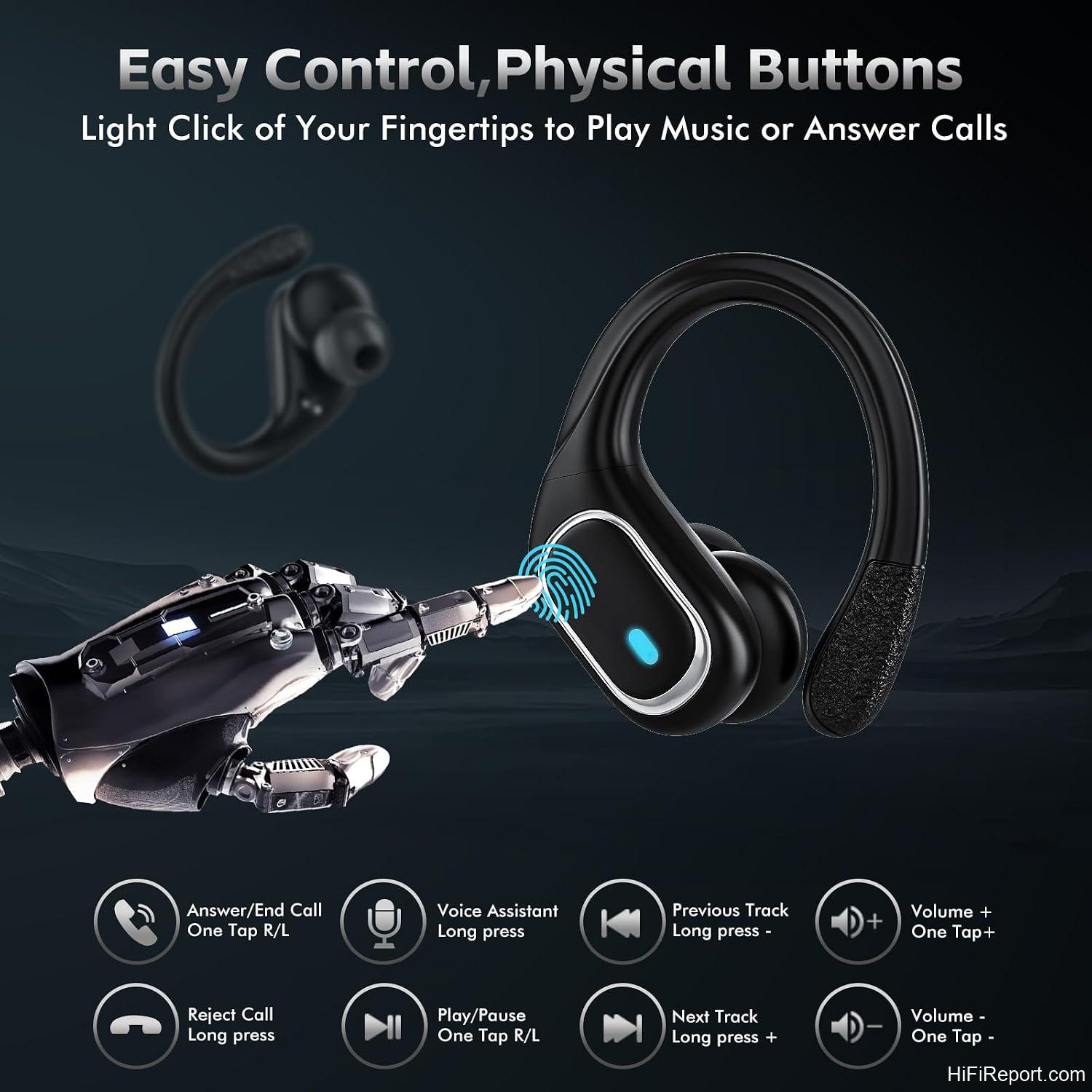
- Controls: touch (play/pause, volume, calls)
Buyer Questions
Does the 80-hour battery claim hold up in real use?
Owners who list daily gym or commute sessions report the earbuds last well over a full workday on one charge, and the case adds multiple top-ups before it needs a wall connection. The 8-hour single-charge figure assumes 50 to 60 percent volume; higher settings shorten that window, but the case reserve keeps total available time in the 80-to-90-hour range the listing states.
Is the “noise canceling” label accurate?
No. The available owner reviews state the buds do not meaningfully block ambient noise. They help with very quiet background chatter but do not reduce louder sounds. Treat the listing’s “noise canceling” wording as a marketing descriptor for passive fit isolation, not as an active cancellation system.
How does the LED display on the case actually work?
The LED shows the charging case’s own battery level, not the earbud level. The earbud charge percentage appears on your phone after pairing. A case can read 0 percent while the buds register 100 percent on the connected device, which takes a few uses to get used to.
Can I switch the T16 between a laptop and a phone easily?
The earbuds auto-pair to the last connected device after the first handshake. To switch, you must manually forget the earbuds on the previous device in its Bluetooth settings before pairing on the new one. There is no shortcut or app-based toggle in the available material, so the switch takes a minute or two each time.

- FAOINGIA