
Hegel H600 Review
Over five years ago, Hegel introduced their flagship integrated amplifier, the H590. This component shattered many audiophile stereotypes, specifically the notion that truly high-end, speaker-maximizing amplification *must* come from separate preamplifier and power amplifier components. However, with its meticulously designed circuitry and a genuinely robust, non-inflated power output exceeding 300 watts, the Hegel H590 convinced many enthusiasts that “one H590 is truly enough.”
Introducing the H600
Add to that the H590’s integrated digital streaming capabilities, and it offered exceptional value. In mid-2023, while the H590 was still a hot topic of discussion, Hegel announced its successor, the H600, the latest generation of their flagship integrated amplifier. If you were still on the fence about the H590, after reading this review, you likely won’t be able to resist the H600! Even before unpacking and listening, it was clear this unit would be packed with premium features.
Power and Refinement
Let’s start by examining a particularly interesting specification, comparing it to the previous H590. The H590 was rated at a substantial 301 watts (into 8 ohms) per channel, operating in Class AB – practically top-tier for AB class amplifiers! The H600’s specification sheet lists 303 watts (into 8 ohms). These numbers strike me as quite… “humorous.” Two questions immediately came to mind: First, why specify 301 and 303 watts? What’s the significance of these non-rounded figures?
Second, a mere 2-watt increase from 301 to 303 – what does that signify? I posed these questions to our chief editor, Mr. Lu. He explained that, firstly, the non-integer wattage figures demonstrate that Hegel’s power output numbers are “the real deal,” not the “inflated” specifications sometimes seen. The significance behind 301 and 303 watts is that these are actual, measured thrust figures.
The clear message is that “both these amplifiers genuinely deliver well over 300 watts, and users can confidently let them flex their muscles.”
So, what does the evolution from 301 to 303 watts actually mean? Mr. Lu elaborated that, theoretically, it indicates the factory made slight circuit tweaks resulting in the H600 having a “slightly higher measured output than the H590.” This suggests that the power increase wasn’t the primary focus of the H600’s redesign; rather, the improvements lie in other circuit updates and sonic advancements. Another key focus of the H600’s redesign is the digital section.
While the H590 could play “multibit” music files shared over a network, the H600 expands this to include DSD files (DSF and DFF). In terms of streaming, the H600 supports AirPlay 2, Spotify Connect, Tidal Connect, UPnP, and is Roon Ready. It also features digital coaxial, optical, and USB digital audio inputs. The USB input supports up to 384kHz/32bit and DSD256.
Digital Section Updates
The most significant change in the digital hardware components from the H590 to the H600 is the switch from AKM to ESS Sabre 9038Q2M DAC chips. Many enthusiasts following audio news likely speculated that supply chain issues, possibly due to the fire at the AKM factory in Japan, might have hindered H590 production, necessitating the development of the new H600 with ESS Sabre chips to restore manufacturing capacity.
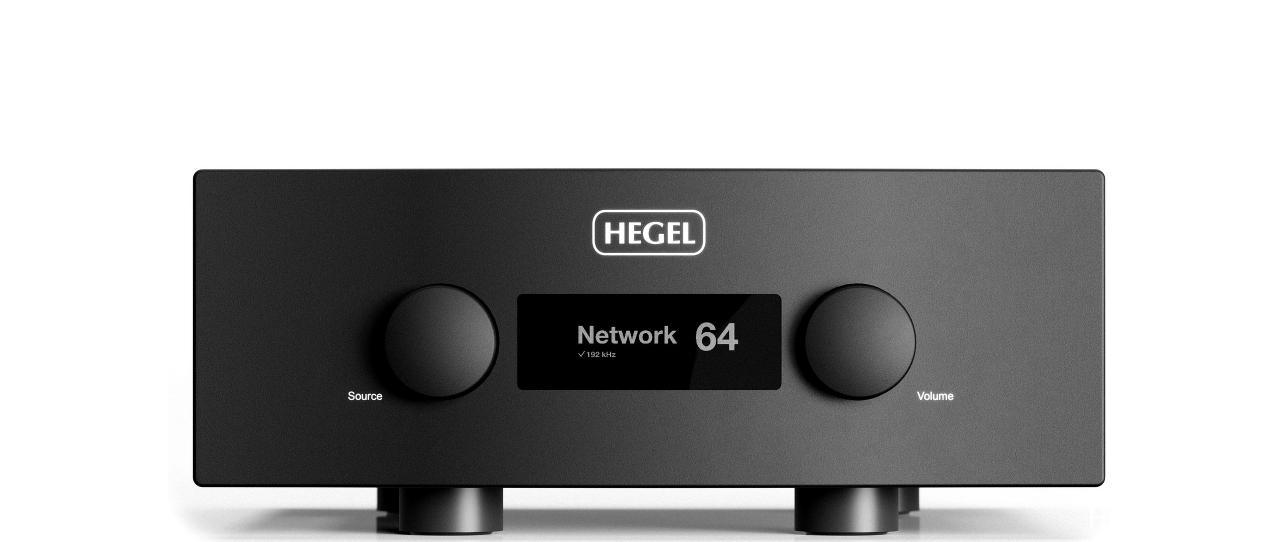
However, according to Hegel, after rigorous testing, the Norwegian factory determined that the sound produced by the ESS Sabre chips better met their expectations, leading to the “natural update.” Regardless of the reason, the 9038Q2M is indeed a high-end DAC chip, further enhancing the H600’s digital support, which users can directly experience.
SoundEngine Explained
Opening up the H600, the top plate is made of thick, non-magnetic aluminum. The internal components are densely packed and meticulously arranged. At a glance, you can immediately see the fully balanced architecture. A massive toroidal transformer sits at the center, supported by several smaller toroidal transformers – ample and powerful power delivery!
Of course, when discussing Hegel amplifiers, it’s essential to mention the core foundation of Hegel’s technological leadership in the audio world: the SoundEngine technology. Simply put, the underlying concept has been around for a long time, but its practical implementation has always been a question mark. Hegel is a prime example of successfully realizing it.
The SoundEngine circuitry is clearly present in the H600, with components marked “Norway,” indicating they are indeed cool creations from the Norwegian factory!
Today, amplifiers contain multiple amplification stages. Traditionally, negative feedback is used to reduce distortion. However, SoundEngine abandons this approach. The primary method for distortion reduction is to compare the output signal with the input signal at each amplification stage. In areas where the difference is audible to the human ear, whenever a distortion signal is generated, an “anti-distortion” signal is created to cancel it out.
Thus, distortion is cancelled directly within “each amplification stage.” For example, even in the final output stage, distortion can be directly cancelled. This has significant implications, especially in Class AB amplifier circuits. Compared to pure Class A, Class AB’s linearity isn’t as good during low-level signal output (the low-power range), particularly when outputting low power.
Traditional negative feedback methods involve feeding back the signal after passing through several amplification stages to correct distortion. This creates a very long path, resulting in transient intermodulation distortion (TIM), a detrimental effect. TIM primarily causes temporal inaccuracies. Simply put, because negative feedback lengthens the overall signal path, it becomes a case of “correcting past distortion at the current time,” meaning the “correction result” is inevitably flawed!
It’s like the “correction is late.”
SoundEngine, on the other hand, detects and compares signals directly within individual amplification stages and corrects distortion immediately. This results in a relatively “real-time” correction solution, which is the core essence of SoundEngine. Mr. Lu offered an interesting analogy, suggesting it’s similar to the principle behind “noise-cancelling headphones.”
The headphones detect ambient noise in real-time and generate an “anti-noise” signal to cancel it out immediately, and this anti-noise signal can be modulated with minimal delay and cancelled using a relatively accurate mode. The core of SoundEngine is somewhat akin to an “analog computer.” As I mentioned, the concept existed long ago, but successful practical application is what Hegel’s founder invented.
Internal Design and Power Supply
Turning to the power supply, it’s evident that the power delivery features two independent winding taps, separate filter capacitors, and dedicated secondary windings, constituting a true Dual Mono design. On both the left and right sides, a total of seven pairs of transistors are visible.
Mr. Lu speculates that six of these pairs are used for push-pull amplification, while the remaining pair is dedicated to executing the correction signal described earlier, with the source of this correction signal being the SoundEngine.
Combining the elements discussed – the key SoundEngine technology and the correction of Class AB’s linearity issues at low power output – along with the abundant power supply and high total output power, there’s a strong likelihood that this amplifier will sound like pure Class A, or perhaps exhibit characteristics leaning towards the (charm/warmth) of tube amplifiers.
Listening Impressions
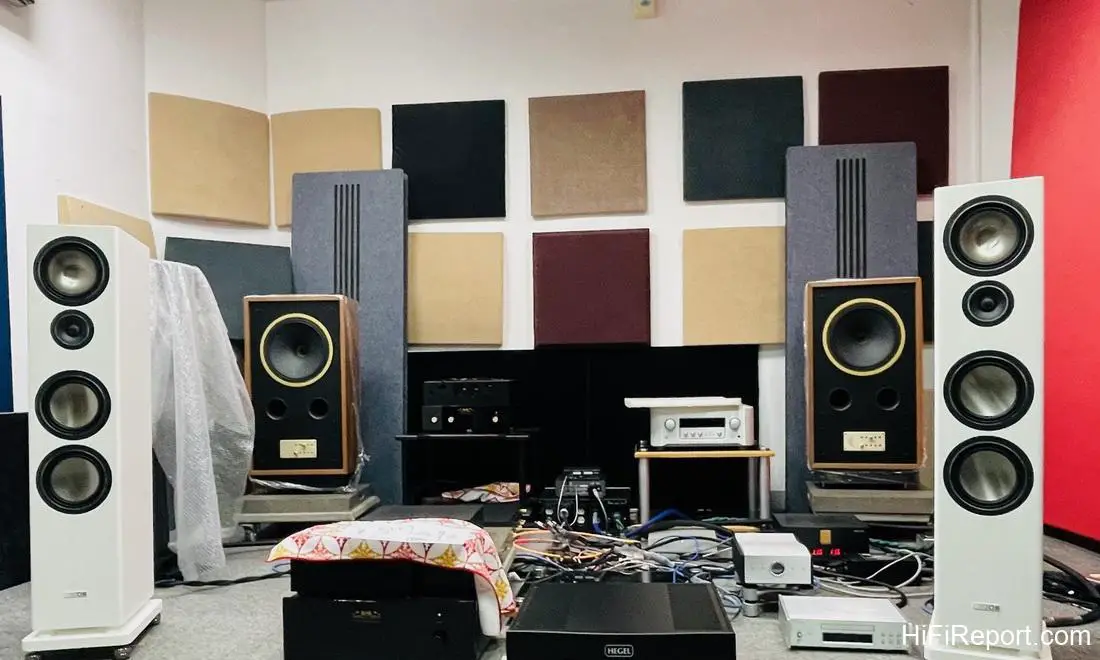
Based on the combination of the aforementioned key SoundEngine technology, ample power supply, high total output power, and optimized correction at low power output, I immediately connected the system and started listening. I used the H600’s built-in AirPlay to stream lossless files from my Mac computer. The best speaker pairing I found was with the Canton Townus Highlight floorstanding speakers.
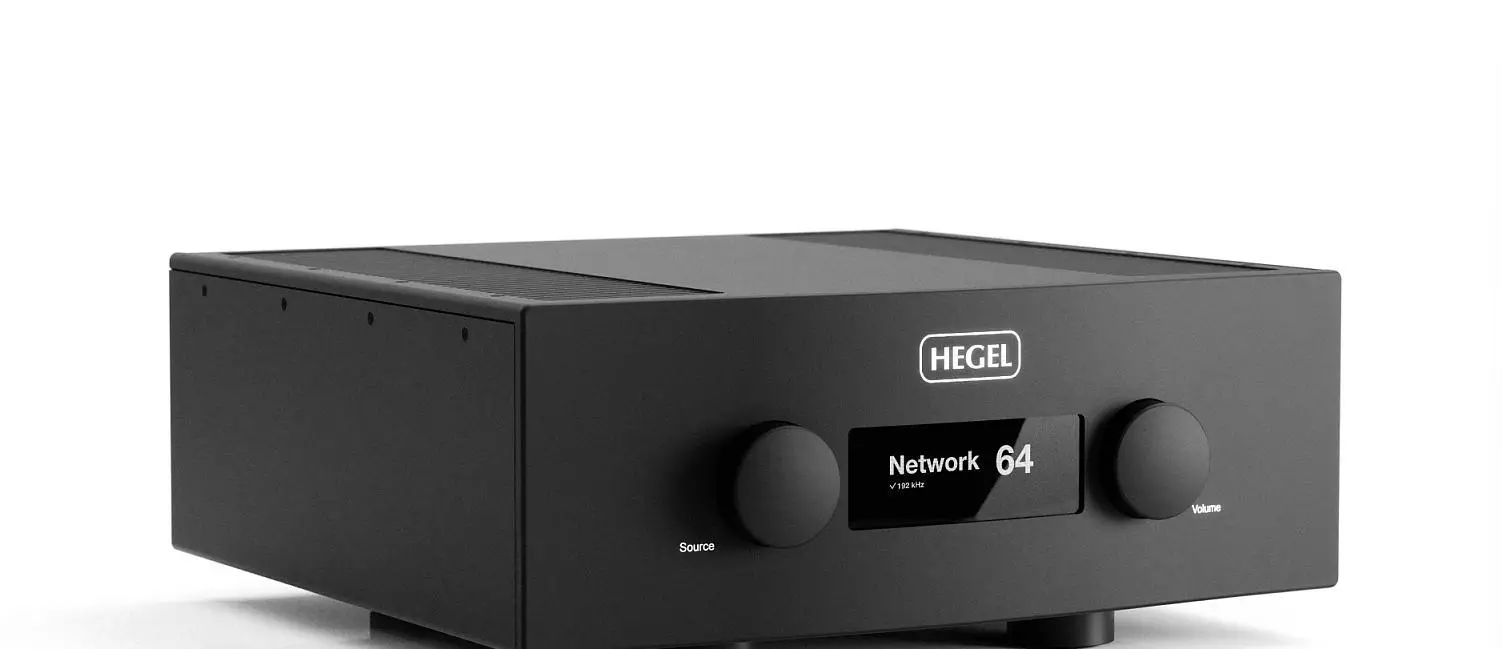
The H600’s sonic presentation felt precisely in line with my intuitive assumptions based on understanding the circuit design: ample power delivered with an elegant demeanor, never harsh or forced. Detail retrieval was complete, imaging was highly resolved, and the scale of instruments and voices was rendered accurately. The sound possessed a certain warmth and charm, making it listenable and comfortable, while seemingly capable of handling any speaker I could throw at it.
Performance with Specific Music
Playing “UTAU,” a collaboration between Taeko Onuki and Ryuichi Sakamoto, the piano sounded highly transparent with incredibly dense layers of overtones. Taeko Onuki’s vocals were rich in detail, creating a sense of being transported directly to the recording venue.
Listening to “Anne-Sophie Mutter – Live at 60” (Her 60th Birthday Concert), the H600’s portrayal of the violin’s timbre was, in my opinion, beautifully rendered. Coupled with a wonderful unraveling of the inner voices within the string section, the H600 essentially delivered the most harmonious and comprehensive presentation, leaving nothing out. When playing Aphex Twin’s latest EP, this system pairing instantly launched me from my seat into outer space.
The immense sonic detail within was woven together into a vivid 3D soundscape. The virtual synthesizer timbres were able to project concrete external forms. I must say, Hegel’s equipment is highly suited for interpreting the kind of “analog-like electronic music” that Aphex Twin excels at and which is so difficult for later EDM artists to replicate. Listening to this was truly astonishing.
The H600 handled all genres with incredible ease and confidence, allowing the speakers to sing with a level of performance that left no room for regret.
Conclusion
All I can say is that this new flagship integrated amplifier solidifies Hegel’s position at the very top. In the price range of around $16,100 USD, what you gain with the H600 is technical prowess and sonic completeness that you might not achieve even with separate monoblock power amplifiers and a streaming preamplifier costing twice the price. For those who know quality, how could you possibly pass up the beauty of the H600?
Room Treatment Equipment Used
Acoustic Science Diffusion Panels
Fullway PTN-1804 Absorption Panels
Tiglon, Sound Art Black Birch, US Lovan Audio Racks
Wakoh Ray Audio Taketa No. 3 Isolation Transformer
KECES IQRP-1500 Isolation Transformer
KECES P6 Linear Power Supply
EAhibrid PureDC-B1 Linear Battery Power Supply
Silent Angel N8 Network Switch
Key Features
1. New generation flagship integrated amplifier with Class AB output of 303 watts per channel, representing a genuinely robust “over 300 watts”!
2. Equipped with SoundEngine technology and Dual Mono circuit design.
3. Updated to ESS Sabre 9038Q2M DAC chips.
4. Extensive digital audio support and compatibility with various streaming platforms, including Roon Ready.
Recommendations
1. Essentially, there isn’t a speaker it can’t handle.
2. The sound is neutral, highly resolving, and maintains a certain degree of warmth, comparable to the sound of tube amplifiers or pure Class A designs.
Specifications
* Type: Network Streaming Class AB Integrated Amplifier
* Output Power: 303W x 2 (8 ohms)
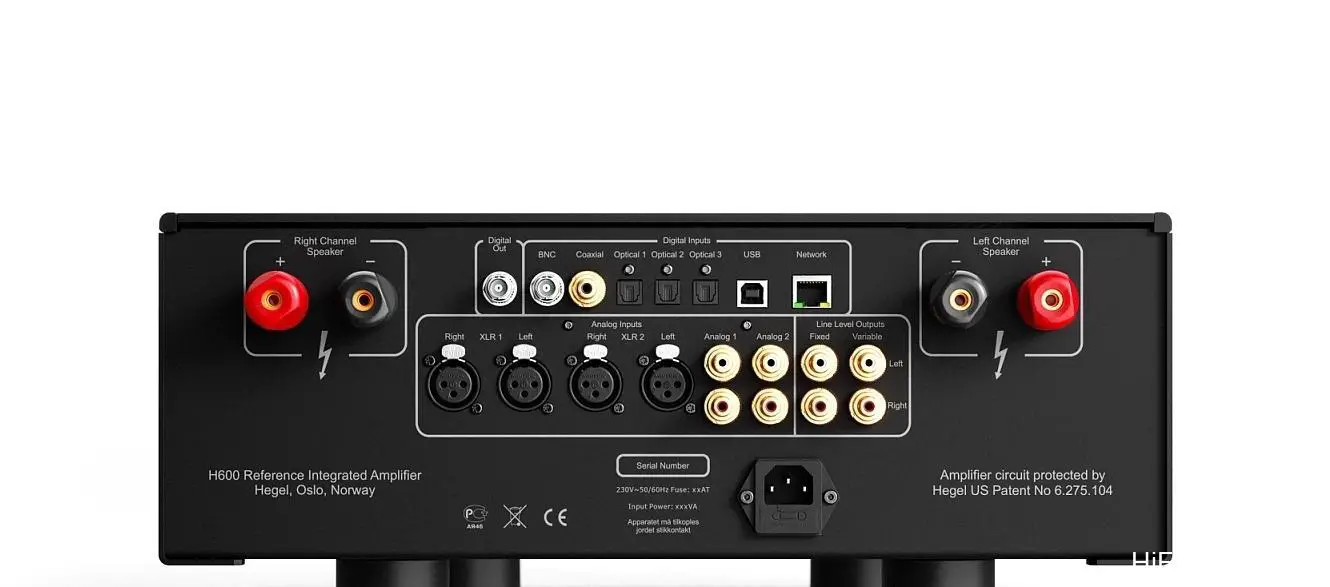
* Analog Inputs: RCA x 2, XLR x 2
* Digital Inputs: USB x 1, RJ45 (Network) x 1, Toslink Optical x 3, Digital Coaxial RCA x 1, Digital Coaxial BNC x 1
* Streaming Support: Spotify Connect, AirPlay 2, Chromecast built-in™, Roon Ready, TIDAL Connect, UPnP
* Frequency Response: 5Hz – 100kHz
* Signal-to-Noise Ratio: > 100dB
* Crosstalk: < -100dB * Total Harmonic Distortion: 0.005% (50W/8 ohms, 1kHz) * Intermodulation Distortion: < 0.01% (19kHz + 20kHz) * Damping Factor: > 4,000
* Weight: 22 kg