
Hegel Viking CD Player Review
My impression of Hegel is that they strive to use what they believe to be the best design, structure, and patented technologies generously across all price points in their product lineup. This results in a high level of maturity in their products, and their value becomes more apparent over time. This is also why they don’t rush new models to market; if everything is already excellent, what is there to change?
However, unforeseen circumstances can arise, and in recent years, Hegel has faced the reality of being “forced” to revise their products due to component shortages or complete discontinuation.
The “Mohican,” released in 2016, was intended by Hegel to be their “last and best CD player.” Yet, unexpectedly, the AKM AK4490 DAC chip used in the Mohican – a crucial component with the greatest impact on sound quality in a digital source – was discontinued. This halted production of the Hegel Mohican, leading Hegel to design and develop the Viking CD player as its successor.
The Viking CD player inherits the Mohican’s design philosophy: strictly adhering to the CDDA Red Book specification for music CDs, avoiding any unnecessary processing or additional features, and focusing solely on pure CD playback and digital-to-analog conversion. Bent Holter, Hegel’s founder and chief designer, believes that adding functions beyond CD playback not only necessitates performance compromises due to the inclusion of more features but also introduces additional noise and distortion.
To offer a simple example, the laser heads in DVD or BD compatible disc mechanisms are “multi-focus,” whereas a true CD playback mechanism uses a “single-focus” laser. For the best possible CD reading quality, the latter is clearly the more reasonable choice. Therefore, from the Mohican to the Viking, the core design concept remains identical – any circuitry or function not essential for CD playback is omitted.
Design and External Features
Hegel also took the opportunity to implement upgrades during this revision. Two changes are immediately visible externally: the disc transport has transitioned from a traditional tray-loading mechanism to a slot-loading type (still a “pure CD” mechanism), and the central LED text display on the front panel has been replaced with an OLED screen (which generates less noise).
Looking at the rear panel, the Hegel Viking provides both balanced (XLR) and single-ended (RCA) analog outputs. If users possess higher-grade DACs, or have grown accustomed to DACs they’ve used since the peak of the CD era, the Viking can also function as a CD transport. Its digital output uses a 75-ohm BNC connector, which adheres more closely to impedance specifications than the common RCA connector.
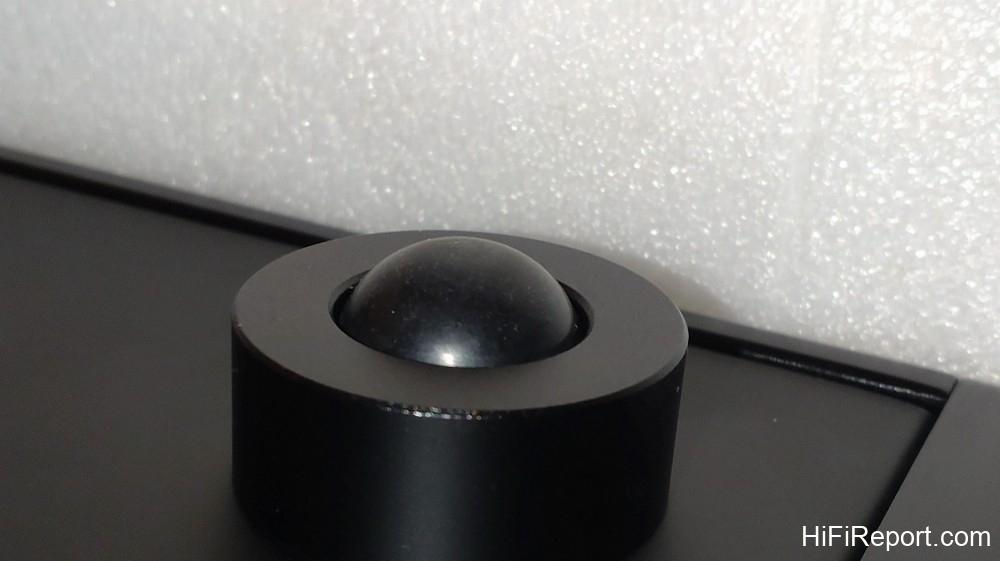
As you can see from the first two photos, the Hegel Viking adopts a “two front, one rear” three-point support design. This is a consistent approach across Hegel’s products. Here, we can observe its feet: the surrounding ring is made of a hard material, while the central spherical part is a soft, elastic material, clearly demonstrating significant attention to vibration damping.
Internal Design and Technology
The internal layout of the Hegel Viking is remarkably similar to the Mohican. The disc mechanism is positioned centrally at the front, the control and display circuitry is in the front right, the power supply section is in the rear right quadrant, and the audio (DAC) circuit board occupies the left side.
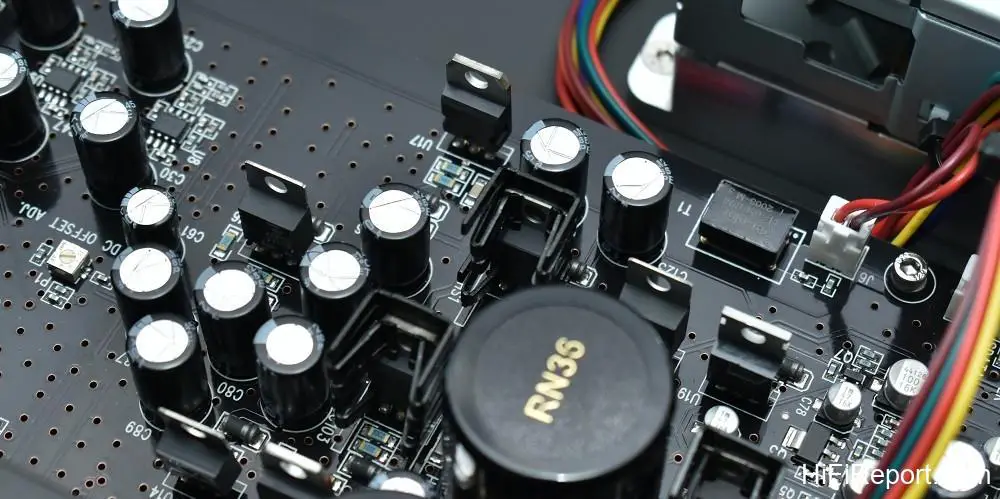
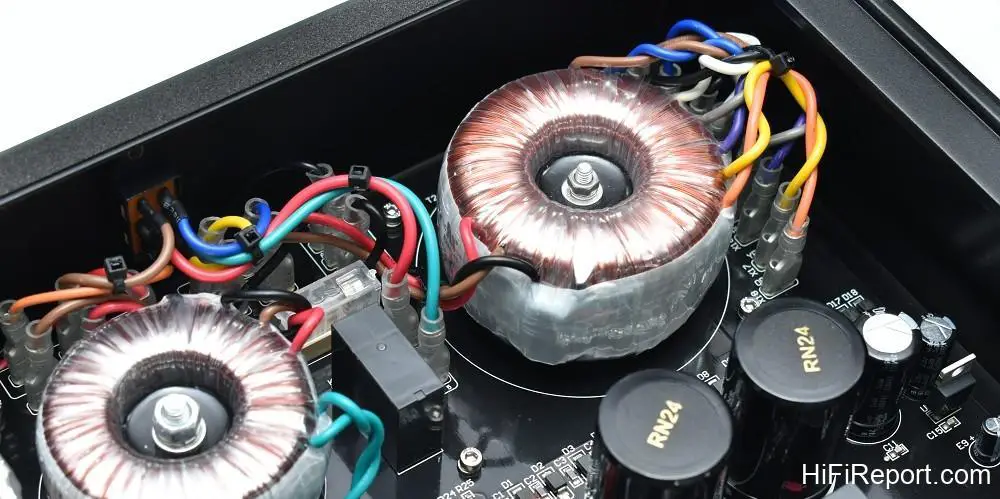
The Hegel Viking employs a traditional linear power supply, powered by two low-leakage toroidal transformers.
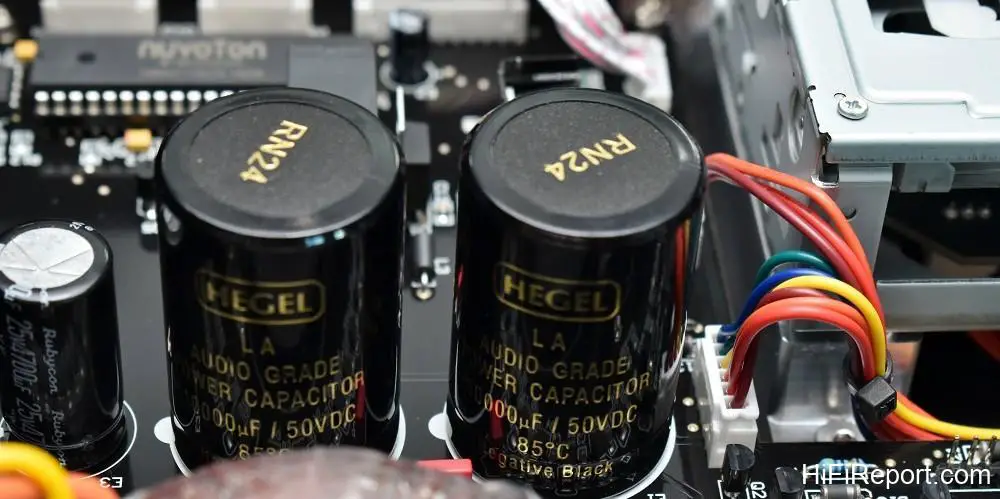
Following the transformer output and rectification, the main power supply for the unit utilizes Hegel’s custom-made filter capacitors.
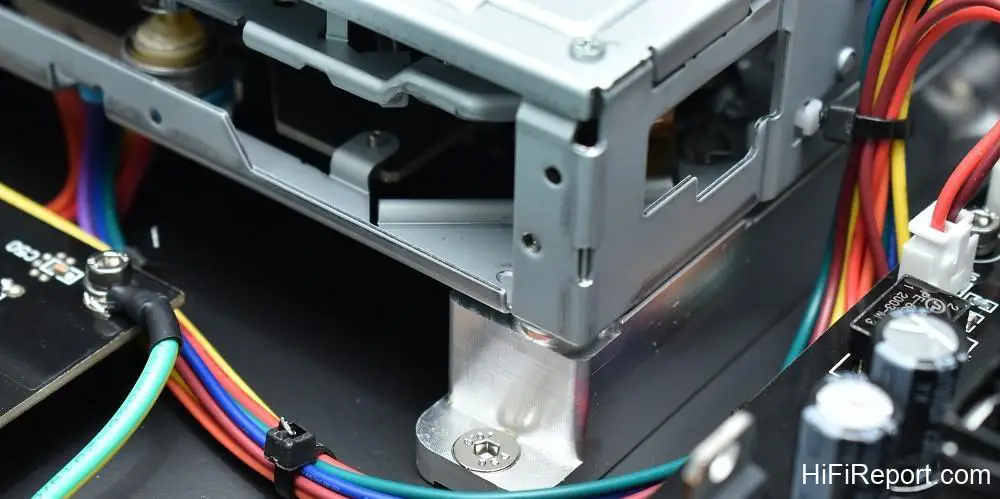
The unit’s slot-loading “pure CD” disc mechanism.
Beneath the disc mechanism, a very robust steel base is visible. This is not standard equipment for CD mechanisms and appears to be specially made by Hegel.
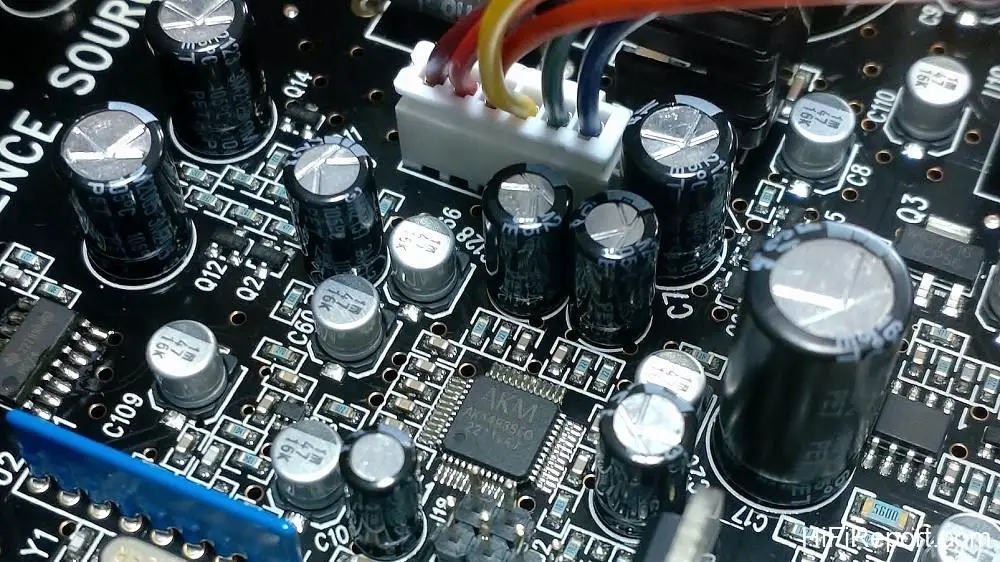
Before the digital-to-analog conversion, this unit performs no additional processing (such as DSP or up-sampling). It proceeds directly to DAC conversion, using the AKM AK4493SEQ DAC chip. Compared to the AK4490 used in the previous Mohican, the total harmonic distortion has decreased by 3dB, and the dynamic range has increased by 3dB. Therefore, based on objective metrics, the Viking’s DAC performance surpasses that of the Mohican.
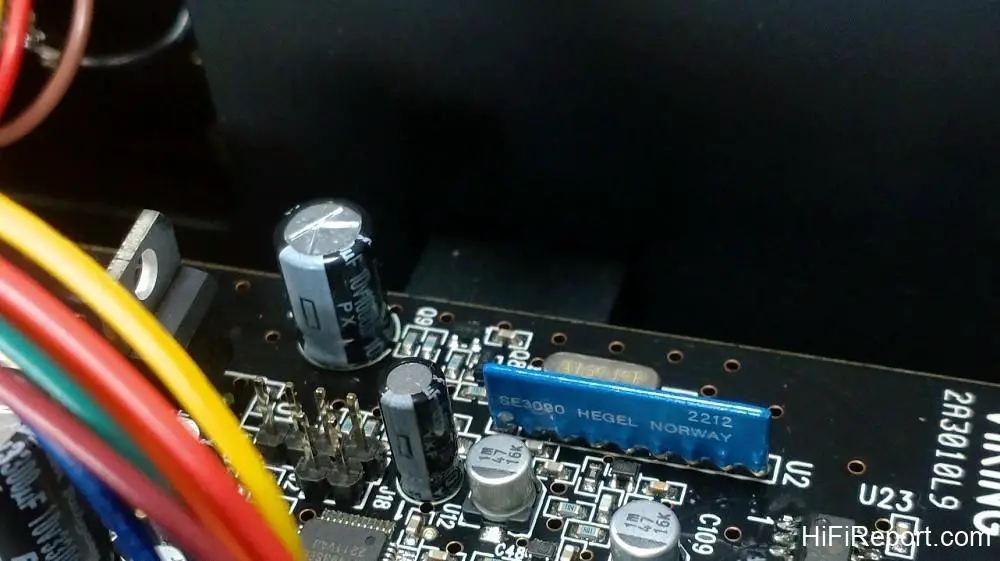
The blue component in this image is a SoundEngine circuit, built with Bent Holter’s patented technology. This has been a key factor behind the widespread acclaim for Hegel amplifiers in recent years. It works by comparing output and input signals in real-time at each amplification stage to correct distortion. In the Mohican and Viking’s circuitry, it is applied to the digital circuit, positioned between the oscillator and the DAC chip, where its function is to reduce jitter (timing errors).

A significant area in the “mid-section” of the audio circuit board is occupied by large-capacity filter capacitors and multiple voltage regulator circuits. This arrangement clearly shows the meticulous division of power supply roles for different parts of the audio circuitry. This helps prevent noise from the power path from causing cross-contamination between different audio circuit sections, with the goal of achieving higher sound purity.
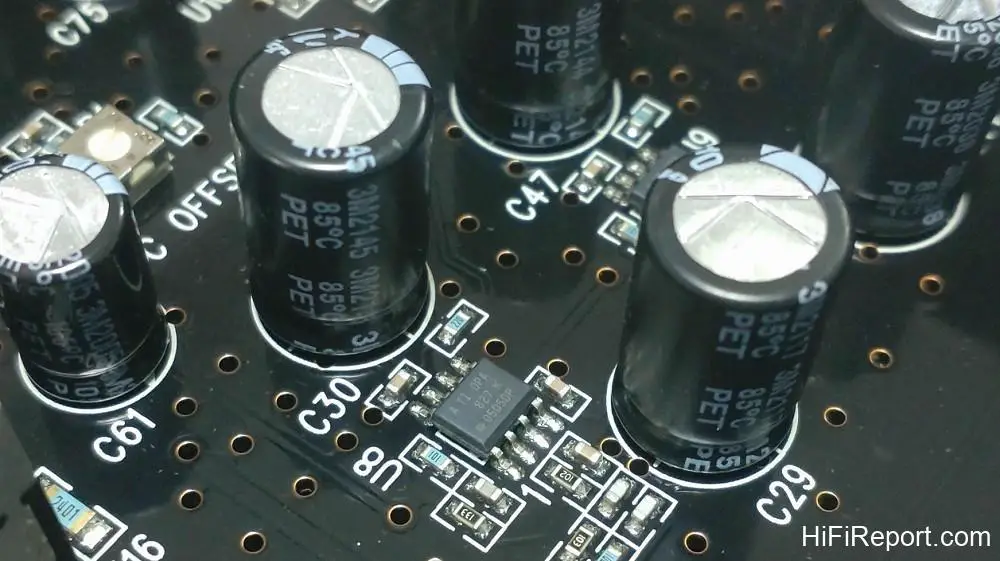
Following the DAC chip, the audio circuitry (I/V conversion and LPF) utilizes TI OPA827K operational amplifiers. This is a “single” OP Amp chip, unlike the “dual” OP Amps commonly found in many digital sources. I believe this is the designer’s choice based on performance and sound quality. The OPA827 has a JFET input stage and, while not exclusively an “audio-grade” component, boasts a wide bandwidth of 22MHz.
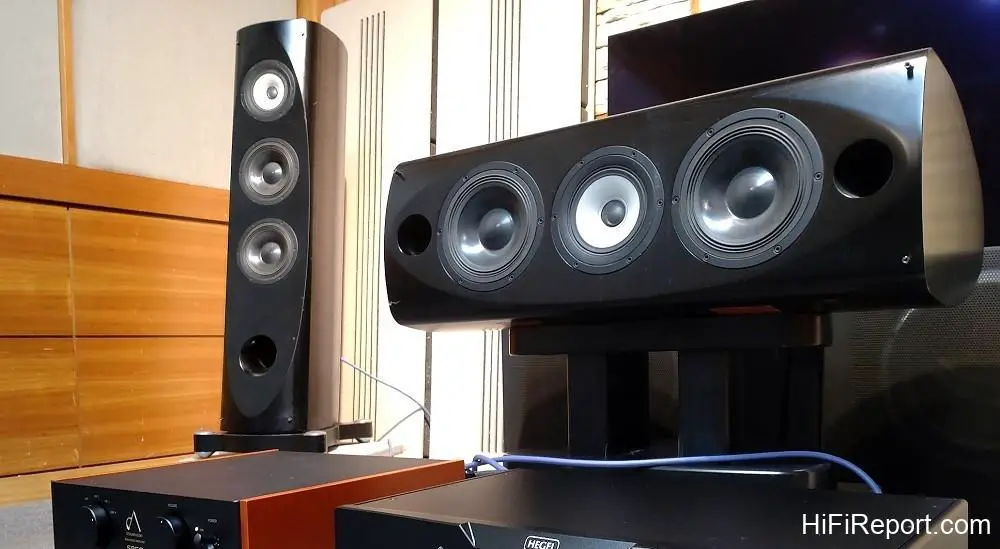
From the hardware structure, we can observe aspects that “differ from conventional units”: a low-vibration chassis and disc mechanism, stable and quiet traditional power supply, DAC circuitry focused on low jitter, and high-speed, sensitive audio circuitry. After this examination, I immediately proceeded to the listening test. The main accompanying equipment was the SPEC RSA-BW7EX integrated amplifier and Pioneer S-1EX floorstanding speakers.

Listening Experience
I believe anyone who listens to the Hegel Viking CD player will be deeply impressed and find it becomes a very important reference benchmark for digital sources. Although I am well aware that it simply plays and decodes CDs in a “standard manner,” without processing like up-sampling that attempts “Hi-Res-like” transformation, I was genuinely surprised by the directness, purity, and realism of the sound when I first listened to Angela Aki singing “We’re All Alone.”
Despite not being Hi-Res, the level of textural refinement and detail was superior to many streaming sources playing Hi-Res files, resulting in higher “perceived resolution.”
How is this possible? I attribute it to the cumulative result of extreme efforts to reduce noise, vibration, and jitter. This time, I deliberately paired it with the relatively low-power SPEC RSA-BW7EX (50 watts per channel into 8 ohms, 100 watts into 4 ohms) specifically to test its dynamics and sound quality at comfortable listening levels (medium to low volume).
The Viking delivered this with an exceptionally quiet background, faithfully reproducing the complexity of instrument sounds even at low, or very low, volumes. Subtle sonic components and spatial cues emerged from an extremely dark background. There was no need to turn up the volume; the dynamism of the music was already fully palpable.
I find the Viking possesses a very appealing sound character. The treble is exceptionally gorgeous, delicate, and lustrous, yet also remarkably smooth. The upper midrange and midrange exhibit a “moderately warm” quality, while the bass is stable and well-defined. Despite its abundance of detail and high resolution, it doesn’t lean towards a bright presentation. Instead, it always carries a kind of moist, gentle aesthetic beauty.
For instance, female vocals and accompaniment on albums like the one by Midori Karashima sound incredibly captivating.
The Viking easily makes me forget it’s a digital source. Listening to old Bread songs from the 70s, or even jazz from the earlier 1950s and 60s, such as the Charles Mingus album shown above, it presents a wonderfully warm, perfectly full midrange that gives it significant musicality. It faithfully captures the texture and flavor of analog recordings from before the 1980s.
On several occasions in the past, when reviewing equipment, I compared the difference before and after jitter reduction using the same unit. The changes observed after reducing timing errors have consistently been the same: the “focus” of the sound significantly improves in accuracy, and the sense of blur is notably diminished. The Viking’s sound performance also exhibits this characteristic. The sonic visibility is very high, and the level of impurity is astonishingly low.
The clarity and high purity are quite rare among high-end sources, and even rarer among CD players (or combinations of CD transport and DAC) that can truly compete with it.
You might wonder how it compares to expensive products from the peak of the CD era in the 1990s. I must state a brutal truth: electronic technology and the manufacturing craftsmanship of audio companies are continuously improving.
Based on the high-end products I heard in the 1990s, even those that were more expensive than the Viking (as currency value was much higher then), I can only think of fewer than three units whose purity, low impurity, and sense of sonic nobility could truly compare to the Viking. I genuinely recommend that seasoned audiophiles take the time to audition the Viking. I am absolutely certain its EISA Award is well-deserved.
Conclusion
In closing, I also want to strongly suggest to the manufacturer: Hegel clearly knows that applying SoundEngine to the clock circuit improves sound quality so dramatically. Could they perhaps incorporate SoundEngine into the streaming circuit boards within their future streaming amplifiers? Or failing that, build a standalone streaming player or streaming preamplifier using the same technology?
If Hegel were to do so, I believe other manufacturers who desperately seek but cannot obtain major awards would find themselves losing them once again.