
In-Akustik Referenz NF-2404 AIR Balanced Interconnect Cable Review
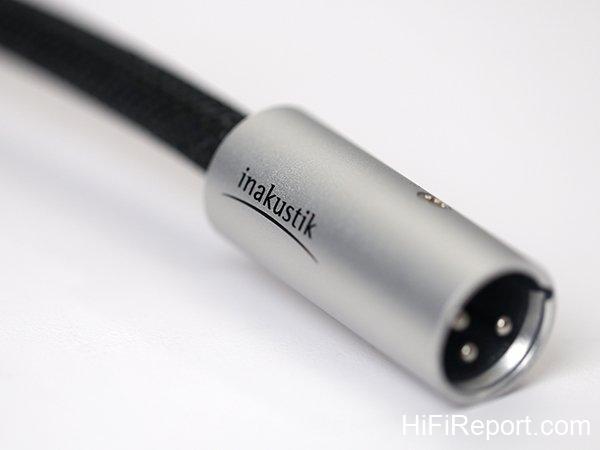
Actually, the title doesn’t fully capture the name of this In-Akustik NF-2404 AIR balanced interconnect cable. To be completely accurate, it should be “Referenz NF-2404 AIR,” but writing the full name makes the title too long, so I had to shorten it.
The word “Referenz” translates to “reference class,” and the NF-2404 AIR truly lives up to this prestigious designation. As soon as I connected it in my system, the sound underwent an immediate and noticeable transformation – a wholly positive leap forward.
German Engineering with Deep Technical Roots
Following the 2018 Munich High End Show, In-Akustik kindly arranged for me to visit their factory in Freiburg, Southern Germany. On the HiFiReport homepage, you can find a comprehensive five-part factory tour report for readers who are interested in the background of In-Akustik.
During my visit, I witnessed the meticulous handcrafting process of the Referenz series from start to finish. Furthermore, a technical session led by CTO Holger Wachmann provided insights into In-Akustik’s design philosophy for cables. Their motto, “Physics Not Voodoo,” prominently displayed on their website, succinctly encapsulates their approach. It’s clear that they design audio cables based on solid electrical engineering principles, rather than relying on empty marketing buzzwords and pseudoscience.

The Importance of Comparison
The question of whether audio cables can genuinely improve the sound quality of a system is a topic of ongoing debate. Some believe it, while others remain skeptical. As an audiophile, I naturally lean towards believing that carefully chosen audio cables can enhance overall system performance. However, in his book “Good Music: A Scientist Explores the Musical Brain, and What It Means to Be Human,” author John Powell expresses a clear skepticism regarding high-end cables: “I would be interested if anyone could tell me the difference between these expensive leads and the sort you can buy for a few pounds a meter.”
If your perspective on audio cables aligns with John Powell’s, then perhaps you needn’t invest more time reading about the NF-2404 AIR, as you, like John Powell, might be among the non-believers. However, if I were to meet John Powell, I would certainly “tell” him about the differences between high-end and budget cables. Moreover, I would set up a well-tuned audio system and, using music he is familiar with, conduct a direct A/B comparison between high-end and entry-level cables. If he still claimed to hear no difference, I would not argue further. After all, auditory perception is subjective, and further discussion would be futile.
The Trinity of Cable Characteristics: Impedance, Capacitance, and Inductance
The factors influencing sound quality in audio cables can be broadly categorized into three key aspects: impedance, capacitance, and inductance.
When we discuss the merits of copper versus silver cables, we are primarily comparing impedance and inductance. Silver’s slightly faster signal transmission speed compared to copper stems from its lower impedance and inductance. This results in a minor difference in conductivity. However, this disparity is minimal, especially considering the short lengths of audio cables typically used – only a few meters. Over such short distances, the difference is negligible.
Capacitance, on the other hand, is a variable largely determined by the cable’s physical construction. In-Akustik believes that minimizing capacitance is a crucial design objective.
How do you reduce capacitance? Firstly, by employing insulation materials with a low “dielectric constant.” Secondly, by increasing the separation between the positive and negative conductors. These two principles are fundamental to the design of the NF-2404 AIR.
Air: The Ultimate Dielectric with the Lowest Constant
Let’s first address the challenge of finding insulation with a low “dielectric constant.” This is measurable. Common PVC has a relatively high dielectric constant, around 3.5–4.5. PE (polyethylene) ranges from 2.2–2.4, and Teflon is approximately 2. This explains why standard cables often use PVC, while higher-priced cables opt for PE or Teflon – their lower dielectric constants result in lower capacitance. But what about “air”? Air has a dielectric constant of 1. Regardless of the formula used, air with a dielectric constant of 1 contributes virtually zero to capacitance.
However, how do you use “air” as insulation? It’s certainly not as simple as just using a bare copper wire, as that would be electrically unsafe! In-Akustik’s Air-Technology incorporates hollow tubes within the cable structure. They have been employing this design since 1999, and it has evolved through four generations. The amount of air within the cable structure has progressively increased. The initial 1999 design included a small amount of air. By the second generation of Air-Technology in 2004, air occupied about 30% of the conductor’s internal structure. In 2011, air tubes were introduced in the center of the conductor, increasing air volume to 50%. The latest iteration of Air-Technology, as implemented in the NF-2404 AIR, pushes the air volume to an impressive 90%.
Achieving 90% Air Content
Reaching 90% air content within the cable is achieved using the Air Helix framework. This framework securely holds the conductors in place, and its design simultaneously addresses the second key design goal: maximizing the distance between the positive and negative conductors.

Most signal cables employ a twisted pair construction, where positive and negative conductors are in close proximity. In-Akustik utilizes the Air Helix framework to fix the conductors and employs a “thread-through” technique, allowing the conductors to naturally spiral within the framework.
While In-Akustik’s R&D department successfully developed the groundbreaking Air Helix framework, significantly reducing cable capacitance, production challenges arose. The intricate handcrafting process made it very costly to manufacture.
However, In-Akustik found a mutually beneficial solution. Near their German factory is a sheltered workshop, a social enterprise employing individuals with mild disabilities. With volunteer support, they handcraft prosthetic and orthotic devices. Intriguingly, the Air Helix framework was inspired by the design of prosthetic limbs. Therefore, In-Akustik contracted the sheltered workshop to handle the intricate “thread-through” work. This arrangement provides the workshop with additional income, supporting their social mission, while also reducing In-Akustik’s manual labor costs.
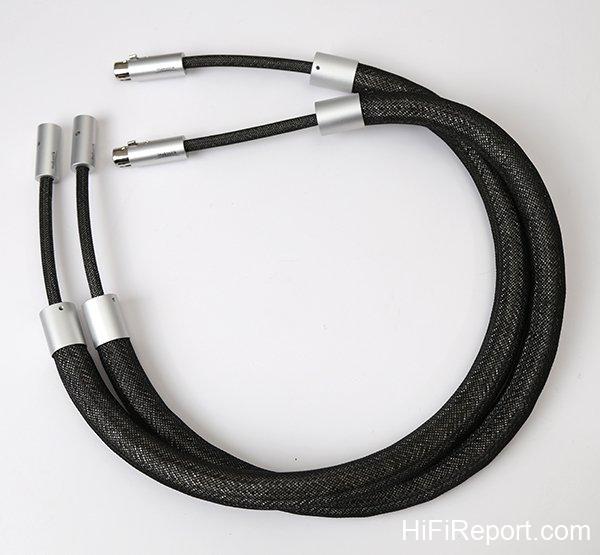
Much like purchasing cookies from a bakery supporting people with disabilities, using NF-2404 AIR signal cables is, in a way, supporting a worthy social enterprise in Germany.
The Handcrafted Production of In-Akustik NF-2404 AIR
Oxygen-Free Copper “Super Speed” Conductors
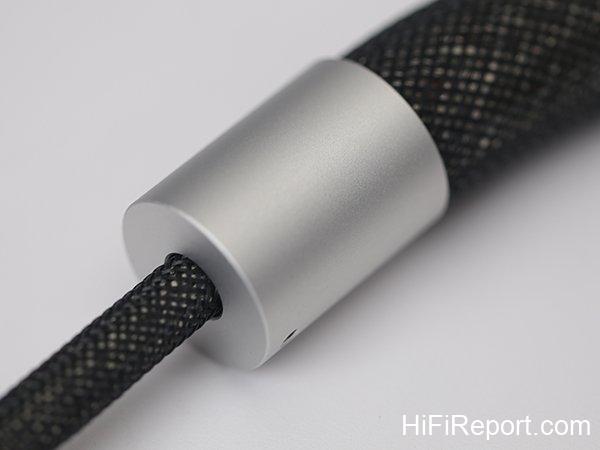
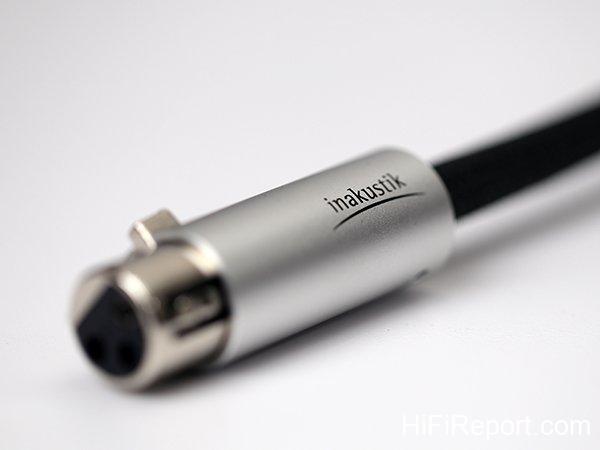
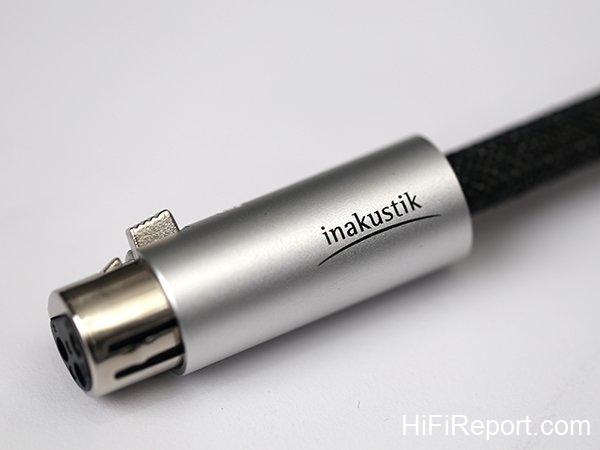
Beyond the advanced Air Technology, the conductors in the NF-2404 AIR are also highly sophisticated, designated by In-Akustik as “Super Speed Conductors.” They use oxygen-free copper, a well-regarded conductor material. But how does the NF-2404 AIR conductor achieve “super speed”? Again, the answer lies in its structure. The seemingly slender conductor is actually composed of 32 individual strands surrounding a PE core. Each strand is coated with a very thin layer of insulation to prevent eddy current effects. This 32-strand construction significantly increases the conductive surface area. According to the skin effect principle, high-frequency signals predominantly travel along the surface of a conductor. Therefore, despite its slim appearance, the NF-2404 AIR conductor possesses a remarkably large conductive surface area. This “skin effect” provides a wide “highway” for signals to race through, resulting in a higher transmission speed compared to conventional oxygen-free copper cables.
This overview summarizes the key technical features of the NF-2404 AIR. It’s evident that In-Akustik’s cable design is grounded in sound engineering principles, rather than relying on subjective “tuning” or audiophile mysticism.
Furthermore, the sonic character of the NF-2404 AIR makes an immediate and strong impression upon connection: it’s transparent, clean, and neutral! The NF-2404 AIR also exhibits tight, fast bass with excellent focus and control. Combined with its clean mid and high frequencies, it delivers remarkably precise instrument imaging.
Expansive Soundstage and Precise Instrument Imaging
My listening experience with the NF-2404 AIR primarily took place in my home system: Merging NADAC connected to an Electrocompaniet EC 4.8 preamplifier, NuForce Reference 18 power amplifiers, driving Wilson Audio Alexia 2 loudspeakers.
Simply inserting the NF-2404 AIR immediately expanded the overall soundstage, making it both wider and deeper. Instrument imaging became more three-dimensional, more sculpted, and richer in detail.
I am aware that such descriptions can be applied to virtually any high-quality signal cable. However, the NF-2404 AIR’s impact was immediately noticeable from the first notes.
Take Eric Bibb’s “Needed Time,” for example, a classic recording from Opus 3. With the NF-2404 AIR in the system, subtle details previously buried in the recording emerged effortlessly, adding significantly to the listening enjoyment. The opening guitar and banjo were not only crisp in tone, but also revealed the resonance and fullness of the wooden instrument bodies. Delicate tambourine sounds in the background provided a subtle rhythmic foundation, underpinning Eric Bibb’s prominent vocals. As harmonica, electric bass, and percussion joined in, the NF-2404 AIR’s ability to resolve musical layers became even more apparent. This relaxed, soulful blues track, captured with a wide soundstage, was punctuated by electric guitar slide solos and harmonica accompaniment, each instrument clearly positioned in space. While I know Opus 3 uses multi-track recording, and this beautiful layering is the result of the recording engineer’s skillful arrangement, on the NF-2404 AIR, it all sounded so natural and pristine.
Uh oh, I’m starting to fall under its spell! The more I listen to the NF-2404 AIR, the more captivating it becomes.
Moving on to a familiar piece, Bill Evans’ “Waltz for Debby,” listening to “My Foolish Heart.” The background noise inherent in older analog master tapes, now digitized, hints at the recording’s age. The pianoemerges from the depths of the soundstage, with the double bass responding in kind, and the jazz drums delicately tapping the cymbals. The NF-2404 AIR’s exceptional instrument imaging ensures each instrument plays its role perfectly, presenting the jazz trio in a well-organized and layered manner. Subtle sounds from the recording venue – clinking glasses, audience coughs – remind us that this is a live recording. The NF-2404 AIR misses none of these minute details, faithfully recreating the original recording’s atmosphere.
Hearing the Nuances of Different Versions
Next, I wanted to use Beethoven’s Piano Concerto No. 4 as an example. Wait, did I mention which version? My point is to highlight the NF-2404 AIR’s ability to reveal the nuances of different recordings! I have many favorite renditions of this piece. Take the version featuring Gulda with the Vienna Philharmonic, for instance. The third movement, Rondo, is performed at a relatively unhurried pace. Gulda’s piano tone is rounded and agile, engaging in a delightful dialogue with the orchestra, creating a harmonious interplay. Through the NF-2404 AIR, Gulda’s piano sounds crystalline and transparent, with each note possessing a full, rounded body.
[Image: Left side: Gulda Vienna Philharmonic. Right side: Uchida]
Switching to another version: Mitsuko Uchida on solo piano, with Sanderling conducting the Royal Concertgebouw Orchestra. Listening to the same third movement, the orchestra initially sets a slower tempo. However, as soon as Uchida’s piano enters, the tempo immediately picks up, and the orchestra follows suit. Uchida’s piano image appears slightly smaller and leaner compared to Gulda’s, but with a brighter sheen. When her right hand soars into the crystalline high notes, Uchida uses the sustain pedal more heavily, resulting in a more ethereal and graceful high register. However, compared to Gulda, the overall musical texture is relatively less weighty.
These are all subtle musical nuances, expressions captured in the recording. The NF-2404 AIR effortlessly brings these subtle musical details to the forefront. It feels as if I’ve been transported back to the recording venue, shifting instantly between the Vienna Philharmonic and the Royal Concertgebouw. Isn’t this precisely the joy of listening to high-fidelity audio?
Time Travel Through Recordings
There are even more listening adventures to be had. Sticking with the Vienna Philharmonic, but changing both conductor and soloist, let’s listen to the same third movement of Beethoven’s Piano Concerto No. 4, this time with Zubin Mehta conducting and Ashkenazy as soloist.
This version is more dramatic. Mehta starts softer and slightly faster, which presents a challenge for the piano. As the orchestra accelerates, the piano soloist must also keep pace. Ashkenazy, in his youthful vigor, is undeterred by this challenge, launching into the Rondo theme with agility. Subsequently, the orchestra’s forte passages maintain the slightly faster tempo, requiring the piano to engage in a thrilling back-and-forth. Ashkenazy’s piano possesses clearly defined note articulation, never blurring or dragging. Even in gentler passages, he avoids excessive use of the sustain pedal, maintaining the clarity of each note, projecting a resolute and assertive Beethovenian character.
Am I Listening to the NF-2404 AIR or Comparing Versions?
Audio equipment and cables serve the purpose of music reproduction. If I can perceive the rich musical emotions of the performers through the NF-2404 AIR, hasn’t this component or cable transcended the limitations of mere physical specifications? Has it enabled me to travel through a sonic time tunnel, attending every captivating concert in history? There are still many more versions of Beethoven’s Piano Concerto No. 4 to explore, such as Brendel with Rattle and the Berlin Philharmonic; Pollini with Böhm and the Vienna Philharmonic; and even the older Gould with Bernstein and the Columbia Symphony Orchestra. Each version has its own unique merits. The recordings capture the interaction between the soloist, conductor, and orchestra. They are all interpreting the same score written by Beethoven, yet they express different musical facets through their performances. The NF-2404 AIR allows me to effortlessly discern the nuances of each version.
Already Missing the NF-2404 AIR
Pure, transparent, and neutral sound – these are my impressions after spending time with the NF-2404 AIR. It truly lives up to its “reference class” designation and price point.
Indeed, I’m already starting to miss the NF-2404 AIR. The evening it was returned, I found myself listening to music for an hour less than usual…
Specifications
* **Model:** In-Akustik NF-2404 AIR Balanced Interconnect Cable
* **Type:** Balanced Interconnect Cable
* **Conductor Material:** Oxygen-Free Copper
* **Conductor Gauge:** 25mm²