
Innuos PhoenixNET Review
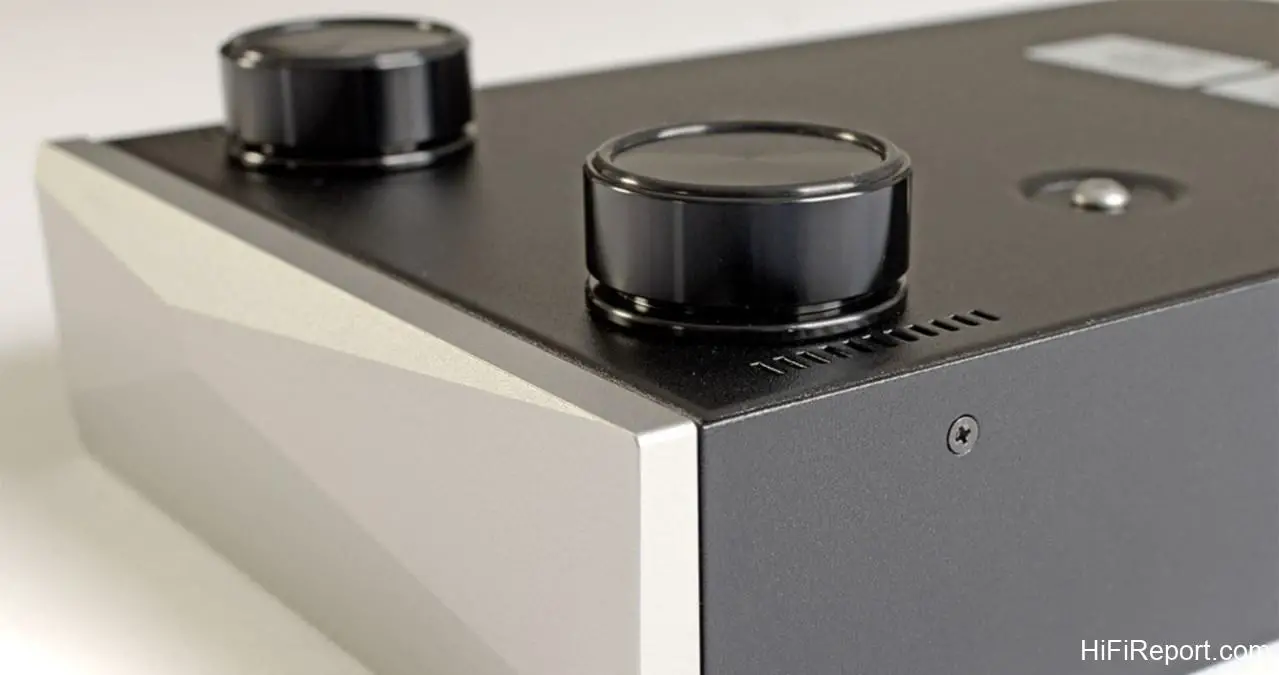
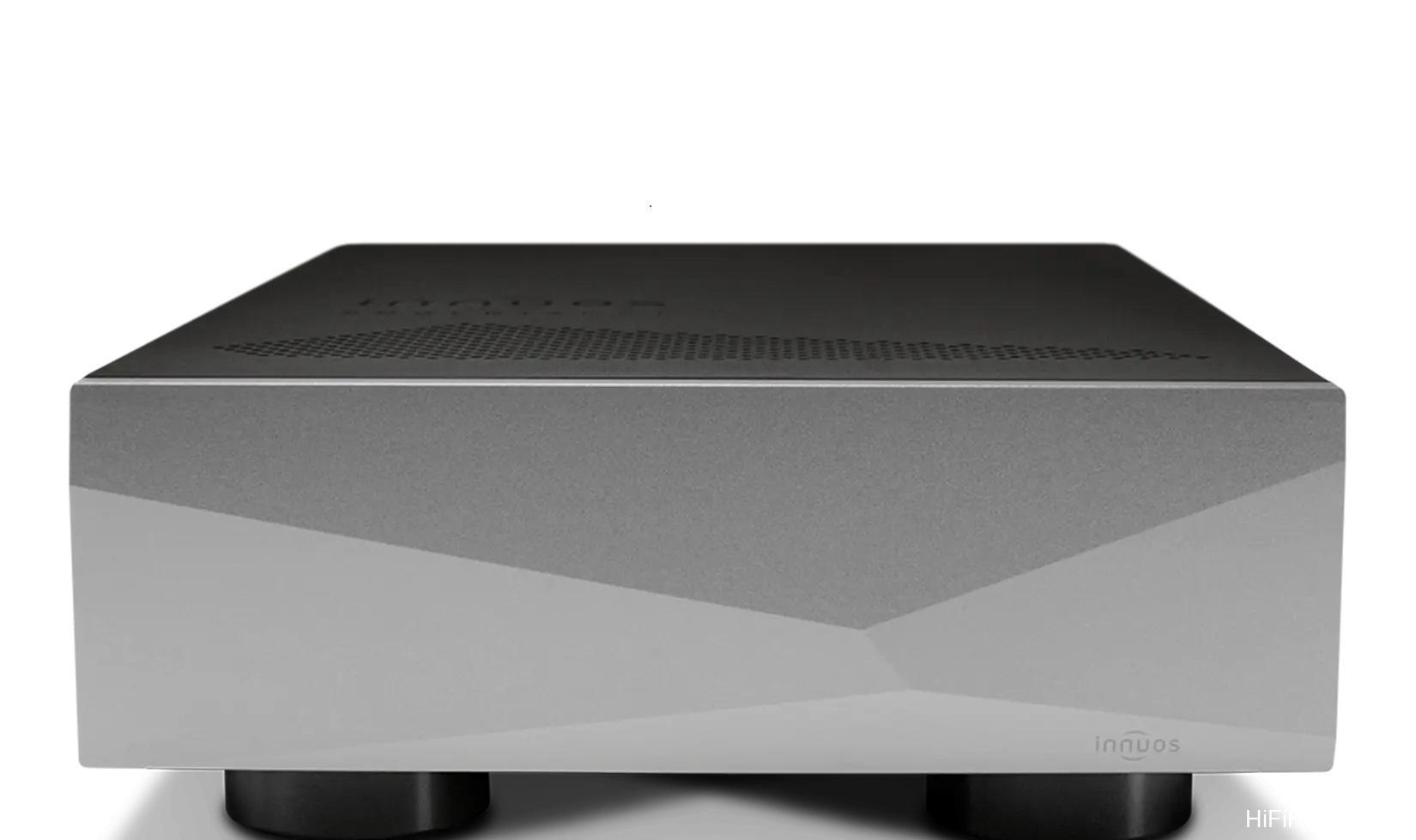
First up is “vibration control.” The PhoenixNET might not be large, but it tips the scales at a substantial 5kg, giving it more heft than typical network switches. To achieve superior chassis damping, Innuos incorporated their first audiophile design element: three massive feet on the bottom. These feet feature soft damping material internally, offering a noticeable compliance when pressed – a design specifically tailored to the PhoenixNET’s weight.
The inside surface of the top cover is also lined with a special damping material, engineered to convert vibrations into thermal energy for dissipation. Finally, silicone rings are fitted around the RJ45 terminals, demonstrating meticulous attention to even the most minute resonances at the connector interface.
Second is “clocking.” Unlike many audio manufacturers who champion external clocking solutions, Innuos believes that the transmission distance for the clock signal must be kept as short as possible to minimize jitter (time base error). To achieve this, the PhoenixNET incorporates an internal clock derived from the same oven-controlled crystal oscillator (OCXO) used in their flagship Statement server. This clock boasts an impressive accuracy of 3ppb at 25MHz.
Furthermore, the clock benefits from its own independent power supply and is directly connected to the network switch chip.
Power Supply
Third is “power.” Many network switches, due to cost or size constraints, often rely on basic transformers or switching power supplies. The PhoenixNET, however, employs two independent linear power supply modules, identical to those found in the flagship Statement. These modules feature large toroidal transformers, each paired with two audiophile-grade German Mundorf filter capacitors, providing dedicated power to the clock and the main circuit board, respectively.

This implementation adheres to the principle of shortest power paths, effectively reducing EMI noise interference.
Noise Reduction
Fourth is “noise reduction.” The rear panel of the PhoenixNET features a total of four RJ45 network ports: the leftmost serves as the input, with the remaining three acting as outputs. Internally, a 100Mbps switch chip was specifically selected, and the external terminals lack blinking LED indicators, all designed to minimize noise generation. Examining the PhoenixNET’s circuit layout reveals that Innuos has meticulously organized all internal wiring – there’s not an inch of superfluous cable.
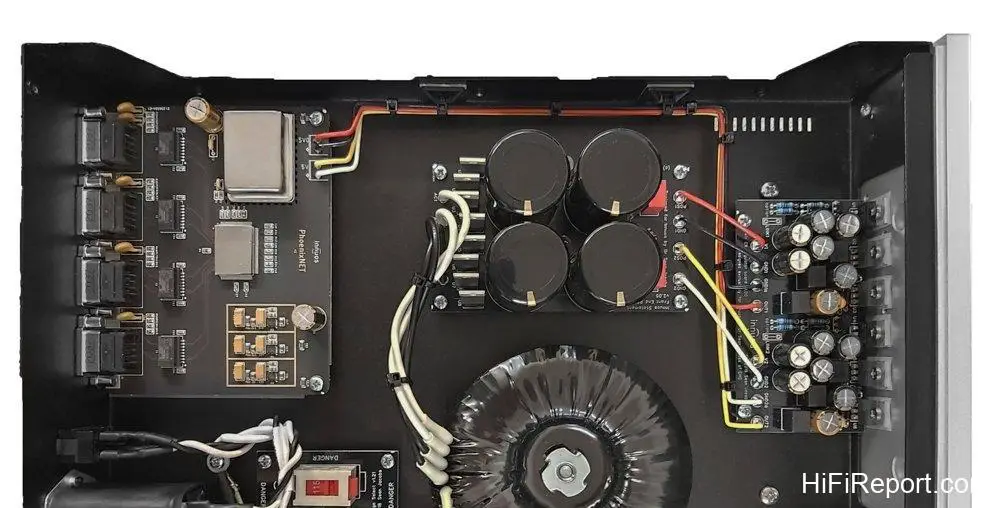
This dedication to minimizing transmission paths is taken to the extreme. Additionally, connections are made not via plastic plugs, but by directly soldering the wires onto the circuit board, ensuring optimal conductivity. This truly showcases audiophile thinking at every turn.
Listening Impressions
After listening, I found that the PhoenixNET’s sound quality absolutely lives up to its price point. Compared to switches costing under $3,000 USD (approximately), while it offers larger images and stronger dynamics, its greatest advantage lies in the highly three-dimensional soundstage localization, lifting the music out of a flat plane.
For instance, on “Sweet Dulcinea Blue” from the Bill Evans album “Quintessence,” I perceived a profound sense of depth emanating from the center of the speakers. Here, the trio’s instruments were spatially separated with a distinct 3D feel, and their images were both vivid and large. The piano notes possessed a crystal-clear transient attack, gleaming as if polished, sweeping away any previously felt fuzzy edges.
Simultaneously, the musical background became significantly blacker, completely devoid of any perceived impurities, allowing the natural texture of the instruments to emerge effortlessly. Dynamic contrast was also notably enhanced!
The PhoenixNET’s three-dimensional localization is particularly advantageous when playing large classical ensembles. For example, listening to Gil Shaham’s performance of Barber’s Violin Concerto revealed a pure black musical background that made the violin’s image exceptionally vivid, drawing distinct, three-dimensional lines through the air. Even within complex instrumental arrangements, each section’s arrangement was clearly delineated layer by layer.
Even with small vocal setups, the presentation gained a more pronounced sense of depth. Playing “River Of Tears” from Eric Clapton’s live album “The Lady In The Balcony,” I felt a life-sized vocal image standing center stage. Eric Clapton’s voice was thick and full of magnetism, feeling incredibly intimate, while the lip and mouth shape was soft and non-aggressive. The accompanying guitar was warm and full of woody resonance; the detail of the string plucks felt palpable in the air.
The gentle thud of the bass drum was loose and full-bodied, each beat impacting your chest, as if you were right there at the performance, experiencing an immersive musical tableau.
Conclusion
While the PhoenixNET is not inexpensive for a network switch, a closer look at its internal design reveals that its specifications and components truly justify the price – it’s a case of “you get what you pay for.” Hearing its sonic performance further underscores the sound characteristics absent in more affordable switches. If you are a top-tier streaming enthusiast looking for a switch that’s a fitting partner for your system, the PhoenixNET will absolutely not disappoint!
Specifications
* Product Type: Audiophile Network Switch
* Ports: RJ45 Input × 1, RJ45 Output × 3
* Supported Network Speed: 100Mbps
* Weight: 5kg