
Innuos PhoenixNET Network Switch Review
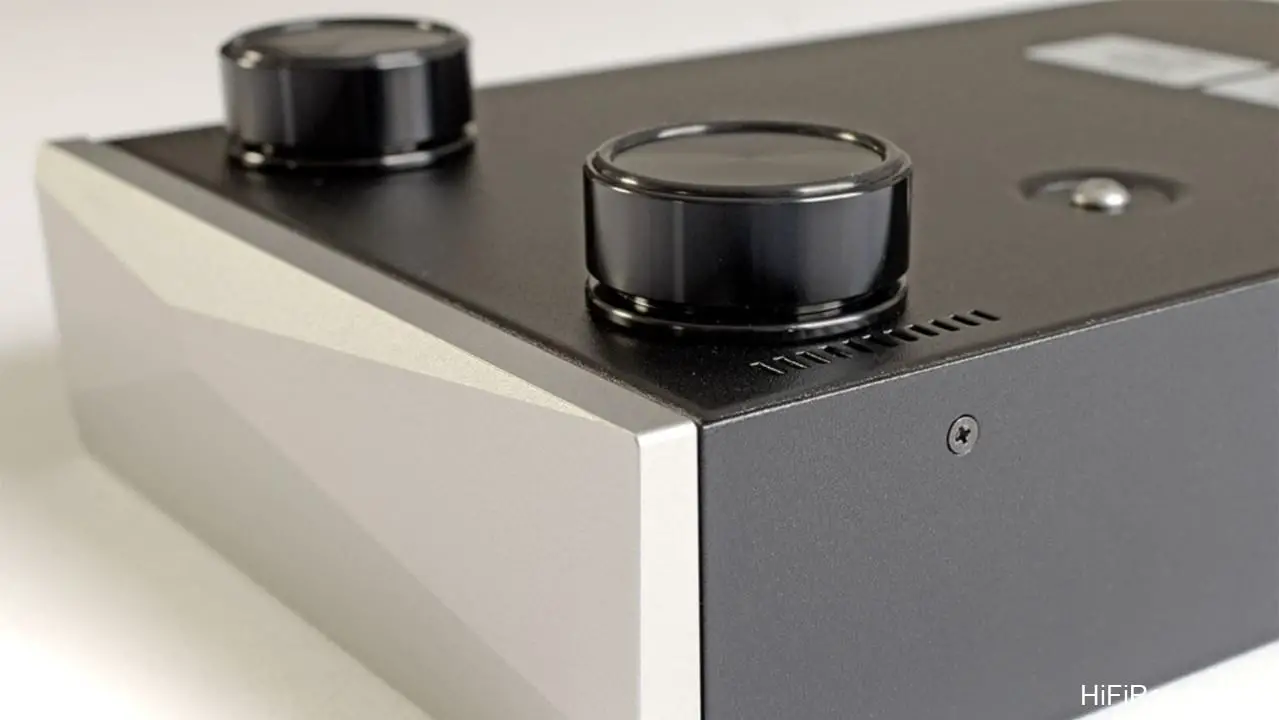
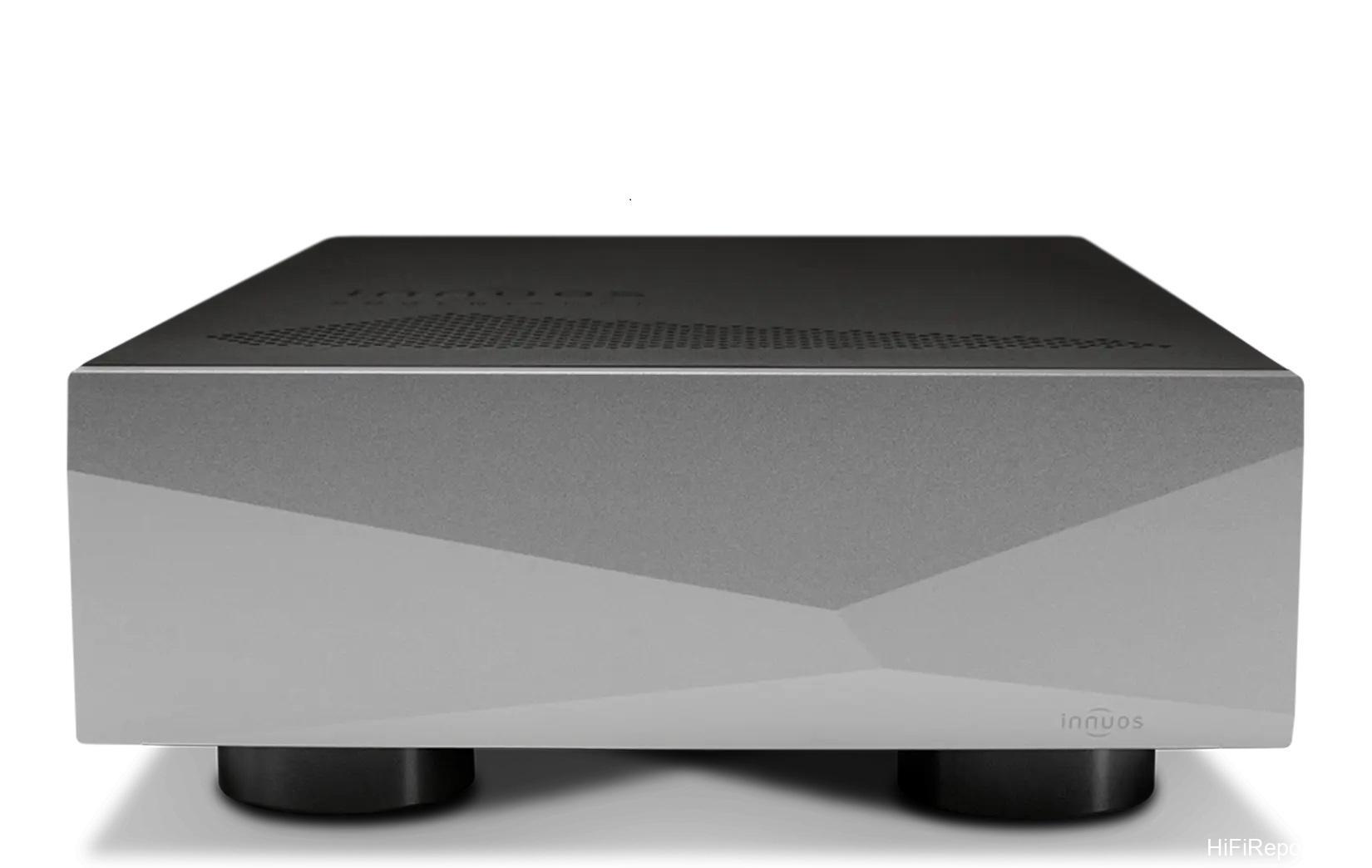
First is vibration control. Although the PhoenixNET is compact, it weighs an impressive 5 kg, making it far more substantial than standard network switches. To achieve superior chassis damping, the manufacturer implemented its first audiophile design choice: three massive isolation feet mounted on the bottom. These feet contain a soft, highly elastic damping material, custom-formulated specifically for the weight of the PhoenixNET.
Additionally, the inside of the chassis top cover is treated with a specialized damping material that converts mechanical vibration into thermal energy. Even the RJ45 ports are fitted with silicone rings to eliminate microscopic vibrations at the connector level.
Master Clock
Second is the clock system. Unlike many audio manufacturers who advocate for external master clocks, Innuos believes that the clock signal must travel the shortest distance possible to minimize jitter.
To achieve this, the PhoenixNET features an internal Oven-Controlled Crystal Oscillator (OCXO) running at 25MHz with an outstanding accuracy of 3ppb—the exact same clock used in their flagship Statement music server. This master clock is powered by an independent supply and connected directly to the network switch chip to eliminate transmission losses.
Power Supply
Third is the power supply. Due to cost and space constraints, many switches rely on basic switch-mode power supplies (SMPS). In contrast, the PhoenixNET utilizes two independent linear power supply modules, similar to those found in the flagship Statement.
These modules feature a large toroidal transformer paired with two premium, audiophile-grade Mundorf filter capacitors from Germany. They supply independent, clean power to the master clock and the main circuit board respectively, executing a short-path power delivery design that minimizes electromagnetic interference (EMI).
Noise Reduction
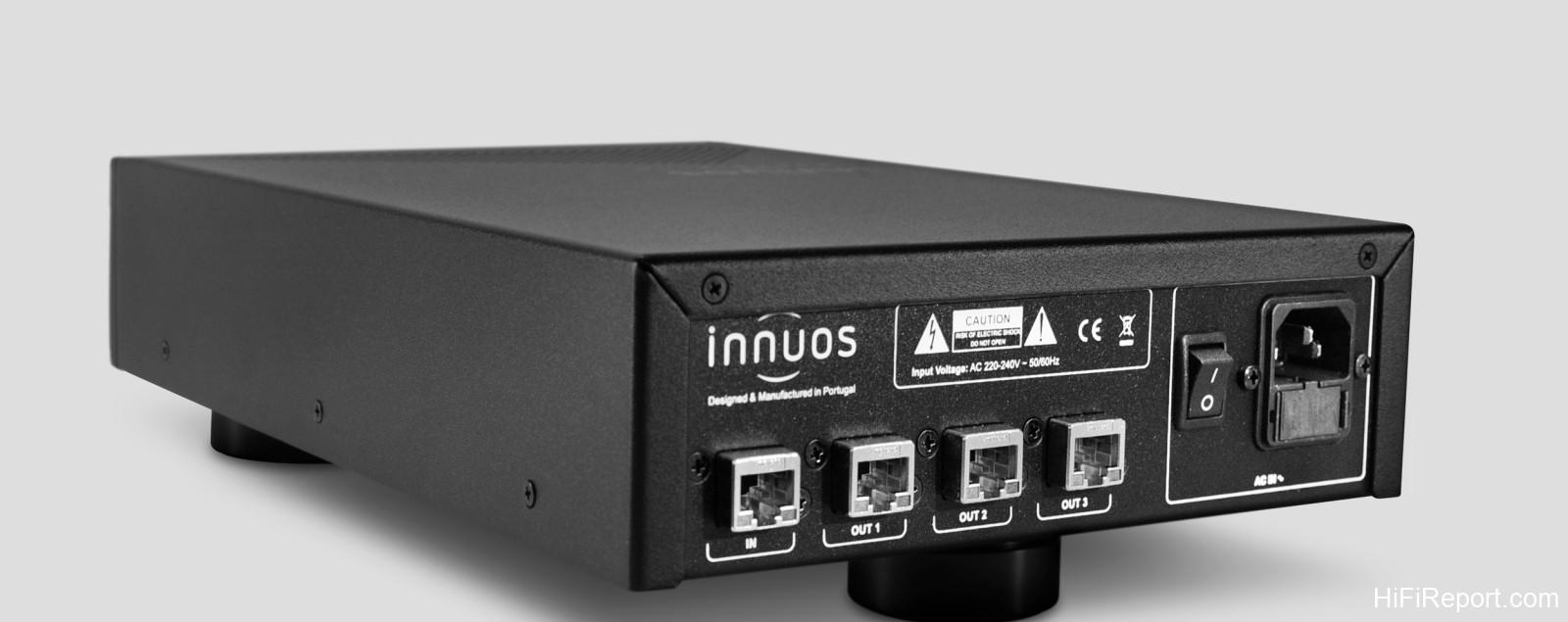
Fourth is noise reduction. The rear panel of the PhoenixNET features four RJ45 ethernet ports: one input on the far left and three outputs. Internally, Innuos specifically selected a 100Mbps switch chip to minimize high-frequency noise, and they completely omitted status LEDs on the ports to eliminate electrical noise.
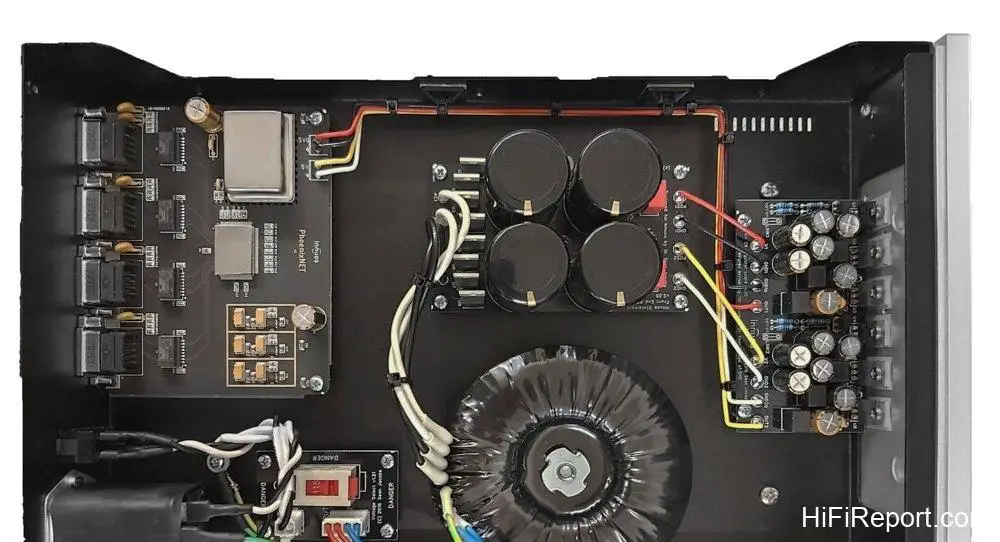
Looking at the internal layout, the wiring is meticulously arranged with absolutely no “slack” or excess length, shortening the signal path to the absolute minimum. Furthermore, instead of using plastic push-in connectors, all internal cables are soldered directly to the circuit board to ensure optimal signal transmission. Every design choice oozes uncompromising audiophile philosophy.
Listening Impressions
During my listening sessions, the PhoenixNET proved that its performance fully justifies its price tag. Compared to switches under $3,000, it offers a grander soundstage and stronger dynamics, but its greatest advantage lies in its highly holographic imaging, which prevents the music from sounding flat.
For instance, in “Sweet Dulcinea Blue” from Bill Evans’ album *Quintessence*, a deep sense of space unfolds right between the speakers. The trio instruments are arranged with a distinct 3D positioning, sounding vivid and full-bodied. The piano notes are crystal clear, boasting a polished, brilliant luster that completely sweeps away any fuzzy edges.
At the same time, the background becomes pitch-black and free of any electronic haze, allowing the natural textures of the instruments to emerge with intense dynamic contrast.
This holographic imaging shines even brighter with large-scale classical music. When playing Barber’s *Violin Concerto* performed by Gil Shaham, the ink-black background makes the violin stand out with remarkable clarity, painting vivid, three-dimensional lines in the air. Even within complex orchestral arrangements, each section remains clearly layered and easy to follow.
Even with intimate vocal recordings, the imaging becomes extraordinarily holographic. Playing “River of Tears” from Eric Clapton’s live album *The Lady In The Balcony*, his vocal image stands life-sized right in the center of the stage. Clapton’s voice sounds rich, magnetic, and deeply intimate, with soft, non-fatiguing sibilants.
The accompanying acoustic guitar carries a warm, woody resonance, with every pluck of the strings rendered with tangible texture. The kick drum delivers a loose, full-bodied punch, where every strike resonates right through your chest. It feels as though you are sitting right at the venue, experiencing an incredibly lifelike musical performance.
While the PhoenixNET is certainly not inexpensive for a network switch, a close look at its internal engineering reveals that you truly get what you pay for in terms of build quality and components. Listening to its sonic performance reveals qualities that budget switches simply cannot replicate. If you are a high-end streaming enthusiast looking for a top-tier network switch to match your reference system, the PhoenixNET will certainly not disappoint.
Specifications
* Product Type: Audiophile-grade Network Switch
* Port Support: RJ45 Input × 1, RJ45 Output × 3
* Network Speed Supported: 100Mbps
* Weight: 5 kg
* Dimensions (WHD): 215 × 87 × 342 mm