
IsoAcoustics GAIA-Titan Review
I recall last year’s audio exhibition vividly. When I was invited to give a lecture, I borrowed IsoAcoustics isolation footers and placed them under a Mesa Boogie California Tweed electric guitar amplifier. The effect was remarkable. The clarity and punch of the low frequencies improved significantly. I immediately purchased three Stage 1 Combo isolation boards. As a bonus, they sent over eight GAIA-Titan units for the Wilson Audio Alexia 2 speakers in our editorial department. After listening for two months, I truly didn’t want to remove them and seriously considered buying them myself. However, the nature of our editorial work forced me to resist the urge. I had to let them go.
Instantly Noticeable 3D Soundstage Enhancement
Why did the demands of editorial work stop me from buying them? Because we are constantly changing equipment and making comparisons. We swap out speakers frequently. To accommodate different gear pairings, we are constantly adjusting speaker placement. Originally, the Alexia 2 speakers had wheels, making them easy to move despite their hefty weight. However, once the GAIA-Titan footers were installed, the speaker positions became fixed. As a result, when we needed to switch to other speakers, we had to place them in front of the Alexia 2s and move the listening position further back. This caused significant inconvenience for our editorial workflow. So, as much as I wanted to keep the GAIA-Titan footers, I ultimately decided against it.
The effect of the GAIA-Titan is immediate and striking. Upon installation, the 3D spatiality of the soundstage noticeably improves. The speakers seem to disappear even more into the room, enhancing transparency. Soundstage imaging and focus are heightened, and the overall stability of the music is improved. Simply put, the atmosphere of listening to music becomes more immersive and engaging.
Choosing the Right GAIA-Titan for Speaker Weight
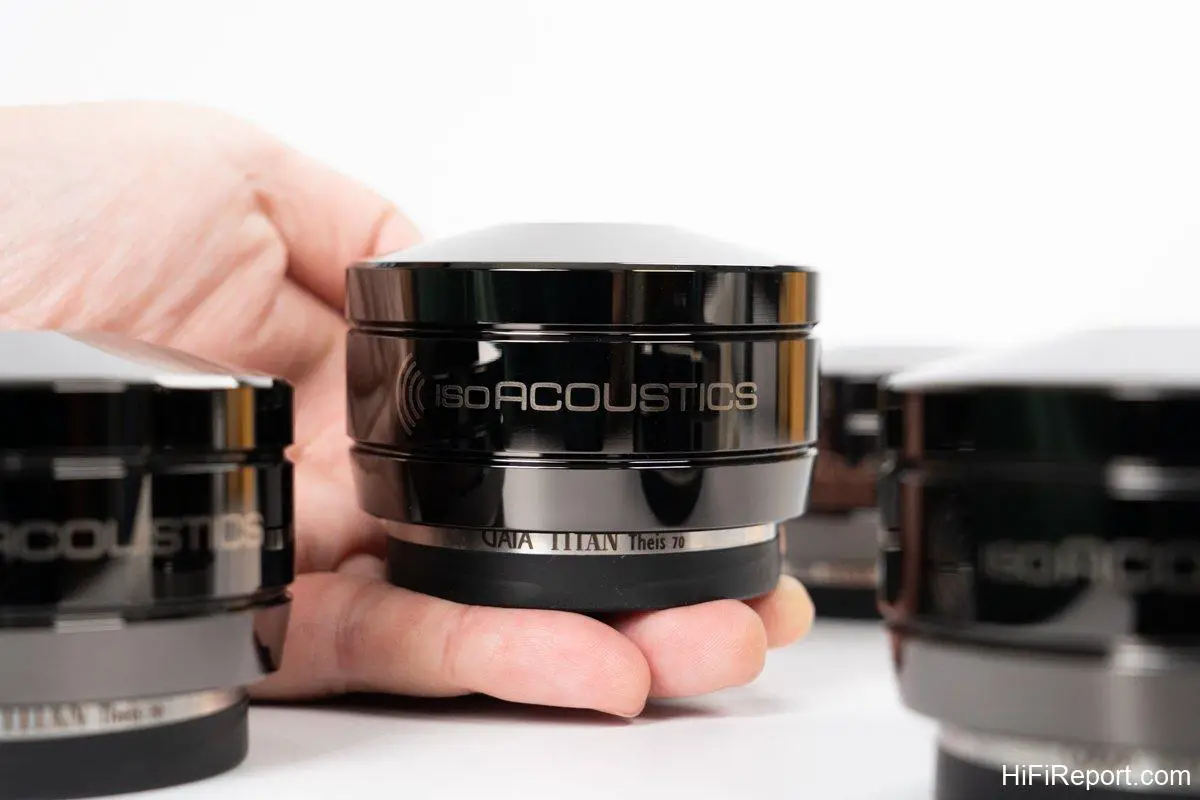
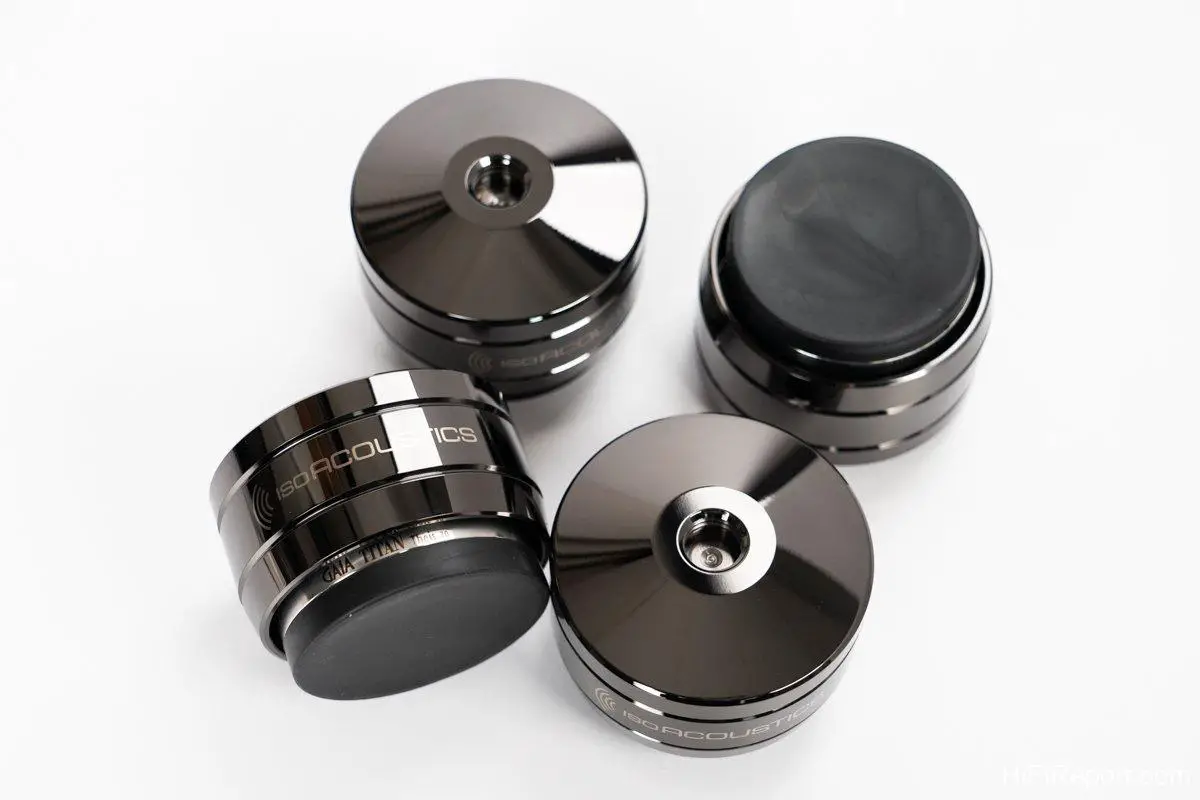
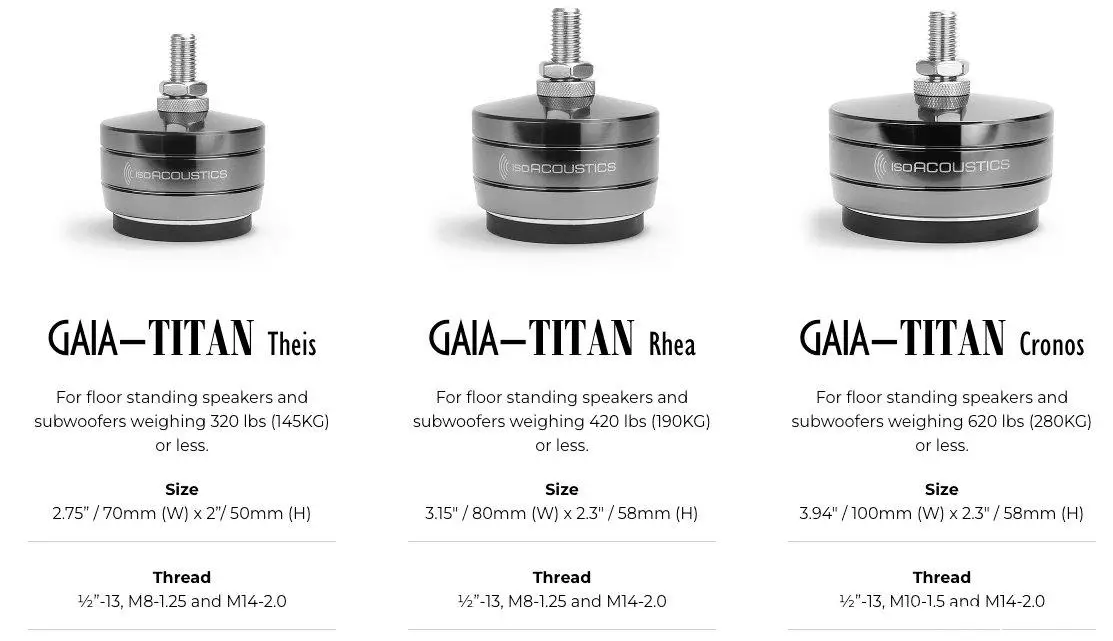
GAIA-Titan is IsoAcoustics’ high-end home audio isolation footer series. The series comprises three models: GAIA-Titan Theis, Rhea, and Cronos. While the underlying technology remains consistent across the range, the physical dimensions increase with each model to accommodate different weight capacities. It is crucial to select the appropriate model based on the weight of your equipment.
For instance, a set of four GAIA-Titan Theis footers supports a maximum weight of 145 kg (approximately 320 lbs). The GAIA-Titan Rhea handles up to 190 kg (approximately 419 lbs), and the GAIA-Titan Cronos can bear a substantial 280 kg (approximately 617 lbs). In the case of the Alexia 2 speakers used by HiFiReport, each weighing 117 kg (approximately 258 lbs), the GAIA-Titan Theis was the model provided.
Positioning as the “Tire Company” of the Audio Industry
IsoAcoustics, as a company, only entered the scene in 2012, debuting their isolation footers at the NAMM Show. They quickly gained recognition in the professional recording market and expanded into the home audio market in 2016. In recent years, they have actively pursued the OEM (Original Equipment Manufacturer) market, designing custom IsoAcoustics isolation footers for major international brands.
IsoAcoustics’ OEM approach can be likened to the relationship between tire manufacturers and the automotive industry. High-performance sports cars don’t typically design and manufacture their own tires. Instead, they rely on specialized tire brands to create bespoke solutions. In the realm of performance tires for supercars, brands like Michelin, Pirelli, and Continental are at the forefront. This is because these tire giants are technology leaders, and partnering with them ensures top-tier performance. IsoAcoustics positions itself as the “isolation expert,” aiming to provide Hi-End loudspeaker manufacturers with custom-designed isolation footers, offering specialized services to audio giants.
While most floor-standing speakers come with their own spikes or base accessories, often designed in-house by the speaker brand, IsoAcoustics must possess genuine expertise to penetrate the OEM market. They need to convince speaker brands to adopt custom-made IsoAcoustics footers. Otherwise, wouldn’t these Hi-End brands simply be promoting IsoAcoustics? However, IsoAcoustics has proven quite successful. Their website currently lists fifteen speaker brands that have adopted custom-made IsoAcoustics footers. Rumor has it that the 2023 Munich High End Show will showcase even more Hi-End brands incorporating their technology, indicating a thriving OEM business.
Both the GAIA-Titan and GAIA series are IsoAcoustics’ high-end isolation footer lines, primarily designed for floor-standing speakers. They are divided into two series, but their specifications are quite similar, differing mainly in weight capacity. The GAIA series includes three models, and the GAIA-Titan series also features three. GAIA 1 has the highest load capacity, reaching 100 kg (approximately 220 lbs), while GAIA III handles 32 kg (approximately 71 lbs). In contrast, the GAIA-Titan Theis starts at 145 kg (approximately 320 lbs), and the GAIA-Titan Cronos reaches 280 kg (approximately 617 lbs). Therefore, the primary distinction between these two series appears to be their weight-bearing capabilities.
Home Audio Aesthetics: Superior Design
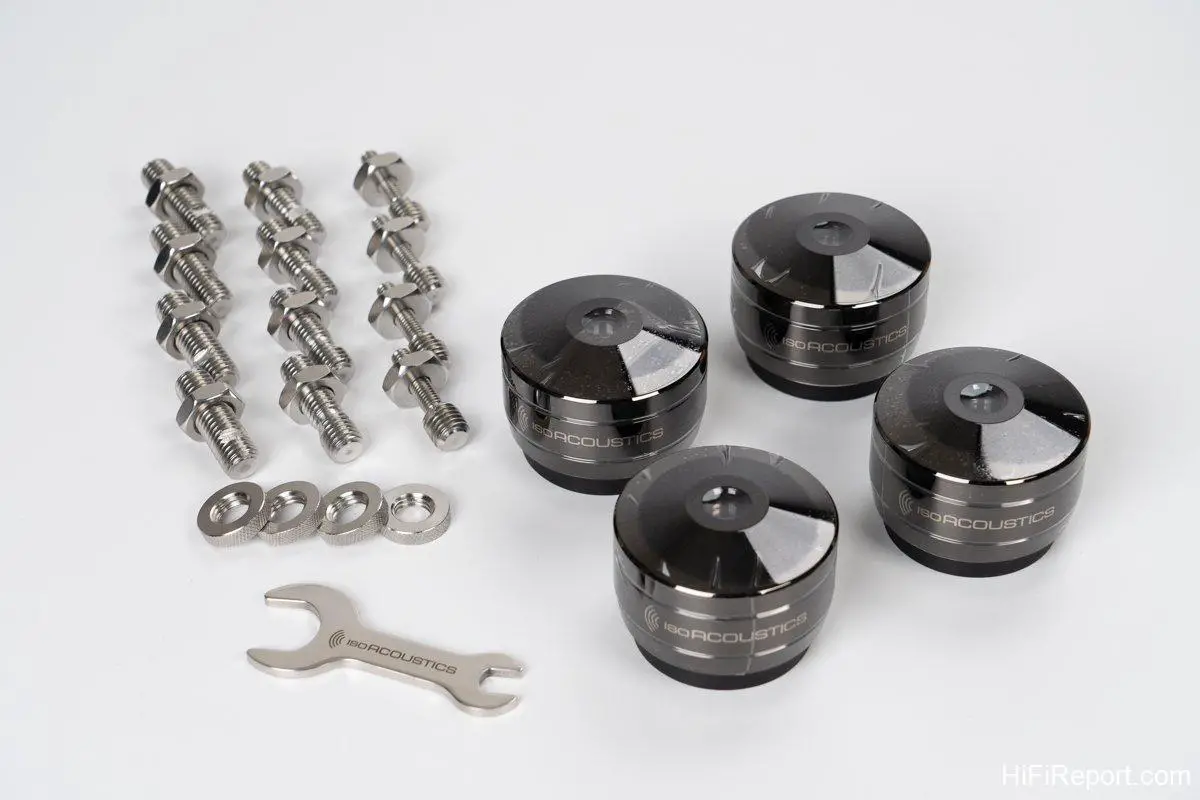
Being designed for home use, the GAIA-Titan series boasts a much more refined aesthetic compared to their Pro Audio counterparts. The exterior features stainless steel with a polished finish. However, the real secrets of GAIA-Titan lie within its internal structure. While the exterior might suggest a simple construction of stainless steel encasing rubber damping material, the internal design incorporates a complex isolation structure. This patented know-how is what IsoAcoustics sells, promising to tighten low frequencies, optimize the soundstage, enhance sonic clarity and openness, and strengthen the natural 3D listening experience.
Well, I’ve already described the sonic improvements. What else is there to discuss?
F1 Speaker Jack for Heavyweight Installation
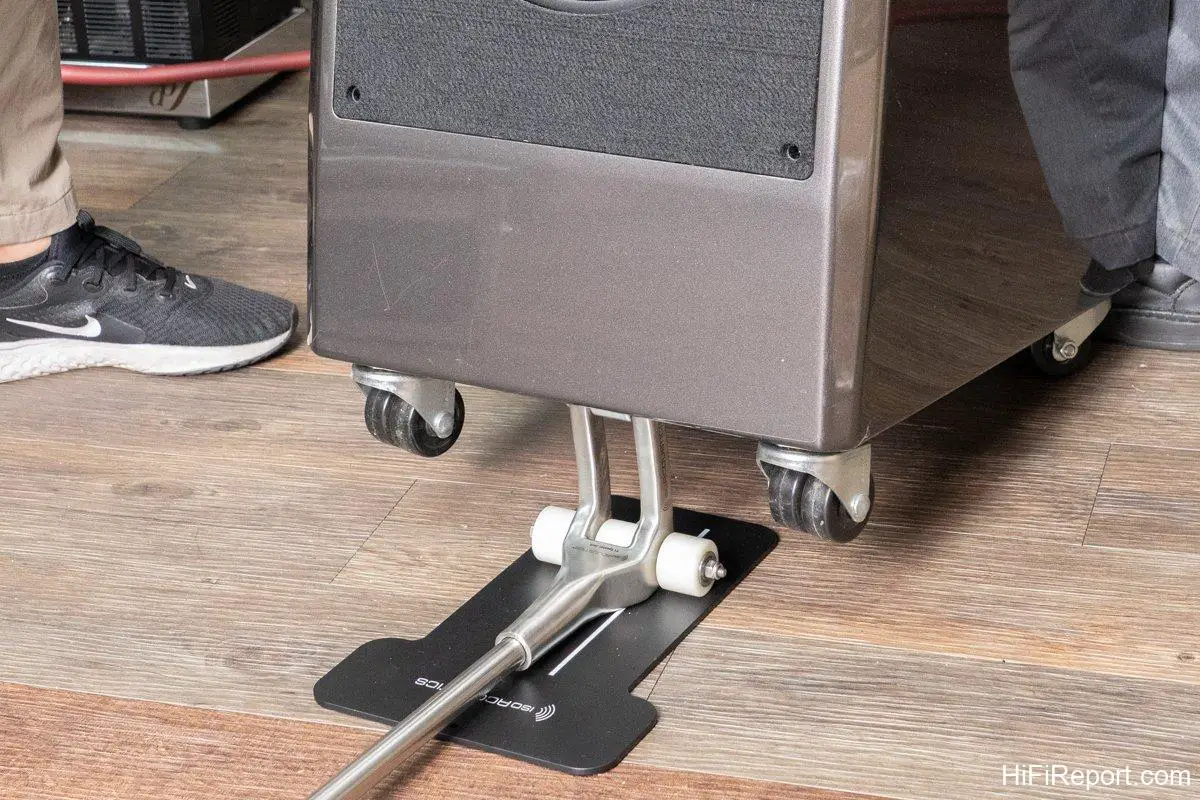
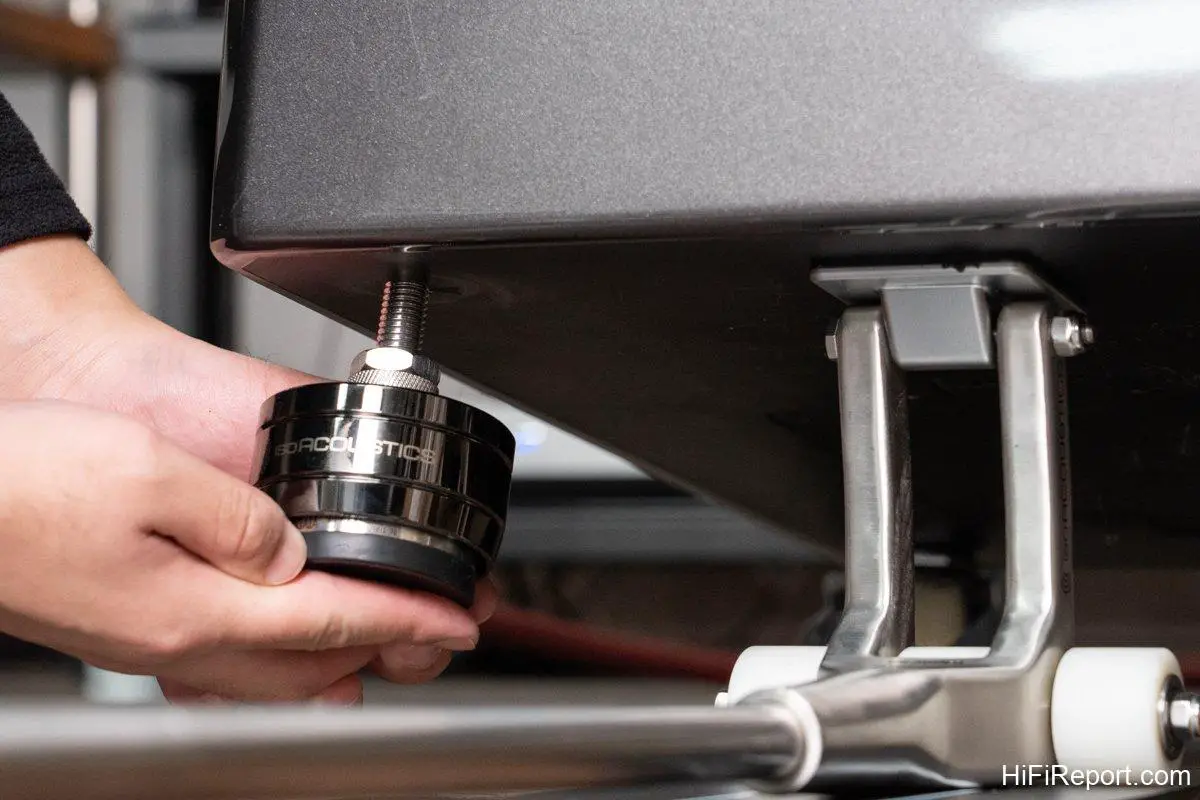
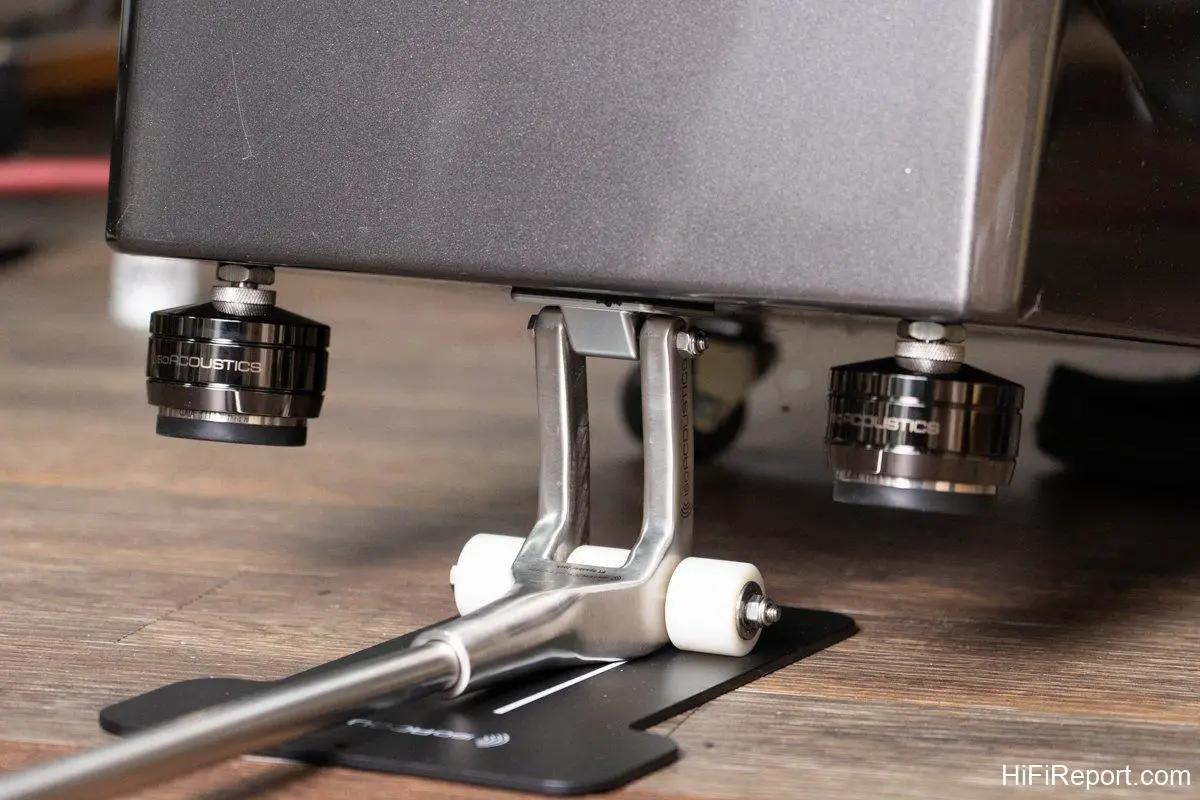
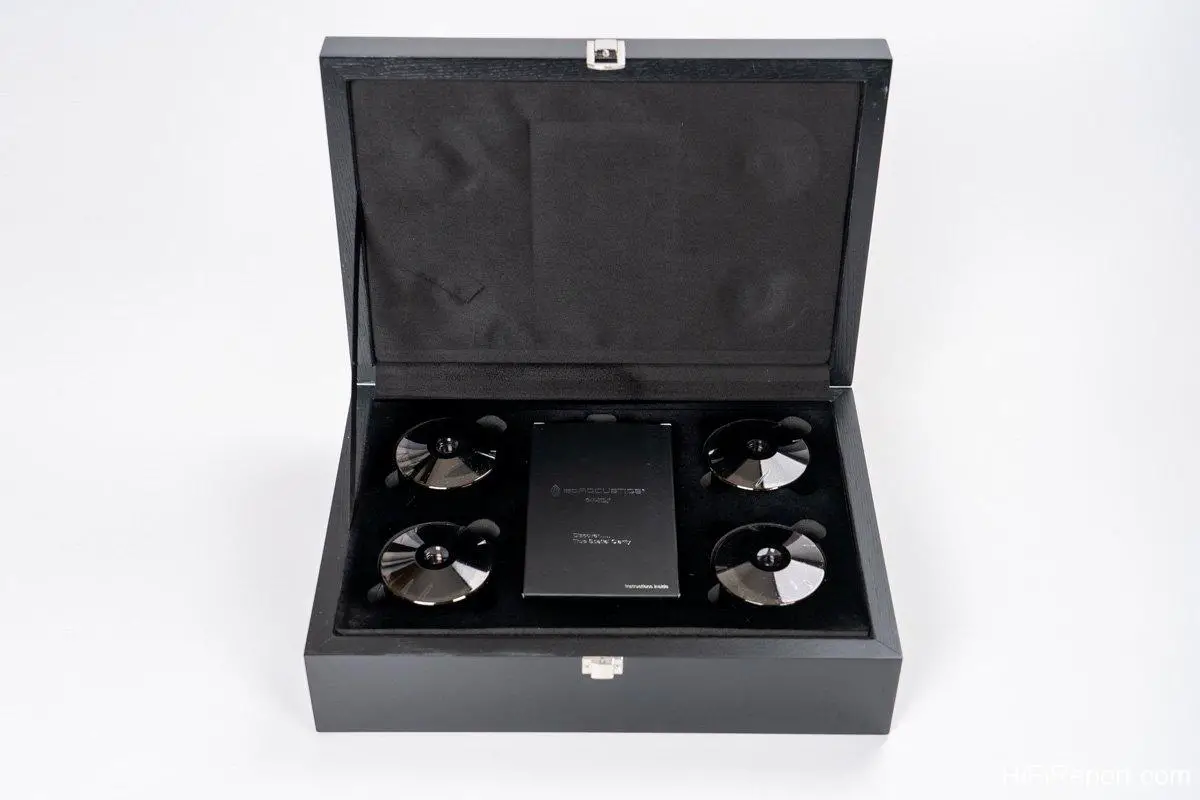
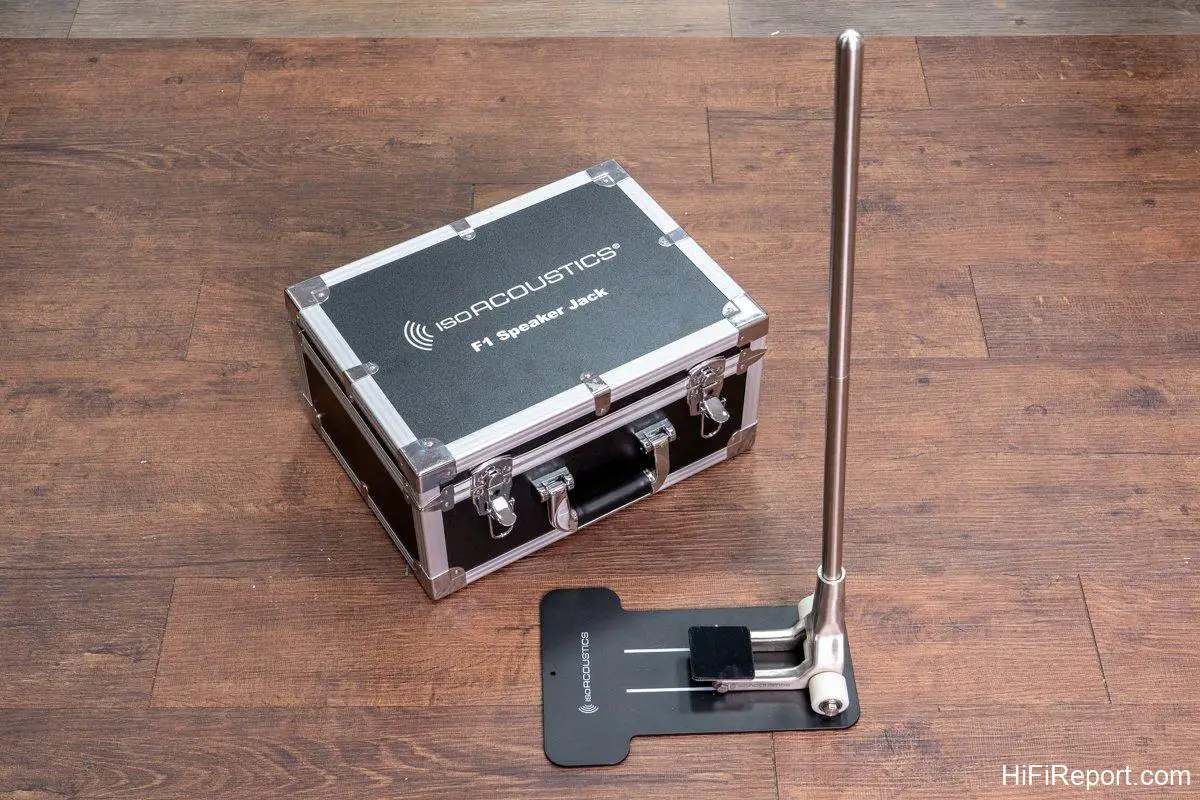
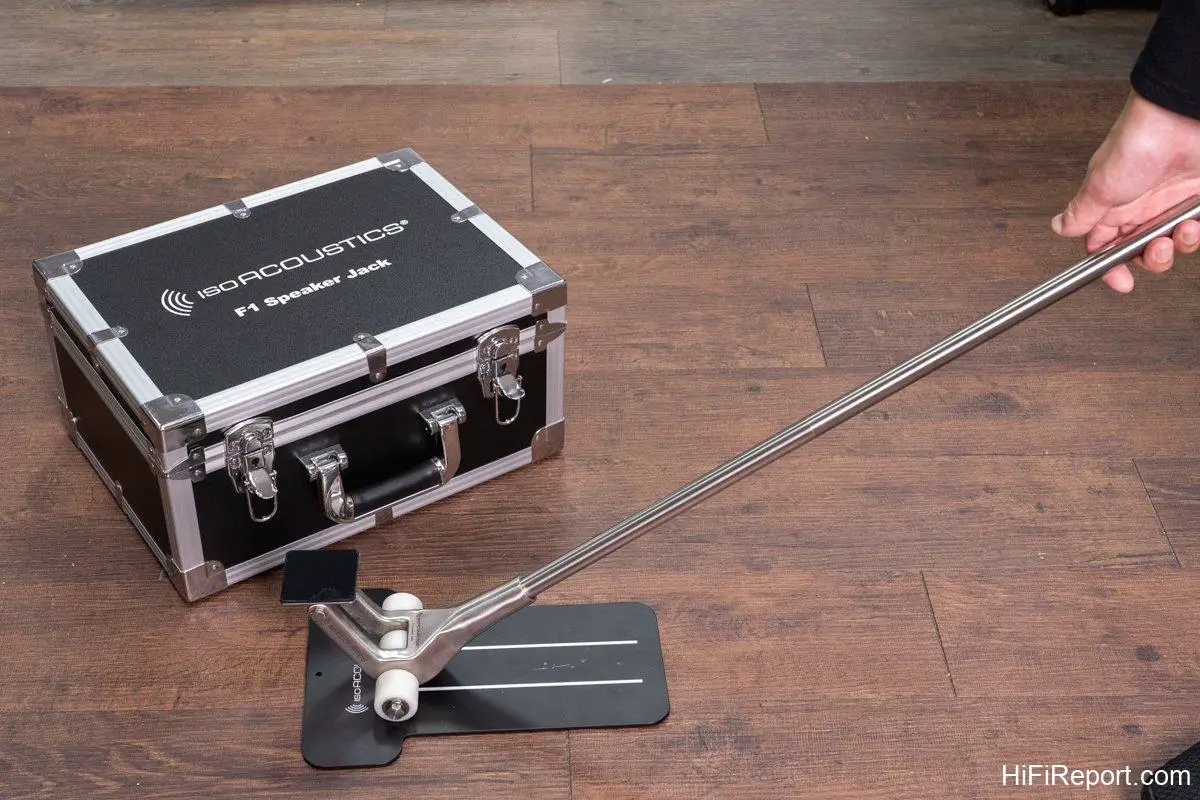
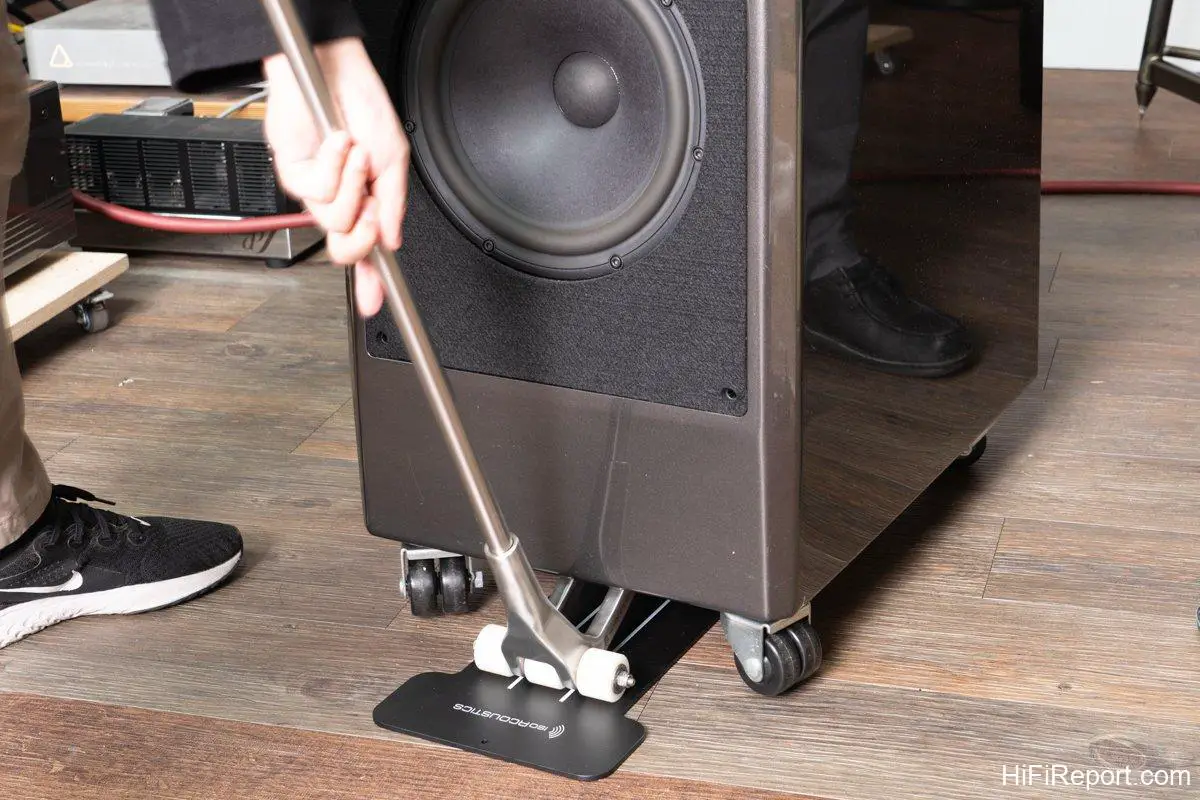
Installation! With the GAIA-Titan Theis designed to support up to 145 kg for a set of four, we’re dealing with substantial speakers. Installation certainly presents a challenge. After photographing the GAIA-Titan Theis, we awaited assistance for installation. IsoAcoustics designed the F1 Speaker Jack specifically for the GAIA-Titan series. This compact jack utilizes leverage to lift floor-standing speakers by 135 mm (approximately 5.3 inches). Given that the GAIA-Titan Theis has a height of 87 mm (approximately 3.4 inches), this provides an extra 48 mm (approximately 1.9 inches) of clearance to access the speaker’s underside and attach the isolation footers. A similar 40 mm (approximately 1.6 inches) height difference is available even with the tallest GAIA-Titan Cronos, which stands at 95 mm (approximately 3.7 inches) tall.
Even with the F1 Speaker Jack, installing the GAIA-Titan Theis isn’t a solo task. The Alexia 2 speakers are originally fitted with four casters for easy movement. The F1 Speaker Jack lifts only one side of the speaker at a time. Therefore, one person needs to support the Alexia 2 from behind to prevent it from rolling backward on its wheels when lifted from the front. However, the F1 Speaker Jack’s jacking mechanism is quite stable. Once the lever handle is pressed to the bottom, it can be released, allowing the other person to remove the casters and install the GAIA-Titan Theis. Repeating this process step-by-step, we successfully installed all eight GAIA-Titan Theis footers.
IsoAcoustics Logo Must Face Forward
When installing IsoAcoustics isolation footers, there’s one crucial detail to remember: the IsoAcoustics logo must face the front of the speaker.
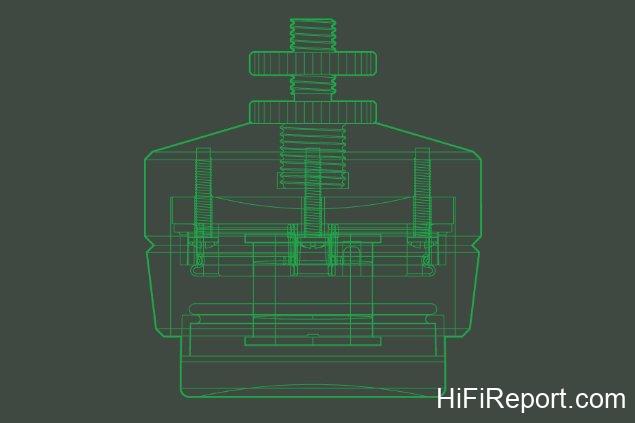
Wait, how do you adjust the height and level then? By adjusting the nut in the center of the locking screw. But the most important thing is to ensure the IsoAcoustics logo points directly forward. This is related to the directional nature of the internal isolation mechanism.
If the direction is incorrect, it’s not that there’s no effect, but the performance is diminished. Since you’ve already invested in isolation footers, you’ll naturally want to maximize their effectiveness. Therefore, make sure the IsoAcoustics logo is oriented directly forward.
I myself am a loyal IsoAcoustics user. My home monitoring speakers, Kali In-5s, are placed on Aperta 200 stands. For bookshelf speakers, IsoAcoustics isolation footers should be considered “essential upgrades.” Depending on the speaker’s weight, pairing them with appropriate IsoAcoustics footers, or using Aperta 200 or Iso-200 stands directly, can immediately achieve tighter bass and an upgraded 3D soundstage with improved imaging. Furthermore, all of my electric guitar amplifiers are equipped with Stage 1 Board Combos. This not only enhances bass clarity but, more importantly, reduces sound transmission through the floor. Since my son’s room is upstairs, without the Stage 1 Board Combo, I would frequently have to ask him to turn down the amp. With the Stage 1 Board Combo, I rarely need to go upstairs anymore because the isolation is so effective, significantly reducing low-frequency transmission downwards. Now, he can practice guitar as he pleases.
Scientifically Backed and Reasonably Priced
My continued purchases of Aperta 200 and Stage 1 Board Combo, and my near-purchase of GAIA-Titan Theis, are driven by simple reasons. First, IsoAcoustics provides measurement data from Canada’s NRC (National Research Council), ensuring all isolation performance is backed by rigorous scientific evidence. Second, their various isolation solutions offer flexible applications and are easy to adjust. Third, and most importantly, IsoAcoustics’ pricing is relatively reasonable, not exorbitantly inflated.
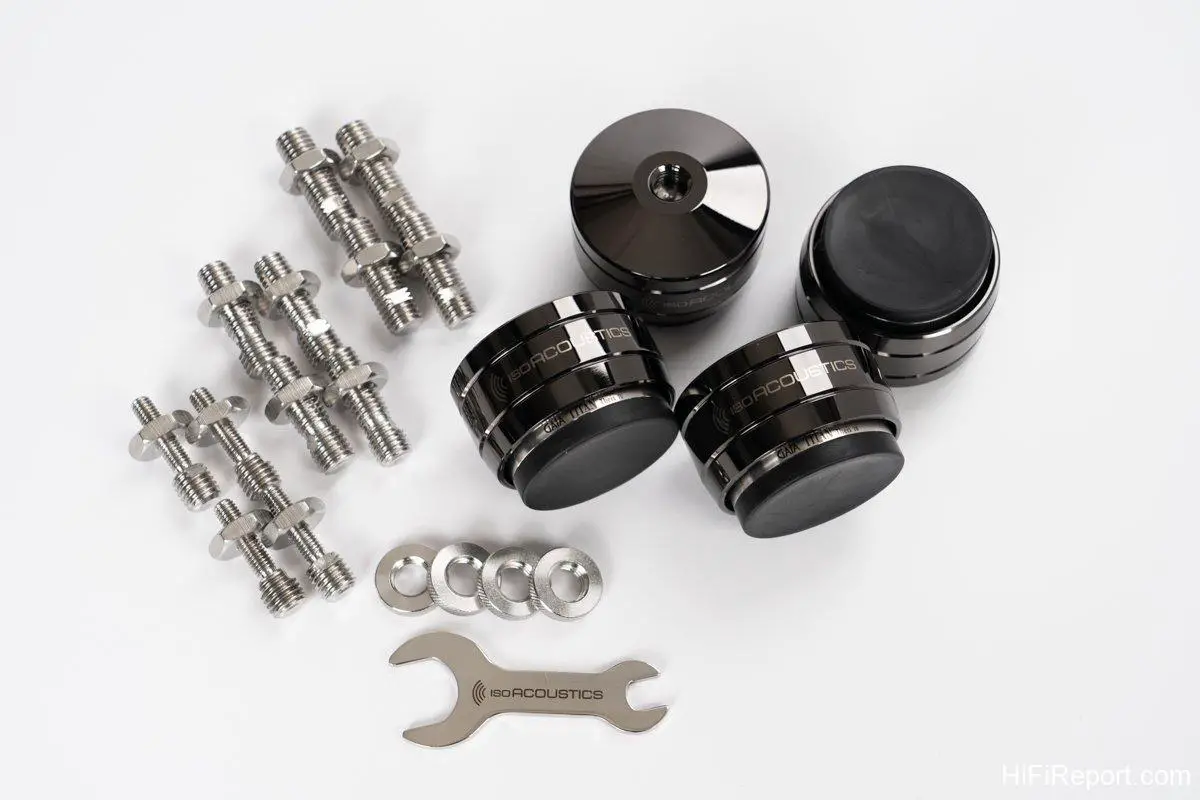
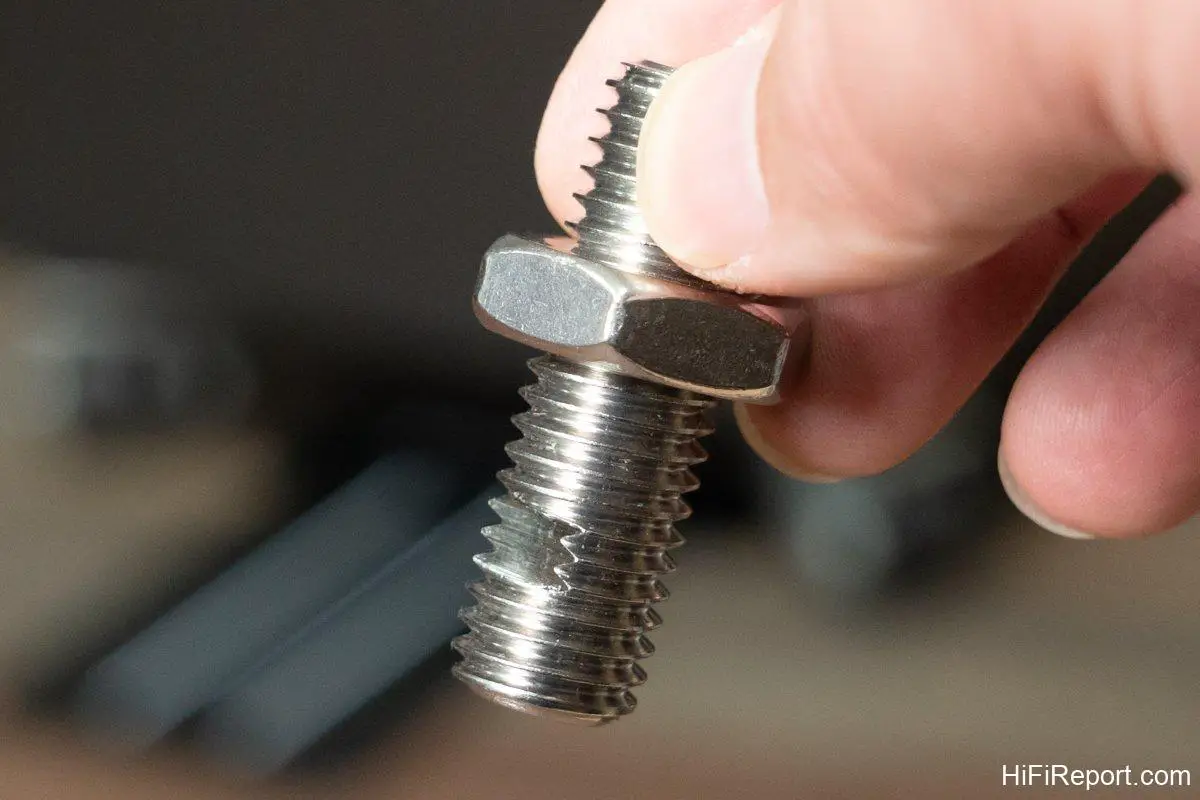
Regarding application flexibility, GAIA-Titan footers need to be compatible with speaker spike threads. However, the thread specifications vary across speaker models. Therefore, IsoAcoustics includes three thread adapters to accommodate most speakers. If your speakers happen to use a unique thread specification, no problem. Just provide the specifications, and IsoAcoustics will endeavor to provide corresponding adapters.
Focused Energy, Open and Transparent
As for the effect of GAIA-Titan Theis with the Alexia 2, I’ve essentially already covered it. In eight words, it can be summarized as “focused energy, open and transparent.” I must emphasize that while GAIA-Titan Theis provides these improvements, it’s contingent on proper speaker placement. If you haven’t already established a 3D soundstage or if your soundstage is inherently asymmetrical, adding GAIA-Titan Theis will only slightly improve bass focus. It won’t magically conjure a 3D soundstage out of thin air. A 3D soundstage is built through manual speaker placement adjustments. A skewed and distorted soundstage cannot be corrected by GAIA-Titan Theis.
However, when you’ve diligently positioned your speakers for optimal performance, achieving a 3D soundstage with discernible instrument placement, but you find the bass lacking focus and sounding loose, and the 3D soundstage depth and width seem insufficient, then GAIA-Titan can be incredibly beneficial! To reiterate, GAIA-Titan cannot create something from nothing; it only enhances what is already there – it’s the icing on the cake.
Rhythmically More Lively and Agile
The same principle applies to our Alexia 2 setup at HiFiReport. We first optimized speaker placement to create the soundstage, then introduced GAIA-Titan Theis. The most noticeable improvement was in bass focus. The tightened bass frequencies also gained elasticity. Think of a jazz drum kit’s kick drum. By adding sufficient damping, the kick drum’s rebound becomes tighter. The “thump” sound becomes more articulate rather than loose and undefined drum hits. The snare drum’s sound becomes crisper, as if the drumhead has been tightened. The entire mid-bass and bass presentation becomes more vibrant, and the rhythm feels more agile and dynamic.
Take, for example, dmp Records’ “Tricycle,” an early digital recording fusion classic. Listening to the title track “Tricycle,” the opening keyboard chords are soft and gentle, sounding light and mellow. But then, the drums and electric bass unexpectedly burst in, creating a powerful dynamic contrast. While the Alexia 2 was already performing well, delivering the scale and impact expected from large floor-standing speakers, adding GAIA-Titan Theis noticeably expanded the 3D soundstage further outwards. The impact and extension in the low frequencies became even more impressive. It makes you want to turn up the volume and revel in the recording’s dramatic dynamic contrast. Especially during the final drum solo, with GAIA-Titan Theis in place, the Alexia 2’s bass becomes even more lively. The rapid drum fills are clear and distinct, each drumbeat defined with excellent articulation and rebound.
With GAIA-Titan Theis providing isolation, the soundstage becomes wider and deeper, and the musical background feels quieter, bringing out a more natural sense of musical flow. Listening to Katja Werker’s “Contact Myself,” a live recording from the German Stockfisch Recording studio, featuring Katja Werker’s vocals and guitar, accompanied by two acoustic guitars and bass, the instrumentation is simple, but the Stockfisch recording quality is excellent. Katja Werker’s voice is centered, acoustic guitars are positioned left and right, and the bass is focused in the center. With GAIA-Titan Theis, the soundstage and imaging created by the recording studio become more expansive and the sense of space more transparent, resulting in a more natural listening experience.
A “Cherry on Top” Upgrade
In the audiophile journey, equipment selection is the first step. Once the gear is in place, fine-tuning becomes the source of enjoyment. Adding various isolation accessories can further unlock the potential of your system. GAIA-Titan is an accessory that adds that extra layer of refinement to your setup. If you’ve already meticulously optimized your audio system and are seeking further improvement, GAIA-Titan is an excellent choice. IsoAcoustics has been a trusted standard in recording studios for years. If professionals rely on them, why not bring that same benefit into your home audio system?