
IsoAcoustics Orea Series Isolation Feet Review
In the realm of high-fidelity audio reproduction, vibration is an omnipresent factor. From the subtle tremors of transformers and cables to the more pronounced resonances of loudspeakers and audio racks, these minute disturbances permeate every aspect of the playback chain. “Intermingling” within the equipment, vibrations exert a significant, often detrimental, influence on the sound we ultimately hear. In essence, the sonic tapestry reaching the listener’s ears, regardless of its perceived quality, is a complex blend of the intended audio signal and the superimposed distortions introduced by vibration – an intricate and often indistinguishable mix. Therefore, effectively managing vibration becomes a paramount task in the pursuit of pristine audio reproduction.
So, how does one effectively address vibration? Employing the right isolation devices is a highly effective approach, exemplified by the IsoAcoustics Orea series isolation feet under review here.
Professional Audio Heritage
IsoAcoustics, a Canadian company, was established in 2012 by Dave Morrison. Prior to founding IsoAcoustics, Morrison spent nearly two decades at the Canadian Broadcasting Corporation (CBC), where he held senior management roles overseeing construction and design teams. Notably, he played a crucial role in the construction of CBC’s Toronto facility, then the world’s largest multimedia center, encompassing a diverse array of studios and soundstages for broadcast, television, music, and drama productions.
In a professional media production hub like CBC, all recording studios must adhere to the highest standards of acoustic isolation to prevent sound interference and maintain recording integrity. Each studio is meticulously isolated and equipped with vibration damping measures to effectively block the transmission of both sound and vibration.
Drawing upon his extensive experience in studio construction and acoustic isolation, Dave Morrison developed a specialized isolator for studio monitors in 2010. This innovation garnered the attention of two monitor speaker manufacturers who sought to license his technology. However, Morrison opted to forge his own path, officially launching IsoAcoustics in 2012 and introducing their inaugural product: an isolation stand designed for 5 to 7-inch studio monitors.
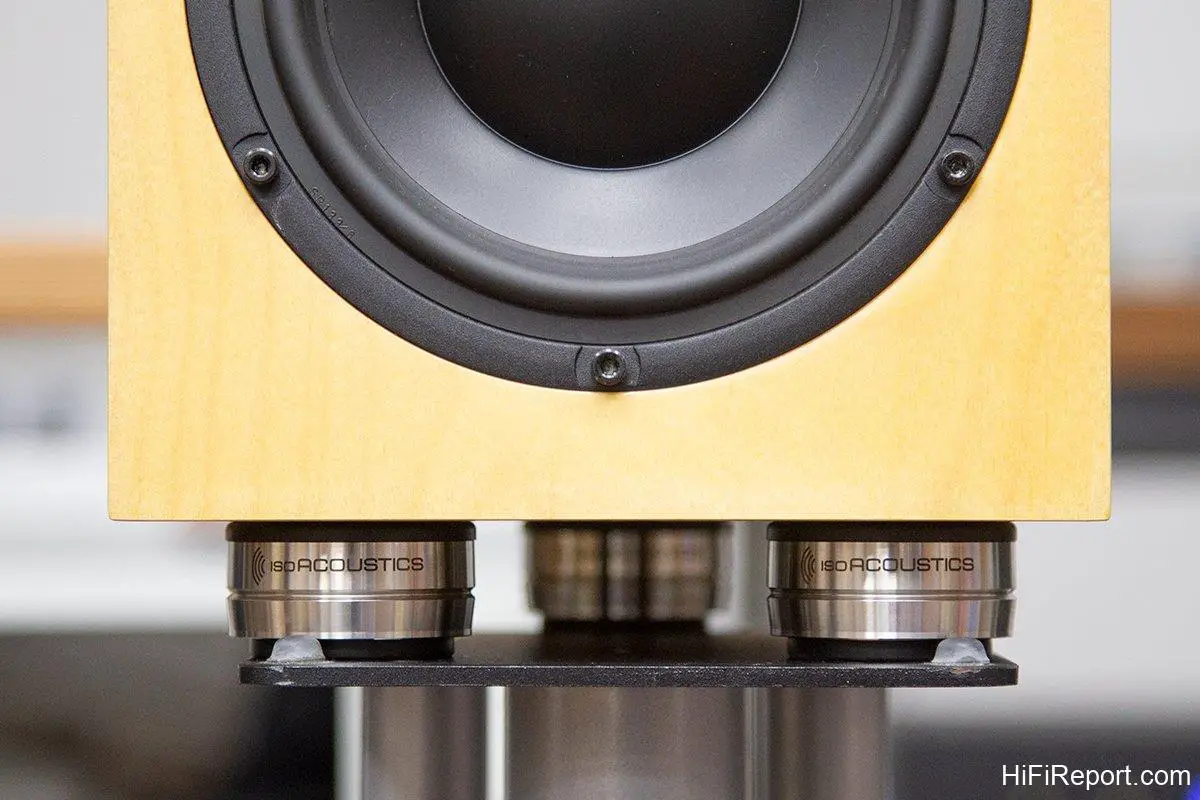
Over the ensuing years of rapid growth, IsoAcoustics has expanded its product range from professional studio applications to encompass home audio and subwoofer isolation solutions.
Currently, IsoAcoustics’ product portfolio is divided into two main lines: Home Audio and Pro Audio. These lines include speaker isolation stands, individual isolation feet, isolation platforms, subwoofer isolation stands, and more. The Orea series is positioned as the entry-level isolation feet series within their home audio offerings.
Exceptionally User-Friendly
The Orea series is remarkably straightforward and exceptionally flexible to use, making them incredibly convenient in practice.
Anyone who has wrestled with traditional cones will appreciate the ease of use offered by the Orea. Setting up cones often requires two people: one to lift the equipment while the other positions the cones precisely, a somewhat cumbersome process. Cones, lacking any inherent stability on their own, tend to topple over when not supporting equipment.
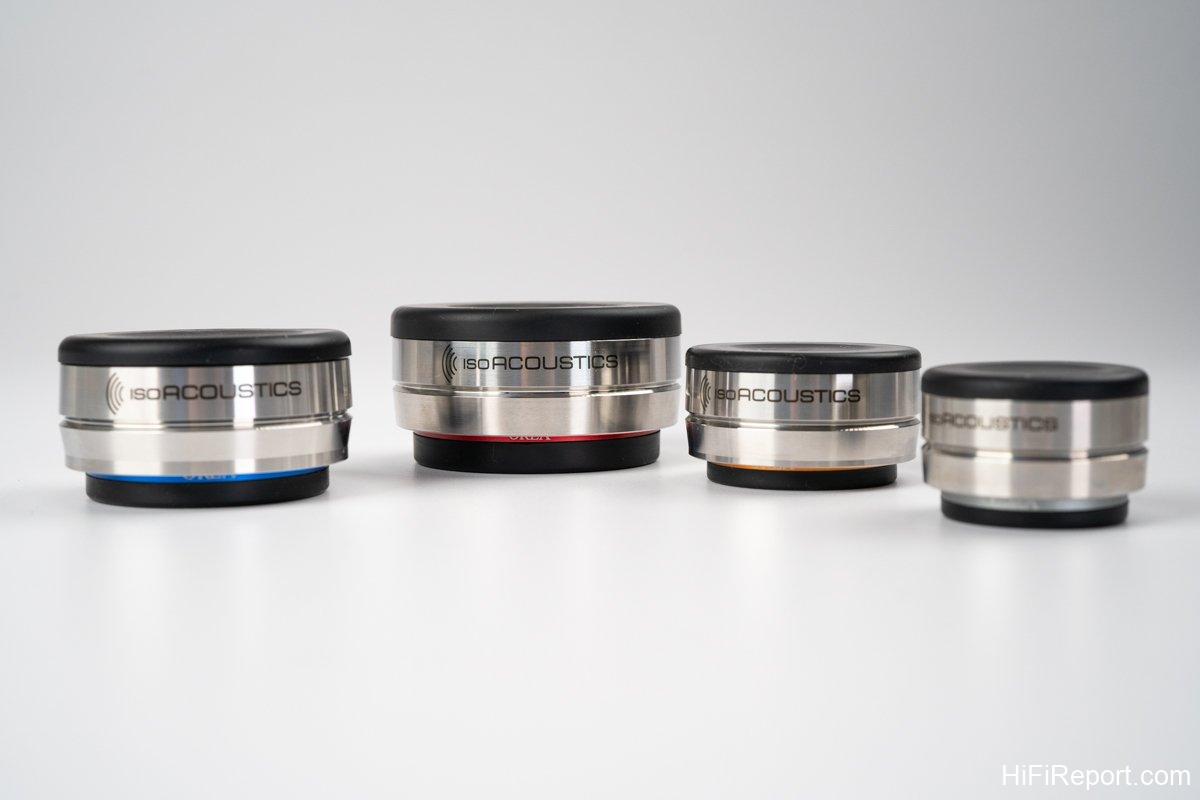
In contrast, the Orea series simplifies the process considerably. Simply place the feet in the desired locations and then set your equipment on top. A single person can easily manage the setup.
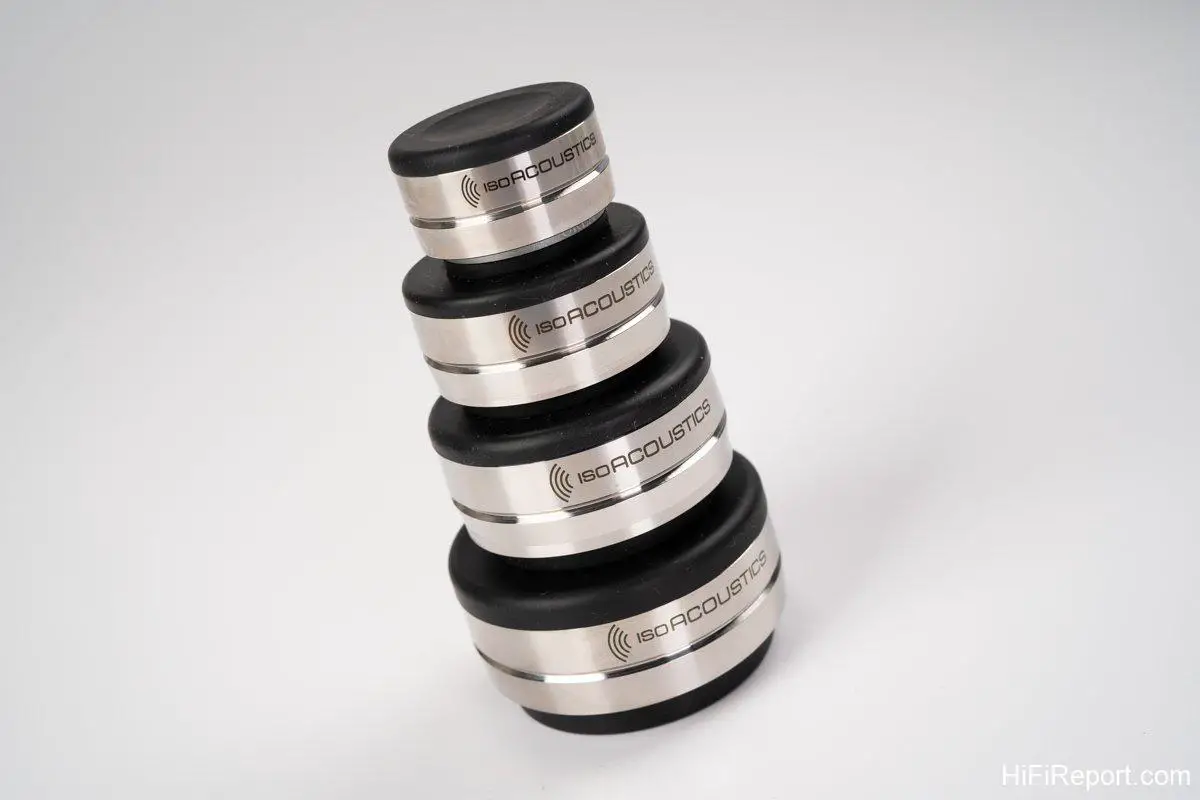
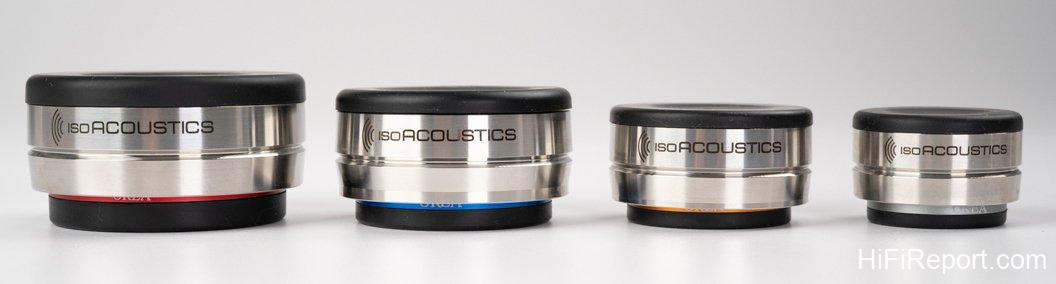
Adding to their versatility, the Orea series comprises four models, each engineered for different weight capacities, ensuring compatibility with a wide range of audio components. Furthermore, they are sold individually, not in sets of three or four. This allows users to purchase the exact number needed based on the weight of their equipment, minimizing waste and unnecessary expense.
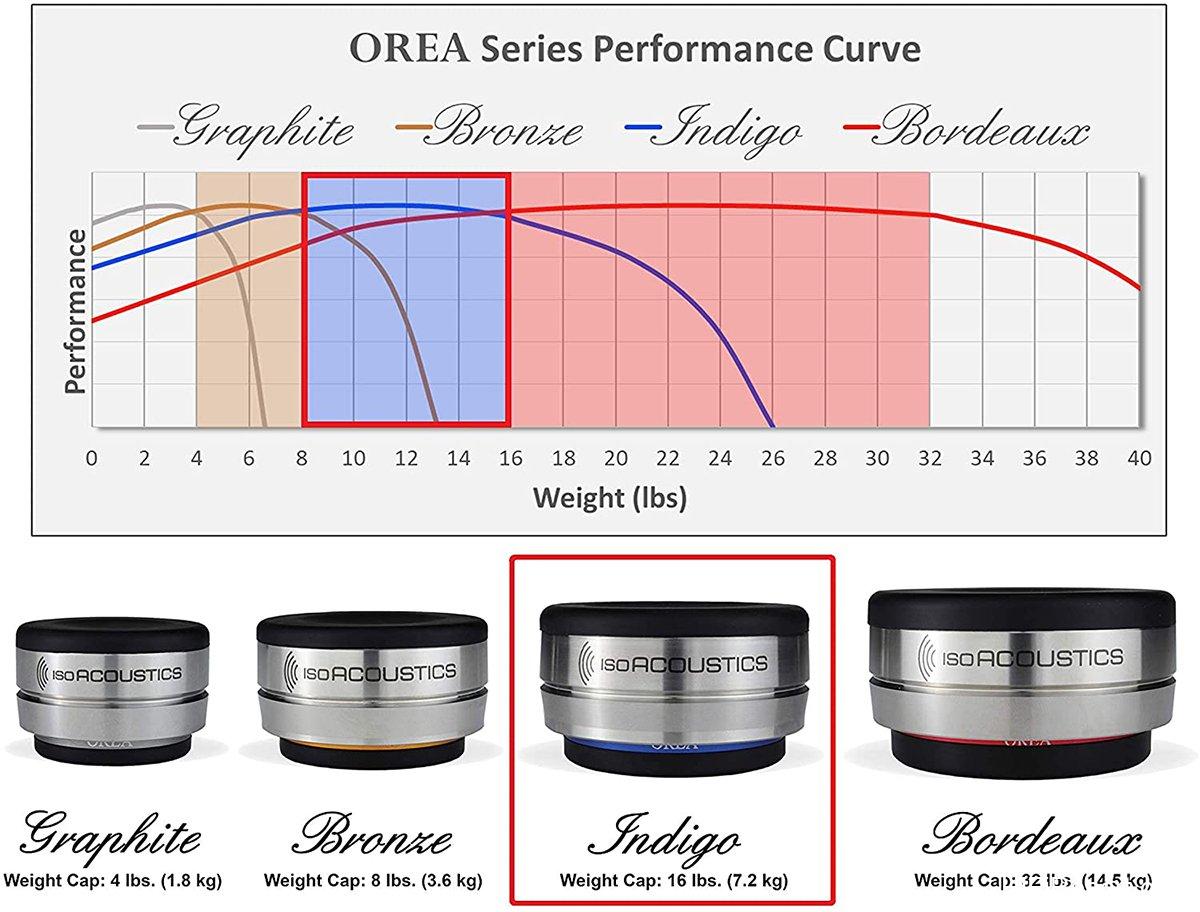
The four models in the Orea series, in ascending order of weight capacity, are Graphite, Bronze, Indigo, and Bordeaux. A single foot’s maximum weight capacity is 1.8 kg (4 lbs), 3.6 kg (8 lbs), 7.2 kg (16 lbs), and 14.5 kg (32 lbs) respectively. A minimum of three feet is recommended for stable support. For instance, three Graphite feet can support a total weight of 1.8 kg × 3 = 5.4 kg (12 lbs), meaning any component weighing up to 5.4 kg is suitable for use with the Graphite model.
Moreover, the manufacturer suggests using a minimum of three and a maximum of six feet per component. Combined with the four size options, this provides a very wide range of weight handling capabilities, offering exceptional flexibility in application.
IsoAcoustics employs a “soft” isolation approach. Each model has not only a maximum weight limit but also an optimal weight range within which it delivers peak isolation performance.
As illustrated in the graph below, the four curves represent the optimal weight ranges for each of the four Orea models. The grey line is Graphite, brown is Bronze, blue is Indigo, and red is Bordeaux. The X-axis represents weight in pounds, and the Y-axis represents performance. Each curve exhibits a plateau, indicating the optimal weight range for that specific model. For example, the blue line highlighted in the red box depicts the optimal range for the Indigo model, between 8 and 16 pounds.
This graph also reveals two key insights: Firstly, larger models offer broader optimal weight ranges, such as the Bordeaux, with a golden zone spanning from 16 to 32 pounds. Secondly, the optimal ranges of different models do not overlap, meaning that models are not interchangeable within their optimal performance zones.
In summary, when selecting the appropriate Orea model, a simple rule of thumb is to choose the model whose weight limit is close to, but not exceeding, the weight of your component.
(Image from IsoAcoustics official website)
Proprietary Patented Technology
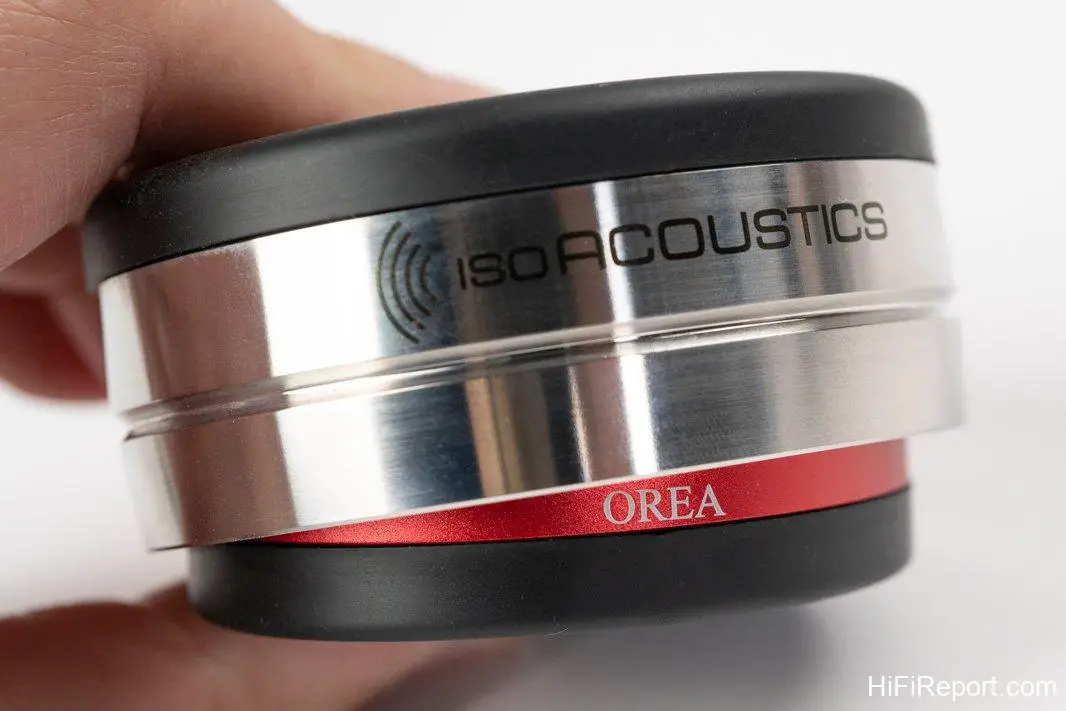
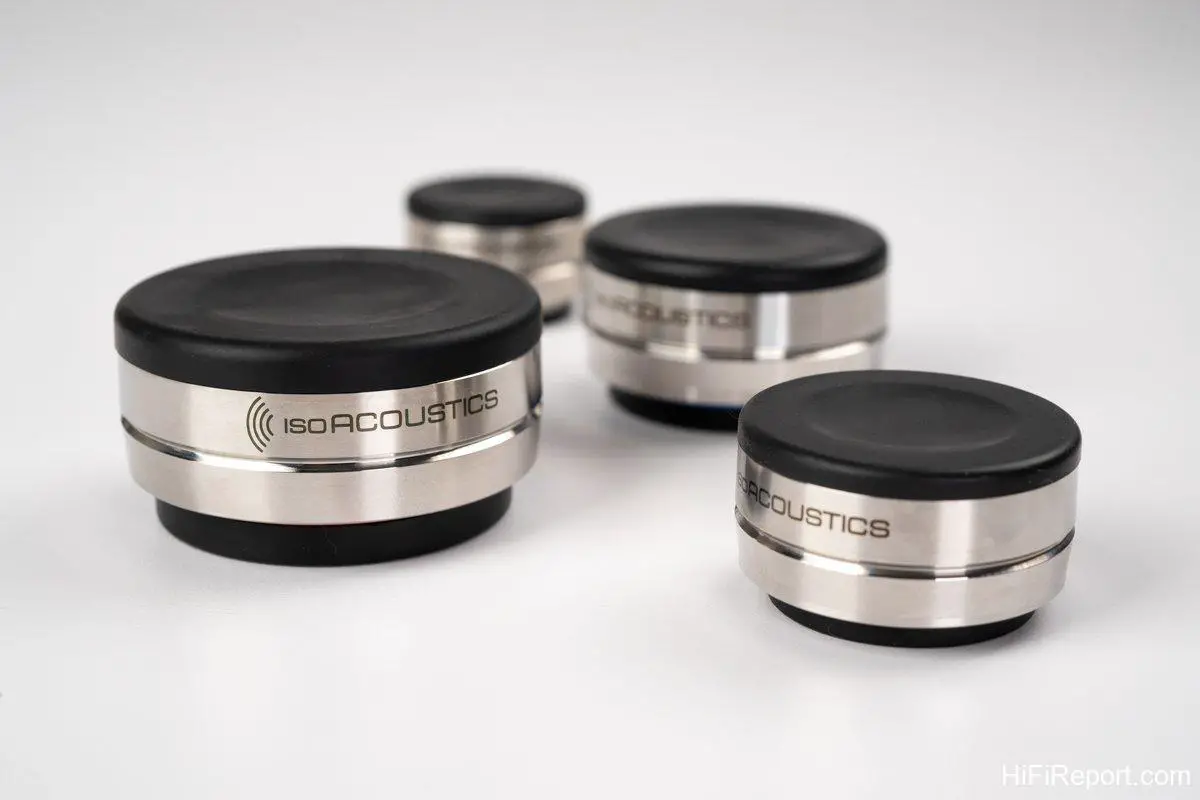
Upon closer examination, the Orea isolation foot reveals a three-part construction. The top section is a thick, black, compliant pad, beneath which is a cylindrical body. The cylinder is further supported by another thick, black, compliant pad at the bottom. An outer stainless steel housing connects the upper and lower sections.
Pressing down on an Orea foot reveals a damped, isolator-like action. This is due to its internal construction, designed to decouple the upper and lower sections, preventing vibration from transmitting downwards from the supported equipment and upwards from the supporting surface.
The precise internal mechanism is IsoAcoustics’ patented technology.
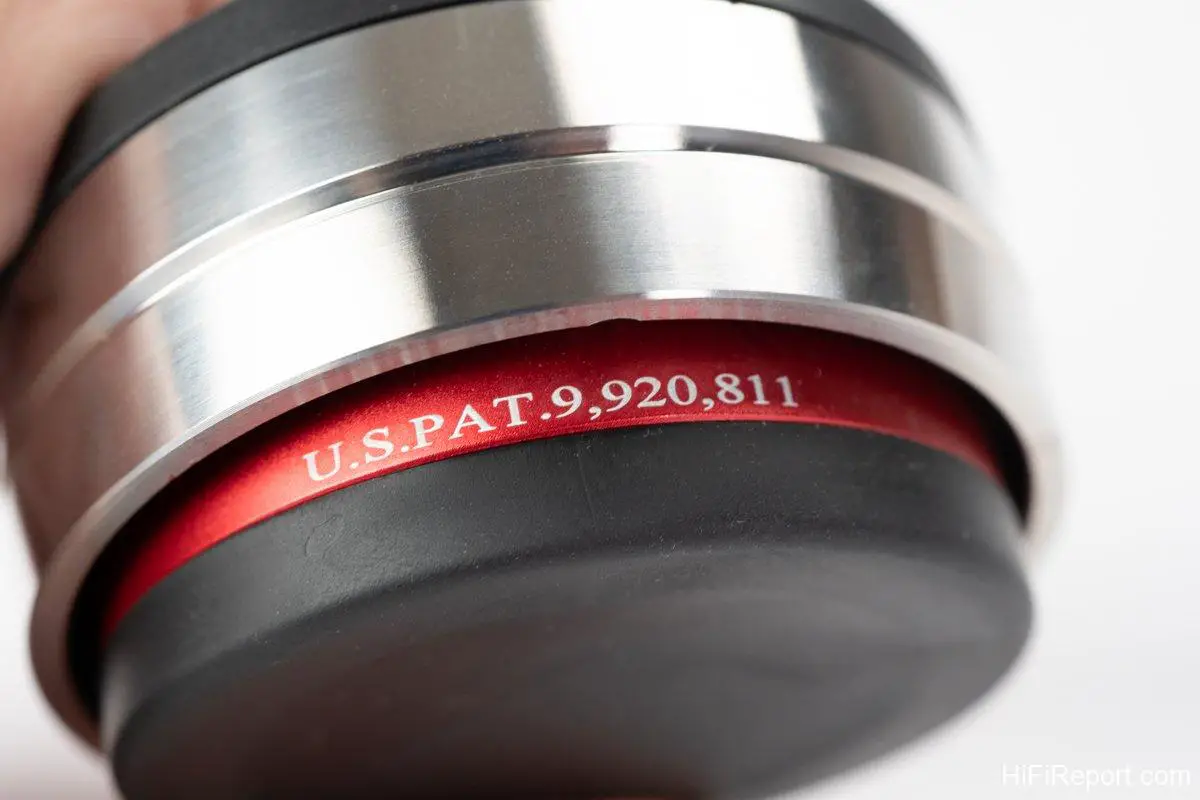
Furthermore, the upper and lower pads of the Orea feet are slightly concave, functioning like suction cups. Once equipment is placed, the feet firmly adhere to both the component and the supporting surface, securely anchoring the equipment in place, making it remarkably stable and resistant to accidental displacement. This secure coupling is undoubtedly a key element of IsoAcoustics’ isolation effectiveness.
IsoAcoustics rigorously tests its products using precision instruments during development, rather than relying solely on subjective listening tests.
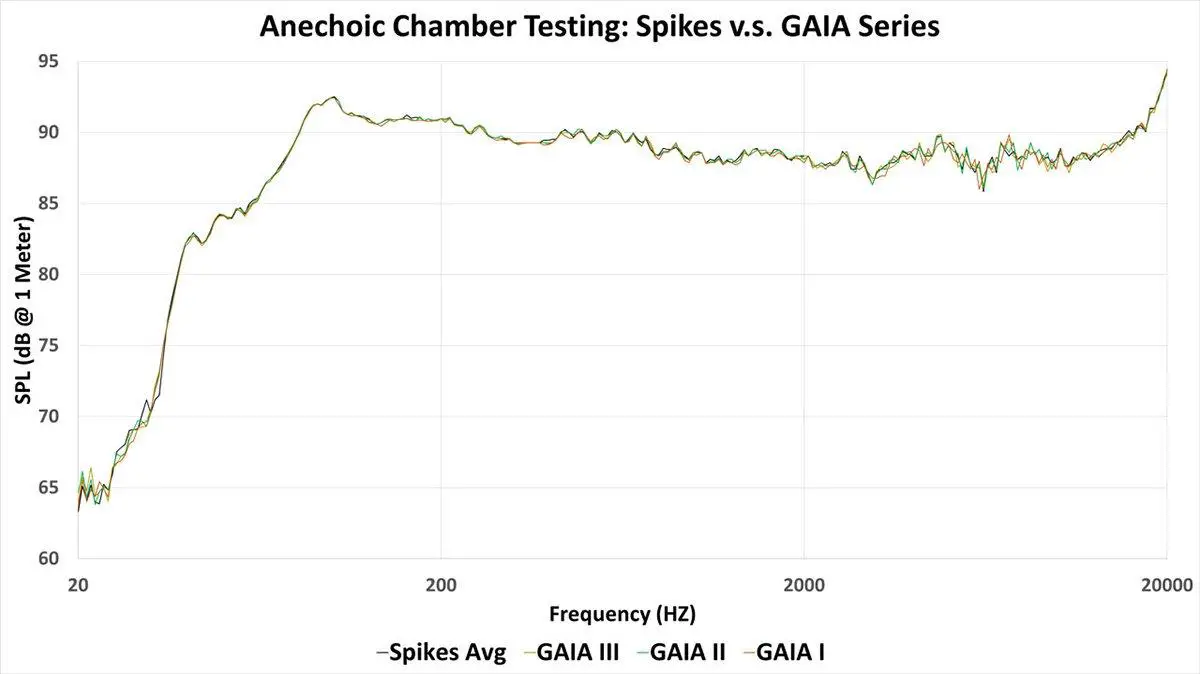
IsoAcoustics products are sent to the National Research Council of Canada (NRC) anechoic chamber for measurement. The resulting data serves not only as a valuable reference for research and refinement but also provides empirical evidence that IsoAcoustics products offer superior vibration isolation compared to conventional cones. They effectively reduce vibration in supported equipment without negatively impacting frequency response distribution, ensuring no alteration of tonal character.
For example, the graph below illustrates the results of measurements conducted in an anechoic chamber. A loudspeaker was tested with conventional cones and with three different models from the IsoAcoustics Gaia series of speaker isolation feet. The speaker output was measured across a 20Hz to 20kHz frequency sweep. The graph contains four curves, showing only minor differences between them, while maintaining a consistent overall trend. This demonstrates that the frequency response curves of the three Gaia models are virtually identical to that of conventional cones, indicating no frequency response alterations.
(Image from IsoAcoustics official website)
Versatile Application Across Components
Another significant advantage of the Orea series is its versatility. It can be used with virtually any audio component, including amplifiers, CD players, DACs, loudspeakers, and even turntables.
They can be placed directly under the chassis of the component or beneath the component’s original feet.
The manufacturer recommends direct chassis contact for optimal performance. Using them under the original feet is suggested only when necessary, such as if the original feet are excessively tall.
How many feet should be used? Three or four? Either is acceptable, as long as the total weight of the equipment does not exceed the combined weight capacity of the feet.
However, it’s important to consider weight distribution.
Equipment weight is often unevenly distributed, with transformers or speaker drivers often being the heavier points. In such cases, using three feet can be advantageous. Place two feet under the heavier side and the third foot centrally on the lighter side to prevent overloading any single foot.
Given the Orea series’ universal applicability, my listening evaluation proceeded in two phases: first, testing with source components, and then with loudspeakers, to assess their respective effects.
Simultaneous Improvement in Imaging, Density, and Power
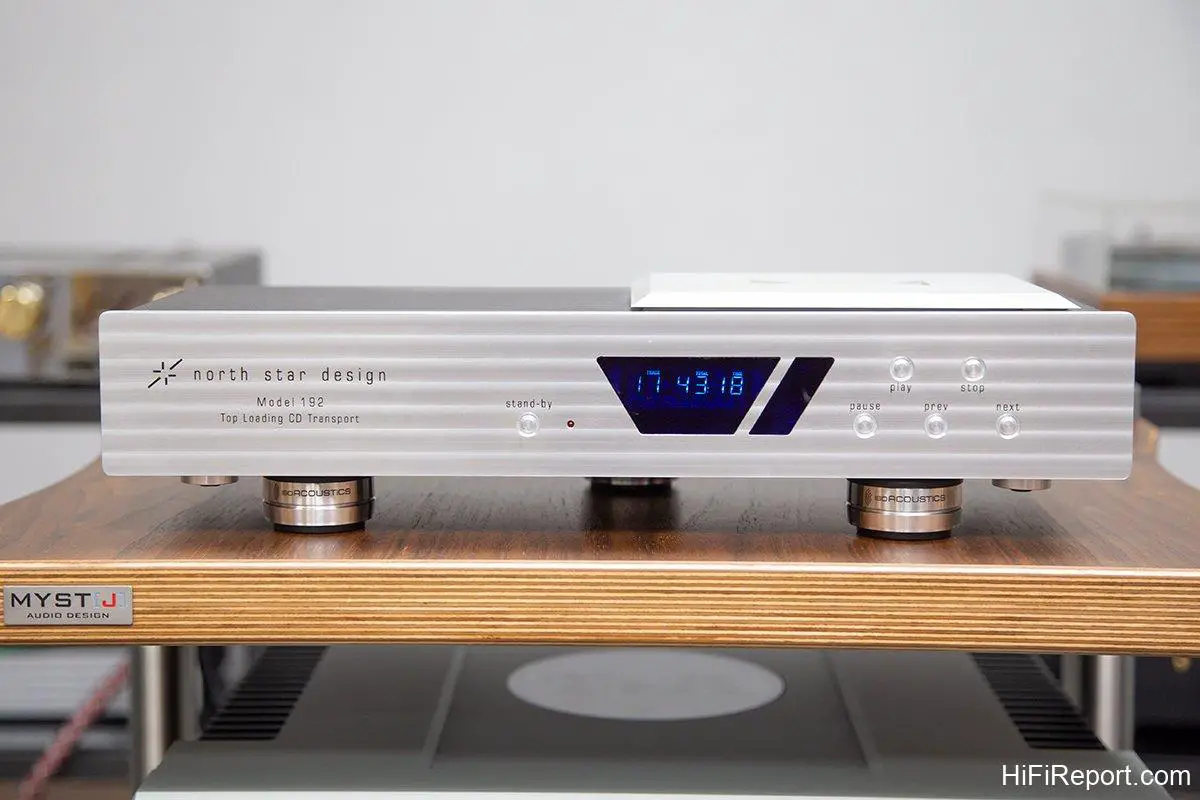
I first assessed the Orea series’ impact on source components, selecting the North Star Design Model 192 MKII CD transport. CD transports, with their mechanical spinning action, generate more substantial vibration than, say, DACs or amplifiers, making them more likely to reveal the benefits of isolation.
The Model 192 MKII CD transport weighs 9 kg (20 lbs). I planned to use three Orea feet. Consulting the manufacturer’s weight capacity chart, three Bronze feet have a maximum capacity of 10.8 kg (24 lbs), the closest match without being under-rated for the 9 kg transport. Three Bronze feet seemed perfectly suited.
The rest of the system comprised a Merging NADAC DAC, T+A PA 3100 HV integrated amplifier, and Wilson Audio Alexia 2 loudspeakers.
The effect of the Orea Bronze feet was immediately noticeable. The magnitude of the improvement was such that even non-audiophiles would likely discern the difference.
What kind of changes? Primarily in three key areas: image solidity, sonic density, and dynamic impact.
Take, for instance, Jennifer Warnes’ “Bird On A Wire” from her “Famous Blue Raincoat” album. The drum kit plays a prominent role, maintaining a consistent rhythmic drive throughout the track, with the drums intentionally recorded with a larger-than-life presence, emphasizing their size and positioning.
After placing the Model 192 MKII transport on Orea Bronze feet, the drum image noticeably became more focused and solid, feeling slightly reduced in size but with sharper, clearer outlines. Consequently, the drummer’s strikes sounded more forceful and weighty, enhancing the drum’s dynamic impact.
Furthermore, the Orea Bronze feet tightened up the low-frequency decay, resulting in a more controlled lower register and a more rhythmically taut and dynamic overall presentation.
Enhanced Sonic Order and Clarity
Moving to Mutter and John Williams’ “Across The Stars” album, featuring symphonic arrangements of Williams’ iconic film scores, the benefits of the Orea Bronze feet were again apparent.
With the Orea Bronze in place, not only did the violin lines become clearer, but the instrumental images across the orchestral soundstage also gained focus and solidity. This contributed to an enhanced sense of separation between instruments.
Moreover, in the first track, “Star Wars: The Force Awakens” – “Rey’s Theme,” the pizzicato notes of the double basses became more defined, articulate, and impactful, imbued with a greater sense of “pluck” and textural richness, enhancing the overall sonic weight.
Conversely, without the Orea Bronze feet, the sound became somewhat looser and less defined, with a slightly disorganized presentation. During louder passages, the low frequencies tended to become muddled, lacking clear layering. Reintroducing the Orea Bronze feet restored clarity to the soundstage, improved the sense of scale, and enhanced the order and coherence of complex musical passages.
In simpler terms, without the isolation feet, the sound was lighter, more open, relaxed, and brighter, but also somewhat diffuse, lacking precise focus, and exhibiting slightly diminished dynamic impact.
With the Orea Bronze feet, the soundstage became more centered and cohesive, the low frequencies gained solidity and power, and the overall musical presentation acquired a more grounded and resolute character.
Even More Pronounced Effect on Loudspeakers
Next, I evaluated the Orea feet with loudspeakers, choosing the Divini Kit-M bookshelf speakers, weighing 7 kg (15.4 lbs) each. Again, the Bronze model was the appropriate choice for three feet per speaker.
Using a two-in-front, one-in-back configuration, I positioned the Orea Bronze feet on speaker stands and then placed the Divini Kit-M speakers on top. While the speakers were elevated slightly, the Orea Bronze’s inherent adhesive properties firmly secured the Kit-M speakers to the stands, eliminating any concerns about accidental toppling.
Revisiting Jennifer Warnes’ “Famous Blue Raincoat” album, I observed similar sonic improvements as with the CD transport, but even more pronounced! The soundstage became even more centered and focused, with enhanced clarity in its spatial dimensions. Vocal images moved forward, becoming more prominent and defined. For example, in the opening of track 1, “First We Take Manhattan,” a spoken-word passage originating from the left channel, sounding like a radio transmission, became closer and clearer with the Orea Bronze feet. The subsequent kick drum strikes were delivered with exceptional definition, and the bass lines were taut and well-defined, with no hint of muddiness or overhang, yet without sacrificing low-frequency extension.
Frankly, achieving greater clarity, precision, and speed in the low frequencies without thinning them out is a remarkably difficult feat. Yet, the Orea Bronze feet accomplished precisely that, while even enhancing the sense of sonic weight. IsoAcoustics’ patented technology clearly delivers tangible results! Crucially, I detected no alterations in frequency balance; the high, mid, and low frequencies remained balanced, without any added coloration. The sonic texture became cleaner, resulting in a more pristine and refreshing musical experience.
It’s no wonder IsoAcoustics enjoys such widespread acclaim in professional recording studios. Their products are easy to use, convenient, and deliver direct, unambiguous sonic benefits at a reasonable cost, making them accessible to a broad range of users.
If you are facing equipment placement challenges or seeking to optimize the performance of your audio system, the Orea series isolation feet are highly recommended. They are sure to provide effective solutions to your vibration-related concerns.