
J.Sikora Aspire Turntable Review
Vinyl turntables and records today represent a classic musical culture. Compared to digital streaming and CDs, vinyl has its own set of advantages and drawbacks, but it possesses a singular uniqueness—not just in its exquisite equipment and meticulous playback ritual, but also in its distinct sonic signature. Brands dedicated to turntable manufacturing remain vibrant in the high-end audio industry today.
Upholding an almost obsessive passion for craftsmanship, they reproduce musical beauty strictly through physical and analog principles. Poland’s J.Sikora is a premier example of this philosophy. Eschewing the ordinary, J.Sikora showcases its deep understanding of vinyl playback through entirely in-house designs, delivering world-class components to music-loving audiophiles.
According to music industry revenue statistics for the US market reported by the RIAA, streaming music accounted for 82% (approximately $9.5 billion), physical media accounted for 12%, and paid downloads accounted for 6%. Within physical media, the two major categories were CDs at roughly $300 million and vinyl records at approximately $1 billion—meaning vinyl revenue was roughly three times that of CDs. Has vinyl experienced a genuine revival?
The answer is a definitive yes, as this marks its 19th consecutive year of revenue growth, whereas CD sales continue to decline at double-digit percentages with no clear end to the slump in sight. We observe this same trend across the audio industry every year: while streaming players have been the most widely introduced source components in recent years, brand-new CD player designs have become increasingly rare.
Source: RIAA
Vinyl turntables and records are truly unique. First, this playback method is inherently inconvenient: you must clean off dust before every spin, side playtimes are short and require manual intervention when finished, and changing albums means repeating the entire setup process. Storing records takes up substantial physical space and demands careful attention to prevent moisture, scratches, and warping—which can become a real challenge as collections grow.
Yet, vinyl’s unique charm stems precisely from this elaborate ritual. How often do busy modern individuals carve out time for a dedicated ritual that relieves stress while allowing them to immerse themselves in music? It remains one of the oldest forms of entertainment in human history.
Because a turntable is a purely analog playback device free of digital signal processing, it yields a unique sonic signature distinct from any digital medium. Furthermore, because turntables require precise mechanical adjustments—with higher-end decks offering an even broader range of fine-tuning parameters—these adjustments directly impact not only functionality but also the final sound quality.
This ongoing process of refinement has long been one of the greatest sources of joy for vinyl enthusiasts.
High-End Polish Engineering
The subject of our review is a top-tier high-end turntable from Poland: the J.Sikora Aspire. In recent years, J.Sikora has made significant waves across the international audio scene through its mastery of metal metallurgy, constrained-layer composite structures, and heavy-duty resonance-damping architecture. Founded in 2007 by Mr. Janusz Sikora, the company’s roots trace back to the 1970s and 1980s during Poland’s Iron Curtain era, when Janusz was an ardent audiophile.
Back then, imported audio gear was prohibitively expensive and difficult to acquire, sparking his passion for DIY audio design.
After Poland’s transition to democracy, Janusz established a non-ferrous metal processing business, accumulating over 40 years of expertise in metallurgy and precision machining. He possessed an intimate understanding of the unique resonance characteristics of various metals, including bronze, brass, aluminum alloys, and stainless steel.
In 2007, he decided to leverage his metallurgical knowledge and precision machine tools to build an uncompromised turntable for himself, giving birth to the legendary J.Sikora brand. His son, Mr. Robert Sikora, a former indie band bassist with an immense passion for music, currently leads global market expansion, brand promotion, and next-generation product development for J.Sikora.
Although the Aspire serves as the entry-level model in J.Sikora’s lineup, the brand exclusively manufactures ultra-high-end turntables, making the Aspire a prime upgrade target for dedicated vinyl enthusiasts. It retains J.Sikora’s core design tenets: exceptional speed stability, outstanding isolation from external vibrations, and ultimately, sublime sound quality.
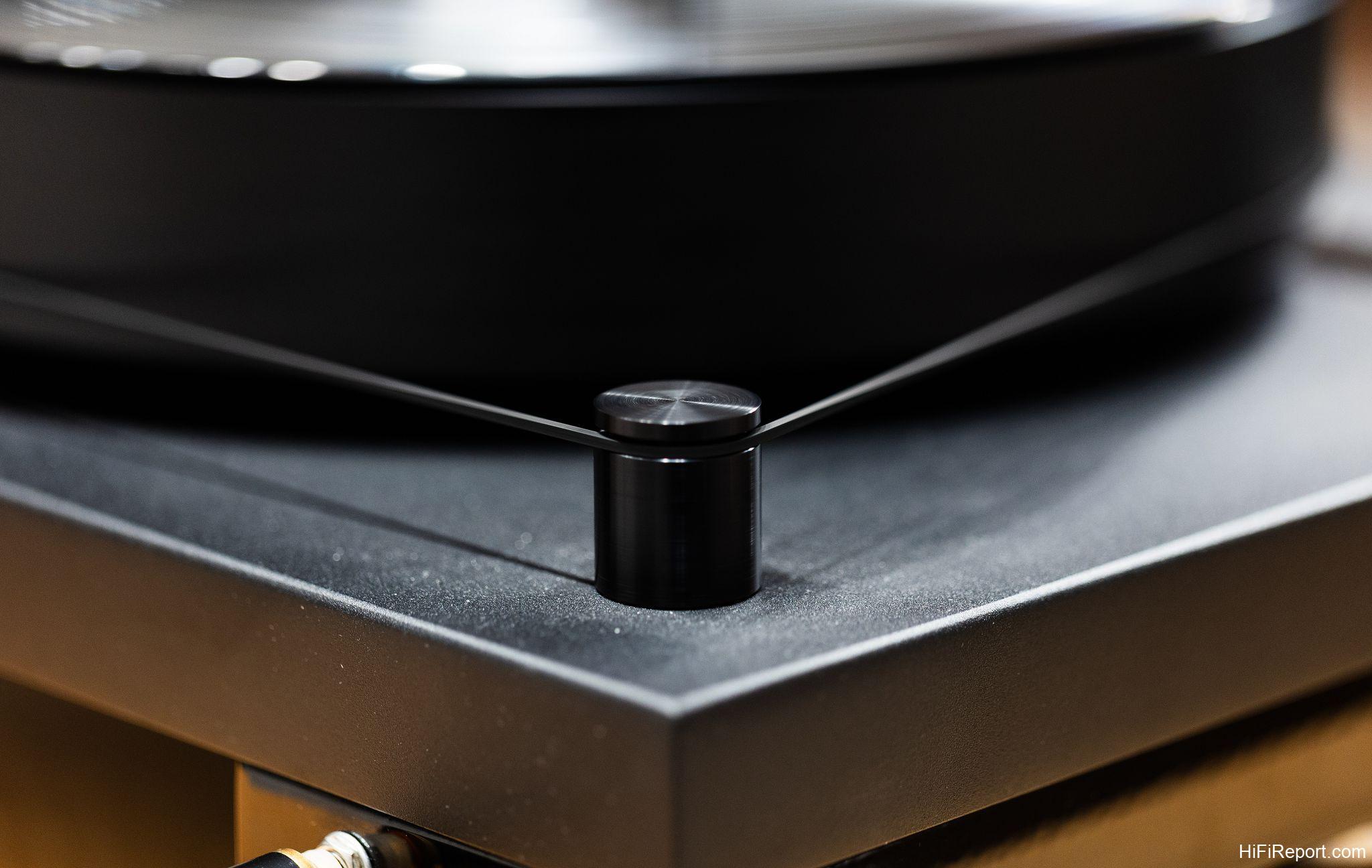
Its bill of materials includes aluminum, stainless steel, and cast iron for the chassis, isolation system, and center spindle; Delrin for the platter; carbon fiber, aluminum, brass, and stainless steel for the tonearm mount and tonearm; ceramic ball bearings; and precision rubber drive belts.
Many design elements are inherited directly from higher-end models, such as the isolation feet and chassis architecture. Meanwhile, the newly developed carbon fiber tonearm streamlines the manufacturing process compared to the Kevlar® tonearms used in flagship models. Regardless of the construction approach, every J.Sikora product is engineered with the sole purpose of achieving superb sound quality and long-term durability.
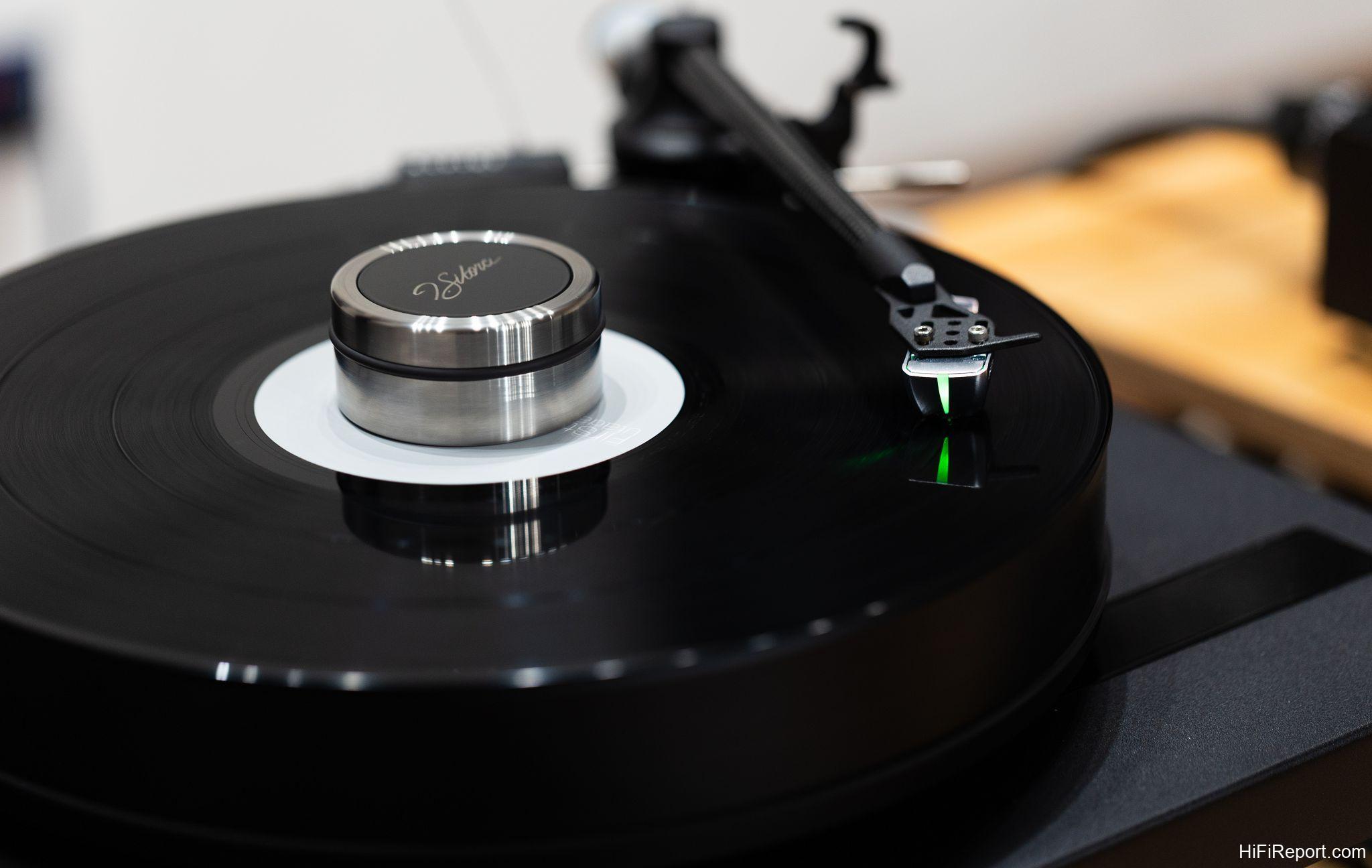
While flagship J.Sikora models (like the Reference and Standard) offer uncompromising sonic performance, they weigh hundreds of kilograms and require complex installation. The core philosophy behind the Aspire is to retain the essential flagship DNA and key components while significantly streamlining physical dimensions and setup complexity. The result is an approachable, ultra-high-end vinyl system that can be easily installed by a single person.
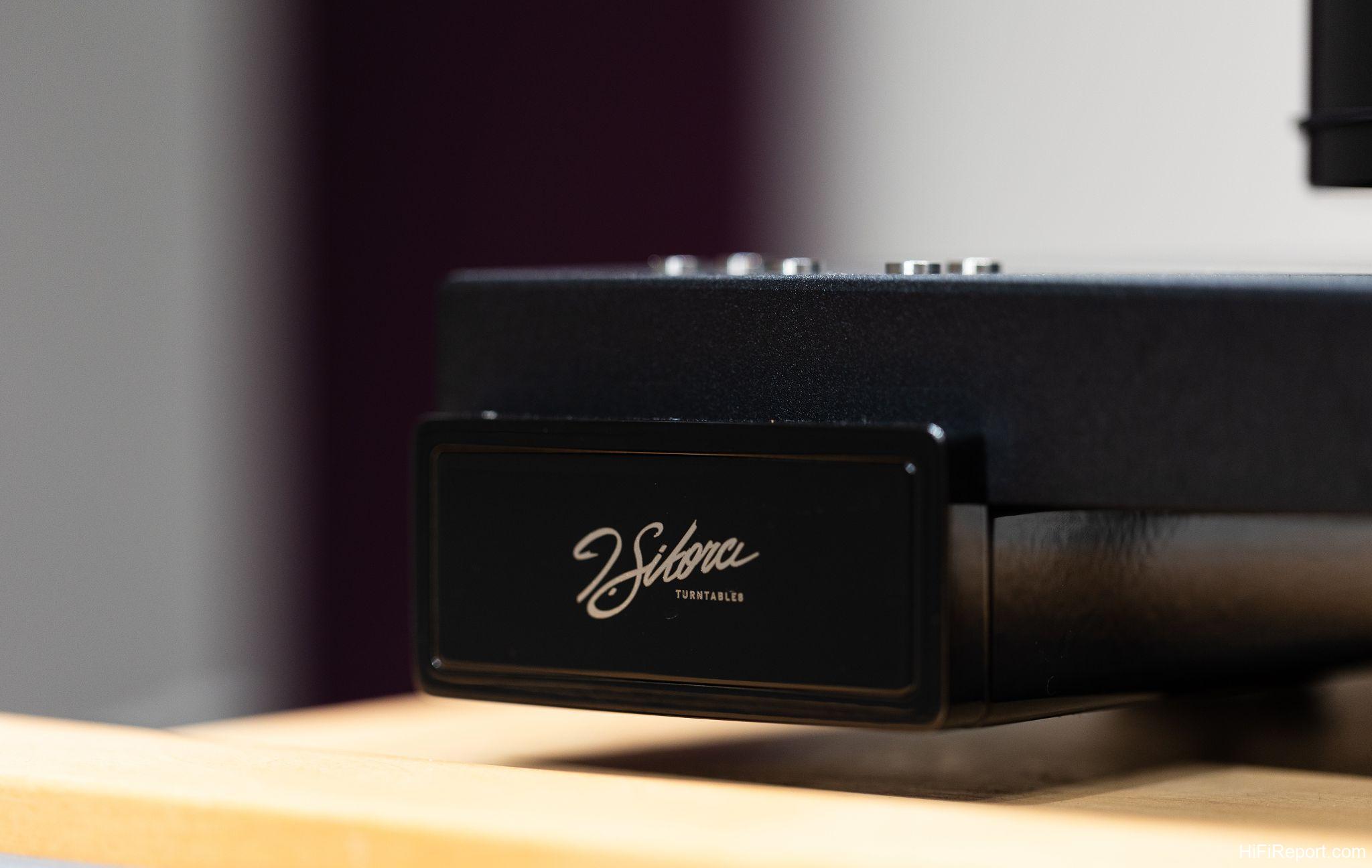
The main plinth of the Aspire is precision CNC-machined from a solid block of high-rigidity PA6 aerospace-grade aluminum alloy. Unlike models such as the Initial, which utilize a standalone motor control box, the Aspire integrates its DC motor, control circuitry, and internal wiring directly into an aluminum housing fixed to the lower-left corner of the plinth. This drastically reduces the unit’s required footprint, making it far easier to accommodate in various living environments.
The Aspire’s main motor and electronic control circuitry are cleverly concealed here.
The Aspire is equipped with a custom-built EBM-Papst DC motor paired with J.Sikora’s proprietary precision speed-control circuitry (shared with higher-end models like the Reference and Standard). It provides fine-tunable dual speed control for 33 1/3 and 45 RPM, delivering exceptionally smooth rotation with ultra-low wow and flutter.
Inherited from the step-up Initial model, the Aspire utilizes a 4 kg Delrin (POM) platter. This material boasts superior damping properties and acoustic impedance closely matched to that of vinyl records. It rides on an inverted ceramic ball-bearing design featuring high hardness and a low coefficient of friction. The bearing base is embedded into a 1 cm thick cast iron plate, utilizing a multi-metal hybrid formulation to absorb and cancel micro-resonances.
Factory options include the dedicated Aspire 9-inch carbon fiber tonearm. Featuring a unipivot design, it offers extremely low friction and high sensitivity, enabling precise retrieval of subtle groove micro-details. The tapered carbon fiber armtube delivers light weight, high rigidity, and excellent vibration absorption.
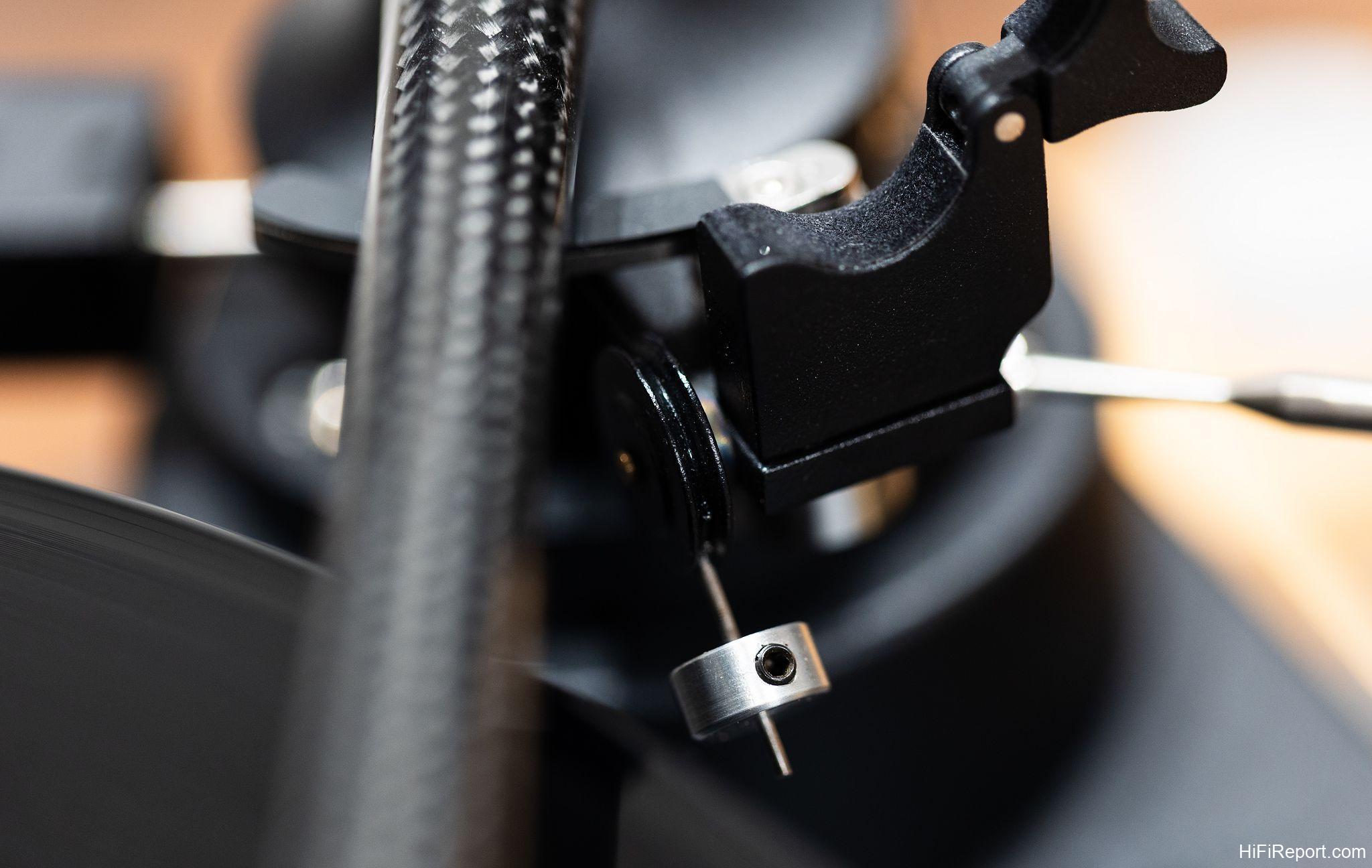
Outfitted with a brass counterweight alongside an aluminum headshell and base, it provides convenient adjustments for VTA (Vertical Tracking Angle), tracking force, and thread-and-weight anti-skating.
The counterweight is used to balance cartridge weight and adjust tracking force.
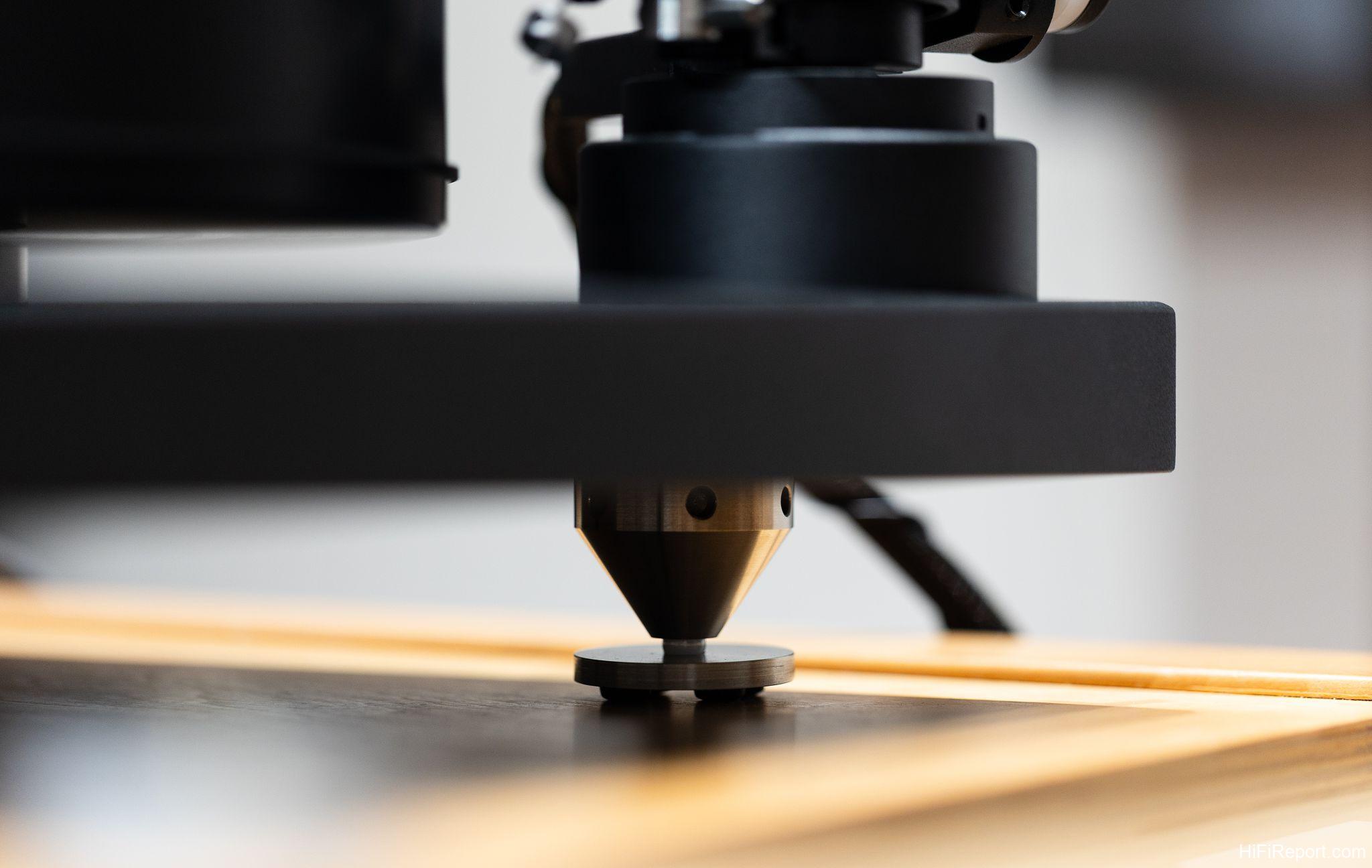
The plinth rests on a three-point high-efficiency isolation foot system featuring a metal composite structure with ceramic ball contact points. Beneath the Aspire base are three heavy-duty steel conical feet with adjustable height for precise leveling. The bottom contact points utilize high-hardness zirconium dioxide / ceramic balls for dual-layer damping, working in tandem with Sorbothane polymer decoupling washers to effectively isolate micro-vibrations from the supporting surface.
The included Aspire record weight is precision CNC-machined from solid stainless steel, featuring a heavy mass-loaded design whose finish perfectly matches the aesthetics of the plinth and isolation feet. It is a gravity puck (mass-loaded) design rather than a screw-down clamp; operation requires simply resting it flat onto the center spindle, making it effortless to use without applying excessive lateral pressure to the bearing.
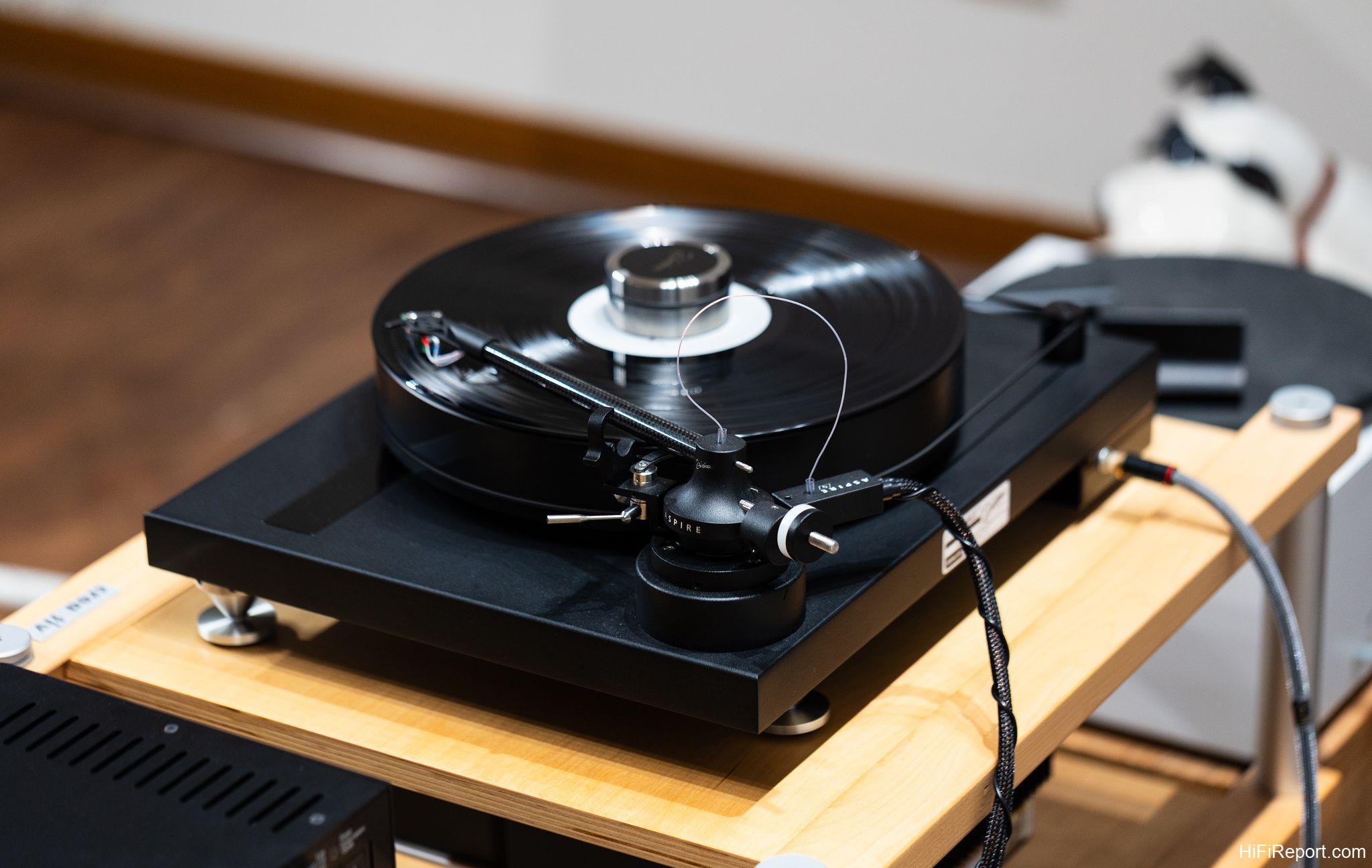
Compared to the massive record weights supplied with J.Sikora’s flagship models, the Aspire’s included puck has been re-proportioned to a more compact footprint and mass, perfectly matching the platter load and unipivot ceramic bearing system.
Inside the Aspire tonearm runs high-purity oxygen-free copper (OFC) internal wiring custom-made by J.Sikora, shielded with Teflon insulation.
For this audition, we paired the J.Sikora Aspire with two notable components. The first is DS Audio’s entry-level optical cartridge, the DS E3, marking our first evaluation of an optical phono cartridge. The second is Keces’s Ephono+ phono preamplifier. All three products from these distinct brands are distributed by Wise Sound, with Keces being their proprietary local brand.
The DS Audio optical cartridge is quite remarkable—it remains a true analog cartridge rather than a digital device. When the Japanese brand DS Audio first entered the market, many struggled to grasp how its optical technology functioned. It requires a dedicated optical phono equalizer. The Keces Ephono+ phono equalizer supports both optical cartridges and traditional MM/MC cartridges, allowing users of either format to handle everything in a single chassis.
Designing an optical phono equalizer requires official certification from DS Audio, and an increasing number of manufacturers are releasing phono stages supporting DS Audio optical cartridges. We will publish a dedicated feature on the Keces Ephono+ shortly.
Quiet Background & Refined Texture
Our evaluation began with Japanese pop icon Hikaru Utada’s blockbuster 1999 debut album, *First Love*. This legendary production, blending classic R&B with J-Pop, set multiple historical sales records while showcasing a seamless fusion of Japanese melodies and R&B rhythms. Played back through the J.Sikora Aspire turntable, the immediate standout was its remarkably clean, comfortable tonal signature and effortless musical flow.
The Aspire exhibited superb speed stability and structural rigidity. While excavating delicate micro-details buried deep in the grooves, it maintained an extraordinarily rich and balanced frequency distribution across the spectrum. Hikaru Utada’s penetrating yet comforting vocals were rendered vividly, faithfully recreating the sheer talent and vocal emotion of an artist who captivated all of Asia.
In the low frequencies, the turntable delivered the punchy rhythms and elastic dynamics characteristic of J-Pop without a trace of smear.
It is worth highlighting that the synergy with the DS Audio optical cartridge was exceptional. The delicacy and pitch-black background silence offered by the optical cartridge were striking, adding a silky-smooth, elegant refinement to the overall tonal texture.
The J.Sikora Aspire’s isolation structure and noise suppression played a pivotal role here—completely isolating motor noise and external micro-vibrations, allowing the optical cartridge’s strengths to blossom against a dead-quiet backdrop. This clean, rock-solid, dynamically rich sound quality serves as clear proof that J.Sikora’s engineering foundation and design philosophy have been implemented in the Aspire without compromise.
Deep Soundstage & Emotional Impact
For this portion of the audition, Tanya Chua’s vinyl album *A-Lister* was selected as a reference. As soon as the music began, the J.Sikora Aspire established a grand, deeply immersive spatial dimension. The opening synth tones gently built a subtle, lonely atmosphere; then, powerful drums and deep strings surged in, delivering a heavy, impactful low-end wave.
As various electronic instruments layered together, the mid-track demonstrated an exceptionally stable, rigid musical framework. Beyond the expansive soundstage depth, the instrument placement and imaging were impressive—instruments possessed tangible, three-dimensional bodies, breathing life and musical nuance into an electronic arrangement that could easily sound cold or flat in digital form.
Subtle details within the intricate production remained clearly discernible, conveying the track’s sense of isolation and chilling emotion with complete transparency.
The vocal presentation was exceptional. Tanya Chua’s slightly raspy, magnetic mid-low vocal range sounded three-dimensional and expressive, supported by the Aspire’s rich body and solid sonic foundation. Whether in the quiet, whisper-like verse or the suppressed, helpless cries of the chorus, every subtle breath and lip artifact was faithfully preserved.
Despite the frequent use of avant-garde, detached electronic effects throughout the track, the vocals and instruments retained a sophisticated, fluid warmth that balanced out the cold tone of the composition. As the track built to its climax, massive low-frequency energy intertwined with layered instrumentation, constructing a powerful musical landscape against a pitch-black background.
The J.Sikora Aspire breathed real life into cold electronic music, transforming it into a soul-stirring, emotionally impactful experience.
Vivid Instrument Lines & Clean Layering
Next, the game soundtrack *In Lumière’s Name* was used for reference. In terms of soundstage, the J.Sikora Aspire presented a grand scale with vast horizontal width and distinct depth layering, extending the instrument layout effortlessly beyond the speaker boundaries. Precise image positioning and delicate focus followed suit—the points of origin for various instruments appeared like candles lit on a dark stage, compact in body with clean edges, completely free from overlapping clutter.
Regarding speed response, the turntable displayed clean agility and elasticity. Whether navigating the rapid transients of bowing strings or the quick dynamic shifts of an organ, the Aspire executed everything with fluid composure.
Having listened to this track extensively via digital streaming, experiencing the vinyl version for the first time through the Aspire delivered a refreshingly different, highly engaging flavor. Instruments felt far more vibrant, and the sense of dynamic contrast was immensely satisfying. Drum textures were natural and punchy, with solid attack; even if the presentation didn’t rely on aggressive force, the drums retained distinct form and elasticity amidst the dense instrumentation.
The organ notes bounced with lively agility, while guitar plucks sparkled with a fresh, airy sheen. String instruments sounded nuanced and smooth, capturing the friction of bow on string and the resonant warmth of wooden instrument bodies with rich decay. Under the playback of the J.Sikora Aspire, the distinct tonal color of each instrument shone brilliantly, weaving together a lively, music-filled tapestry.
Warm Vocals & Story-Driven Detail
Finally, Ed Sheeran’s classic track “Photograph” served as a reference. Against the J.Sikora Aspire’s exceptionally dark, transparent background, the song opened with a pristine, bright guitar melody, joined gently by soft vocals. In this pure acoustic space, musical emotion felt intensely focused, drawing the listener in.
Soon after, warm, weight-filled piano notes descended, seamlessly blending with the drum rhythms as the song built momentum. Through the Aspire, every instrument radiated a refined, natural warmth without any sense of hardness. Ed Sheeran’s signature tender vocal delivery sounded full-bodied and authentic, infusing the warm track with heartfelt sincerity.
In describing spatial dimensions, the turntable demonstrated exquisite layering. During the minimal opening accompaniment, the vocals and guitar felt intimately close; as rich harmonies and reverberation entered in the latter half, the soundstage expanded naturally outward.
Within this vast acoustic landscape, subtle details remained focused and defined—from the vibration of guitar strings to the tactile weight of piano keys, every outline was precise and solid. Subtle finger snaps and string movements exhibited smooth, composed, and delicate transient response. The seamless integration of these musical details painted a vivid, story-driven musical picture that fully conveyed the deep, gentle emotion of the song.
J.Sikora Aspire Specifications
* Turntable Type: Belt-drive turntable
* Drive System: Custom EBM-Papst DC motor
* Supported Speeds: 33 1/3 RPM / 45 RPM (fine-tunable via panel)
* Platter Material/Weight: Delrin (POM) / 4 kg