
Thorens TD-101A Turntable Review
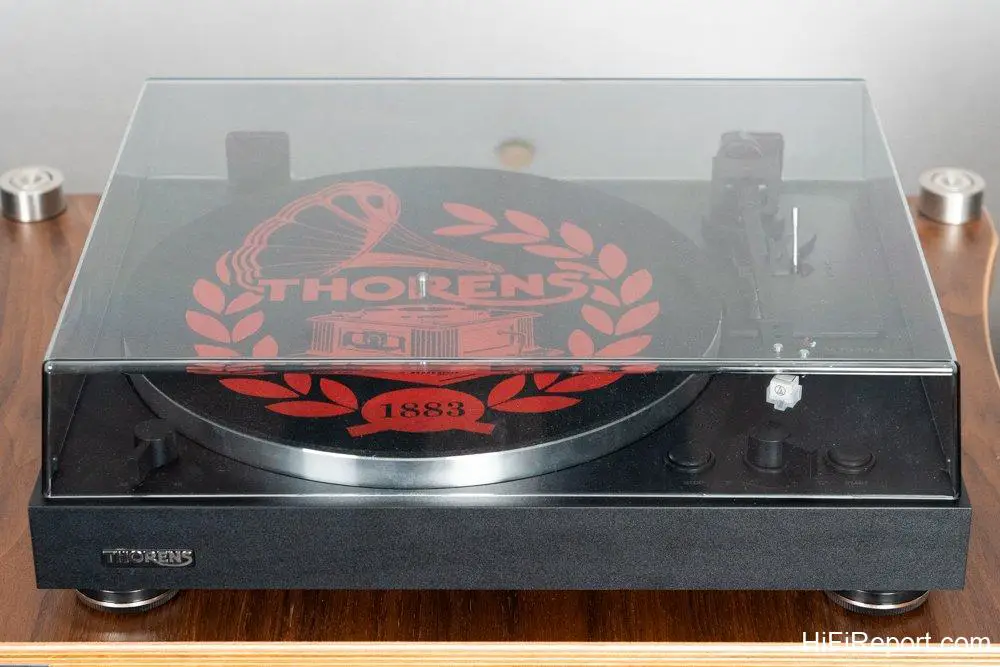
Want to listen to vinyl? The thought is appealing, but vinyl turntables seem expensive and difficult to set up. There’s also the worry of damaging the stylus when changing records. In short, there are plenty of reasons to hesitate. Thorens’ new TD-101A turntable is a perfect gift for vinyl beginners. Thorens has thoughtfully addressed all these concerns. Simply unpack, set it up, plug it in, place an LP on the platter, and press the Start button. The TD-101A “automatically” starts playing music.
Automatic Turntable: No More Fear of Damaging the Stylus
Indeed, the TD-101A is an “automatic” turntable. While most turntables on the market today are purely manual, automatic turntables like the TD-101A were market darlings in the 1980s. For those afraid of damaging the stylus, automatic turntables are definitely a welcome option.
Listening to vinyl is not just about the music; it’s also about the ritual. Taking the record out of the sleeve, removing the inner sleeve, placing the record on the platter, moving the tonearm, lowering the cue lever, and then the stylus makes contact with the LP, producing a soft “tick” sound before the music begins.
If you need a visual to enhance this description, think of the scene in the movie “Let the Bullets Fly” around the 21-minute mark. Zhang Mazi is playing a gramophone and says to Xiao Liu, “Once this job is done, and Dad makes money, I’ll send you to study abroad.” The record playing is Mozart’s Clarinet Concerto. Xiao Liu asks, “Dad, how did Mozart blow this thing into this thing?” Zhang Mazi replies, “You’ll know everything after you study abroad.”
Analog Revival in the Digital Age
Today, the mainstream listening method has shifted from physical CDs to cloud-based digital streaming. However, physical vinyl records are experiencing a resurgence, and the continued revival of purely analog music formats is driving a new market for entry-level vinyl.
But has vinyl truly made a comeback? According to the 2021 RIAA statistics report, digital streaming (including subscriptions, broadcasts, and ad-supported plays) accounts for 83%, digital music file downloads for 4%, and physical records (including CDs, vinyl, and others) for 11%. This indicates that physical records have become a minority market, representing just over one-tenth of the US music consumption market. Non-physical formats have long dominated.
However, looking at the sales ratio of physical records, data from Luminate shows that vinyl record sales accounted for 53% in the first half of 2022, surpassing CDs and continuing the trend from 2021. RIAA statistics also show that vinyl sales surpassed CDs in 2021, marking the first time since 1991, when vinyl sales began to decline annually compared to CDs, that vinyl has once again outsold CDs. If this trend continues, vinyl may become the mainstream physical music format in the future.
Even so, vinyl accounts for only about 5-6% of the overall record market, indicating it remains a niche market. However, this is enough to support the vinyl turntable market.
Designed for the Z Generation
The resurgence of vinyl is closely related to Generation Z (born after 2000). These digital natives, for whom the internet and mobile phones are as natural as sunshine, air, and water, are finding analog vinyl interesting. If their favorite artists release vinyl records, they want to collect them. Many young vinyl buyers don’t even own a turntable to play them; collecting comes first. This shows the rise of a new generation of vinyl enthusiasts.
For example, my youngest son, who recently became obsessed with electric guitar, saw my “Nirvana: MTV Unplugged in New York” record. Ignoring the fact that he doesn’t have a turntable in his room, he snatched it to hang on the wall as decoration. Kurt Cobain is his guitar hero, and the MTV Unplugged performance on the LP cover is his rock and roll mecca.
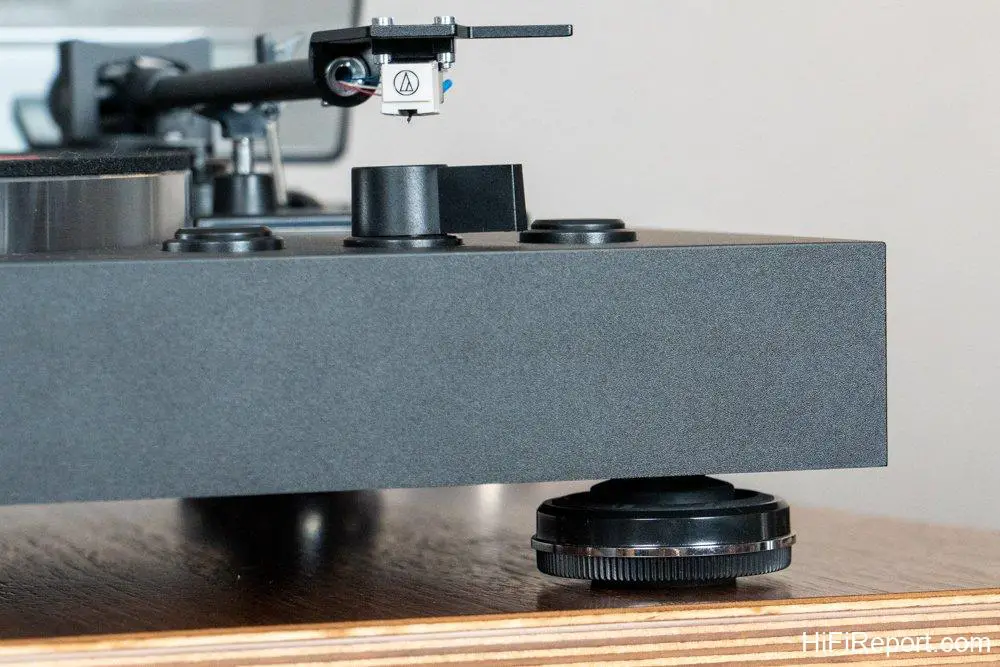
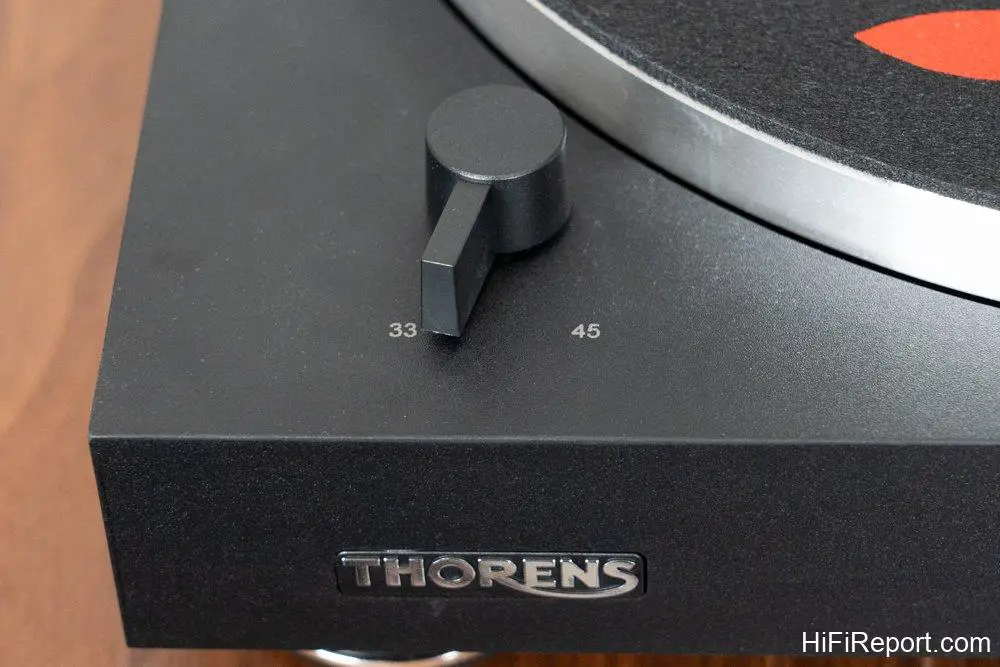
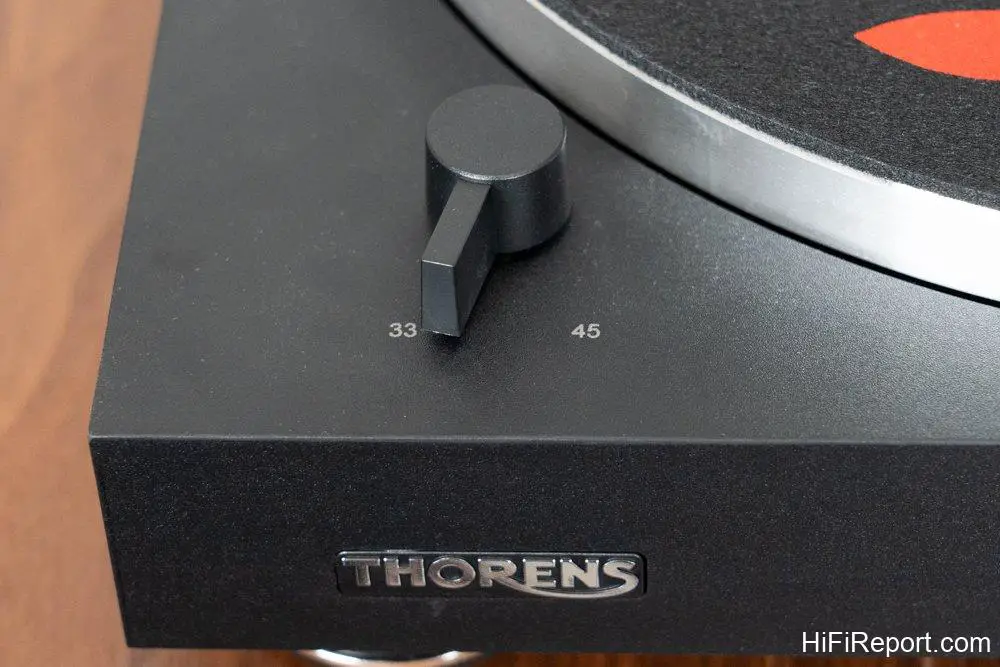
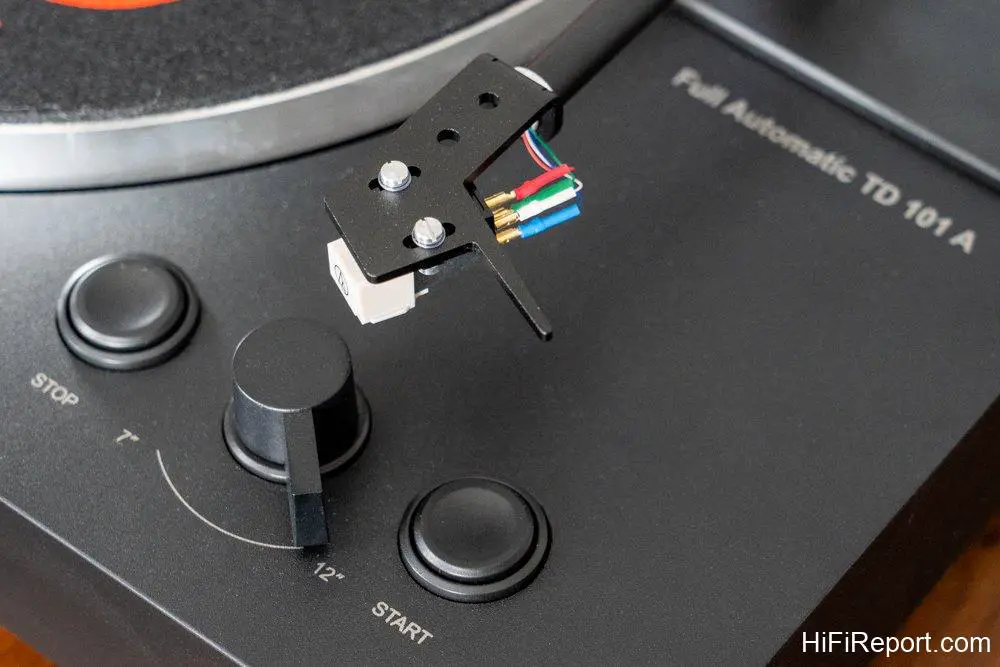
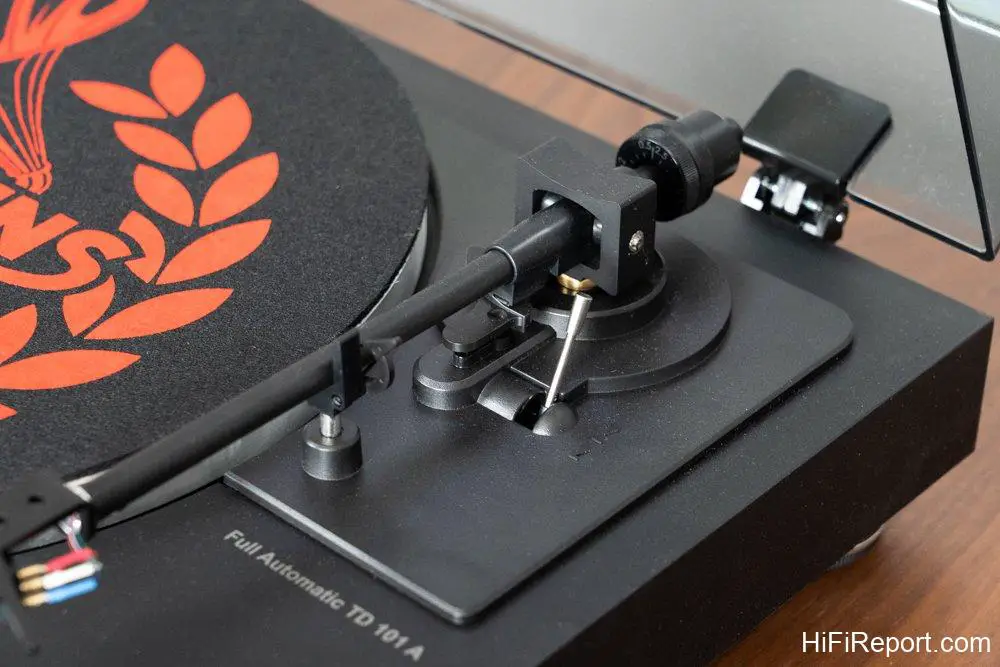
Since it’s designed for new vinyl beginners, the TD-101A must be simple and user-friendly. That’s why Thorens added full automation. Simply press Start, and the platter begins to spin, the tonearm automatically lifts, moves to the first track, and lowers the stylus to play.
Remember to Place the LP Before Playing
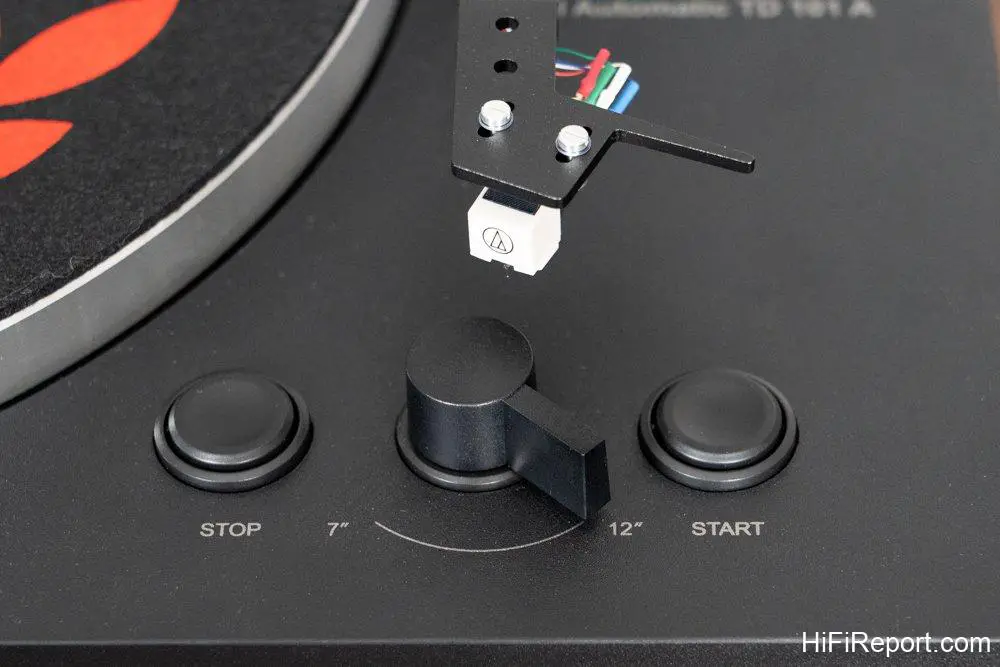
Please note: When playing records with the TD-101A, remember to place the vinyl record on the platter before starting playback. Otherwise, when the stylus automatically drops, it will directly contact the felt mat, potentially damaging the stylus. Remember, remember, remember, place the LP before pressing Start.
What if you make this mistake? You’ll have to spend money to replace the MM cartridge (which shouldn’t be too expensive).
The TD-101A was personally delivered to the editorial department by Mr. Yan (Senior) and Mr. Yan (Junior) from HiFiReport. Mr. Yan (Senior) mentioned that Thorens initially informed them that the TD-101A was an automatic turntable, and they were hesitant to import it. They had previously encountered a batch of automatic turntables that consistently malfunctioned. Repairing entry-level models wasn’t cost-effective, and it was unfair to customers. Since then, they had avoided automatic turntables. However, Thorens assured them that the TD-101A was reliable, and sent a sample unit. After testing it, they felt it was problem-free and decided to place an order for import.
Why did previous Thorens automatic turntables frequently fail? It wasn’t due to Thorens’ manufacturing quality, but rather operational errors. With fully automatic arm lifting, rotation, and stylus lowering, users sometimes wanted to skip to the next song and would “manually” lift the tonearm and move the cartridge inward. During this time, the automatic tonearm’s mechanical mechanism was still engaged. Manual intervention would damage the mechanical functions. Repairing it meant replacing the entire automatic mechanism, which was costly in parts and labor, almost half the price of a new automatic turntable. It was more cost-effective to buy a new one, and switching to a fully manual turntable would prevent future malfunctions.
So, why doesn’t the new TD-101A have the same issue of manual operation causing damage? Because Thorens redesigned it. During automatic playback, the motor and mechanical mechanism are linked, but once playback starts, the linkage disengages. If you want to change tracks mid-song, lifting and moving the tonearm won’t affect the mechanical mechanism. In other words, the TD-101A’s mechanical motor only interacts with the tonearm during “automatic start playback” and “automatic return to origin.” During playback, you can freely lift the tonearm to change tracks without damaging the automatic playback function.
More Substantial Than Typical Entry-Level Turntables
As an entry-level vinyl turntable, the TD-101A feels significantly more substantial than other entry-level models under $300 USD.
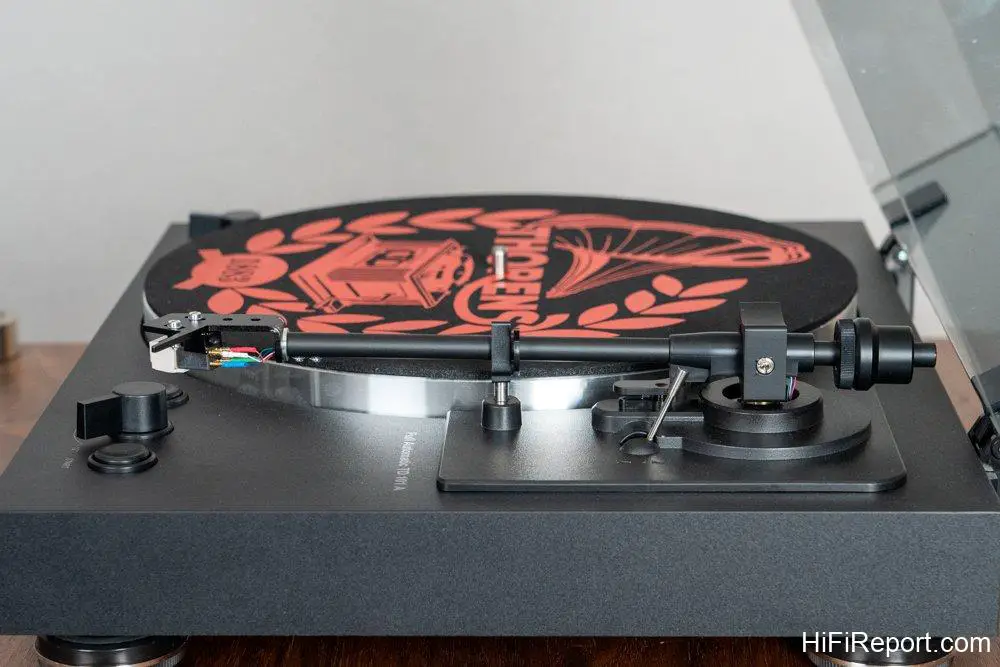
The most affordable turntables currently available are likely from Audio Technica and Onkyo, which can be purchased for a few hundred dollars. However, these entry-level turntables are more like “toy” turntables with thin sound. If you truly want to experience quality vinyl playback, you need to step up to the TD-101A level. At this price point, you get an aluminum tonearm instead of a cheap plastic one, a belt-drive system, a die-cast aluminum platter, and a relatively substantial weight (the turntable weighs 5.4 kg), giving the analog sound sufficient weight and depth.
Thorens also offers the TD-202 at the entry-level, which, like the TD-101A, has a built-in MM phono preamp, eliminating the need for an external one, and also features a USB output for digitizing vinyl records. So why release the TD-101A at a similar price point? The answer is simple: the “automatic turntable” function. To use a car analogy, the TD-101A is like an automatic transmission, while the TD-202 is a manual transmission car.
From a “playing” vinyl perspective, the fully manual TD-202 might be more suitable, offering adjustable anti-skate. However, for ease of use, the TD-101A is easier to get started with. Unbox it, plug it in, and it’s ready to play, with automatic playback and stop functions. As for sound performance, I can only say that for a vinyl turntable at this price, the TD-101A sounds excellent, far surpassing toy turntables under $300 USD.
Although it’s an automatic turntable, the TD-101A doesn’t have the automatic track selection features popular in the last century. It only offers automatic playback and stop. Early automatic track selection turntables used optical sensors on the tonearm to detect the blank spaces between tracks on the vinyl, enabling automatic track selection playback. However, to replicate this function in the TD-101A would likely compromise its competitive price point. Therefore, the TD-101A only has simple automatic playback and stop functions. This also means you can listen to your favorite vinyl before bed, and after you fall asleep, the TD-101A will automatically lift the tonearm, return it to its rest, and enter standby mode, so you don’t have to worry about the record spinning endlessly in the inner groove all night, wearing out the diamond stylus.
Great for Jazz and Rock
When auditioning the TD-101A, I chose a “nearly impossible” pairing: the EAR 868P preamp and 509 MK II monoblock power amps, with Wilson Audio Alexia 2 speakers. Using this level of amplification and speakers to listen to the TD-101A automatic turntable is completely asymmetrical. However, despite its affordability, the TD-101A’s sound performance was surprisingly good, especially for jazz and rock, which it handled exceptionally well.
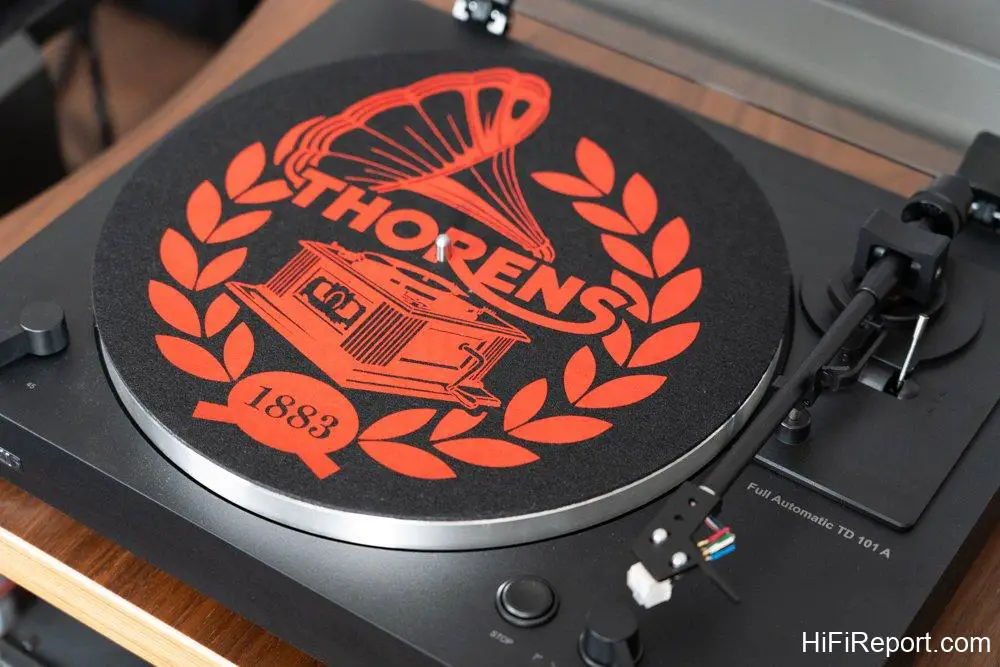
The TD-101A’s strength lies in its rich midrange power. A common weakness of budget turntables is thin sound, but the TD-101A has a solid foundation and a weighty lower end. Listening to “Saturday Night In San Francisco,” the live recording of the three guitar masters Al Di Meola, Paco De Lucia, and John McLaughlin from December 6, 1980, a follow-up to “Friday Night In San Francisco” after forty years, the TD-101A reproduced the crisp guitar plucking with full-bodied note definition. The relative positions of the three guitarists on stage were clear. I know the EAR and Wilson Audio equipment are exceptional, making me feel that the TD-101A delivers outstanding sound quality and tone for its price. But listening to “Saturday Night In San Francisco” with an MM cartridge was truly enjoyable.
Rich Nostalgia for Old Mandarin Pop
Switching to Mandarin pop, I listened to “1984~1989 Jonathan Lee Collection,” side B “My Future, My Home, My Wife.” Listening with an MM cartridge might be even more interesting than with an MC. The rich midrange thickness presented the sound of 80s pop music, recreating the atmosphere of the era.
When I heard Jonathan Lee sing, “Sometimes I feel like I work harder than Wang An, but I still worry about being able to repay the bank interest,” I wondered if young people today could relate to these lyrics. Wang An computers are now a historical term; who among the younger generation knows Wang An? And worrying about repaying bank interest refers to an era with interest rates exceeding ten percent. Now, even with interest rate hikes, they are still below 5%, and the stock market is already plummeting.
I used the TD-101A to reminisce about the music of the 80s, not just nostalgic for vinyl records, but also like riding a time machine, recalling the era of high interest rates and high inflation, which was also a time of the most vigorous economic activity and the most fruitful season for musical creation.
However, listening to Jonathan Lee, I noticed a minor issue with the TD-101A’s automatic playback. When dropping the stylus on the first track, it usually goes slightly too far, starting to play immediately. I believe the TD-101A mechanically controls the tonearm’s movement distance, resulting in a fixed stylus drop point. However, the lead-in groove width varies between records, so the TD-101A sometimes starts playing directly, missing the first few notes. If you are really particular about this, manual operation is always an option.
MM Cartridge Offers Excellent Midrange Warmth
It’s been a while since I last listened to an MM cartridge, and the TD-101A rekindled my nostalgia for the warm midrange of MM cartridges. Listening to Bill Evans’ “Waltz For Debby” album, “My Foolish Heart” had a spacious live recording soundstage. MC cartridges certainly offer more detail and a wider, more transparent soundstage. However, the Audio Technica 3600 MM cartridge equipped with the TD-101A, with its warm midrange tonality, provided a great “gutty” feel for jazz. The double bass plucks had good thickness, and the piano tone was rich and full-bodied. Perhaps the delicate brushstrokes of the jazz drums weren’t as beautifully airy and refined, but the intense atmosphere of the Village Vanguard recording, paired with a good single malt, could transform the listening room into a jazz club.
For a change of pace, I listened to “Crossroads Revisited,” Eric Clapton’s long-running Crossroads Guitar Festival, inviting his musician friends to participate and raise funds for his drug rehabilitation center. Held six times since 1999, it features not only lively live blues concerts but also instrument donations from participating artists for auction. “Crossroads Revisited” in my hand is a collection of highlights from years of live recordings, compiled into a 6-LP box set, and a first vinyl pressing. When I saw it at the high-temperature audio show, I immediately snatched it up.
Blues Rock with a Grittier Edge
The recording quality of “Crossroads Revisited” isn’t audiophile-grade, even a bit rough. But this roughness suits the rootsy nature of blues. If the recording were too polished, you wouldn’t hear the noise of the Fender single-coil electric guitars, losing some of the live recording feel. Listening on the TD-101A, I would say as long as the midrange is right, everything else falls into place. Combined with the Alexia 2’s ample low-frequency energy, the TD-101A sounded surprisingly impressive, a truly value-for-money performance.
Listening to “Sweet Home Chicago,” with five legends on stage: Eric Clapton, Robert Cray, Buddy Guy, Hubert Sumlin, and Jimmy Vaughan. Without visuals, only music, but from the electric guitar tones and playing styles, it’s not hard to guess who is soloing. If five electric guitars are too hard to distinguish, listening to “Rock Me Baby” is definitely not difficult, because B.B. King is added. His Gibson Lucille electric guitar tone is rich and warm, instantly recognizable as B.B. King. The TD-101A’s slightly rich sound made B.B. King’s electric guitar sound even more flavorful.
Finally, I want to mention the TD-101A’s built-in phono preamp. Its performance is actually decent, with sufficient gain. However, comparisons are inevitable. When I switched to listening through the 868P’s built-in phono preamp, it immediately outperformed the TD-101A’s internal preamp. Therefore, when I say the TD-101A offers excellent value analog sound, I’m referring to the turntable itself. The built-in MM phono preamp is more of a convenient feature option. To fully realize the TD-101A’s potential, an external, higher-quality phono preamp is likely necessary.
An Excellent Starting Point for Vinyl
Using EAR and Wilson Audio to audition the TD-101A might seem excessive, but using a dream system to listen to an entry-level turntable further highlights the TD-101A’s value. If you are considering starting to listen to vinyl, don’t want to spend a lot of money, and just want to enjoy easy listening, the TD-101A automatic turntable would be an excellent starting point.
Specifications
* Type: Fully Automatic Turntable
* Drive Method: Belt Drive
* Motor: Electronically Controlled DC Motor
* Speeds: 33 1/3 RPM, 45 RPM
* Tonearm: Aluminum Tonearm
* Cartridge: Audio Technica AT 3600
* Phono Preamp: Built-in MM Phono Preamp
* Dimensions: 420 x 135 x 360 mm (W x H x D)
* Weight: 5.4 kg