
Jabra Elite 3 Review
The recurring question in the wireless earbud space is whether a small pair of buds can carry a professional-sounding call through a noisy office, a construction site, or a crowded train platform. Jabra’s Elite 3 makes a specific claim here: four built-in microphones, digital signal processing, and beam-forming technology combine to deliver what the product page calls “crystal-clear calls.” The Elite 3 carries a 4.3-out-of-5 rating across 5,767 Amazon reviews, and a large share of those owners work in customer-facing roles where voice clarity is the entire point. This review tests whether the four-mic system earns that headline in real use, and whether the rest of the package holds up alongside it.
The Headline Act
The Elite 3’s defining claim is the four-microphone call system, and it matters to anyone who takes calls in environments where a two-mic budget bud would smear your voice into the background. Jabra embeds four microphones in each bud and pairs them with beam-forming DSP, the same signal-chain approach the company has used in professional headsets for years. The product description frames call quality as the core engineering goal, and the hardware reflects that priority.
What makes the claim credible is the specific sensor count. Four mics per bud is a step up from the two- or three-mic setups common in competing wireless earbuds. The beam-forming processor uses the spacing between those mics to build a directional sensitivity cone around your voice, reinforcing the close signal and suppressing the wideband noise from a coffee shop, a highway, or an open-plan office. The practical effect, as multiple owners report, is that the person on the other end of the call struggles to tell you are wearing earbuds at all.
One verified reviewer who works in call-center quality assurance says the Elite 3 outperforms the Plantronics USB desktop headsets they had used previously for the same job. That is a strong benchmark for a pair of in-ear buds, and it points to the four-mic array doing real signal work rather than riding on marketing copy.
Four-Microphone Call System Under the Hood
Each Elite 3 bud houses four microphones, and Jabra pairs them with digital signal processing and beam-forming technology. The spacing between the mics lets the DSP construct a directional “cone” of sensitivity. Sound arriving from your mouth, close and centered, is reinforced. Sound arriving from the sides or rear, the rumble of a construction site or the murmur of a busy restaurant, is attenuated before the signal leaves the bud. The far-end listener receives a cleaner voice trace than a two-mic setup typically produces.
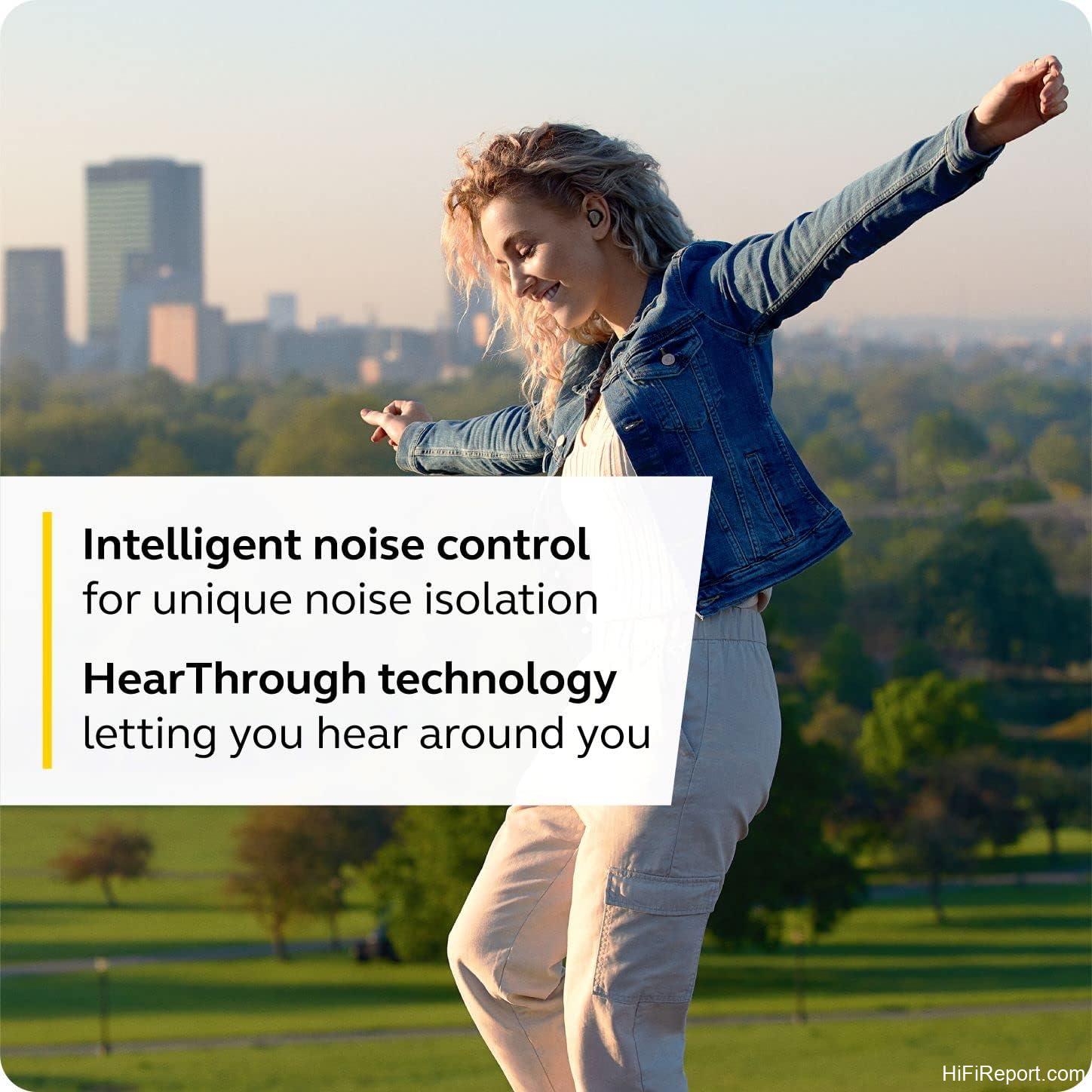
On top of the four-mic array, the Elite 3 adds passive noise isolation through the physical seal of the silicone ear tips. Three sizes ship in the box, and a tight seal blocks mid- and high-frequency ambient noise before it reaches the driver or the microphones. Jabra labels this “intelligent noise control” in the product bullets. It is a mechanical, seal-based approach; there is no anti-phase ANC circuit generating an opposing waveform to cancel low-frequency drone.
The HearThrough feature rounds out the noise story. A tap on the right bud, or a voice command through Alexa on Android, lets outside sound bleed in through the microphones while you keep listening to music or a call. One owner describes using HearThrough during a video conference in a packed office: they heard the remote participants clearly through the buds while simultaneously catching in-person teammates talking to them, all without removing either earpiece. For a desk-bound user, that is the difference between taking a headset off and clipping it back on.
Mono mode and the fast-charge cycle complement the call workflow. Ten minutes on USB-C yields roughly an hour of playback, so a quick top-up between meetings keeps you covered. Mono mode lets you pull one bud out and leave the other charging in the case, useful when you need ambient awareness for a stretch. The four-mic system still works on the active bud in mono mode, so you do not lose call clarity by going single-ear.
The Sound
The Elite 3 pairs the call-quality hardware with 6mm drivers and a six-preset EQ system in the Jabra Sound+ app, and the out-of-the-box tuning lands flat-to-mild-bass. One professional audio reviewer with 40 years in the industry found the bass “not big as the description claims” at the neutral setting and had to select a bass-boost preset to get the low-end punch the marketing suggests. The same reviewer noted the volume ceiling sits a couple of clicks below what they would prefer for high-energy genres.
Owners who skip the app and just tap play report a clean, balanced sound. A 5-star reviewer working in contact centers says the buds handle music, audiobooks, and personal calls well, and the overall quality is a clear step up from cheaper wired pairs they had tried. Another owner, comparing the Elite 3 against a budget wired backup pair, says the difference is obvious on familiar songs and that details in the mix open up in a way the cheaper buds do not reproduce. A music-focused reviewer playing rock, metal, and rap describes a bass with a “nice subtle punch on the kickdrum” and mids and highs that sit well, though the treble runs a touch hot until you dial it back in the app.
The single custom EQ slot, added via firmware update, is the most useful control. The six built-in presets, including dedicated treble and bass options, cover most tastes, but the custom slot lets you drag four frequency bands to your own curve. One reviewer explicitly recommends the treble preset over the neutral default for clarity across genres. The Sound+ app also includes a hearing-profile tuning that adjusts output to your individual frequency response, though that feature, along with Alexa, Spotify Tap, and Google Fast Pair, is Android-only.
Everything Else
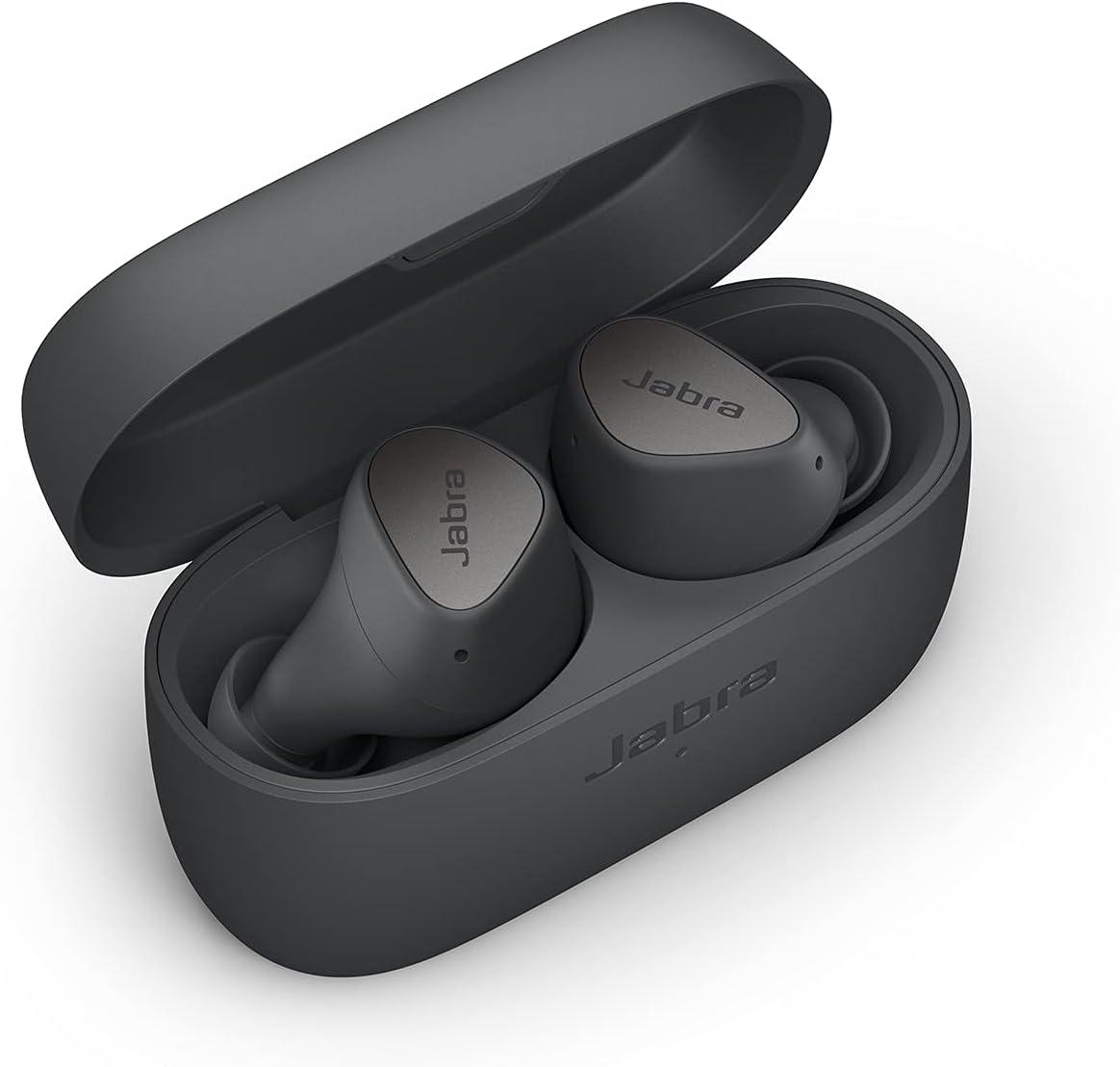
The Elite 3 is a compact, matte-finished bud in a small pocket-friendly case, and the overall build feels solid without being heavy. The Danish design keeps the profile low and rounded; there are no protruding stems or fins. Three sizes of silicone tips are included, and most reviewers report the default medium or large tip gives a secure seal. One owner with irregular ear canals and moisture issues says the buds stay put without any wing or lock mechanism. A few users with very small canals note the smallest tip still works its way out during vigorous movement, which limits the buds for running or high-intensity gym sessions.
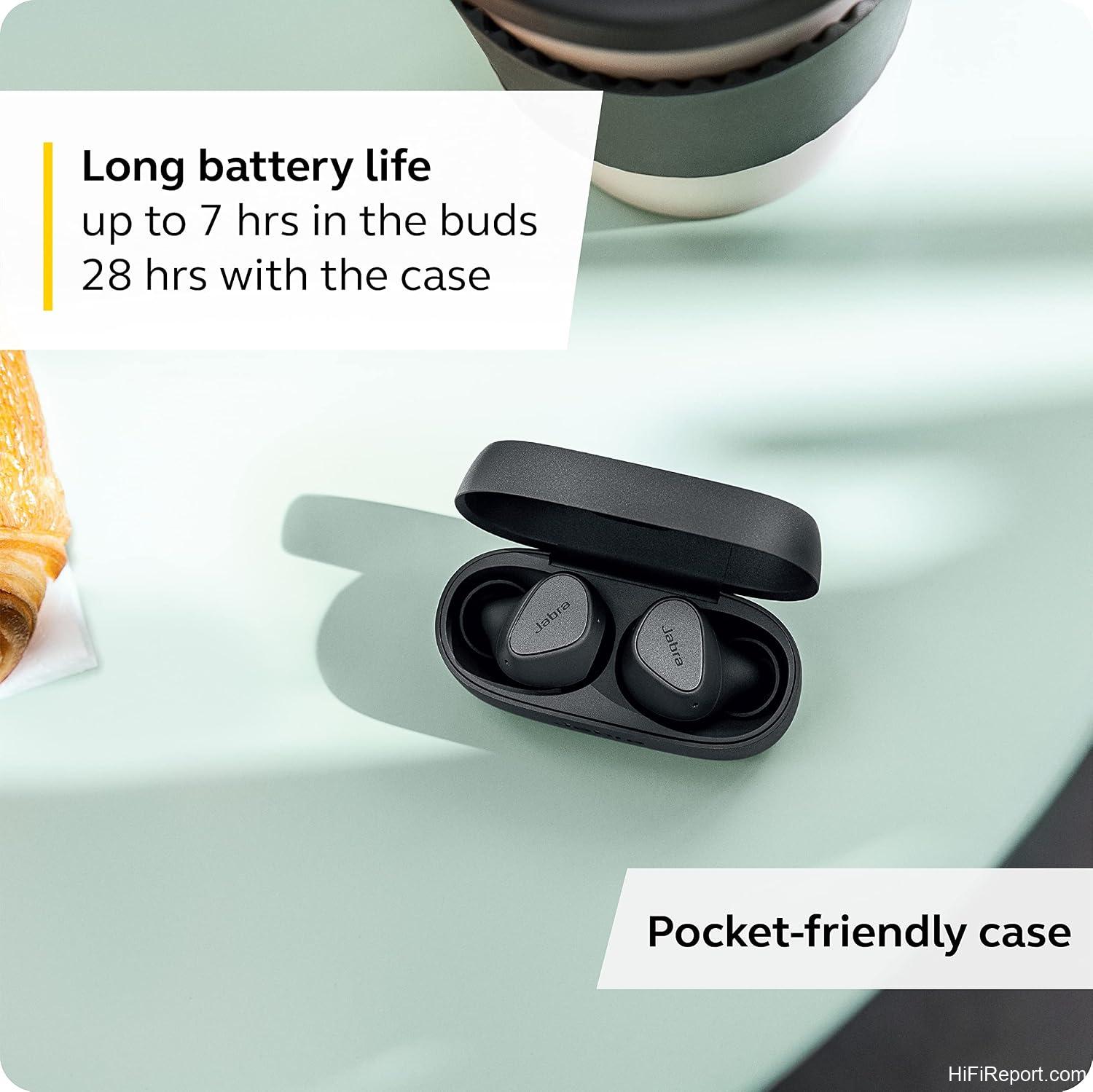
Battery life is the other strength. Jabra rates the buds at up to 7 hours per charge and up to 28 hours total with the case. The fast-charge claim is 10 minutes on USB-C for approximately an hour of playback. Several owners confirm the numbers hold in practice; one Mexican reviewer went a full month on two hours of daily use and charged the case only once. The case uses USB-C, and the included cable is very short, so most users will grab their own. There is no wireless charging pad.

The Jabra Sound+ app handles pairing, EQ, HearThrough settings, firmware updates, and a find-my-buds location feature. The app is required for full setup, which annoys a subset of owners who prefer a Bluetooth-only pairing flow. On the positive side, the app works on both iOS and Android, and the core EQ and HearThrough functions work regardless of platform. Alexa built-in, Spotify Tap, and Google Fast Pair are Android-only, as the product listing notes. The buds carry an IP55 rain and dust rating, and Jabra backs them with a 2-year warranty against dust and water failure, contingent on Sound+ app registration.
Day-to-Day
The commute is where the Elite 3 earns its keep. Pull a bud out of the case, tap it into your ear, and the passive seal drops train rumble and platform chatter to a low hum. Turn on HearThrough when you reach your stop and you can hear the announcement without yanking the bud out. Mono mode means you can run the second bud home charging while you walk through a crowd, and the four-mic system still picks up your voice clearly if a call comes in mid-walk. One contact-center worker pairs the buds with a laptop over Bluetooth for all-day video calls and says the audio and mic quality are strong enough that colleagues cannot tell they are not wearing a desktop headset.
Published originally on hifireport.com, all rights reserved, no unauthorized reuse.
At the desk, the single-device connection is the main friction point. The Elite 3 pairs with one device at a time, so switching from a laptop to a phone means disconnecting the first. A reviewer who wanted multipoint across a laptop, phone, and a VR headset found the absence of that feature the deciding factor, though they kept the buds because PC latency, roughly 0.05 seconds, was low enough for movies and casual gaming. For a typical worker who lives on one phone and one laptop, the manual switch takes a few seconds and is easy to build into a routine. The 10-minute fast-charge slot means you can top up between meetings without waiting for a full cycle.
What Customers Are Saying
The most repeated praise across the 5,767 reviews centers on call clarity and fit. Owners in customer-facing jobs describe the four-mic system as a step above the desktop USB headsets they used to clip onto a monitor. One QA specialist says the Elite 3 performs better than the Plantronics devices they had relied on for years. Fit is the second theme: multiple reviewers with small or unusually shaped ears report the buds stay in securely, and the three included tip sizes make the fit dialeable. Battery life gets its own paragraph of thanks in several long-form reviews, with one owner confirming a full month on a single case charge at two hours of daily use.
The complaints cluster around three issues. First, the single-device Bluetooth connection: no multipoint, so you cannot hold a laptop and a phone paired at the same time. Second, the Sound+ app is mandatory for pairing, EQ, and firmware updates, which frustrates owners who want a plug-and-play Bluetooth device. Third, a subset of reviewers report intermittent audio dropouts or charging-contact problems where one bud loses power after roughly 14 months of regular use. One owner who cycles through three Jabra models says the Elite 3 charging contacts are the weakest of the set, with the magnets not seating firmly enough for reliable top-ups when the case rides in a backpack.
A smaller but persistent gripe is the 30-minute sleep timer. If the buds sit idle for that window, they power off. An owner who uses them for driving reports that a call arriving after a 30-minute break requires pressing both buds back on, a step that competing brands do not include. The absence of active noise cancellation is well understood by buyers at this tier, but a few owners note that the passive seal forces them to turn the volume up more than they would like in very loud environments.
What We Like / What We Don’t
What We Like
- Four-microphone call system with beam forming produces a clean, professional-grade voice on the far end of a call
- Compact, stem-free body that stays in most ear shapes without wings or locks
- 7-hour bud battery, 28-hour case battery, and 10-minute fast-charge for an hour of play
- HearThrough mode for instant ambient awareness without removing the buds
- IP55 rain and dust protection, USB-C charging, and mono mode for single-ear use
What We Don’t
Published originally on hifireport.com, all rights reserved, no unauthorized reuse.
- Single-device Bluetooth only; no multipoint pairing for phone-plus-laptop workflows
- Sound+ app is required for pairing, EQ, and firmware updates
- No active noise cancellation; isolation is purely mechanical
- Sleep timer powers the buds off after 30 minutes idle
- Included USB-C cable is very short; users will need their own
The Verdict
The Elite 3 is built around a four-microphone call system that, in the hands of owners who take all-day calls, genuinely competes with desktop headsets. If your daily routine centers on video calls, phone calls in noisy environments, or long listening sessions where you need the buds to stay put for hours, the package is complete and well balanced. The compact stem-free body, the 28-hour case battery, and the HearThrough mode make it a workhorse for commute-and-desk users who do not need active noise cancellation.
Best for: remote workers, call-center agents, and commuters who prioritize clear calls, a secure fit, and all-day battery over ANC. Look elsewhere if: multipoint pairing across a phone, laptop, and tablet is a hard requirement, or if you need active noise cancellation to mask an open-plan office or an airplane cabin; Jabra’s Elite 8 Active and Elite 10, announced in 2024, are the current premium alternatives in the lineup.
Key Specs
- Driver: 6mm dynamic
- Microphones: 4 per bud, with beam-forming DSP
- Noise isolation: Passive mechanical seal; HearThrough for ambient awareness
- Battery (buds): Up to 7 hours
- Battery (with case): Up to 28 hours
- Fast charge: 10 minutes for approximately 1 hour of playback
- Charging port: USB-C
- Water/dust rating: IP55
- Mono mode: Yes, either bud usable alone
- Warranty: 2 years against dust and water failure with Sound+ app registration
FAQ
Do the Jabra Elite 3 work with a Windows or Mac laptop over Bluetooth?
Yes, provided the PC has Intel Smart Sound Technology or equivalent Bluetooth audio support. Several owners confirm stable pairing for video calls, movies, and casual gaming with a latency of roughly 0.05 seconds. The Sound+ app handles the initial pairing on a phone, after which the laptop connection is straightforward.
Can I use the Elite 3 with two devices at the same time, like a phone and a laptop?
No. The Elite 3 supports a single active Bluetooth connection at a time. Switching devices requires manually disconnecting the current one from the device settings and then pairing the new one. Jabra reserves multipoint for its higher-tier models.
How well does the four-microphone call system handle a noisy environment?
Owners in contact-center and open-office settings report that the beam-forming DSP keeps ambient room noise, construction, and keyboard clatter off the far end of the call. One reviewer tested the buds in a packed office during a video call and said the remote participants heard them clearly while HearThrough let them catch in-person teammates talking.
Do the Elite 3 have active noise cancellation?
No. The Elite 3 relies on passive isolation through the silicone ear-tip seal, with no anti-phase ANC circuit. For buyers who need active noise cancellation to block out an airplane cabin or a busy coffee shop, Jabra’s higher-tier earbuds announced in 2024 include that feature.

- FREE THE BASS – You deserve music your way, every day; With 6mm speakers and class-leading customization options, the Jabra Elite 3 compact buds deliver rich, clear sound and punchy bass that’s not only just powerful, but also unique to you.Specific uses for product : Music
- INTELLIGENT NOISE CONTROL - For optimal on the go listening, the Elite 3 offers unique noise isolation whilst providing on demand external noise pickup with HearThrough technology
- CRYSTAL-CLEAR CALLS – 4 microphones, the latest digital signal processing and pioneering beam form technology mean these Jabra earbuds offer great call quality and play music while staying connected; , they are rainproof protected