
Kali IN-5 Active Speaker Review
Yes, this pair of Kali Audio IN-5 active speakers isn’t here on loan for a HiFiReport review. The editorial team actually purchased them as nearfield listening reference monitors.
During a visit to the HiFiReport recording studio, engineer Xu Yusheng let me hear his newly acquired IN-5s. I was instantly captivated. Priced under NTD 30,000, I immediately decided to buy a pair for our editorial reference system.
Wait a minute, doesn’t HiFiReport already have Wilson Audio Alexia 2s and Dynaudio Contour 60s? Why the interest in IN-5s? The answer lies in different price points, sizes, and applications. I had been searching for high-quality active nearfield monitors, specifically professional studio-grade ones. While several brands and models caught my eye, budget constraints held me back. Then came the Kali LP-6, boasting impressive sonic performance and exceptional value. I was close to buying them, but the editor-in-chief suggested holding out to hear the slightly pricier IN-5s before making a final decision. After just one track at the HiFiReport studio, I was sold on the IN-5s.
What? All this for under NTD 30,000? It would have been remiss of me not to buy them. Purchase confirmed.
High Demand, Limited Availability
Another compelling reason for the immediate purchase was their scarcity. I was told that current stock was almost depleted, and Kali hadn’t provided delivery timelines for new orders, likely due to pandemic-related supply chain disruptions, port congestion, and chip shortages. With units available, securing them became a priority.
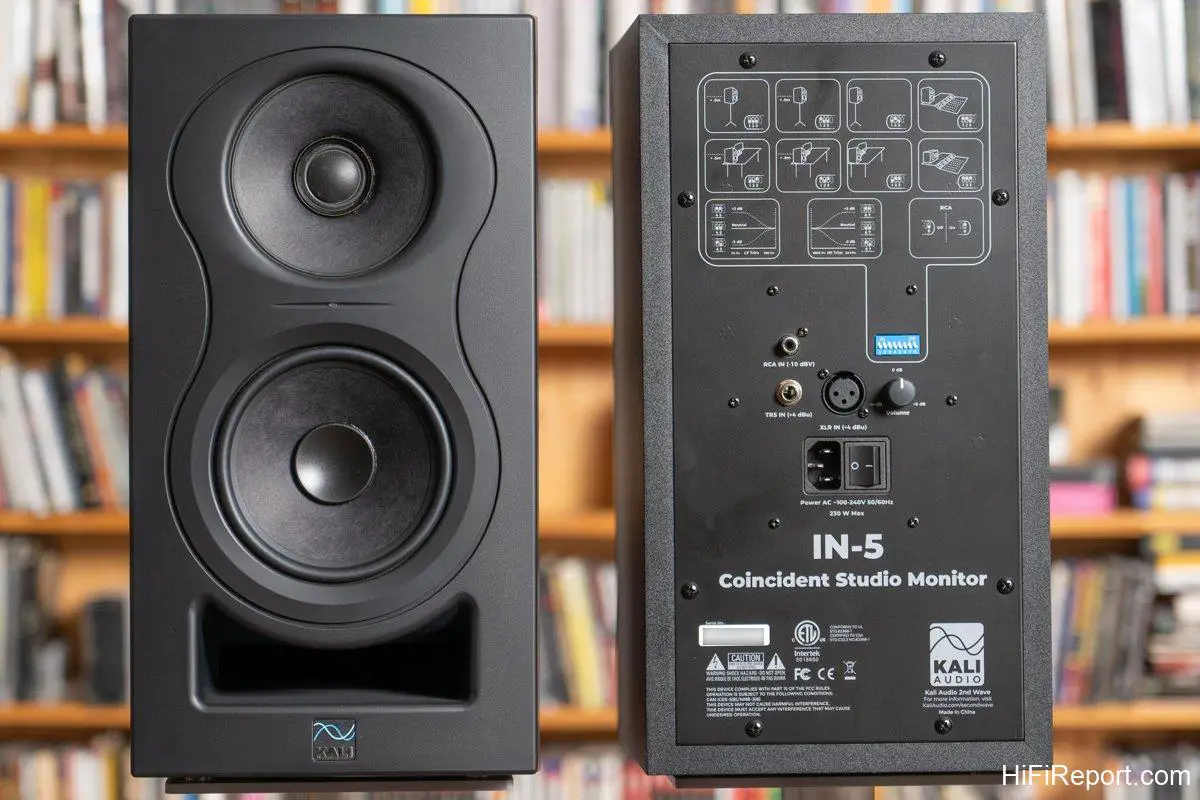
Are the pricier IN-5s significantly superior to the LP-6s? I must emphasize that both the LP-6 and IN-5 are excellent nearfield monitors. Their frequency response and dynamic range are virtually identical. For tighter budgets, the LP-6s are already outstanding. However, my preference for the IN-5s stems from their coaxial three-way design. The IN-5’s soundstage rendering and imaging precision are noticeably enhanced, effortlessly revealing subtle nuances within recordings.
Hyper-Realistic Imaging
Kali Audio describes this as “hyper-realistic” imaging, signifying the accurate reproduction of each instrument’s placement within the recording, creating a vivid and lifelike soundstage. Even with entirely digital recordings, producers meticulously position sounds in the mix. The IN-5s faithfully reveal these spatial manipulations, making the sonic image almost tangible.
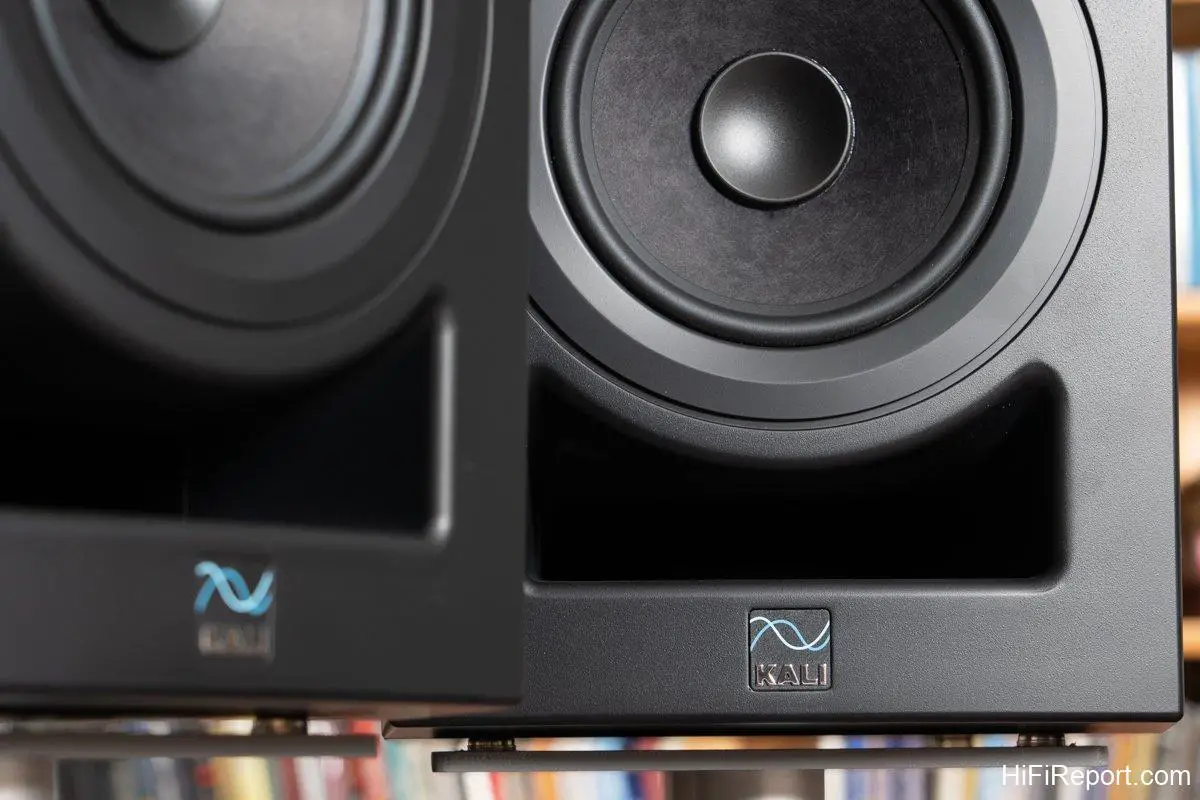
Listening to the IN-5s at close range, you’ll understand my description of “instruments seemingly within arm’s reach.”
While the LP-6s offer commendable imaging, the IN-5s, with their coaxial driver design, hold a technical advantage. Although the LP-6s are also point-source designs, incorporating waveguides for improved mid-high frequency integration, a slight separation remains between the tweeter and mid-bass driver. In contrast, the coaxial IN-5s position the tweeter and midrange sound source at the same point and axis, theoretically representing the ideal point source, resulting in superior 3D soundstage and imaging accuracy.
What does “more precise” truly mean, and by how much? Quantifying it is challenging. Listening to the LP-6s in isolation, their imaging also impresses for nearfield monitoring. However, in audio, comparisons are revealing. A side-by-side comparison of the LP-6s and IN-5s immediately highlights the IN-5’s enhanced 3D soundstage and imaging precision. The difference is evident within just a song or two.
Tri-Amp and Boundary EQ
The IN-5’s price point is astonishing. For under NTD 30,000, you get a three-way coaxial design with tri-amplification – 40 watts each for the tweeter and midrange, and 60 watts for the woofer, totaling 140 watts per channel. The cost of these amplifier modules alone would be substantial, not to mention the DSP crossover and Boundary EQ development. If you find yourself lamenting the high cost of audio equipment, Kali Audio’s active speakers offer exceptional value for every dollar spent.
Kali Audio’s Boundary EQs are another standout technical feature, adding to their already impressive value proposition.
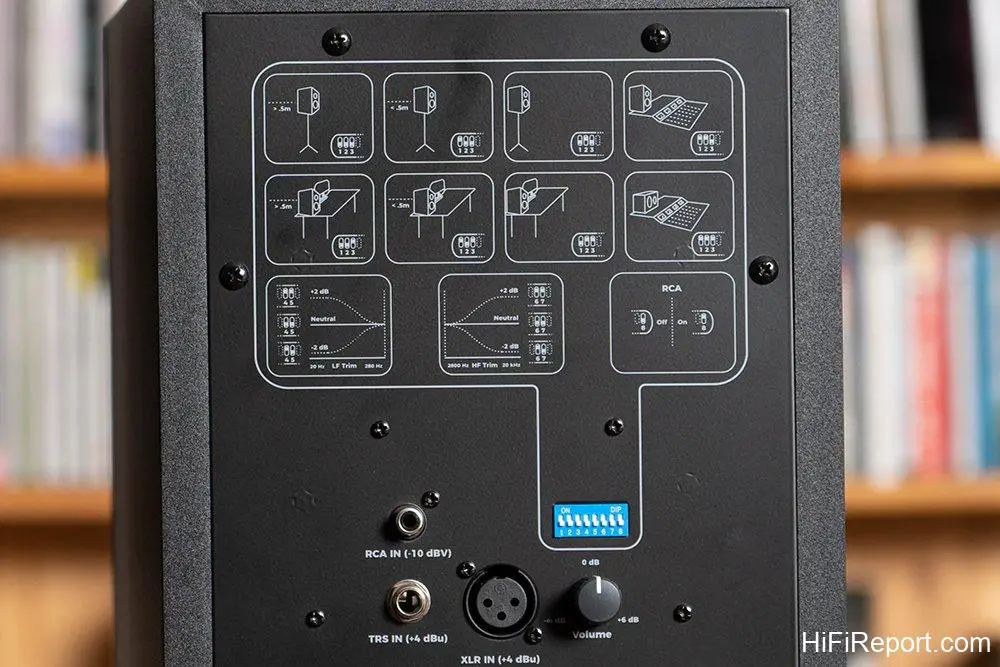
Both recording studios and home listening environments grapple with room acoustics and speaker placement. Boundary EQs address this by digitally compensating for speaker placement. Positioned far from walls, bass frequencies are allowed to extend naturally. Placed closer to walls, bass output is subtly reduced, minimizing room mode interference. Setup is incredibly straightforward. Simply refer to the diagrams on the speaker’s rear panel, identify the diagram that most closely matches your speaker placement, and adjust the corresponding DIP switches.
The Boundary EQ settings are derived from measurements taken by Kali Audio at the legendary Village Studios in Los Angeles. With over six decades of history, The Village has witnessed the golden age of American pop and rock music, hosting artists from the Rolling Stones, B.B. King, and Bob Dylan to contemporary stars like Coldplay, Lady Gaga, and John Mayer. Listening to these artists on the IN-5s might just transport you to a Village recording session.
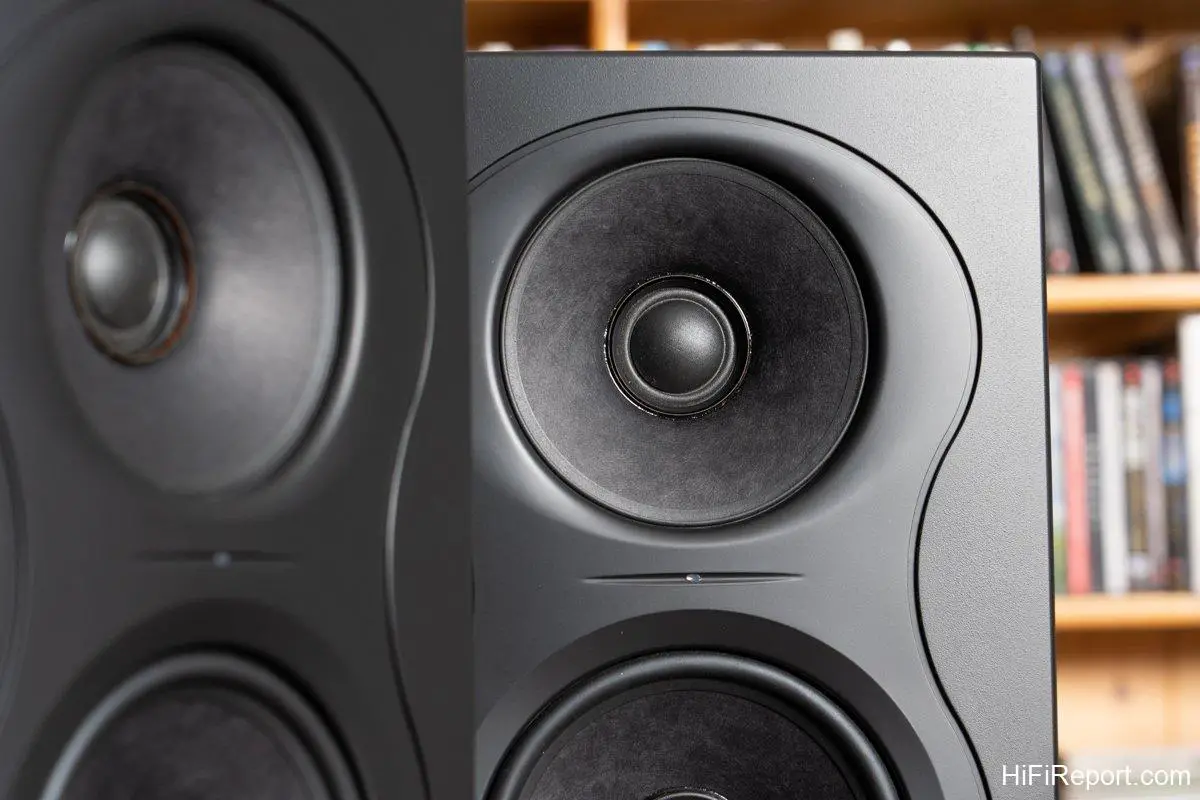
Beyond Boundary EQs, the IN-5’s design itself facilitates placement. The front-firing bass reflex port minimizes low-frequency room mode issues, even when positioned close to walls. The large port opening also reduces air turbulence noise.
As I noted in my LP-6 review, every design element in Kali Audio speakers serves an acoustic purpose, and the IN-5s are no exception.
High-End System Pairing
Upon bringing the IN-5s home, I opted to treat them as conventional bookshelf speakers rather than desktop monitors. I paired them with a decidedly high-end system: a YBA CDT450 transport and Merging NADAC, complemented by an mbl Noble C11 preamplifier. An unconventional pairing, perhaps, considering each component costs ten to twenty times more than the IN-5s themselves. My aim was to explore the IN-5’s full potential.
Rest assured, I will also assess them with a more “budget-friendly” setup shortly to further illustrate their exceptional value.
Paired with the C11 preamp, the IN-5s exhibited a rich and full midrange with an added touch of refinement. Listening to Mutter and John Williams’ “Across the Stars,” particularly “Rey’s Theme,” the solo violin’s timbre was dense and luminous, the highs bright and soaring, and the descending scales showcased clear tonal shifts into the lower registers. Being a crossover recording, the plucked double bass was intentionally prominent. The IN-5s accurately conveyed the recording’s style, with the added “flavor” precisely rendered. The recording’s layering was beautifully presented, with the brass section positioned slightly back, creating a wide soundstage that contrasted with the violin solo, which was beautifully focused and prominent at the center. Such impressive sound quality from speakers priced under NTD 30,000 is truly remarkable.
Enhanced Imaging Accuracy
Switching to Katja Werker’s “Contact Myself 2.0,” a live recording with guitarist Gert Neumann at Stockfisch Records, engineered by Gunter Pauler himself. Listening to “Yes,” the intro’s acoustic guitar is positioned to the left, consistent with album artwork suggesting Katja Werker playing guitar and singing. As the vocals begin, a second guitar emerges on the right of the soundstage, with the fretless bass centered slightly behind. Having listened to the same track on the LP-6s, the IN-5’s imaging accuracy is demonstrably superior.
Moving my head slightly from the center axis between the speakers, I intently listened for any leftward bias in Katja Werker’s vocals, given the guitar’s clear left-channel placement. While a slight leftward lean was perceptible, it was minimal. I suspect post-production may have compensated to center the vocals, with only subtle lip sounds betraying a slight leftward position. The IN-5’s captivating quality lies in this level of detail retrieval, acting as a sonic magnifying glass.
Rich and Clear Detail Retrieval
Moving to bass-heavy tracks, Michael Jackson’s “The Way You Make Me Feel” highlighted the IN-5’s precision. The opening sound effects and electronic drums panned vividly between channels, with a focused rhythmic element in the center, underpinned by wide synthesizer chords. Michael Jackson’s vocals were firmly anchored center stage, while numerous synth effects decorated the left and right channels, and harmonies broadened the soundstage. Michael Jackson’s recordings are truly iconic. Each listen reveals the recording engineer’s meticulous sound design, creating a rich, full, and dynamic sonic landscape that contributes to their timeless appeal.
Okay, I acknowledge that pairing the IN-5s with mbl, Merging, and YBA components might be considered overkill. “Feed them well, and any active speaker will sound good,” some might say. Fair enough. Let’s switch to a more budget-conscious setup, employing the editor-in-chief’s “secret weapon”—the ifi Go-Blu, a portable Bluetooth wireless DAC priced at approximately $180 USD (NTD 5,800). Using Airplay as the source, this should qualify as a budget-friendly pairing!
Budget-Friendly Bluetooth DAC Pairing
Revisiting “The Way You Make Me Feel” with the Go-Blu, the IN-5’s precise imaging remained compelling. The primary differences lay in a slightly less full midrange and a reduction in mid-high frequency refinement—an inevitable consequence of the significant price disparity. However, the Go-Blu offers three digital sound modes, including a bass boost, which enhanced the lower-end fullness, though it couldn’t quite replicate the C11’s overall sonic sophistication.
Crucially, even with a budget wireless Bluetooth DAC like the Go-Blu, and streaming Apple Music via Airplay, the IN-5s maintained their precise imaging and monitor-like character. Furthermore, the IN-5s proved remarkably sensitive to volume variations and clearly conveyed dynamic shifts within recordings. Even complex orchestral pieces were rendered with impressive clarity, allowing you to discern both the individual instruments and the overall orchestral tapestry.
Mahler’s Layered Orchestra
What orchestral work presents the greatest challenge? Mahler! Let’s listen to the fifth movement of Mahler’s Symphony No. 5, specifically the Bernstein/Vienna Philharmonic HiFiReport version. The movement opens with sustained brass notes, followed by the woodwind’s thematic response. As the woodwinds play, the brass continues its sustained backdrop. The IN-5s faithfully capture the detail of each instrument with remarkable clarity.
As the strings enter, the soundstage expands laterally. Woodwinds and brass remain centrally positioned, cellos and double basses occupy the right, and violins the left. Mahler interweaves the two string sections in thematic dialogues, further intertwined with brass and woodwinds. The IN-5s reproduce each section with distinct layering.
The IN-5’s soundstage layering is undeniably first-rate. However, low-frequency extension is naturally limited by the speaker’s cabinet size. In the finale of Mahler’s Symphony No. 5, the grand orchestral climaxes exhibit some low-end roll-off. While the orchestral sections remain beautifully layered, the impact of the timpani and the weight of the bass drum lack the physicality of larger floorstanding speakers. However, if you desire more low-end presence, adding a subwoofer will undoubtedly fill out the bottom end, fully realizing the rolling energy of the timpani and bass drum.
Excellent Home Audio Value
Despite being designed as studio monitors, my experiences with both the LP-6 and IN-5 models demonstrate their suitability for home audio applications. They offer exceptional value, and even without a high-end preamp, a simple pairing with a budget wireless Bluetooth DAC like the Go-Blu, streaming from a smartphone or computer, and accessing services like Tidal, Spotify, and Apple Music, delivers impressive results. Furthermore, the Boundary EQs and adjustable high, mid, and low-frequency DSP enhance the IN-5’s adaptability to various acoustic environments. Within their price range, I struggle to conceive of a superior bookshelf speaker and amplifier combination. The IN-5s are simply outstanding value.
Reference Components
* Source: YBA CDT450 CD Transport
* DAC: ifi Go-Blu / Merging NADAC
* Preamplifier: MBL N11
* Cables: Tromba Cypher-OCC USB Cable / Xsymphony Precision One Power Cable
* Accessories: Tiglon TMR-2 Audio Rack / MYSTJ Audio CMS Audio Rack / ASI Tuning Devices
Specifications
* Model: Kali Audio IN-5
* Type: 3-way Coaxial Driver Bass Reflex Active Monitor
* Drivers: 1″ Silk Dome Tweeter x 1, 4″ Coaxial Midrange x 1, 5″ Paper Cone Woofer x 1
* Frequency Response: 39 Hz – 25 kHz
* Crossover Frequencies: 280 Hz, 2.8 kHz
* Built-in Amplifier: 140 Watts (40W HF + 40W MF + 60W LF)
* Max SPL: 115 dB
* Inputs: RCA, TRS, XLR (one each)
* Dimensions: H 382 x W 282 x D 206 mm
* Weight: 8.43 kg (18.6 lbs)