
KEF LS60 Wireless Speaker Review
What exactly is a “Stand-Alone Audio System”? Simply put, it’s a complete audio system that you can effortlessly enjoy at home by just plugging it in and connecting to your network and smartphone.
KEF’s initial foray into this market was with the LS50 Wireless, followed by the LSX II and LS50 Wireless II. Both were bookshelf speakers that achieved remarkable sales success, particularly resonating with younger audiences. Now, with the newly launched LS60, KEF is venturing into the realm of floor-standing speakers, aiming squarely at the high-end market.
Brain, Heart, and Desirability
Let’s cut to the chase: the LS60 is the most feature-rich and sonically versatile digital wireless active speaker system I’ve had the pleasure of reviewing to date. Its design philosophy appeals to consumers on multiple levels – intellectually, emotionally, and viscerally – creating a compelling product that’s a true game-changer in the world of digital wireless active speakers.
Why bring up the brain, heart, and… well, let’s just say ‘desire’ in an audio review? This framework comes from Scott Galloway, a professor at NYU Stern School of Business, in his book “The Four.” He posits that consumer behavior is driven by these three core motivators. (Apologies for omitting the ‘stomach’ aspect dominated by Amazon, but LS60s aren’t exactly edible.) Galloway identifies the “Four Horsemen” of tech as each tapping into these drivers: Google (brain – who doesn’t Google before buying?), Facebook (heart – connecting with others and seeking happiness), and Apple (desire – the allure of owning an iPhone as a status symbol, embodying “Think Different”).
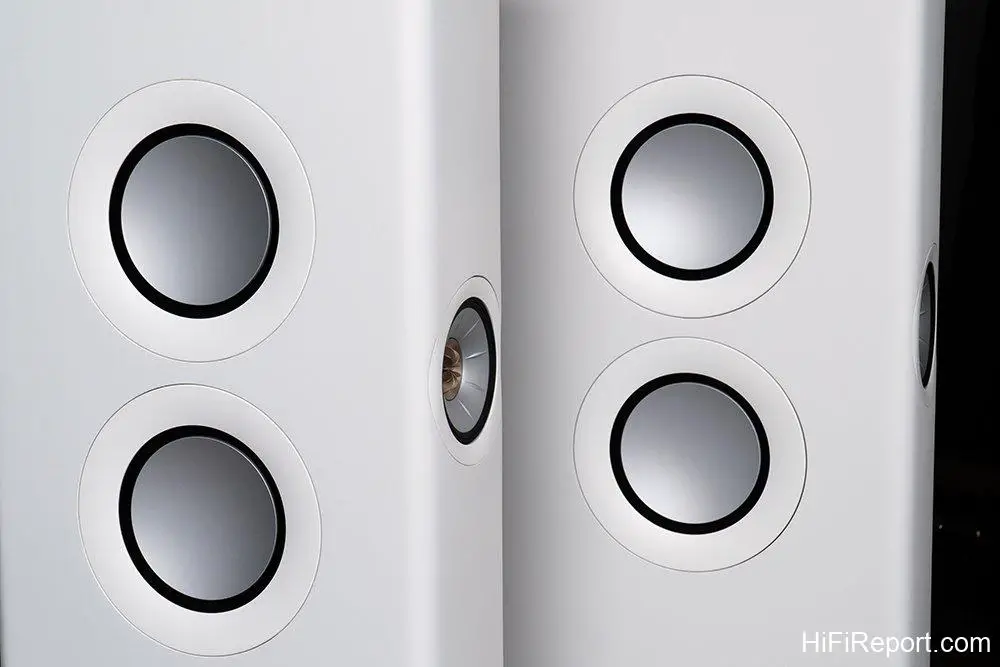
As I sat in the listening room, controlling the LS60 entirely with my iPhone and exploring the vast landscape of online streaming music, these very concepts came to mind.
Fundamentally, audio equipment leans towards being a ‘heart’ purchase. Investment in audio is driven by the desire for superior music reproduction, seeking emotional fulfillment. From a purely rational, ‘brain’ perspective, spending significant sums on audio might seem less essential for basic survival. Yet, in terms of ‘desire,’ traditional audio, being confined to the home, lacks the outward status signaling power of something like an iPhone.
Understated Elegance and Allure
However, the LS60 might just be the challenger that rewrites the rules. Let’s start with ‘desire’ (perhaps the most universally engaging aspect). For years, the audio industry has talked about WAF – Wife Acceptance Factor. If audio gear isn’t aesthetically pleasing, it’s unlikely to make it past the front door. Traditional audio, often bulky, heavy, and conservatively styled, can struggle in this regard. KEF has long understood this, collaborating with industrial design experts to break free from conventional forms. This journey began in 2007 with the monumental Muon speakers, sculpted by Ross Lovegrove. These striking, sculptural pieces remain iconic, though extremely rare and now likely highly collectible.
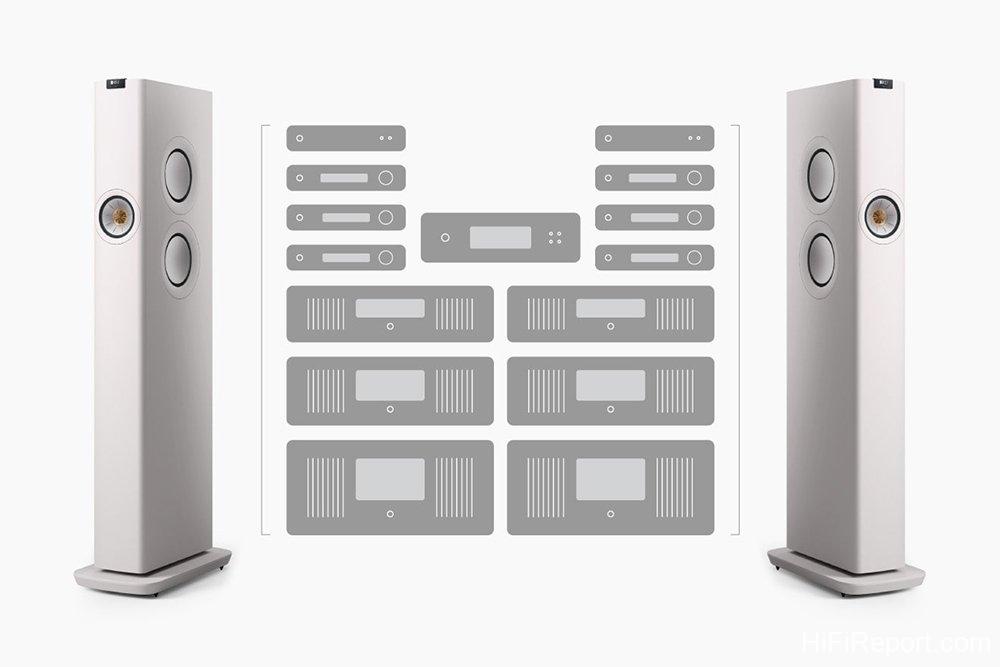
Then came the Blade in 2009, designed with New York-based ECCO and designer Eric Chan, inspired by Romanian sculptor Brancusi’s “Bird in Space,” resulting in the Blade’s slender, flowing cabinet. For the LS60, KEF partnered with Hong Kong-based Michael Young Studio, whose minimalist design ethos imbues the LS60 with an air of refined elegance.
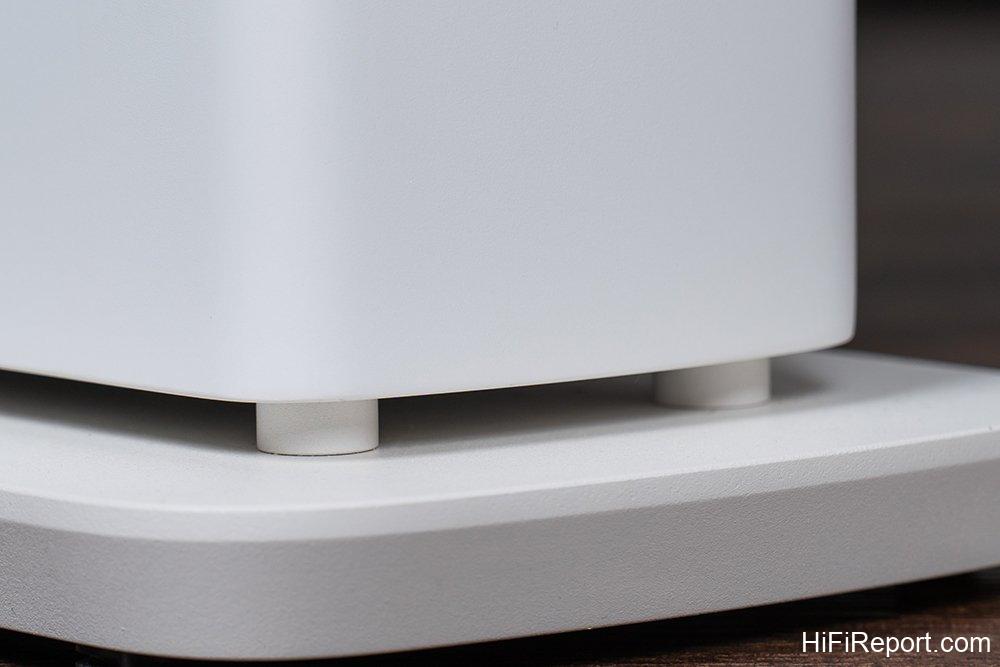
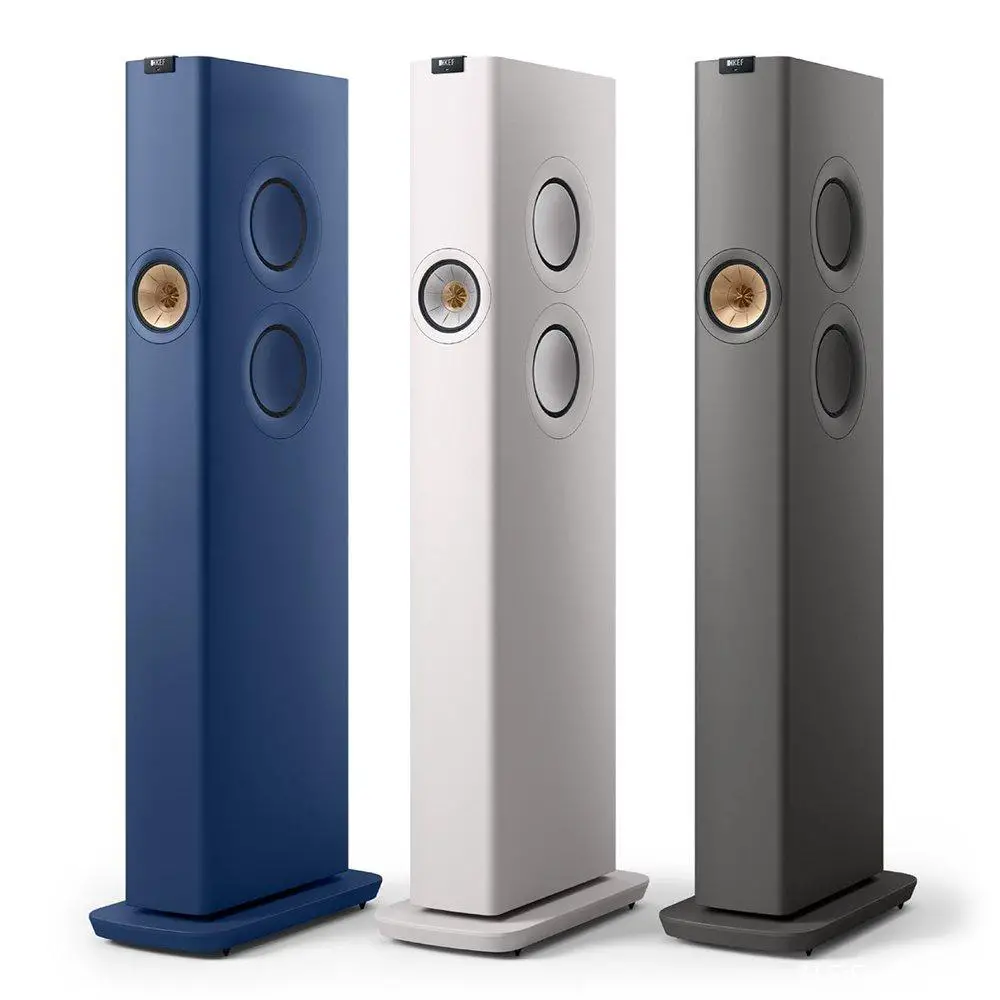
Unboxing the LS60 in the listening room was a breeze thanks to the expertly designed packaging. The matte finish of the white LS60 exudes understated luxury. While I haven’t yet seen the Royal Blue or Titanium Grey versions in person, I can already imagine their striking presence.
From an industrial design perspective, the LS60 undeniably appeals to ‘desire’. Imagine inviting friends over and showcasing the sleek LS60s – no bulky amplifiers, no source components, no tangled wires, just effortless music streaming from a phone, and the ability to enhance Netflix or Disney+ with superior sound. In terms of sheer desirability, the LS60 system outshines traditional audio setups.
KEF Connect: Control at Your Fingertips
Next, let’s delve into how the LS60 caters to the ‘heart’: the KEF Connect App. Effortless control of a sophisticated audio system hinges on a user-friendly app.
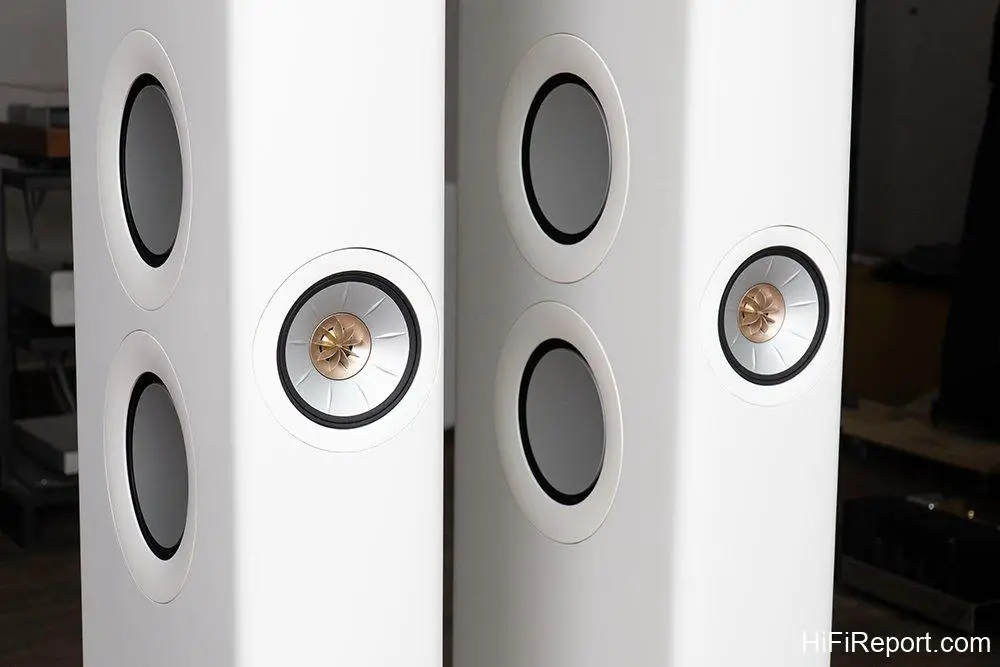
Picture this: you arrive home, unlock your phone, tap the KEF Connect app, select your preferred music source (likely Wi-Fi), and the LS60s awaken from standby. Choose your soundtrack from Spotify, Apple Music, or Tidal, and the LS60s serenely fill your space, summoning your personal muse. KEF Connect supports a wide array of streaming services, including Amazon Music, Deezer, and QQ Music, though these might be less prevalent in certain regions.
Beyond popular streaming services, KEF Connect also integrates Internet Radio, Podcasts, and automatically connects to music libraries on your local NAS. This positions the LS60 not just as digital wireless active speakers, but as a comprehensive network streaming audio hub.
The LS60, with its minimalist design and intuitive operation, targets both ‘desire’ and ‘heart’. The final hurdle is convincing your ‘brain’ to overcome any purchasing hesitation. With a suggested retail price around $7,300 USD (converted from 219,000 NTD), the LS60 isn’t cheap. If you adhere to the traditional audio logic of bigger and heavier equating to greater value, the LS60 might seem somewhat underwhelming in size. However, understanding the level of integration KEF has achieved reveals the exceptional value proposition.
If you’re not deeply entrenched in audiophile culture, the following rational analysis of the LS60’s ‘brain’ appeal might be skippable. If music enhances your life, the LS60’s aesthetic appeal and ease of use might be enough to sway you. After all, does one meticulously compare Ferrari engines against Lamborghini before indulging in a supercar? The ultimate ‘desire’ purchase often culminates in owning both – a stable of Italian stallions. (Pardon my daydreaming).
Globally Consistent Pricing
The LS60’s first strategic move to engage the ‘brain’ is its globally consistent pricing strategy. Projected to launch in Europe in Fall 2022 with a suggested price of £6,000, the converted price of $7,300 USD and Hong Kong’s $6,300 USD (49,800 HKD) are remarkably close after currency conversion.
This showcases KEF’s ambition as a global audio brand, mirroring Apple’s strategy of maintaining near-uniform global pricing. This minimizes consumer’s price-hunting behavior (the ‘brain’s’ reflexive comparison shopping), accelerating the purchase decision.
Flagship Technology at a Fraction of the Cost
Now, let’s delve into the technical aspects.
High-end audio’s premium pricing often stems from its “component-based” design. Transforming “electrical energy” into “mechanical energy” – the process of music reproduction – involves numerous stages. From the music source, digital audio signals are converted by a DAC, amplified, and then drive speaker drivers to create sound waves. This is a simplified explanation. The LS60’s hidden technological depth is truly remarkable, justifying its price point to the ‘brain’ as exceptional value.
Initially, I intended to dissect the LS60’s “value” from a technical standpoint. However, mentally rehearsing the technical details felt increasingly dry. Explaining KEF’s two-decade refinement of the Uni-Q coaxial driver to its 12th generation, incorporating MAT (Metamaterial Absorption Technology), would become a tedious technical deep dive. Perhaps comparing prices provides a more impactful perspective.
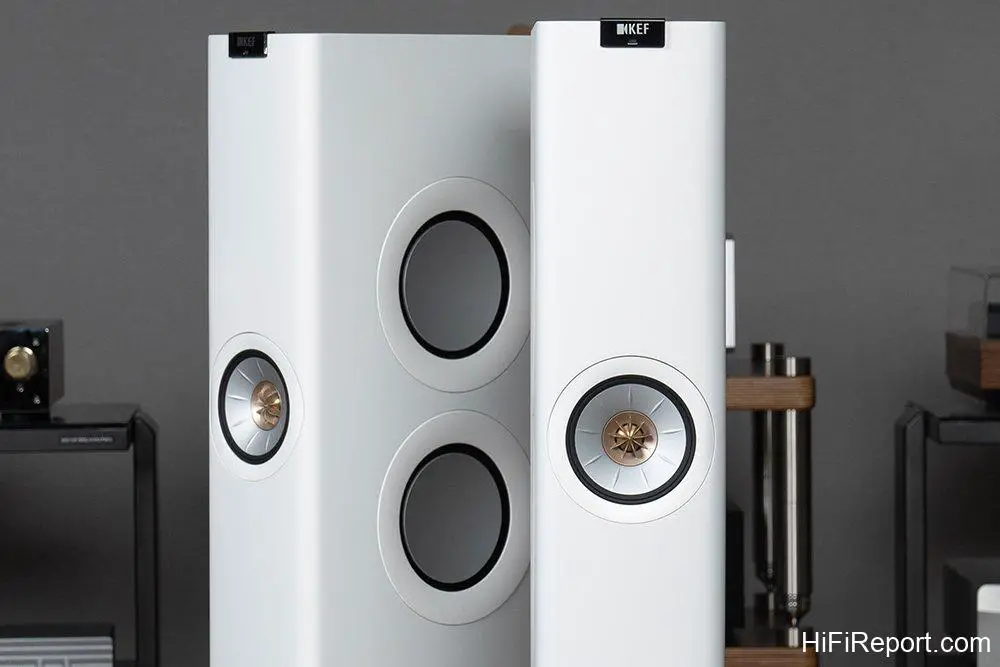
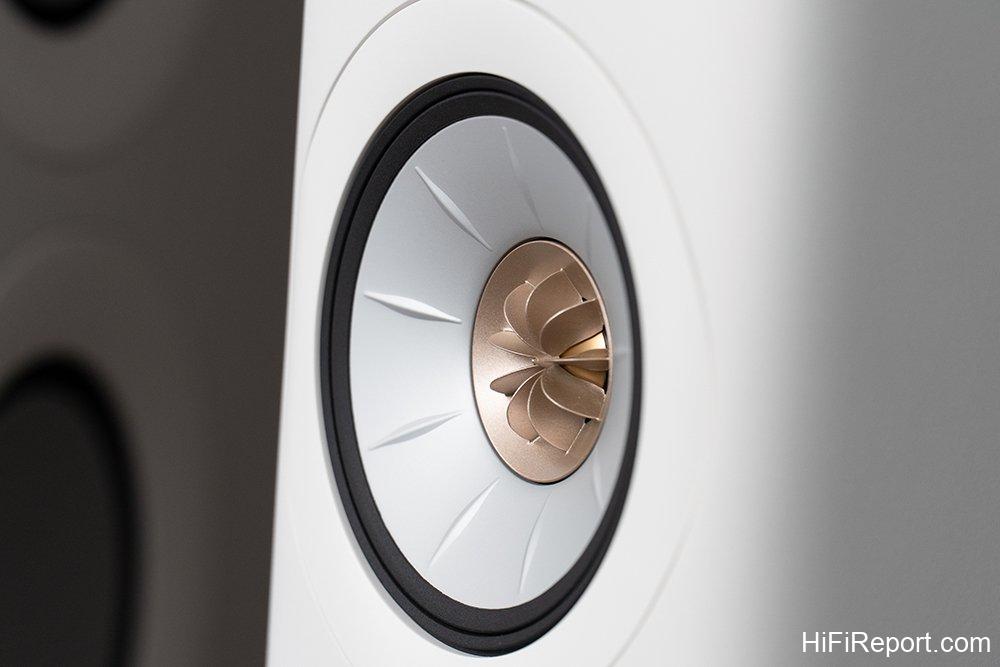
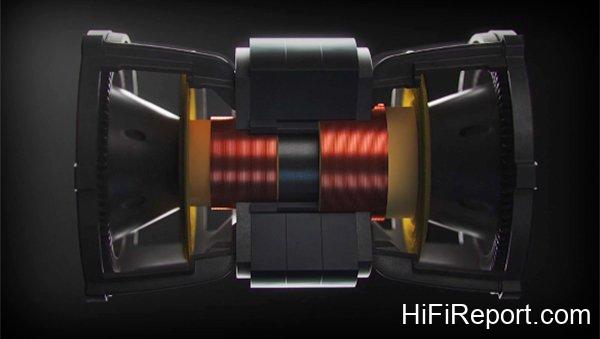
If you find the LS60’s $7,300 USD price tag steep, consider the Blade Two Meta, priced at approximately $31,600 USD, which utilizes virtually identical driver technology. The LS60’s Uni-Q coaxial driver is only one inch smaller, and the Uni-Core bass driver is also slightly smaller. Does the LS60 still seem expensive in comparison? If speaker drivers are the engine of sound, analogous to a car engine, then the LS60 and Blade Two Meta are akin to a 2.0-liter versus a 3.0-liter engine. Are larger drivers worth a fivefold price increase? It genuinely appears KEF has prioritized the LS60, incorporating their top-tier coaxial driver, push-pull Uni-Core woofers, and proprietary Single Apparent Source technology, elevating the LS60’s technological pedigree to rival million-dollar flagship systems.
1400 Watts of Powerful Amplification
Furthermore, comparing the LS60 to the Blade Two Meta extends beyond driver technology. The LS60 is a digital wireless active speaker system! Purchasing the Blade Two Meta necessitates separate source components and amplification. The LS60, however, integrates everything, and remarkably, costs roughly one-fifth the price of the Blade Two Meta. KEF seems to have shown significant favoritism towards the LS60.
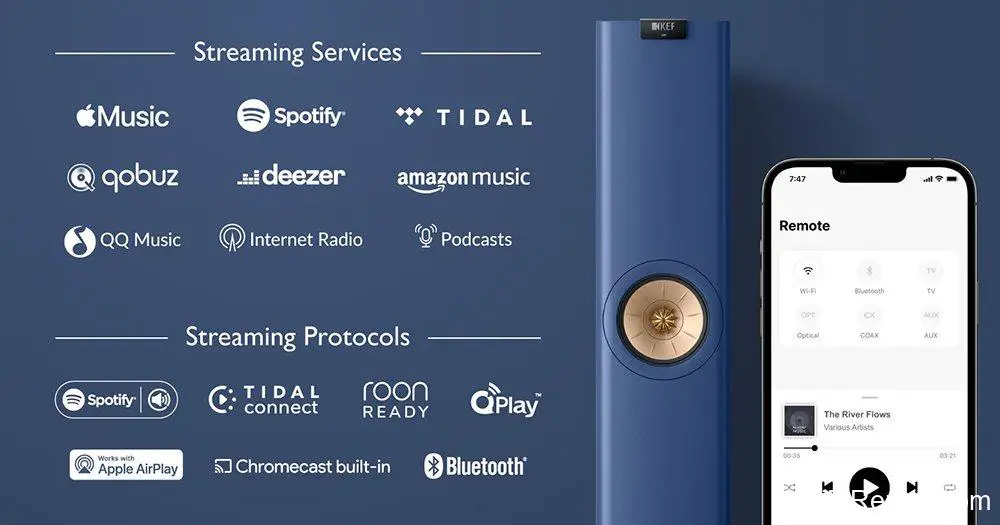
In terms of built-in amplification, a pair of LS60s boasts a total of 1400 watts, with independent amplification for high, mid, and low frequencies. The tweeter is driven by a 100-watt Class AB amplifier, while the midrange and bass are powered by Class D amplifiers, each at 100 watts and 500 watts respectively. This is essentially employing six monoblock power amplifiers to drive the Uni-Q and Uni-Core drivers.
(Image from KEF Official Website)
Digital DSP Crossover and High-End DAC Preamp
To manage these monoblock amplifiers, the LS60 requires significant processing power for its DSP electronic crossover, and also functions as a DAC, supporting both PCM and DSD formats, and MQA via network input. Crucially, to accommodate popular digital streaming services, the LS60 directly supports Spotify, Tidal, Amazon Music, Qobuz, Deezer, QQ Music, Internet Radio, and Podcasts. Wireless streaming protocols include AirPlay 2, Google Chromecast, Roon Ready, UPnP, and Bluetooth 4.2.
This extensive list underscores that the LS60 integrates not only DAC decoding, preamp functionality, and DSP digital crossover, but also a complete digital streaming player.
In essence, the LS60’s hardware encompasses a network streaming player, a high-end DAC preamp, digital electronic crossover, and six independent power amplifiers, driving a three-way Uni-Q coaxial driver and Uni-Core bass drivers.
(Image from KEF Official Website)
Digital EQ for Acoustic Space Adaptation
And there’s more: digital EQ, coupled with a bass management system, controlled via the KEF Connect App.
KEF has generously integrated this complex audio system within the LS60.
Purchasing separate components to replicate the LS60’s functionality would likely cost far more than ten times its price.
This is KEF’s arsenal to conquer the consumer ‘brain’. While the LS60’s price might initially seem substantial, the sheer complexity and integration it offers makes it an exceptional value proposition.
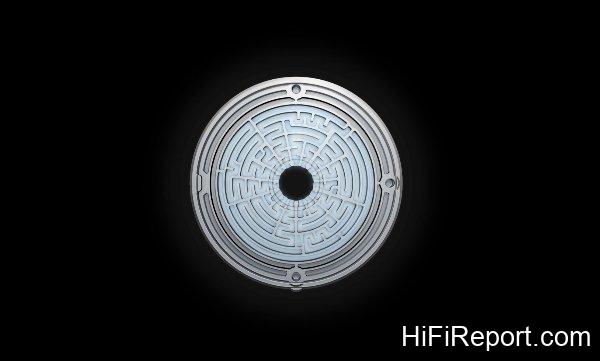
I’ve deliberately simplified the technical descriptions. Delving into the intricacies of Uni-Q, Uni-Core, Metamaterial Absorption, and Single Apparent Source technologies could easily become overwhelming. Suffice it to say, KEF has incorporated their latest research and development innovations into the LS60, providing comprehensive digital music input capabilities.
Soundbar Replacement and Beyond
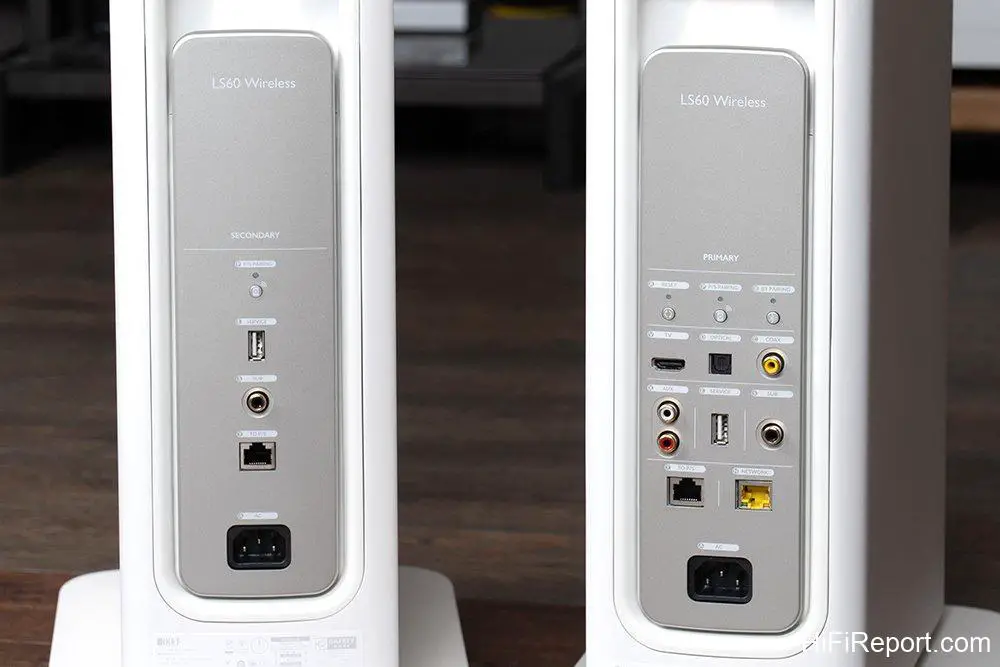
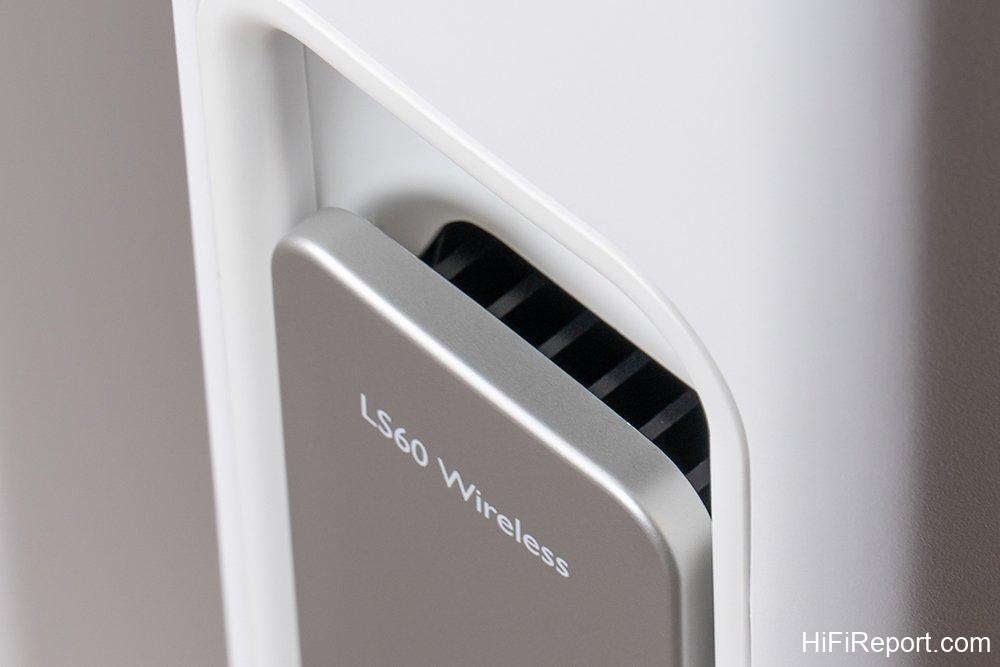
One more key technical advantage of the LS60: beyond Wi-Fi, optical, coaxial, analog RCA (for vinyl enthusiasts), and RJ45 network connections, it also features an HDMI eARC input. This enables seamless connection to TVs, ensuring audio-video synchronization without lip-sync issues.
In simpler terms: the LS60 can function as a Soundbar, but with sound quality far exceeding any existing Soundbar on the market.
The LS60 simultaneously targets the ‘brain’, ‘heart’, and ‘desire’. Integrating a sophisticated multi-way digital electronic crossover, a full-featured digital streamer, and a design by Michael Young, all controlled by the user-friendly KEF Connect App, it appeals to the rational mind with its value, the senses with its aesthetics, and the heart with its promise of musical enjoyment.
The LS60’s sonic performance is equally impressive, exceeding expectations for its price. Even with a similar budget of around $7,300 USD for traditional passive speakers, amplifier, and digital source, I doubt I could assemble a system with the LS60’s comprehensive performance. Furthermore, the LS60’s unique DSP equalization parameters offer exceptional acoustic space adaptation. Even placed close to walls, the LS60 can be tuned via KEF Connect to achieve balanced sound.
Speakers Disappearing Act
However, the powerful digital EQ also means the LS60’s sonic character is somewhat fluid and customizable.
I’ll discuss the LS60’s sound from both objective and subjective perspectives. Objectively, due to the Uni-Q coaxial driver and Uni-Core bass configuration, creating a near point-source radiation, the LS60 excels in soundstage and imaging accuracy. It effortlessly performs the “speakers disappearing act,” creating a transparent and expansive soundstage.
Subjectively, the LS60 offers significant sonic flexibility. KEF Connect’s digital EQ isn’t a traditional graphic EQ with frequency band sliders, but a user-friendly, intuitive system, offering “Basic” and “Expert” modes.
In “Basic” mode, the App prompts for room acoustics (absorbent, moderate, or lively) with helpful descriptions, and listening room size. The settings are simple and intuitive.
Even in “Expert” mode, the LS60’s EQ adjustments remain straightforward. It allows for +/- 3dB tweeter level adjustment, bass contouring (reduce, standard, extend), and left/right channel balance. If integrating a subwoofer, KEF Connect also allows for crossover frequency adjustment and supports multiple subwoofers, providing comprehensive bass management. KEF is indeed generous with the LS60’s features.
Bass: The Key Adjustment
KEF Connect’s primary focus for adjustment is the bass. If you favor bass-heavy electronic music and want to host a party, the LS60 can deliver club-like, booming bass. Simply increase the bass level in the app.
Listening to EggPlantEgg’s “Love You More Than I Thought,” the opening features a powerful bass drum. LS60 can control the depth and impact of this bass drum via KEF Connect. The question becomes, how much bass impact do you desire? Pushing the LS60’s bass to its maximum might become overly boomy, potentially overshadowing the subsequent funky guitar rhythms. But who dictates how EggPlantEgg should be enjoyed? Even pushed to nightclub levels, the Uni-Q coaxial driver maintains accurate phase coherence, preserving the meticulously crafted soundstage and imaging of the multi-track recording. The dual guitars remain distinctly positioned in the left and right channels, and vocalist Abin’s voice remains firmly centered. This is the brilliance of the Single Apparent Source design. With minimal attention to speaker placement, a precise and expansive soundstage is easily achieved. Regarding bass, KEF empowers you to tailor it – from deep and rich to light and airy.
Defining Your Own Sound
Initially, I listened to the LS60 with factory default settings, without any adjustments. The LS60 presented a full, rich bass, leaning towards a warmer, perhaps even slightly feminine sonic character. However, after experimenting with EQ, I realized the factory settings were somewhat conservative, prioritizing a smooth, warm tone, perhaps lacking some assertiveness. The EQ’s adjustability allows for creating “different personalities” for the LS60, tailoring the sound to various music genres.
For classical music, predominantly acoustic instruments, excessive bass is undesirable. Balance, naturalness, and transparency are key. I selected the “Classical” EQ preset, reducing bass slightly and maintaining standard midrange and treble levels. For rock music, inherently more energetic, a more exaggerated sound might be desired. I created a “Rock” EQ preset, slightly boosting bass and subtly enhancing midrange and treble, adding a “boost” to the LS60’s character. The “Jazz” EQ preset retained the factory bass setting, adding a touch of brightness to the midrange and treble.
Rest assured, KEF Connect’s EQ won’t distort the sound beyond recognition. It’s not a traditional graphic EQ. KEF’s adjustments are DSP-optimized, maintaining phase coherence while fine-tuning the balance across the frequency spectrum. The ideal sonic character ultimately depends on your musical taste.
Switching to my custom “Rock” mode and listening to Pink Floyd’s classic “Dark Side of the Moon,” the opening cash register sounds gradually build into a rhythmic foundation, almost like a cash register drum kit, with electric bass filling in the low frequencies, leading into David Gilmour’s psychedelic guitar. Multi-tracked guitars pan across the soundstage, tremolo effects enhancing the trippy atmosphere. The LS60, with its adjustable bass, delivered punchy, articulate drums, and bright, colorful midrange and treble, breathing fresh life into “Dark Side of the Moon.” Perhaps this is the joy of audio exploration.
Jazz: Subtler Bass
My “Rock” mode presented a more exaggerated, bass-heavy LS60. In contrast, the “Jazz” mode was more refined and open. Listening to Bill Evans Trio’s “Waltz For Debby,” “My Foolish Heart,” the double bass plucks were rounded and resonant, contrasting with the delicate, continuous brush strokes on the drums. Piano meandered languidly in between, with ambient sounds of clinking glasses and faint coughs, evoking a smoky jazz club atmosphere. The LS60 fulfilled my imagination of the recording venue. Piano soloed on the right, double bass on the left, nestled beside the drums. The jazz trio was effortlessly rendered, making me yearn for a glass of whiskey.
The LS60’s sonic character is truly shaped by your preferences. KEF Connect’s EQ is simple, fun, and unlikely to lead to sonic disasters. One setting, “Phase,” offers only “On” or “Off” options. KEF doesn’t elaborate on its function. To my ears, engaging “Phase” seemed to tighten imaging and sharpen instrument outlines. However, with older recordings, it could sound slightly harsh. Disabling “Phase” softened the imaging, sacrificing some detail but sounding more relaxed and natural. Ultimately, your preference prevails – experiment and discover your ideal LS60 settings.
Classical: Brighten the Mid-Highs
Having tuned presets for Rock and Jazz, naturally, a “Classical” mode is essential. My settings for this mode slightly reduced bass and subtly increased mid-high frequencies, adding a touch of brilliance and energy to the LS60.
Further refinement is possible – an EQ preset for orchestral music, another for chamber music. With app-based control and unlimited preset slots, explore diverse sonic landscapes for the LS60.
While tonal balance can be tailored, the LS60’s soundstaging prowess is consistently exceptional and easily achieved. Toe-in? Minimal, if any, is needed. The Single Apparent Source design truly shines, offering excellent sound dispersion, expansive soundstage, and precise imaging, effortlessly achieved.
Chamber Music EQ Preset
For chamber music, I opted for slightly reduced bass and slightly enhanced mid-high frequencies to accentuate the clarity and articulation. Listening to Dumay, Pires, and Wang Jian’s rendition of Brahms’ Piano Trio No. 1, the piano’s warm melody, the cello’s graceful dance, and the violin’s entrance, raising the musical texture’s brilliance, all interwoven beautifully. The cello’s richness and violin’s brightness interplayed, while the piano gracefully navigated between them. The LS60 precisely rendered the instruments’ positions – piano centered, cello right, violin left – with a rich, dense midrange creating warm harmonies. The slightly enhanced treble gave the violin better projection, cutting through the piano and cello’s harmonic density.
Driven by a three-way electronic crossover and 1400 watts of total power, the LS60 never felt underpowered. Its compact size belies its musical energy, making it capable of tackling even Mahler.
Mahler Shines
Bernstein’s Vienna Philharmonic recording of Mahler’s Symphony No. 5. The fifth movement opens like a brass and woodwind section showcase. The brass prelude evokes woodwind responses. French horn introduces the first sustained note, then a motif, followed by bassoon entry, oboe response, and French horn reiterating the theme, clarinet echoing. In German music, brass often symbolizes forests. The brass and woodwind interplay evokes forest sounds – birdsong and insects chirping. On the LS60, the spacious and accurate soundstage placed the warm French horn deep within, enveloping the listener, while bassoon, oboe, and clarinet timbres danced within the horn’s broad soundscape.
Presenting Mahler through audio is challenging due to the vast orchestral forces. The system needs to project sufficient energy to convey the orchestra’s scale. The fifth movement’s fugal sections, with layered voices, demand rich layering. This is where the LS60 excels. The coaxial driver’s imaging precision keeps brass, woodwind, and strings distinct and organized. As the fugue builds, steadily increasing musical energy, percussion enhances the grandeur, unveiling the “chorale theme’s” brilliance. When truly immersed, the “chorale theme” feels like a warm wave washing over you. Mahler, using maximum sonic impact, slows the tempo in the coda, making the “chorale theme” even more majestic, like opening heaven’s gates.
It’s been a while since I’ve written about Mahler with such “musicality,” but listening through the LS60, I was captivated by Bernstein’s tempo control throughout the 15-minute fifth movement. Mahler, a composer and Vienna’s leading conductor, meticulously indicated tempo markings. Bernstein seemed to dramatize these, amplifying the music’s emotional impact. The LS60’s accurate, warm, and full-bodied sound captured Mahler’s scale and breadth, and the extreme dynamic contrasts conveyed the emotional intensity, drawing me into the music, rather than critically assessing the LS60.
Expandability with Preamps
Some audiophiles might argue that all-in-one systems like the LS60 leave no room for “tweaking.”
For basic music listening, the LS60 is indeed comprehensive, even adding HDMI eARC for enhanced video sound. However, for those seeking further sonic exploration, the LS60 offers analog inputs, allowing preamp integration to alter its sonic character.
My advanced setup involved adding an EAR 868P tube preamp, injecting tube warmth, and a Linn LP12 Klimax turntable for authentic vinyl playback.
Listening to Mutter, Ma, Barenboim, and the West-Eastern Divan Orchestra performing Beethoven’s Triple Concerto, the third movement’s rondo, starting with the cello’s theme, violin’s response, and piano’s entrance, initiating a three-way instrumental dialogue. With the LP12 Klimax and 868P in the chain, the LS60’s sonic density increased, midrange became more emotionally engaging, and vinyl’s smooth texture was beautiful.
I then compared this to Tidal streaming directly into the LS60, bypassing the 868P. The sound quality remained excellent, but with a slight difference. The LP12 Klimax offered a smoother, more flowing sound, while Tidal revealed finer spatial details and ambient cues, like subtle stage floor noises. Both were excellent, but the LP12 Klimax and 868P added a more visceral, bouncy quality, creating a richer atmosphere, whereas Tidal was more analytical and transparent, with a leaner atmosphere.
So, there’s still room for audiophile experimentation!
Digital Wireless Game Changer
The LS60’s arrival heralds a new direction for digital wireless active speakers. It’s undeniably a game-changer. Future digital wireless active speakers will likely integrate streaming and HDMI eARC, evolving into integrated audio-visual hubs. The LS60’s sonic performance, balancing audiophile fidelity and musicality, coupled with KEF Connect’s powerful EQ, provides exceptional room acoustic adaptability. Its appeal to the ‘brain’ (global pricing), ‘heart’ (musical enjoyment), and ‘desire’ (design) is masterful.
Undoubtedly, the LS60 sets a new benchmark in its price range, offering comprehensive features and sound quality rivaling far more expensive traditional systems. I guarantee that with the same budget, a traditional component system wouldn’t outperform the LS60. Reaching its sonic capabilities might require systems costing hundreds of thousands of dollars.
For those seeking simple musical enjoyment without delving into complex audio system building, the LS60 is the optimal choice for exceptional sound within a reasonable budget.
Specifications
* **Model:** KEF LS60 Wireless
* **Type:** Coaxial Driver Floor-standing Wireless Speaker
* **Drivers:** KEF 12th Generation 4-inch Uni-Q Coaxial Mid-High Driver × 1, 5.25-inch Uni-Core Bass Driver × 4
* **Amplifier Power:** Bass 500W (Class D), Midrange 100W (Class D), Tweeter 100W (Class AB)
* **Frequency Response:** 26 Hz – 36 kHz
* **Maximum Supported Sample Rate:** 24 bit / 384 kHz, MQA, DSD
* **Wireless Platform:** W2 Wireless Platform
* **Streaming Protocols:** AirPlay 2, Google Chromecast, Roon Ready, UPnP Compatible, Bluetooth 4.2
* **Streaming Services:** Spotify, Tidal, Amazon Music, Qobuz, Deezer, QQ Music, Internet Radio, Podcast
* **Inputs:** HDMI eARC, Optical, Coaxial, Analog RCA, USB Type A (for service), RJ45 Ethernet (Network), RJ45 Ethernet (Inter-speaker connection)
* **Outputs:** RCA Subwoofer Output
* **Dimensions (with plinth):** 1090 × 212 × 394 mm (H×W×D)
* **Weight:** 64.2 kg