
KEF Q Concerto Meta Review
It’s been a while, KEF! After many years without listening to a KEF speaker, I had the chance to audition the brand new Q Concerto Meta for 2024. Even at the entry level, the Q Concerto Meta delivers transparency and vitality in precise music reproduction, coupled with ample musical energy. For a speaker priced around $1,560 USD, it might just be the most exceptional value currently available.
2024 Q Series Overhaul
This Q Concerto Meta arrived at the editorial office towards the end of the year, and I was incredibly excited to hear it. The Q Series is considered KEF’s entry-level range, known for its approachable pricing. However, the Q Concerto Meta’s sonic performance completely surpassed my expectations – it is simply outstanding.
The Q Concerto Meta features a coaxial driver combined with a woofer, making it a true three-way design. Although it’s a bookshelf speaker, the cabinet volume is relatively large, suggesting the potential for musical energy comparable to floorstanding speakers. Given its reference price of $1,560 USD, it feels like incredible value for money.
Q Series Launch Event
At the International Audio Show in December 2024, KEF partnered with the show organizers to host a grand launch event for the new Q Series, introducing eight speakers simultaneously. The lineup was truly impressive.
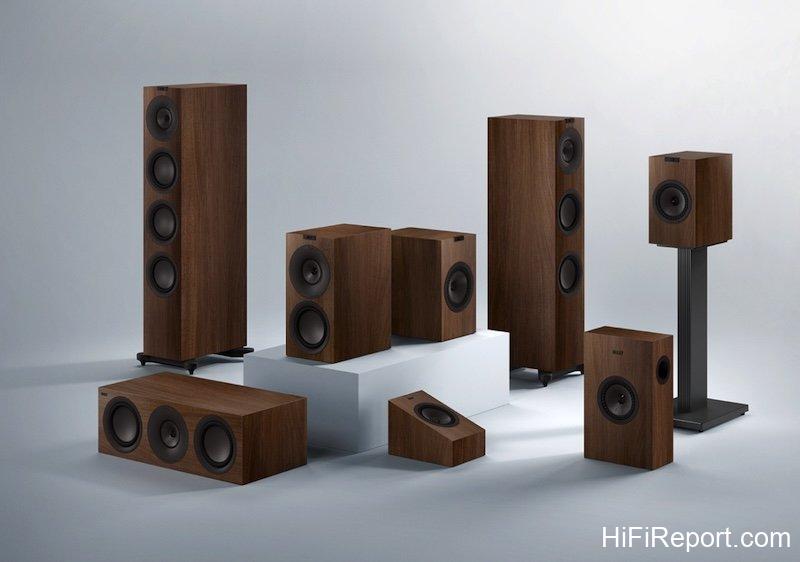
The new Q Series starts with the smallest Q1 Meta, joined by the Q2 Meta and Q Concerto Meta, totaling three bookshelf models. There are two floorstanders, the Q7 and Q11, plus the Q4 Meta wall-mount speaker, Q6 Meta center channel, and Q8 Meta Dolby Atmos surround speaker. Even as a static display, seeing the entire range lined up was quite a spectacle.
KEF’s Proactive Global Marketing
The launch event for the new Q Series was hosted by KEF’s Vice President, Joseph Leung. Joseph recounted KEF’s history, discussed the evolution of the Q Series, and introduced KEF’s global “Touch Point” initiative aimed at bringing KEF closer to consumers. Through actual music listening experiences, KEF demonstrated its concrete actions to enhance its brand value worldwide.
It seems KEF is poised for significant market growth. The company’s serious commitment to marketing, combined with the launch of the new line, should lead to robust sales growth in 2025.
Exceptional Value Pricing
During the product launch event, the Q Concerto Meta was the speaker actually playing music, while other new Q Series models were on static display. In terms of pricing, the Q4 particularly caught my attention with a reference price of just $550 USD. It’s wall-mountable, acts as an LCR (Left, Center, Right), meaning it can be used for two-channel or multi-channel systems. This price point is truly a boon for audio newcomers.
However, if we talk about the highest C/P (cost-performance) ratio, it has to be the Q Concerto Meta. KEF chose it as the demo speaker at their launch, so after hearing it at the show, I requested the Q Concerto Meta be sent to the editorial office immediately. I couldn’t wait to see what it could do.
First Three-Way Bookshelf
There were a few reasons I chose to listen to the Q Concerto Meta first.
Firstly, the Q Concerto Meta is the first three-way bookshelf speaker KEF has ever produced. The goal is to pack more powerful musical energy into a limited cabinet size, allowing the bookshelf speaker to rival floorstanding models. Secondly, being named Q Concerto Meta pays homage to the Concerto bookshelf speaker launched in 1969, holding historical significance for KEF. Thirdly, the Q Concerto Meta’s price is exactly the “median” of the new Q Series range. If it performs well, the Q Concerto Meta can serve as a standard for selection, with budget adjustments depending on low-frequency requirements. For larger listening spaces, you might spend more for the floorstanding Q7 or Q11. For smaller rooms, you can opt for the smaller Q1, Q3, or Q4.
Design Continuity
If you look at the Q Concerto Meta’s appearance, there isn’t much change from the previous generation. This reflects KEF’s commitment to industrial design heritage. Take their high-end Blade speaker, for example; even with the evolution to Blade Meta, the exterior looks unchanged. The Blade-like design has a modern feel that remains appealing for decades.
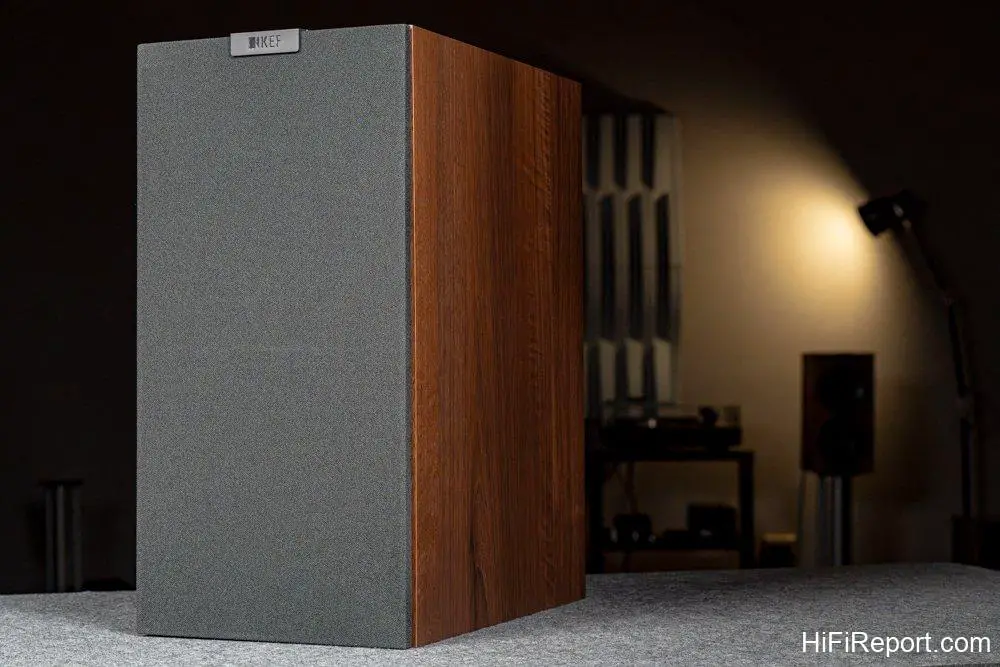
The new Q Series, however, retains the traditional speaker cabinet shape – a straightforward, rectangular box with beautiful wood finishes, offering the texture of “sounding furniture.”
Nevertheless, the Q Concerto Meta is essentially a brand new product introduction. Previous Q Series iterations didn’t feature a true three-way bookshelf speaker; this newest generation introduces the Q Concerto Meta. At a price point around $1,560 USD, you get a genuine three-way speaker, making the Q Concerto Meta potentially the speaker with the highest C/P ratio in the entire series.
MAT Technology from Flagship
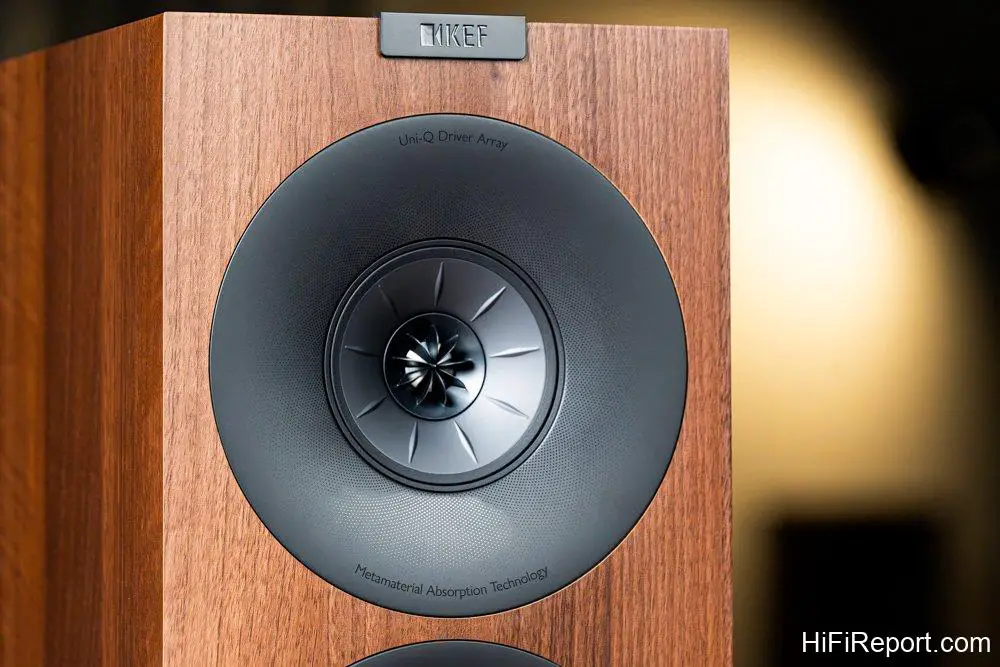
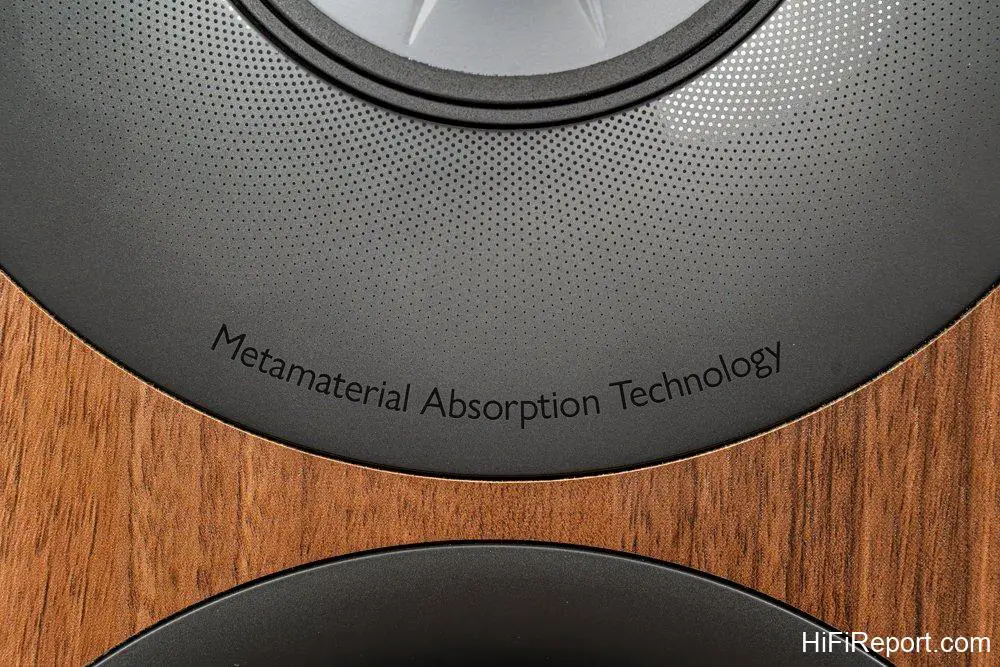
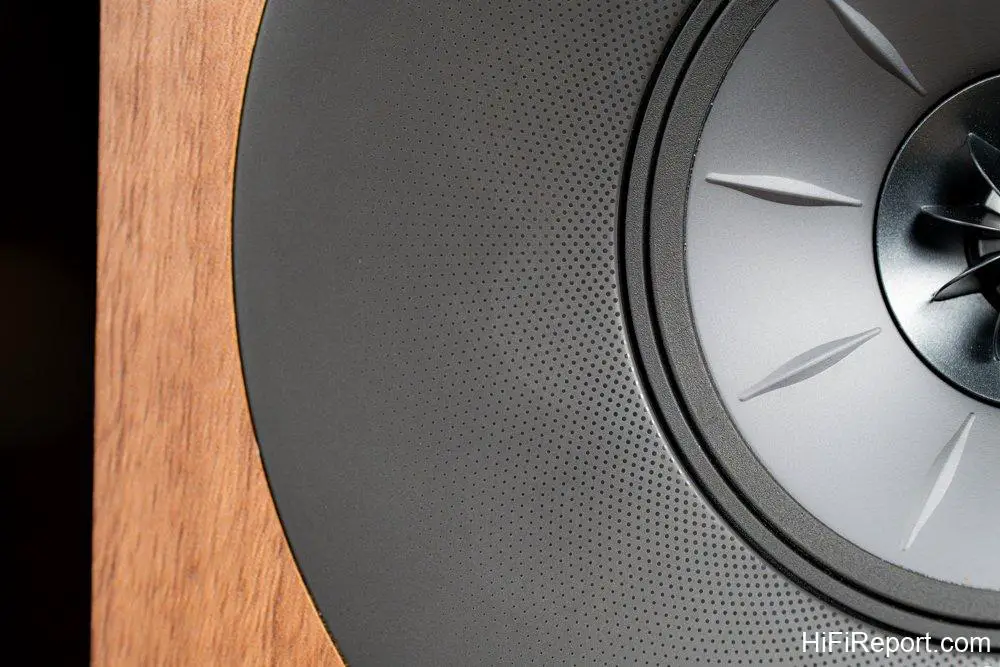
The most significant advancement in the new Q Series for 2024 is KEF’s trickle-down of MAT technology from their high-end products. Every new Q Series model number now includes “Meta” after the number, signifying Metamaterial Absorption Technology (MAT). MAT is KEF’s exclusive patented technology and the most crucial technical upgrade highlight of the new Q Series.

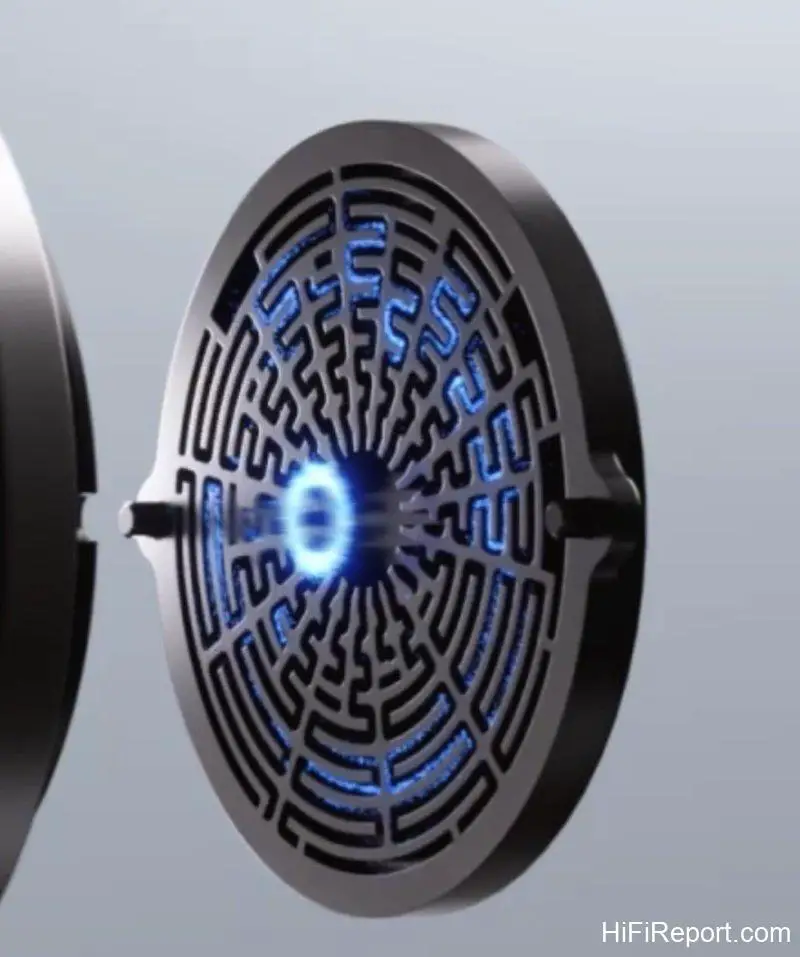
What is Metamaterial? Its basic characteristic is high damping. When formed into a flat circular disc with a labyrinthine channel pattern on the surface, this becomes the core of MAT technology. The labyrinth combined with the high-damping material works to absorb backwaves from the driver, eliminating backwave interference. This allows for the reproduction of a transparent soundstage and precise imaging.
What is backwave interference? When a driver moves like a piston, it oscillates back and forth. Moving forward pushes sound waves forward, and moving backward simultaneously generates sound waves. If the energy from the rearward movement bounces back and overlaps with the forward-moving sound waves, it can cause image blurring and a lack of transparency in the soundstage. Therefore, eliminating backwaves is a critical aspect of speaker design.
Since it’s a critical issue, is KEF the only company that knows how to deal with it? Of course not! Almost all speakers have designs to eliminate backwaves. For instance, soft foam might be placed behind the tweeter to absorb backwaves, while some manufacturers enclose the entire back of the tweeter to reduce interference.
Perhaps the most classic design for eliminating backwave interference is B&W’s Nautilus. Behind each driver, there’s a long tube, wider at the front and tapering towards the back. The constricted tubular channel causes backwaves to repeatedly reflect within the tube walls, converting the energy into heat and dissipating it.

MAT Backwave Absorption
So, what is the principle behind KEF’s MAT technology? If you look at the labyrinth pattern on the surface of the Metamaterial disc, when the driver generates a backwave, the sound wave energy travels through the labyrinth, reflecting repeatedly. The Metamaterial’s high-damping properties convert the backwave into heat, causing it to disappear.
On the surface, the technology seems similar, a “three kingdoms unified” approach, isn’t it? Yes, the goal is indeed to eliminate backwaves. But what makes KEF’s approach superior? MAT can eliminate 99% of backwave energy, while other brands can only eliminate about 60%.
Hmm? Who are these “other brands”? Those in the know can probably guess. If not, looking at the long tube in the video might give you a clue about whom I’m referring to. Let’s just say I won’t write it down explicitly!
12th Gen Uni-Q Driver
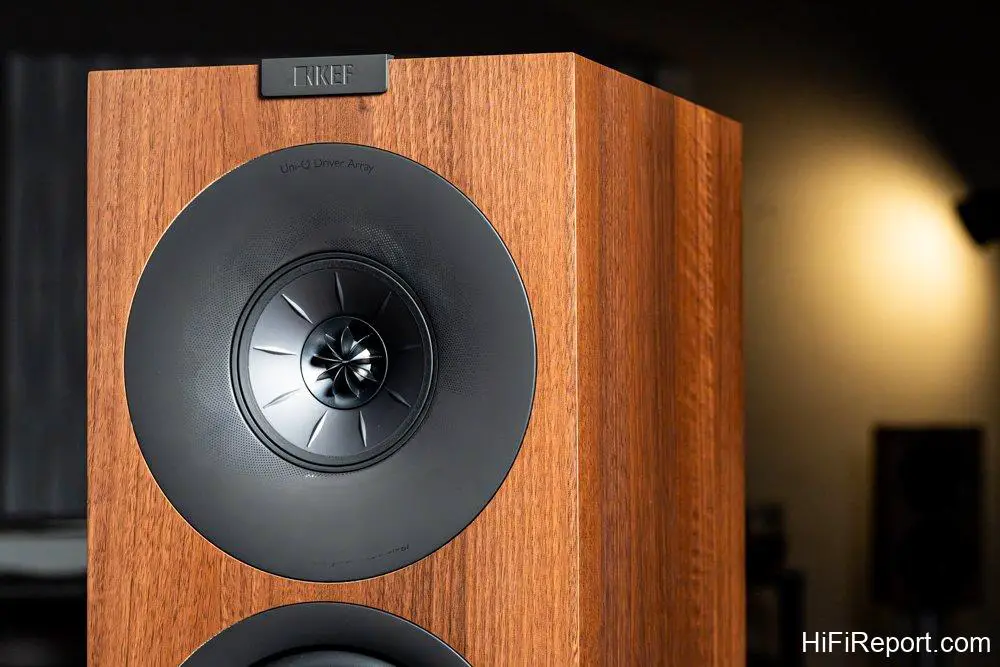
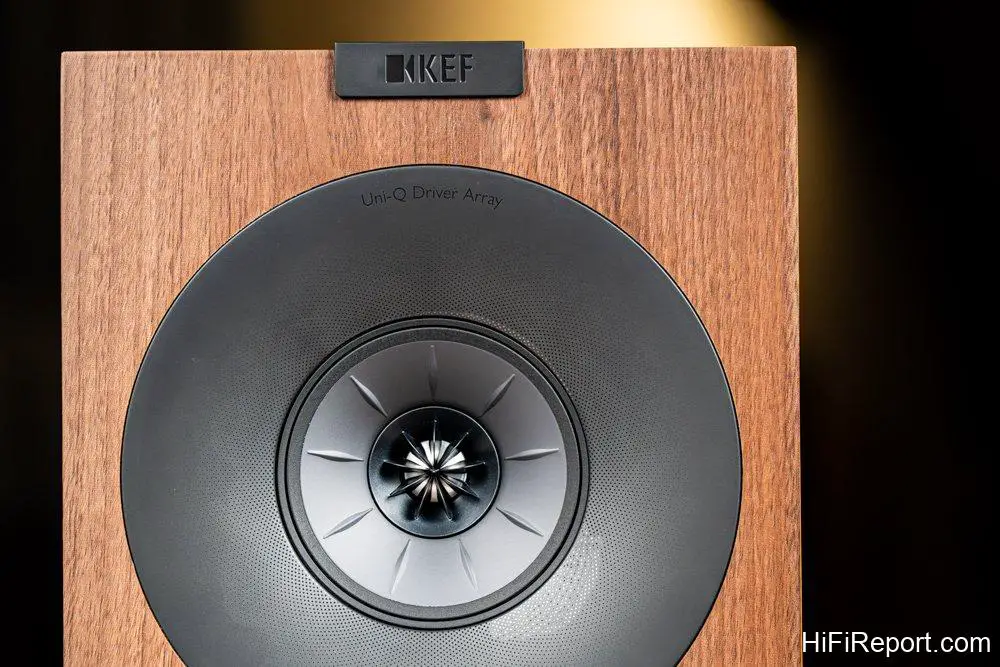
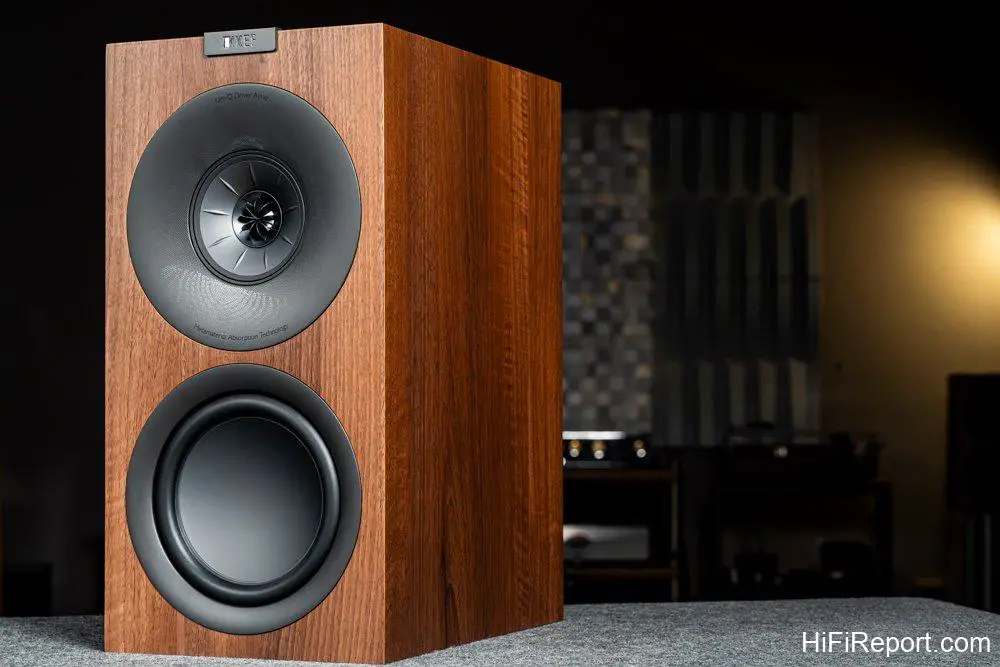
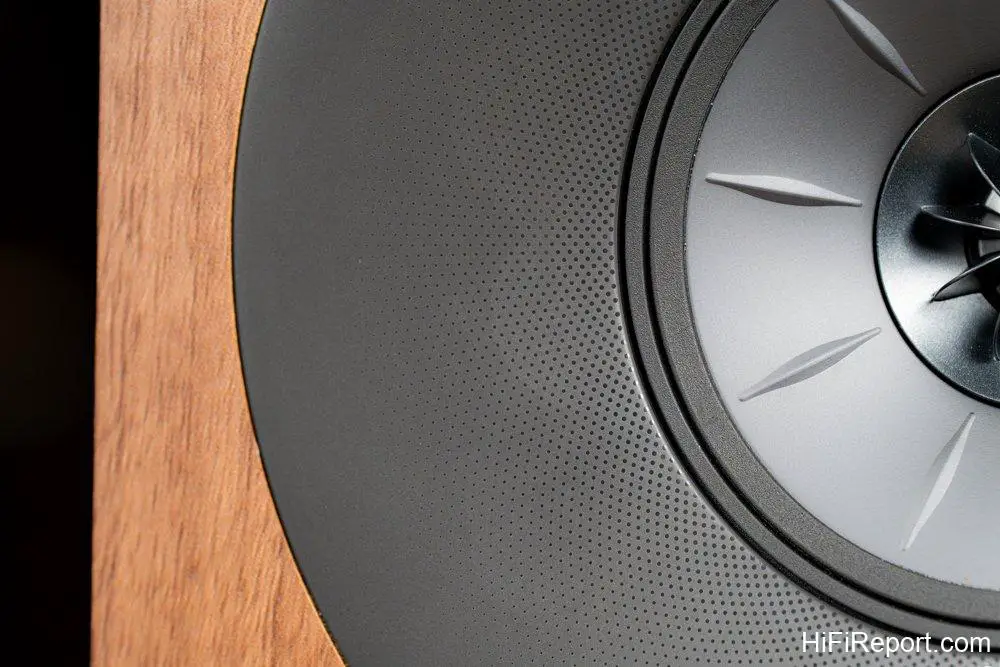
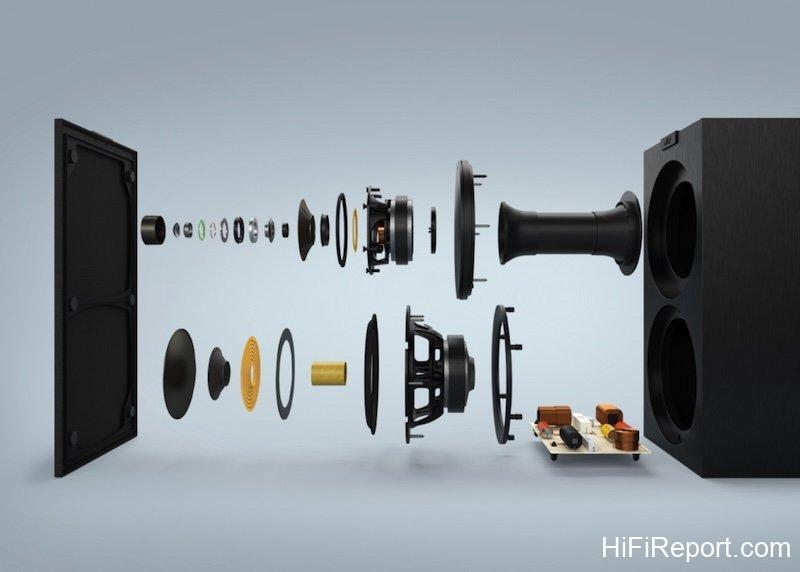
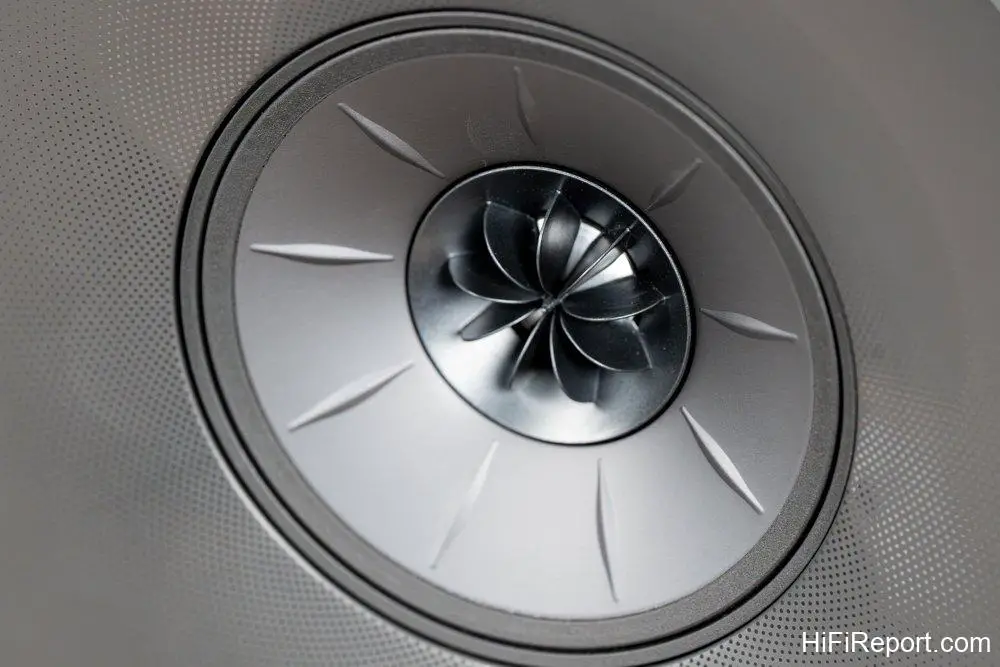
Turning back to the Q Concerto Meta, it uses the 12th generation Uni-Q coaxial mid-high frequency driver with Metamaterial behind it, forming the core of the mid-high section. The tweeter is a 0.75-inch aluminum dome, with a petal-shaped sound wave diffuser in front. The midrange is a 4-inch aluminum cone, paired below with a 6.5-inch aluminum cone woofer, forming a standard three-way design.
Looking at the Uni-Q coaxial driver, Shadow Flare is one of the important technologies in the 12th generation. Although coaxial designs are theoretically the best point sources, the tweeter being recessed within the midrange driver can potentially cause diffraction. Shadow Flare, combined with the shallow waveguide in front of the tweeter, expands the tweeter’s dispersion and integrates it seamlessly with the midrange.
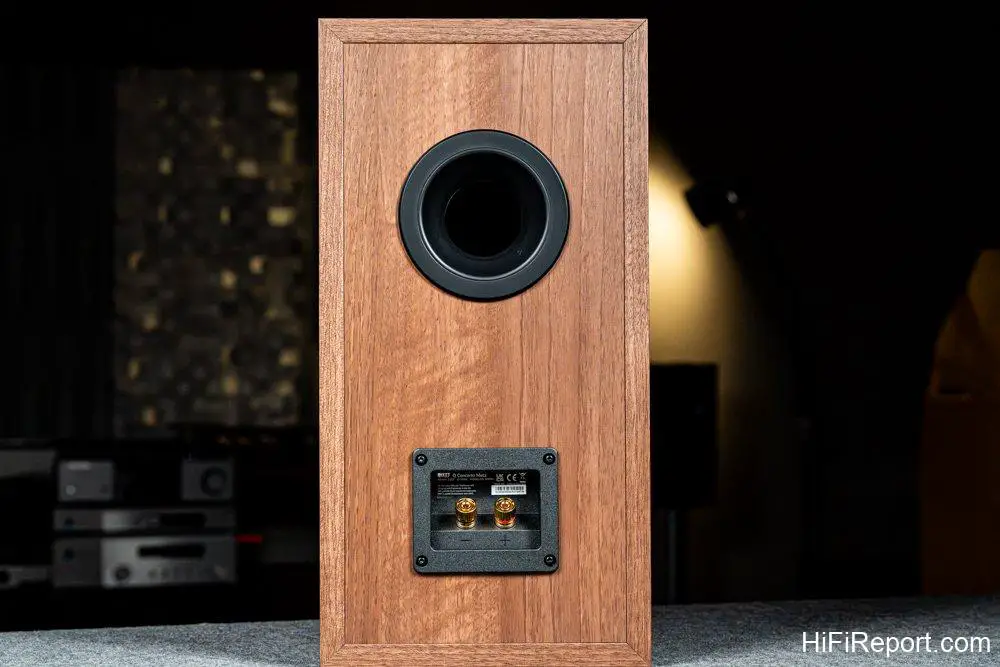
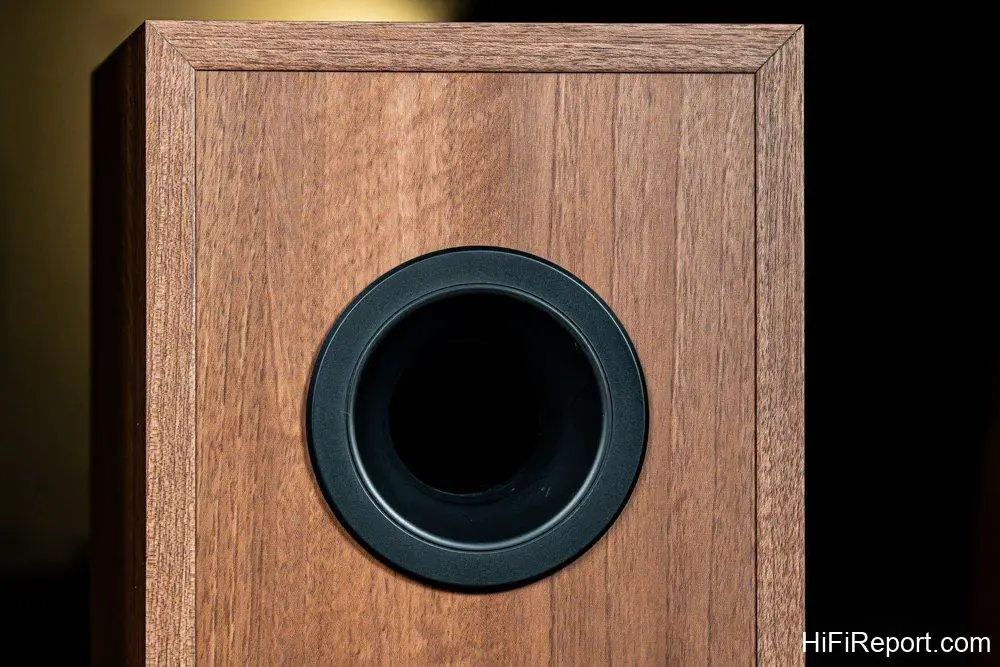
Another technological advancement is the CFD (Computational Fluid Dynamics) designed bass reflex port. The molded, curved port has a smooth surface, and its curvature angle is likely a key technical detail.
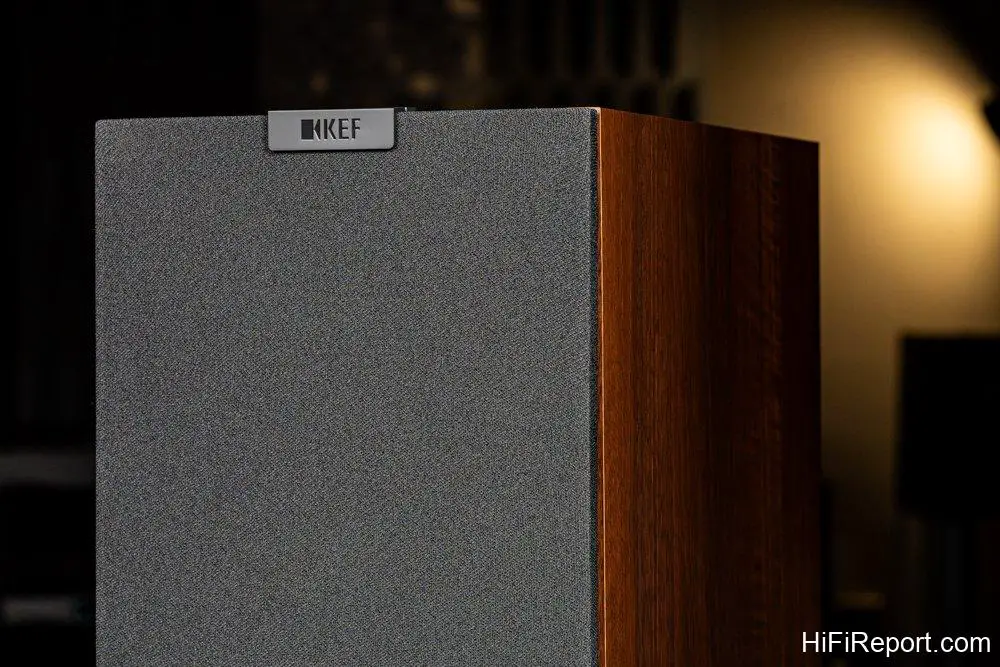
When I unboxed the Q Concerto Meta at the editorial office, considering its $1,560 USD price tag, I was truly impressed by the value. At this price, finding a three-way speaker is quite challenging, especially one with so many practical design features. For instance, the magnetic grilles are very convenient to remove. The matte wood finish blends easily and subtly into home environments. But these are just superficial benefits. The real question should be: Is the Q Concerto Meta’s sound worth the value?
85 dB Efficiency, Needs Power
For the audition, I used two amplifier setups. One was the editorial office’s own EAR 868P preamplifier and 509 MK II power amplifier, a full tube setup. The other was a Cambridge EXA100 integrated amplifier. Both amplifiers provide around 100 watts of power, which is sufficient to drive the 85 dB efficient Q Concerto Meta and extract its full potential.
Simply put, to get the best out of the Q Concerto Meta, amplifier power is key. Making a bookshelf speaker three-way inevitably sacrifices some efficiency. Give it enough power, and the Q Concerto Meta will produce a presence comparable to a floorstanding speaker.
In terms of sound quality, the EAR preamp and power amp combination was undoubtedly the best. When driving the Q Concerto Meta with the 509 MK II, I even secretly added a pair of REL Carbon Special subwoofers that had just arrived at the office. It was incredible! The Q Concerto Meta plus the subwoofers filled out the extreme low-frequency extension. Listening in the basement, people upstairs in the office thought I was listening to Wilson Audio Alexia V. That tells you how capable the Q Concerto Meta is.
However, the combined price of the EAR components is completely mismatched with the Q Concerto Meta. So, for a more “practical” pairing, the Cambridge EXA100 is a good choice. As a 100-watt solid-state amp, it delivers powerful bass impact, though without the elastic richness of the tube amps. Nevertheless, the EXA100’s mid-high frequency transparency is excellent, allowing the Q Concerto Meta to shine and reproduce an expansive and focused 3D soundstage.
Killer Speaker Around $1,560 USD
Based on sound quality versus price, the Q Concerto Meta is absolutely a killer speaker at the $1,560 USD level! With its three-way design and slightly larger cabinet, as long as your amplifier can feed the Q Concerto Meta enough power, you will truly get the impression of listening to a floorstanding speaker.
Let’s go for something heavy! Listening to AC/DC’s rock classic “Back In Black,” the distorted electric guitar plays the rhythm with a pick, power chords following the drums – the classic AC/DC riff. The Q Concerto Meta plays it with incredible punch. Every time I hear this rock anthem, I picture the scenes from the “Iron Man” movie, just like “Shoot to Thrill.” On the Q Concerto Meta, the intensity of the electric guitar’s overdrive and its interaction with the drums are excellent. The bass foundation has superb thickness and impact, with the kick drum providing full, rounded impact while maintaining controlled elasticity. It’s a very well-controlled bass performance.
Exquisite Soundstage Layering
Switching to something softer, I chose John Mayer’s “Continuum” album and listened to “Slow Dancing In The Burning Room.” The electric guitar’s gentle pickup at the start introduces the rhythm of the electric bass and drums, followed by the arpeggiated guitar playing with a second guitar adding high-register double stops. The Q Concerto Meta clearly separates and beautifully layers each instrument track added during the recording. John Mayer’s voice is focused in the center. During the second verse, an acoustic guitar chord progression is added in the background. These layers are, of course, the result of careful studio mixing, and the Q Concerto Meta’s ability to reproduce them accurately enhances the listening pleasure.
For “Slow Dancing In The Burning Room,” listening through the EAR tube amps brought a more engaging character compared to the EXN100. After all, John Mayer used many classic vintage guitar amplifiers during recording, and listening with tube amps felt more authentic. However, for budget-conscious pairings, the EXN100 offers relatively better value.
Studio vs. Live Recordings
Listening to the same song from “Where The Light Is: John Mayer Live In Los Angeles,” the difference between live and studio recordings is very apparent. Since it’s a live concert recording, there must be two people on stage playing the two stacked electric guitars. The intro with the electric guitar, electric bass, and drums can be cleaner in a studio recording. When John Mayer starts singing, the Q Concerto Meta brings out the spatial sense of the live recording, painting a vivid picture of the concert stage.
The new generation Q Series with MAT technology excels at portraying a 3D soundstage. Its transparency and expansiveness significantly exceed many speakers in the same price range, and the accuracy is also excellent. With studio recordings, you hear the intimacy of the recording. With live recordings, the expanse of the stage is brought to life.
Mid-High Detail for Vocals
Let’s listen to a female vocalist, Eva Cassidy’s “Songbird 20,” specifically “Fields of Gold.” Behind Eva Cassidy’s humming is the arpeggiated acoustic guitar. The Q Concerto Meta clearly opens up the 3D soundstage, with the voice focused in the center and the guitar chords and decorative sounds subtly placed behind.
Eva Cassidy’s singing is full of genuine emotion. The subtle vibrato at the end of her phrases is rendered with delicate emotional layering by the Q Concerto Meta. I can hardly believe that this pair of Q Concerto Meta costs only $1,560 USD. It truly surpasses many competitors, especially another British brand that KEF directly targets.
Controlled Bass Punch
The ability to render a 3D soundstage and instrument placement is the Q Concerto Meta’s most impressive performance upgrade. With appropriate speaker positioning, you can find the distance that best consolidates the image, allowing the 3D soundstage to emerge naturally and making the speakers disappear into the room. Furthermore, the Q Concerto Meta’s bass energy is not just ample; it’s well-controlled.
For instance, listening to “Friday Night In San Francisco,” the clear positioning of the three guitars on stage, combined with the lively and energetic mid-bass, makes the competitive interaction between the three guitars even more thrilling to listen to. The guitars’ rapid runs are rendered with percussive clarity, each note bursting forth. The Q Concerto Meta truly makes the guitars sound vibrant and dynamic.
Excellent Frequency Extension
To test the Q Concerto Meta’s bass, I switched to Jacques Loussier Trio’s “Jazz Seasons.” The opening of “Spring,” First Movement, features the lively bouncing of the jazz drum skins, paired with the ‘gut’ sound of the double bass, and the piano providing chords above, along with incessant twinkling sounds as decoration. This demonstrates the Q Concerto Meta’s ability to extend at both the high and low ends, far exceeding what I would expect from speakers of this size. While I initially chose “Jazz Seasons” to evaluate the bass, the delicate high-frequency sounds embellishing the jazz drumming instead revealed the captivating musical charm of the Q Concerto Meta’s mid-high detail.
Must-Hear Under $3,120 USD
Evolved to the 12th generation Uni-Q, enhanced with Metamaterial, the new Q Series is truly remarkable – like seeing someone in a new light after three days’ absence. Please note, I’m referring to the 2024 Q Series with MAT technology. After listening to the Q Concerto Meta, I believe KEF’s entry-level speakers are currently among the best value available. At $1,560 USD, the Q Concerto Meta offers a genuine three-way crossover design, virtually unparalleled by rivals.
If your budget for speakers is under $3,120 USD, you absolutely must prioritize auditioning the new KEF Q Series!
Specifications
* KEF Q Concerto Meta
* Type: 3-way coaxial driver bass reflex bookshelf speaker
* Drivers: Uni-Q coaxial driver (0.75-inch aluminum dome tweeter with MAT, 4-inch aluminum cone midrange) × 1, 6.5-inch aluminum cone woofer x 1
* Frequency Response: 40 Hz – 20 kHz (-6 dB)
* Crossover Frequencies: 2.9 kHz, 430 Hz
* Recommended Amplifier Power: 15 – 180 Watts
* Sensitivity: 85 dB
* Nominal Impedance: 4 Ohms (minimum 3.2 Ohms)
* Dimensions: 410 × 210 × 315 mm (H×W×D)
* Weight: 9.5 kg