
Kharma Enigma Veyron 2D Review
My initial encounter with the Kharma Enigma Veyron 2 (EV-2D) was at the 2016 Munich High End show, where it made its debut. My first impression was of an incredibly refined and beautiful loudspeaker, immediately captivating with its three eye-catching diamond drivers (hence the “D” in the model name).
My second interaction with the EV-2D was in 2017 at a small art museum near Tamsui Hongshulin station, where the distributor, Wen Hung Audio, hosted three music appreciation sessions using the EV-2D paired with Boulder amplifiers and other high-end gear. As the main speaker for these events, I became quite familiar with the EV-2D.
Even in that vast space, the EV-2D produced immense sonic energy, filling the room effortlessly and remaining powerful and robust for the audience of over a hundred people.
The Blame for Bad Sound
Following those events, I encountered the EV-2D on other occasions, including the 2018 Kaohsiung Audio Show. However, my most serious listening session took place recently, on March 6, 2023, in Wen Hung Audio’s largest listening room. This dedicated audition allowed me to form a comprehensive understanding of the EV-2D’s overall performance and truly witness its capabilities.
Audiophiles often hear the sentiment: “This multi-million dollar audio system is utterly worthless; it sounds dreadful.” Such statements are honest from the perspective of the listener, who genuinely hears unpleasant or overpriced sound. However, a wiser individual understands that poor sound quality is often a consequence of severe room acoustics issues or inadequate setup and tuning. Expensive audio equipment itself is largely innocent, frequently misunderstood and unfairly judged.
Unfortunately, few audiophiles have the opportunity to experience a properly demonstrated high-end system, leading to the misconception that expensive gear is unjustifiably priced and only for “brand tax” payers. I believe that anyone holding this view would have their world of sound opened up by hearing the EV-2D’s stunning performance in Wen Hung’s large listening room, potentially changing their ingrained misconceptions forever.
Three Diamond Drivers Per Side
The EV-2D sits as the second-highest model in Kharma’s flagship Enigma Veyron series. The top-tier Veyron 1 boasts eight diamond drivers per speaker, likely the most diamond drivers found in any loudspeaker currently available, although I haven’t personally seen the Veyron 1 in Taiwan. The Veyron 4 and Veyron 5 models have been available in Taiwan for quite some time, but the Veyron 3 remains unseen, not even appearing on the official website. What could be the reason?
I inquired with Wen Hung Audio, and they were also unsure. Could the number 3 have an unfavorable connotation in Dutch culture? Below the Enigma Veyron series are the Exquisite and Elegance series, easily identifiable by their appearance and the grade of drivers used. For instance, the Exquisite series employs Kharma’s proprietary Omega 7 mid-range drivers, while the Veyron series uses the higher-grade Omega F Driver.
Similarly, the Exquisite series features Nomex-Kevlar bass drivers, whereas the Veyron line again utilizes the top-tier Omega F Driver for bass.
What is the F Driver?
So, what exactly is the Omega F Driver? The ‘F’ stands for Foucault, referring to Leon Foucault (1819-1868), a French physicist renowned for inventing a device demonstrating the Earth’s rotation. He also measured the speed of light and discovered eddy currents. What are eddy currents?
Foucault discovered that when a moving magnetic field interacts with a metal conductor, or when a moving metal conductor intersects a magnetic field perpendicularly, electromagnetic induction occurs, generating circulating currents within the conductor. These circulating currents are known as eddy currents. However, in an ideal magnetic field of uniform intensity, eddy currents would not arise.
The faster the magnetic field changes, the greater the induced electromotive force and the stronger the eddy currents. Eddy currents cause the conductor to heat up and create resistance to motion.
Considering this, does it bring to mind the situation within a loudspeaker driver’s voice coil and the magnetic field generated by its magnet? Exactly. According to Leon Foucault’s discovery, eddy currents are produced when a loudspeaker driver moves. This is why “Faraday rings” made of copper or aluminum are often placed within the driver’s magnet assembly to mitigate eddy currents.
Eliminating Eddy Currents
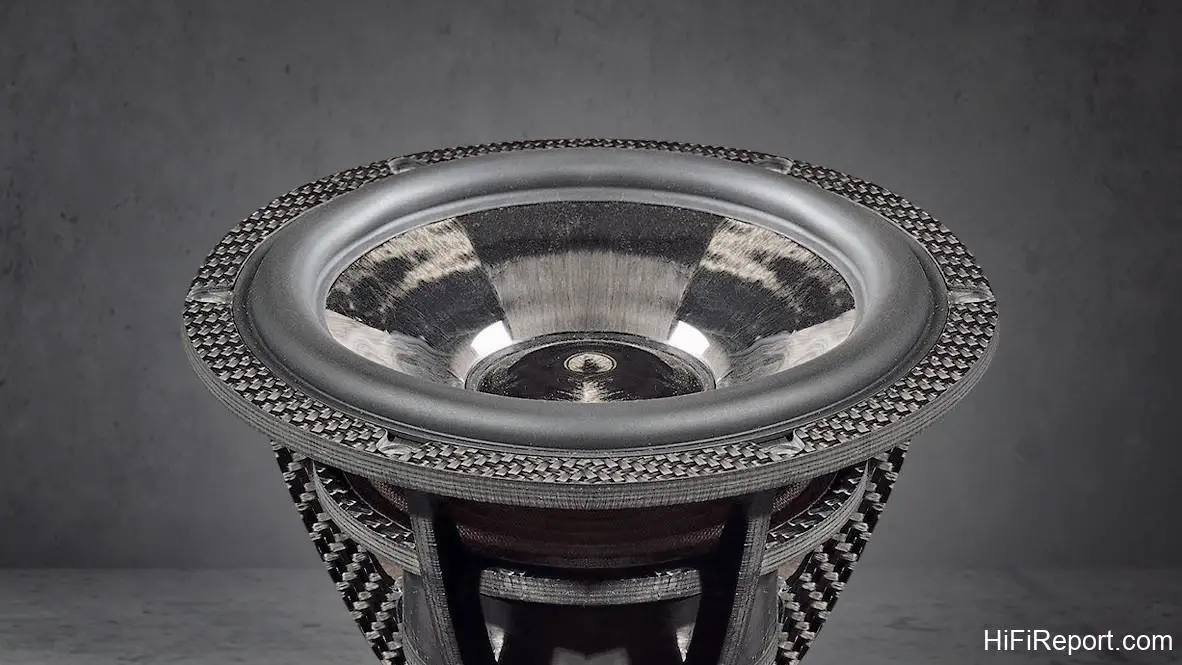
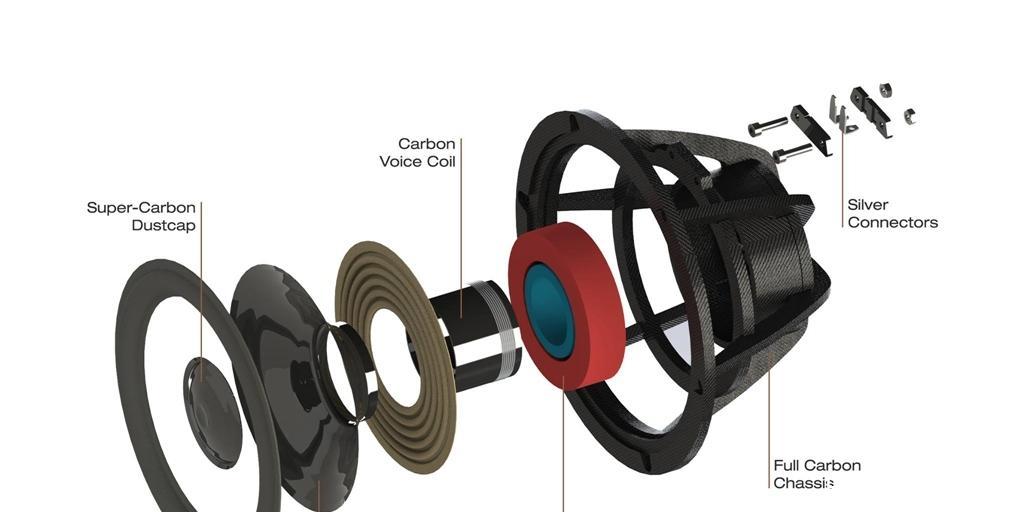
However, Kharma’s Omega F Driver takes this concept further, aiming for “0 Foucault,” meaning zero eddy currents. How does Kharma achieve this zero eddy current state? They construct the driver frame from carbon fiber, use non-ferrous materials for the magnet assembly, replace other necessary iron parts with carbon fiber where possible, and even make the voice coil former from carbon fiber.
The goal is to minimize the use of ferrous materials to create an ideal magnetic field of uniform intensity, thereby significantly reducing, or even approaching zero, the opportunity for eddy currents to form as the voice coil moves within the field. Without the resistance of eddy currents, the voice coil can move more smoothly and rapidly, resulting in faster transient response, higher resolution, and lower coloration. Additionally, connection points are made from silver alloy.
As you can see, Kharma loudspeakers are not just visually distinct, exquisitely beautiful, and luxurious; they are also packed with technical innovation internally, all originating from Kharma’s founder and owner, Charles van Oosterum. After graduating from university in 1982, he founded O.L.S Audio (Oosterum Loudspeaker Systems) to pursue loudspeaker design.
In 1992, he received a major commission to build an audio system with no budget constraints, leading to the design of the Grand Enigma Reference System, which significantly impressed the audio world. He officially founded Kharma in 1993 and has enjoyed continuous success ever since.
Streamlined and Refined Design
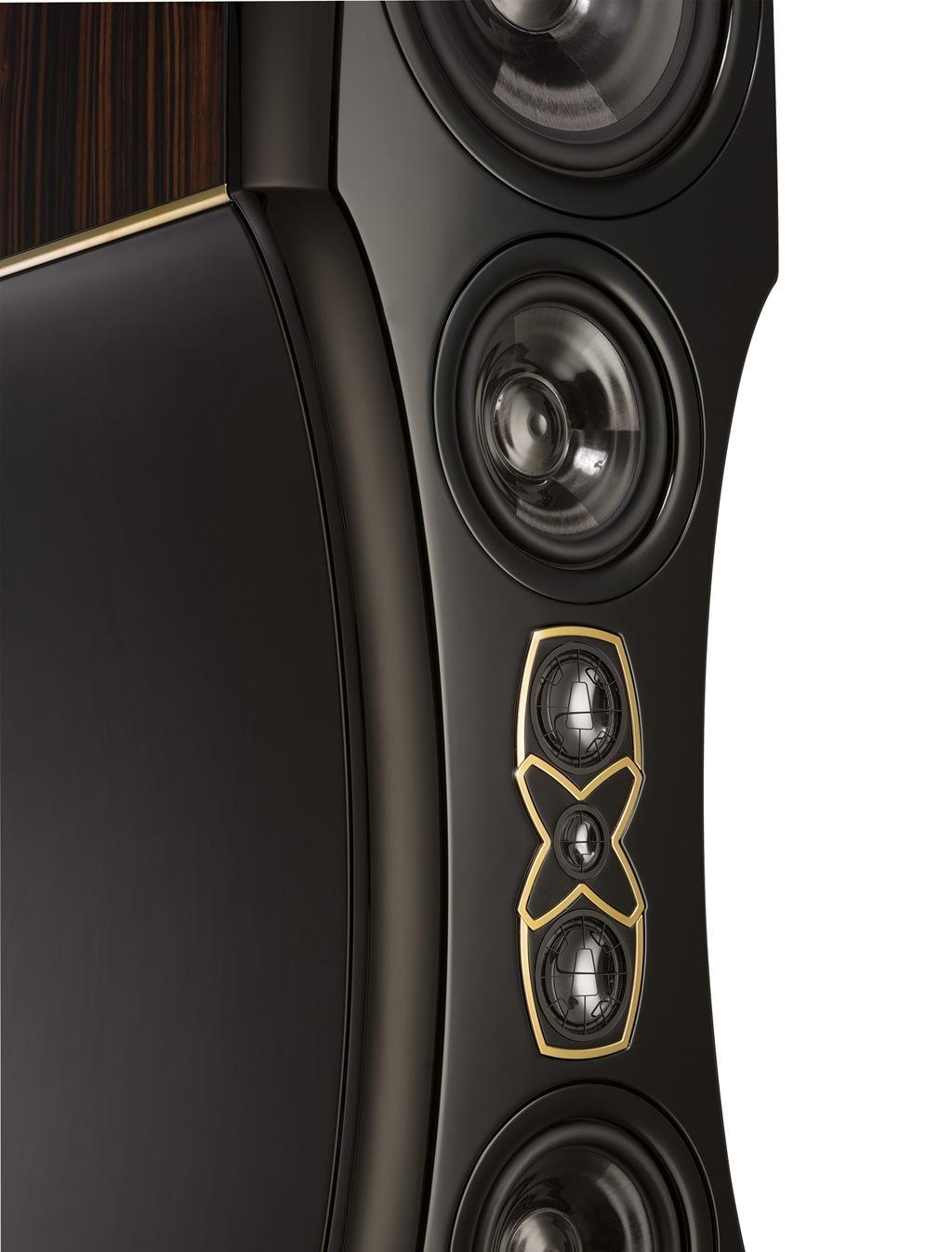
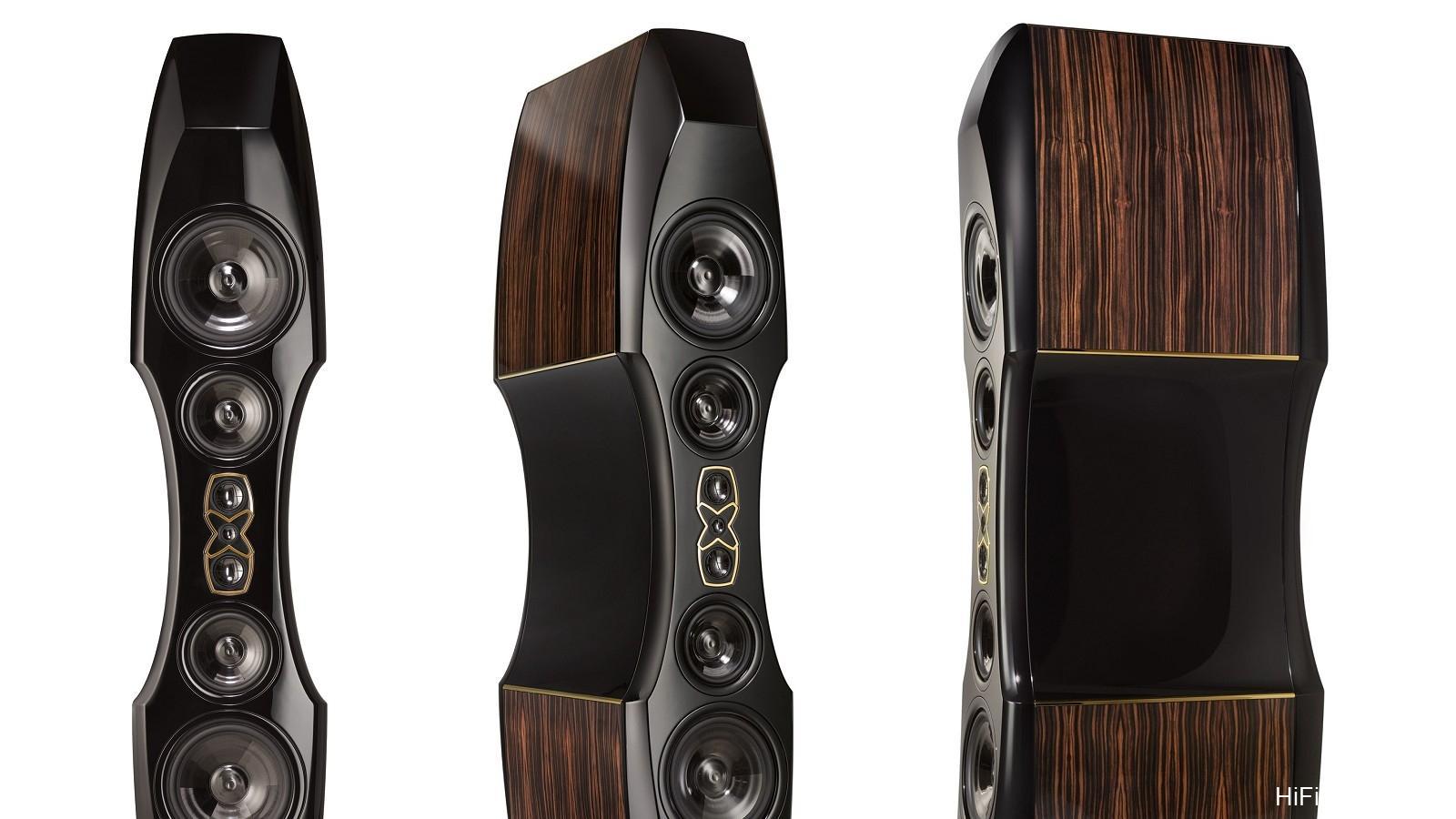
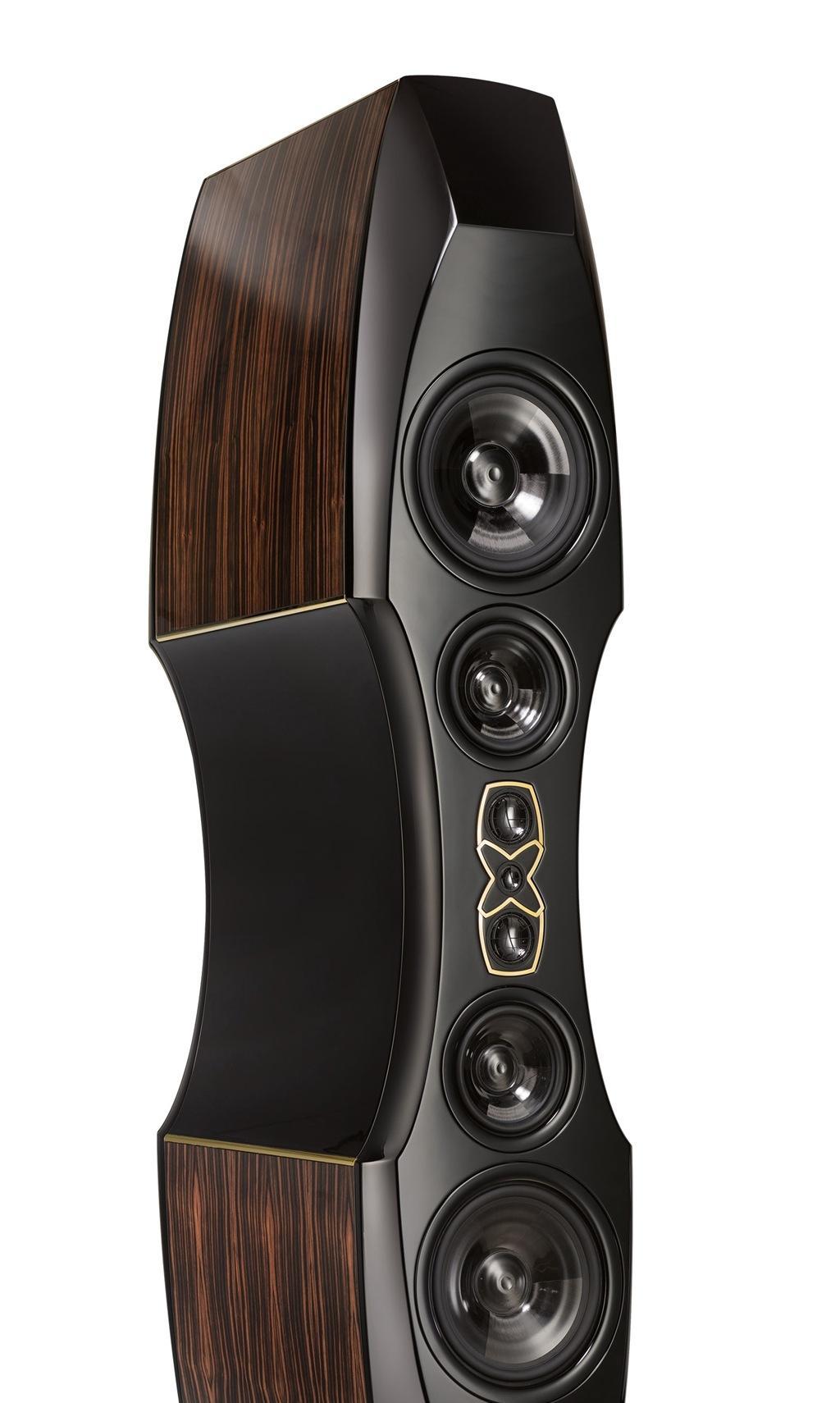
The EV-2D’s appearance can be described as an evolution of the Equisite Grand 3.0. While the Grand 3.0 had a shape more akin to a “dumbbell,” the EV-2D adheres to the principle of a “cinched waist,” where the cabinet narrows around the tweeter section and widens at the upper and lower mid/bass sections. This, combined with more fluid lines, creates the EV-2D’s stunning aesthetic. But beauty is more than skin deep.
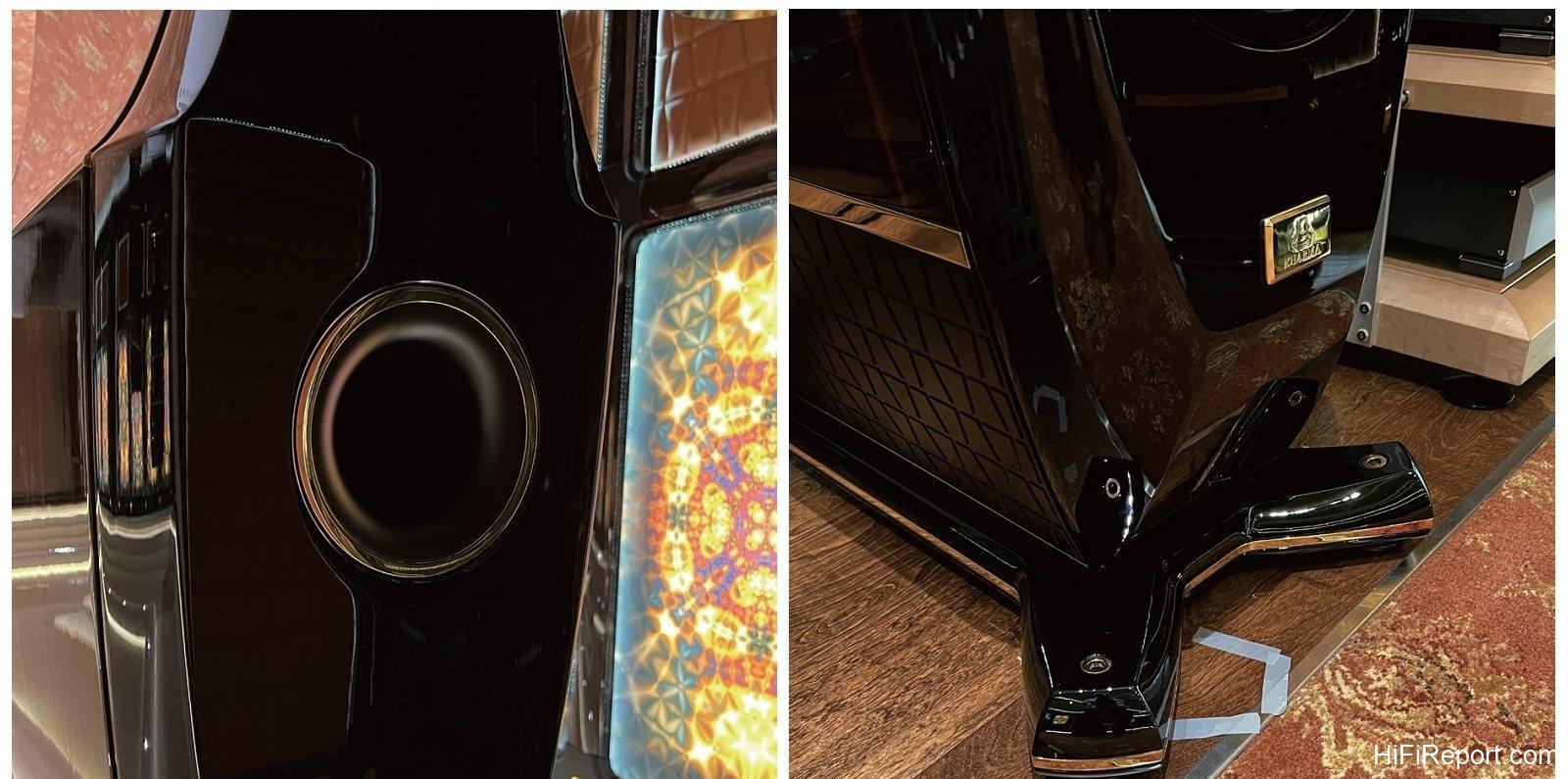
Upon closer inspection, you’ll discover the EV-2D’s paint finish is absolutely exquisite, and many details like seams and trim lines are meticulously crafted. The tweeter section is highlighted by a golden frame, the upper and lower wood veneer panels on the sides are luxurious and beautiful, and the base is inlaid with gold lines. These intricate design elements converge to give the EV-2D an enticing aura.
Massive Sound Pressure
The EV-2D features one 1-inch diamond tweeter, two 2-inch diamond mid-tweeters, two 7-inch Omega F Driver mid-woofers, and two 11-inch Omega F Driver woofers. It boasts a frequency response of 24Hz-90kHz, a nominal impedance of 4 ohms (minimum 3.4 ohms), a sensitivity of 93dB, a maximum sound pressure level of 120dB, and a continuous power handling of 500 watts.
These specifications alone indicate that the EV-2D is a highly sensitive loudspeaker capable of handling substantial power, enabling it to produce a formidable 120dB SPL. To put this in perspective, standing one meter from a PA speaker in a disco typically measures around 100dB; one meter from a chainsaw is approximately 110dB; 120dB is the point where sound pressure begins to feel uncomfortable; 130dB is painful; and 140dB is comparable to the sound of a jet engine fifty meters away.
Therefore, a loudspeaker capable of producing 120dB SPL is exceptionally powerful, making it suitable for any genre of music without fear of limitations.
Listening Environment
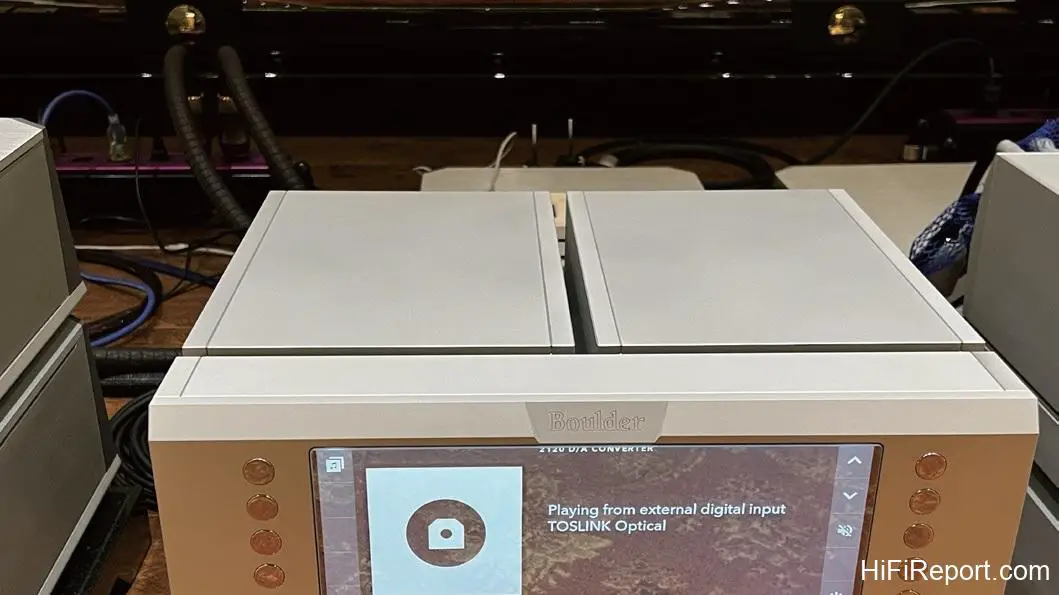
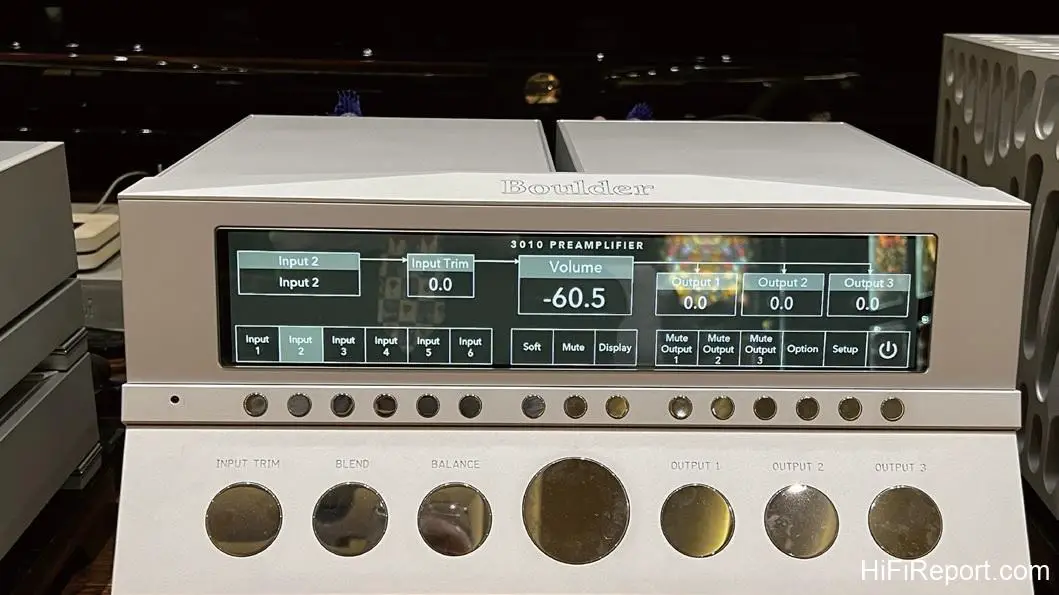
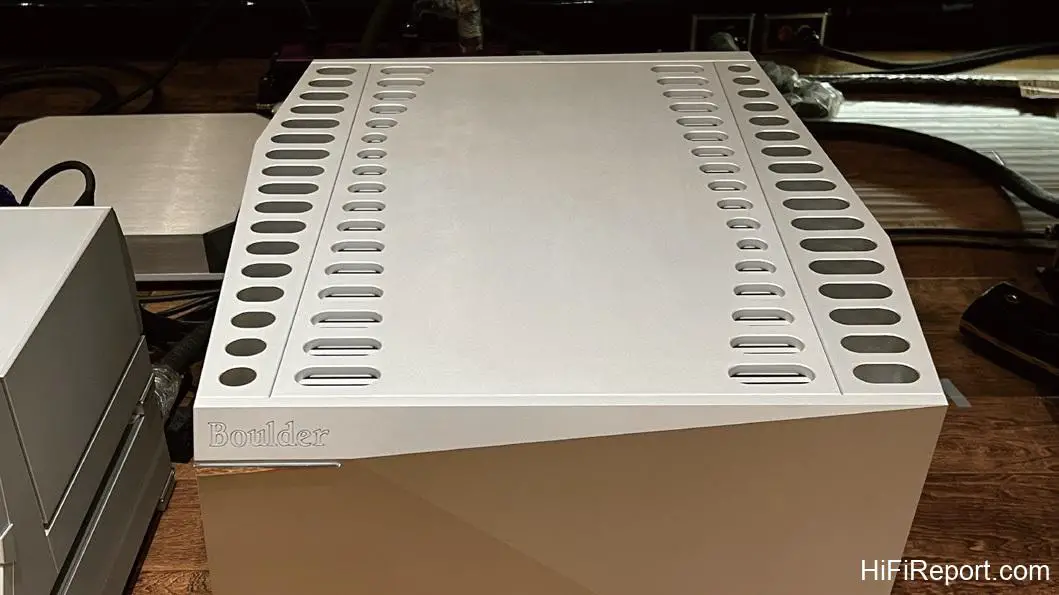
The audition of the EV-2D took place in Wen Hung Audio’s largest listening room. The system configuration on that day included a Boulder 2120 DAC, a Boulder 3010 preamplifier, and Boulder 3050 monoblock power amplifiers. Each 3050 monoblock is an absolute powerhouse, capable of peak output exceeding 2,100 watts into 8 ohms, and over 3,000 watts into a 4-ohm load.
Even more impressive are its distortion figures: at 1,500 watts into 8 ohms, the THD (20Hz-2kHz) measures an astonishingly low 0.0005%. Extending the frequency range to 20Hz-20kHz, the THD remains below 0.0035%. Such performance is truly breathtaking. Driving the EV-2D with such formidable monoblocks makes it difficult *not* to sound good.
PEQ is Very Useful
Upon settling in, as is my custom, I asked the staff at Wen Hung to play some music they were familiar with. As I listened, I began to assess the system’s various capabilities. Next, I used a spectrum analyzer to see if the observed frequency response aligned with my listening impressions. What if there were significant flaws or the sound was simply not good? In that case, I wouldn’t write the review; I’d pack up and return another day.
If the sound was acceptable but needed improvement, I would explore immediate adjustments. Sometimes this involves relocating the listening chair, adjusting the speaker positions, or fine-tuning the speakers’ toe-in angle. Since Wen Hung subscribes to Roon, they could utilize its built-in PEQ (Parametric Equalizer) for adjustments. This feature is incredibly helpful and undeniably beneficial, and should never be overlooked.
I asked the staff to activate the PEQ, referenced my spectrum analysis, and made some minor tweaks in a few areas (Wen Hung’s room is fundamentally quite good). After listening to a few tracks, I noticed the soundstage was confined between the two speakers, and the imaging, layering, and depth were not yet satisfying. So, I requested that the speakers be toed in (they were initially parallel with no toe-in).
After two adjustments of the angle, the soundstage had significantly expanded horizontally, and the imaging, layering, and sense of depth met my expectations. At this point, I could finally settle in for serious listening.
Spacious and Grand
The EV-2D presents music with immense scale, delivering a spacious, solid, and grand sound that fully justifies its size and price. Listening to the track “Guardian Spirit” from the “Dragon Drums” album, the drum impacts were incredibly impactful and solid, devoid of any loose or weak sensation. Roger Waters’ “Time” was explosively dynamic, the room filled with a whirlwind of detailed sound effects.
When I listened to Mayumi Itsuwa’s “Koibito yo,” the soundstage stretched wide from left to right, extending beyond the speakers, and the sound was grand and spacious yet simultaneously focused, with clear imaging and definition for vocals and instruments. Listening to Hideaki Tokunaga’s “Yasashii Kiss Shite,” his voice seemed to resonate throughout the entire space.
The accompanying instrumentation wasn’t overly complex, yet the music completely filled the room with a sense of generous, full-bodied energy that is simply beyond the capability of ordinary loudspeakers. This is the massive energy delivered by powerful amplifiers driving large loudspeakers, creating a truly impactful musical experience even with an emotional ballad.
Wide Dynamic Range
When I played Hugh Masekela’s “The Coal Train,” the EV-2D instantly opened up the entire musical scene – the width increased, the depth deepened, the sense of space expanded, and the dynamic range from softest to loudest became significantly wider. Furthermore, the texture of voices and instruments was incredibly realistic, and the tonal quality was simply beautiful.
If you’ve only ever heard this song on a smaller system, you simply cannot imagine the emotional impact it delivers when played through the EV-2D. The sheer sonic energy elevates the sense of realism to an incredibly high level, making me feel as though I was actually in a pub listening to them perform live.
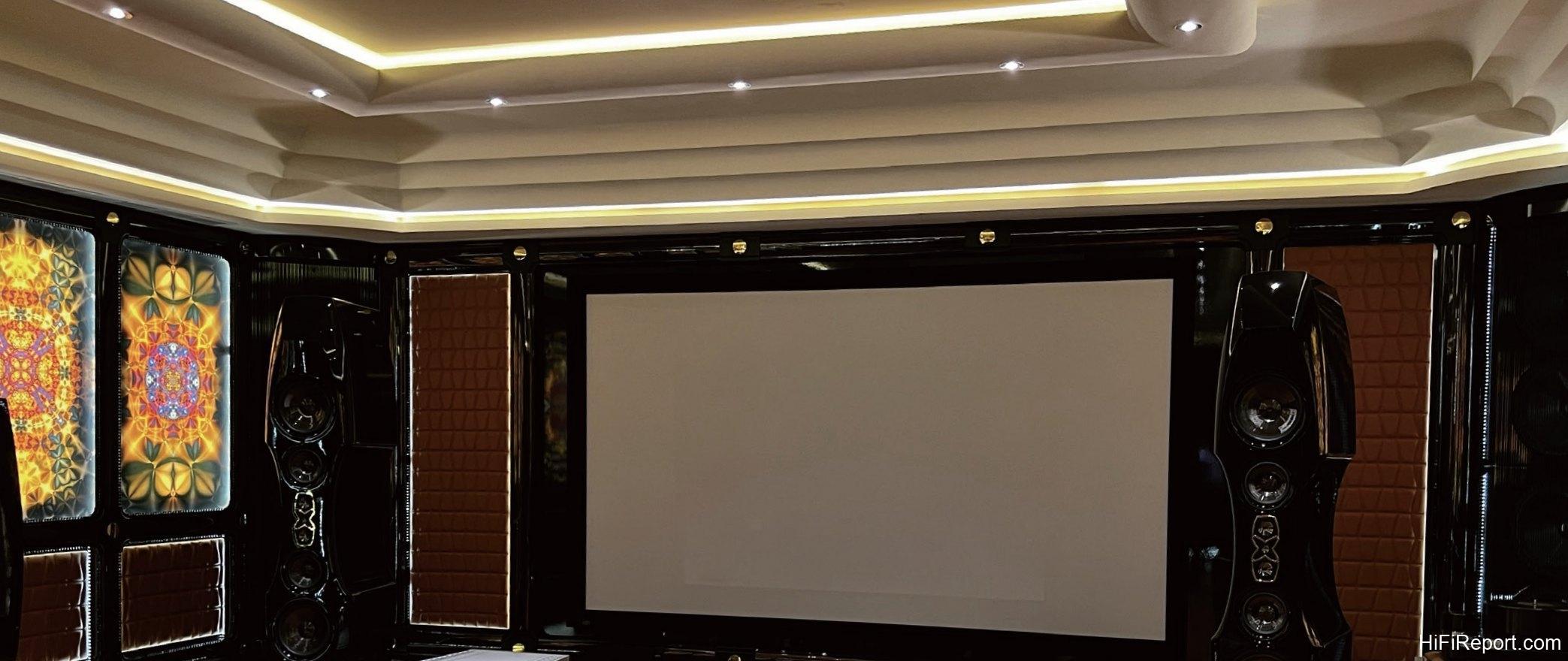
Let me put it this way: if you acquire the EV-2D only to listen to music at low volumes, I believe you are essentially hobbling its performance. In that case, you might as well buy the smallest EV-5D. The EV-2D is meant to deliver music on a grand scale; it’s meant to produce music that sends shivers down your spine; it’s meant to unleash music that makes your blood run hot.
Driven by the Boulder 3050 monoblocks, the EV-2D handles power effortlessly – a light touch on the accelerator sends it soaring from 60 to 100 mph instantly.
Deep, Subterranean Bass
Next, I must emphasize the EV-2D’s absolutely superb bass performance. Listening to “Touching Ghosts” from Maria & Boris Blank’s album “Convergence,” the spectrum analysis showed the lowest frequencies dipping below 30Hz. Most speakers struggle to reproduce this sub-30Hz frequency range with the soft, supple, yet defined and sensually captivating texture of Hakka mochi. However, the EV-2D delivered the mesmerizing bass of this track with effortless perfection.
Each low note felt like a massive stone dropped into a well, creating ripples of deep bass without any sense of peaking, instead spreading smoothly in all directions. This ability to reproduce extreme low frequencies is something you truly cannot comprehend unless you experience it with this album.
Or, perhaps more accurately: many people believe their home audio systems already deliver the full power of bass, but after hearing the EV-2D, they realize with a jolt how vast the difference is between bass that is “hard-squeezed” and bass that is effortlessly abundant.
Sensual Shivers
Let’s talk about an album many audiophiles own: “La Fabuleuse Histoire de Mister Swing.” This double CD set was incredibly popular back in the day and is often played at audio shows. I must be frank: without a sufficiently large space and sufficiently large speakers, what you might consider a “100-point” performance is likely only about 50 points compared to the EV-2D. Take the track “Le Temps Passe,” where the lowest frequencies also hover around 30Hz.
When this bass appears, it too sends sensuous shivers. But that’s not all; the unique textures produced by other instruments playing at the same time are also incredibly difficult to reproduce. The EV-2D delivers this with such ease and spaciousness, making the bass incredibly captivating. To use an analogy: it’s like struggling to climb a mountain staircase, legs trembling and gasping for air, while someone effortlessly glides past you.
You understand that feeling – the EV-2D is that person effortlessly gliding past.
Exquisite Sound Quality
Reading this far, you might assume the EV-2D is merely a powerhouse, strong but perhaps lacking in finesse and beauty. Incorrect! The other side of the EV-2D’s personality is precisely its exquisite detail and beauty. Listening to Josef Suk’s performance of Frantisek Benda’s “Caprice,” the sweet, rich beauty of the violin was utterly captivating and refined.
Switching to his rendition of Brahms’ “Waltz Op.39 No.15,” the softness of the violin sound and the beauty of its elasticity are truly beyond words – suffice it to say, it was sweet, rich, and lustrous. The sheer listening pleasure it provided, if likened to fruit, would be a Japanese peach; if likened to food, it would be the fatty belly of bluefin tuna. Next, I listened to Ana Maria Valderrama and Victor del Valle performing Brahms and Franck violin sonatas.
The violin was similarly sweet and incredibly realistic, possessing both exquisite detail and the subtle texture of the bow on the strings, graceful as a willow in the wind. The piano, meanwhile, sounded like rolling pearls, combining beautiful tone with realistic texture, a truly stunning presentation.
Sweet Diamond Drivers
With the violin and piano displaying such exquisite quality, listening to the Tokyo String Quartet perform Beethoven string quartets offered yet another revelation. I suspect that in this case, the two 11-inch bass drivers were hardly engaged, with the two 7-inch mid-woofers and three diamond drivers handling the entire spectrum. Many people mistakenly believe diamond tweeters sound sharp, hard, or aggressive – this is a gross misconception.
The EV-2D’s 1-inch diamond tweeter and two 2-inch diamond mid-tweeters handle different frequency ranges, with the two 2-inch drivers extending down into the upper mid-range. With this division of labor, the high frequencies I heard were sweet, smooth, full of luster, and perfectly balanced – neither sharp nor hard in the slightest.
Especially with string quartets, the beauty of the harmonies combined with the intricate resolution and subtle sense of life simply makes you want to listen endlessly.
Lively and Dynamic
The EV-2D possesses an inherent sense of grandeur. With orchestral music, it sounds particularly spacious and expansive, creating a vast soundstage. The natural sense of upward extension and downward depth is incredibly satisfying, like witnessing grand mountains and flowing rivers unfold before you, the scene opening up wide.
Beyond this, I found the EV-2D’s resolution to be exceptionally high, preventing orchestral masses from sounding congested, which significantly enhances the music’s long-term listenability.
Another strength of the EV-2D is its lively and dynamic response. Whether it’s the subtle sense of life hidden within classical music or the punchy, dynamic response of percussion in pop music, it springs forth like lightning. This is particularly noticeable with steel-string guitars. I believe this lively and dynamic character is directly related to its mid-range and bass drivers being F Drivers.
Because F Drivers have zero eddy currents, the voice coil’s piston-like motion encounters no undue resistance, resulting in exceptionally rapid response. Coupled with the inherently fast response of the diamond drivers, this synergy creates the EV-2D’s lively and dynamic signature. This trait is evident in various music genres.
For example, listening to the Yuri Honing Trio’s “Walking on the Moon,” the elasticity of the various drums and the plucked bass is excellent – a kind of dynamic force that is simultaneously gentle and firm.
Pinpoint Imaging
Listening to Yosi Horikawa’s “Bubbles,” the EV-2D demonstrated astonishing dynamic prowess and realistic tactile texture. What is “tactile texture”? It’s like hundreds of ping pong balls of different sizes and weights bouncing around in front of you. The soundstage extended from the left side all the way to the right, the entire auditory scene seemingly filled with bouncing balls.
In fact, the EV-2D’s dynamic response is not only astounding, but in this track, it also exhibited remarkable solidity and localization. Each “ping pong ball” solidified into a distinct entity, bouncing with a clear trajectory, without the slightest blurring.
Endless Waves of Pleasure
Every time I conduct an off-site equipment review, if I encounter a truly exceptional audio system, I’m left with a lingering sense of regret. Time is limited, and I can’t leisurely listen and savor the experience as I would at home. However, with the system I heard at Wen Hung Audio this time, I understood seventy or eighty percent of its capabilities within just a few tracks because everything was simply too perfect.
Many people can afford a multi-million dollar audio system, but few can make that system perform to its full potential, creating a sound that makes you reluctant to leave. When listening to the Kharma EV-2D, the pleasure secreted by my brain didn’t appear occasionally; it flowed endlessly, like turning on a faucet. Saying that this endless flow of pleasure is worth millions is no exaggeration!
Highlights
* Cabinet design aligns with physical principles.
* Bulletwood cabinet minimizes cabinet vibrations.
* Employs three diamond drivers and proprietary F Drivers.
* Sounds grand and expansive, with natural extension at both frequency extremes.
* Recommendation: Pairing with top-tier Boulder amplifiers is highly synergistic.
Associated Equipment
* Digital-to-Analog Converter: Boulder 2120
* Amplification: Boulder 3010 Preamplifier + 3050 Monoblock Power Amplifiers
Kharma Enigma Veyron 2D Specifications
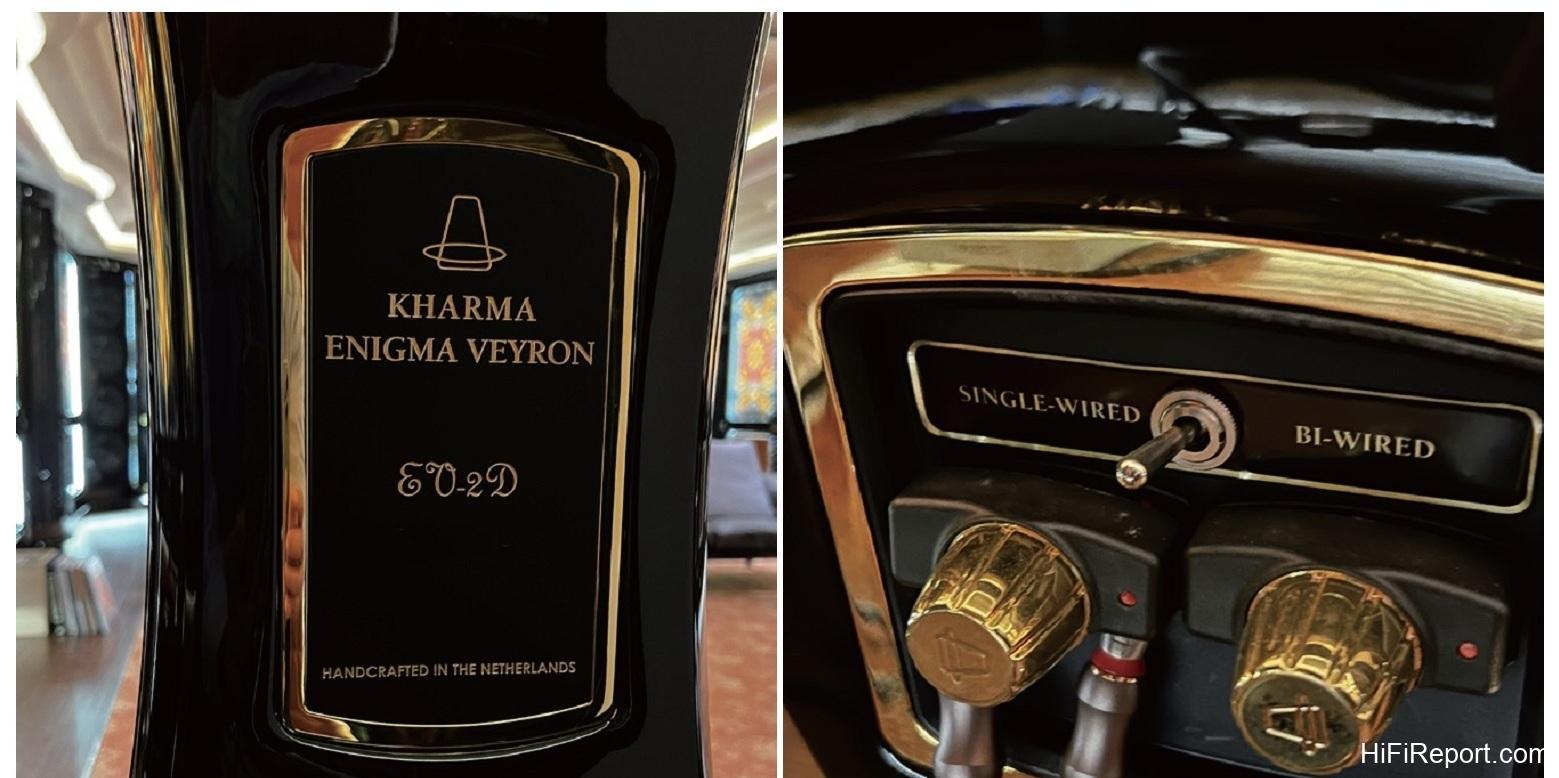
* Type: Seven-driver, four-way, bass-reflex loudspeaker
* Driver Complement:
* One 1-inch diamond tweeter
* Two 2-inch diamond mid-tweeters
* Two 7-inch F Driver mid-woofers
* Two 11-inch F Driver woofers
* Frequency Response: 24Hz-90kHz
* Nominal Impedance: 4 Ohms
* Sensitivity: 93dB
* Maximum SPL: 120dB
* Dimensions: 480(W) × 1,990(H) × 810(D)mm