
Enigma Veyron 4D Review
Frankly, at the time, I thought Charles must have just been idly chatting. Yet, the following year, the Enigma Veyron-1D was officially launched, and it truly featured eight diamond tweeter and midrange drivers, arranged exactly as Charles had sketched on paper!
Could it be a coincidence arranged by fate? Eight years later, another speaker employing similar technology, the Monitor Audio Hyphn, appeared on the market and, coincidentally, is also reviewed in this issue. This proves that Charles’s concept was far from a flight of fancy; it was a groundbreaking design for achieving ideal point source reproduction.
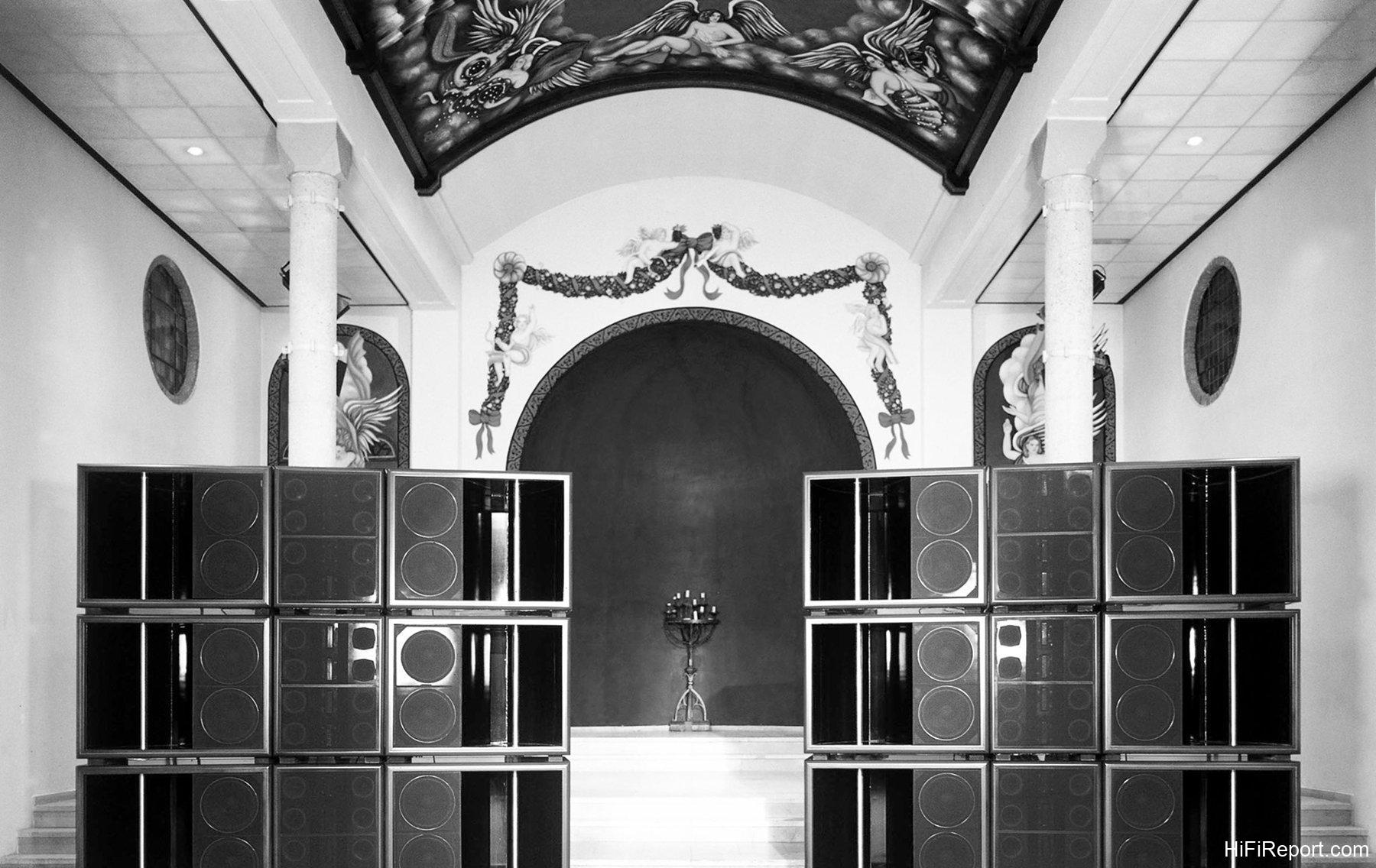
In truth, Charles’s penchant for audacious projects has historical precedent. In 1992, a client commissioned him to build the world’s most formidable speaker system. Charles’s ultimate creation was a system featuring 12 x 15-inch woofers, 24 x 7-inch midrange drivers, and 16 x membrane tweeters. It boasted a built-in amplifier section with a total output power of a staggering 31,600 watts and weighed 12,600 kilograms – a monumental horn speaker system.
Charles priced it at $1 million, and after hearing it, the client purchased it without hesitation! This awe-inspiring, legendary speaker system, christened the Grand Enigma Reference System by Charles, was the most expensive audio system in the world at the time, although today it has been surpassed by the combination of the Enigma Veyron 1D and Kharma’s flagship subwoofers.
Have you noticed the pattern? The name “Enigma” from that legendary system’s model is now carried by the flagship Enigma Veyron series. Clearly, Charles aims to forge another legendary chapter of ultimate achievement with the Enigma Veyron line.
The Enigma Veyron Design
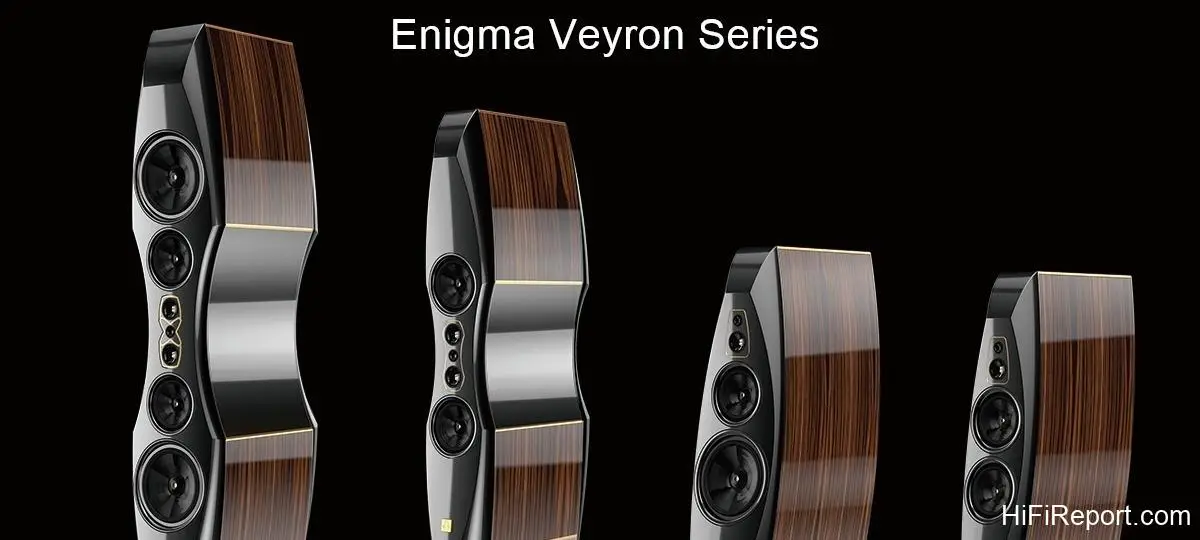
It’s noteworthy that while the 4D is slightly smaller than the dumbbell-shaped 2D, each channel is still equipped with two 11-inch woofers. The bass extension is the same as the 2D, reaching down to 24Hz, suggesting its performance capabilities should be closely comparable to the 2D.
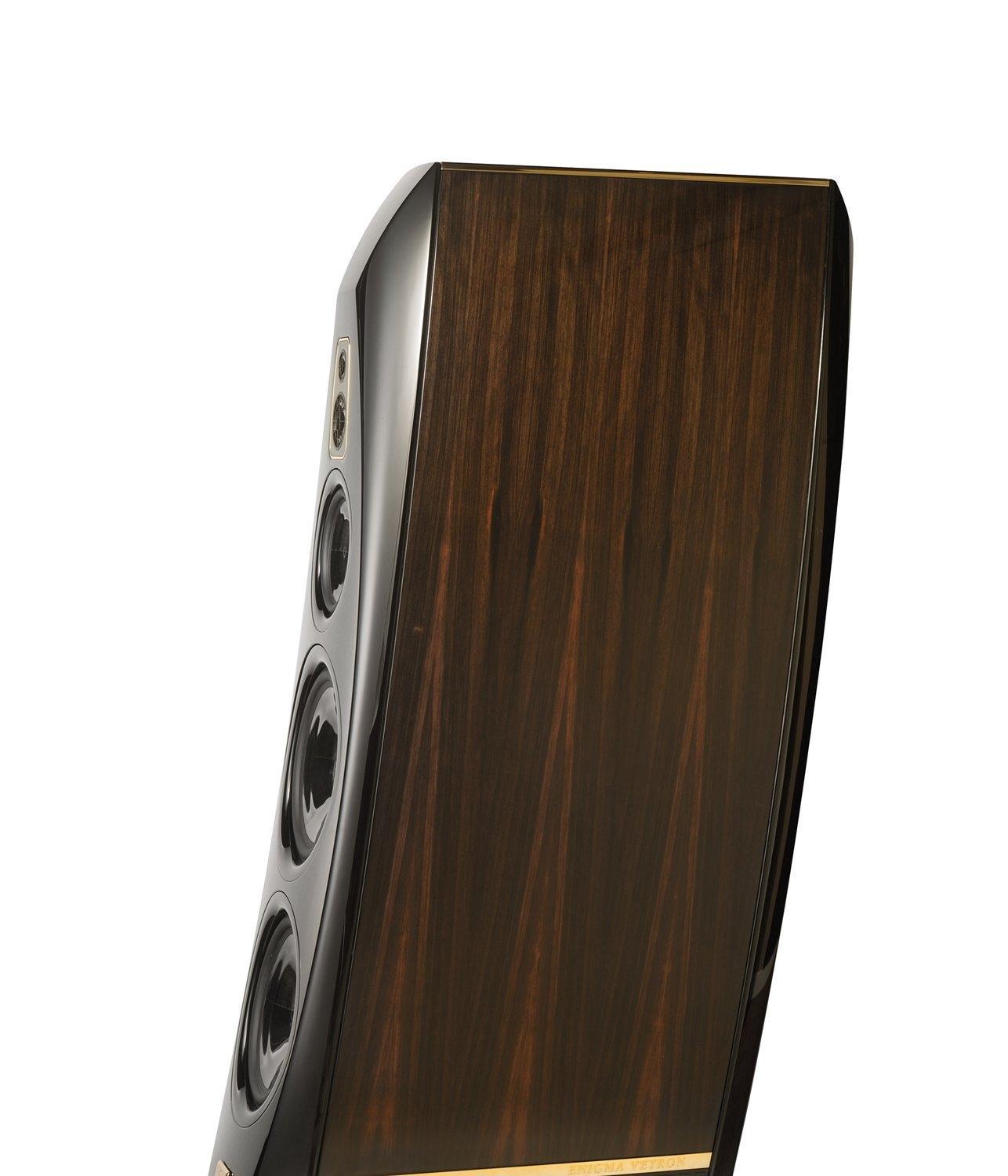
The cabinets of the Enigma Veyron series are crafted from the extremely hard bulletwood, a material rarely seen in audio speaker construction. Even when it is used, the cabinets are typically boxy, as this material is exceedingly difficult to process. Bending it into curved shapes is fundamentally impossible. So, how are the spindle-shaped cabinets of the 4D and 5D created? They are actually carved from solid blocks of bulletwood using precision 5-axis CNC machining!
Furthermore, the real wood veneer and paint finish of the Enigma Veyron series are, in my experience, simply unparalleled. Each driver is adorned with a striking gold-colored outer ring, and the side panels are decorated with gilded trim. These speakers exude an incomparable aura of luxury craftsmanship; any other Hi-End speaker would pale in comparison. Even the most exquisite furniture would likely struggle to match this level of refined workmanship.
The Revolutionary Omega-F Driver
If, at this point, you assume the Enigma Veyron merely relies on exquisite cabinets and lavish use of diamond tweeters to cultivate a luxurious image, you’d be profoundly mistaken. What impresses me most about Kharma is their ability to continuously evolve technically, despite not being a large-scale manufacturer. This is something many major speaker brands struggle to achieve. It’s clear they’ve invested heavily in R&D over the long term, allowing their technology to advance relentlessly.
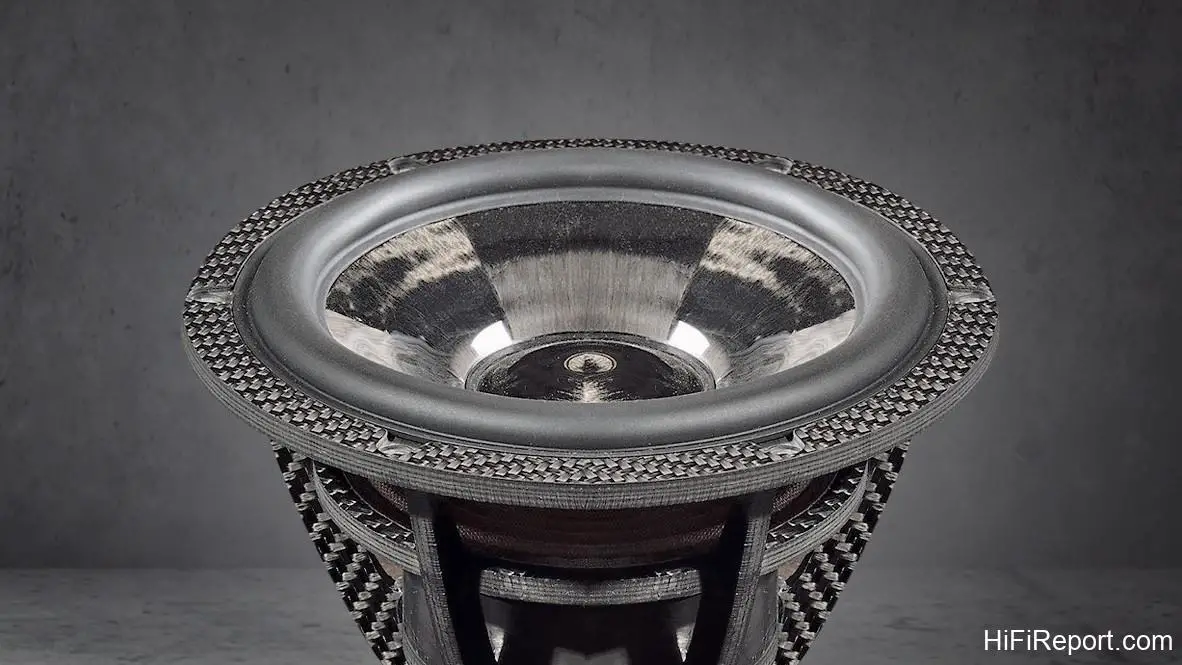
They first developed the KCD midrange driver, which used a carbon fiber cone. This evolved into the Omega-7 driver, and by the time the Enigma Veyron series was launched, it was further refined into the highest-grade Omega-F. It’s important to note that previously, only Kharma’s midrange drivers were developed in-house. However, the Enigma Veyron series now utilizes the Omega-F driver for both the midrange and bass, breaking free from the constraints of off-the-shelf drivers.

This allows for a more seamless integration of drivers and a more comprehensive command over the overall reproduction performance.
The Omega-F drivers boast several key technical features:
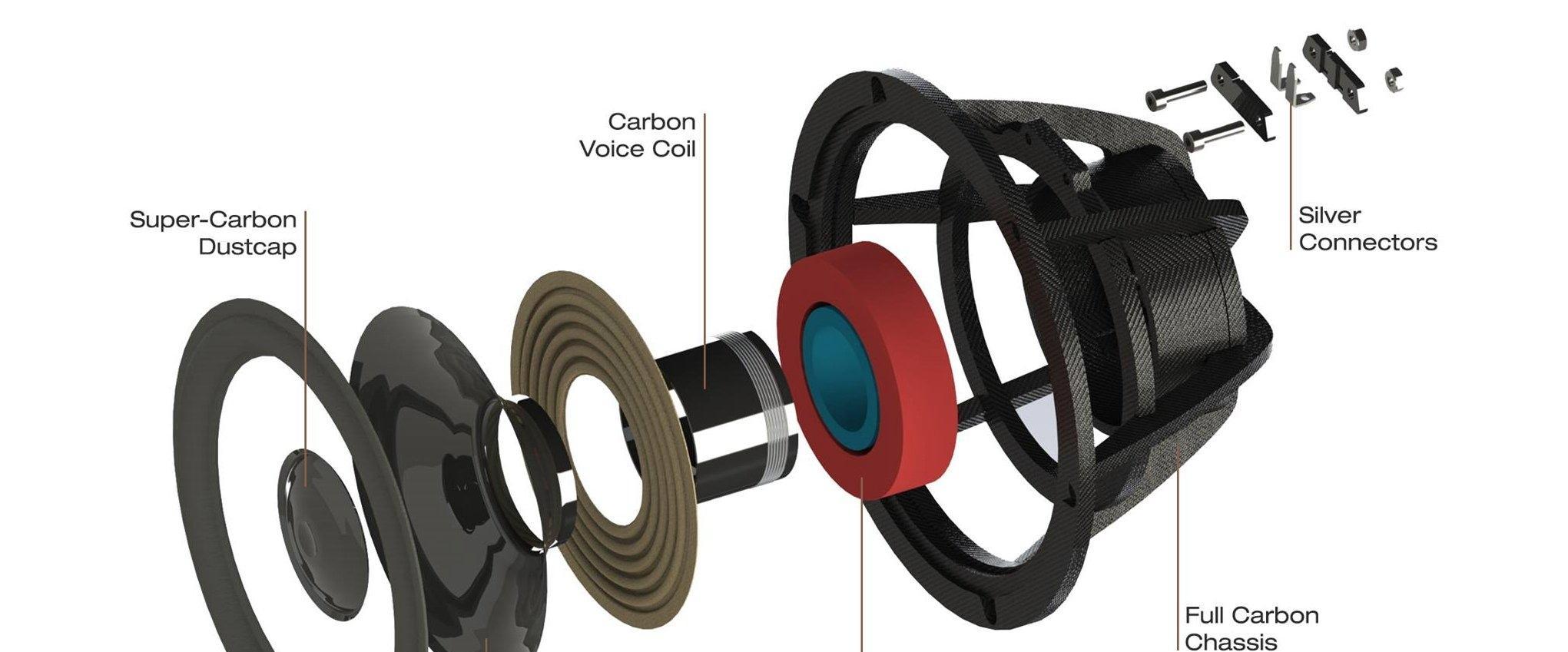
First, they utilize an ultra-light and extremely rigid carbon fiber cone.
Second, the cone’s unique wavy structure is the result of Finite Element Analysis computer simulations. This design pushes cone breakup modes beyond the usable frequency range, significantly reducing distortion and coloration.
Third, the cone is attached to the voice coil former using a special adhesive and geometry, which Kharma claims provides a stronger bond and better energy transfer than conventional methods.
Fourth, the magnetic system of the new Omega-F woofer driver is composed of 24 neodymium magnets arranged in a specific configuration. Due to their low heat resistance, neodymium magnets are rarely used in conventional woofers, as their operating temperature can be high. However, Charles has clearly found a solution.
Compared to standard ferrite magnets, neodymium magnets can provide a much stronger magnetic field with a smaller size and weight, which is another crucial factor in the Omega-F driver’s lightness.
Fifth, all driver binding posts are made of pure silver, matching the internal pure silver wiring, ensuring the music signal is transmitted under optimal conditions.
Zero Foucault Current: The Challenge
In a driver’s magnetic system, besides the magnets, there are typically iron top plates and a central pole piece (also known as the T-yoke). These sandwich the magnets’ poles to concentrate the magnetic flux in the voice coil gap for electromagnetic induction.
The problem is that during electromagnetic induction between the pole piece and the voice coil, the pole piece itself generates eddy currents (also known as Foucault currents), which create resistance and distortion against the voice coil’s movement. This “ady current” problem is a major challenge that the Omega-F driver aims to overcome, and it’s the origin of the “F” in the model name. This “F” refers to the French physicist Leon Foucault (1819-1868), who discovered the eddy current effect.
In honor of his discovery, eddy currents are also called Foucault currents. A common method to reduce the impact of eddy currents in drivers is to add copper or aluminum “Faraday rings” to the pole piece. However, Charles’s ambition is much greater: he strives for “0 Foucault,” which means completely eliminating distortion caused by eddy currents.
Zero Foucault Current: The Solution
How is this achieved? If iron pole pieces cause eddy currents, then removing all iron components from the magnetic system and replacing the iron frame with carbon fiber material should completely eliminate eddy currents, right? This idea seems simple but represents a radical revolution in the basic structure of dynamic drivers. How can a driver operate after removing the pole piece?
No one had ever thought this way before, but according to Kharma’s official documentation, through a special arrangement of neodymium magnets, they have genuinely achieved a unique structure that can stably concentrate the magnetic flux in the voice coil region *without* needing iron pole pieces and top plates.
According to the manufacturer, eliminating eddy current distortion dramatically increases sonic detail, resulting in faster transients, lower coloration, greater dynamics, and vastly improved resolution of complex musical passages. The entire frequency range’s performance is comprehensively enhanced through the use of the Omega-F midrange and bass drivers.
Frankly, this patented technology in the Omega-F driver is absolutely one of the most significant breakthroughs in speaker development history. However, Charles prefers to focus everyone’s attention on the sound quality of Kharma speakers, so he hasn’t heavily promoted the technical aspects. If you understand the significance of this technology, I believe you will look at the Enigma Veyron series speakers equipped with Omega-F drivers in a new light.
Kharma speakers are truly not just about extreme luxury in appearance; their technical prowess is equally advanced and cutting-edge.
Diamond Drivers
The Enigma Veyron series features diamond drivers, which are inherently expensive and high-tech, but they also possess unique advantages beyond mere luxury:
First, diamond’s extreme hardness makes it the ideal diaphragm material. Its stiffness-to-weight ratio is exceptionally high, allowing the diaphragm to behave as a perfect piston up to very high frequencies, free from breakup issues.
Second, diamond boasts excellent heat dissipation properties, helping to cool the voice coil inside the driver and significantly reducing distortion. The main challenge with diamond diaphragms is their relative weight. However, the diamond diaphragms used in the Enigma Veyron series are only 50 μm thick, thinner than the diameter of a typical human hair, minimizing weight.
Crossovers
Finally, let’s introduce the Enigma Veyron series crossover. Kharma had previously provided little detail on this aspect until our editor wrote to the manufacturer while reviewing the EV 5D speakers in issue 402. Only then did Charles reveal more information. He refers to the Enigma Veyron series crossover as a “subtractive-crossover” architecture. In this design, the high-pass and low-pass circuits are treated as a single entity.
The advantages are better overall musical coherence and minimized impact from component tolerances.
The drawback is that changing the high-pass circuit also simultaneously changes the low-pass, significantly increasing design complexity. Kharma invested considerable effort and time matching components to fine-tune this crossover circuit to its optimal state. The slopes of the high-pass and low-pass crossovers are considered by Charles to be a proprietary secret, evidently a key factor in shaping the sound of the Enigma Veyron series.
In their pursuit of the ultimate, Kharma naturally employed top-tier components in the crossover, including inductors wound with pure silver wire, silver-gold alloy capacitors, proprietary carbon nanotube resistors, and pure silver internal wiring, all significantly enhancing musical detail and resolution.
Listening Impressions: Bass
That being said, there are some particular aspects of the EV 4D’s bass performance that warrant emphasis. Listening first to the last track of Austrian percussionist Martin Grubinger’s “Drums ‘n’ Chant” album, my initial observation was that the EV 4D could clearly render the faintest percussion sounds, maintaining excellent balance even at low volumes.
My second discovery was that the EV 4D not only clearly differentiated between various percussion sounds but also presented an extremely precise soundstage image. My third discovery was that the drumming bass could easily descend to the lowest frequencies, with definite and ample bass quantity. The layered texture of the drumming was also exceptionally clear, indicating that the manufacturer’s specification of 24Hz bass extension is not an exaggeration.
This speaker can indeed easily and clearly extend into the ultra-low frequency realm.
Next, listening to the single “Ratchets” by Norwegian electronic DJ Hedegaard, I was astonished that the EV 4D’s bass energy could fill this large, approximately 30-ping (approx. 1000 sq ft) space. The bass impact was not only powerful, but even the lowest notes’ contours were clearly presented.
This level of bass performance goes beyond just being ample; it truly possesses astonishing power that transcends the speaker’s physical size limitations, more than sufficient even for hosting a party in such a large room.
Listening Impressions: Piano
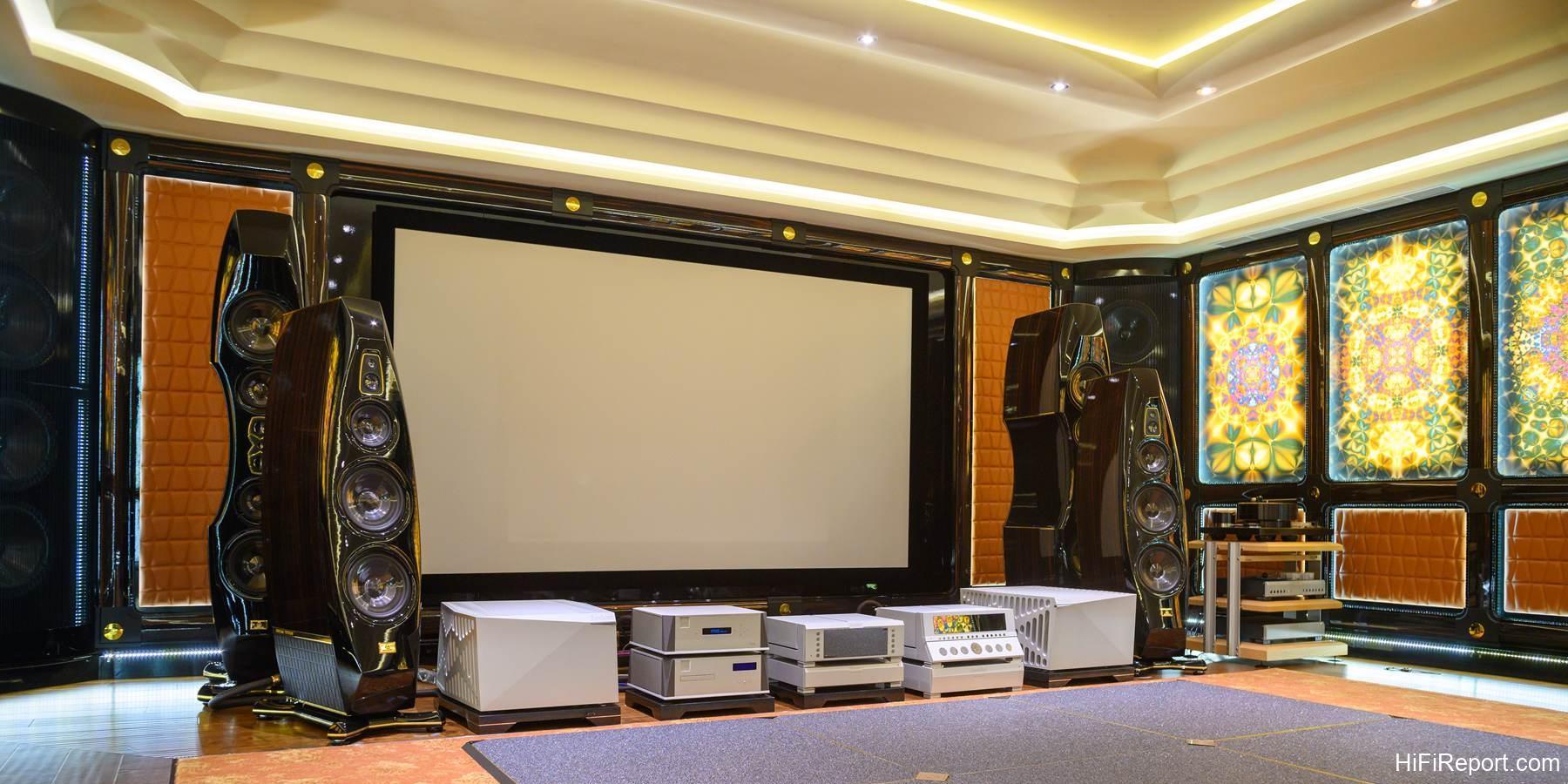
Listening to the fourth movement of Saint-Saëns’ Symphony No. 3 “Organ,” conducted by Myung-Whun Chung, even at high volumes reproducing the organ’s extreme low frequencies, the layering remained distinctly clear, and the bass extension was complete. This further proved the EV 4D’s capability for true low-frequency reproduction. The accompanying Boulder 3050 mono power amplifiers also deserve mention. These amplifiers output a peak power of up to 3,000 watts into a 4-ohm load.
Their control was not only immensely powerful, but their sound quality was even more refined and pure than typical amplifiers. Such ultimate performance inspires only admiration and awe.
Throughout the listening session, I listened to many different piano recordings and clearly perceived that the EV 4D’s goal is not merely pleasant sound but possesses a powerful monitoring capability, clearly revealing subtle differences between different recordings. I must particularly highlight the late pianist Lars Vogt’s performance of Mozart’s Fantasy in C minor, K.475.
The EV 4D faithfully reproduced Lars’s light and nimble touch – that extremely delicate yet incredibly clear, exquisitely soft yet utterly transparent touch texture. Unexpectedly, on this ultra-powerful system driven by 3,000-watt amplifiers, it reproduced the most beautiful performance I had ever dreamed of hearing.
The Sound Pixel Philosophy
In that 2014 interview, Charles once told me that when the hardness and damping characteristics of the Omega-F carbon fiber cone are simultaneously tuned to their optimal state, they will be able to reproduce the most realistic instrument textures and achieve the highest “Sound Pixel” he pursues, describing the difference as being as vast as that between BD and 4K or even 8K image quality. After hearing the EV 4D, I realized Charles was not exaggerating.
What unfolded before me was indeed a magnificent panorama with 8K ultra-high resolution, revealing every tiny detail with breathtaking clarity and grandeur!
Technical Highlights
* Equipped with exclusive Omega-F midrange and bass drivers, utilizing the innovative zero-eddy current magnetic structure to push resolution to the extreme.
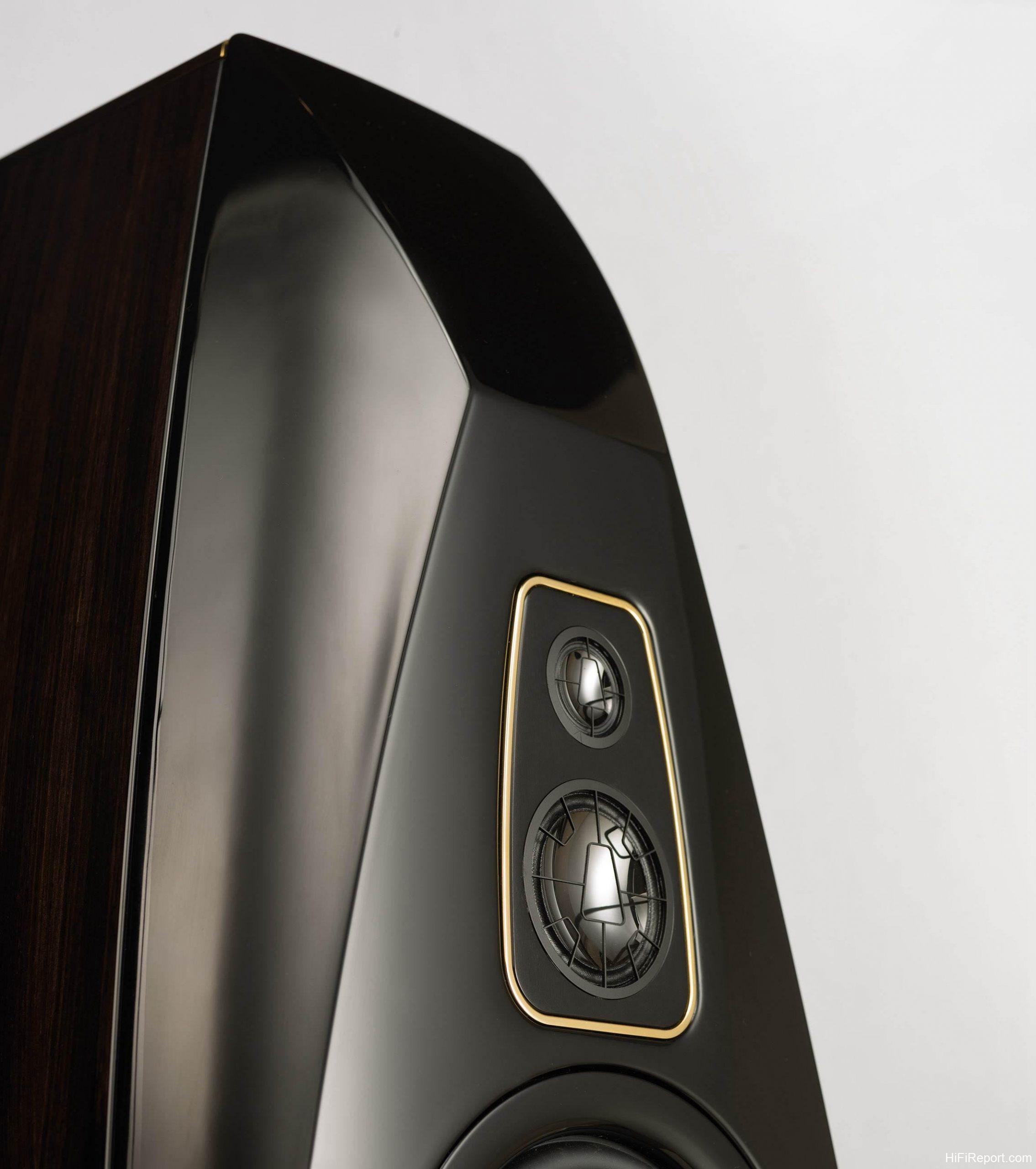
* Features one 1-inch and one 2-inch diamond tweeter, responsible for reproducing frequencies above 1kHz. The sound quality is not only pure but also possesses a natural thickness.
* The spindle-shaped cabinet, crafted from hard bulletwood, helps dissipate internal standing waves through its non-parallel surfaces.
Performance Summary
* Offers ultra-high resolution across the entire frequency range, with transparent and natural sound quality.
* Delivers astonishing bass presence and energy that can fill a 30-ping space without dilution.
Setup Recommendations
* Recommended pairing with front-end systems offering the highest level of sound purity.
* Stronger amplifier driving power will better unleash the speakers’ potential.
* Manufacturer recommends no inward toe-in, positioning speakers at least 45 cm from the rear wall and at least 70 cm from the side walls.
Specifications
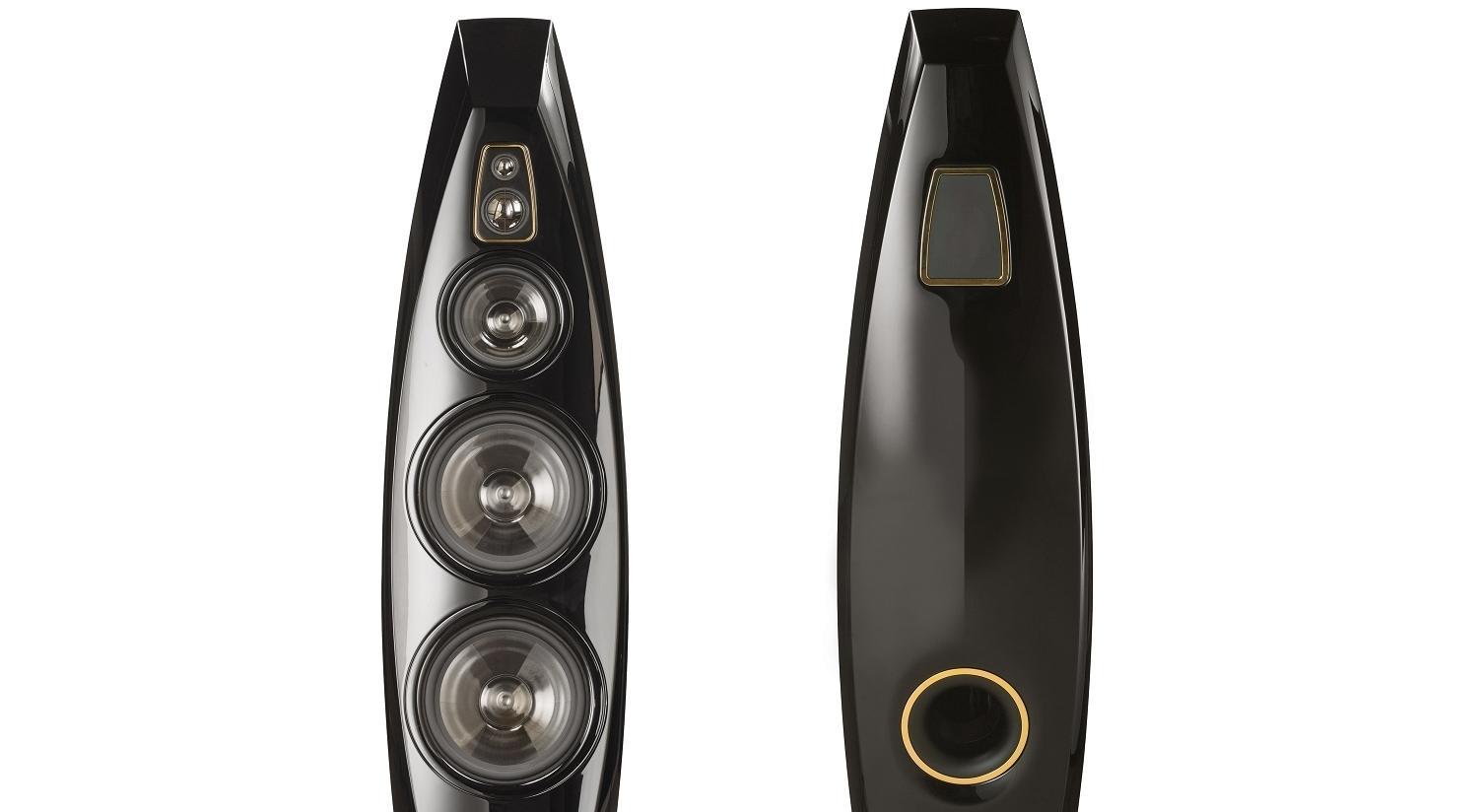
* Type: 4-way, 5-driver, bass-reflex floorstanding speaker
* Drivers:
* 1-inch diamond tweeter ×1
* 2-inch diamond tweeter ×1
* 7-inch Omega-F midrange driver ×1
* 11-inch Omega-F bass driver ×2
* Frequency Response: 24Hz – 90kHz
* Nominal Impedance: 4 ohms (minimum 1.8 ohms)
* Sensitivity: 92dB (2.83V/1m)
* Power Handling: 400 watts RMS (800 watts peak)
* Maximum SPL: 119dB
* Dimensions (WHD): 425 × 1,515 × 835mm