
Kii Audio Three Review
German brand Kii Audio was established in 2014, and officially launched its first product, the Kii Three, at the 2016 Munich High End Show. The Kii Three garnered significant attention upon its release, particularly in neighboring China and Hong Kong, while in Europe and America, many professional recording studios eagerly acquired them. The Kii Three is an active loudspeaker that bridges both professional and home use, incorporating numerous innovative technologies and custom modules.
It was developed by a team led by Bruno Putzeys, the designer of Ncore amplification and Kii Audio’s CTO, a leading designer of Class D amplifier modules.
Kii Audio was founded by a group of friends with years of experience in the audio industry, each being accomplished designers, engineers, marketing managers, and more. These members are not exclusively German, but also hail from the Netherlands and Belgium, making Kii Audio perhaps more accurately described as a European brand. The Kii Three, officially launched this year, is their first exceptional product, featuring remarkably unique technology that we will introduce in detail.
Six Drivers in a Compact Cabinet
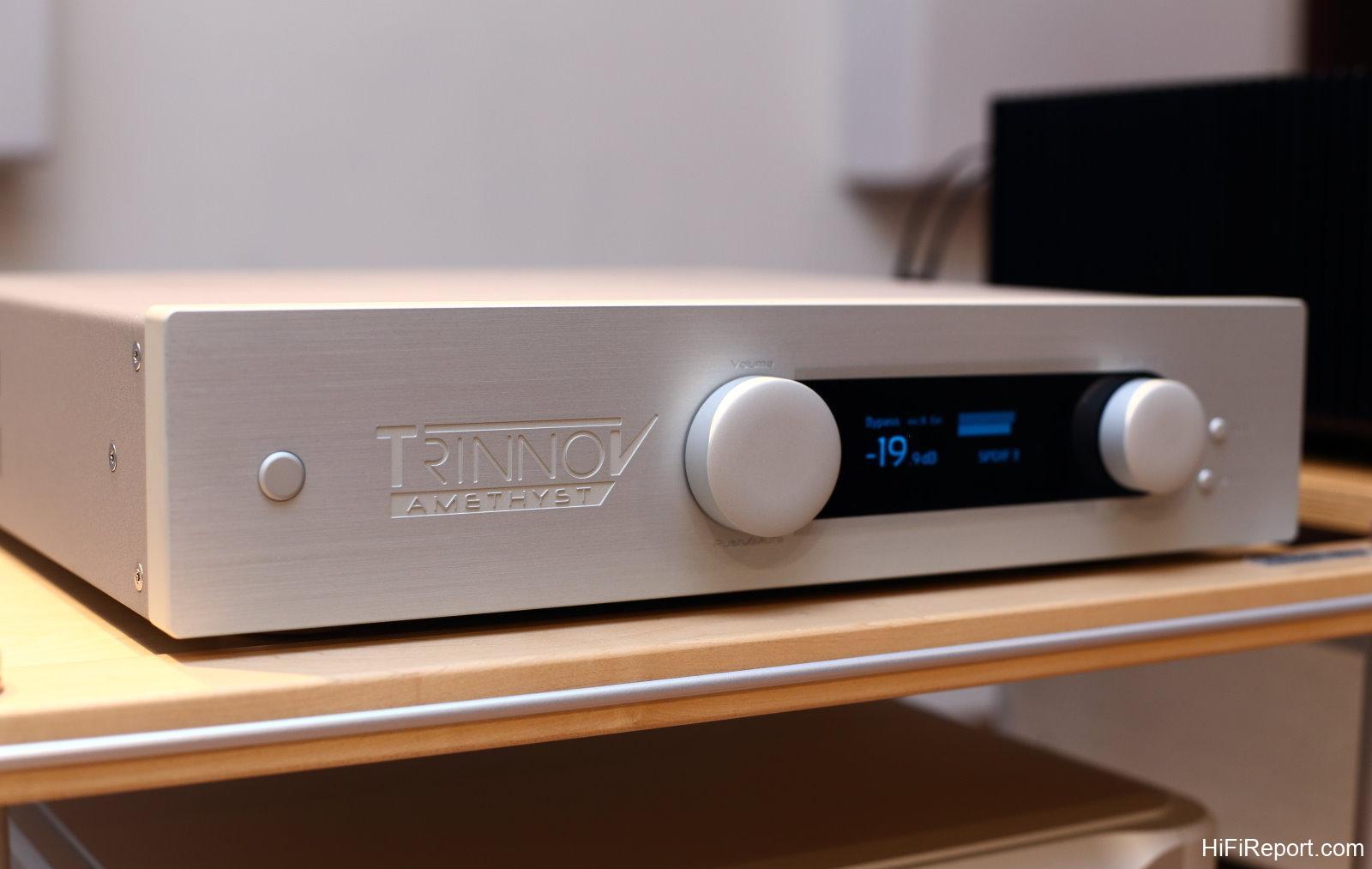
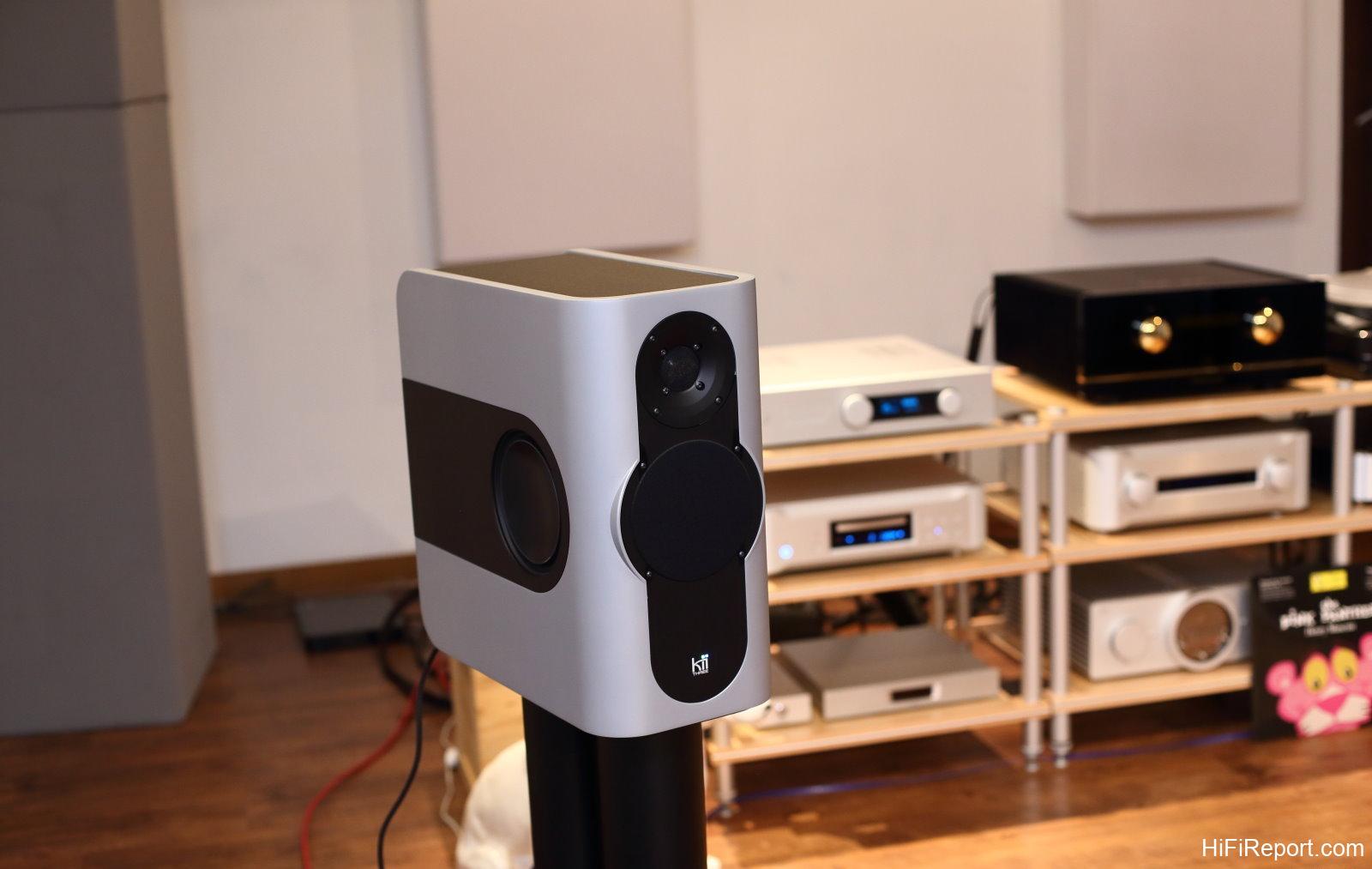
Let’s begin with the visible aspects of the exterior. Each Kii Three speaker cabinet houses six drivers. The front baffle features a 1-inch waveguide tweeter and a 5-inch midrange driver. Additionally, there is a 6.5-inch woofer on each side of the cabinet, and two identical 6.5-inch woofers on the rear.
Independent Amplification for Each Driver
The Kii Three employs an active design, with each speaker cabinet containing six DACs and amplifier modules. A pair of Kii Three speakers utilizes a total of twelve DACs and Ncore amplifier modules. Each driver is powered by an independent 250-watt Class D amplifier, eliminating the need to worry about amplifier matching, which is a significant advantage of active speakers. Furthermore, the Kii Three also incorporates ADC and DSP processing chips.
Essentially, users only need to connect a CD player or network streamer, providing either digital or analog signals to the Kii Three to play music, requiring no other equipment. Providing a digital signal directly to the Kii Three is the manufacturer’s recommended approach.
Bookshelf Convenience, Large Speaker Performance
The reason for using four woofers in the Kii Three is simple: to achieve low-frequency performance comparable to large speakers, reproducing high-quality sound that belies its size. However, simply increasing volume is not sufficient. Audiophiles interested in bookshelf speakers are often constrained by space considerations.
At the Kii Three’s price point, purchasing a decent pair of floor-standing speakers is easily achievable, but many enthusiasts’ listening spaces are not suitable for large speakers.
Minimizing Back Wall Reflections
Therefore, the Kii Three team placed great emphasis on addressing low-frequency issues and developed a solution. In terms of results, the Kii Three, despite having two rear-firing woofers, only requires a distance of 8-10 centimeters from the back wall thanks to its unique active waveguide technology. Users will not experience excessive low-frequency reflections or standing waves due to the speakers being placed too close to the rear wall.
Reflections, beyond volume, also muddy the low frequencies. Achieving this is made possible by internal DSP processing. The design team utilizes unique DSP algorithms to control the sound from the rear and side woofers. Although the drivers are not directed forward, the sound is projected to the sides and front, allowing the Kii Three to be easily placed in any position within a room, even close to the back wall.
As seen in the diagram below, the left side illustrates a traditional speaker. When placed near a back wall, low frequencies propagating forward create two sound waves: the first is the direct sound, and the second is the reflection from the back wall. The right side shows a simulation of the Kii Three. Due to the near absence of rearward sound waves, placing it against a wall minimizes secondary reflection waves.
This not only reduces standing waves but also significantly improves low-frequency clarity and time accuracy.
Unique Internal Design
From the schematic below, we can see that after the signal passes through digital or analog inputs, it first enters the DSP processing stage. It is then converted to an analog signal before reaching the power amplification stage. Each driver, in addition to having a custom Ncore amplifier module, also has a motion control unit.
This unit receives feedback data on voltage and current generated by the driver’s movement and instructs the Ncore module to adjust its output, ensuring the driver produces a flat and balanced frequency response. Consequently, the Kii Three achieves a very linear frequency response across the 20Hz-25kHz range, with deviations controlled within ±0.5dB.
Three Pillars of Sound Reproduction
Beyond linear and balanced frequency response, the Kii Three addresses two other critical issues through DSP and active design: phase and time domain. Traditionally, listening to audio systems was limited by the “sweet spot.” Moving away from this optimal position often resulted in significantly altered sound due to phase issues. Furthermore, the time domain is also addressed through independent DACs and amplifier modules.
DSP processing ensures that the final sound output from each driver is time-synchronized. The design team, through DSP design, substantially minimizes the impact and limitations of these two issues, which are very difficult for passive speakers to resolve.
Frequency Response Adjustments
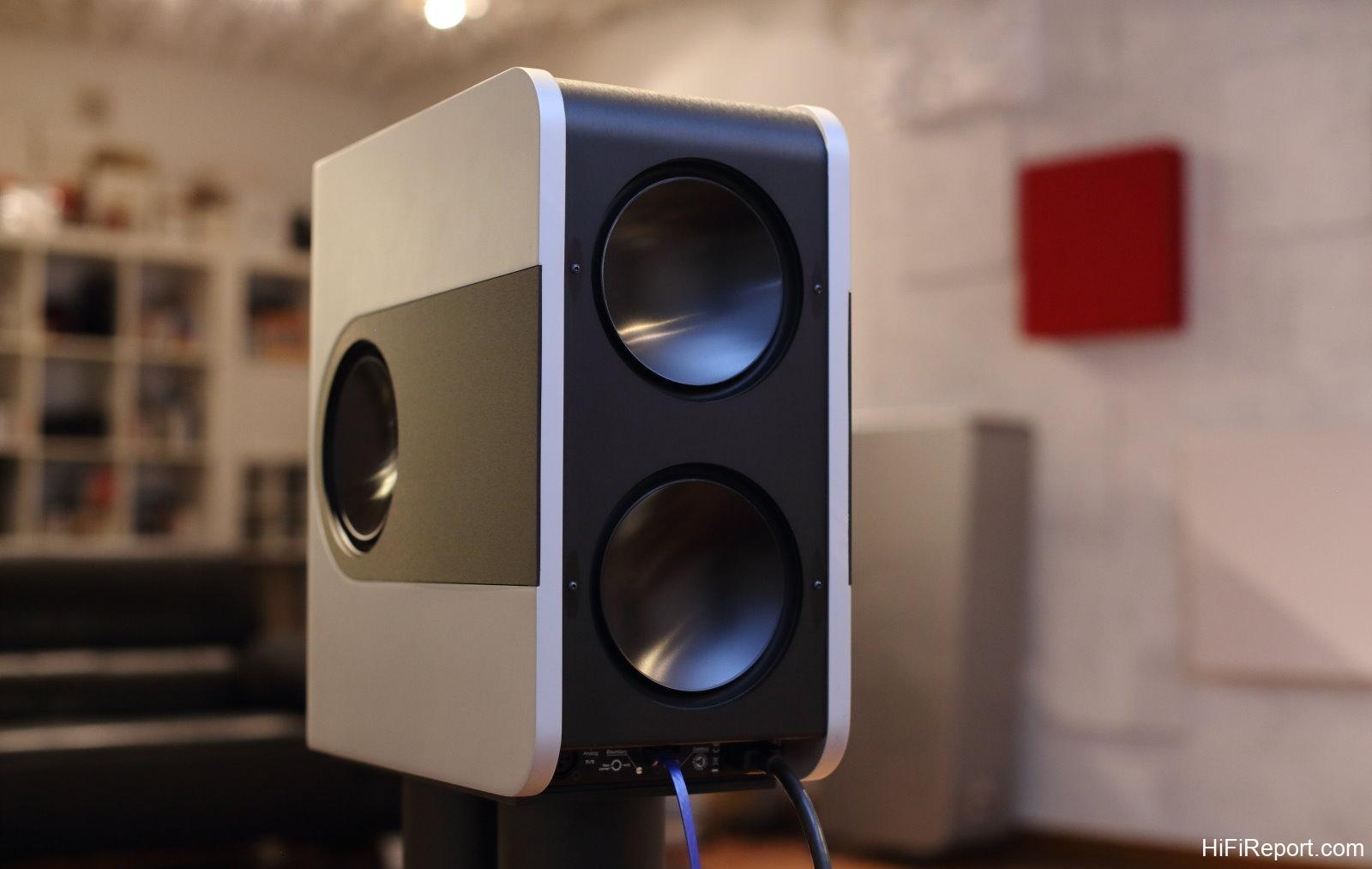
Looking at the rear panel of the speaker, the rightmost is the power socket, followed by a knob labeled “contour.” This is used to adjust the speaker’s frequency response curve, allowing for boosting or attenuating gain below 300Hz or above 3000Hz. Next are two KiiLink Ethernet ports, one input and one output. These are solely for connecting the two speakers.
When connecting a source, the digital signal only needs to be fed to one speaker, designated as the master speaker, and the left and right channels are transmitted digitally via Ethernet cable. Therefore, on the left, you can see the AES digital input jack and the left/right channel selection switch. In the photo, it is set to the right channel, indicating a non-master speaker, so there’s no need to connect to AES, and KiiLink is connected to the “In” port.
Another control knob is “Boundary,” designed to adjust low-frequency response based on speaker placement in different locations. Options include free-standing, corner, and near-wall placement. Since the Kii Three effectively controls the sound dispersion of the woofers, this adjustment only fine-tunes the ultra-low frequencies below 40Hz.
Versatile Digital and Analog Inputs
In practical application, the Kii Three can receive both digital and analog signals. As signals within the Kii Three undergo DSP processing, it is recommended to input digital signals for optimal performance. Analog input is provided because many users have collections of purely analog vinyl records and wish to use turntables as a source. Analog signals entering the Kii Three are converted to digital signals via ADC before processing.
Enhanced Playability with Trinnov AMETHYST
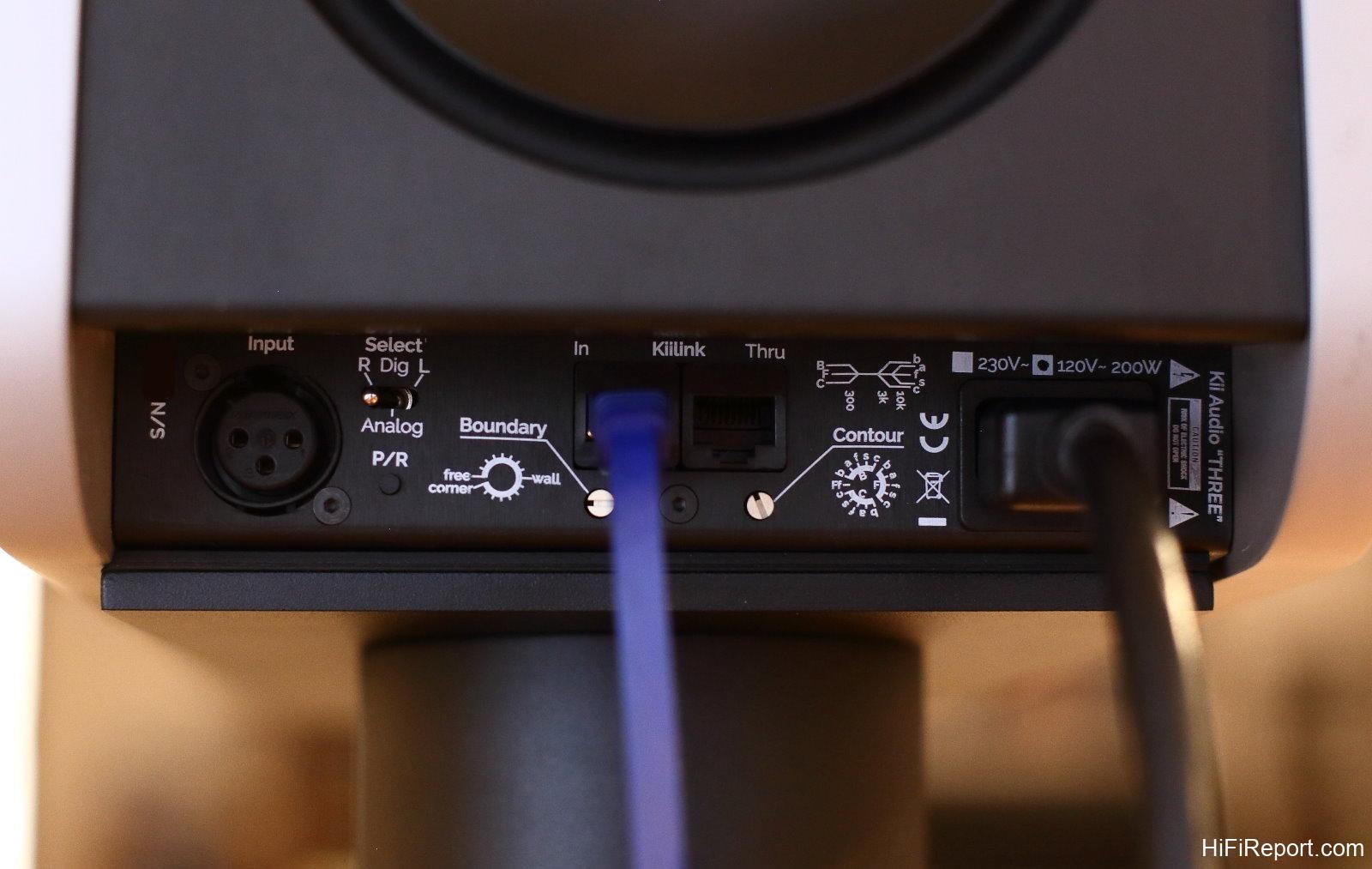
During the listening session, I used an Esoteric CD player as the source, digitally outputting to a Trinnov AMETHYST as a digital preamplifier, which then transmitted digital signals to the Kii Three. The Trinnov AMETHYST served several purposes here. The AMETHYST is both a preamplifier and a signal processor, capable of directly altering frequency response, phase, time delay, and more via software.
Prior to this listening session, I had already measured the overall sound characteristics with the AMETHYST and made subtle adjustments, which positively impacted the sound. Additionally, the Kii Three currently lacks volume control, which I managed through the AMETHYST.
For users without a digital preamplifier, volume control for the Kii Three needs to be managed from the source. Digital streaming players typically have volume control software, and computer playback software also includes volume control. In the fourth quarter of this year, Kii Audio will release a new controller for Kii Three, featuring volume control, additional digital connections such as USB, and control software. Rumor has it that the quality will be exceptionally high.
Waveguide Technology and Placement Flexibility
My greatest curiosity regarding the Kii Three was its waveguide technology, particularly whether the rear woofers truly projected sound forward rather than backward as claimed by the manufacturer. After positioning the speakers and initiating playback, I selected a couple of tracks with substantial low-frequency content and increased the volume to test.
Since our listening room was spacious, and the speakers were not placed close to the rear wall, I moved back and forth between directly in front of and directly behind the speakers during music playback. Standing approximately half a meter behind the speakers, the perceived mid-bass was indeed less pronounced than when standing in front, and the soundstage seemed to originate from the front of the speakers.
Even when standing behind, there was no sensation of significant volume at my listening position, despite progressively increasing the volume. Subsequently, I switched to the Nordost test disc, playing frequency sweeps from 18Hz to 90Hz. In the extremely low-frequency range, the difference was less noticeable, but as the frequency approached 90Hz, the effectiveness of the waveguide technology became increasingly apparent.
Sound Quality and Performance
Playing Eagles’ live recording , the magic of the Kii Three was fully revealed during the classic “Hotel California.” The instant the opening kick drum hit, I completely forgot that these were bookshelf speakers. The low frequencies struck the room with authority. The lead vocalist’s voice possessed both richness and detail. Simultaneously, the guitars and various instruments maintained clarity and distinctiveness, allowing effortless focus on any instrument.
The ambiance of the audience cheering at the end was remarkably realistic and distinct.
Balanced Frequency Extension
Moving on to the soundtrack, Christina Aguilera’s vocals were soaring and bright, full of youthful and wild energy, while Cher’s voice was more restrained and substantial, conveying deep emotion. In Christina’s tracks on the album, characterized by fast tempos and swift rhythms, the Kii Three’s active design handled the style with ease. Christina’s soaring high notes were extended and never harsh, with clear vocal details.
Cher’s voice, on the other hand, sounded steady and rich, with more emotion conveyed through the nuances of her delivery. The Kii Three articulated these emotional shifts clearly, showcasing her vocal appeal equally well.
Sound Density and Soundstage
For soundtrack, I selected tracks emphasizing soundstage and spaciousness, such as track 15 “Over the Love” and track 3 “Young and Beautiful.” In the film, these pieces are used to underscore the protagonists’ emotionally uncertain moments. Beyond timbre, the overall soundstage performance is crucial. The Kii Three speakers were positioned quite widely apart, and the sound density was impeccable. The soundstage’s expansiveness was excellent.
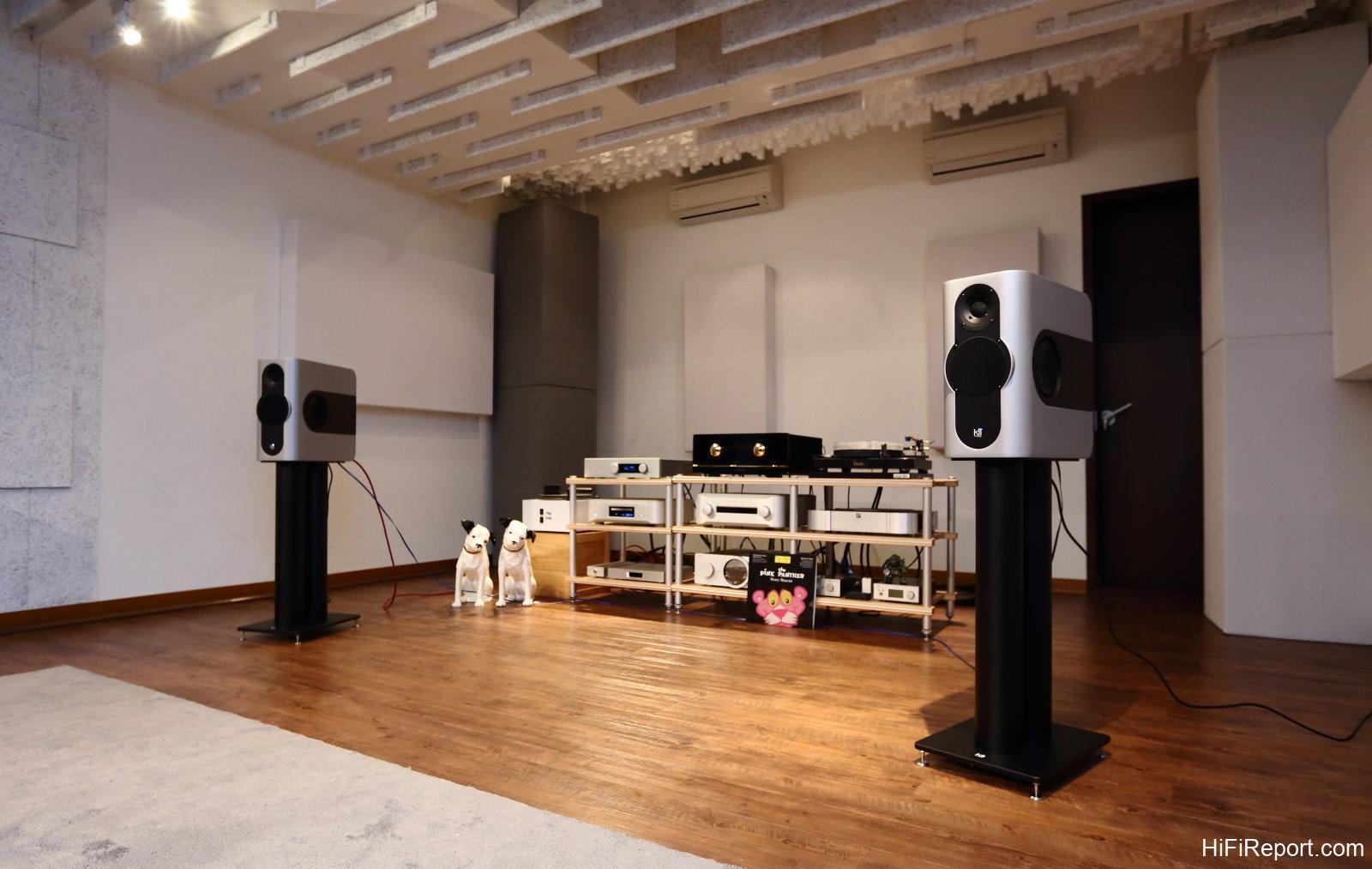
Although the arrangements were not complex, a grand scale is essential for the music to resonate. The Kii Three again scored highly in this aspect.
Precision and Vivid Performance
The piano concerto album featuring Yuja Wang and conductor Gustavo Dudamel with the Venezuelan Simón Bolívar Orchestra is exceptional. Through the Kii Three’s rendition, the performance was rendered with remarkable precision. Without extraneous noise, listening to this occasionally rapid and complex piece was clean and accurate. The performance and every strike of the piano keys were presented in an orderly and vivid manner.
When the orchestra unleashed dynamic bursts, the Kii Three did not falter in the slightest, allowing us to experience the most direct impact.
Kii Three: A Stunner
Kii Audio’s debut product is truly an outstanding speaker. The design team realized their design ideals and created a product that caters to audiophiles with similar needs. The technologies and design logic implemented in the Kii Three are purposeful and interconnected, from the DSP to the final six-driver configuration, all with clear rationale. It is a complete and cohesive system.
As bookshelf speakers, and particularly as studio monitors, the Kii Three’s precision and resolution are beyond doubt. From its flat and balanced frequency response, phase coherence, and time domain accuracy, the design started on the right path. Through DSP and active design, it achieves what passive speakers cannot.
Significant effort was invested in low-frequency waveguide technology, allowing the bookshelf-sized Kii Three to overcome limitations and reproduce superior low-frequency performance. For a company only two years old, Kii Audio’s first offering is remarkable, suggesting it will be a leading innovative brand in audio technology.
Specifications
* Compact DSP controlled monitor speaker
* 4x 6.5″ woofer, 1×5″ midrange, 1″ waveguided tweeter, all individually driven
* Amplification: 6x250W full-custom Ncore
* Active Wave Focusing crossover filter
* Frequency response: 20Hz…25kHz +/- 0.5dB
* Phase response: minimum (best possible time coherence).
* Long term SPL(*): 105dB
* Short term SPL(*): 110dB
* Peak SPL: 115dB
* Controlled Directivity: 4.8dB (80Hz – 1kHz, slowly rising thereafter)
* Size: 20x40x40cm, 8″x16″x16″ (WxHxD)
* Weight: 15kg (33lbs)