
Klipsch Cinema 400 Review
Recently, I decided to retire my decade-old 42-inch flat-screen television and upgrade to a larger LCD model. The advancements were immediately apparent: sharper picture quality, more vibrant colors, and even a more aesthetically pleasing design. The new TV boasts remarkably slim bezels, making the screen itself almost the entirety of the unit’s footprint. This sleekness and lightness make my old television feel like a bulky, outdated relic.
While the new television excels in visual fidelity, its audio performance leaves much to be desired. In the pursuit of thin profiles, manufacturers are forced to employ diminutive and shallow speaker drivers. Consequently, sonic quality inevitably suffers – a fundamental limitation of physics. The trade-off for space-saving design is often compromised audio.
However, solutions exist to overcome this acoustic shortfall. The Klipsch Cinema 400 soundbar emerges as an accessible and effective remedy, allowing you to dramatically enhance your TV audio without breaking the bank.
Horn-Loaded Tweeter Technology
Klipsch currently offers two soundbar systems: the Cinema 400 and the Cinema 600. Both share identical height and depth dimensions, differentiating themselves primarily in width and the size of their accompanying subwoofers. The Cinema 400, with its 40-inch width, is paired with an 8-inch wireless subwoofer, while the Cinema 600 extends to 45 inches and incorporates a larger 10-inch wireless subwoofer.
These variations in scale, driver configurations, and price points provide consumers with options tailored to different television sizes, room dimensions, and budgetary considerations. This review will focus on the more compact Cinema 400.
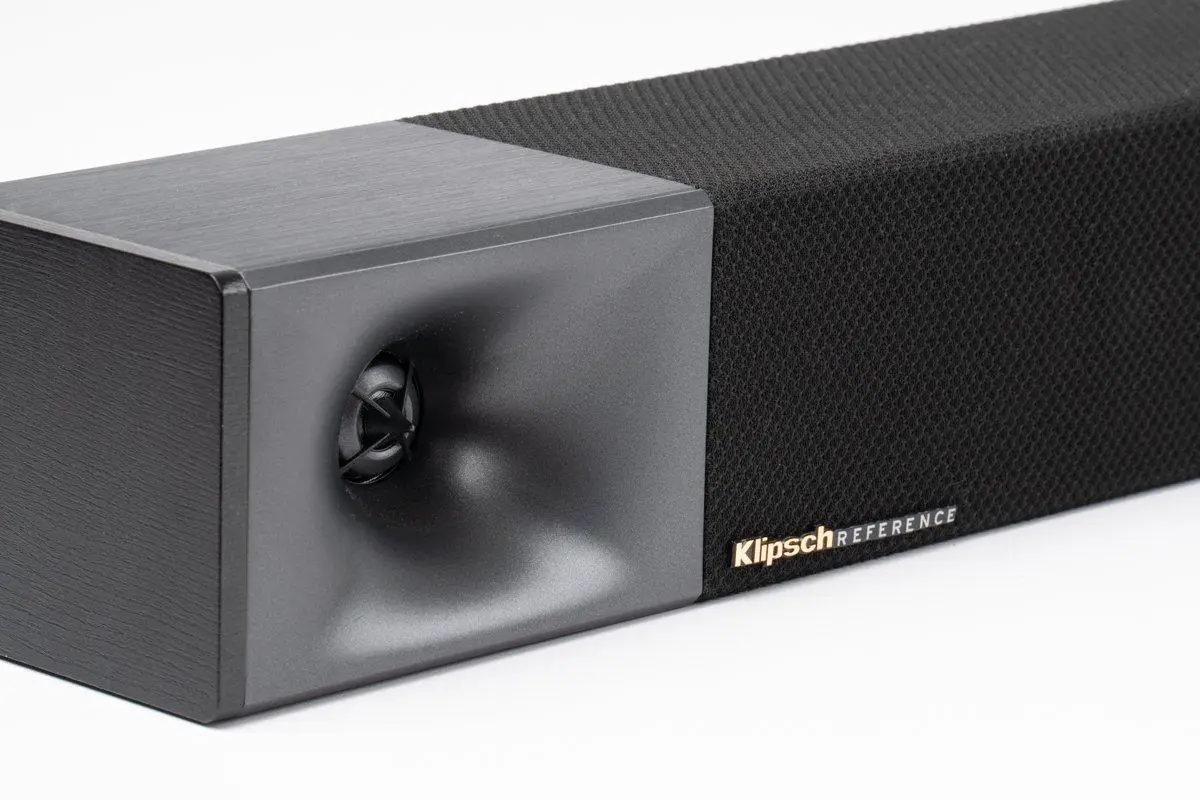
Let’s delve into the driver arrangement of the Cinema 400.
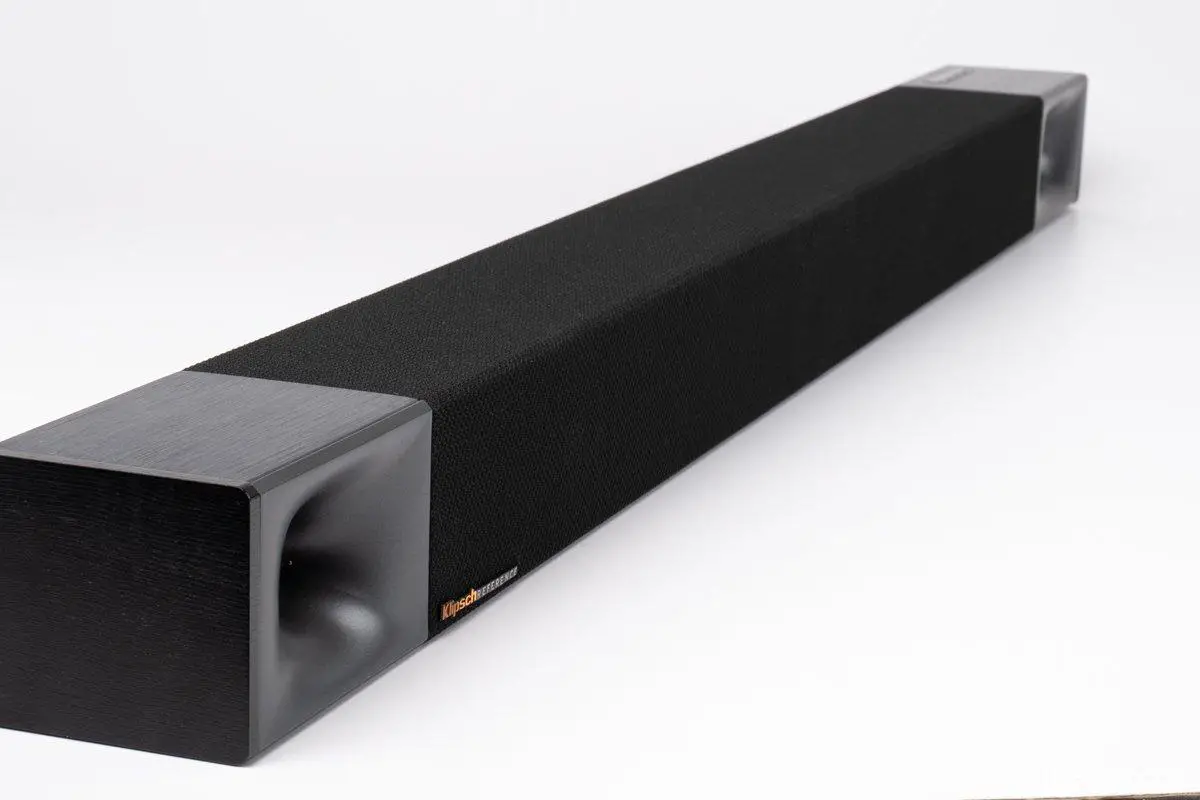
The Cinema 400 soundbar itself employs a fundamentally 2.1 channel configuration, utilizing a total of four drivers. At the extreme ends of the soundbar, nestled on both the left and right channels, reside Klipsch’s signature 90° x 90° Tractrix horn-loaded tweeters. This proprietary horn technology elevates performance by delivering superior efficiency and enhanced detail retrieval compared to conventional dome tweeters. Furthermore, the horn loading extends the tweeter’s lower frequency response, facilitating a smoother integration with the lower-frequency drivers.
Positioned immediately inward from the Tractrix horn tweeters are oval-shaped 3-inch composite fiber woofers, one per channel. The choice of an oval driver geometry is deliberate. Given the height constraints inherent in soundbar designs, maximizing cone area within a limited vertical space is crucial. Oval drivers achieve this, resulting in an expanded radiating surface area that bolsters low-frequency reproduction. Concealed beneath the soundbar’s wraparound grille, these woofers contribute to the system’s understated and streamlined aesthetic.
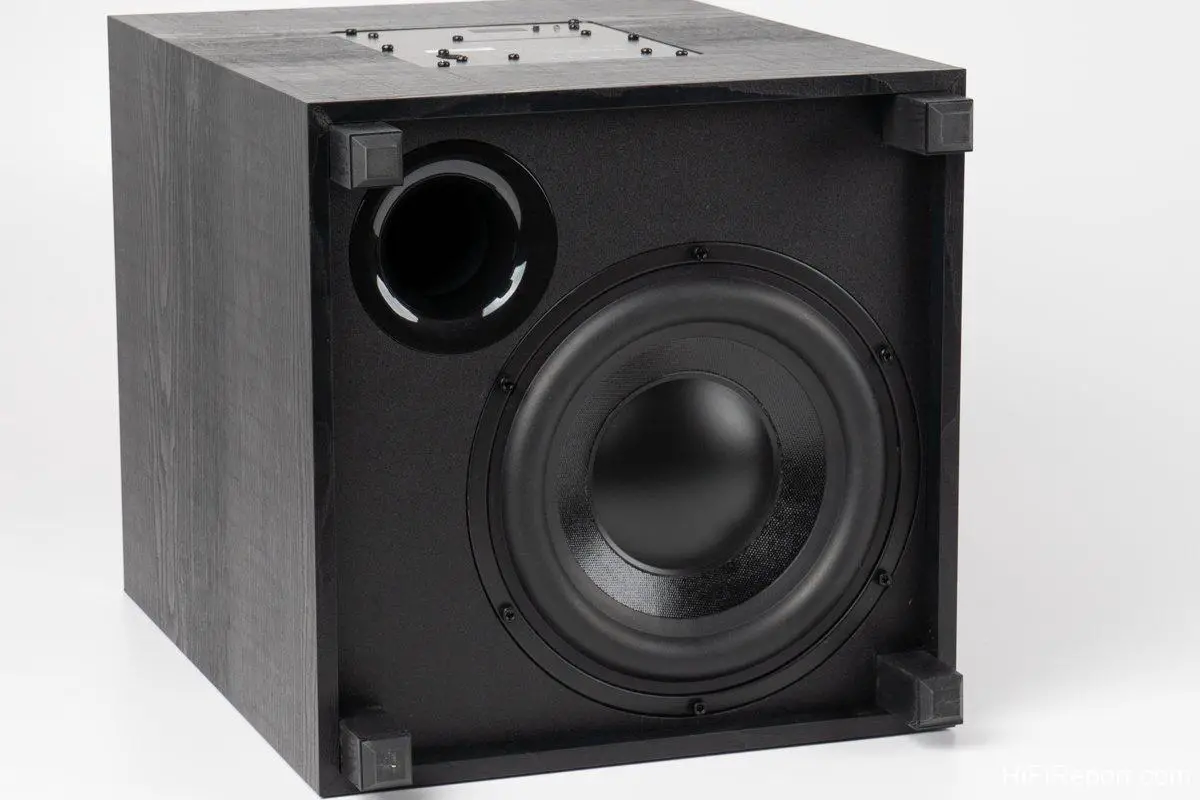
Complementing the soundbar is a dedicated wireless subwoofer, housing an 8-inch downward-firing driver. This subwoofer empowers the system to achieve a robust low-frequency extension down to a claimed 35Hz.
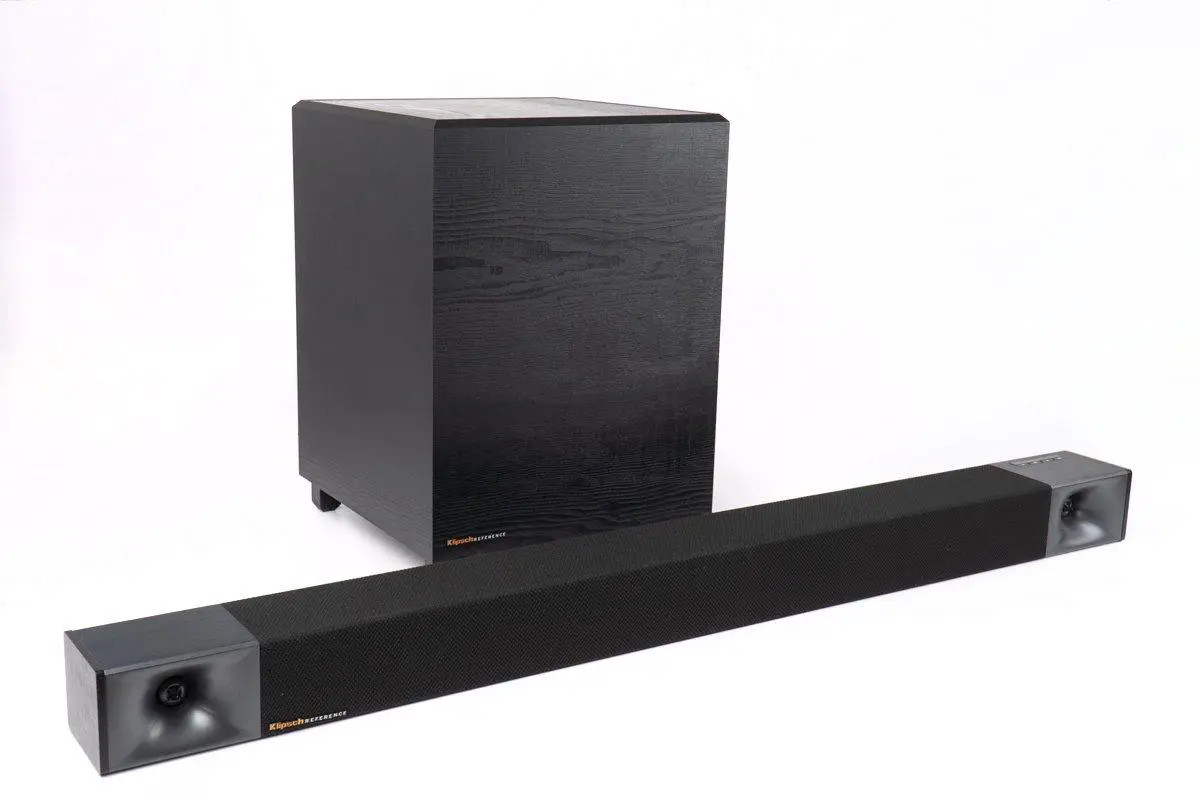
The wireless nature of the subwoofer eliminates the need for cumbersome signal cables, granting greater flexibility in placement, even at a distance from the soundbar itself. The downward-firing driver and bottom-ported bass reflex design further enhance placement versatility by directing sound waves and air movement downwards, minimizing room interaction issues.
For users desiring even more substantial bass reinforcement, the Cinema 400 also provides a dedicated subwoofer output, enabling the option to connect a second subwoofer via a wired connection.
Versatile Listening Modes
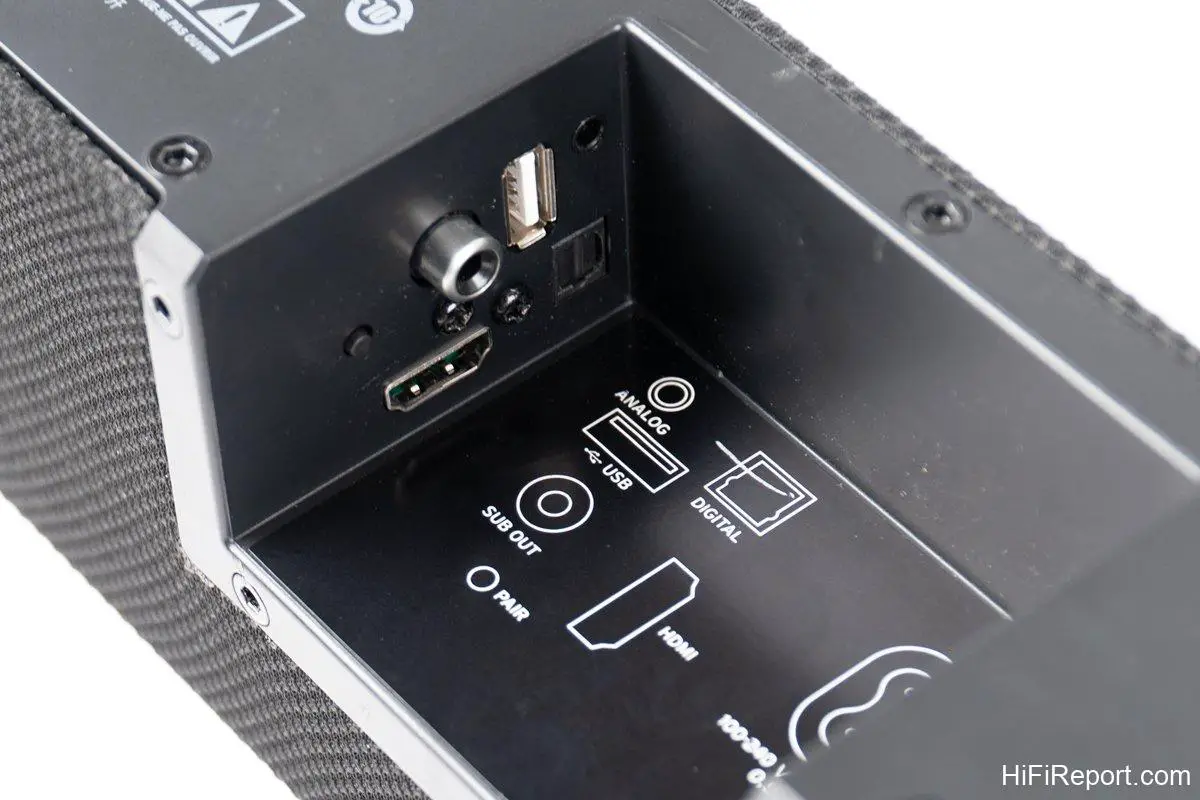
In terms of connectivity, the Cinema 400 offers a comprehensive suite of inputs. An HDMI-ARC (Audio Return Channel) port simplifies connection to compatible televisions. By utilizing an HDMI cable between the soundbar and the TV’s corresponding HDMI-ARC port, audio from the television can be seamlessly transmitted back to the Cinema 400 for playback.
For televisions lacking HDMI-ARC functionality, the Cinema 400 provides alternative connectivity options, including a 3.5mm analog input and an optical digital input. These inputs ensure compatibility with a wide range of legacy and modern televisions.
Furthermore, the Cinema 400 incorporates Bluetooth wireless technology, facilitating convenient streaming from smartphones, tablets, and computers.
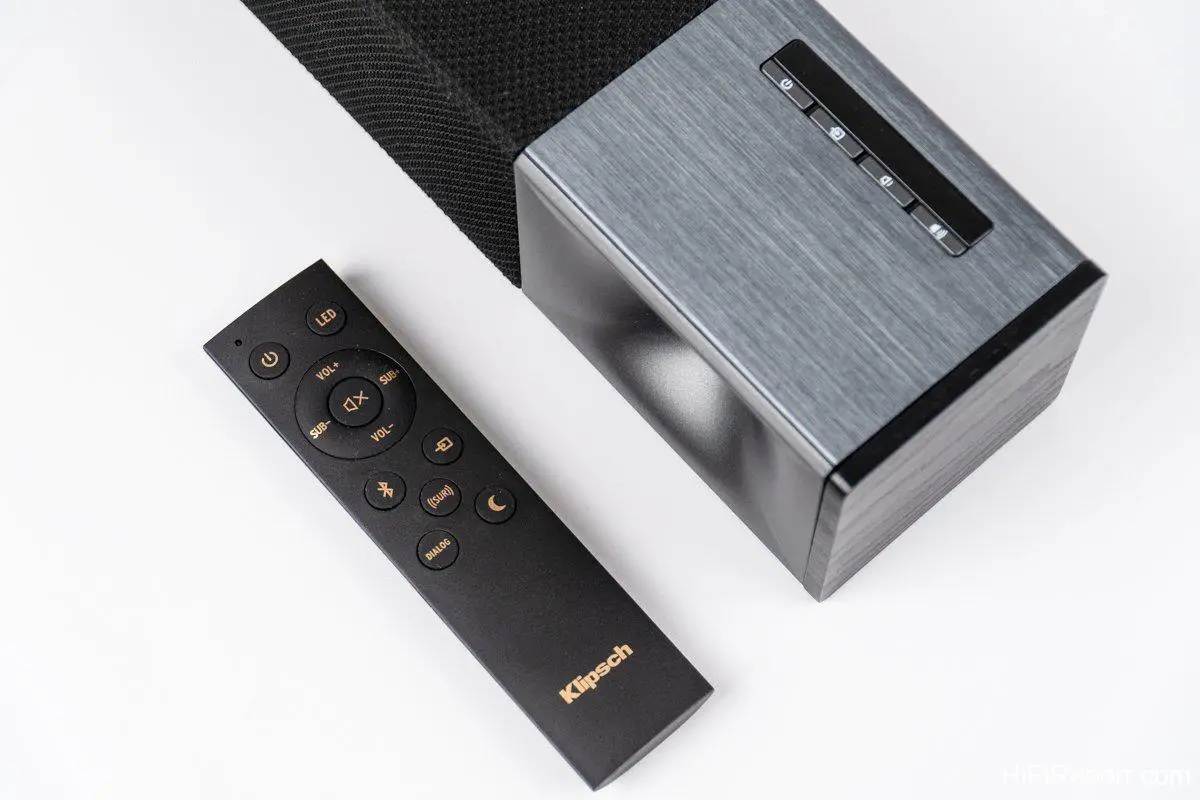
To ensure effortless control, a dedicated remote control is included.
This elegantly designed remote provides fingertip access to essential functions, notably independent subwoofer level adjustment. This allows users to fine-tune the system’s bass response to their preference and the acoustics of their listening environment.
The remote also manages the Cinema 400’s listening modes. Three distinct modes are available. The first, SUR (Surround) mode, engages a virtual surround processing algorithm via the internal DSP (Digital Signal Processor) to create a more expansive soundfield. When deactivated, the Cinema 400 operates in a standard stereo mode, presenting a more focused, albeit less immersive, sonic image.
The second mode, DIALOG, enhances vocal clarity by employing equalization (EQ) to emphasize the midrange frequencies, rendering dialogue more prominent and intelligible.
The third mode, NIGHT, is designed for late-night listening scenarios. Engaging NIGHT mode automatically disables the subwoofer and compresses the dynamic range of the audio signal, preventing loud passages from disturbing others while maintaining intelligibility at lower volumes.
An additional user-friendly feature of the Cinema 400 is its ability to learn commands from your television’s remote control. This allows for seamless volume adjustment directly from your existing TV remote, streamlining operation and minimizing remote clutter.
The Cinema 400 also boasts integrated Dolby Audio decoding, providing native support and processing of Dolby Digital audio streams. This ensures a more impactful and cinematic audio experience when playing content encoded in Dolby Digital formats.
Expansive Soundstage Performance
Setting up the Cinema 400 is remarkably straightforward, bordering on plug-and-play simplicity. In most cases, no manual configuration is required. Upon powering on both the soundbar and the subwoofer, they automatically establish a wireless connection and pair seamlessly.
In the rare event of needing to re-establish pairing, a PAIR button is located on the rear panel of both the soundbar and subwoofer. Pressing and holding the PAIR button on the subwoofer for 3 seconds, followed by the same action on the soundbar, initiates the pairing process.
The listening evaluation was conducted in the HiFiReport listening room. Lacking a traditional television in this space, a computer monitor was utilized as the display. A Blu-ray player was connected to the monitor via HDMI, and an optical cable was then used to link the Blu-ray player to the Cinema 400, enabling audio playback for testing purposes.
Immediately upon playback of familiar test clips, a significant strength of the Cinema 400 became apparent: its capacity to generate a surprisingly expansive soundstage. The perceived sonic scale extended beyond the physical width of the soundbar itself, evoking a more immersive, theater-like presentation.
It’s worth noting that this expansive soundstage is primarily realized when the SUR mode is engaged. Disabling SUR mode results in a soundstage more closely confined to the physical dimensions of the soundbar, underscoring the effectiveness of the Cinema 400’s DSP-driven virtual surround processing.
For instance, during playback of the “Leaf” demo clip from the Dolby Atmos demonstration disc, the rustling of leaves audibly originated from the far left of the listening space, rather than simply emanating from the left portion of the soundbar. This clearly demonstrated the system’s ability to project sound beyond its physical boundaries.
Moving to the “Amaze” clip from the same Dolby Atmos demo, the sensation of birds flapping their wings and flying across the soundstage from left to right, and then back again, was convincingly rendered. The smoothness and continuity of the sonic movement were also commendable.
Remarkably, certain sound effects even seemed to originate from the sides of my listening position, indicating a degree of sonic envelopment that transcended a purely frontal, planar presentation.
An Ideal Upgrade for TV Audio
The primary role of a soundbar is to supersede the often-underwhelming integrated speakers found in most televisions. Consequently, a significant portion of typical viewing content, such as movies and television shows, is dialogue-centric. This is where the Cinema 400’s DIALOG enhancement mode proves invaluable. Engaging this mode noticeably enriches vocal presence, lending voices a fuller, more substantial quality and enhancing their clarity and intelligibility. This allows dialogue to be heard distinctly without needing to raise the overall volume to uncomfortable levels.
Another key advantage of the Cinema 400 over typical television speakers is its ability to reproduce audio with genuine depth and low-frequency extension. The sound is richer and more substantial, avoiding the thin and anemic sonic character often associated with built-in TV audio. This improvement is largely attributable to the seamless integration between the soundbar and the dedicated subwoofer. The cohesive blending of the soundbar and subwoofer outputs results in a unified and full-bodied sonic presentation. This integration not only heightens the excitement and impact of action sequences and soundtracks but also imbues the overall sound with greater weight and a more satisfying listenability over extended periods.
In its role as a soundbar solution, the Klipsch Cinema 400 delivers exceptional performance and value, offering a significant audio upgrade at an accessible price point. It represents a compelling option for those seeking to enhance their home entertainment experience without the complexity or expense of a full-fledged surround sound system.
Specifications
* Type: 2.1 channel soundbar system with 8-inch wireless subwoofer
* Maximum SPL: 99 dB
* Drivers: 1 x 1″ Silk Dome Tweeter with 90° x 90° Tractrix Horn (per channel), 1 x 3″ Oval Fiber Composite Woofer (per channel)
* Wireless Subwoofer: 8″ Down-Firing Driver, Bass Reflex Enclosure
* Frequency Response: 35Hz – 20kHz
* Inputs: HDMI-ARC, Bluetooth®, 3.5mm Analog, Optical Digital
* Output: Subwoofer Output
* Dimensions: Soundbar – 1014mm x 73mm x 86mm (39.9″ x 2.9″ x 3.4″) (W x H x D), Subwoofer – 302mm x 410mm x 410mm (11.9″ x 16.1″ x 16.1″) (W x H x D)
* Weight: 12.47 kg (27.5 lbs)