
KT1 Bluetooth Earbuds with Earhook Review
The question that comes up most when a buyer looks at sport earbuds is simple: will they stay in when you move? For the average ear, that is a manageable concern. For anyone with small or child-size ears, the question sharpens: will they even fit at all? The KT1 earbuds address both. Multiple owners spanning several years of reviews report these as the first true-earhook buds that seat correctly in a small ear without pressure or slippage, and the product’s 72-hour total playtime claim gives them a longevity edge over most in-canal competitors. This review tests the fit claim and the battery claim against what actual owners say after weeks, months, and years of daily use.
The Headline Act
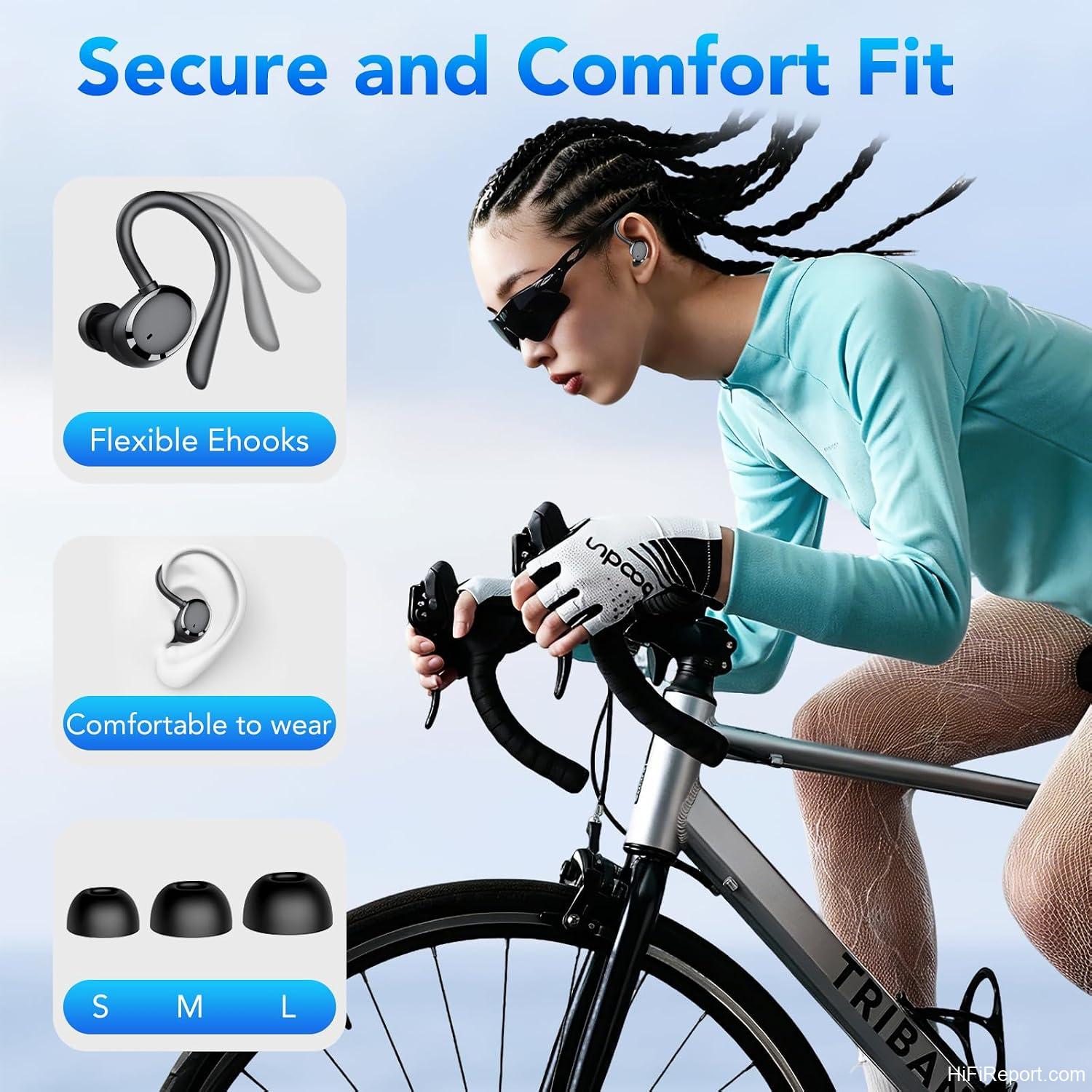
The KT1 earbuds are built around a sports earhook with soft rubber wings that wrap behind the ear. The Amazon listing describes the wings as a “new design of soft rubber wings” that “firmly support” the bud and are “suitable for all types of ears, small ears can also wear.” In a market where most wireless earbuds are sized around an average adult ear canal, the earhook adds a second anchoring point that prevents the bud from rotating out during lateral head movement. For a runner or gym-goer with a smaller outer ear, that second anchor changes whether the bud stays in for a 40-minute session or needs a readjustment every two minutes. The compact in-ear head keeps the overall footprint small enough for ears that have usually fought standard earbud shapes, and the soft wing does the holding work so the canal fit can stay gentle.
The Earhook Fit Under the Hood
Soft rubber forms the earhook, and several owners flag this material choice as the reason the buds tolerate glasses frames and do not create pressure points behind the ear. The product ships with three sizes of ear tips, and one long-term owner who uses the smallest tips reports no clogged feeling during extended wear. A separate owner with what they describe as “child size” ears confirms the medium-size tips seated comfortably on the first try, with no pain and no need to readjust during a run. The earhook can be positioned two ways: the flexible wing tucks behind the ear for maximum security, or the bud rests along the edge of the ear for a lighter grip when the user does not need the full lock. Both positions held through bending over, lying down, and running, according to multiple reviews across different use cases.
The compact in-ear head is a second fit factor. Standard earbuds often carry a driver housing that is too large for a small outer ear, causing the bud to sit too high or tilt out of the canal. The KT1 keeps the housing small enough that even a narrow ear accommodates it, and the earhook carries the structural load so the canal fit can remain light. Owners who wear glasses consistently note the soft wing does not conflict with temple arms, a problem that rules out many rigid-hook and over-ear designs.
Originally published on hifireport.com. Unauthorized scraping or republishing is prohibited.
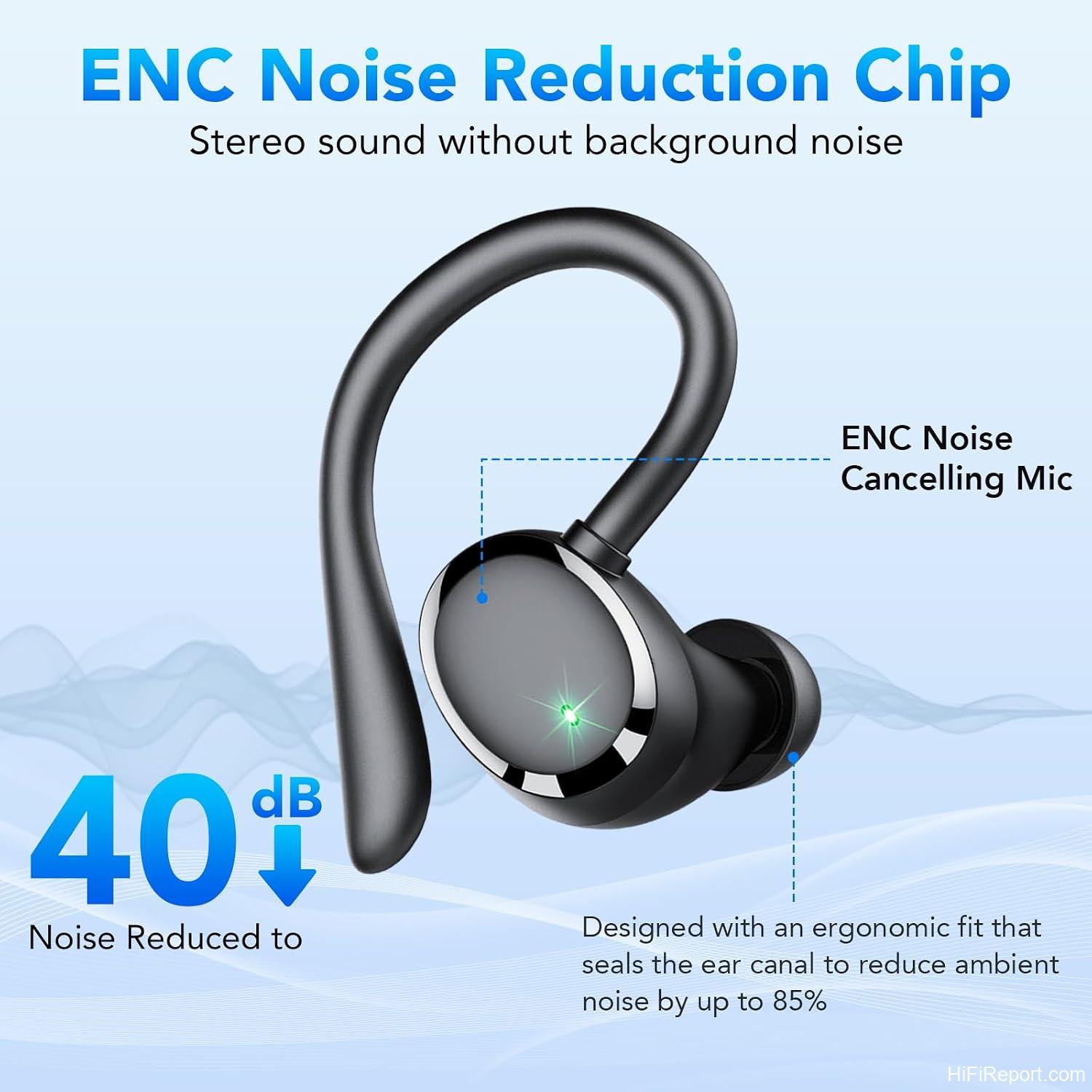
One practical note follows from the earhook shape. The bud sits slightly outside the canal compared to a deep in-canal fit, which affects how much ambient noise is blocked. A runner in the reviews noted that even at a soft volume the buds blocked out most external noise, and they did not hear a car right next to them. For anyone running near traffic, the mono (single-bud) mode becomes the safer option, and the KT1 supports that: either the left or right earpiece can be used alone.
Sound Check
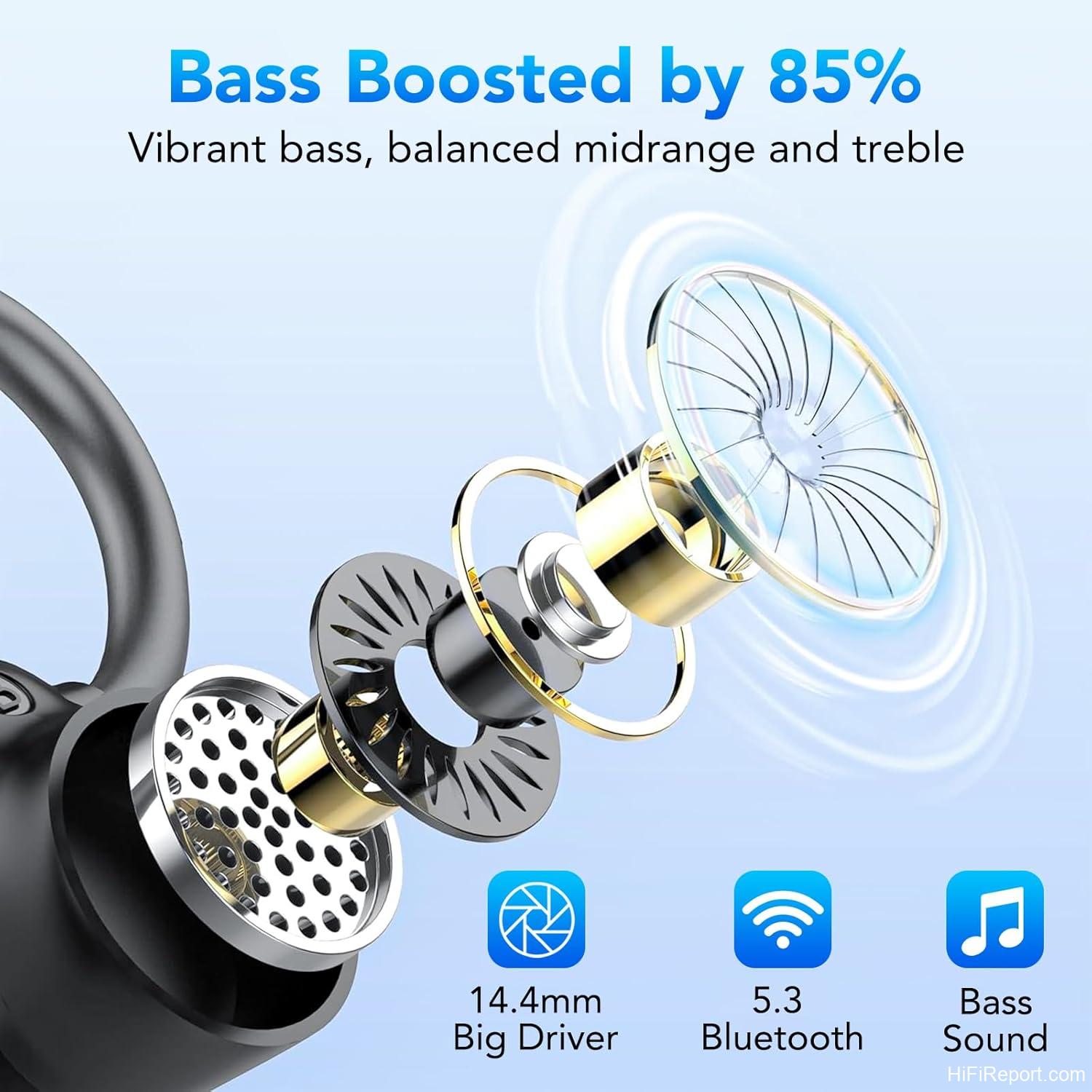
The KT1 earbuds deliver clear, balanced audio with a pronounced bass boost, and the trade-off is a slight muddiness in the low end at higher volumes. Owners who are not self-described audiophiles describe the sound as full and clear, with one comparing it favorably to premium in-ear buds they had owned for years. The driver is a 10 mm graphene and dynamic speaker unit, and the listing references an enhanced bass technology that adds 43 percent more bass. Bass is present and punchy, but one reviewer noted muffling of ranges, especially in bass-heavy tracks, which can make the low end feel compressed rather than extended. At moderate volumes the midrange and highs stay clean; the compression shows up mainly when the driver is pushed.
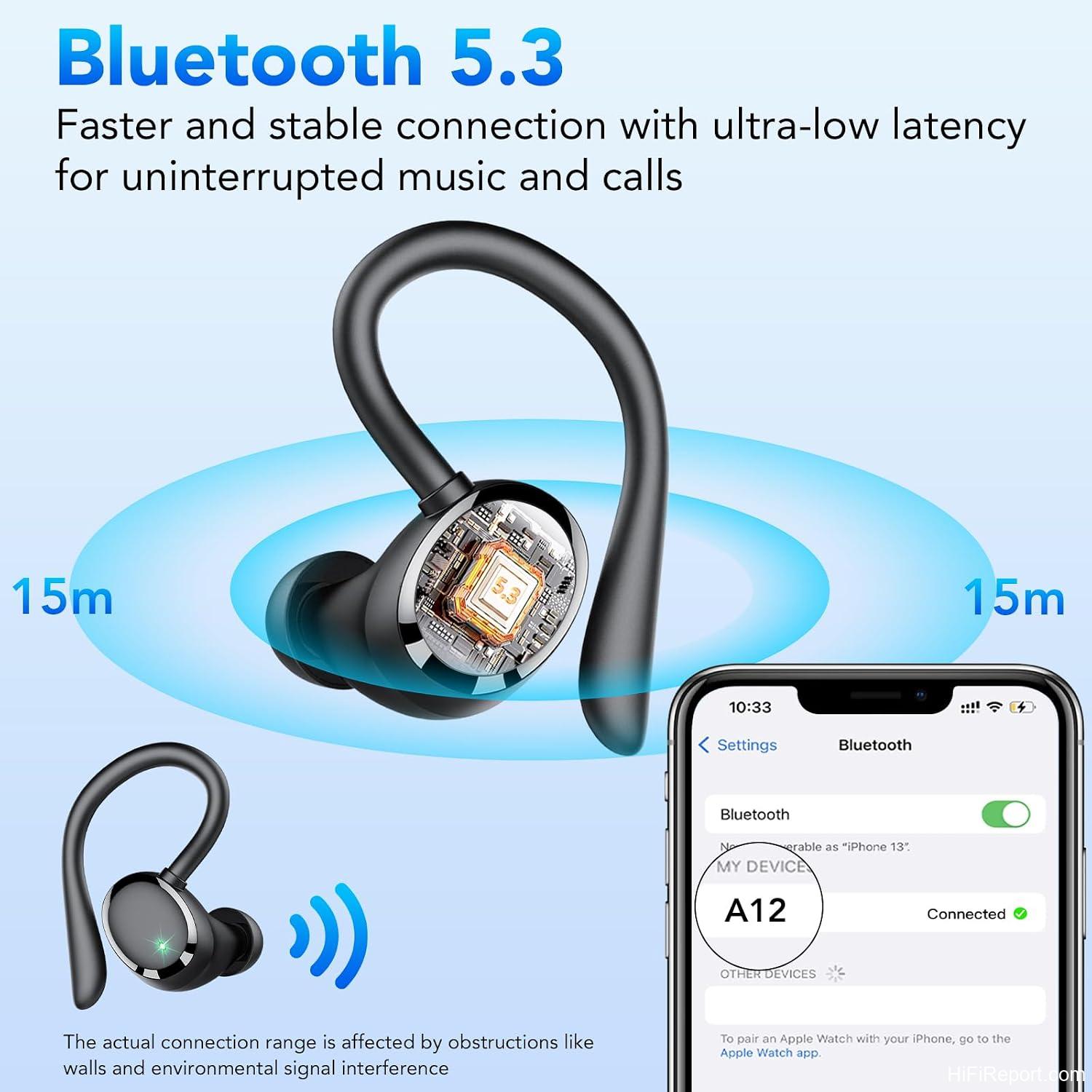
Call quality is a separate audio channel worth checking. The built-in microphones isolate the wearer’s voice from surrounding noise, and multiple owners confirm they are heard clearly on phone calls without the listener asking for a repeat. Connection range is a strength in its own right: one owner left a phone in a garage and walked the full yard without a dropout, and another crossed a house from the media source with no quality loss. Bluetooth 5.3 on the A12 chip, paired with a ceramic antenna the listing says enhances signal by 50 percent, underpins that range. Minimum latency sits at 42 milliseconds, low enough for video playback without noticeable lip-sync drift.
Everything Else
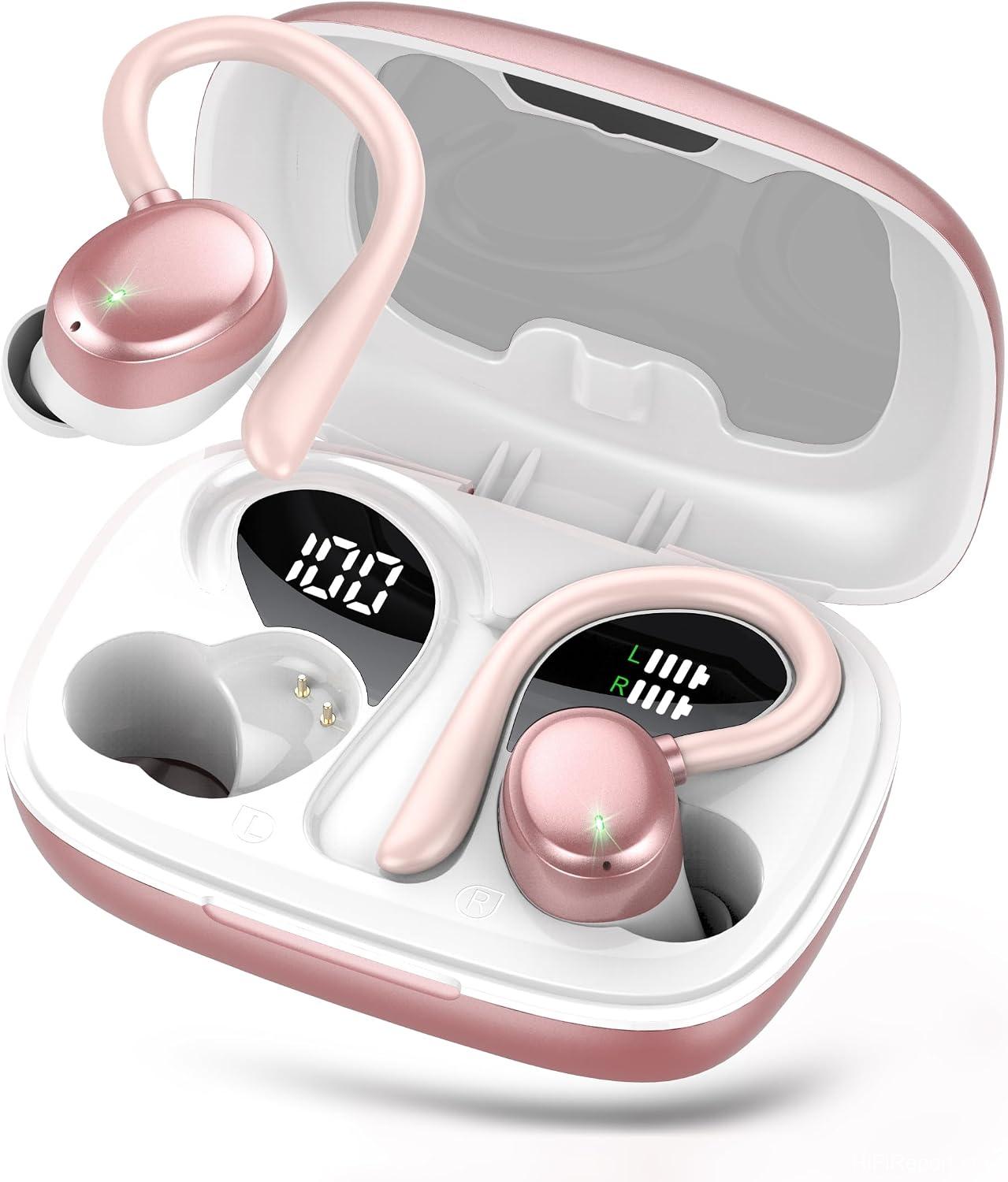
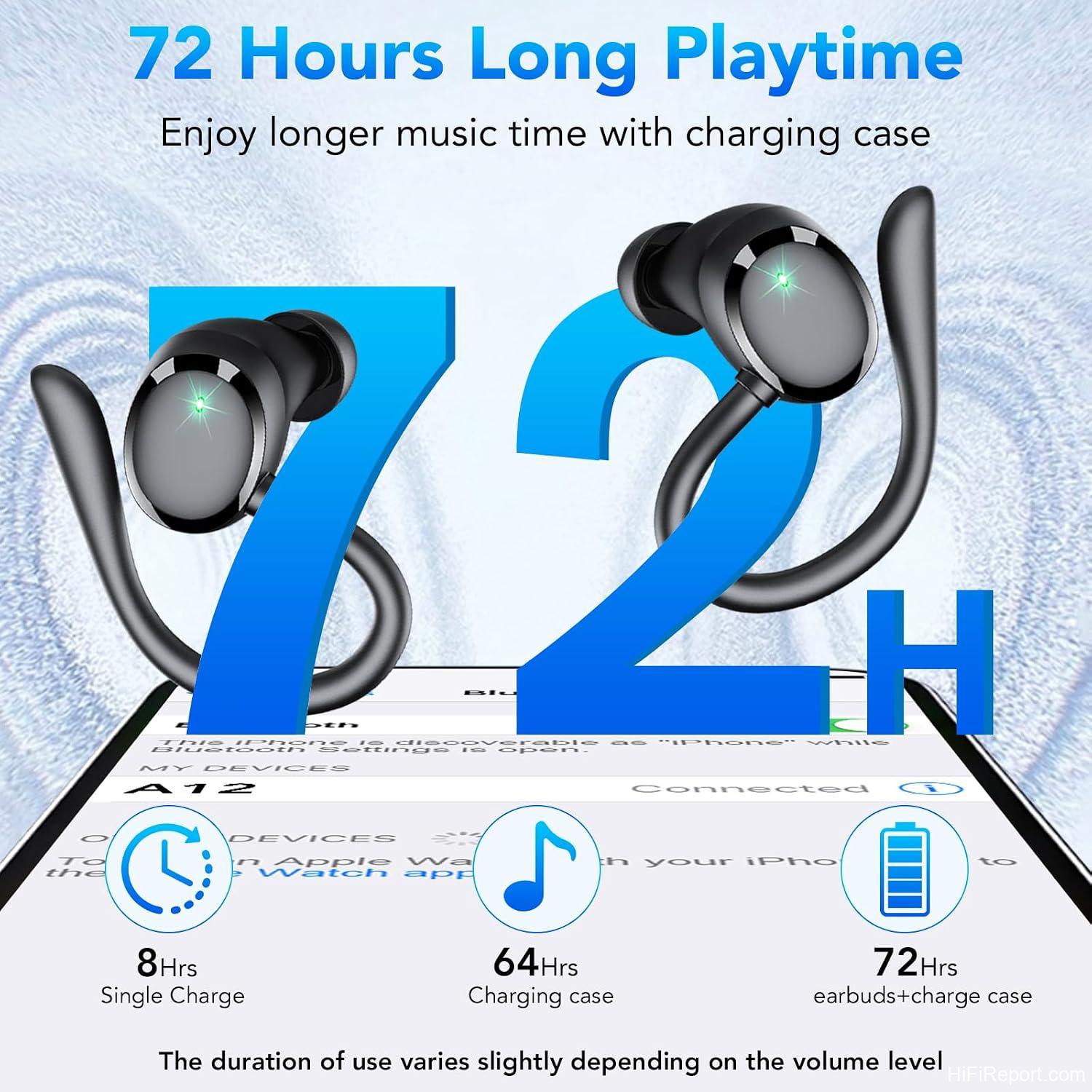
Battery life is the second headline number: 8 hours on the earbuds alone and 72 hours total with the charging case. The case carries a digital display on both sides, with each grid representing 25 percent of the remaining power. Owners confirm the earbuds last through a full workday of intermittent use, and one reviewer went weeks between case recharges. A separate owner timed the case recharge at roughly 3 hours from empty over USB-C. The case can also pass power to a phone, though in one test it drained from 100 percent to zero in 40 minutes and added 16 percent to a phone already at 51 percent, which positions it as a slow top-up source rather than a primary charger.
Water resistance is rated IPX7, and owners validate the rating through real sweat and rain exposure. One reviewer got the buds wet by accident and they continued to function without issue. The control scheme uses physical multifunction buttons instead of a full touch surface, which reduces accidental triggers. That said, one owner found the buttons sensitive enough that the act of pushing a bud into the ear could max out the volume, and recommended setting volume before seating the bud. A separate owner noted a 1 to 2 second lag on button responses, minor but present.
The case build splits opinions. Several owners call it sturdy and solid; one described the buds surviving a fall from barstool height onto a cement floor with only the hinge slightly bent, both earbuds still charging and working. Another owner said the case feels like thin plastic and the hinge wiggled straight out of the box. The case measures slightly less than an inch thick, which suits a jacket pocket or bag better than a slim pants pocket.
Day-to-Day
A running or gym session is the use case the earhook is designed around. Owners report the buds stay seated through sprints, lateral movements, and the full range of treadmill or stair-machine work. Sweat from a hard session does not degrade performance or cause a slip, thanks to the IPX7 rating and the rigid seam design the listing highlights. The soft rubber wing does not chafe during a long set, and the compact head means no pressure behind the ear even when the user wears a headband or sunglasses.
At a desk, the buds handle a full day of work, study, or podcast listening. One owner wore them for entire days while working and studying without the battery running low. The digital display on the case makes it easy to check remaining charge at a glance without pulling out a phone. The single-bud mode is useful in an open office or at home, letting the wearer keep one ear on the room while staying on a call or following a lecture.
What Owners Say
The most consistent praise across all 13 collected reviews is the fit, especially for small ears. Owners who have tried multiple brands marketed as “small ear” options report the KT1 as the first pair that actually seats correctly. The earhook plus compact head combination gets the bud into the canal without forcing it, and the three tip sizes give a margin of adjustment. Comfort over long wear is the second frequent theme: no clogged feeling, no pressure, no need to pull the buds out for a break.
Originally published on hifireport.com. Unauthorized scraping or republishing is prohibited.
Durability earns the third slot in the praise column. One owner had a pair for three years through daily running and sweat before the electronics finally failed, and another had a pair for years before losing them. A separate owner described the buds surviving a fall onto a cement floor with only the case hinge slightly bent, both earbuds still functioning and charging. Battery longevity rounds out the praise: multiple owners report the case holds enough charge for several days of moderate use before needing a wall recharge.
Complaints cluster in a few areas. The absence of noise cancellation is the most cited gap; one owner noted the buds get loud and do not block ambient noise well, which is expected for an open-hook sport design but matters for a commuter who wants quiet. Control sensitivity is the second complaint: the buttons can trigger the wrong command or spike volume during the physical act of seating the bud. Case build quality is the third: it functions, but the plastic feels thin and the hinge is the first component to show wear. Color options are limited; the product moved from a single rose-gold finish to also offering black, which addresses the most common styling complaint.

Pros and Cons
Pros:
- Earhook fit confirmed by multiple owners with small or child-size ears who have struggled with other brands
- 72 hours total playtime with a digital display on the charging case
- IPX7 water resistance validated by real-world sweat and rain use
- Bluetooth 5.3 connection with 42 ms minimum latency and strong range reported by owners
- Physical button controls reduce mis-taps compared to full touch surfaces
Cons:
- No noise cancellation; ambient sound bleeds through, a safety consideration in traffic
- Buttons are sensitive; seating a bud in the ear can trigger a volume spike
- Case build feels thin; hinge is the first component to show wear
- Slight muffling in the bass range at higher volumes
- Limited color choices (black and rose gold)
The Verdict
The earhook fit is the reason to buy these, and it is the reason to skip them. If you have small ears or a narrow outer ear and have bounced off every other wireless bud on the market, the KT1 is the design that solves that specific problem. The soft rubber wing anchors the bud, the compact head seats without pressure, and the three tip sizes cover the range. Pair that with 72 hours of total battery, IPX7 resistance, and a Bluetooth 5.3 connection owners report holding across a house or a yard, and the buds cover sport-to-desk use without needing a second pair. If your ears are average or large, the earhook adds bulk and the compact head loses its advantage; a standard in-canal bud will likely fit as well or better. Best for runners, gym-goers, and desk workers with small ears who want a secure, long-lasting fit; look elsewhere if your priority is active noise cancellation or a large-ear comfort profile.
Originally published on hifireport.com. Unauthorized scraping or republishing is prohibited.
Spec Sheet
- Bluetooth version: 5.3 (A12 chip)
- Minimum latency: 42 ms
- Driver: 10 mm graphene and dynamic speaker unit
- Bass technology: Enhanced Bass (43% more bass per listing)
- Earbud playtime: 8 hours
- Total playtime with case: 72 hours
- Water resistance: IPX7
- Charging: USB-C via case; digital display (25% per grid)
- Antenna: Ceramic, 50% signal enhancement per listing
- Earhook material: Soft rubber wings
Questions Worth Asking
Will the earhook fit if I wear glasses?
Yes. The soft rubber wing is flexible enough to sit behind temple arms without creating a pressure point, and multiple owners who wear glasses or sunglasses confirm there is no conflict between the two.
Can I use just one bud at a time?
Yes. The KT1 supports mono mode, so either the left or right earpiece can be used alone for situations where you need to hear your surroundings. The buds auto-disconnect when returned to the case and auto-pair when the lid opens.
How long does the charging case actually last between wall charges?
Owners report several days of moderate use on a single case charge, consistent with the 72-hour total playtime claim in daily running and desk scenarios. A full case recharge from empty takes roughly 3 hours over USB-C.
Do the buttons cause accidental volume spikes?
They can. The physical buttons are sensitive enough that the act of pushing a bud into the ear can trigger a volume increase or fire the wrong command. The workaround owners use is to set volume before seating the bud and to be deliberate with each press.

- 72H Playtime and Digital Display: Wireless earbuds can be used normally for 8 hours after a full charge, with a charging case to enjoy 72H play time.Charging case with a clear digital display, as well as the left and right sides with the earbuds power display, each grid represents 25% of the power. During charging and connected, the LED light will flash
- Hi-Fi Sound Quality & HD Voice Technology: Bluetooth earbuds with 10mm graphene and dynamic speaker unit, enhanced bass 3.0 technology, 43% more bass.Experience high-fidelity sound reproduction that brings every note and detail to life, enhancing your music listening experience. The built-in microphones ensure high-quality call performance by isolating your voice from surrounding noise. Enjoy uninterrupted conversations with superior clarity, regardless of your location
- Bluetooth 5.3: The A12 bluetooth headphones features Bluetooth 5.3 and an advanced ceramic antenna with 50% signal enhancement and a minimum latency of 42ms. ensuring a stable connection in complex environments.The wireless earphones offer both binaural mode for stereo surround sound and mono mode allowing you to enjoy music with either the left or right earpiece alone.Open the lid of the charging case, the bluetooth earbuds can be automatically connected to the previous paired device, Put back the charging case, the earphones will automatically disconnect