
KZ AS10 IEM Headphone Review
Most five-driver in-ear monitors at this tier get bought by musicians who assume the extra drivers mean a louder, bass-heavier stage mix. The KZ AS10’s five balanced armature setup takes a different route: it prioritizes instrument separation, wide staging, and controlled low-end punch. A vocalist on a live rig hears each element as a distinct block in the mix; a casual listener at home gets a reference-leaning tonal profile that several owners compare to sets costing several times more. The product markets itself as a musician’s monitor, but the sound signature pulls in any buyer who wants clean, separated audio in a wired, low-impedance package.
Build Quality and Design
The KZ AS10 arrives in a black cardboard box with the KZ logo and a winged-top graphic. The IEMs rest in a hard foam cradle labeled Left and Right, with an engraved plate carrying the model name. Lifting the foam on its attached ribbon reveals two small plastic bags: three pairs of silicone ear tips (S, M, L; medium is pre-attached to the shells) and the stock cable. A user manual, warranty card, and a small certificate of authenticity round out the contents.
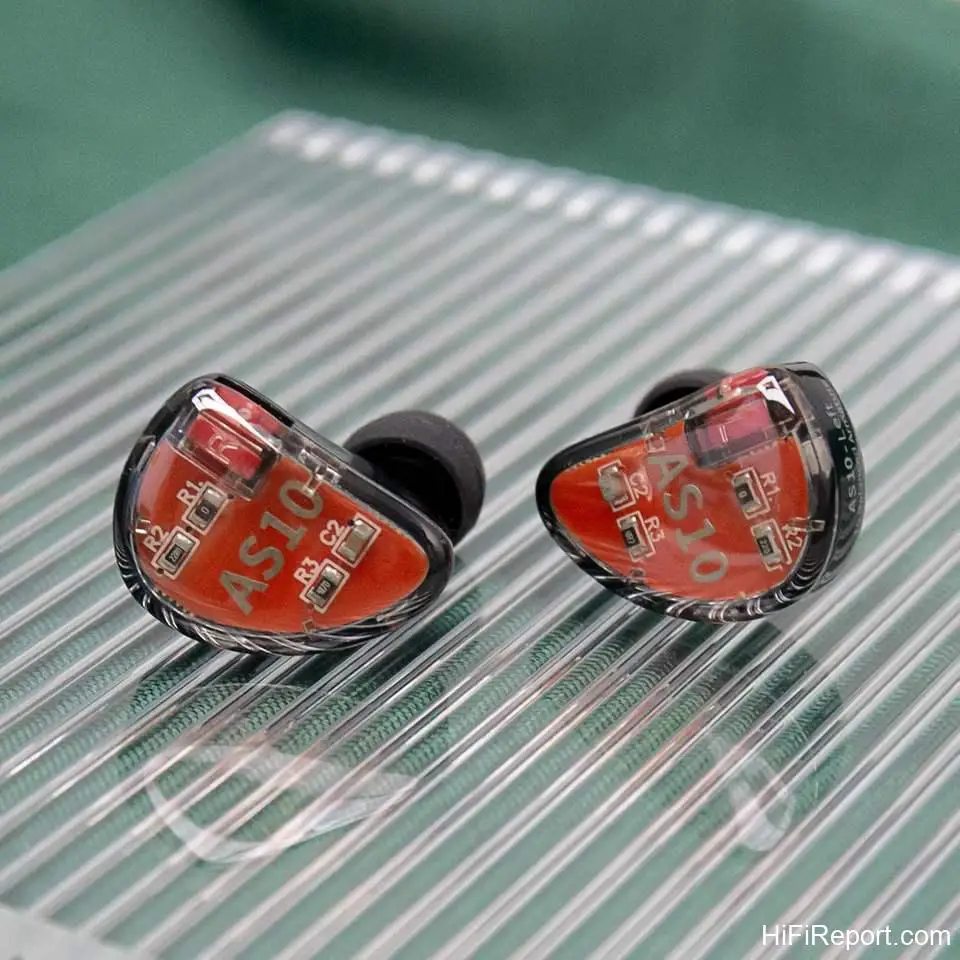
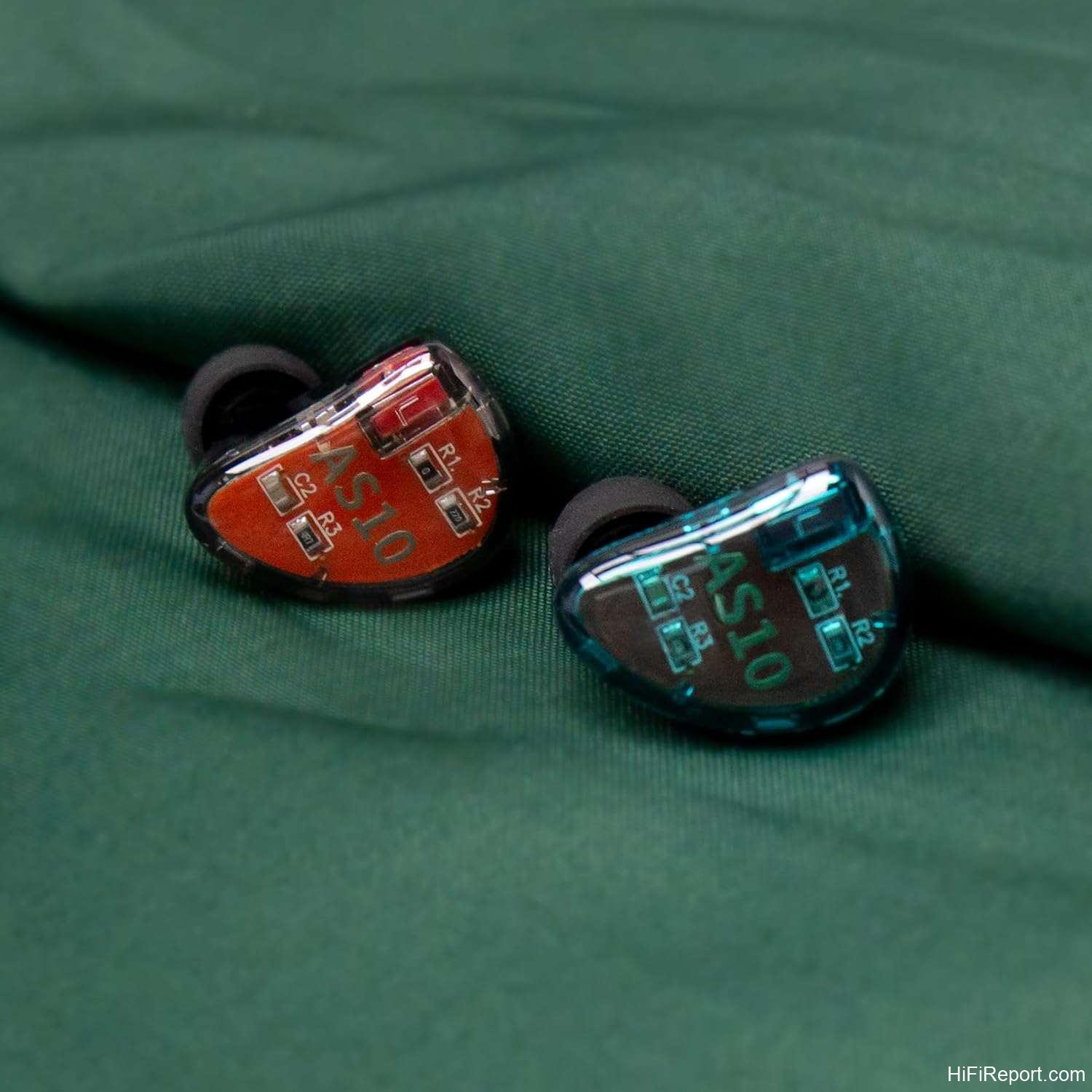
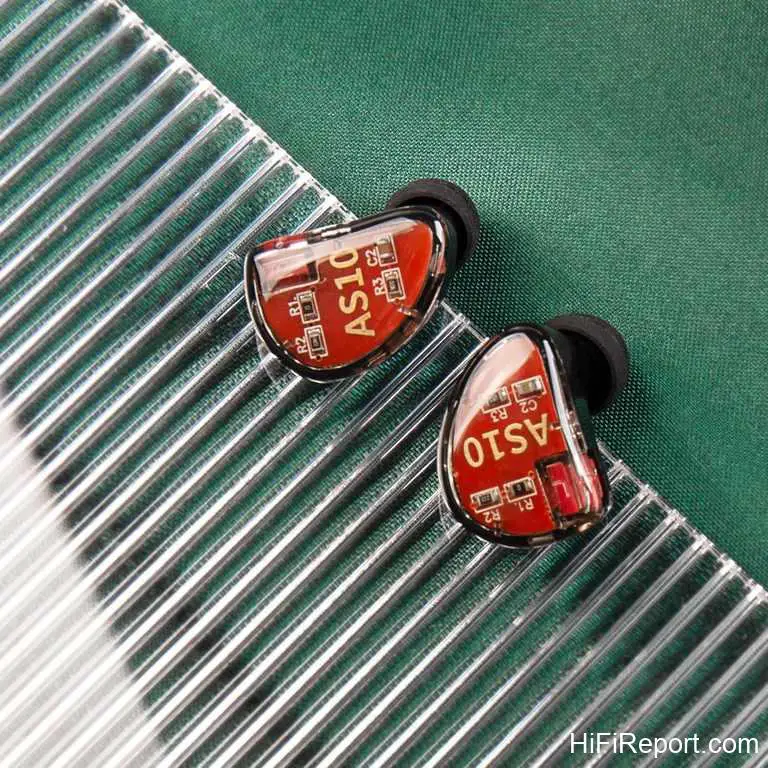
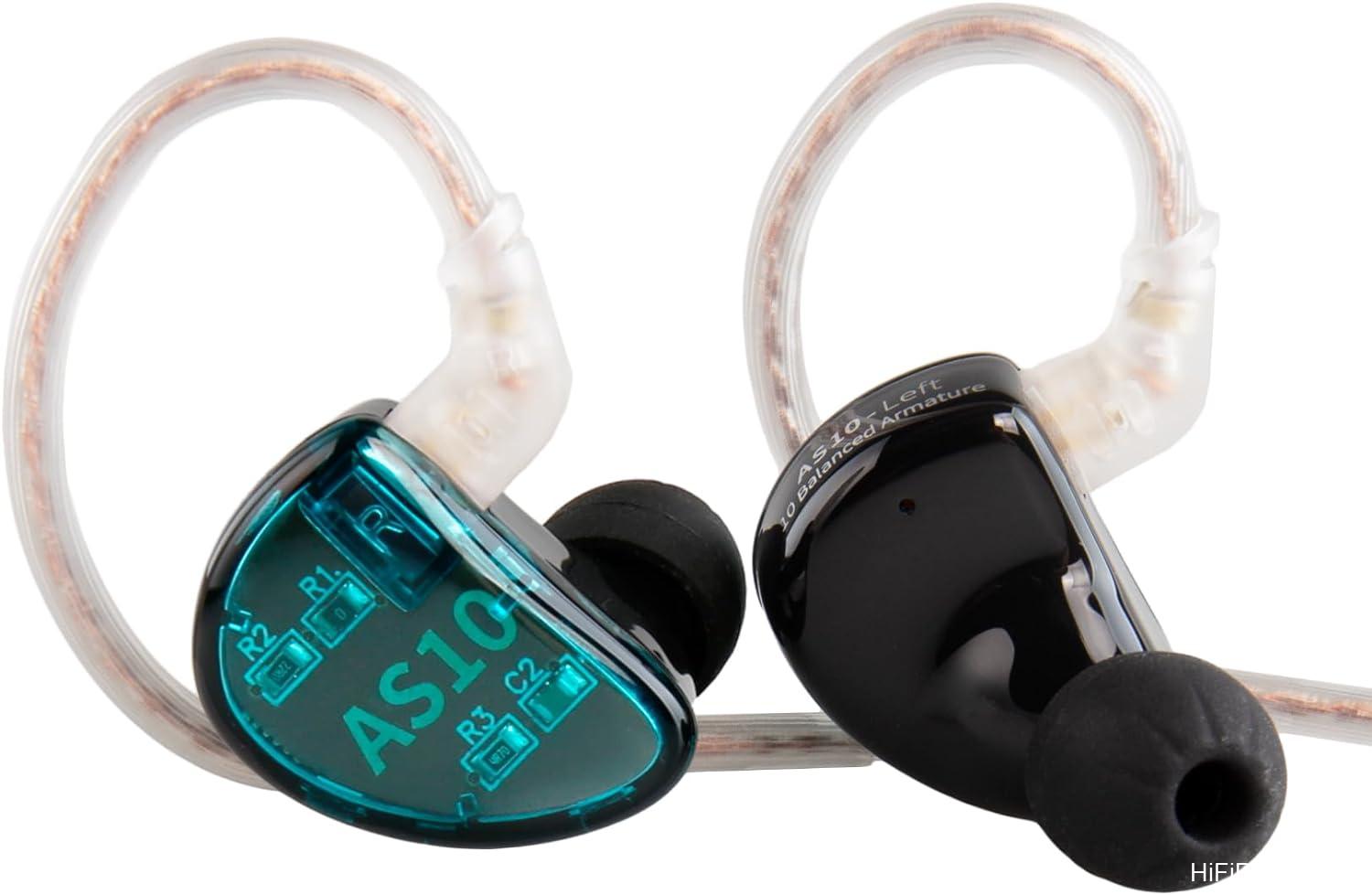
The shells are molded from durable plastic. The black colorway pairs a translucent front panel with a solid black back, and the model number plus L/R marks are engraved into the rear face. The shells run lighter and slightly smaller than earlier KZ designs, and the nozzle extends a touch further into the canal, which several owners credit for a better seal and a more comfortable long-session fit. The 3.5mm L-shaped stereo jack and gold-plated contacts plug into a braided cable roughly 120 cm in length. A memory-wire section near the 2-pin connectors, sheathed in a clear tube, lets the cable hook sit snugly around the ear. The 2-pin plugs detach from the shell, so a worn or stretched cable can be replaced without retiring the driver units. No microphone segment is included; the set is strictly a two-channel audio monitor.
Wearing Comfort
Fit comes down to tip selection and insertion depth. Owners with average-sized canals report the medium silicone tips seal without pressure, and the slightly longer nozzle helps the shell sit flush against the ear. One long-term stage user described the shells as comfortable enough for extended live sets without the ear fatigue that often follows dynamic-driver IEMs after the first hour. A separate owner who wears them two to four hours a day noted the shells run a bit large for smaller ears and begin to press after about two hours of continuous wear.
The included silicone tips tend to migrate deeper into the canal over the course of a long session, a complaint at least two owners flagged. Swapping to foam tips addresses both the slip and the seal in one move. The braided stock cable is flexible and low-stiffness; one reviewer specifically pointed out that it produces no rubbing noise against clothing or a beard, a common irritation with stiffer wires. The cable length at 120 cm suits desk and travel use, though one owner found it a touch short for reaching a far phone.
Sound Quality
The KZ AS10 delivers a wide, well-separated sound from its five balanced armature drivers, with bass that carries dynamic-driver punch and a treble that rewards clean recordings while exposing sloppy ones.
Bass
The low-frequency section is the strongest part of the tuning. One large balanced armature unit handles the bass range, and multiple owners describe the result as matching the texture and impact of a dynamic driver in the same price bracket. Bass arrives with a quick attack and a controlled decay. It stays clean without bleeding into the midrange, and the sub-bass extension reaches deeper than most single-driver earbuds at this level. One detailed listener found the low-end response on par with headphones several tiers up in cost and singled out the sub-bass as the standout element. A separate owner compared the bass character to the Sennheiser HD 650: present and articulate, without the rumble that muddies the low mids.
Midrange
The mids sit on the warm side of neutral, with a modest dip in the 500 Hz to 1 kHz region that gives the overall tuning its V-shaped character. Voices come through clean and crisp, without the scooped, forward placement typical of stage IEMs tuned to shout over a mix. Several owners who mix or master at home described the mids as reference-leaning: instruments occupy their expected positions, and the tonal balance does not flatter or harshen the signal. The mid and mid/high hybrid driver handles the upper-mid to lower-treble transition, keeping vocals and acoustic instruments articulated without muddiness or a boxy timbre.
Treble
Two dedicated high-frequency drivers push the top end further than most five-driver sets, and the extension is genuinely wide. On well-recorded material, the detail in cymbal tails, string harmonics, and the air around a vocal stands out. The weakness shows up on poorly mastered tracks and for listeners with acute high-frequency sensitivity: one owner described the 2 kHz to 12 kHz band as aggressive, with sibilance and tonal spikes that a simple EQ dip could not fully smooth. A second peak around 19 kHz is audible to younger ears and can feel like a thin, bright edge stacked on top of the rest of the range. For buyers who still hear past 18 kHz, this is the one tuning compromise to weigh before committing.
Soundstage
The stage width is the feature that surprises buyers coming from single-dynamic-driver earbuds. Instruments hold distinct positions across the left-right and front-back planes, and a listener can track a drum fill or a guitar arpeggio as it moves through the mix. One owner benchmarked the spatial picture against a full-sized open-back headphone and found the AS10 placed the bass slightly forward and the treble closer to the ear, producing a three-dimensional image that, while narrower than the open-back, held up well for the in-ear form factor. The wide, natural separation makes the IEM work as a reference tool for checking mixdowns, not just as a stage monitor.
Keeping the World Out
The KZ AS10 has no active noise cancellation; it is a passive, wired IEM. Isolation comes entirely from the silicone tip seal and the physical mass of the shell against the canal wall.
This review first appeared on hifireport.com. Reproduction without permission is not allowed.
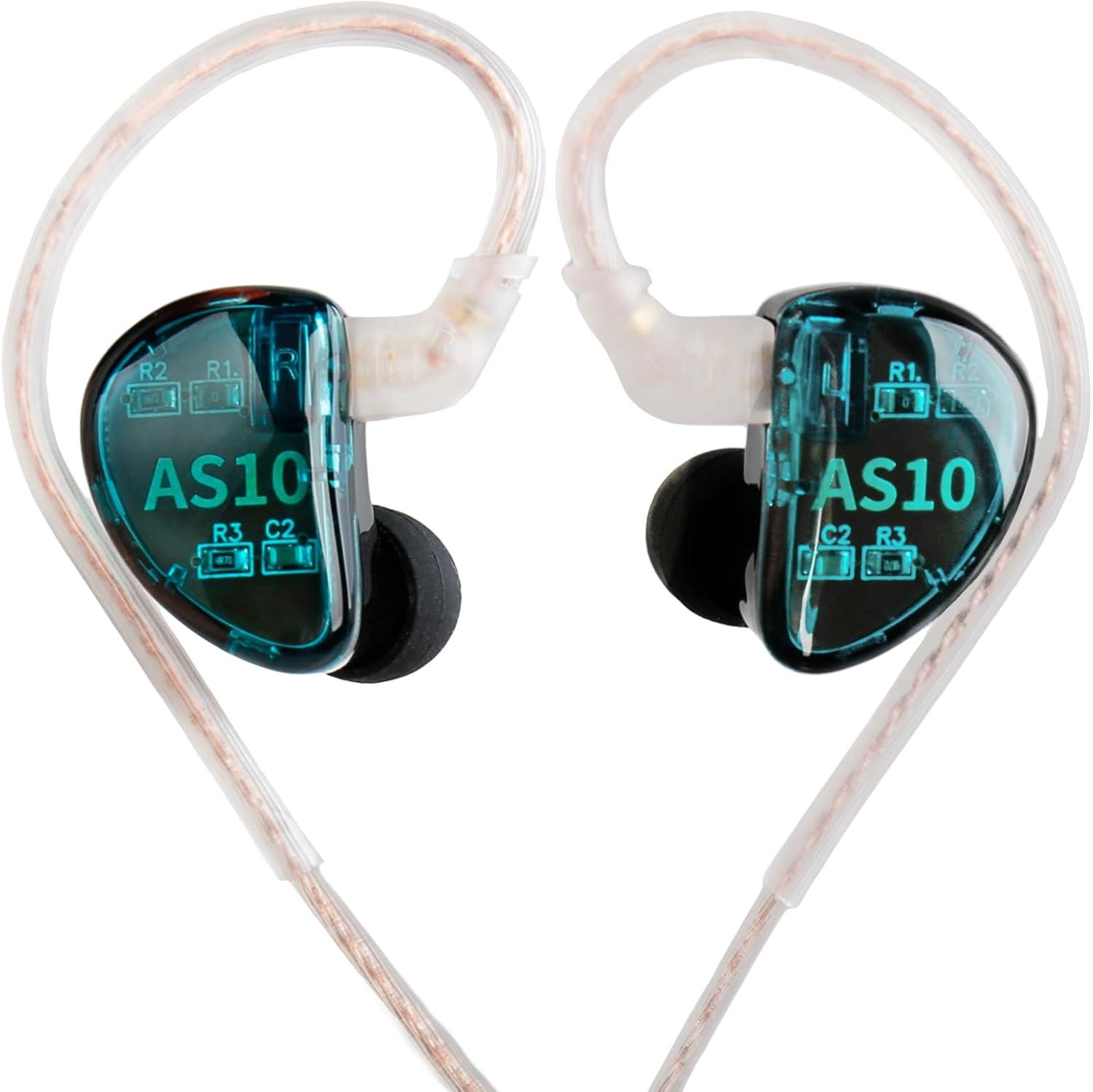
On stage, that passive seal does real work. One musician reported the IEMs block out nearly all ambient stage sound, to the point of pulling one side out just to hear a bandmate talking between songs. An owner in France described the ambient noise reduction as effective for daily smartphone listening in a café or on transit. Compared to earlier KZ models, the AS10 shows a tighter seal and lower sound leakage, meaning a partner sitting next to you hears less of what is playing. The trade-off is that the same tight seal that kills stage bleed can feel occlusive in a quiet room, and a small pressure build-up becomes noticeable when the tips are seated deeply.
Endurance and Charging
The KZ AS10 is a wired IEM with no battery, no charging port, and no wireless module. Power flows directly from the connected source, whether a smartphone, laptop, stage IEM pack, or desktop DAC. The detachable 2-pin design means a frayed or stretched cable does not kill the earpieces; you replace the cable and the driver units keep working.
Longevity reports in the review base reach seven years of regular use for one stage musician and over a year and a half of weekly church sets for another, with no driver failure noted. The plastic shells and braided cable construction show no reports of internal component degradation in the source material. Because there is no battery, there is no charge cycle, no degradation curve, and no firmware to update.
Taking Calls
The KZ AS10 includes no microphone. The product is a strictly two-channel audio monitor, and none of the source material describes a call-taking or voice-chat function. A buyer who needs to talk on a phone or a conference line through the same cable should look at KZ models that ship with a mic segment, or pair the AS10 with a separate mic-equipped earphone on the non-critical channel.
Customer Feedback Highlights
The aggregate rating sits at 4.5 out of 5 across 957 reviews, a number that skews positive while carrying a visible minority of lower scores.
This review first appeared on hifireport.com. Reproduction without permission is not allowed.
Praise concentrates on three themes. First, sound separation: multiple owners use words like “amazing” and “incredible” for the detail and instrument placement, with several comparing the AS10 favorably to professional stage monitors costing multiples of its retail. Second, isolation: stage and church users report the passive seal blocks ambient sound effectively enough to rely on the IEMs as their sole monitoring reference. Third, durability: multi-year ownership without component failure appears in at least three separate reviews, including one user who bought a second set for a family member.
Complaints cluster around unit-to-unit consistency. One owner went through three pairs and found the second and third did not match the bass response of the first, pointing to a pairing or quality-control issue that a replacement unit did not fully resolve. A second recurring theme is treble harshness on recordings that are not studio-clean; several reviewers describe the upper register as sharp or fatiguing after a listening session. The included silicone tips slipping deeper into the ear during long wear and the cable length feeling short for desk use round out the negative notes.
What We Like / What We Don’t
What we like:
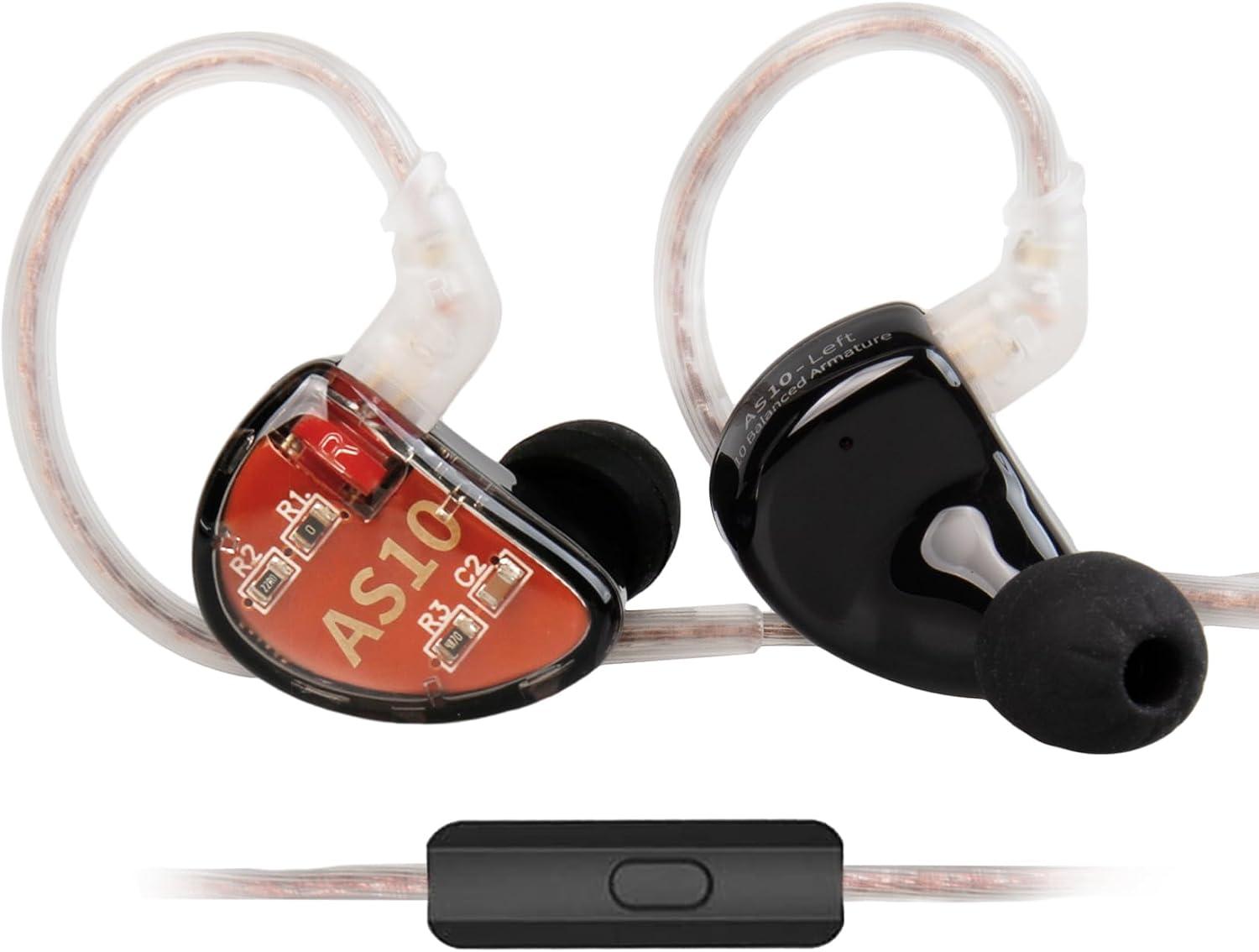
- Five balanced armature drivers produce a wide, well-separated soundstage that holds up on detailed recordings
- Strong passive isolation suits live stage and church monitoring without an external noise-cancelling pack
- Detachable 2-pin cable lets you swap to a balanced or silver-plated upgrade without replacing the earpieces
- Owners report multi-year service life with no driver failures in the review sample
- Low-impedance drivers power cleanly from a smartphone without an external amp or DAC
What we don’t:
- Treble above 2 kHz runs hot on poorly mastered tracks and is harder to tame with a simple EQ adjustment
- Unit-to-unit consistency raised flags in at least one multi-pair owner’s experience
- No microphone is included, so the set cannot handle a phone call or voice chat
- Silicone tips slip deeper into the canal over extended sessions
- Shells run slightly large for owners with smaller ear canals
The Verdict
The KZ AS10 suits a stage musician who needs tight passive isolation and instrument separation without the cost of a professional monitoring system, and it works as a reference earphone for a home listener who values wide staging and clean mids over bass quantity. The detachable 2-pin cable and low-impedance drivers keep the setup flexible: a smartphone on the train, a stage IEM pack in a live venue, or a desktop DAC at home all feed the same pair of shells. The treble tuning is the one design choice that will divide opinions, and the unit-consistency reports mean a buyer should check the first pair carefully before committing to a second set.
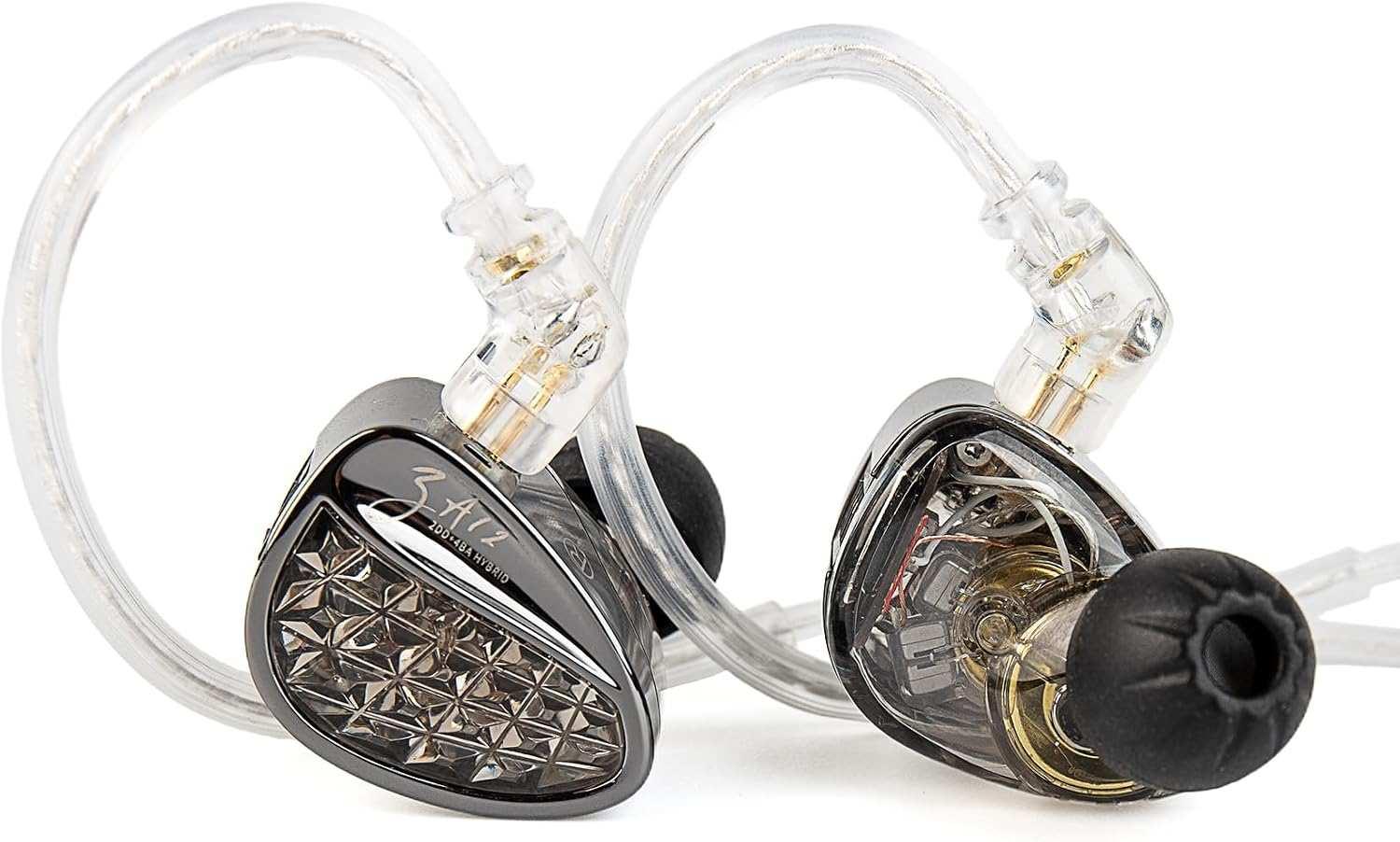
Best for live musicians, stage monitors, and detail-oriented listeners who want separation and isolation in a wired IEM; look elsewhere if you need a built-in mic, prefer a dynamic-driver bass texture, or have smaller-than-average ear canals that make the shell size a pressure point.
Spec Sheet
- Driver type: 5 balanced armature (1 low, 1 mid, 2 high, 1 mid/high hybrid)
- Connection: 3.5 mm L-shaped stereo jack, 2-pin detachable
- Cable length: 120 cm
- Ear tips included: 3 pairs silicone (S, M, L)
- Microphone: None
- Color: Black (translucent front, solid black back)
- Impedance: Low (pairs with smartphones without an external amp)
- Form factor: Wired in-ear monitor
- Cable construction: Braided, with memory-wire section near 2-pin connectors
- Finish: Gold-plated contacts and jack
Frequently Asked Questions
Do I need an external amplifier to drive the KZ AS10?
No. The IEMs are low-impedance and power directly from a smartphone, laptop, or any 3.5 mm output without a dedicated DAC or amp. Several owners confirmed clean, full-volume sound from phones and tablets as their primary source.
Can I use these on stage as a replacement for professional monitoring IEMs?
This review first appeared on hifireport.com. Reproduction without permission is not allowed.
Yes. Multiple stage and church musicians in the review base use the AS10 as their primary in-ear monitor, citing the passive isolation and instrument separation as sufficient for live sets. The absence of a mic means you cannot talk back to the front-of-house engineer through the same cable.
What happens if the included cable gets damaged?
The 2-pin connectors detach from the shell, so you replace only the cable. The stock set does not include a spare, but the 2-pin format is widely available from KZ and third-party manufacturers for a simple swap.
Are the KZ AS10 comfortable for all-day listening?
Most owners report comfort through a full performance set, with one or two noting the shells feel slightly large after two hours of continuous wear, particularly for smaller ears. Swapping the included silicone tips for foam tips addresses the slip issue and improves the seal.

- 【5 Balanced Armature Driver KZ AS10 Earphone】 Equipped with 5 balanced armature driver on this KZ in ear monitors, 5 balanced armature response from Low to High frequency for music, add more definition and show more details in music, and provide you a balanced sound feature.
- 【5 Armature Driver Specification】 KZ AS10 musician in ear monitor uses 5 driver, include one Big Low frequency driver, can be comparable to the bass texture and strength of the traditional dynamic driver. There also have One Mid and Two High frequency, One Mid & High Hybrid driver.
- 【HIFI Earphone Sound Feature】Impressive punch and impact of bass, fast and accurate with quick attack and decay.Full and warm Mids with excellent detail. Highs are well extended but not overly boosted. Sound stage is very wide and individual instruments are easy to locate.