LA Audio A-60 Vacuum Tube Integrated Amplifier Review
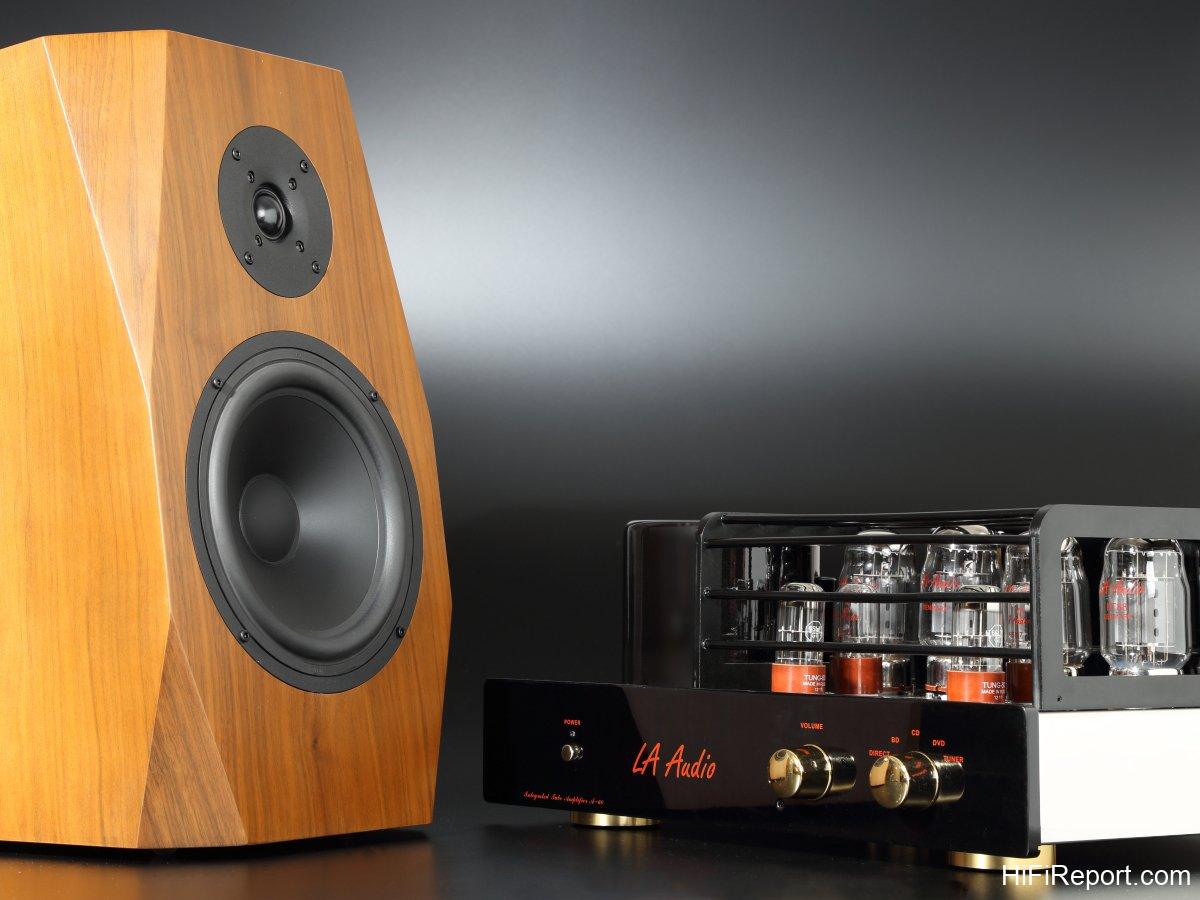
It’s rare to find an audio brand that offers the same amplifier in three different styles, but LA Audio has done just that to cater to diverse consumer preferences. The A-60 vacuum tube integrated amplifier is a prime example, with two sibling models, the A-60R and A-60W, offering variations on the theme. What sets them apart? The standard A-60 adopts the simplest aesthetic, featuring a black painted metal front panel with two gold knobs and remote volume control.
The A-60R introduces more visual flair with an aluminum front panel, complemented by cylindrical accents at each corner. The panel design is streamlined to a single central knob, with indicator lights on the right to display the selected input source. The remote control is also enhanced with input switching functionality for added convenience.
Conversely, the A-60W takes a more traditional route, replacing the painted metal of the A-60 with a substantial wooden front panel, exuding a rustic and natural charm.
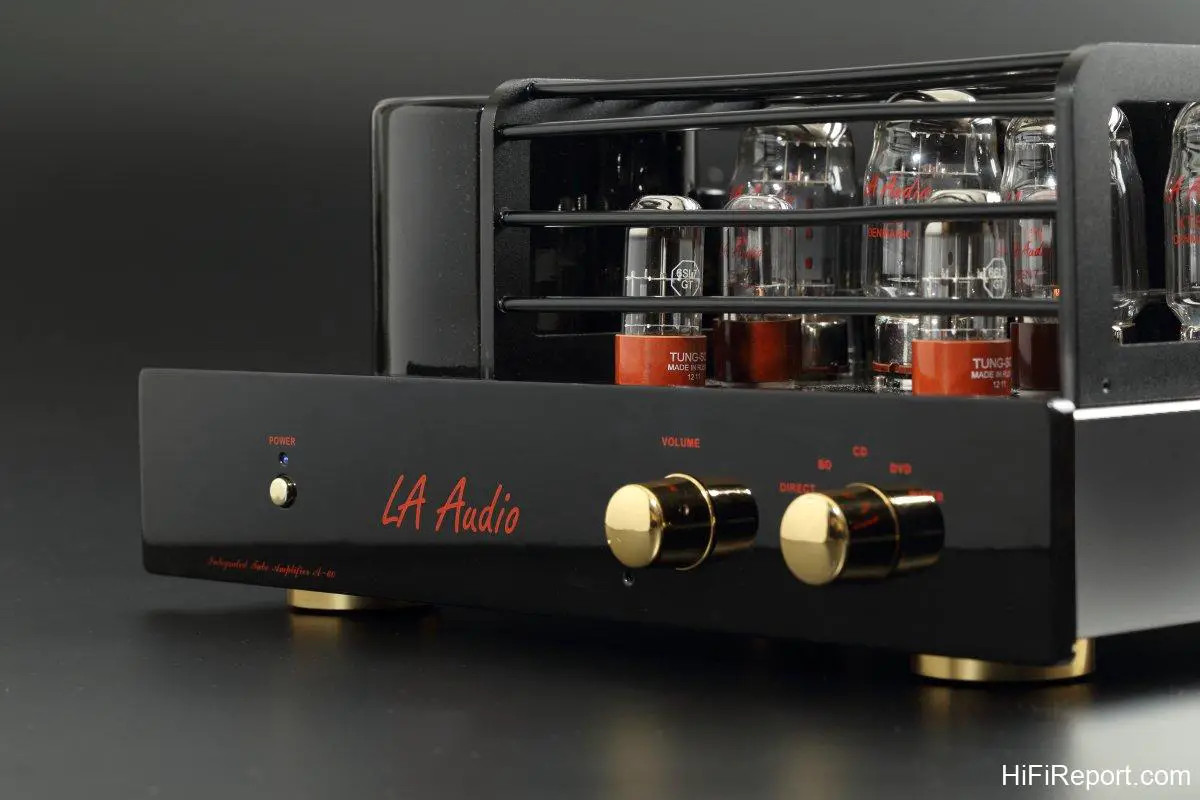
Crucially, all three amplifiers share identical vacuum tube configurations and specifications, as well as dimensions and weight. This allows consumers to choose based purely on their preferred aesthetic.
For this review, we’ll delve into the A-60, using it as the focal point to explore the series.
Choke Coil Noise Filtering
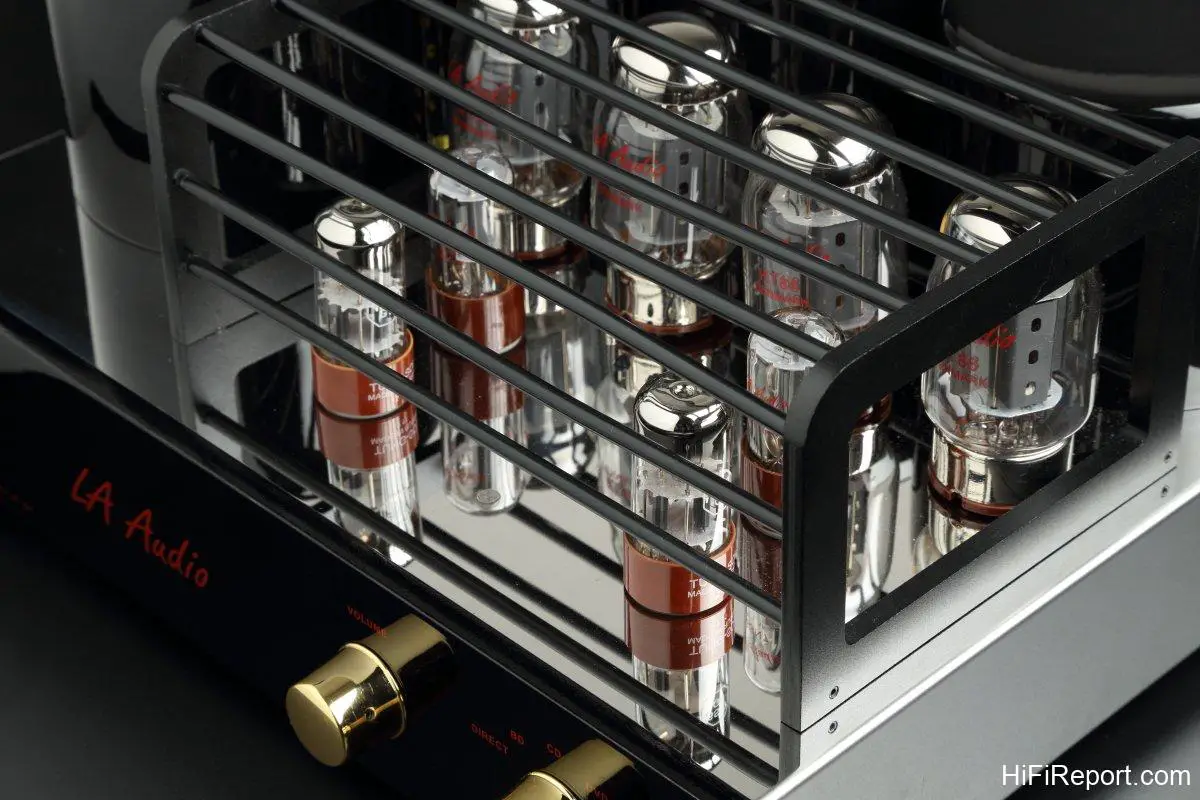
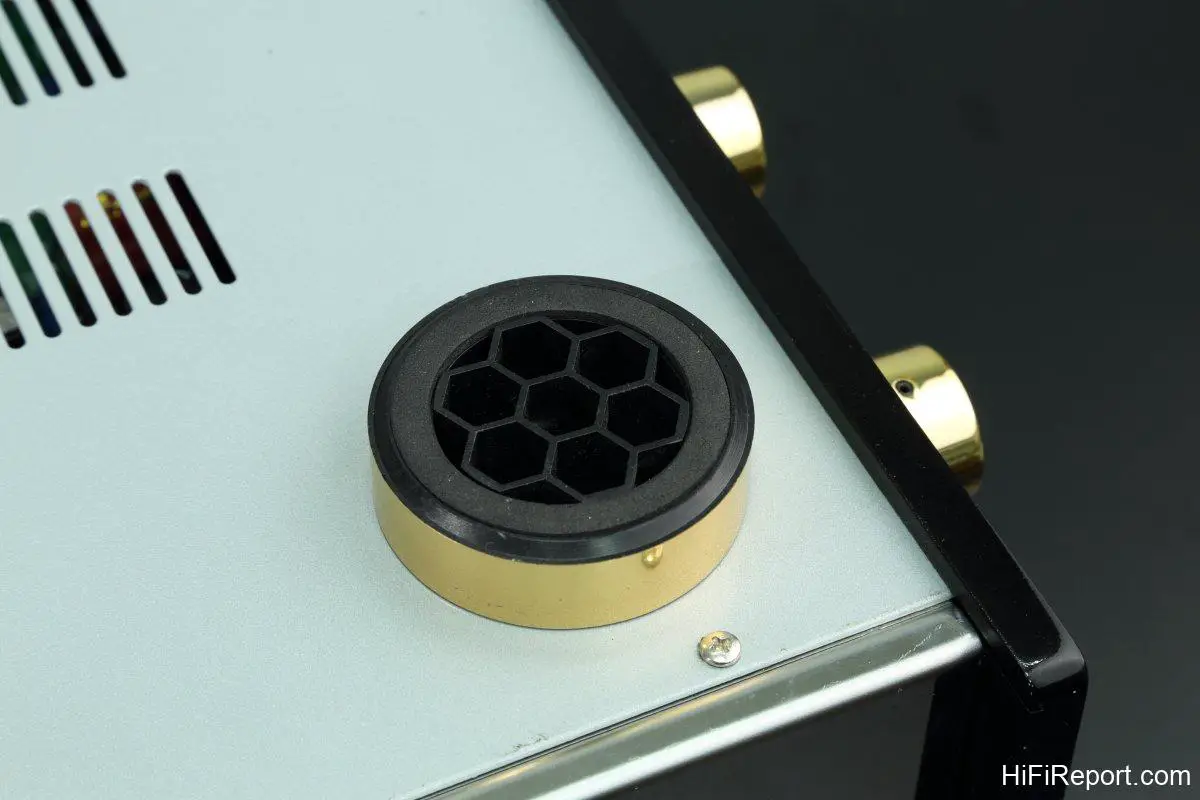
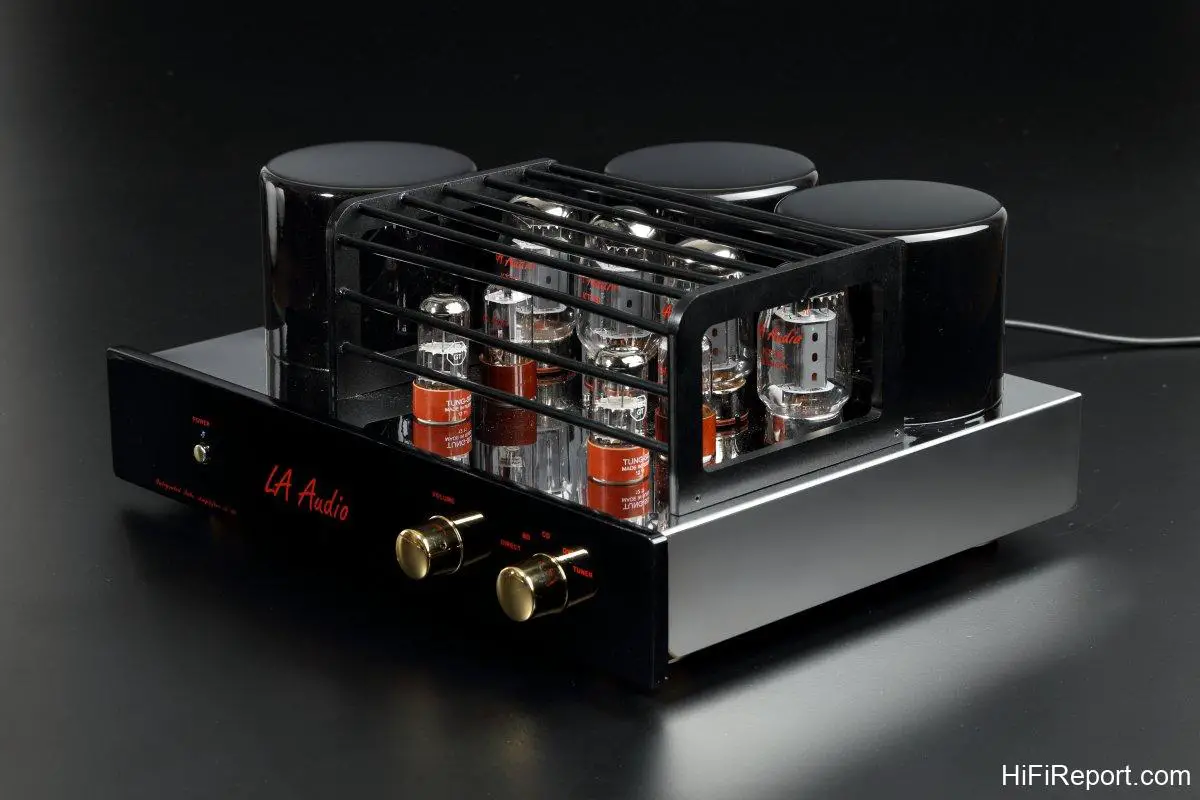
In keeping with LA Audio’s design philosophy, the A-60 embraces the classic visual language of vacuum tube amplifiers. The power transformer, large filter capacitors, vacuum tubes, and output transformers are all externally mounted on the chassis, arranged according to their function and signal path.
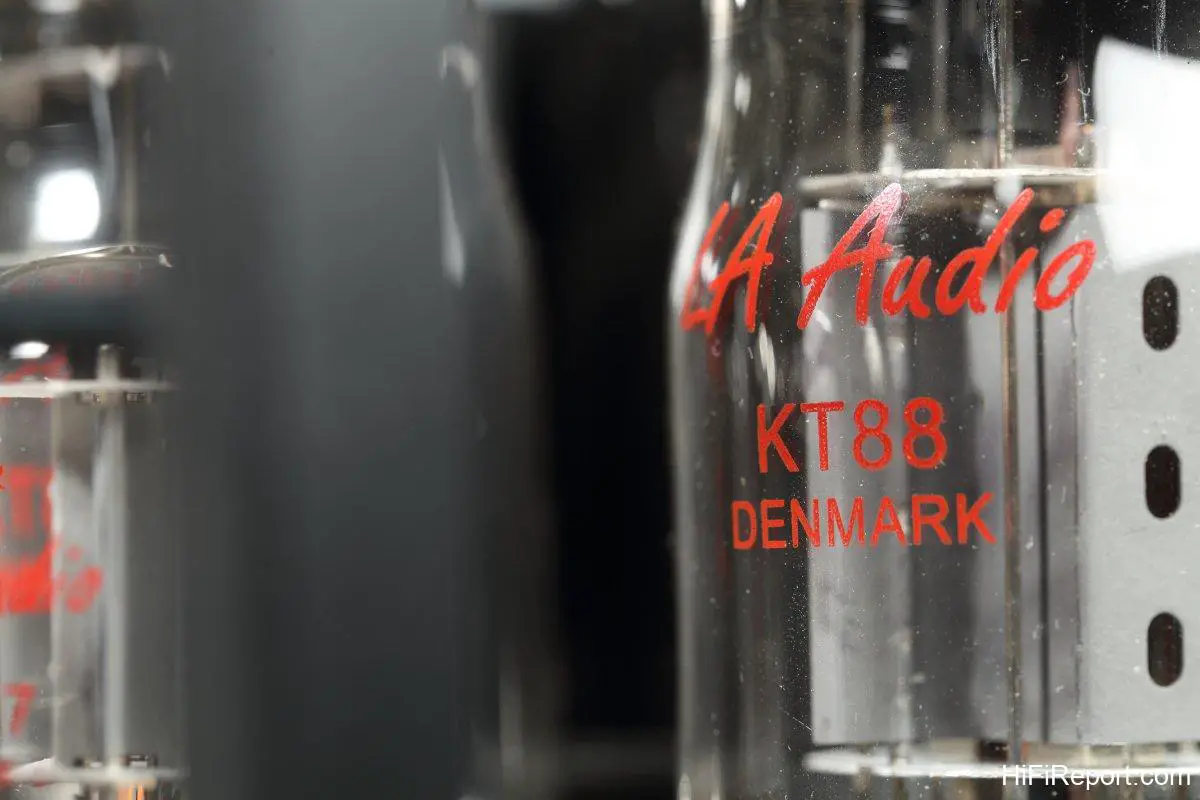
The A-60 utilizes the widely recognized KT88 power tube. With two tubes per channel in a push-pull configuration, it delivers a practical 60 watts of output power, making it a suitable match for the majority of loudspeakers on the market.
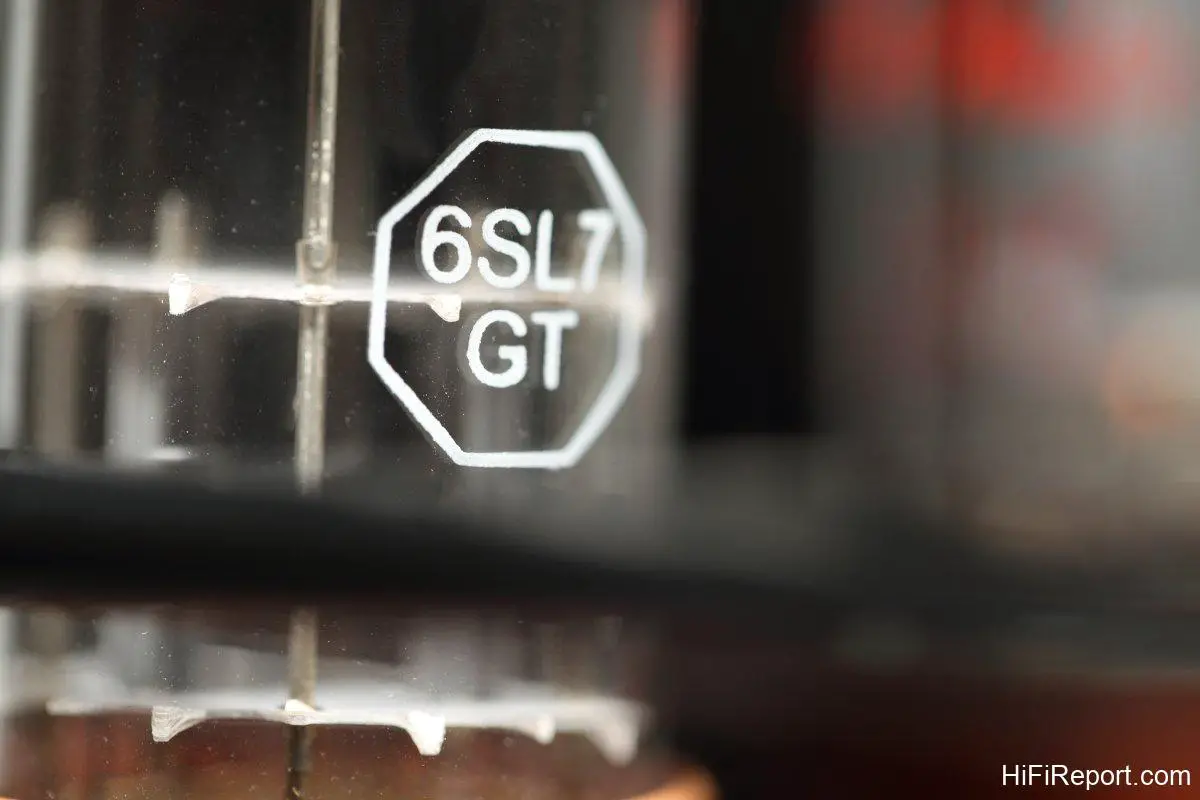
For signal amplification, the amplifier employs 6SN7 and 6SL7 tubes, one of each per channel. These tube types are also readily available, ensuring easy access to replacements and facilitating tube-rolling for those who enjoy sonic experimentation.
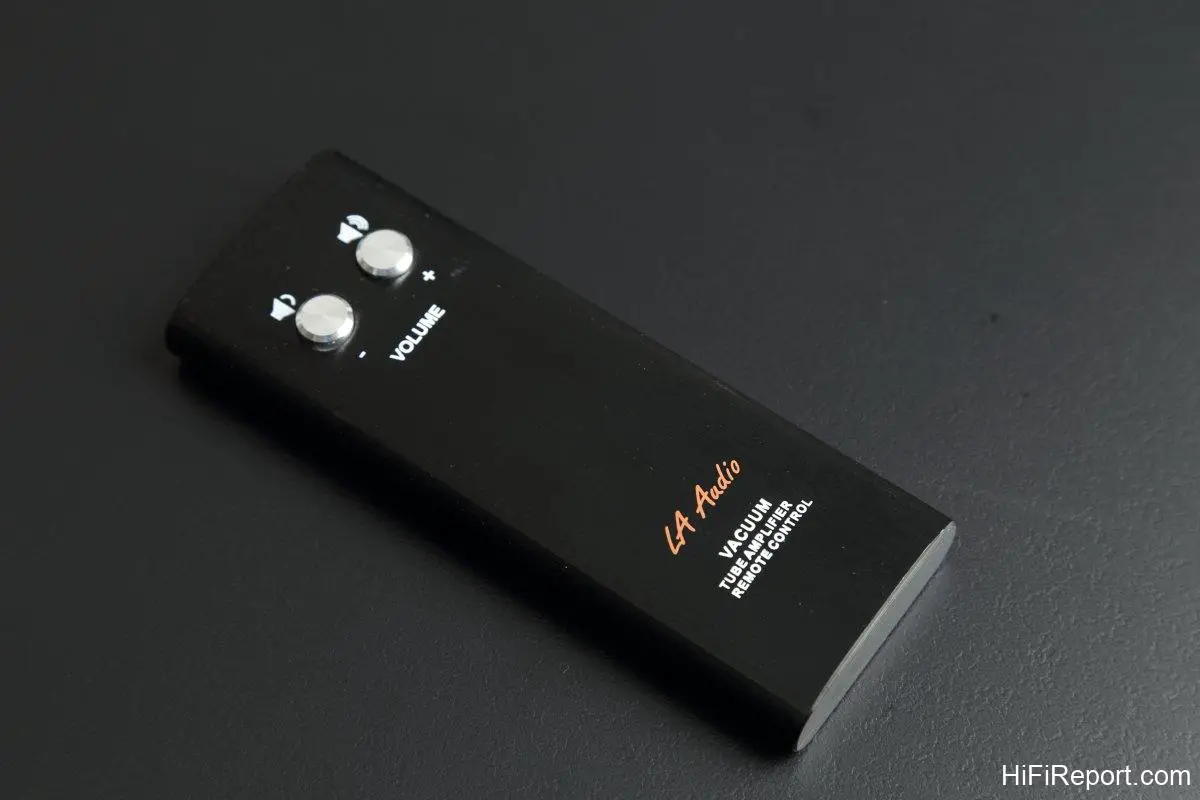
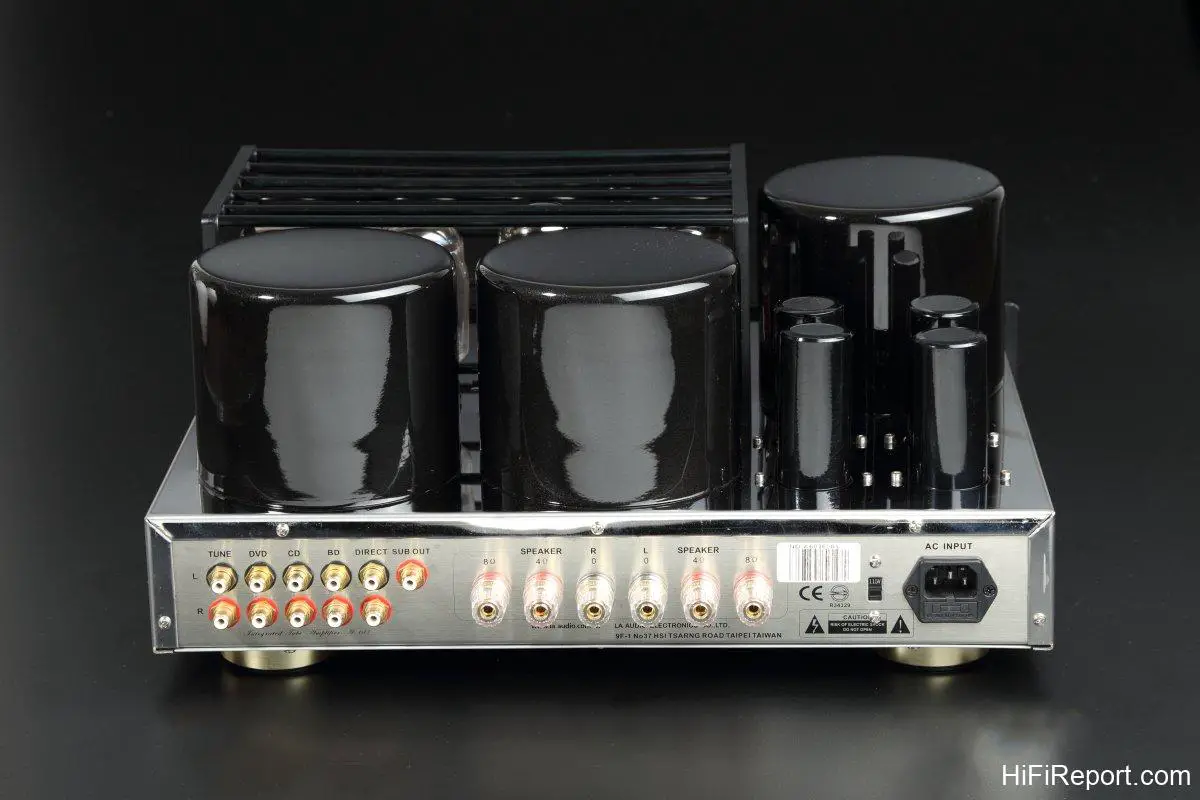
The A-60 provides five sets of RCA stereo inputs, selectable via a rotary switch on the right side of the front panel. It’s worth noting that this input selector is manually operated and not remote-controlled. Fortunately, the frequently used volume adjustment is indeed controllable via the included remote, maintaining overall user-friendliness.
On the output side, the A-60 offers taps for both 8-ohm and 4-ohm speaker impedances. This allows users to optimize the amplifier’s performance for their specific speakers based on their average impedance or desired sonic characteristics.
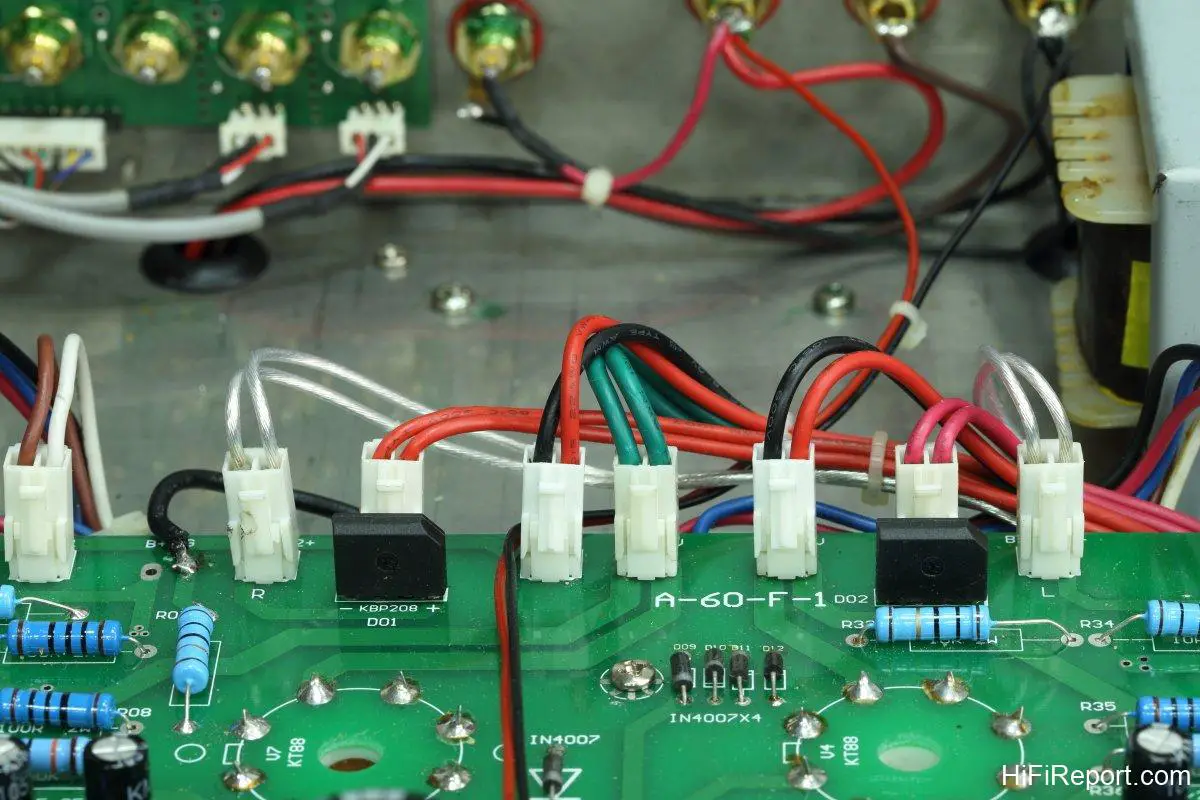
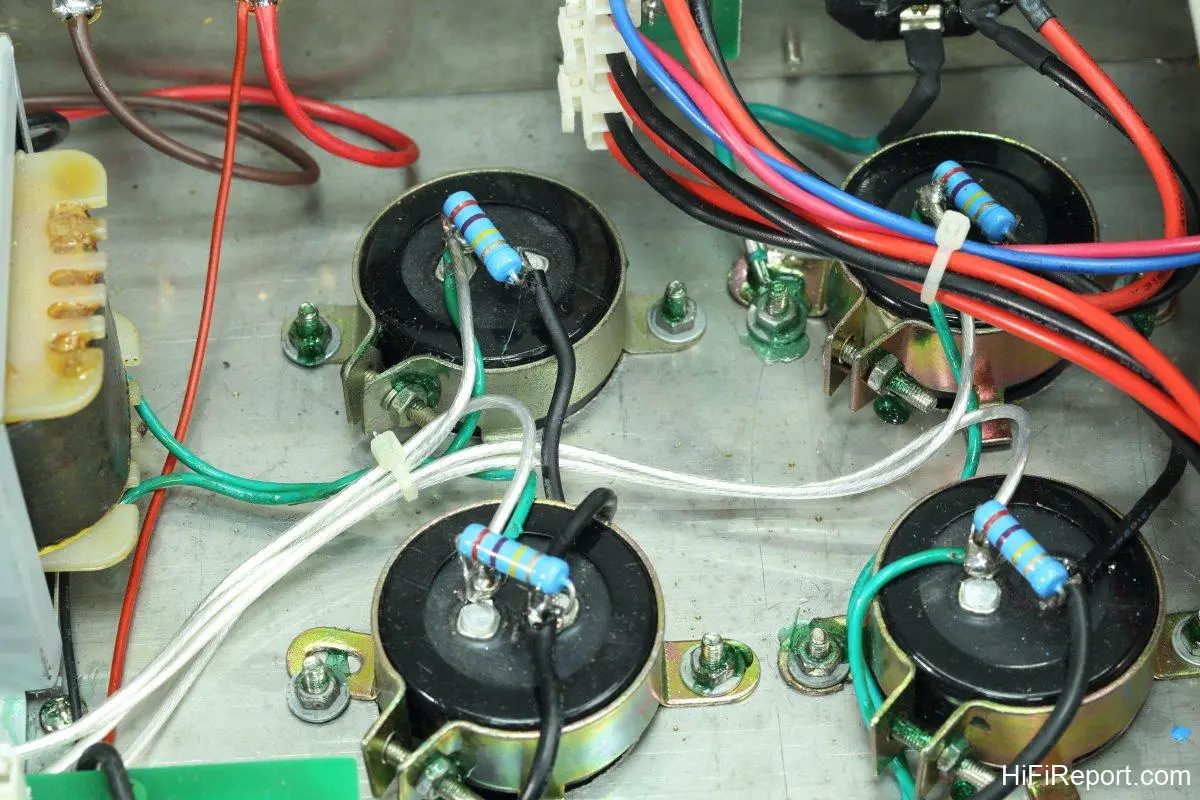
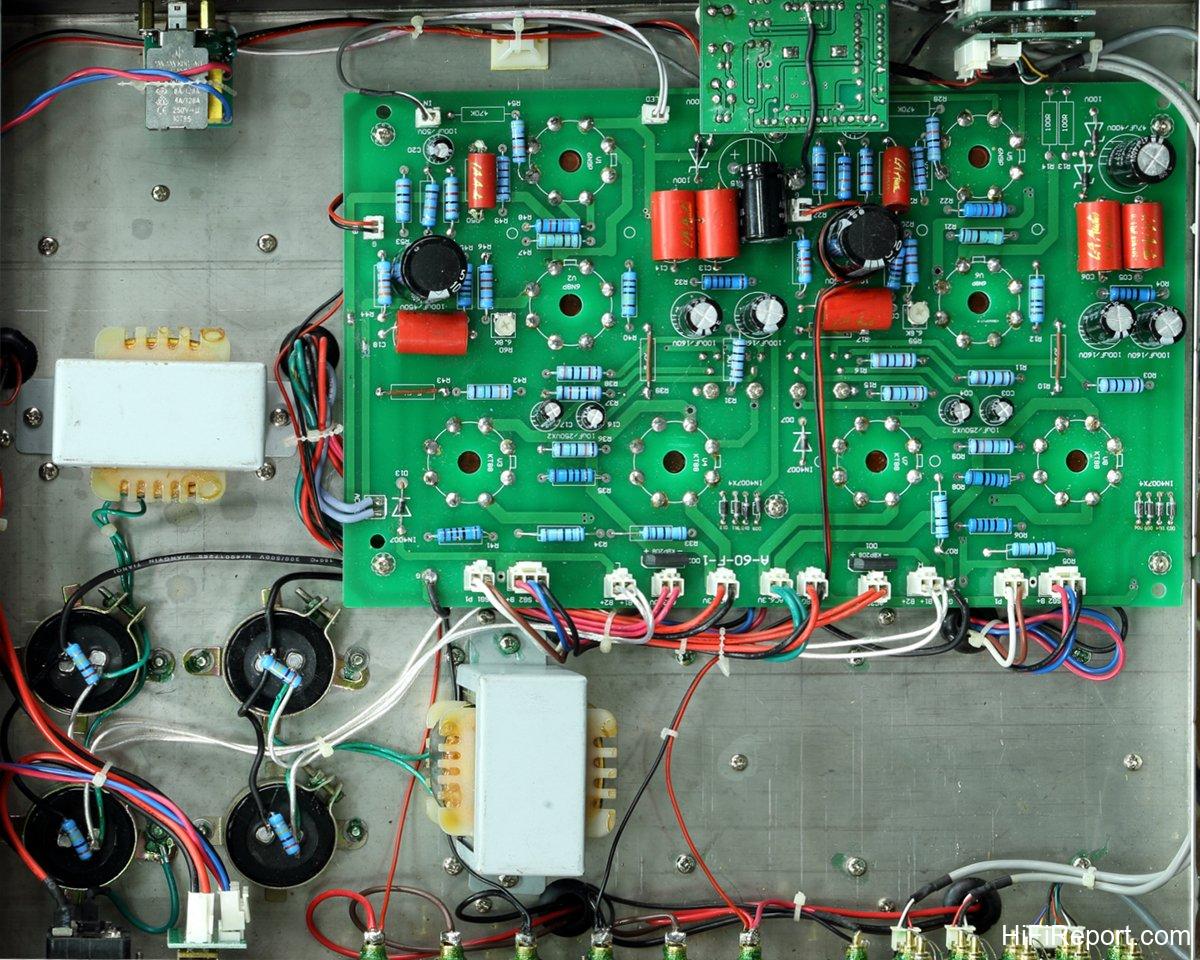
Removing the bottom plate reveals the internal construction of the A-60.
Inside, two components resembling transformers are visible. These are, in fact, choke coils, implemented for high-frequency noise filtering. This design choice contributes to a cleaner sonic backdrop.
I previously observed choke coils in the LA Audio A-50R vacuum tube integrated amplifier, suggesting this is a consistent design approach for LA Audio.
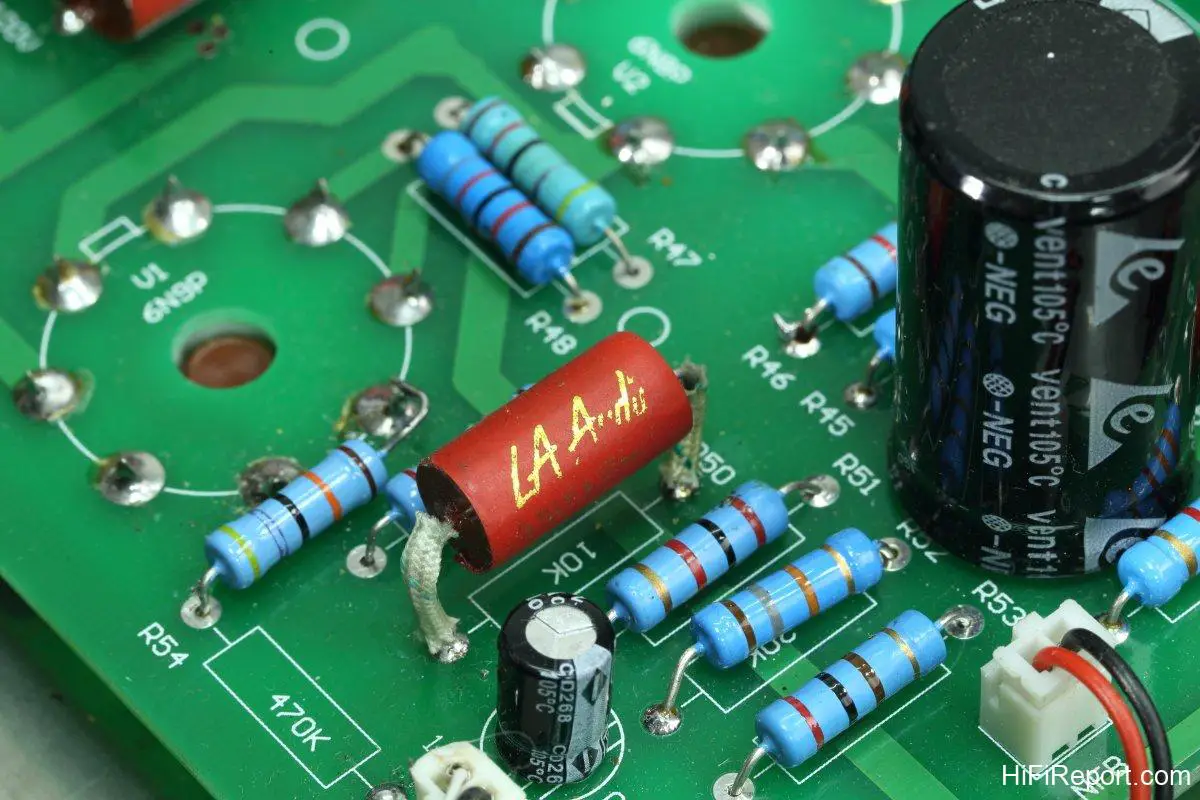
The A-60’s main circuitry is built on printed circuit boards (PCBs) rather than point-to-point wiring. Although both channels reside on a single PCB, it’s clear that the left and right channel components are strategically placed on opposite sides of the board, effectively minimizing potential crosstalk and interference.
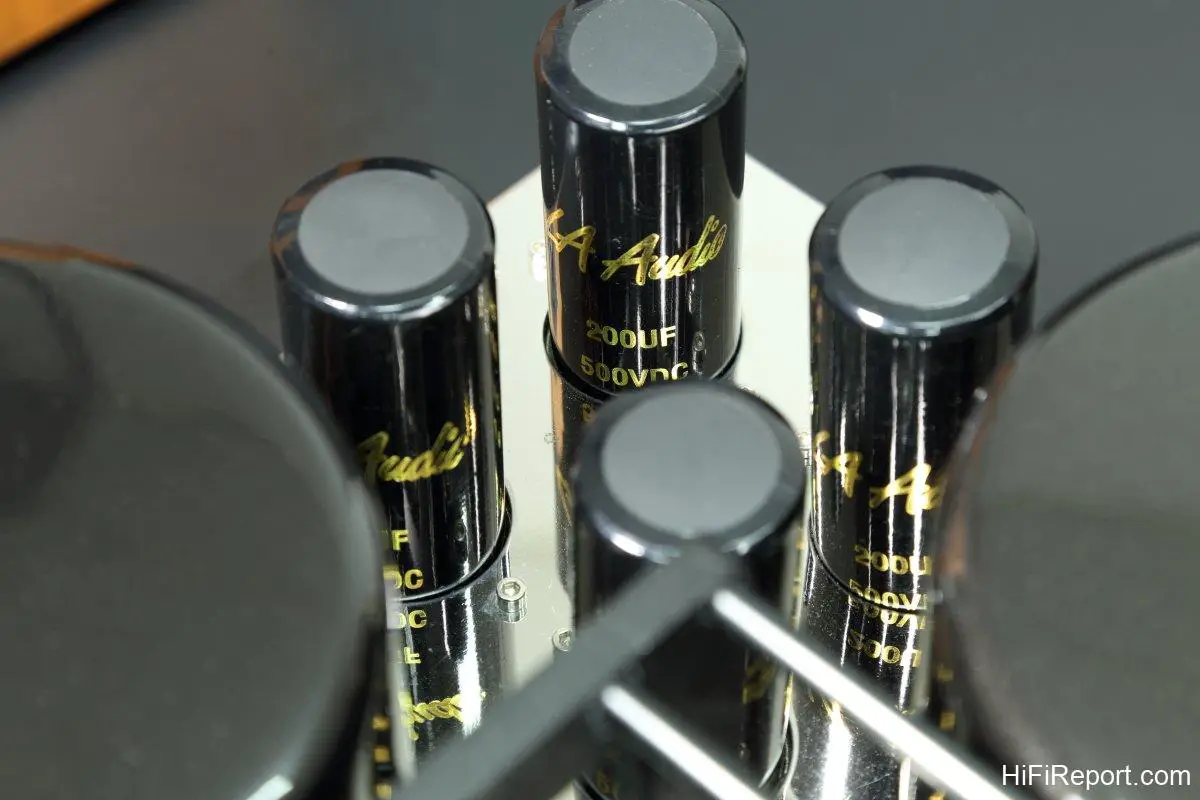
Furthermore, certain key capacitors are marked with the LA Audio logo, indicating custom-designed components.
Full-Bodied and Grand Sound
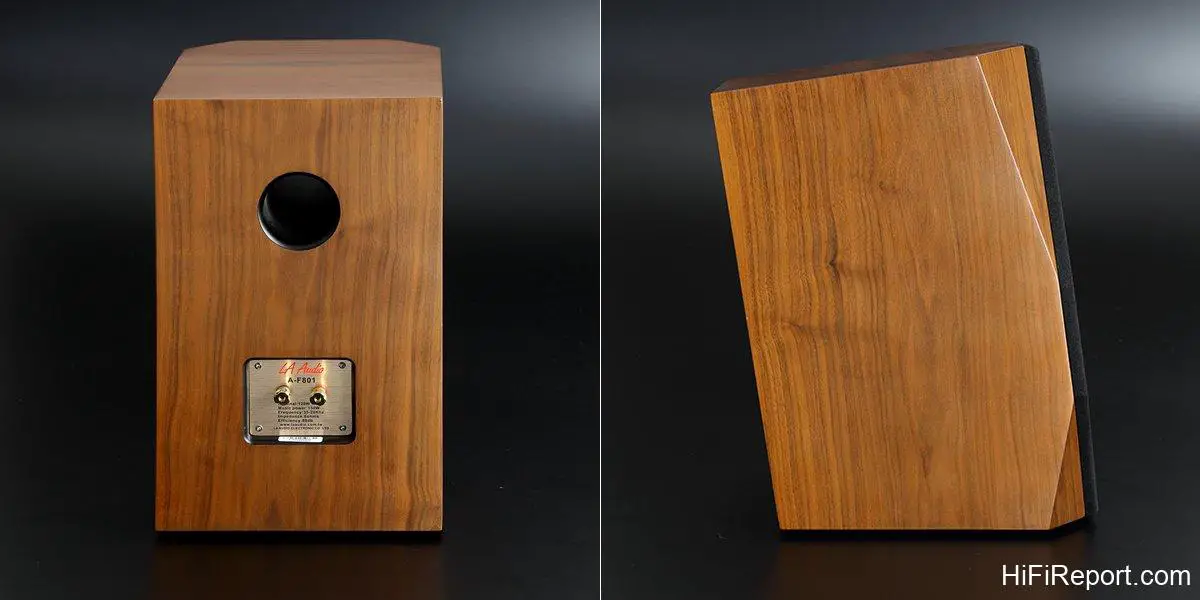
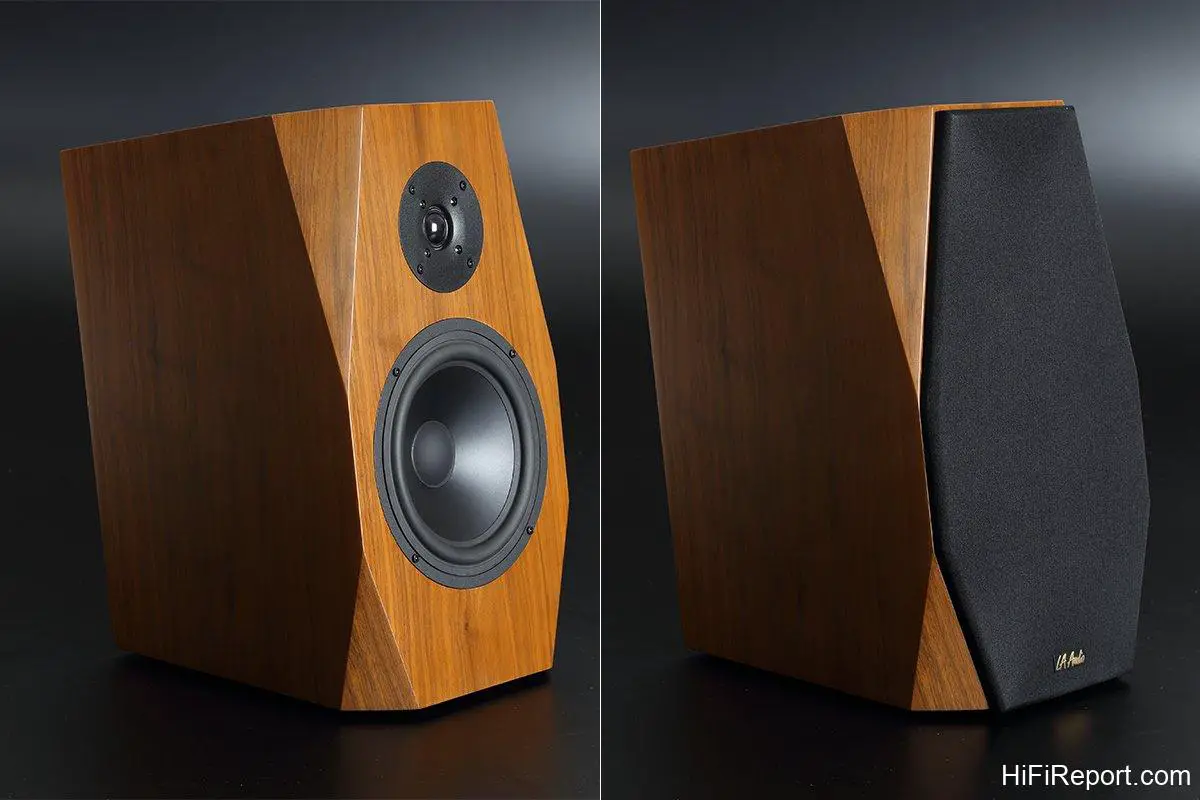
The listening evaluation took place in the HiFiReport listening room. LA Audio also supplied their A-F801 bookshelf speakers for potential pairing. However, to push the A-60 to its limits and assess its true performance capabilities, I opted for a pair of larger speakers: the in-house reference Dynaudio Contour 60 floor-standing speakers. Their dual 8-inch woofers are an excellent benchmark for evaluating an amplifier’s control.
The rest of the system comprised equally high-caliber components, including a Lumin U1 Mini streaming transport and a Lampizator flagship The Pacific DAC. Music sources were accessed from a NAS drive.
After allowing ample warm-up time, the listening session commenced. Immediately, the A-60’s forthright character became apparent. This is an amplifier that’s easy to get along with, simple to pair, and definitely not temperamental for a tube design. It drove the Contour 60’s low frequencies with impressive authority, delivering a full-bodied and grand sonic presentation. The soundstage was richly populated with sonic textures, creating a satisfyingly substantial and comfortable listening experience.
Playing Sarah McLachlan’s “Surfacing” album through the A-60, every track showcased abundant low-frequency presence, coupled with smooth, non-fatiguing highs and a remarkably gentle sonic texture.
The A-60’s driving power is commendable, fully realizing the Contour 60’s ample bass capabilities while maintaining well-defined contours and clear articulation. This album alone demonstrated the A-60’s excellent suitability for pop music.
Take track 5, “Do What You Have to Do,” for instance. While the A-60’s sound is undeniably full, Sarah McLachlan’s vocals retained a sense of brightness. The effortless transition from chest voice to head voice in the chorus was delivered without any sense of strain or constriction. Even the subtle, breathy rasp in her voice was faithfully reproduced.
Moreover, the A-60 projects a soundstage with a substantial lower foundation, a characteristic many listeners find appealing. This expansive presentation made the piano sound quite grand in scale, although the mid and high frequencies were comparatively slightly smaller in proportion. This sonic balance is likely to be widely appreciated.
Moving to track 6, “Witness,” the electronic bass lines in the arrangement were rendered with commendable clarity and definition, not at all muddy. This highlights the A-60’s genuinely usable 60 watts of power, effectively driving the Contour 60s. Overall, the sound is grounded and solid, without becoming overly thick, sluggish, or ponderous.
Track 7, “Angel,” the iconic theme song from the film “City of Angels,” was presented by the A-60 with a soundstage that wasn’t intensely black or exceptionally deep and expansive. Instead, it was dense, rich, and imbued with warmth and tenderness. The requisite reverberation and decay were also well-preserved.
This, I believe, represents the optimal way to experience the A-60: pair it with substantial loudspeakers, listen at a closer distance, and it will reward you with a relaxed yet immersive experience, filled with a large soundstage and generous sound pressure levels – perfect for enjoying pop music with gusto.
Lush and Sweet Timbre
Given its aptitude for pop music, I naturally continued down that path, selecting George Michael’s “Ladies & Gentlemen: The Best of George Michael” double-CD compilation.
Listening to track 1, “Jesus to A Child,” at a higher volume was truly rewarding. The A-60 doesn’t artificially accentuate sibilance or vocal fry, nor does it aggressively boost the high frequencies. Consequently, George Michael’s “s” sounds remained smooth and free of any harshness.
Furthermore, the high-frequency extension was effortless, devoid of any tension, and possessed a pleasant thickness and liquidity, resulting in a timbre that was lush and sweet.
Moving to track 2, “Father Figure,” the short, sharp bass plucks and kick drum hits were reproduced by the A-60 with substantial size and a full, elastic quality. Crucially, the decay was controlled and concise, contributing to clear articulation and a sense of abundant yet well-managed bass – demonstrating solid grip over the dual 8-inch woofers.
Track 3, the renowned “Careless Whisper,” can lose its appeal if the sound lacks sufficient fullness, or if the mid and high frequencies are overly dominant. However, the A-60’s richly saturated and substantial sonic character allowed the saxophone to soar with both brilliance and ease, delivering a thoroughly enjoyable experience.
Next, I turned to Singaporean singer-songwriter Corrinne May’s “Fly Away” album, her debut release from 2001, characterized by an urban folk style. Her vocals are naturally clear, bright, and delicate.
This album’s recording tends towards the brighter side, emphasizing sibilance, vocal fry, and the crispness of steel-string guitar plucks. It’s not a particularly thick-sounding recording, so if a system isn’t well-balanced or sufficiently smooth, it can easily become fatiguing to listen to. However, the A-60 presented no such issues. For example, on track 2, “Same Side of The Moon,” the guitar notes in the intro were full, rounded, and resonant, with a rich body. The substantial tone wasn’t overshadowed by the crispness of the plucked strings.
Furthermore, the vocals were rendered with ample presence, imbuing her clear voice with a touch of warmth, creating a highly satisfying listening experience.
Does high resolution always equate to better sound? Mere resolution, when unbalanced, can actually lead to listening fatigue. The A-60 strikes a pleasing balance of fullness, tonal warmth, and frequency distribution. The sound is engaging and enjoyable without being simplistic or clumsy.
Track 3, “Something About You,” often presents a sharp, piercing sensation in the ears with the entrance of the snare drum and cymbals. However, this time, that harshness was absent.
Crank It Up!
Finally, I played the soundtrack to the film “La La Land.” The opening dance track, track 1, is a litmus test for any system. Listening through the A-60, the immediate and correct response is: crank it up! The Contour 60s filled the room with a vibrant, celebratory atmosphere. The music was energetic and lively, but never “mushy” or indistinct. The A-60 maintained commendable control across the board – soundstage layering, instrument placement, tonal balance, and overall structure were all well-preserved. If an amplifier can handle this track at high volume, it’s passed the test! If you seek a tube amplifier with a warm sonic character, capable of delivering enjoyable high-volume listening sessions, the LA Audio A-60 is certainly worth considering.
Specifications
**LA Audio A-60 Vacuum Tube Integrated Amplifier**
* Type: Vacuum Tube Integrated Amplifier
* Output Power: 60W × 2
* Frequency Response: 10 Hz – 35 kHz
* Total Harmonic Distortion: 0.7% (1 kHz)
* Input Sensitivity: 300 mV
* Input Impedance: 100 kΩ
* Output Impedance: 4Ω, 8Ω
* Signal-to-Noise Ratio: 88 dB
* Vacuum Tubes: KT88 × 4, 6SN7 (6N8P) × 2, 6SL7 (6H9C) × 2
* Power Consumption: 320 W
* Dimensions: 390 × 455 × 190 mm (W×D×H)
* Weight: 20 kg
**LA Audio A-F801 Bookshelf Speakers**
* Type: 2-driver, 2-way Bass Reflex Bookshelf Speaker
* Drivers: Soft Dome Tweeter × 1, PP Paper Fiber Composite Mid-bass × 1
* Impedance: 6 Ω
* Sensitivity: 89 dB
* Frequency Response: 30 Hz – 20 kHz
* Power Handling: 120 W (Peak 150 W)
* Dimensions: 470 × 265 × 320 mm (H×W×D)
* Weight: 10 kg