
Laiv Harmony DAC R-2R Review
It’s clear that whether you’re listening to CDs, Hi-Res audio files, or streaming platforms, the most dedicated audiophiles recognize the necessity of isolating the DAC from the source component. This is why, despite the rapid evolution of audio technology, the “pure DAC” remains a timeless product category. Even with current digital-to-analog conversion technology being quite mature, there’s a constant stream of products featuring more innovative designs and sophisticated techniques.
Introducing the Laiv Harmony DAC
The Laiv Harmony DAC, the subject of this review, stands out as an excellent example from the past year.
About Laiv Audio
Laiv Audio is a company based in Singapore. Its founder, Weng Fai Hoh, was previously a member of the Singaporean audio brand Soundaware. Soundaware released numerous DACs over the years, accumulating considerable expertise in digital processing and D/A converter technology. This rich experience inspired Weng Fai Hoh to start his own brand. Thus, in 2023, he and nine professional engineers co-founded Laiv Audio.
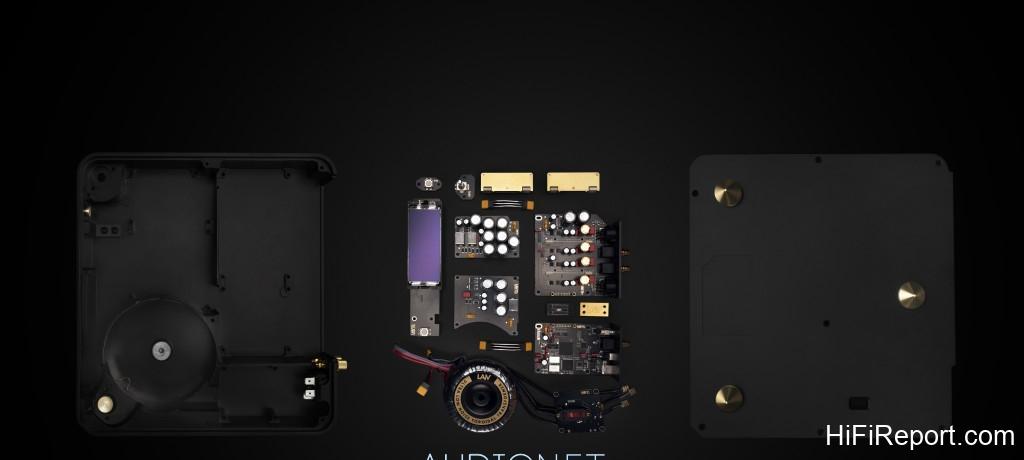
The Harmony DAC is their inaugural product, and upon its release, it immediately created a stir in the audio market, quickly becoming one of the most discussed DACs of the year.
Unique R-2R Design and Technology
What makes this Singaporean DAC, priced under $3,000 (approximately 89,900 NTD), so special that it has garnered more attention than many European, American, and Japanese Hi-End brands? Upon researching the Laiv Harmony’s design, the reason became instantly apparent. Most DACs on the market utilize off-the-shelf D/A converter chips from manufacturers like AKM or ESS, paired with proprietary buffer circuits for sound tuning.
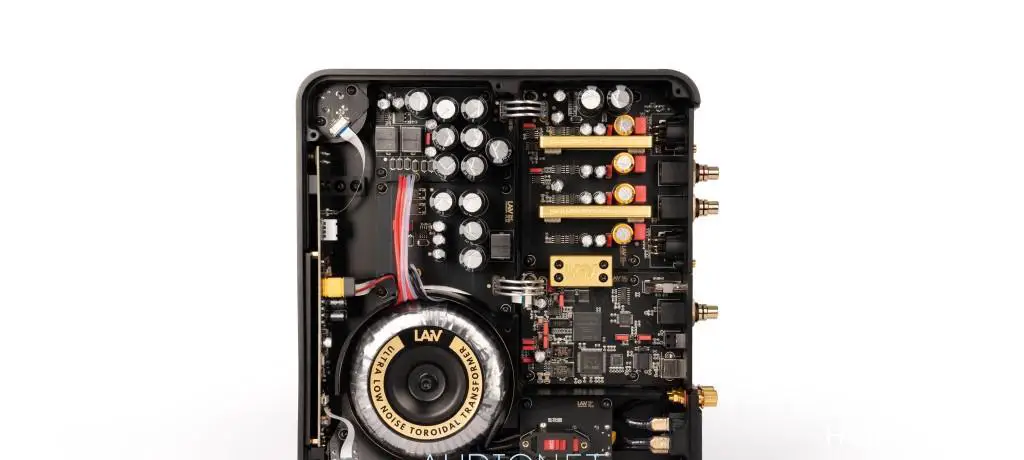
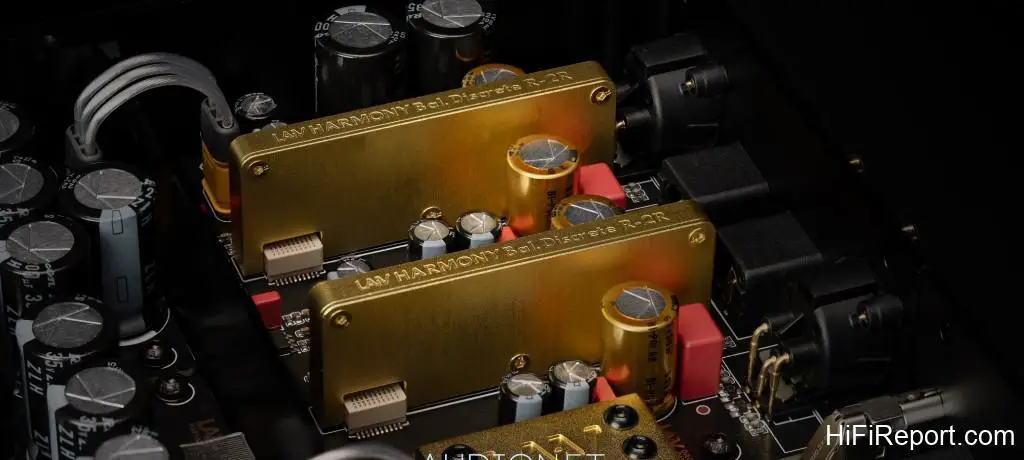
Only a select few Hi-End brands with significant technical prowess develop their own unique decoding methods. The Harmony employs a balanced discrete R-2R ladder resistor technology. Open the chassis, and you’ll see a long, golden metallic enclosure for each channel – these are the decoding modules. An Intel Cyclone FPGA chip controls a precisely matched array of resistors for the D/A conversion.
The resistors boast extremely high precision, with individual components allowing only a 0.05% tolerance.
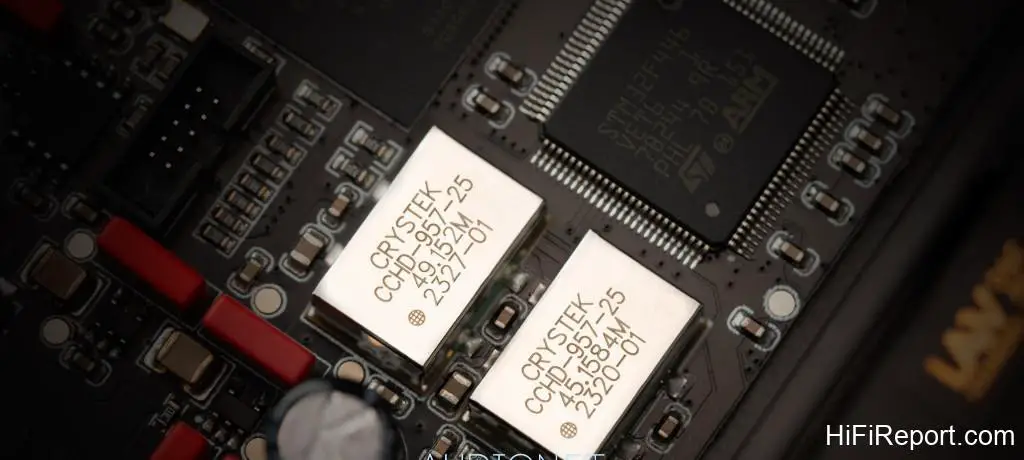
Simultaneously, the Harmony features proprietary Oversampling (OS) functionality, capable of upsampling CD-quality audio (44.1kHz) to a sampling rate of 706.4kHz/24bit. Preceding the decoding circuit are two Crystek CCHD-957 FEMTO clocks, providing optimal timing precision for sampling rates based on 44.1kHz and 48kHz multiples, respectively. This design brings to mind top-tier decoding specialists like MSB Technology from the US, which also uses R-2R DAC modules.
However, MSB’s pricing is several times that of the Harmony, highlighting the exceptional value offered by this unit.
Premium Components and Build Quality
Beyond its unique decoding technology, the Harmony’s internal circuitry is packed with premium components. Surrounding the R-2R modules, you’ll find the renowned British Audio Note Kaisei and Rubycon ZLH electrolytic capacitors. Inside the chassis, you’ll also notice that the Harmony’s enclosure is CNC-machined from a single block of aluminum alloy.
This not only ensures optimal vibration damping but also features internally partitioned chambers for the digital circuitry and power supply, effectively isolating noise. Despite its compact size, the Harmony is powered by a substantial toroidal transformer, paired with a linear power supply comprising numerous filtering capacitors. This provides abundant dynamic performance for the music and avoids the switching noise associated with switch-mode power supplies.
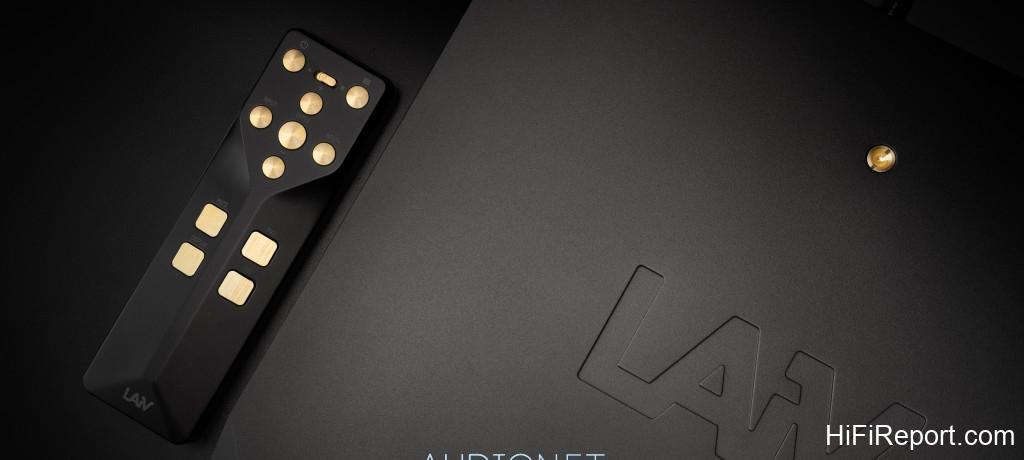
Every aspect is designed for excellent sound quality; even Hi-End DACs significantly more expensive than the Harmony might not feature such meticulous component selection.
Exquisite Exterior Design
Another major allure of the Harmony is its appearance. When I first saw it, I couldn’t believe it was manufactured in China, as the exterior quality is truly exquisite, with a minimalist design that exudes a European-American aesthetic. Holding the physical unit, you realize that while it’s not large, it has considerable heft, weighing in at 4.3 kilograms (approximately 9.5 lbs). This contributes directly to its vibration damping.
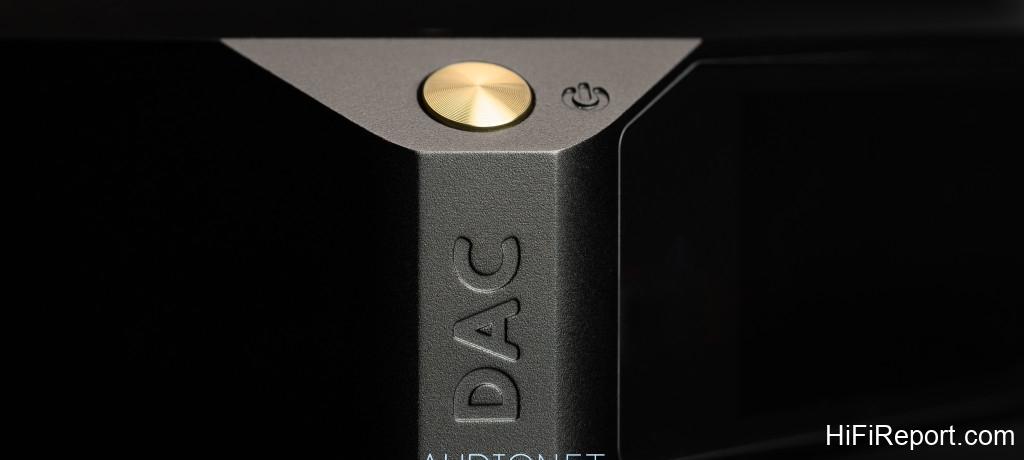
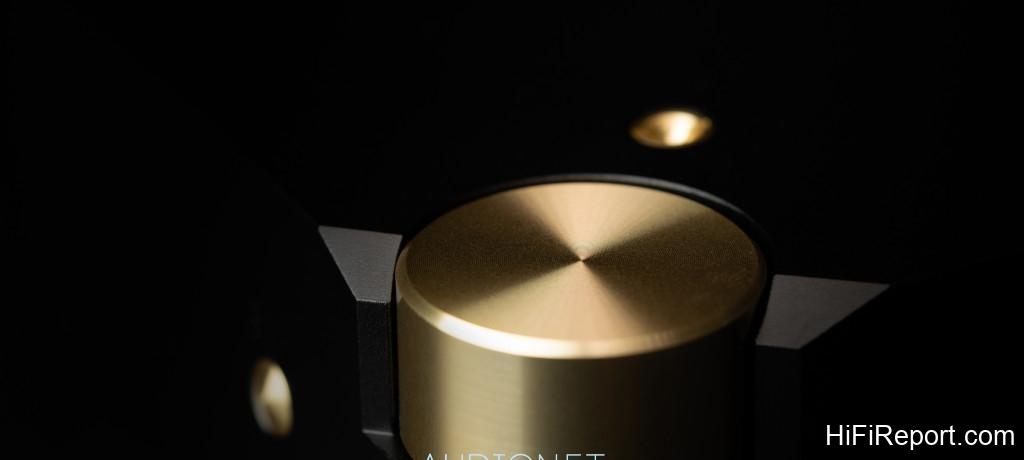
The metalwork is of high caliber; the anodized surface feels smooth and doesn’t scratch easily. The top panel features an elegant etched brand logo, and the four corners are smoothly rounded. More prominently, the right side panel features a golden knob responsible for controlling the unit’s various functions. Turning it provides a distinctly premium tactile feel.
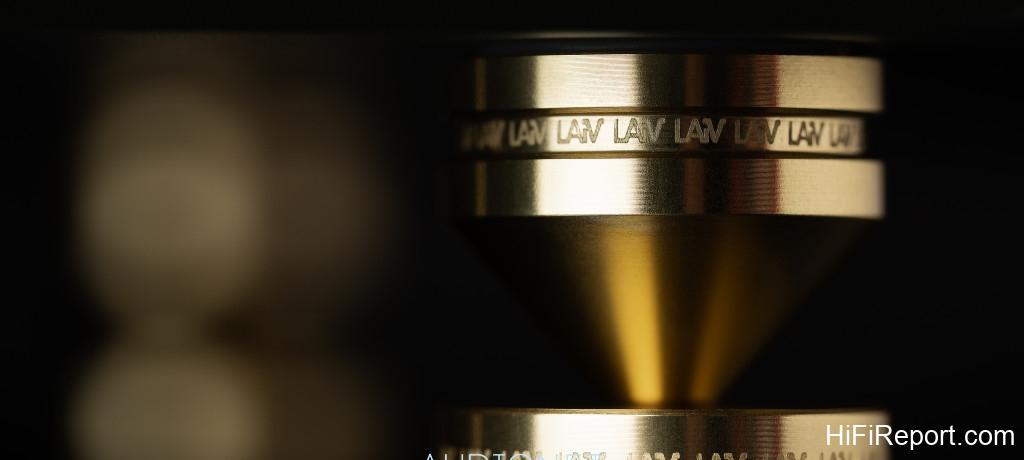
The front panel features a large, 3.83-inch diagonal OLED display. The white text on a black background aligns with the minimalist style of European and American audio equipment. The large font ensures easy readability, even from the listening position far across the room; the screen information remains perfectly clear. Looking underneath, you’ll find that the Harmony also emphasizes chassis isolation, utilizing three-point metal cone feet.
Metal cone pads are also included and can be easily installed using the supplied cardboard guide. The bottom of the metal pads features soft rubber, allowing the unit to be placed stably on various surfaces like audio racks or desks, preventing external vibrations from entering the chassis – another secret to the Harmony’s excellent sound. The top of the chassis also features three brass-plated support points, allowing Laiv’s future audio components to be stacked, saving space.
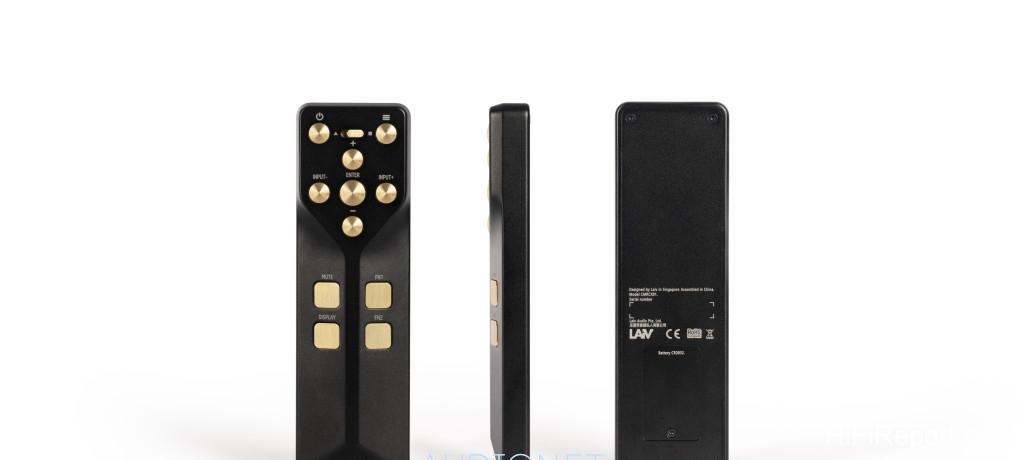
Finally, the Harmony comes with a solid, exquisite full aluminum alloy remote control, which is another one of its selling points.
Connectivity
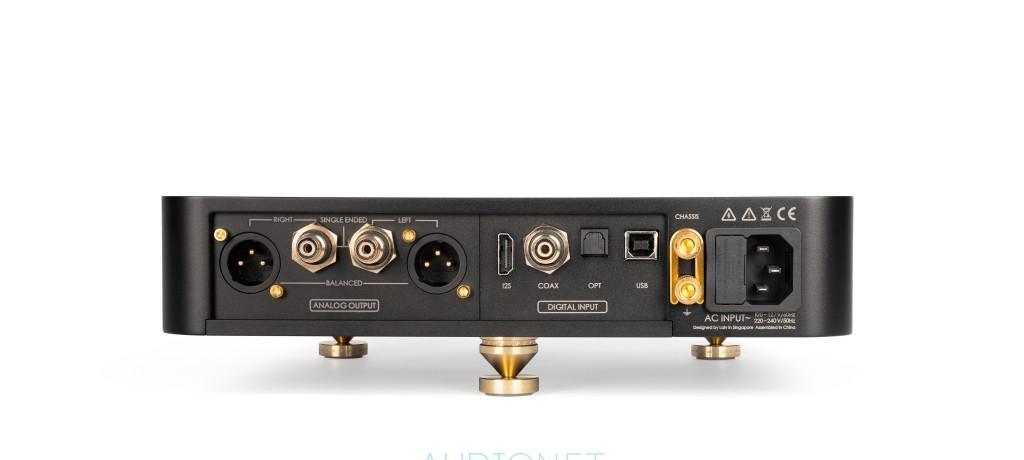
Turning to the rear panel, the Harmony offers ample connectivity. Firstly, it provides both XLR and RCA analog outputs, with maximum voltage outputs of 4.15Vrms and 2.07Vrms respectively. This also signifies that the Harmony is a pure DAC product, lacking digital volume control.
By simplifying its functions as much as possible, it not only improves sound quality but also prevents distortion when paired with a preamplifier or integrated amplifier by avoiding two volume stages, minimizing potential audio degradation. Digital inputs include USB Type-B, Optical, Coaxial, and the proprietary I2S input via an HDMI cable. It also supports external I2S clocks.
This connection method is also designed to allow the Harmony to automatically configure itself with future amplifiers from Laiv, setting the stage for their upcoming products.
Listening Experience
For testing, I paired the Harmony with two integrated amplifiers: the LINN Majik DSM and the Gustard K-221, using Fyne Vintage Five bookshelf speakers. I found the Harmony’s sound to lean towards transparency and resolution. When paired with the Majik DSM, the sound was detailed but felt a bit too plain and understated, lacking some weight in the mid-bass. Switching to the K-221 immediately added significant sonic thickness, making the sound warmer and smoother.
The previously somewhat reserved mid-bass now had more elasticity. This reflects the Harmony’s neutral sound signature, free from excessive coloration, allowing it to faithfully reproduce the sonic characteristics of the amplifier. Ultimately, I decided to use the K-221 integrated amplifier for the final review pairing.
The Harmony’s sound also surprised me greatly. When using the “NOS” (Non-Oversampling) mode, it sounded round and full of moisture, with condensed and substantial musical forms. While the soundstage wasn’t particularly expansive, it felt natural, and the background was remarkably black, making the musical outlines clearer. It was particularly moving when playing small-ensemble jazz vocals.
The imaging felt naturally integrated, like milk and water blending, with a full and smooth sound devoid of any hard digital edges.
For example, playing “Devil May Care” from Diana Krall’s album “When I Look In Your Eyes,” from the very start, a large, full, and substantial vocal image stood in the center. Diana Krall’s magnetic voice sounded enchanting and moving. The Harmony’s high resolution also made the subtle movements of her lips and teeth during the performance more distinct. This sense of intimacy felt as though you could hear the living breath in every word and phrase.
The piano sounded warm and rounded, yet it didn’t feel blurry or sluggish; the key strikes still had a crisp speed. The accompanying chord hits were very solid, and the plucked notes of the double bass were distinct and full of that “beefy” texture. Blending with the K-221’s slightly soft low end, the music’s foundation exhibited improved elasticity and control.
Next, I switched the Harmony to “OS” mode. In this mode, all music files are automatically upsampled to 16x the sampling rate, resulting in a striking change in the DAC’s sound quality. I could feel the soundstage expanding outward, and the density and resolution of the sound significantly improved. Playing Mozart’s Violin Concerto No. 1 performed by Christoph Koncz, the violin now became slightly more slender but didn’t sound skeletal or thin.
Instead, I heard a more condensed density, and the texture of the bow strokes was finer. When playing passages in the upper register, the shimmering quality was more prominent, adding a touch of luxurious elegance to the neutral and gentle violin tone. Additionally, the instrument images seemed to recede slightly.
If NOS mode felt like sitting in the front row of the concert hall, experiencing the intimacy of the instrumental performance, OS mode was like being positioned in the middle to back of the hall, allowing you to hear richer hall ambiance details and a greater sense of soundstage envelopment.
At this point, the accompanying string section in the piece also distanced itself, resulting in a more orderly layering of the performance and more defined lines. Even the inner voices, which are often easily overlooked, had a strong presence, allowing the beauty of the performance to be appreciated without intense concentration. When encountering tutti passages, the Harmony’s dynamic performance was outstanding, exhibiting controlled and effortless dynamics.
The bass felt fast, stable, and highly elastic. For playing classical music with large ensembles like this, I preferred the OS mode, as it offered distinct advantages in terms of dynamics, soundstage scale, and layering.
Finally, when playing the album “Remember That You Will Die” by the progressive metal band Polyphia, the Harmony also felt right at home. In the track “Playing God,” the opening lightning-fast electric guitar performance sounded distinct, and even under explosive distortion, it remained clear and non-fatiguing; the clear and full texture of the pick strokes was still audible. Simultaneously, the popping electric bass performance sounded incredibly sharp.
Both the percussive feel of the string strikes and the rapid double-bass drumming were full of elasticity. Although the weight felt slightly reserved, the control was excellent, keeping the bass energy firmly in check, allowing me to perceive clear performance details and bass shape. When encountering the extreme low-frequency electronic effects in this track, the Harmony was also capable of creating a clean and deep descent, providing a fast and precise rhythmic foundation for the rock music.
Conclusion
This Laiv Harmony is a truly exceptional audio product. In today’s market trend emphasizing features and compatibility, the Harmony foregoes volume control and preamplification, focusing solely on excelling at “decoding.” Coupled with its robust build quality and meticulous craftsmanship, as a pure DAC priced under $3,000 (approximately 89,900 NTD), its price-to-performance ratio absolutely surpasses that of Hi-End level products from major European and American manufacturers.
If you’re seeking a DAC with detailed, transparent sound devoid of digital harshness, I believe the Harmony offers remarkable value at this price point!
Specifications
* Product Type: R2R DAC
* Digital Inputs: Optical, Coaxial, USB, I2S (up to 768kHz PCM, DSD256)
* Analog Outputs: RCA (up to 2.07 Vrms), XLR (up to 4.15 Vrms)
* Dimensions: 250 × 255 × 50mm